This post contains affiliate links. As an Amazon Associate, we may earn a commission from qualifying purchases at no extra cost to you.
The top electric toothbrushes for 2026 include the Quip Metal Sonic, known for its sleek design and travel-friendly convenience, the Philips Sonicare 9900 Prestige, praised for advanced plaque removal and customizable settings, and the Oral-B Pro 5000 SmartSeries, which offers tech-savvy features like Bluetooth connectivity and real-time feedback. Whether you’re dealing with sensitive gums, chasing a deeper clean, or just want data on your brushing habits, one of these three is built to solve that problem. Explore the unique features and benefits of each to find the right toothbrush for your routine.
Quick Verdict
- Best for Travel & Simplicity: Quip Metal Sonic
- Best Overall / Premium Pick: Philips Sonicare 9900 Prestige
- Best for Tech-Savvy Users: Oral-B Pro 5000 SmartSeries
Quip Metal Sonic Electric Toothbrush for Adults
BEST FOR TRAVEL & SIMPLICITY
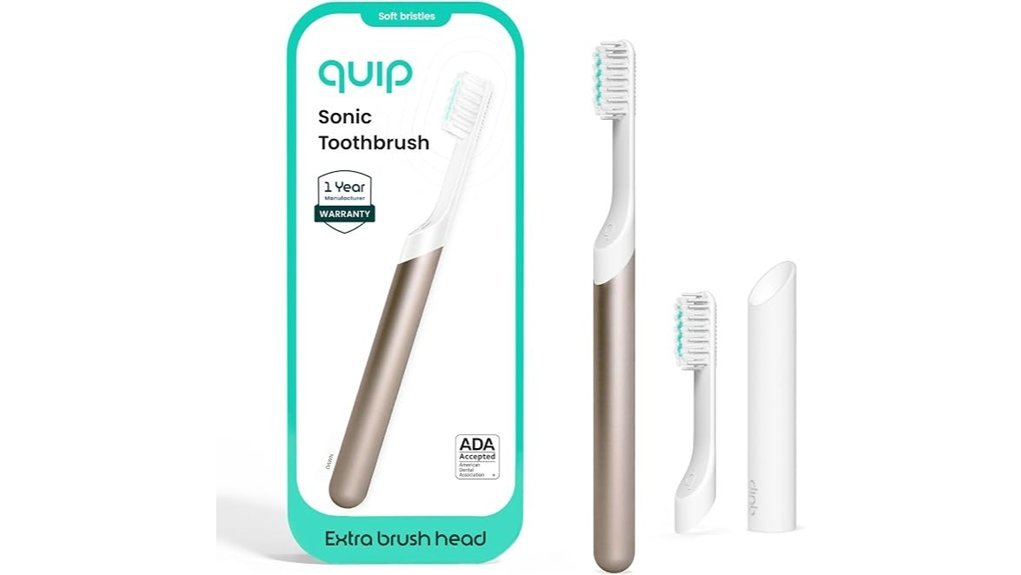
The Quip Metal Sonic Electric Toothbrush for Adults stands out as an ideal choice for individuals seeking a stylish and effective oral care solution. Available in the elegant Dawn Peach Gold, this toothbrush features a sleek design complemented by a travel case, perfect for those on the go. Its guided brushing technique, with a 2-minute timer and 30-second pulses, is designed to support a thorough clean. Equipped with soft bristles and gentle sonic vibrations, it effectively cleans tight spaces and sensitive teeth. With a replaceable brush head every three months and a 1-year warranty, it promotes lasting oral health with convenience.
Best For: Individuals seeking a stylish, effective electric toothbrush that promotes good oral care habits while being convenient for travel.
Who Should Avoid This: Anyone who wants app tracking, multiple brushing modes, or Bluetooth feedback — Quip keeps things intentionally simple with one guided mode.
Pros:
- Sleek design with a travel case makes it ideal for on-the-go use.
- Guided brushing technique with a timer and pulses supports a thorough clean.
- Soft bristles and gentle sonic vibrations effectively clean tight spaces and sensitive teeth.
- No charging cable required — runs on a replaceable AAA battery for up to 3 months.
Cons:
- Requires replacement brush heads every three months, which may be an added expense.
- Single brushing mode — no customization for whitening, gum care, or deep clean.
- Limited color options might not appeal to everyone.
Philips Sonicare 9900 Prestige Electric Toothbrush
BEST OVERALL / PREMIUM PICK
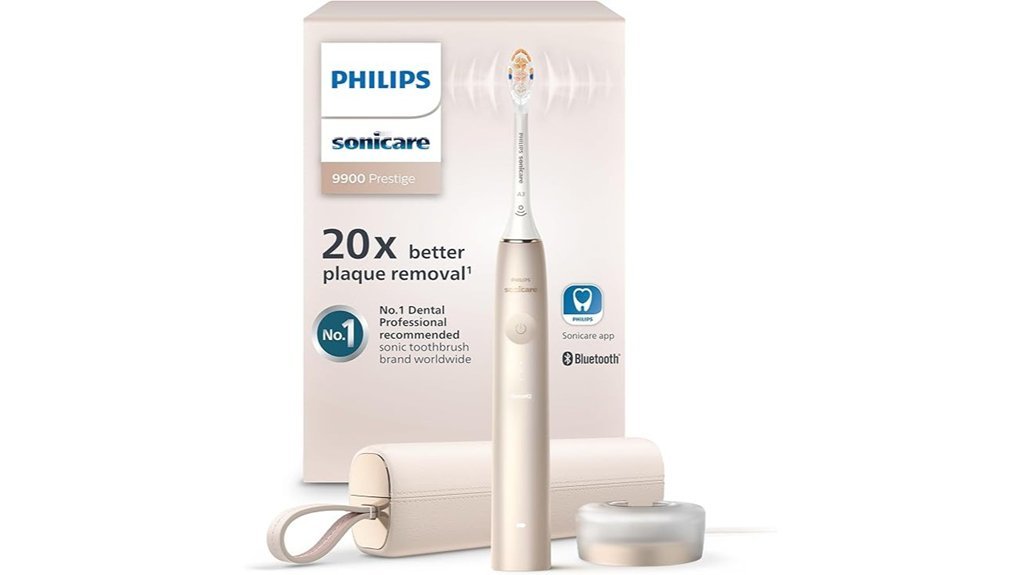
Engineered for ideal oral health, the Philips Sonicare 9900 Prestige Electric Toothbrush excels in plaque removal and gum care. Featuring the A3 Premium All-in-One brush head, it removes up to 20 times more plaque than a manual toothbrush and helps promote healthier gums within six weeks. With SenseIQ technology, it senses pressure and automatically adjusts intensity to help protect teeth and gums from excess pressure. The toothbrush offers 15 customizable settings (5 modes × 3 intensity levels) and connects to an app for personalized guidance. Its rechargeable battery lasts up to 14 days, and the included travel case makes it convenient for maintaining oral care on the go.
Best For: Those seeking advanced oral care with a focus on plaque removal and gum health.
Who Should Avoid This: Budget shoppers, or anyone who just wants a simple one-button brush without app setup.
Pros:
- A3 Premium brush head effectively removes up to 20x more plaque than manual brushing.
- SenseIQ technology adjusts intensity to help protect teeth and gums from excessive pressure.
- App connectivity provides personalized tips and tracks brushing habits for optimal care.
- Long-lasting charge (up to 14 days) reduces daily charging hassle.
Cons:
- Higher price point compared to standard electric toothbrushes.
- Requires periodic charging via the included dock, which may be inconvenient for some users.
- App/Bluetooth features may be unnecessary for those who prefer a simpler brushing experience.
Oral-B Pro 5000 SmartSeries Electric Toothbrush
BEST FOR TECH-SAVVY USERS
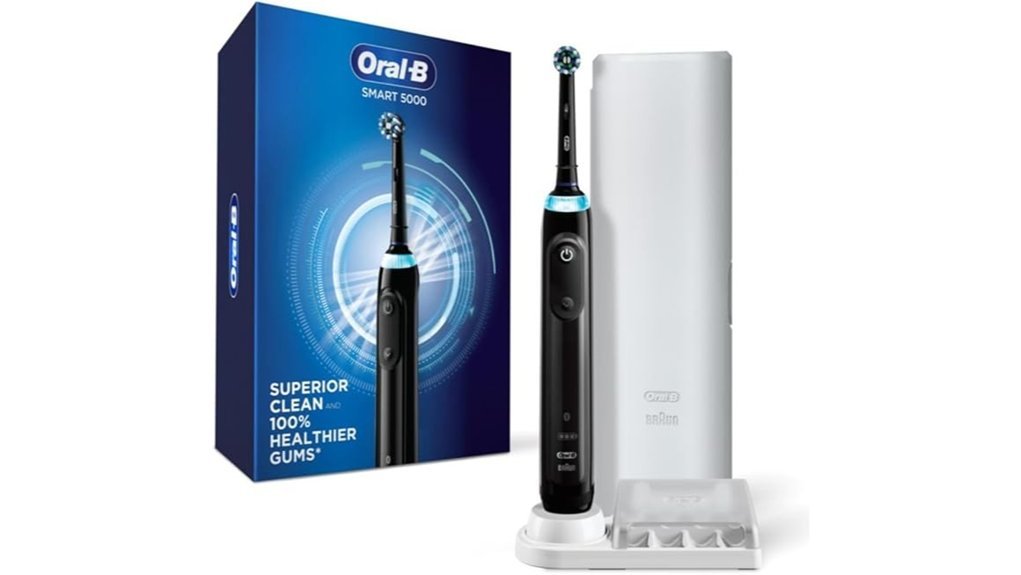
For tech-savvy individuals seeking effective oral care, the Oral-B Pro 5000 SmartSeries Electric Toothbrush stands out. Featuring Bluetooth connectivity, it provides real-time feedback to enhance brushing habits. Its advanced 3D cleaning action oscillates, rotates, and pulsates, removing more plaque along the gumline than manual brushes. With five customizable modes—Daily Clean, Gum Care, Sensitive, Whitening, and Deep Clean—users can tailor their experience. A pressure sensor helps signal ideal brushing pressure to reduce the risk of over-brushing. The toothbrush includes a rechargeable battery, case, and charger, making it a thorough choice for modern dental hygiene. Note: to maintain battery capacity, the maker recommends fully discharging and recharging the handle roughly every 6 months.
Best For: Tech-savvy individuals seeking an effective and customizable oral care solution.
Who Should Avoid This: Anyone who prefers a slim, minimalist brush without a charging stand — this is the bulkiest and most feature-heavy of the three.
Pros:
- Advanced Cleaning Technology: 3D cleaning action effectively removes plaque along the gumline.
- Customizable Modes: Five cleaning modes cater to different oral care needs.
- Real-Time Feedback: Bluetooth connectivity provides insights to improve brushing habits.
Cons:
- Price Point: Higher cost compared to basic manual toothbrushes.
- Charging Maintenance: Recommended full discharge roughly every 6 months for optimal battery health.
- Size and Weight: May feel bulkier than traditional toothbrushes for some users.
Quick Comparison: All Three at a Glance
| Model | Power | Modes | Connectivity | Warranty |
|---|---|---|---|---|
| Quip Metal Sonic | Replaceable AAA battery (~3 mo.) | 1 guided mode | None | 1-year limited* |
| Sonicare 9900 Prestige | Rechargeable (~14 days) | 5 modes × 3 intensities | App + SenseIQ | 2-year limited* |
| Oral-B Pro 5000 | Rechargeable | 5 modes | App + Bluetooth | 2-year limited* |
*Warranty length can vary by retailer and region — confirm current terms on the product page before purchase.
Factors to Consider When Choosing Electric Toothbrushes 2026: Top Picks and Buying Guide
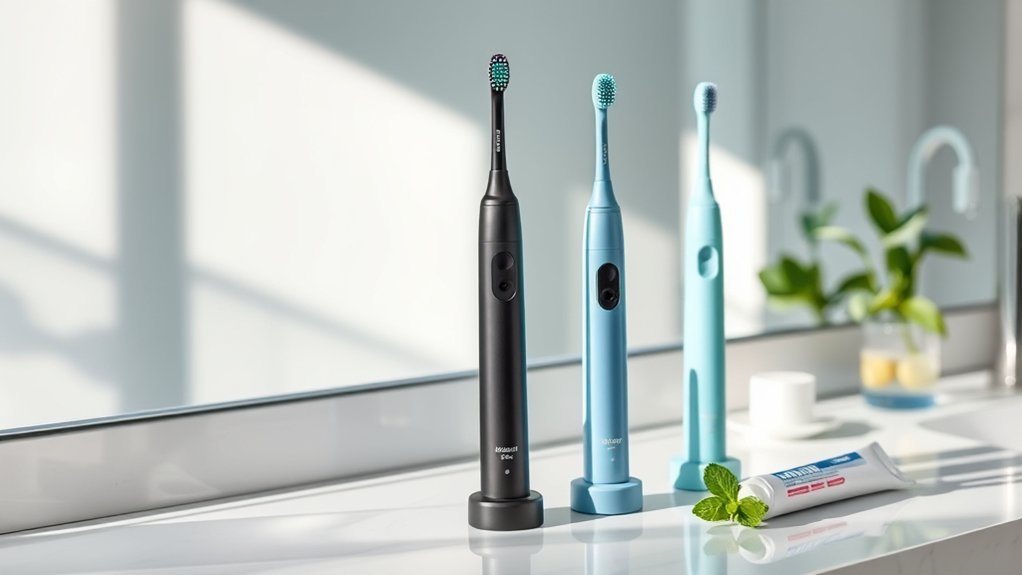
When selecting an electric toothbrush, several key factors come into play. Cleaning technology options, brushing modes, battery life, design, and smart features greatly influence user experience and effectiveness. Understanding these elements can help consumers make informed choices tailored to their dental care needs.
Cleaning Technology Options
Selecting the right electric toothbrush requires careful consideration of various cleaning technologies available on the market. Sonic-type electric toothbrushes often use high-frequency vibrations — Sonicare models reach up to 62,000 movements per minute — which can enhance plaque removal and support gum health. Some models include pressure sensors that automatically adjust intensity, helping to reduce excessive force on teeth and gums. Additionally, oscillating-rotating designs like Oral-B’s incorporate 3D cleaning action, combining oscillation, rotation, and pulsation. Brush heads with softer bristles are often recommended for sensitive teeth. Timed cleaning features, such as built-in timers and 30-second pulses, help support a full two-minute brushing routine.
Brushing Modes Availability
Understanding the availability of brushing modes is essential for consumers seeking an electric toothbrush that aligns with their specific oral health needs. Many electric toothbrushes offer multiple modes, including Clean, Whitening, Gum Care, and Sensitive, allowing for a customized brushing experience. Some advanced models offer up to 15 combined mode-and-intensity settings. Higher-end options often include a pressure sensor that alerts users when they’re brushing too hard. Additionally, app connectivity may offer personalized recommendations based on individual habits.
Battery Life Considerations
Battery life is an essential factor to take into account, as it directly impacts the convenience of an electric toothbrush. Battery longevity can vary widely: rechargeable models may last up to 14 days on a full charge, while battery-powered models like Quip run on a single replaceable AAA battery for up to 3 months. Most electric toothbrushes are designed to support the recommended two minutes of brushing, twice daily. Some rechargeable models notify users of battery levels via app or handle indicator. Proper maintenance, such as periodically fully discharging and recharging a rechargeable handle, can help extend battery longevity.
Design and Ergonomics
When considering electric toothbrushes, design and ergonomics play a significant role in enhancing user experience and promoting effective oral care. An ergonomic design prioritizes comfortable handling, allowing users to brush efficiently without strain. Lightweight, well-balanced models help reduce hand fatigue during a two-minute brushing session. Compact designs with travel cases improve portability for maintaining routines while traveling. These factors collectively contribute to a more enjoyable and effective brushing experience.
Smart Features Integration
Many modern electric toothbrushes now offer Bluetooth connectivity, enabling users to receive real-time feedback on their brushing habits through companion apps. Advanced models are equipped with sensors that monitor pressure, motion, and coverage, adjusting intensity to help protect teeth and gums. App integration often provides personalized brushing tips, reminders for head replacements, and tracking of oral care routines over time — though these features add cost and complexity some users may not want.
Replacement Head Frequency
Maintaining oral health depends partly on the frequency of electric toothbrush head replacements, typically recommended every three months. Consistent replacement helps support cleaning effectiveness and reduce plaque buildup. Users should watch for signs it’s time for a new brush head, such as frayed bristles or a noticeable decline in performance. Many modern electric toothbrushes include reminders or app notifications to flag when a replacement is due.
Price and Warranty
Choosing the right electric toothbrush involves evaluating multiple factors, including price and warranty. Price ranges considerably, from budget-friendly models like Quip to high-end options like the Sonicare 9900 Prestige. Warranty length also varies by brand — Quip lists a 1-year limited warranty, while Philips and Oral-B commonly offer 2-year limited warranties, though exact terms can differ by retailer and region, so it’s worth confirming on the current product listing. Some brands also offer subscription services for brush head replacements. User reviews on durability and performance are useful for judging whether the price reflects long-term value.
Before You Buy: Quick Checklist
- Do you want app tracking and Bluetooth feedback, or a simple no-fuss brush?
- Do you prefer a rechargeable dock, or a swap-and-go AAA battery?
- Do you have sensitive teeth or gums that need a gentler mode?
- Will you actually replace the brush head every 3 months?
- Is portability and travel case important to you?
Frequently Asked Questions
How Often Should I Replace My Electric Toothbrush Head?
Electric toothbrush heads should generally be replaced every three months, or sooner if bristles become frayed. Regular replacement helps maintain cleaning effectiveness and supports better oral hygiene over time.
Are Electric Toothbrushes Safe for Children?
The three models reviewed here — the Quip Metal Sonic, Sonicare 9900 Prestige, and Oral-B Pro 5000 — are designed and marketed for adult use, and manufacturer guidance recommends keeping them out of reach of children and using them only for their intended purpose. If you’re shopping for a child, look for a toothbrush specifically designed and sized for kids, and always use age-appropriate models under adult supervision.
Can I Use My Electric Toothbrush in the Shower?
Many electric toothbrushes are water-resistant and safe for use in the shower. However, checking the manufacturer’s guidelines for your specific model is essential to ensure proper usage and avoid damaging the device.
Do Electric Toothbrushes Really Clean Better Than Manual Ones?
Research indicates that electric toothbrushes typically clean teeth more effectively than manual ones, offering strong plaque removal and supporting better gum health. Their consistent brushing motion enhances cleaning efficiency, making them a popular choice among dental professionals.
How Do I Charge My Electric Toothbrush Effectively?
This depends on the model. Rechargeable brushes like the Sonicare 9900 Prestige and Oral-B Pro 5000 use a charging base or dock — simply place the handle on the charger until it’s fully powered. The Quip Metal Sonic, by contrast, doesn’t need charging at all: it runs on a single replaceable AAA battery that lasts up to about 3 months.
Which Model Is Best for Sensitive Teeth or Gums?
All three offer gentler options: Quip’s soft bristles and gentle sonic vibrations are built for sensitive spots, while both the Sonicare 9900 Prestige and Oral-B Pro 5000 include a dedicated Sensitive mode plus a pressure sensor that helps prevent brushing too hard.
Conclusion
Final Recommendation
Want the simplest, most travel-friendly option? Go with the Quip Metal Sonic. Want the most advanced, dentist-caliber clean with app guidance? The Sonicare 9900 Prestige is the premium pick. Want real-time Bluetooth feedback and multiple cleaning modes at a mid-range price? The Oral-B Pro 5000 SmartSeries fits best.
In a world where dental care intertwines with technology, the right electric toothbrush can transform your daily routine. With choices like the Quip Metal Sonic, Philips Sonicare 9900 Prestige, and Oral-B Pro 5000 SmartSeries, each offers unique benefits, helping your smile stay healthier in 2026 and beyond. The right choice awaits; will you find it?