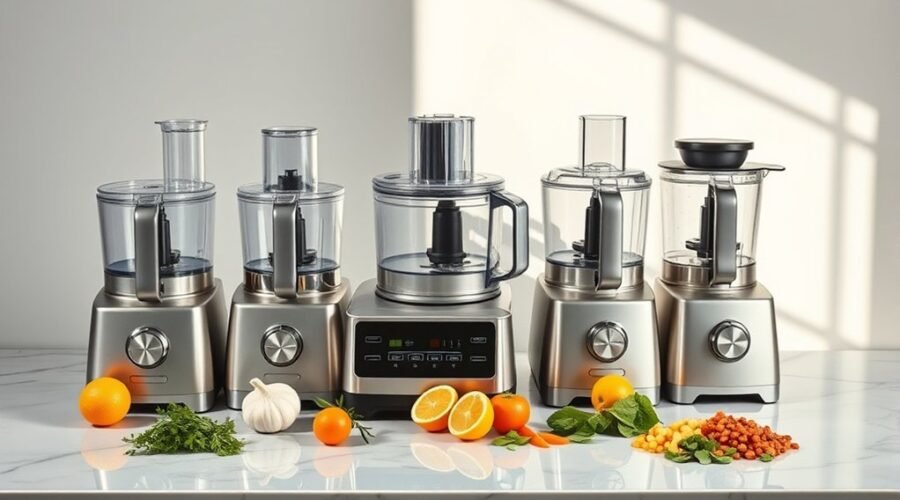
The five best food processors for 2026 are the KitchenAid 13-Cup Food Processor, Cuisinart 14-Cup Food Processor, Hamilton Beach Big Mouth Duo Plus, BLACK+DECKER 8-Cup Food Processor, and KitchenAid 5 Cup Cordless Food Chopper. These models balance strong motors, useful attachments, and easy cleanup. Larger corded units handle heavy prep, while the cordless KitchenAid adds portability. Each option suits different kitchens, and the details below show which one fits each task best.
KitchenAid 13-Cup Food Processor (KFP1318) Contour Silver
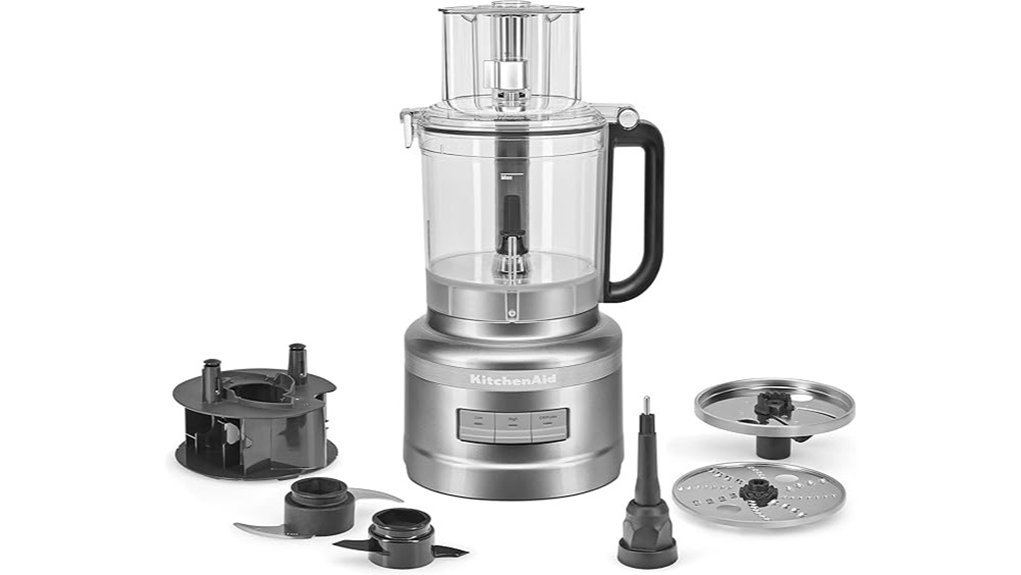
The KitchenAid 13-Cup Food Processor (KFP1318) in Contour Silver is best suited for home cooks who want a versatile, mid-size machine that can handle everything from quick salsa to larger meal prep. Its 13-cup bowl supports chopping, shredding, kneading, and mixing with ease. The externally adjustable Exact Slice disc provides thickness control, while the 3-in-1 feed tube accepts varied ingredient shapes. An in-bowl caddy keeps blades and discs organized, and the Snap and Go bowl simplifies setup. A leak-resistant design also makes cleanup straightforward.
Best For: Home cooks who want a versatile, mid-size food processor for everything from quick salsa to larger meal prep.
Pros:
- 13-cup capacity handles both everyday prep and bigger batches.
- Externally adjustable Exact Slice disc offers flexible slicing thickness.
- In-bowl caddy and Snap and Go bowl make storage and setup easy.
Cons:
- Larger capacity may be more than some small kitchens need.
- Multiple accessories can still take up cabinet space.
- Best suited for food prep tasks, not heavier-duty appliance use.
Cuisinart 14-Cup Food Processor (DFP-14BCNY)
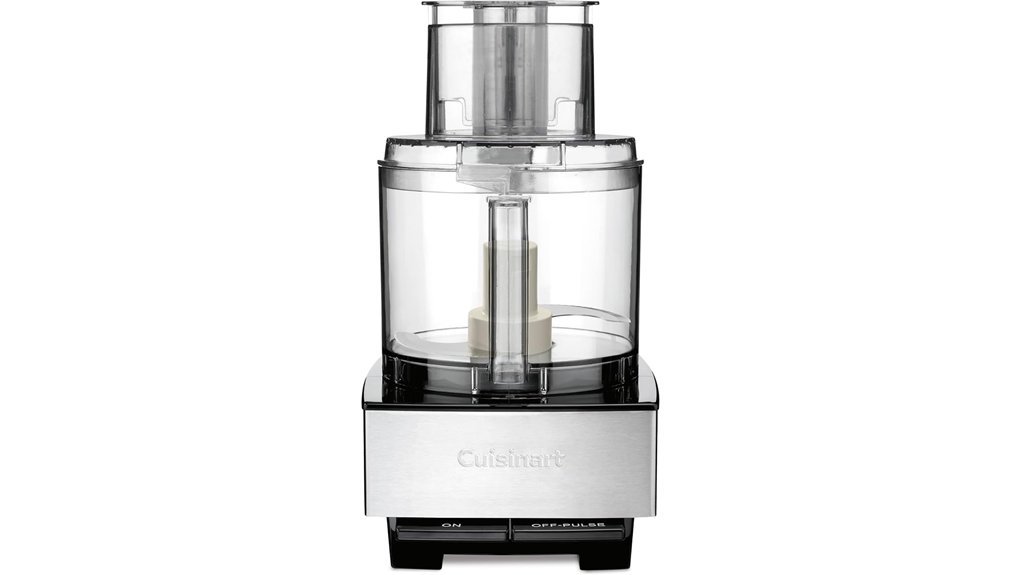
Built for batch cooks, the Cuisinart DFP-14BCNY stands out with its 14-cup bowl and 720-watt motor. It handles mincing, dicing, shredding, pureeing, and dough kneading with consistent speed. The stainless steel body houses simple On and Off/Pulse controls, while the extra-large feed tube accepts both small and large pushers. Included are a 4mm slicing disc, medium shredding disc, and chopping blade. Dishwasher-safe parts and a detachable disc stem simplify cleanup. Backed by a three-year unit warranty and five-year motor warranty, it suits demanding kitchens.
Best For: Batch cooks and home chefs who need a powerful, large-capacity food processor for chopping, shredding, pureeing, and dough kneading.
Pros:
- 14-cup bowl handles large batches efficiently
- 720-watt motor delivers strong, consistent processing
- Dishwasher-safe parts and detachable disc stem make cleanup easier
Cons:
- Large and heavy, so it takes up significant counter and storage space
- Shredding and slicing blades are not adjustable
- Basic On/Off-Pulse controls offer limited precision compared with more advanced models
Hamilton Beach Big Mouth Duo Plus Food Processor
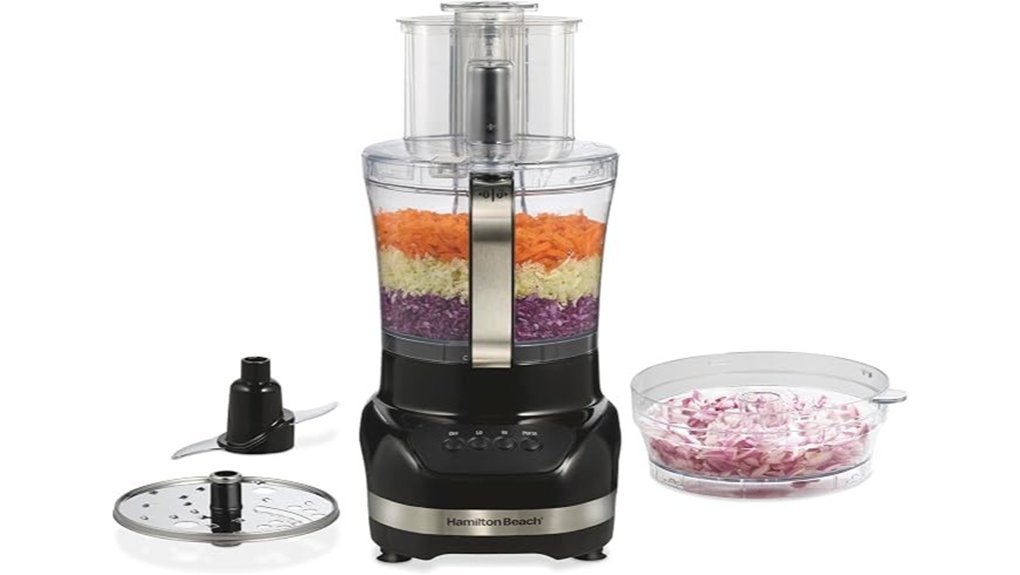
With its 12-cup bowl and 4-cup mini chopper, the Hamilton Beach Big Mouth Duo Plus suits cooks handling both large and small prep jobs. The 500-watt motor, 3 speeds, and pulse setting support slicing, shredding, chopping, mixing, and pureeing with steady control. An extra-large feed chute accepts whole tomatoes, potatoes, and onions to reduce pre-cutting. A reversible disc and S-blade add flexibility. The two bowls nest for compact storage, while dishwasher-safe parts, BPA-free food zones, and a wipe-clean touchpad simplify cleanup. The black 70580 model weighs 8.3 pounds.
Best For: Home cooks who want a versatile, space-saving food processor for both large-batch prep and quick small chopping jobs.
Pros:
- 12-cup bowl plus 4-cup mini chopper offers great flexibility for different recipe sizes.
- 500-watt motor with 3 speeds and pulse handles slicing, shredding, chopping, mixing, and pureeing.
- Dishwasher-safe parts, BPA-free food zones, and a wipe-clean touchpad make cleanup easy.
Cons:
- Plastic body may feel less durable than higher-end metal alternatives.
- At 8.3 pounds, it is not the lightest option to move or store.
- Large capacity and multiple components may be more than needed for very small kitchens or infrequent use.
BLACK+DECKER 8-Cup Food Processor and Vegetable Chopper
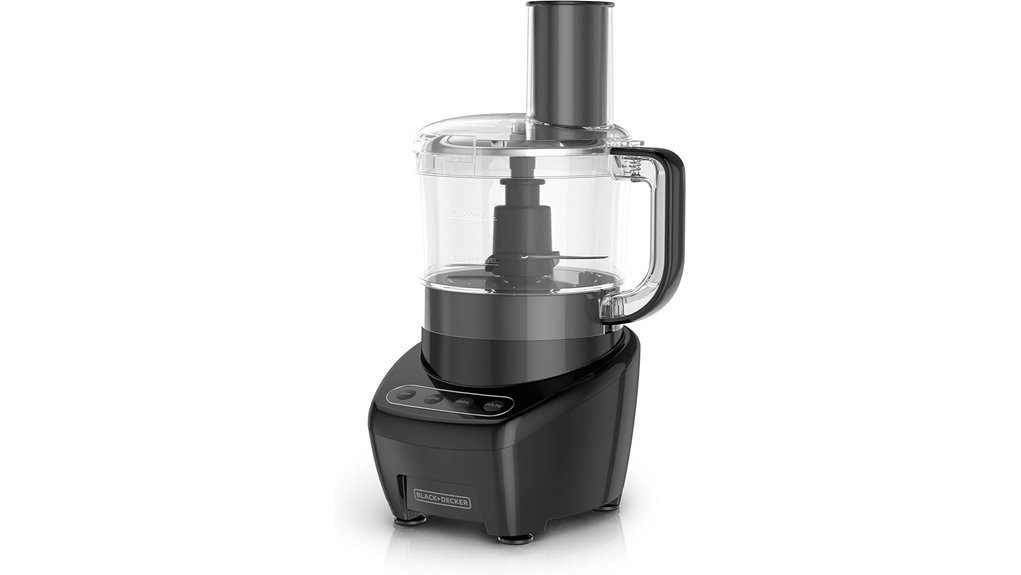
BLACK+DECKER’s 8-cup processor suits small households needing fast, versatile prep. Its 450W motor handles shredding, slicing, mincing, grinding, and pureeing with steady efficiency. The smart work bowl and lid locking system simplifies assembly, while touchpad controls make cleanup easier. Low, high, and pulse settings give users control over texture. A stainless steel S-blade supports quick chopping and mixing, and the reversible slice/shred disc adds flexibility for vegetables and cheese. The spacious bowl works well for salsa, hummus, nut butter, and other everyday recipes, making food preparation straightforward and adaptable.
Best For: Small households and home cooks who want a compact, versatile food processor for quick everyday prep like chopping, slicing, shredding, and pureeing.
Pros:
- 8-cup bowl offers solid capacity for sauces, dips, and small-batch prep
- 450W motor and multiple blade/disc options handle a wide range of tasks
- Touchpad controls and smart locking design make it easier to use and clean
Cons:
- 8-cup size may be limiting for larger families or big batch cooking
- Not ideal for heavy-duty or professional-level processing needs
- Touchpad controls may feel less tactile than traditional buttons for some users
KitchenAid 5 Cup Food Chopper Cordless KFCB519ER, Empire Red
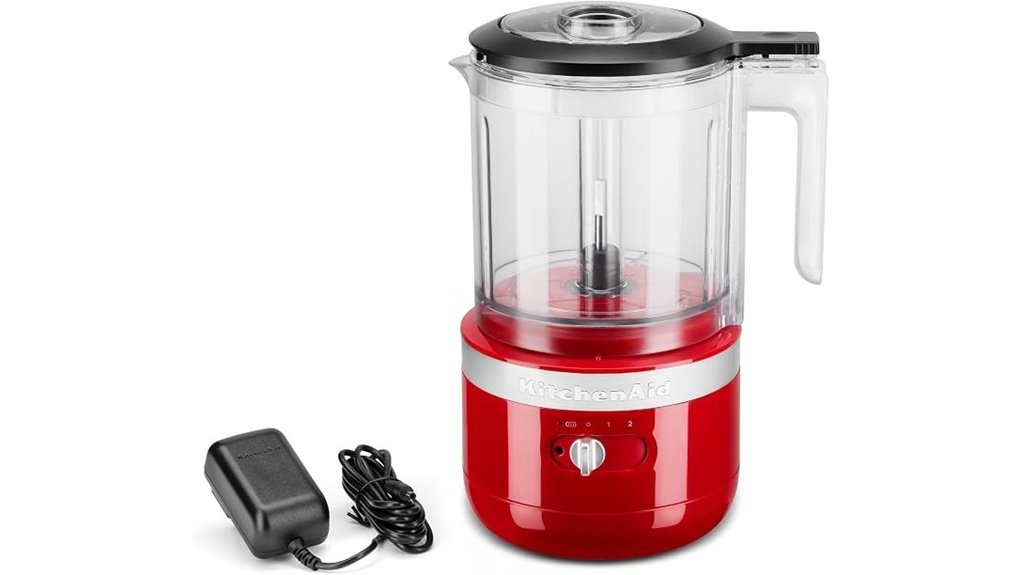
KitchenAid’s cordless 5-cup chopper suits cooks who want portability without sacrificing everyday prep power. The KFCB519ER in Empire Red runs on a rechargeable lithium-ion battery, letting it chop anywhere indoors without a cord. A full charge can handle up to 40 onions, while a 10-minute quick charge delivers enough power for about 11. Its compact 5-cup bowl supports chopping, mixing, pureeing, and whipping for salsa, hummus, and more. A stainless steel blade and whisk are included, both dishwasher-safe, and the universal charger works across KitchenAid cordless tools.
Best For: Home cooks who want a compact, cordless food chopper for convenient indoor prep, easy portability, and versatile everyday tasks like chopping, mixing, pureeing, and whipping.
Pros:
- Cordless rechargeable design lets you use it anywhere indoors without being tied to an outlet.
- Compact 5-cup capacity is great for small-batch prep like salsa, hummus, and sauces.
- Includes dishwasher-safe stainless steel blade and whisk, plus a universal charger compatible with other KitchenAid cordless tools.
Cons:
- 5-cup capacity may be too small for larger meal prep or family-sized batches.
- Battery-powered use means runtime is limited and depends on charge level.
- Accessories and charger are useful, but the product may feel less powerful than a full-size corded food processor.
Factors to Consider When Choosing Food Processors 2026: Top Picks and Buying Guide
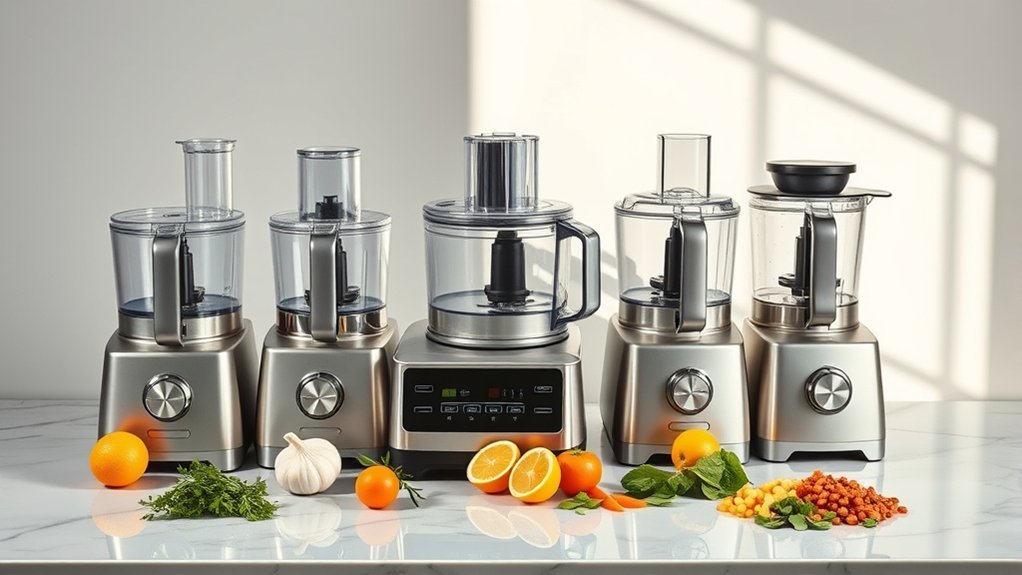
Choosing a food processor in 2026 starts with matching bowl capacity to the size of the household and the types of meals prepared. Motor power, blade and disc options, and the ease of storage and cleanup each shape how well a model fits daily use. Corded and cordless designs also matter, especially when convenience and countertop flexibility are priorities.
Bowl Capacity Needs
Bowl capacity is one of the most important factors when selecting a food processor because it determines how much can be handled in a single batch. Compact 5-cup models suit small jobs, while 8-cup or smaller bowls are better for individuals or couples preparing modest recipes, dips, or chopped herbs. Larger 12- to 14-cup bowls serve families and meal preppers, making it easier to process bigger amounts without repeated batches. Capacity should also match common tasks. Bigger bowls help with dough, salads, and other high-volume prep, while smaller bowls can be more convenient for quick, precise work. Storage space matters as well, since larger processors take up more counter or cupboard room, whereas smaller units are easier to move, stow, and retrieve.
Motor Power Levels
Motor power is the next key factor to weigh once bowl size has been narrowed down, because it determines how well a food processor handles demanding tasks. Typical models range from 450 watts to more than 720 watts, and higher wattage usually means stronger performance with dough, dense vegetables, and other resistant ingredients. For regular home use, lower outputs may suffice, but processors with at least 600 watts are better suited to heavier workloads and are less likely to strain or overheat. Multiple speed settings can further refine control, letting the machine match power to the task at hand. Noise should also be considered, since stronger motors often run louder. The best choice balances force, durability, and a tolerable sound level.
Blade And Disc Options
Blade and disc variety often determines how versatile a food processor will be in everyday use. Stainless steel slicing discs usually deliver consistent cuts, while reversible shredding discs handle different shredding tasks with less effort. Adjustable slicing discs add another layer of control by letting users choose thickness from thin to thick, which improves precision for salads, gratins, and prep work. Specialized attachments also expand capability. Dough blades support kneading, and multi-purpose blades assist with mixing and chopping. Many models include accessories suited to varied food sizes and textures, improving processing efficiency across recipes. Some food processors also use a detachable disc stem, which makes switching between blades and discs more straightforward and helps keep operation organized.
Storage And Cleanup
Storage features can make a food processor far easier to live with day to day, especially when blades and discs need a dedicated place. Built-in storage, such as in-bowl caddies, helps keep attachments organized and within reach, reducing clutter in the kitchen. Models with snap-on work bowls and twist-free assembly also simplify setup and make cleanup less frustrating. Leak-resistant bowls are especially useful because they allow a quick wash with warm water and dish soap without worrying about spills. Dishwasher-safe parts further cut maintenance time and make routine cleaning more convenient. The control panel also matters: touchpad controls are typically easier to wipe clean than traditional buttons, supporting a tidier, more hygienic workspace after repeated use.
Corded Vs Cordless
Beyond storage and cleanup, the choice between corded and cordless food processors also shapes day-to-day convenience. Corded models usually deliver stronger motors and larger bowls, making them better for heavy chopping, kneading, and other long preparation sessions. Their steady power supply supports uninterrupted use, which matters when processing large batches. Cordless processors trade that output for mobility. Rechargeable batteries let them work away from outlets, a useful advantage in compact kitchens, patios, or outdoor cooking setups. They fit smaller tasks well, though runtime must be checked carefully; some units can chop about 40 onions per charge. Cordless designs may also be easier to clean and handle in tight spaces, since they often have fewer parts and less bulk overall.
Frequently Asked Questions
How Noisy Are Food Processors During Operation?
Food processors are usually moderately noisy during operation, often comparable to a blender or vacuum cleaner. Smaller models tend to sound softer, while powerful motors and tough ingredients can produce louder, sharper noise levels.
Are Food Processor Bowls Dishwasher Safe?
Many food processor bowls are dishwasher safe, but not all. A careful reader should check the manufacturer’s instructions, since some bowls, lids, or seals require hand washing to prevent warping, clouding, or damage.
Can Food Processors Crush Ice Effectively?
Food processors can crush ice, but effectiveness varies by motor power and blade design. Heavy-duty models handle small ice amounts well; weaker units may struggle, overheat, or dull blades with repeated use.
What Safety Features Prevent Accidental Startup?
Safety features usually include lid-lock interlocks, bowl sensors, and power-button safeguards that prevent operation unless components are properly seated. Slip-resistant bases and overload protection further reduce accidental startup and unsafe activation.
How Long Do Food Processors Typically Last?
Food processors typically last 7 to 10 years, though heavy use, poor maintenance, or low-quality motors can shorten lifespan. Durable models with proper cleaning and careful operation often remain reliable longer.
Conclusion
These five food processors stand out for their range of sizes, power, and convenience, making them strong picks for a variety of kitchens. One interesting statistic: home cooks can save up to 15 minutes per meal prep session by using a food processor instead of chopping by hand. That kind of time savings adds up fast. Whether the goal is speed, capacity, or portability, the right model can make everyday cooking noticeably easier.