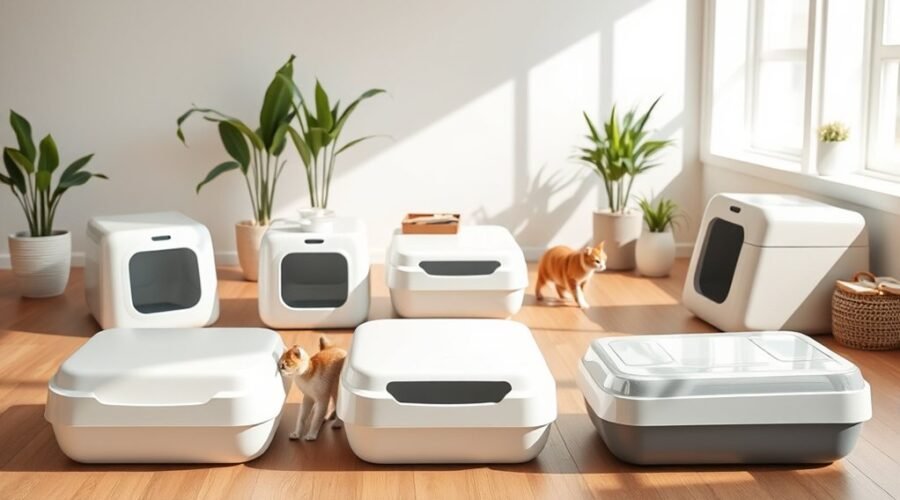
The best self-cleaning litter boxes for 2026 range from fully automatic systems that rake, rotate, wash, or pack waste to simple manual designs that make scooping faster. The six options covered here are the Pet Zone Smart Scoop, PETKIT Purobot Ultra, Litter-Robot 4, CatGenie A.I., PetSafe ScoopFree, and Omega Paw Roll ‘n Clean. They suit different priorities, including smart monitoring, multi-cat use, odor management, low-maintenance cleaning, and electricity-free operation.
Affiliate Disclosure: This article contains affiliate links. We may earn a commission if you buy through them, at no extra cost to you.
Quick note: “Self-cleaning” does not always mean fully automatic. Five picks below use powered cleaning systems, while the Omega Paw Roll ‘n Clean requires you to roll the box manually to sift waste.
Quick Comparison
| Product | Cleaning Type | Best For | Main Consideration |
|---|---|---|---|
| Pet Zone Smart Scoop | Automatic rake | Simple automatic cleaning | Cat size and age limits |
| PETKIT Purobot Ultra | Automatic rotating/packing system | Smart monitoring | Large footprint and higher complexity |
| Litter-Robot 4 Bundle | Automatic sifting | Multi-cat households | Requires compatible clumping litter |
| CatGenie A.I. | Automatic wash, flush, and dry | Owners who want no waste drawer | Needs water, drainage, and electricity |
| PetSafe ScoopFree | Automatic rake | Crystal-litter convenience | Uses compatible crystal trays |
| Omega Paw Roll ‘n Clean | Manual roll-and-sift | No-electricity simplicity | You must roll the box yourself |
Pet Zone Smart Scoop Self-Cleaning Cat Litter Box
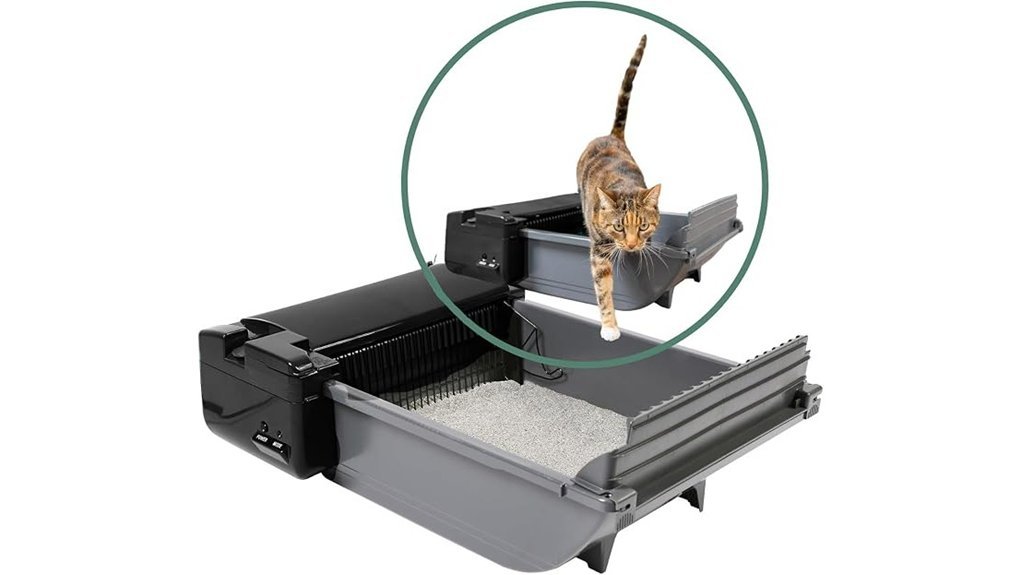
The Pet Zone Smart Scoop Self-Cleaning Cat Litter Box is a relatively straightforward option for owners who want automatic waste removal without moving to a large enclosed rotating system. A sensor starts a cleaning cycle after the cat leaves, allowing the rake to move waste into a covered receptacle.
Its high-sided design helps contain some litter scatter, while the modular construction makes the main components easier to access for routine cleaning. Product information lists it for up to two cats weighing approximately 6 to 15 pounds each. It is not intended for kittens younger than six months.
Best For: Cat owners who want a conventional open-box shape with automatic raking.
Why You’ll Like It: It keeps the familiar shape of a traditional litter box while reducing how often you need to manually scoop waste.
Pros:
- Sensor-triggered cleaning helps reduce routine scooping.
- High walls help contain litter scatter and spray.
- Modular components make routine cleaning more manageable.
Cons:
- Not suitable for kittens younger than six months.
- Recommended cat-weight limits make it unsuitable for some larger cats.
- The rake and waste compartment still require routine cleaning and emptying.
PETKIT Purobot Ultra Self-Cleaning Cat Litter Box
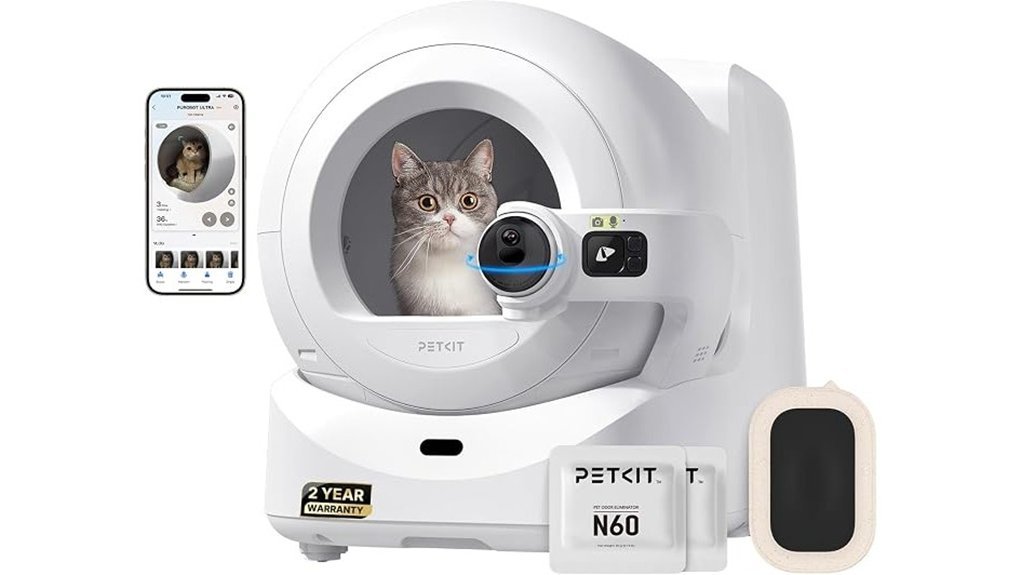
Pet owners who want extensive smart monitoring may prefer the PETKIT Purobot Ultra Self-Cleaning Cat Litter Box. Its camera system can distinguish individual cats, record litter-box activity, and provide waste-related information through the PETKIT app.
The unit also automates waste removal and packing. Its 10-liter waste bin is designed to reduce how frequently owners need to handle collected waste, although actual emptying frequency depends on the number of cats and how often they use the box. The manufacturer’s recommended cat-weight range is approximately 3.3 to 22 pounds.
Best For: Owners who want automatic cleaning plus detailed app-based activity tracking.
Why You’ll Like It: It combines automatic litter management with individual-cat identification and activity records, which can be useful in multi-cat homes.
Important: Litter-box activity and waste tracking may help you notice changes, but these features do not diagnose illness or replace veterinary care.
Pros:
- AI-assisted recognition can distinguish cats in a multi-cat household.
- Automatic waste cleaning and packing reduce direct waste handling.
- App connectivity provides activity and waste-related records.
Cons:
- Larger and more complex than basic automatic litter boxes.
- Smart features depend on connectivity and proper setup.
- Automatic operation has minimum cat-size and kitten restrictions that owners must follow.
Litter-Robot 4 Supply and Accessory Bundle by Whisker
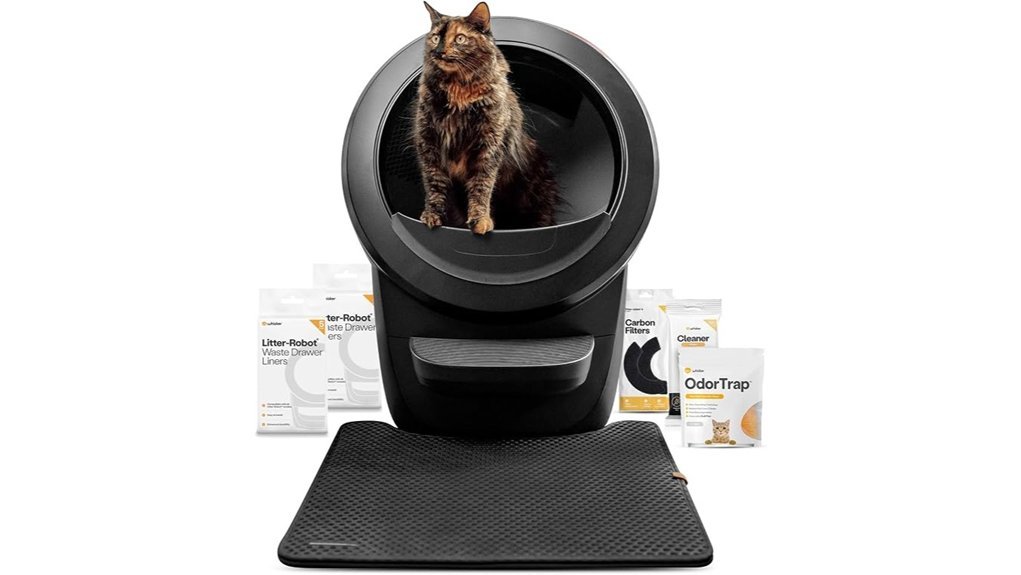
For busy multi-cat households, the Litter-Robot 4 Supply and Accessory Bundle by Whisker combines an automatic self-cleaning litter box with useful maintenance accessories. The bundle includes the Litter-Robot 4 plus items such as OdorTrap packs, waste drawer liners, cleaner wipes, carbon filters, and a LitterTrap mat.
The Litter-Robot uses an automatic sifting cycle to separate clumped waste from reusable clean litter and send waste into a drawer below. The Whisker app can provide litter-box activity, waste-drawer information, litter-level information, and cat-weight data.
It is designed for multi-cat use, but cats must meet the manufacturer’s minimum weight requirement before automatic operation is used.
Best For: Multi-cat households that want a mature automatic sifting system with app controls.
Why You’ll Like It: The large waste drawer and automatic sifting process can substantially reduce daily scooping in a busy household.
Pros:
- Automatically separates clumped waste from clean litter.
- App features help owners monitor litter-box activity and maintenance needs.
- Included odor and litter-tracking accessories add convenience.
Cons:
- The unit has a relatively large footprint.
- Requires suitable clumping litter for proper operation.
- Automatic mode should only be used when the cat meets the manufacturer’s minimum weight requirement.
CatGenie A.I. Self-Cleaning Cat Litter Box
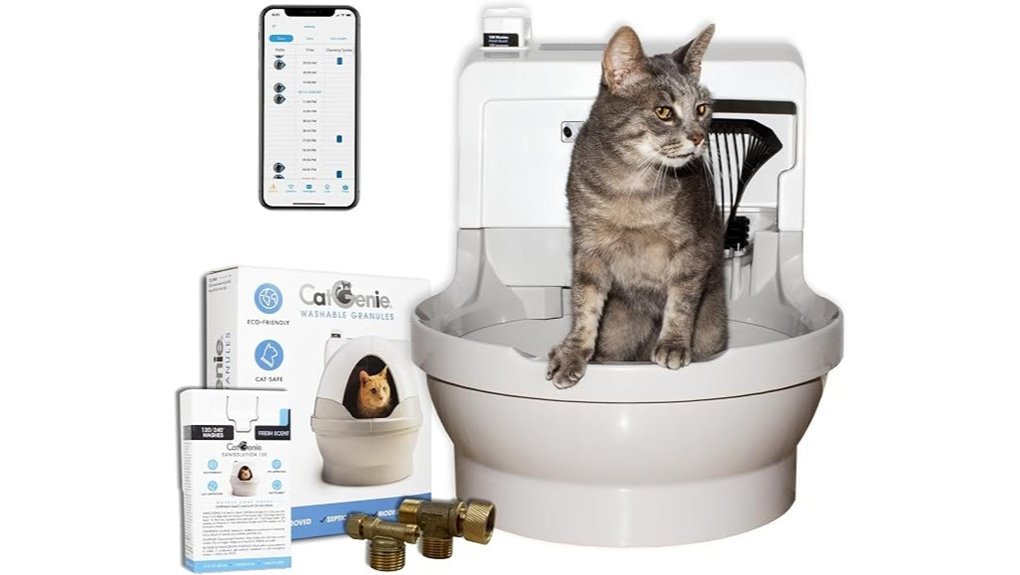
The CatGenie A.I. Self-Cleaning Cat Litter Box takes a very different approach from rake- or rotation-based litter boxes. It scoops solid waste, sends waste through a drainage system, washes the bowl and reusable granules, and then dries the granules for the next use.
Instead of regular cat litter, CatGenie A.I. requires its reusable Washable Granules. It also needs electricity, a cold-water connection, and access to appropriate drainage through a bathroom or laundry setup.
That makes installation more involved than most automatic litter boxes, but it also eliminates the conventional waste drawer used by many competing systems.
Best For: Owners who want a wash-and-flush system and have a suitable bathroom or laundry-room installation location.
Why You’ll Like It: Waste is sent to the home’s drainage system instead of accumulating in a drawer that must be emptied.
Pros:
- Automatically scoops, washes, and dries the litter-box area.
- Reusable Washable Granules replace conventional disposable litter.
- No conventional waste drawer needs routine emptying.
Cons:
- Requires electricity, a cold-water supply, and drainage.
- Regular cat litter cannot be used in the CatGenie A.I.
- Owners still need to replenish granules and perform scheduled appliance maintenance.
PetSafe ScoopFree Self-Cleaning Litter Box
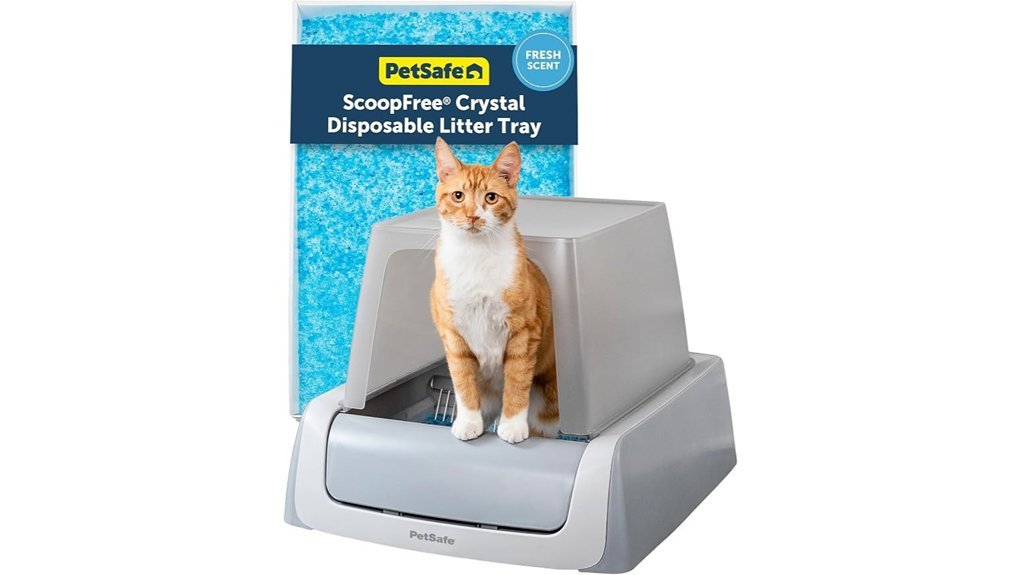
The PetSafe ScoopFree Self-Cleaning Litter Box is designed for owners who prefer the convenience of disposable crystal-litter trays. After a cat uses the box, an automatic rake moves solid waste into a covered compartment while the crystal litter absorbs moisture.
The disposable tray system can reduce routine scooping and simplifies larger cleanouts because the used tray can be removed and replaced. How long a tray lasts depends on the number of cats, their habits, and other household factors.
Some ScoopFree configurations also include a usage counter that records litter-box visits. This can help owners notice changes in bathroom frequency, but it should not be treated as a medical diagnostic tool.
Best For: Owners who value simple tray replacement and prefer crystal litter.
Why You’ll Like It: The combination of an automatic rake and disposable tray reduces direct contact with soiled litter.
Pros:
- Automatic raking reduces day-to-day scooping.
- Crystal litter absorbs urine and helps dry solid waste.
- Disposable trays make periodic litter replacement straightforward.
Cons:
- Compatible replacement crystal trays create an ongoing consumable cost.
- Litter choice is more restricted than with systems that accept standard clumping litter.
- Some cats may need a gradual transition to crystal litter and an automatic rake.
Omega Paw Roll ‘n Clean Self Cleaning Litter Box, Brown, Large
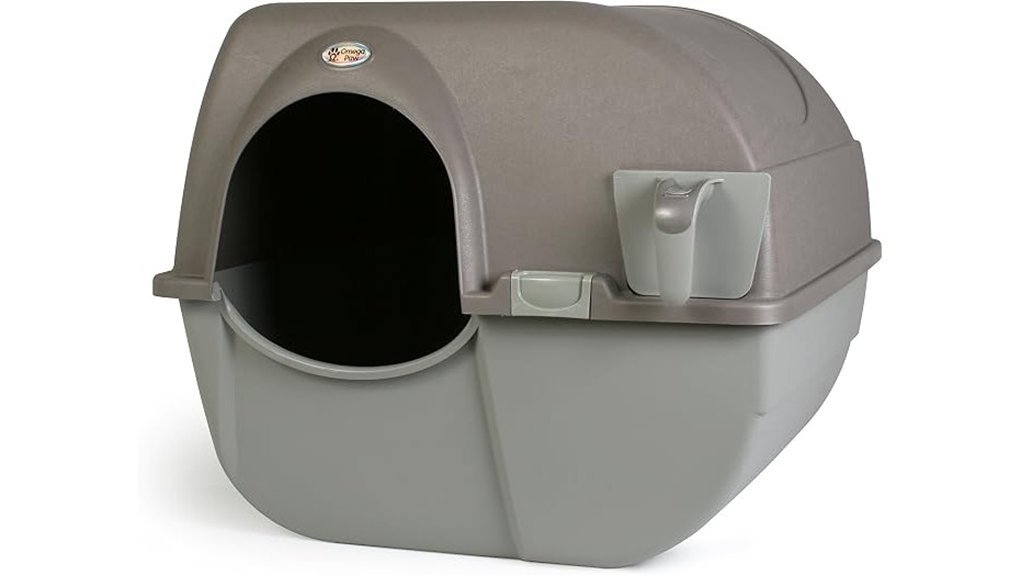
The Omega Paw Roll ‘n Clean Self Cleaning Litter Box is the simplest option in this roundup because it uses no motor, sensors, Wi-Fi, or electricity. Instead, an internal patented sifting grate separates clumped waste from usable litter when you manually roll the litter box onto its top and then return it upright.
The separated waste falls into a removable tray for disposal. The large model is intended to provide more room for larger cats or multi-cat households, and the manufacturer recommends using clumping litter for the sifting mechanism.
Best For: Owners who want easier waste separation without buying an electric automatic litter box.
Why You’ll Like It: There are no motors, apps, electrical components, filters, or automatic cycles to maintain.
Pros:
- Simple roll-and-sift mechanism reduces conventional hand scooping.
- No electricity is required.
- Fewer mechanical components mean a simpler maintenance routine.
Cons:
- It is manual rather than truly automatic.
- You need enough surrounding space to roll the entire box during cleaning.
- Proper clumping litter and correct litter depth are important for effective sifting.
Factors to Consider When Choosing a Self-Cleaning Litter Box
Choosing a self-cleaning litter box involves more than comparing smart features. Your cat’s size and age, the cleaning mechanism, litter compatibility, available floor space, odor-management system, maintenance requirements, and ongoing consumable costs can all affect whether a model works well in your home.
Cleaning Mechanism Efficiency
Automatic litter boxes use different methods to separate waste. Rake systems move solid waste into a covered compartment, while rotating systems sift clumps into a drawer. CatGenie uses a wash-and-flush approach, and Omega Paw relies on manual rolling and gravity.
The best mechanism for you depends on how hands-off you want the system to be. Remember that even fully automatic litter boxes still require tasks such as emptying waste, adding litter or granules, cleaning sensors, wiping interior surfaces, or replacing consumables.
Size and Space Requirements
Check both your cat’s size and the product’s external dimensions before buying. Large enclosed automatic boxes can use considerably more floor space than a conventional litter tray.
Also leave enough clearance to open waste drawers, remove components, refill litter, and perform deep cleaning. A litter box that technically fits into a corner may still be frustrating to maintain if you cannot reach its service areas easily.
Cat Age and Weight Requirements
Automatic cleaning mechanisms rely on sensors to know when a cat is inside or near the machine. This makes minimum age and weight requirements especially important for kittens and very small cats.
Never assume that automatic mode is suitable simply because a kitten can physically enter the box. Follow the specific manufacturer’s weight and age instructions, and use a manual or kitten-protection mode when required.
Health Tracking Features
Some smart litter boxes record visit frequency, duration, cat weight, waste appearance, or other bathroom activity. These records can be useful because a change from your cat’s normal habits may give you a reason to pay closer attention.
However, smart litter-box data should be treated as supplementary information rather than a diagnosis. Contact a veterinarian when you notice concerning changes in urination, bowel movements, appetite, behavior, pain, or other symptoms.
Odor Control Capabilities
Odor control depends on more than the cleaning mechanism. Waste-compartment sealing, cleaning frequency, litter type, ventilation, carbon filters, and how often the waste drawer or tray is emptied can all affect smell.
Automatic cleaning helps because waste spends less time exposed in the litter bed, but no system completely eliminates the need for proper cleaning and timely waste disposal.
Litter and Consumable Compatibility
Check litter compatibility before buying. Some automatic boxes work with common clumping litter, while other systems require specific crystal trays, proprietary waste bags, refill rings, cleaning solution, or reusable granules.
These requirements affect both convenience and long-term ownership cost. A system with a lower-maintenance cleaning cycle may still require more proprietary consumables than a simpler model.
Material Durability and Quality
Self-cleaning litter boxes contain moving or frequently handled components, so sturdy construction and easy-to-clean surfaces matter. Inspect areas such as the waste drawer, rake, sifting grate, hinges, seals, and removable liners or mats during routine maintenance.
Keeping sensors, tracks, and moving components free of litter buildup can also help the machine operate as intended.
App Integration and Control
App-connected litter boxes can provide maintenance alerts, activity histories, litter levels, waste-drawer information, cat-weight records, or remote settings depending on the model.
Before paying extra for smart features, decide which information you will actually use. Buyers who mainly want less scooping may be satisfied with a simpler automatic rake, while multi-cat owners may benefit more from individual-cat identification and detailed activity records.
Before You Buy: Quick Checklist
- Measure your space: Include clearance for drawers, lids, and cleaning access.
- Check your cat’s size: Confirm minimum and maximum weight recommendations.
- Check kitten restrictions: Do not use automatic mode contrary to manufacturer guidance.
- Confirm litter compatibility: Some systems require clumping litter, crystal trays, or proprietary granules.
- Check utilities: CatGenie requires water, drainage, and electricity.
- Compare ongoing supplies: Consider liners, filters, trays, bags, cleaning solution, or granules.
- Plan for maintenance: Self-cleaning does not mean maintenance-free.
- Consider your cat’s temperament: Noise and movement may require a gradual transition.
Frequently Asked Questions
How Do Self-Cleaning Litter Boxes Work?
Self-cleaning litter boxes use different waste-removal systems. Some use an automatic rake, others rotate and sift clumped litter, and CatGenie washes and flushes waste through a connected drainage system. Manual self-cleaning designs such as the Omega Paw Roll ‘n Clean require you to roll the box so an internal grate separates waste.
Are Self-Cleaning Litter Boxes Safe for Kittens?
Not every automatic litter box is appropriate for every kitten. Models can have minimum age or weight requirements because small kittens may not reliably trigger safety sensors. Follow the manufacturer’s instructions for your exact model and use manual or kitten-protection settings when required. Never leave an undersized kitten using automatic mode when the manufacturer says not to.
What Maintenance Is Required for These Litter Boxes?
Maintenance can include emptying waste drawers, replacing trays or bags, topping up litter or granules, cleaning sensors, wiping interior surfaces, replacing filters, and periodically deep-cleaning removable components. Wash-and-flush systems can also require scheduled appliance maintenance. Follow the instructions for your specific model.
Can Self-Cleaning Litter Boxes Handle Multiple Cats?
Many can, but capacity varies significantly. Check the manufacturer’s recommended number of cats, individual weight requirements, waste-bin capacity, and cleaning frequency. A multi-cat household will generally fill the waste compartment and use consumables faster than a single-cat home.
How Noisy Are Self-Cleaning Litter Boxes During Operation?
Noise varies by cleaning mechanism and model. Motors, rakes, rotating drums, pumps, and dryers can all make different sounds. If your cat is sensitive to movement or noise, introduce the new box gradually and allow the cat to become comfortable with it before relying on automatic cycles.
Do Self-Cleaning Litter Boxes Eliminate All Scooping?
Many automatic models dramatically reduce routine scooping, but they do not eliminate maintenance. You still need to dispose of collected waste, clean the machine, refill compatible litter or granules, and replace required consumables. Manual systems such as the Omega Paw Roll ‘n Clean still require you to perform the rolling step.
Can Smart Litter Boxes Detect Health Problems?
Smart litter boxes can record useful information such as visit frequency, cat weight, bathroom duration, or waste-related changes, depending on the model. That information may help you notice a change from your cat’s normal routine, but a litter box cannot replace examination, testing, or diagnosis by a veterinarian.
Conclusion
The right self-cleaning litter box depends on how much automation you want and what your home can support. PETKIT Purobot Ultra is the most feature-focused option here for owners interested in smart tracking, while Litter-Robot 4 combines automatic sifting with strong multi-cat practicality. CatGenie A.I. offers a distinctive wash-and-flush approach if you have suitable plumbing, and PetSafe ScoopFree makes sense for buyers comfortable with disposable crystal trays.
Pet Zone Smart Scoop keeps the familiar open litter-box format while adding automatic raking. If you would rather avoid electricity and complicated electronics entirely, Omega Paw Roll ‘n Clean offers a simpler manual sifting approach.
Before buying, compare your cat’s age and weight, available floor space, litter compatibility, ongoing consumable requirements, and maintenance routine. The best choice is the one that safely fits your cat and reduces the particular litter-box chores you most want to avoid.