
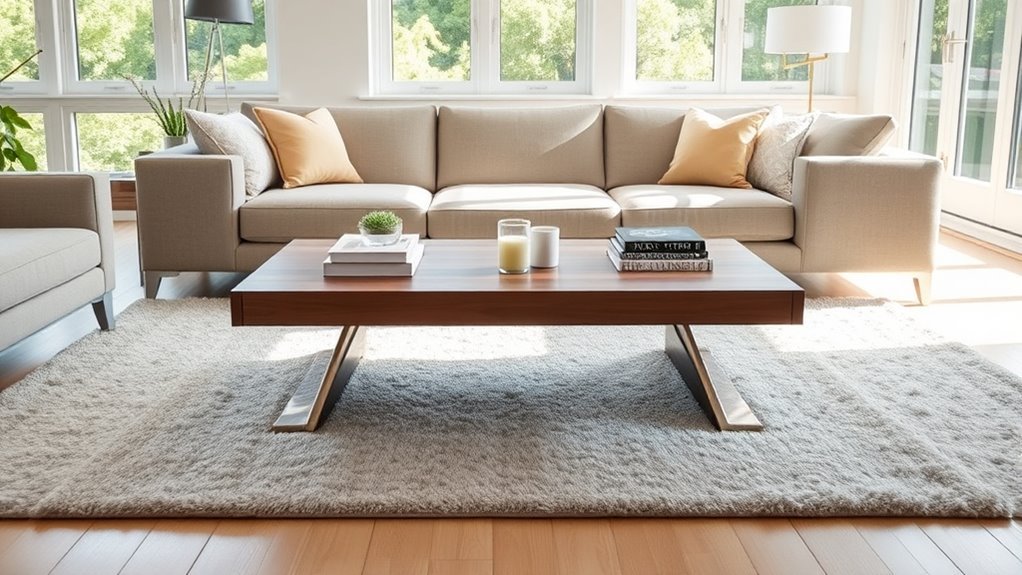
When choosing a coffee table, make certain it’s roughly two-thirds the length of your sofa, ideally standing 1-2 inches shorter than the seat height for seamless flow. Position it 12 to 18 inches away from seating for easy access, with at least 18 inches of walking space around it. Consider shapes that complement your furniture style, and think about width and overall room scale for harmony. As you explore, you’ll uncover more tips for style and function in your living room.
What Size Should Your Coffee Table Be?
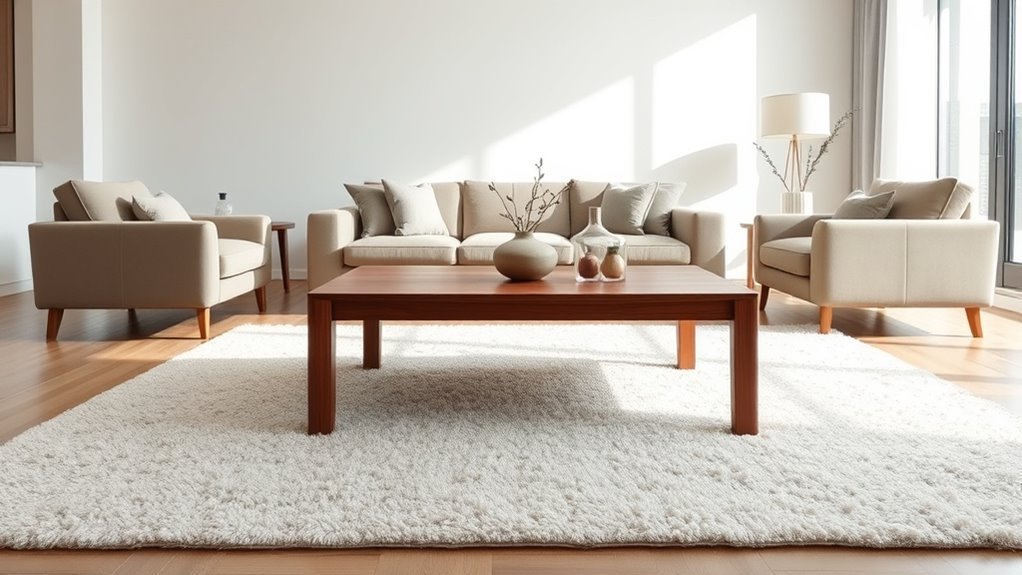
When choosing the perfect coffee table, size matters greatly. The ideal coffee table length should be about two-thirds the length of your sofa. If you’ve got a standard 8-foot sofa, aim for a table around 64 inches long. Coffee table height is equally essential; it should sit 1-2 inches shorter than your sofa seat height, landing around 15 to 18 inches. For best usability, position your table 12 to 18 inches away from the sofa, allowing smooth movement. Don’t forget the width—make it roughly two-thirds the width of your armchairs to maintain balance. Oversized tables are often preferred, providing ample space for drinks and decor, making your living area both functional and inviting.
How Tall Should Your Coffee Table Be?
Finding the right height for your coffee table is just as important as selecting the right size. Ideally, your coffee table height should match your sofa seat height, usually ranging from 17 to 19 inches. Most standard coffee tables fall between 16 to 19 inches tall, ensuring a comfortable reach for your drinks and books. If your sofa has firm cushions, aim for a table at the same height; softer cushions might need a table that’s 2-3 inches shorter. A table that’s too high can dominate your space, while one too low may hinder usability. Ensuring your coffee table complements your seating arrangement creates a balanced visual flow, enhancing the overall harmony of your living room.
Measuring for Your Coffee Table?
When measuring for your coffee table, start by considering the length and height of your sofa to guarantee a harmonious fit. Aim for a table that’s two-thirds the length of your sofa and 1-2 inches shorter than your seat cushion for comfort. Don’t forget to account for space around the table; keeping 12 to 18 inches between it and your seating will enhance flow and accessibility in your living area.
Ideal Measurement Guidelines
Choosing the right size for your coffee table can dramatically enhance both the functionality and aesthetics of your living space. For an 8-foot sofa, aim for a coffee table length of about 64 inches—two-thirds of your sofa’s length. The height should be 1 to 2 inches shorter than your sofa seat, typically ranging from 16 to 19 inches. When considering width, your coffee table should be about two-thirds the width of adjacent armchairs for balanced access. Placement is essential; keep the table 12 to 18 inches away from seating to allow comfortable movement. Finally, guarantee at least 6 inches of clearance beneath the table for legroom and easy cleaning, especially if you choose a solid block or drum design.
Space Considerations and Layout
A well-measured coffee table can transform your space by enhancing both its functionality and style. When considering coffee table size, aim for a length about two-thirds that of your sofa—approximately 64 inches for an 8-foot sofa. The ideal width should match two-thirds the width of your armchairs, guaranteeing a cohesive look. For placement, keep the table 12 to 18 inches from the sofa to allow comfortable movement and prevent tripping. The standard height should be 1-2 inches lower than your sofa cushions, ideally ranging from 16 to 19 inches. Finally, verify at least 6 inches of clearance beneath the table for legroom and easy cleaning access. These space considerations create a harmonious living room environment.
Choosing the Right Coffee Table Shape for Your Decor
When picking a coffee table shape, consider how it complements your existing furniture while enhancing your room’s visual appeal. Rectangular or oval tables work well with sectionals, while round options soften the lines in family-friendly spaces. Each shape not only serves a purpose but also adds character to your decor, creating a harmonious balance.
Shape Compatibility With Furniture
The right coffee table shape can transform your living space, enhancing both functionality and aesthetics. By considering shape compatibility with your existing furniture, you can create a harmonious environment. Here are some tips to guide you:
- Contrasting Shapes: Pair rectangular coffee tables with round or oval designs to add visual interest.
- Geometric Appeal: Use angular coffee tables alongside rounded or ornate furniture for a dynamic aesthetic.
- Practicality Matters: Opt for round coffee tables to eliminate sharp corners—perfect for homes with children.
Enhancing Visual Appeal Design
Selecting the right coffee table shape can greatly elevate your decor, offering both style and functionality. Coffee tables are best when they create visual interest, especially if you choose a unique coffee table shape like circular or oval. These forms contrast beautifully with rectangular upholstery, enriching the overall aesthetic. If your seating areas feature rounded furniture, consider angular or geometric tables to enhance usability and create a dynamic visual interplay. Round tables are particularly safe for homes with children, eliminating sharp corners while maximizing walkable space. Ultimately, the shape should complement the overall layout of your room, ensuring flow and cohesion with your existing decor theme, making your living space feel both inviting and liberating.
Where to Place Your Coffee Table for Optimal Flow?
To create an inviting and functional living space, positioning your coffee table correctly is essential for peak flow. Start by placing your coffee table 12 to 18 inches away from your sofa or chairs. This distance guarantees comfortable access and keeps your space safe from tripping hazards. Consider these key points for prime placement:
Position your coffee table 12 to 18 inches from seating for optimal flow and safety in your living space.
- Maintain at least 18 inches of walking space around the coffee table.
- In larger areas, adjust the distance to enhance balance and usability.
- Think about the table’s function—whether it’s for drinks or decor—when determining its position.
Proper coffee table size and placement not only enhance usability but also invite a natural flow, allowing guests to move freely without feeling cramped.
Comparing Low vs. Tall Coffee Tables: Pros and Cons

When choosing between low and tall coffee tables, you’ll find that each option brings its own unique advantages and challenges to your living space. Low coffee tables, typically 12 to 15 inches high, create an airy feel, perfect for modern sofas and relaxed conversations. However, they can be uncomfortable for taller seating and those with mobility issues. On the other hand, tall coffee tables, ranging from 18 to 22 inches, serve as versatile dining or work surfaces, but they might feel bulky in small spaces, obstructing flow and making the area feel crowded. Balancing the height of your coffee table with your interior design is essential; it can enhance accessibility while maintaining a cohesive and visually appealing atmosphere in your home.
How to Choose the Right Width for Your Coffee Table?
How do you determine the perfect width for your coffee table? To achieve the best access and visual balance in the living room, aim for a width that’s roughly two-thirds the width of your sofa. Consider these key points:
- Standard coffee table widths range from 16 to 40 inches; for larger spaces, wider tables work well.
- If you have a 64-inch loveseat, a 42-inch wide table is ideal. An 82-inch sofa pairs nicely with a 56-inch table.
- Always factor in any decor or books you plan to place on the table to avoid overcrowding.
Choosing the right width of your coffee table not only enhances usability but also guarantees walkways remain clear, creating a harmonious flow in your living space.
Deciding on the Length of Your Coffee Table?
Selecting the right length for your coffee table is essential for creating a balanced and inviting living space. Ideally, your coffee table length should be about two-thirds the length of your sofa. For example, with an 84-inch sofa, aim for a coffee table around 56 inches long. This proportionality guarantees both functionality and aesthetics. Large coffee tables suit sofas wider than 7 feet, enhancing the room feel, while smaller tables fit nicely with loveseats or settees. When deciding, consider your room’s scale to avoid crowding and maintain ease of movement. If you have a sectional, remember to exclude the chaise’s width for precise placement. A well-sized coffee table can transform your living area into a harmonious retreat.
Tips for Decorating Your Coffee Table With Style and Function

While decorating your coffee table, it’s crucial to strike a balance between style and functionality. To create an inviting and accessible space, consider these tips:
- Use a tray to group candles, books, and decorative objects, keeping everything organized.
- Mix heights and textures by incorporating vases with flowers alongside stylish coffee table books for added visual interest.
- Follow the rule of three when arranging decor to maintain balance and avoid clutter.
Don’t forget to personalize your setup with meaningful trinkets that spark conversation. Finally, guarantee functional items like coasters or a small bowl for keys are easily accessible, enhancing both usability and charm. This way, your coffee table becomes a stunning focal point that reflects your unique style while serving practical purposes.
Frequently Asked Questions
What Is the Standard Size for a Coffee Table?
The standard size for a coffee table varies, but explore styles, materials, and shapes that enhance your space. Choose colors that resonate with you, consider functions, and add accessories for a personalized touch.
What Is the 2/3 Rule Furniture?
The 2/3 rule in furniture suggests your coffee table should measure two-thirds the length of your sofa. This principle optimizes living room aesthetics, enhances furniture arrangement, and allows for better material choices and color coordination.
How Long Should a Coffee Table Be for a 90 Couch?
For your 90-inch couch, a coffee table should span about 60 inches. This balances design aesthetics and couch size compatibility, enhancing your living room layout while inviting comfort and style with thoughtful material choices.
What Is the Rule of Thumb for Coffee Table Height?
For ideal coffee table height, aim for dimensions 1-2 inches lower than your sofa seat. This balance enhances coffee table function and design, ensuring comfort while complementing various styles and materials in your living space.
Conclusion
In the end, choosing the right coffee table is like finding the perfect playlist for a cozy night in. You want it to fit your space, style, and lifestyle seamlessly. Remember to take into account size, height, shape, and placement to create a harmonious flow in your living room. With these tips, you’ll transform your coffee table from a mere surface into a functional centerpiece that sparks conversations and elevates your decor. Now, go ahead and make your space shine!

Leave a Reply