
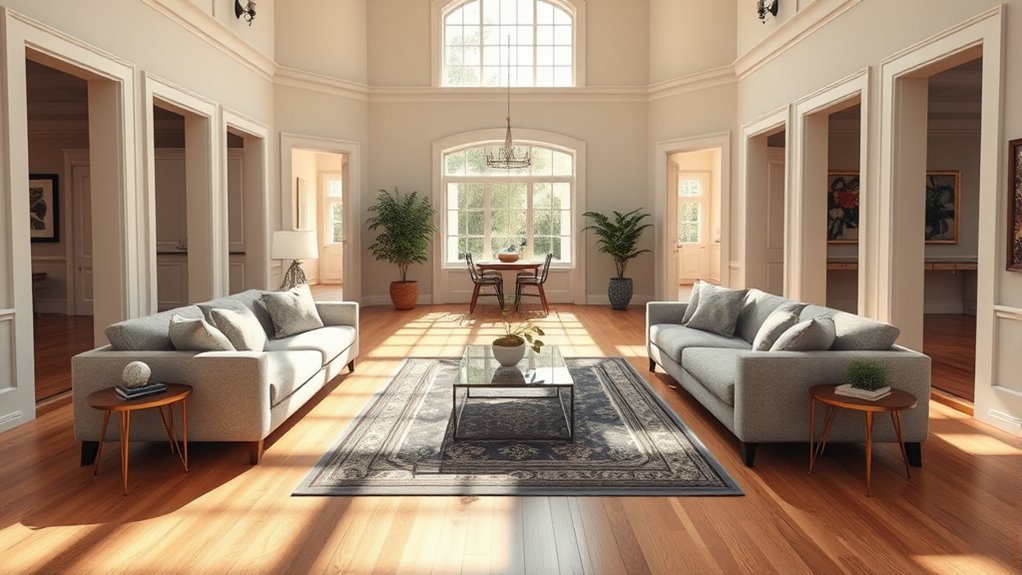
Knowing how to set up your living room for game night turns a cramped hangout into an effortless evening for your guests. Whether your group is gathering for a playoff broadcast, multiplayer console games, or a marathon tabletop session, your layout dictates how easily people can see, talk, and grab food. A few smart furniture adjustments before the doorbell rings will prevent blocked screens, spilled drinks, and awkward seating bottlenecks.
Quick Answer
To set up your living room for game night, anchor your main sofa 8–9 feet from a 65-inch TV or around a central game table, leave 30–36 inches for walkways, place a drink surface within reach of every 1–2 guests, use warm perimeter lighting to prevent glare, and separate messy snacks from controllers and game boards.
At a Glance
| Time Required | 30–45 minutes for a full room reset; 10 minutes for a quick pre-kickoff tidy |
| Difficulty | Easy |
| Tools Needed | Tape measure, painter’s tape, serving trays, side tables, cord clips, storage baskets, extra pillows or poufs |
| Cost | $0 if rearranging existing furniture; $25–$150 if adding trays, poufs, bias lighting, or folding tables |
Select the Right Anchor Piece for Comfort
Your anchor piece is the main sofa, sectional, or primary seating group that defines the room’s focal point. Position this piece first so the maximum number of guests get a clear, straight-on view of the TV or game table without blocking doorways. A large sectional works best for sports broadcasts and console gaming, while a standard three-seat sofa paired with two movable accent chairs gives better access to a board game table.
Match your seating setup to your expected headcount rather than guessing on the fly. A standard sofa and one accent chair comfortably hold 4 to 5 people. For 6 to 8 guests, combine an L-shaped sectional with two lightweight armchairs or ottomans. If you are hosting 10 to 12 or more people, split the room into two distinct zones—such as a main TV lounge and a secondary card or snack table—so guests are not squeezed shoulder to shoulder.
Pay attention to cushion depth and chaise placement as well. If your sectional has a chaise lounge, place the chaise on the side farthest from the main path to the kitchen, bathroom, or hallway. Standard sofas with a 20-to-22-inch seat depth help players sit upright during fast-paced board or video games. If you own a deep lounge sofa (24 inches or deeper), add firm throw pillows behind guests’ lower backs so they can lean forward without straining.
Pro Tip: Before lifting heavy furniture, mark the footprint of your sofa, chairs, and coffee table on the floor with painter’s tape. You can test walkways and sightlines in five minutes without dragging furniture across the rug twice.
Recommended Products

No Assembly Required, Ready to Use: Say goodbye to tedious furniture assembly! Our minimalist sofa requires no tools and offers instant comfort. Simply unpack and relax-experience cloud-like comfort in just a few minutes, with its full luxurious state achieved within 72 hours

【NO ASSEMBLY REQUIRED】Be ready in 1 step! Setting up this cloud couch with ottoman is incredibly easy. Simply unbox the cushions, place them together, and let them naturally expand over 48-72 hours. No extra tools or complicated assembly steps are needed. It’s ready to use this cloud sofas for living room with minimal effort.
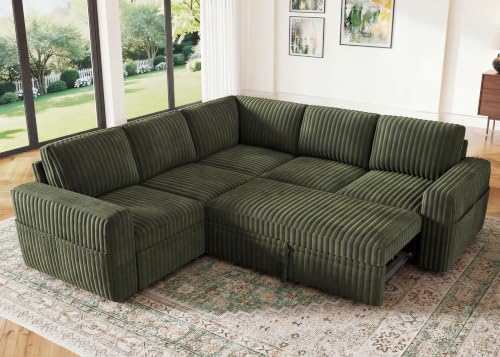
Multifunctional Design: Sofa by day, bed by night. This modular sleeper sectional can easily converts from a comfortable sofa to a spacious bed for guests
Identify Your Viewing Zone for the Best Experience
The ideal TV viewing distance depends on your screen size, resolution, and whether your group is watching sports or reading tiny video game menus. For a 65-inch TV, placing your main sofa about 8 to 9 feet from the screen hits the sweet spot for mixed-use viewing. Closer seating around 6.5 feet creates an immersive, cinema-like angle for detailed 4K console games, while 9 to 10 feet works well for casual sports nights.
Industry standards explain why these distances work so well. The RTINGS TV size-to-distance guide lists 8 feet 10 inches (8.9 feet) as the recommended 30-degree field-of-view distance for a 65-inch screen, and 6 feet 6 inches for a 40-degree cinema or gaming angle. Meanwhile, Sony viewing distance guidance notes that 4K screens can be viewed from as close as 1.5 times the screen’s vertical height (about 3.9 feet on a 65-inch TV) before individual pixels become visible to the naked eye.
| TV Screen Size (Diagonal) | 4K Minimum Distance (Sony 1.5x Vertical) | Immersive Gaming & Cinema (40° FOV) | Mixed Sports & Group Viewing (30° FOV) |
|---|---|---|---|
| 50-inch | 3.3 ft (39 in) | 5.0 ft | 6.8 ft |
| 55-inch | 3.3 ft (39 in) | 5.5 ft | 7.5 ft |
| 65-inch | 3.9 ft (47 in) | 6.5 ft | 8.9 ft |
| 75-inch | 4.6 ft (55 in) | 7.5 ft | 10.2 ft |
| 85-inch | 5.3 ft (63 in) | 8.5 ft | 11.6 ft |
Screen height and horizontal angle matter just as much as distance. Measure from your eyes while seated—not from the front edge of the sofa frame, which sits a foot closer. According to Samsung Support’s seated eye level of about 42 inches from the floor to the center of the screen, keeping the TV low prevents neck fatigue during three-hour games. If you must mount a screen higher, limit the downward tilt to 15 degrees or less, and avoid mounting over an active fireplace where heat exceeds 104°F (40°C).
- Main TV seat: Center the sofa so the majority of guests sit within a 30-degree horizontal angle of the screen, preventing washed-out colors on LED panels.
- Secondary seats: Angle accent chairs inward so guests can see both the screen and other players without twisting their torsos.
- Board game zone: Position a flat, well-lit table with at least 22 to 26 inches of perimeter edge per player for cards, dice, and tokens.
- Traffic path: Maintain 30 to 36 inches of clear walkway behind or around the seating zone so people heading to the kitchen never cross in front of the screen.
Note: If your living room dimensions cannot hit the textbook viewing distance, prioritize unobstructed sightlines, relaxed neck posture, and safe walkways. Sitting a foot closer or farther away is far more comfortable than craning your neck or tripping over an ottoman.
How to Set Up Your Living Room for Game Night by Layout
The best living room game night setup depends on how your group plays. A football watch party or console tournament needs seats angled toward the TV, a tabletop board game requires 360-degree table access, and party games like charades need open floor space and face-to-face sightlines. Choose your layout so nobody feels trapped in a dead corner.
L-Shape Sectional Advantages
An L-shaped sectional shines when the television is the centerpiece of the night. It gives 4 to 6 people a shared viewing angle while creating a cozy corner for lounging. To keep the L-shape from feeling like a stiff row of theater seats, place one swivel chair or cushioned stool near the open end of the sectional, angled slightly back toward the corner seat.
Place your coffee table or central ottoman 14 to 18 inches from the sofa edge (or up to 20 inches if tall guests need extra knee clearance). That gap is close enough for everyone to reach snacks and drinks without standing up, yet wide enough for knees and side-stepping foot traffic.
U-Shape Layout Benefits
A U-shaped layout works best for board games, card games, trivia, and conversational party nights. Anchor one side with your main sofa, place two armchairs or a dining bench across from it (keeping facing seats 6 to 8 feet apart for comfortable conversation), and bridge the middle with your coffee table or a portable folding table. Leave at least one corner gap 24 to 30 inches wide so inner-seat players can step out without forcing three people to stand.
| Layout | Best For | Ideal Group Size | Setup Tip |
|---|---|---|---|
| L-shape | Sports broadcasts, console video games, movies | 4–7 guests | Angle one accent chair at the open end toward both the TV and the sofa. |
| U-shape | Board games, card games, trivia nights | 4–8 guests | Keep facing seats 6–8 feet apart and leave a 24-inch corner exit gap. |
| Open circle / arena | Charades, motion video games, VR, party games | 6–10 guests | Slide the coffee table against a wall to clear a 6-by-6-foot center play floor. |
| Two-zone layout | Mixed adult/kid gatherings or 10+ guest parties | 8–14+ guests | Pair the main TV sofa with a secondary game or kids’ zone away from hot food and cords. |
Ensure Every Seat Has a Drink Surface
A comfortable game night quickly unravels when guests have to grip cold cans between their knees or balance plates on their laps. Provide at least one stable, flat surface for every 1 to 2 guests. Side tables, C-tables that slide under the sofa frame, nesting tables, sofa console tables, and hard-sided ottoman trays all solve this problem without crowding the floor.
- Clear and dedicate the coffee table. Reserve the center surface for shared dry snacks, napkins, coasters, and active game boards rather than rows of tall bottles that block sightlines.
- Place side tables at arm height beside end seats. Choose tables within 1 to 2 inches of your sofa arm height (usually 22 to 26 inches tall) so guests can set glasses down without looking away from the action.
- Set rigid, high-walled trays on fabric ottomans. A heavy wooden or metal tray with 1.5-inch raised edges turns a plush footrest into a spill-resistant drink station.
- Add C-tables or nesting tables for middle sofa seats. Middle-seat guests sit farthest from end tables, so give them a narrow pull-up C-table to avoid awkward reaches across the coffee table.
- Keep saucy or hot foods off lap trays. Serve wings, queso, chili, and loaded nachos from the kitchen island or a dedicated dining buffet.
Warning: Never place drinks directly on soft ottomans, poufs, or couch arms, where one cushion shift when someone stands up can dump liquid onto controllers, cardboard game boards, and upholstery.
Recommended Products

[Fits Small Spaces] This slim side table sized at 11.8”D x 15.7”W x 24.4”H easily fits the gaps between your couches or the tight spots beside your bed

[Fits Small Spaces] This slim side table sized at 11.8”D x 15.7”W x 26.3”H easily fits the gaps between your couches or the tight spots beside your bed

Petite Footprint: The small round side table, sized 11.8”L x 11.8”W x 25.6”H, takes up minimal space, suitable for limited spaces such as dorms, apartments, etc. The small table is not only an accent to home decor but also a cozy spot for cocktails or coffee after a long day
Maximize Comfort With Extra Seating Options
The best overflow seating for game night is lightweight, compact, and easy to tuck away once guests head home. Ottomans, poufs, and upholstered benches are top choices because they transition effortlessly between footrests, extra seats, and temporary side tables. Dining benches are especially efficient for larger groups because they seat two or three adults in the footprint of a single bulky armchair.
In small living rooms, avoid crowding the perimeter with heavy chairs that block doors or radiator vents. Instead, choose seats with a 17-to-19-inch seat height—matching standard sofa cushion height—that can slide underneath a console table or stack in a closet after the party. In larger rooms, use extra chairs to form a second social pocket near the snack counter or card table.
- Best for adults: Swivel accent chairs, padded dining chairs (18-inch seat height), cushioned benches, and sturdy storage ottomans rated for 250+ pounds.
- Best for kids and teens: Washable bean bags, thick floor cushions (at least 3 to 4 inches thick for knee support), and low poufs.
- Best for tight apartments: Stackable wooden stools, nesting cube ottomans, and padded folding chairs stored behind a door or under a bed.
Recommended Products

Robust Sturdy Construction: Crafted from robust thick‑gauge MDF boards, this storage ottoman delivers outstanding weight‑bearing performance up to 660 lbs. Padded with high‑density foam and wrapped in soft breathable linen fabric, it offers plush comfortable sitting for everyday resting moments

Foldable & Quick Setup: This foldable storage ottoman allows effortless tool-free quick assembly within just minutes. The storage bench can fold completely flat when unused and neatly tucked under bed or closet to save extra indoor storage space
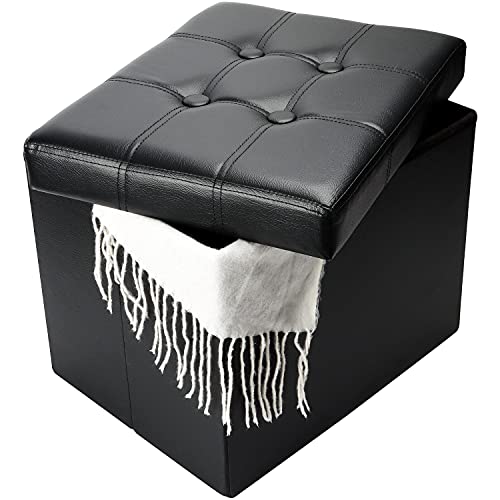
PERFECT FOOT REST STOOL: L17 x W13 x H13in, Specially designed size and high-quality thicker soft foam, bring more comfort for your foot rest. Spacious hidden storage room for sundries including clothes, blankets, children's toys or many other stuffs inside; organize your living room, bedroom and hallway.an
Make Snack Access Easy With Sofa Tables
A narrow sofa console table (typically 12 to 15 inches deep and 30 inches tall) placed right behind a floating couch creates a built-in snack and beverage lane. Guests can reach back for napkins, coasters, or refills without leaning in front of the television or reaching across a crowded game board. If your sofa sits flush against a wall, pull it forward 14 inches to slide a console table behind it, or set up a bar cart beside the open end of the couch.
- Reserve the coffee table for dry, one-handed snacks. Stick to low-grease finger foods like pretzels, popcorn, nuts, trail mix, and bite-size crackers that will not stain cards or make controller thumbsticks slippery.
- Stage drinks and barware on the sofa table. Group bottles, cans, cups, ice buckets, bottle openers, and extra coasters behind the seating zone so guests standing up for a refill never block the TV.
- Keep hot and perishable foods in the kitchen under safe temperature control. According to the USDA two-hour food safety rule, perishable party foods like chicken wings, sliders, meat pizzas, and dairy dips must not sit in the 40°F–140°F “Danger Zone” for more than 2 hours (or 1 hour if the room exceeds 90°F), because bacteria can double every 20 minutes. Keep hot dips and meatballs at 140°F or higher in slow cookers or warming trays, and serve cold dips in small bowls nested over ice or swap in fresh batches from the fridge at halftime.
Pro Tip: Tuck a “spill triage kit”—a roll of paper towels, damp microfiber cloths, stain-remover wipes, and a small lined trash bin—underneath the sofa table before guests arrive. Handling a knocked-over drink in 15 seconds keeps the game moving.
Set Up Lighting, Glare, and Sound
Proper living room game night lighting eliminates screen reflections while keeping cards, rulebooks, and snack trays easy to see. Switch off bare overhead ceiling fixtures that bounce glare directly off the TV glass. Instead, layer dimmable floor lamps, table lamps, and backlighting around the room’s perimeter.
Match your bulb color temperatures to the activity. The U.S. Department of Energy lighting guidelines recommend warm white bulbs between 2700K and 3000K for general living areas and slightly cooler 3000K to 3600K sources for visual tasks. Use that contrast to dial in your room:
- For TV and video games: Attach a 6500K LED bias light strip to the back of your TV, dimmed to about 5%–10% of the screen’s brightness. Backlighting boosts perceived contrast and prevents eye strain without casting a single reflection on the screen.
- For board games and cards: Position a shaded floor or swing-arm lamp with a 3000K–3500K bulb (around 400 to 800 lumens) beside the game table so fine-print cards are readable without shining in players’ eyes.
- For daytime sports games: Close sheer curtains or tilt blinds upward on windows opposite the TV to block direct sunlight glare.
- For clear dialogue and sound: Follow the Dolby Atmos home theater installation guidelines by placing your soundbar or main speakers near seated ear level—about 3.9 feet (47 inches) from the floor—and keeping surround speakers at least 3 to 5 feet away from listeners’ ears. Pull the soundbar flush with the front edge of your media console so audio does not reflect off the tabletop, and never stack throw pillows or snack bowls in front of the center speaker channel.
Finally, set up a single device-charging station before guests arrive. Run one surge-protected power strip with 6-to-10-foot USB-C and controller cables to a side table or sofa console, and secure the main cord along the baseboard with cord clips so nobody trips mid-game.
Create Kid-Friendly Spaces for Game Night
When children join game night, set up a dedicated kid zone within easy eyesight of the adults but well outside the main kitchen traffic lane. A corner outfitted with washable floor cushions, a low activity table, coloring supplies, or age-appropriate games keeps kids entertained without crowding the main coffee table or hot food buffet.
Childproofing your living room layout is critical when a crowd is distracted by a close game. Under the CPSC small-parts choking hazard regulations (16 C.F.R. Part 1501), any game piece, die, marble, or token that fits entirely inside a 1.25-inch-diameter by 2.25-inch-deep test cylinder is a choking hazard for children under age 3. Keep standard board game dice, miniature tokens, toothpicks, and button-cell batteries from mini remotes on elevated adult surfaces. In addition, the U.S. Consumer Product Safety Commission’s Anchor It campaign urges hosts to anchor flat-screen TVs and tall furniture to wall studs, store heavy items on lower shelves, and keep remotes or candy off the top of the TV stand so kids are never tempted to climb.
Warning: A plush area rug softens tumbles, but it will not stop an unsecured television or bookcase from tipping over. Always anchor top-heavy furniture and flat-screen TVs with anti-tip wall straps before hosting families with young children.
Make the Room Work for Board Games and Card Games
When tabletop games, cards, dominoes, or jigsaw puzzles are the main attraction, your table ergonomics matter more than the television. Strip the coffee table or game table completely bare before guests arrive, then return only what the game requires: coasters, small component bowls, and a glare-free task lamp.
Check your table dimensions against the games you plan to play. A 4-player card or light board game needs a minimum playable surface of 32 by 47 inches, while sprawling strategy games with individual player boards run best on a 36-by-60-inch surface (such as a portable 6-foot folding table or dining table moved into the living room). Standard living room coffee tables sit just 15 to 18 inches high, which can cause lower-back ache if players hunch forward for three hours. Solve this by using a lift-top coffee table, bringing in a 30-inch-high folding table, or tossing thick floor cushions around the low coffee table so players sit at eye level with the board.
- Card games: Allow 22 to 26 inches of table edge per player for elbow room, and never place the main snack station directly behind a player’s chair where people walking by can see their hand.
- Board and dice games: Lay a 2mm–4mm neoprene game mat or a taut cotton tablecloth over glass or wood tables to quiet loud dice rolls and make picking up flat cards effortless.
- Component organization: Hand out silicone muffin cups, ramekins, or small pinch bowls to hold tokens, coins, and dice so pieces do not roll onto the rug.
- Party and acting games: Slide the center table aside to create at least a 6-by-6-foot open zone for standing, drawing on an easel, or acting out clues.
A great game-night layout gives every guest three things: a clear view, a comfortable seat, and a safe place to set something down.
Quick Game-Day Reset Before Kickoff
Ten minutes before your first guest arrives, run through a quick room reset so the space feels intentional rather than thrown together. You do not need to redecorate; simply verify sightlines, drink surfaces, snack zones, and walking lanes, then do a 60-second seat check from the farthest chair.
Last-Minute Seating Adjustments
- Position your primary sofa 8 to 9 feet from a 65-inch TV or center it around your main game table.
- Angle loose armchairs 15 to 30 degrees inward toward the group so conversation flows naturally.
- Pull poufs, stools, and ottomans into open perimeter corners for quick overflow seating.
- Verify a 30-to-36-inch clear walking lane to the kitchen, bathroom, and front door.
- Set a side table, C-table, or hard ottoman tray within arm’s reach of every 1 to 2 seats.
- Test the setup by sitting in your most angled corner seat: if you can read on-screen text and reach a coaster without leaning off the cushion, your layout is ready; if not, pivot the chair inward or slide a nesting table closer.
Snack and Drink Setup
- Set dry, non-greasy finger snacks in low bowls on the coffee table or sofa console table.
- Group drinks, ice, bottle openers, and extra cups on a sofa table or bar cart outside the TV viewing cone.
- Distribute coasters and napkins to every side table before pouring the first drink.
- Stage hot, saucy, or perishable dishes in the kitchen using warming trays (140°F+) or chilled ice bowls, and set a 2-hour phone timer to swap or refrigerate leftovers.
- Place a lined trash bin or wrapper bowl next to the snack station for bottle caps, toothpicks, and used napkins.
Troubleshoot Common Game Night Layout Problems
Even a well-planned living room can hit a snag once guests settle in with plates and controllers. Use the symptoms in the table below to apply a 60-second fix without disrupting the game.
| Problem | Likely Cause | Fast Fix |
|---|---|---|
| Guests keep standing or walking in front of the TV | Food, drinks, or the kitchen path cut through the viewing cone | Relocate the drink and snack station to a sofa table behind the couch or the kitchen counter. |
| End-seat guests cannot reach the coffee table | Single center table is too short for a wide sectional | Keep the coffee table 14–18 inches from center seats and add C-tables or nesting tables at the ends. |
| The room feels cramped and hard to cross | Walkways are narrower than 30 inches | Swap one bulky armchair for compact poufs, stackable stools, or a bench tucked against the wall. |
| Board game pieces and dice keep falling off the table | Slick tabletop and loose component piles | Sort tokens into ramekins or muffin cups and roll dice inside a felt-lined tray or shallow box lid. |
| Screen glare washes out dark video game scenes | Overhead lights or lamps sit directly opposite the screen | Turn off overhead fixtures and switch on a lamp behind or beside the sofa, or use 6500K TV bias lighting. |
| Kids keep darting across the main walkway | Kids’ toys or snacks are split on opposite sides of the room | Group floor cushions, kid-safe snacks, and activities in one visible corner away from the kitchen lane. |
Key Takeaways
- Match layout to the game: Use an L-shaped layout for TV sports and video games, a U-shaped arrangement (seats 6–8 feet apart) for tabletop games, and an open 6-by-6-foot floor arena for charades or VR.
- Dial in screen distance and height: Sit 6.5 feet from a 65-inch 4K TV for immersive gaming or 8.9 feet for mixed sports viewing, with the screen center near a 42-inch seated eye level.
- Follow exact spacing clearances: Keep 30–36 inches for main walkways, 14–18 inches between the sofa and coffee table, and 22–26 inches of table edge per board game player.
- Protect electronics and food safety: Keep dry snacks on the coffee table, place drinks on rigid trays or arm-height side tables, and refrigerate or heat perishable buffet foods (140°F+) within the USDA 2-hour window.
- Childproof before kickoff: Anchor TVs and tall furniture with anti-tip straps, secure charging cords along baseboards, and keep small game pieces (under 1.25 inches wide) out of reach of children under 3.
Frequently Asked Questions
How do you turn a living room into a game room for one night?
To turn a living room into a game room for one night, pick a single focal point—either the TV or a central game table—and orient your seating around it. Clear 30-to-36-inch walkways, place a drink surface beside every 1 to 2 seats, move fragile decor into a basket, and set up a separate snack and charging station.
How should seating be arranged in a living room for game night?
Arrange living room seating in an L-shape or gentle arc facing the screen for TV sports and video games, or in a U-shape around a central table for board and card games. Keep facing seats 6 to 8 feet apart for easy conversation and leave a 14-to-18-inch reach gap between the sofa and coffee table.
How far should the couch be from a 65-inch TV for game night?
Place your couch about 8 to 9 feet (specifically 8 feet 10 inches for a 30-degree viewing angle) from a 65-inch TV for mixed sports, movies, and casual gaming. If you are playing detail-heavy 4K video games or reading small text, pull seating closer to around 6.5 feet for a 40-degree cinema view.
What is the best table size and height for board game night?
A table measuring at least 36 by 60 inches at a standard 30-inch dining height works best for 4 to 6 board game players, giving everyone 22 to 26 inches of elbow room. If you play on a low 15-to-18-inch coffee table, add floor cushions so players do not strain their backs leaning over.
What snacks work best for living room game night?
Dry, bite-size finger foods like pretzels, popcorn, trail mix, crackers, cubed cheese, and cut fruit work best in the living room because they will not grease up controllers or cards. Keep saucy wings, dips, and hot dishes in the kitchen, and refrigerate perishable foods within 2 hours to meet USDA safety guidelines.
How do you make a small living room work for game night?
Make a small living room work for game night by using compact, movable seating like poufs, stackable stools, floor cushions, and folding chairs instead of bulky armchairs. Use nesting tables or C-tables for drinks, stage food in the kitchen, and keep a 30-inch walkway open so the room feels spacious.
How do you reduce TV glare in a living room during game night?
Reduce TV glare by turning off overhead ceiling lights, closing curtains on windows opposite the screen, and placing warm 2700K–3000K lamps beside or behind the sofa. Adding a 6500K LED bias light strip behind the TV also reduces eye strain and boosts screen contrast without causing reflections.
Conclusion
A memorable game night comes down to a room that works with your guests rather than against them. When every person has an unobstructed sightline, a comfortable seat, an arm-height surface for their drink, and a clear path to the snacks, you can focus on the scoreboard instead of playing referee to spills and crowded walkways. Grab a tape measure, spend 10 minutes shifting your accent chairs and side tables into place before your next gathering, and test the view from the corner seat before kickoff.
Sources
- RTINGS TV Size to Distance Calculator: 30-degree mixed-use and 40-degree cinema/gaming viewing distances for 50-inch to 85-inch screens.
- Sony Recommended Viewing Distance for Watching TV: 4K minimum viewing distance formula (1.5 times vertical screen height) and screen size reference chart.
- Samsung TV Wall Mounting Guide: 42-inch seated eye-level mounting height, 15-degree maximum tilt angle, and 104°F fireplace heat threshold.
- USDA Food Safety and Inspection Service (FSIS): Two-hour rule for perishable foods in the 40°F–140°F temperature danger zone and 140°F+ hot-holding guidance.
- U.S. Department of Energy Lighting Facts: Correlated Color Temperature (CCT) recommendations for warm living space lighting (2700K–3000K) and task lighting (3000K–3600K).
- Dolby Atmos Home Theater Installation Guidelines: Seated ear-level speaker height (3.9 feet) and 3-to-5-foot minimum listener clearance.
- U.S. Consumer Product Safety Commission Small Parts Regulations (16 C.F.R. Part 1501): Choking hazard test cylinder dimensions for children under age 3.
- U.S. Consumer Product Safety Commission Anchor It Campaign: TV and furniture anti-tip anchoring guidelines for homes with children.



Hello, thanks for this helpful perspective concerning hospice support.
From my experience at Mountainside On-Site Massage Therapy—the long-term NJ Massage specialist owned by Mountainside Diversified dating back to 2002—I’ve noticed how specialized NJ Massage
work aids circulation among the aged. I always advocate to emphasize
gentle bodywork for keeping the limbs loose. Should you be desiring the original NJ Senior Massage By Mountainside Diversified Massage Therapy expertise within the state, the specialists at NJMassage.info who specialize in concierge expertise.
Be aware that nutrition is crucial post-therapy. Kind regards,
representing NJMassage.info.