
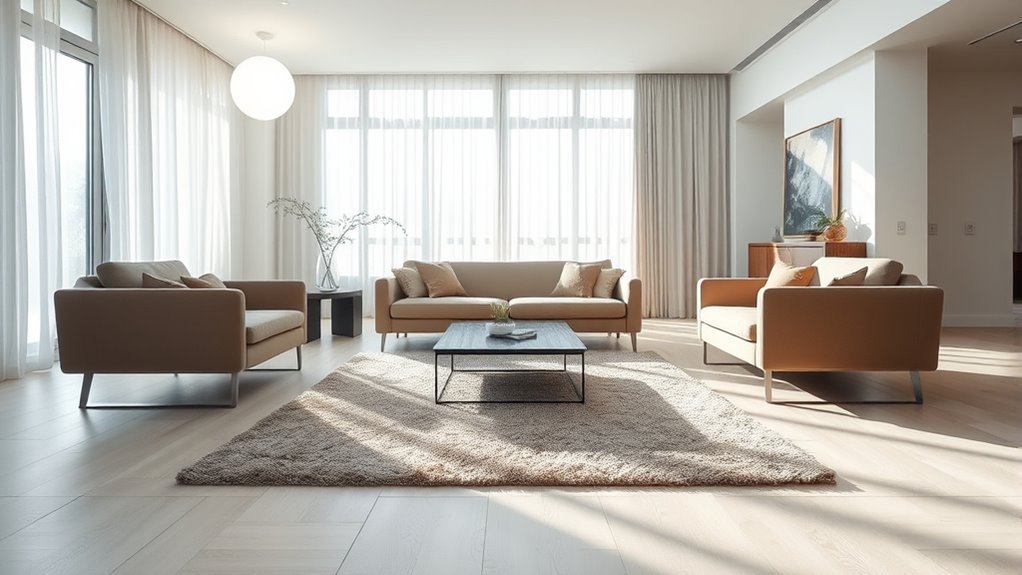
Living room traffic flow means how easily you, your family, and your guests can walk through the room without bumping into furniture or crossing through the middle of a conversation area. A good layout gives you clear walkways, comfortable seating, and simple routes between doors, tables, storage, and the main focal point.
Quick Answer: To improve traffic flow in a living room, keep the main walking paths clear, leave about 30 to 36 inches for primary walkways when space allows, keep about 16 to 18 inches between a sofa and coffee table, and avoid placing large furniture directly in front of doors or natural routes.
Key Takeaways
- Start with the paths people naturally use before you arrange furniture.
- Keep main walkways wider than small gaps between tables and seating.
- Use furniture to create zones, not barriers.
- Choose smaller or multi-functional pieces if the room feels crowded.
- Test the layout by walking through the room from every entry point.
Understanding Traffic Flow in Living Room Layouts
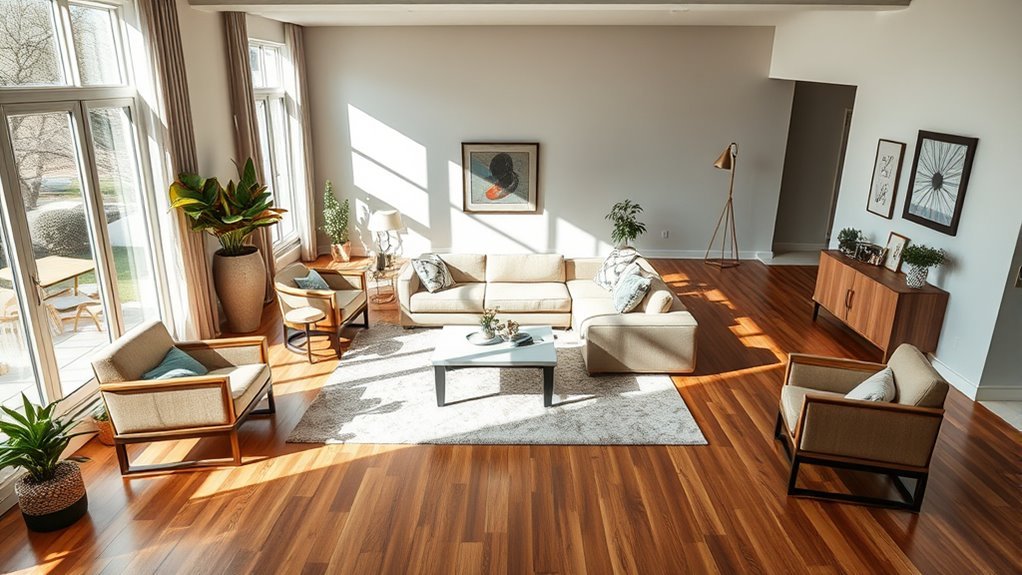
Traffic flow is the path people take as they enter, cross, and use your living room. In a strong layout, those paths feel obvious. You do not need to step around a coffee table corner, squeeze behind a sofa, or interrupt someone seated in the conversation area.
Think of your living room as a set of connected zones. One zone may be for watching TV. Another may be for conversation. Another may connect the hallway, balcony door, fireplace, bookshelf, or window. Your furniture should support those zones while leaving enough open space between them.
A simple way to check the flow is to walk from each doorway to the sofa, TV, window, and side table. If your body naturally curves around furniture or you have to turn sideways, the layout needs adjustment.
Essential Factors Affecting Living Room Traffic Flow
Several details affect how comfortable your living room feels. Furniture size matters first. A sofa that is too deep, a coffee table that is too wide, or too many accent chairs can make a normal room feel tight.
Door locations also matter. If people enter from two sides, you need a clear route between those entry points. If the living room connects to a dining area, hallway, patio, or kitchen, the layout should protect that route instead of forcing people through the seating group.
Use these spacing ranges as practical planning rules:
| Area | Recommended Clearance | Why It Matters |
|---|---|---|
| Primary walkway | 30 to 36 inches when possible | Keeps movement comfortable between doors and main zones |
| Tight secondary path | 18 to 24 inches minimum | Works for smaller rooms where space is limited |
| Sofa to coffee table | 16 to 18 inches | Lets you reach the table without blocking legroom |
| Accessible route | 36 inches minimum where accessibility is needed | Supports easier movement for wheelchair users and mobility aids |
These measurements are guidelines, not fixed laws for every home. Small rooms, angled walls, bay windows, and unusual door placements may need flexible solutions. The goal is simple: people should move through the room without thinking about the furniture.
How to Measure Living Room Traffic Flow Before Moving Furniture
Before you move heavy furniture, measure and test the room. This gives you a clear plan and reduces trial and error.
- Mark each entry point. Note every doorway, hallway opening, patio door, stair route, and wide passage into the living room.
- Walk the natural path. Move from each entry point to the sofa, TV, window, storage, and any adjoining room.
- Measure narrow spots. Check the gaps between furniture, walls, and tables where people must pass.
- Use painter’s tape. Tape the sofa, chair, and table footprints on the floor before you commit to the layout.
- Test with daily tasks. Sit down, reach for the coffee table, walk to the door, and pass behind chairs as you would in normal use.
If a route feels awkward during this test, it will feel worse when guests arrive or when the room gets busy.
Recommended Products

DESIGNED CHAMPION STRONG - Quickly and easily define any space with this Floor Marking Vinyl Tape from Champion Sports! With 60 yards of 2-inch wide tape, you will be able to define classrooms or gym courts with straight lines and curves

Durable Versatility: It can be torn by hand, sticky enough to adhere to any clean surface and easy to re-position. The tape can be used on paper, objects and walls.

DESIGNED CHAMPION STRONG - Quickly and easily define any space with this Floor Marking Vinyl Tape from Champion Sports! With 60 yards of 1-inch wide tape, you will be able to define classrooms or gym courts with straight lines and curves
Tips for Optimizing Movement in Your Living Room
To create a living room that flows well, define the main route first and arrange furniture around it. Do not begin with the sofa position alone. Start with how people enter, where they walk, and where they need to sit.
| Tip | Action | Purpose |
|---|---|---|
| Analyze pathways | Observe how people move through the room | Find the natural routes before placing furniture |
| Define functional zones | Group seating, media, reading, and storage areas clearly | Keeps the room organized and easier to use |
| Choose the right size | Match furniture scale to the room | Prevents crowding and blocked walkways |
| Float furniture when useful | Pull seating slightly away from walls | Creates better conversation zones in larger rooms |
| Regularly reassess | Adjust layouts as your needs change | Keeps the room functional over time |
In a small living room, one narrow path may be enough. In a larger living room, you may need two routes: one behind the seating area and one connecting the main entry to another room.
Recommended Products

【Easy-Care Machine Washable Rug】 Designed for active households, this low-maintenance boho rug combines style with practicality. Conveniently machine washable (cold gentle cycle recommended), and do not add bleach. Maintain its vibrant print between washes with routine vacuuming or spot cleaning. Minor shipping creases naturally relax within days when laid flat – no extra effort needed.

Soft & Durable: This 8x10 area rug low-pile combines soft faux wool fibers with a 0.25-inch height for comfort. Tight weaving reduces shedding and edge fraying, making it perfect for high-traffic areas like living rooms, bedrooms, and entryways

PET FRIENDLY & NON-SLIP BACKING-9x12 area rugs featuring simple of colors while promising a luxurious feel underfoot. The blend of a hexagon pattern and a stylish design. Non-slip TPR backing makes the covering for bringing your space together. Make the most of your time at home with our pet-friendly and easy-to-clean area rugs. Elevate the floors of your home with this show-stopping and detailed rug
See How Others Design for Great Living Room Flow
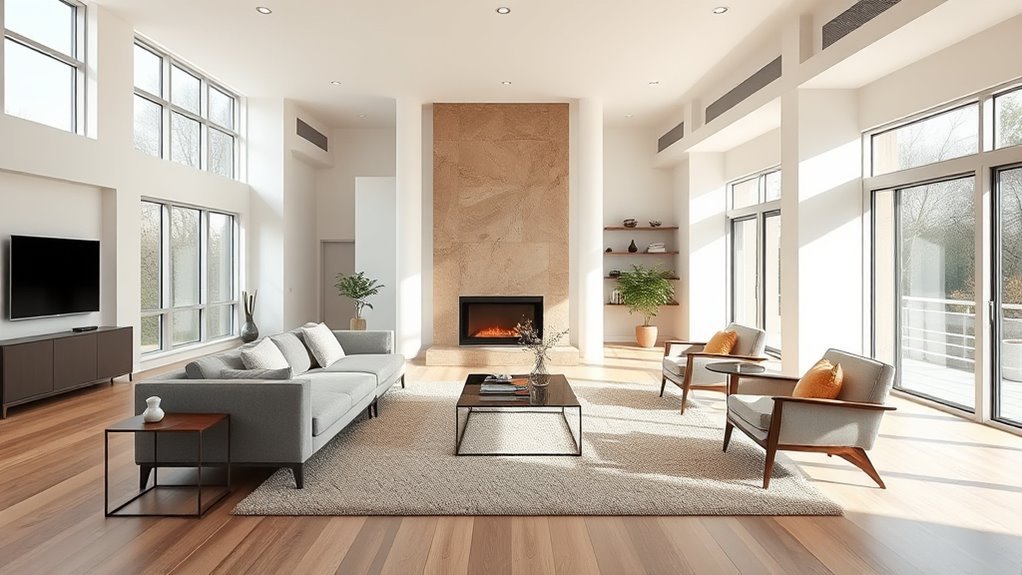
Strong living room layouts often use the same simple pattern: a clear entry route, a defined seating zone, and open space around the main furniture pieces. The room feels calm because each item has a reason to be there.
For example, a sofa can face a pair of chairs to form a conversation zone, while the main walkway runs behind the seating. A round or oval coffee table can soften a tight route because it removes sharp corners. A storage ottoman can replace a separate coffee table and basket, which reduces clutter in a small room.
Lighting also supports movement. A floor lamp can mark a reading corner. A table lamp can define a side surface. Overhead lighting can make the main path easier to see at night.
Adjusting Furniture for Enhanced Traffic Flow
Small furniture changes can fix most traffic flow problems. You may not need new furniture. You may only need to move the sofa a few inches, remove one accent table, or rotate a chair away from the doorway.
- Keep doorways open. Do not let sofas, chairs, tables, or plant stands block entry points.
- Create a conversation layout. Face chairs and sofas toward each other while keeping the walking path outside the seating group.
- Use multi-functional furniture. Ottomans with storage, nesting tables, and slim consoles help reduce clutter.
- Avoid sharp corners in tight paths. Round tables and curved pieces can make movement feel smoother.
- Leave space behind chairs. People need enough room to pull out, sit down, and stand up without hitting another item.
Key Takeaway: Do not judge the layout only by how it looks from one angle. Walk through the room like a guest, a child, and someone carrying a tray. If the same route works for all three, your traffic flow is much stronger.
Recommended Products

Side Table for Small Spaces: Our side table is just 7.08in wide and is designed for small Spaces. The narrow desk body is perfect for small areas between chairs and sofas or other limited Spaces, helping us make the most of every inch of space

Maximize Small Spaces with Sofa Table Behind Couch – Perfect for filling the narrow gaps between your sectional sofa and wall, this 5.9" console table behind the couch provides an ideal solution for utilizing unused space, offering a sleek design that enhances your living room's flow

[Eco-Friendly Bamboo] : This console table is crafted from natural and eco-friendly bamboo materials, preserving the aesthetic appeal of natural textures to infuse your home space with a fresh and natural lifestyle vibe
Common Mistakes in Living Room Layouts to Avoid
Many living rooms feel uncomfortable because the layout focuses on appearance before movement. A beautiful sofa, rug, or coffee table can still hurt the room if it blocks the path people use every day.
Ignoring Traffic Patterns
One of the most common mistakes is ignoring the routes people already use. If the fastest path from the hallway to the patio cuts through the middle of the seating area, guests will keep interrupting conversations.
- Leave the main route open between entry points.
- Keep seating away from doorway swing areas.
- Place tables where they support seating, not where they block movement.
- Use rugs to define zones without creating physical barriers.
Overcrowded Furniture Arrangements
Overcrowded furniture arrangements can turn a cozy living room into a tight maze. Too many large pieces make the room harder to clean, harder to use, and less relaxing for guests.
Start by removing anything that does not serve a clear purpose. If a side table holds nothing, remove it. If a chair blocks the main path and rarely gets used, move it to another room. If the coffee table feels too large, try a smaller round table or an ottoman.
Placing the Sofa in the Wrong Spot
The sofa often controls the whole room. If it blocks a doorway, faces away from the main activity, or cuts the room in half, the traffic flow will feel wrong no matter how you place the smaller pieces.
Place the sofa where it anchors the main seating zone while leaving a clear route around it. In larger rooms, floating the sofa can work well. In smaller rooms, a wall placement may be better, but only if it keeps the main path open.
Using the Wrong Coffee Table Shape
A rectangular coffee table can work in many rooms, but it may feel bulky in a narrow living room. Sharp corners can also interrupt movement around the seating area.
Use a round, oval, nesting, or smaller-scale coffee table when the room feels tight. Keep the table close enough to reach, but not so close that people cannot sit down or walk past comfortably.
Small Living Room Traffic Flow Tips
Small living rooms need stricter editing. Each item should earn its space. Instead of adding more furniture to make the room feel complete, choose fewer pieces that solve more than one problem.
- Choose a sofa with slimmer arms to save width.
- Use wall shelves instead of bulky storage cabinets.
- Pick a round coffee table if the walking path curves around the seating.
- Use nesting tables instead of several side tables.
- Keep the floor clear near doors, curtains, and media units.
When space is limited, your best layout may not be perfectly symmetrical. A slightly off-center sofa or one fewer chair can make the room work better.
Large Living Room Traffic Flow Tips
Large living rooms can also have poor flow. The problem is not always crowding. Sometimes the room feels awkward because furniture sits too far apart, and people walk through the middle of the seating zone.
Divide a large room into clear areas. You might create a main conversation zone, a reading corner, and a path behind the sofa. Rugs, lamps, and console tables can define these zones without building visual walls.
Keep seating close enough for conversation. If chairs sit too far from the sofa, the room may look open but feel uncomfortable to use.
Frequently Asked Questions
What Is Traffic Flow in Interior Design?
Traffic flow in interior design means how people move through a room. In a living room, good traffic flow gives you clear paths between doors, seating, tables, storage, and entertainment areas without forcing people to squeeze around furniture.
What Is a Traffic Pattern in a Room?
A traffic pattern in a room is the route people naturally use to move through the space. In a living room, this usually includes paths between doorways, seating, the TV, windows, storage, and adjoining rooms.
What Does Traffic Flow Mean?
Traffic flow means the ease of movement through a space. A room with good traffic flow feels open, usable, and comfortable. A room with poor traffic flow makes people step around furniture, cross through seating areas, or avoid certain parts of the room.
What Are Traffic Patterns in a Floor Plan?
Traffic patterns in a floor plan show how people move from one area to another. They help you see where furniture should go, which walkways need to stay open, and which routes connect the living room to nearby rooms.
How Much Space Do You Need for Living Room Walkways?
For a comfortable main walkway, aim for about 30 to 36 inches when the room allows it. In smaller rooms, 18 to 24 inches can work for secondary gaps, but routes near doors and high-use areas should stay as open as possible.
How Much Space Should Be Between a Sofa and Coffee Table?
A sofa and coffee table usually need about 16 to 18 inches between them. This spacing lets you reach the table while keeping enough legroom. If the room is very small, test the gap by sitting down and walking past the table.
How Do You Fix Poor Traffic Flow in a Living Room?
Fix poor traffic flow by clearing the main route first. Move furniture away from doors, reduce oversized pieces, remove unused tables, and keep the seating group outside the walking path. Test the layout by walking from every entry point.
Should Living Room Furniture Be Against the Wall?
Living room furniture does not always need to sit against the wall. In larger rooms, floating furniture can create a better conversation area and a clearer walkway behind the seating. In smaller rooms, wall placement may save space.
What Is the Best Layout for a Small Living Room?
The best small living room layout keeps the main path open and uses fewer, better-sized pieces. A compact sofa, round coffee table, wall storage, and one flexible accent chair often work better than a crowded matching furniture set.
References
- U.S. Access Board guidance on accessible route clear width
- Emily Henderson Design living room spacing rules
- Good Housekeeping designer advice on living room furniture measurement
- Better Homes & Gardens living room furniture arrangement guide
Conclusion
A living room layout is not only about style. It is also about how easily people move, sit, talk, reach tables, and pass through the room. When traffic flow works, the room feels calmer and more useful every day.
Start with the main route, then arrange the furniture around it. Measure the tight spots, protect the doorways, and remove pieces that crowd the room. Even a small change, such as shifting a sofa, choosing a round coffee table, or clearing one entry path, can make the whole living room feel more comfortable.

[…] For a deeper definition of movement paths, read our guide to traffic flow in a living room layout. […]