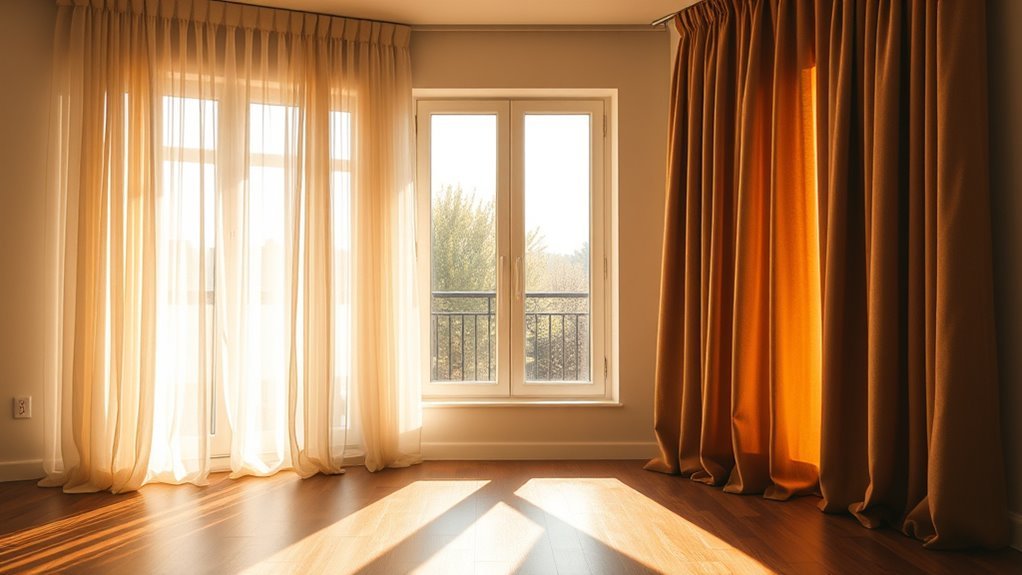
Choosing between curtains, blinds, and shades for your living room comes down to how you use the room. If you want softness, warmth, and a finished designer look, curtains are hard to beat. If you want precise daylight control and privacy, blinds are practical. If you want a clean profile, room darkening, or better insulation, shades are often the strongest choice.
Quick Answer
For most living rooms, shades are best for a clean look and energy efficiency, blinds are best for adjustable light and privacy, and curtains are best for softness, color, and a cozy finished style. For the most flexible setup, layer curtains over blinds or shades.
Key Takeaways
- Curtains add warmth, color, texture, and better softness around large living room windows.
- Blinds give the most precise control over daylight, glare, and privacy because the slats can tilt open or closed.
- Shades create a sleeker look and can offer strong room-darkening or insulation, especially cellular shades.
- Layering curtains with blinds or shades gives the best mix of style, privacy, and light control.
- Cordless window coverings are the safest choice in homes where young children live or visit.
Curtains vs. Blinds vs. Shades: Quick Comparison
Each option can work beautifully in a living room, but they solve different problems. Use this comparison as a starting point before choosing the final style, fabric, color, or mount.
| Window Treatment | Best For | Watch Out For |
|---|---|---|
| Curtains | Softness, warmth, color, pattern, large windows, and a cozy living room feel. | They take more fabric, need periodic cleaning, and do not adjust light as precisely as blinds. |
| Blinds | Adjustable light, glare control, privacy, and a crisp tailored look. | Slats can collect dust, and side gaps may let in light unless the fit is planned carefully. |
| Shades | Minimal design, room darkening, solar glare control, and energy-efficient cellular options. | Most shades are either raised or lowered, so they usually offer less fine-tuned light control than slatted blinds. |
Recommended Products

【Excellent Material】Made of imported 100% Polyester. Light filtering, good ventilation, anti-static, dust-proof and durable. Dual-layer fabric for daylight filtering and full night privacy.

1【Our Strengths】Over 100 Years Window Covering Expertise (SCHOENBERGER GROUP est.1878)
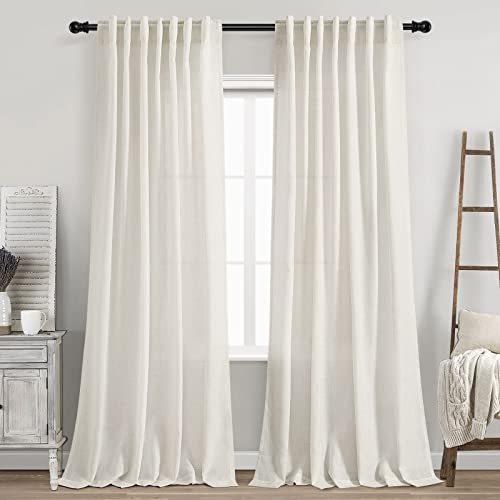
READY MADE: 2 Linen Curtain Panels per package.Each panel measures 52 inches wide by 84 inches long. Top design of Back tab & loop pocket provide 3 hanging options. <1> hanging from the back patch to create an elegant pleated look, <2> from the 3 inch rod pocket for a classic look <3> Hanging with clip rings for easy, slide open and closed (clip rings are not included)
Choosing the Right Window Treatment for Your Living Room
Start with the room’s main need. A street-facing living room may need privacy during the day and night. A sunny room may need glare control for television viewing. A drafty room may need better insulation. A formal living room may need the softness and scale of full-length curtains.
Window size matters too. Large picture windows and sliding doors often look best with full-height curtains, vertical blinds, panel-track shades, or wide roller shades. Smaller windows can handle Roman shades, cellular shades, wood blinds, faux-wood blinds, or simple curtain panels.
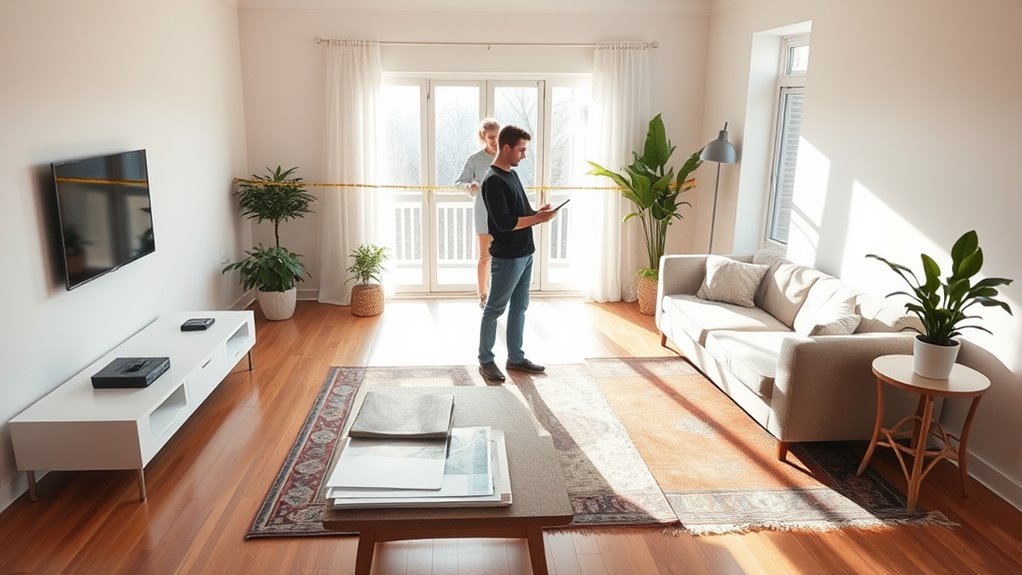
Fit is just as important as style. Inside-mounted blinds and shades look clean, but they can leave thin light gaps at the sides. Outside-mounted treatments can cover more of the wall around the window, which helps with privacy and room darkening. Curtains should usually be hung wider than the frame so the panels can stack off the glass and make the window feel larger.
Note: Energy savings depend on the treatment type, fabric, fit, climate, season, and how often you open or close the covering. The U.S. Department of Energy notes that window coverings can help comfort and energy use, but performance varies by product and daily use.
How Curtains Enhance Comfort and Style
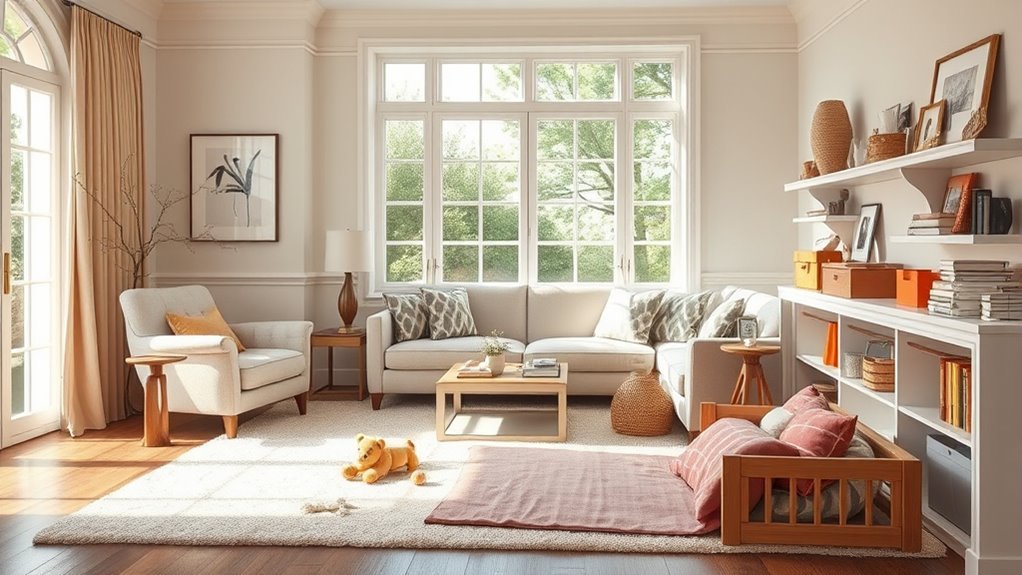
Curtains bring softness to a living room in a way hard blinds usually cannot. They frame the window, add color or pattern, soften sound slightly, and make a room feel more finished. Long curtains can also make ceilings feel taller when the rod is mounted high and the panels reach the floor.
Curtains for Style, Texture, and Warmth
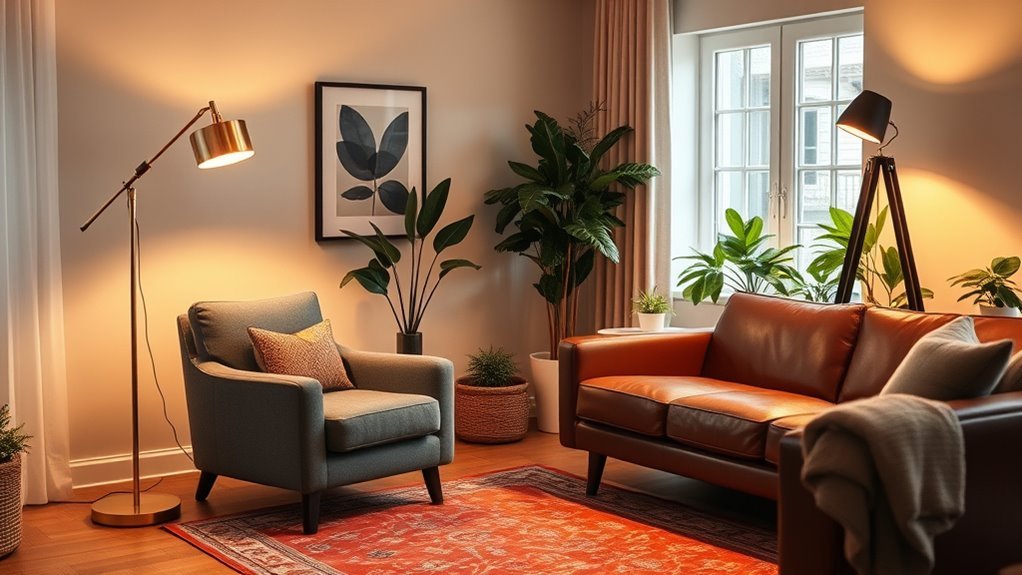
Choose curtains when the living room needs a warmer, more decorated look. Linen, cotton, velvet, and lined drapery all create different moods. Light linen feels relaxed and airy. Velvet feels richer and more formal. Patterned panels can become a focal point, while solid neutral curtains quietly soften the space.
For the best visual effect, hang the rod several inches above the window frame and extend it beyond both sides of the window. This makes the window look larger and allows the curtains to open without blocking as much daylight.
Curtains for Thermal Comfort
Curtains can improve comfort near cold or sunny windows, but the exact benefit depends on fabric, lining, color, and fit. According to the U.S. Department of Energy, most conventional draperies can reduce heat loss from a warm room by up to 10% when drawn during cold weather. The same source notes that medium-colored draperies with white-plastic backings can reduce heat gain by 33% when closed on sun-facing windows during summer days.
For better performance, hang curtains close to the window, let them reach the sill or floor, overlap them at the center, and close them at night in winter. In summer, close them during the hottest part of the day on windows receiving direct sun.
Benefits of Blinds for Light Control and Privacy
Blinds are the most adjustable of the three options. Because the slats tilt, you can block glare while still allowing daylight into the room. This makes blinds a smart choice for living rooms with televisions, computer screens, street-facing windows, or changing sunlight throughout the day.
Recommended Products
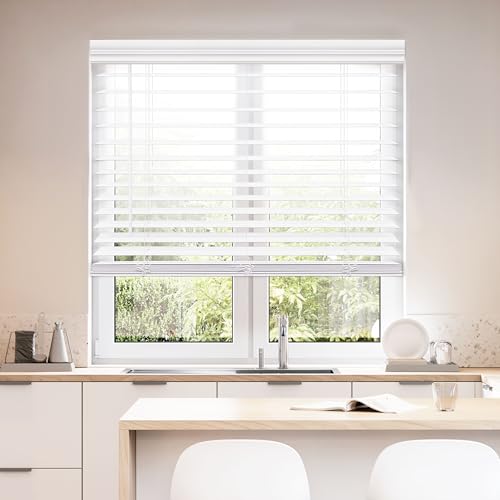
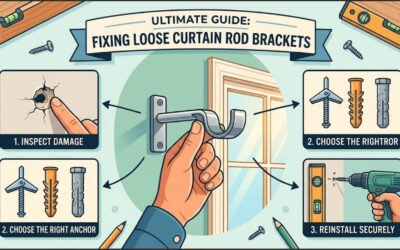
All blinds are manufactured with a standard 1/2" width deduction to allow for proper installation clearance. The actual blind width will always be 1/2" narrower than the selected size, regardless of whether you choose an inside or outside mount.

IMPORTANT! - This blind is 34.5" wide to allow for mounting the blind inside a 35" wide window. Your blind will arrive to you exactly 34.5" wide. Our 2 Inch Faux Wood blinds are designed for a wide variety of window sizes and styles. Sizes stated within the product descriptions are listed by WIDTH then HEIGHT. See measuring instructions to ensure best fit.

Blinds actual width will arrive ½" narrower for a snug fit inside your window, allowing for end caps and hardware. For an outside mount, just order ½" wider for better covering.
Adjustable Light Control
Wood, faux-wood, vinyl, and aluminum blinds let you angle the slats upward or downward to control brightness and glare. You can keep the room bright without leaving the window fully exposed. Horizontal blinds work well on standard windows, while vertical blinds can work on patio doors or wide glass areas.
The U.S. Department of Energy notes that louvered blinds are effective for reducing summer heat gain and glare while still allowing daylight indoors. However, blinds are less effective at controlling winter heat loss because of the openings between slats.
Enhanced Privacy Solutions
Blinds are useful when you want privacy without making the living room feel dark all day. Tilt the slats to block the view from outside while still bringing in filtered daylight. For street-facing windows, faux-wood and wood blinds usually provide stronger privacy than sheer curtains.
| Blind Material | Light Control | Privacy Level |
|---|---|---|
| Wood | High and adjustable | Excellent when closed |
| Faux wood | High and adjustable | Excellent when closed |
| Aluminum | High and adjustable | Good to excellent |
| Vinyl | Moderate to high | Good |
Warning: In homes where young children live or visit, choose cordless blinds or shades whenever possible. The U.S. Consumer Product Safety Commission says cordless window coverings are the safest option because window-covering cords can create a strangulation hazard.
Why Go for Shades in Your Living Room?
Shades are best when you want a clean, simple look. Unlike blinds, shades are made from a continuous piece of fabric or material instead of individual slats. This gives the window a smoother appearance and can make the living room feel less busy.
Different shade styles solve different problems. Roller shades are simple and modern. Roman shades add softness and folds. Solar shades reduce glare while preserving some outside view during the day. Blackout or room-darkening shades are better for movie nights. Cellular shades, also called honeycomb shades, are a strong choice when insulation is a priority.
The U.S. Department of Energy states that tightly installed cellular shades can reduce heat loss through windows by 40% or more during heating seasons and reduce unwanted solar heat through windows by up to 60% during cooling seasons. For shoppers who want to compare energy performance, the Attachments Energy Rating Council provides ratings and certified product information for energy-efficient window attachments.
For energy efficiency, cellular shades are usually the standout choice. For precise daylight control, blinds are stronger. For softness and style, curtains still win.
Best Choice by Living Room Need
The best window treatment is the one that fits how the living room is used every day. Use these common scenarios to narrow your choice.
| Living Room Need | Best Choice | Why It Works |
|---|---|---|
| Movie watching or TV glare | Room-darkening shades or blinds with curtains | Reduces glare and gives stronger light blocking when layered. |
| Street-facing privacy | Wood/faux-wood blinds or top-down bottom-up shades | Lets in light while blocking direct views from outside. |
| Drafty or sunny windows | Cellular shades with optional curtains | Adds insulation and improves comfort near the glass. |
| Decorative, cozy style | Full-length curtains | Adds softness, texture, color, and visual height. |
| Minimal modern look | Roller shades or solar shades | Keeps the window simple and uncluttered. |
| Large patio doors | Vertical blinds, panel-track shades, or curtains | Covers wide glass while remaining easy to open and close. |
Recommended Products

SIZE & MATERIAL:Set includes 2 panels blackout curtains(52" Wide by 84" Long). Each panel has 8 grommets.The interior diameter of hole is 1.6 inch.It's easy to hang. Curtains are made by quality faux linen.
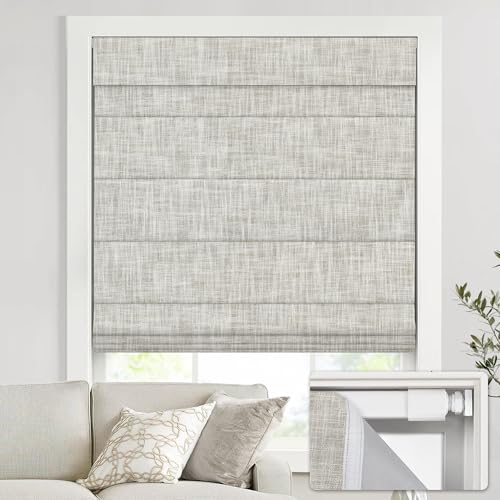
1【Our Strengths】Over 100 Years Window Covering Expertise (SCHOENBERGER GROUP est.1878)

Motorized Cellular Shades with Remote: Smart cellular blinds can regulate the incoming natural daylight and sunlight to control the indoor climate and save energy, by taking full advantage of the reflective and insulating properties, creating perfect atmosphere at any time of the day.
Comparing Maintenance Needs: Curtains, Blinds, and Shades
Maintenance should influence your decision, especially in busy homes with pets, children, dust, or heavy use. No option is maintenance-free, but some are easier to keep clean than others.
- Curtains: Vacuum with an upholstery attachment, shake out dust, and clean according to the fabric care label. Lined, pleated, or delicate drapery may need professional cleaning.
- Blinds: Dust slats regularly with a microfiber cloth or blind duster. Faux-wood, vinyl, and aluminum blinds are usually easier to wipe than real wood.
- Shades: Vacuum gently with a brush attachment and spot-clean only if the fabric allows it. Cellular shades need gentle handling so the pleats and cells keep their shape.
- Layered treatments: Layering looks polished, but it adds more surfaces to clean. Use it where the extra style, privacy, or light control is worth the upkeep.
Pro Tip: If the living room gets heavy sun, choose fade-resistant fabrics or solar shades. Sunlight can fade flooring, upholstery, and curtain fabric over time, especially on west- and south-facing windows.
Making the Best Choice Based on Room Usage and Style
If you want one simple recommendation, choose shades for a clean and efficient living room, blinds for flexible light control, and curtains for a warmer designer look. If you want the most complete solution, layer two treatments together.
Layering works especially well in living rooms because the room often has to do several jobs. For example, you can use cellular shades for insulation and privacy, then add curtains for softness and color. Or you can use wood blinds for adjustable daylight, then add curtain panels to reduce side light gaps and make the window feel more finished.
Also think about the direction your windows face. Sunny west-facing windows may need solar shades or lined curtains to reduce glare and heat. North-facing or drafty windows may benefit from cellular shades or lined drapery. If your living room needs both privacy and daylight, top-down bottom-up shades are often a practical middle ground.
Frequently Asked Questions
Do blinds or curtains block out more light?
Heavy blackout curtains usually block more light than standard blinds, especially when the curtains extend beyond the window frame. However, blackout roller shades or cellular shades can also darken a room well when they are measured and mounted carefully.
Is it better to have curtains or blinds in the living room?
Curtains are better for softness, warmth, and decorative style. Blinds are better for adjustable light and privacy. In many living rooms, the best choice is both: blinds for function and curtains for a finished look.
What blinds are best for light control?
Wood, faux-wood, and aluminum blinds are strong choices for adjustable light control because the slats can tilt throughout the day. For the darkest room, choose blackout shades or layer blinds with curtains.
Are shades more energy-efficient than curtains or blinds?
Some shades are. Cellular shades are usually the strongest interior option for insulation because their honeycomb pockets trap air. Curtains can still help, especially when lined and closed at night, while blinds are better for summer glare and sunlight control than winter insulation.
Should living room window treatments be cordless?
Yes, cordless options are the safest choice in homes where young children live or visit. Cordless blinds, cordless shades, and motorized treatments also create a cleaner look because there are no dangling cords.
Conclusion
Curtains, blinds, and shades can all work well in a living room, but the best choice depends on your top priority. Choose curtains for softness and style, blinds for adjustable privacy and daylight, and shades for a clean look with strong room-darkening or energy-efficient options. For the most comfortable and polished result, layer treatments: use blinds or shades for function, then add curtains for warmth, texture, and a finished living room design.
Sources
- U.S. Department of Energy — Energy Efficient Window Coverings — backs energy, heat-loss, heat-gain, cellular shade, blind, and drapery guidance.
- U.S. Consumer Product Safety Commission — Window Covering Cords — backs cordless safety guidance for homes with young children.
- U.S. Consumer Product Safety Commission — Custom Window Covering Safety Standard — backs current U.S. safety context for corded custom window coverings.
- Attachments Energy Rating Council — backs energy-rating and certified product guidance for window attachments.