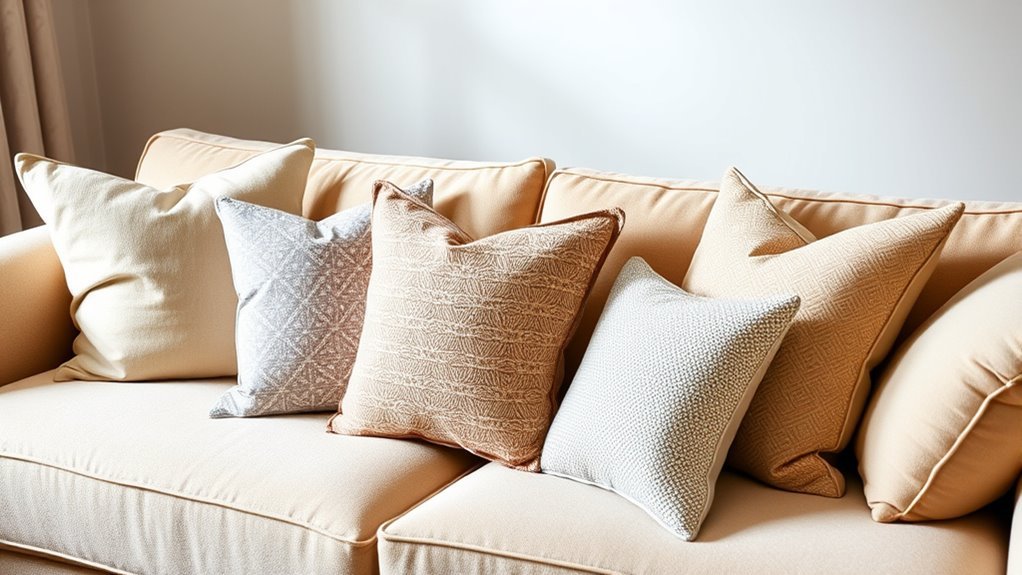
A couch can look cluttered fast when every cushion shares the same size, shape, or print. When you layer throw pillows on a sofa by stepping down from large corner anchors to medium squares and a compact front lumbar, you create visual depth without sacrificing legroom. The right combination depends on your sofa’s width, seat depth, and back height so your seating stays comfortable for everyday lounging.
Quick Answer
To layer throw pillows on a sofa, work from largest in back to smallest in front: anchor the outer corners with 22×22 or 24×24 inch squares, place 18×18 or 20×20 inch pillows slightly inward, and finish with a 12×20 or 14×20 inch lumbar. Start with 1 to 3 pillows on a loveseat, 3 to 5 on a standard 72 to 89 inch sofa, and 5 to 9 on a deep sofa or sectional.
Key Takeaways
- Match pillow scale to sofa measurements: Add 5 inches to a low-back sofa’s inside back height to find your maximum square pillow size, and reserve 24×24 inch anchors for seats at least 26 inches deep.
- Follow the “2-of-3” contrast rule: Any two pillows that touch should differ in at least two of three elements—size, pattern scale, or fabric texture—so layers never blur together.
- Size up square inserts only: Use an insert 1 to 2 inches larger for square covers (such as a 22×22 insert inside a 20×20 cover) to fill out the corners, but keep lumbar inserts true to size.
- Cluster sectional pillows in zones: Anchor the two outer ends and the 90-degree inner corner while leaving the chaise open for stretching out.
- Choose fill by maintenance needs: Pick 90/10 or 95/5 feather-down inserts for a moldable, choppable profile, or microfiber down-alternative inserts for hypoallergenic, washable bounce.
Sofa Pillow Size and Count Chart
Your sofa’s width and seat depth determine how many layers fit comfortably before cushions start pushing you forward. Use the dimensions below as a practical starting framework, then adjust for arm height, loose back cushions, and the number of corners.
| Sofa Type & Width | Back Layer (Anchors) | Front & Middle Layers | Starting Count | Best Layout Formula |
|---|---|---|---|---|
| Small loveseat or apartment sofa (under 72 in. wide) | 18×18 or 20×20 in. | 10×18 or 12×20 in. lumbar | 1 to 3 | One square at each arm, plus an optional small lumbar on one side |
| Standard 3-seat sofa (72 to 89 in. wide; 20–24 in. seat depth) | 20×20 or 22×22 in. | 18×18 or 20×20 in. plus 12×20 or 13×21 in. lumbar | 3 to 5 | Asymmetrical 2-1 cluster (3 total) or classic 2-2-1 arrangement (5 total) |
| Deep or extra-long sofa (90+ in. wide or 26+ in. seat depth) | 22×22 or 24×24 in. | 20×20 in. plus 14×20 or 14×36 in. long lumbar | 5 to 7 | Two layered pairs at each arm with a wide center lumbar or trio |
| L-shaped or U-shaped sectional (95+ in. span) | 22×22 or 24×24 in. | 18×18 or 20×20 in. plus 12×20 or 14×20 in. lumbar | 5 to 9 | Three distinct clusters at the left end, inner 90-degree corner, and right end |
These ranges are styling starting points, not rigid rules. Designer recommendations shift with seat depth, arm profile, and seating capacity. Compare The Spruce’s designer guidance on sofa pillow count, Real Simple’s throw-pillow styling guidance, and Room & Board’s throw pillow pairing guide for additional layout examples.
Recommended Products

Long-lasting Durability: 100% Virgin Filling and 110 GSM Brushed Fabric combining aesthetics and practicality for long-lasting use. 18x18 pillow insert is filled with 500g/1.1lb filling (20% more than other).

Premiun Material: Utilizing 100% virgin filling and 110 GSM brushed fabric, offers a perfect blend of visual appeal and practicality.18x18 pillow insert is filled with 500g/1.1lb filling (20% more than other).

18 x 18 Pillow Inserts (Set of 4) – Standard fit for 18 x 18 pillow covers and protectors. Each insert features 500g / 1.1 lb of filling (15% more than standard inserts) for a fuller, fluffier appearance. For added fullness, use with covers one size smaller. Perfect for living room, bedroom, or patio décor.
Understanding Sofa Pillow Sizes for Different Types
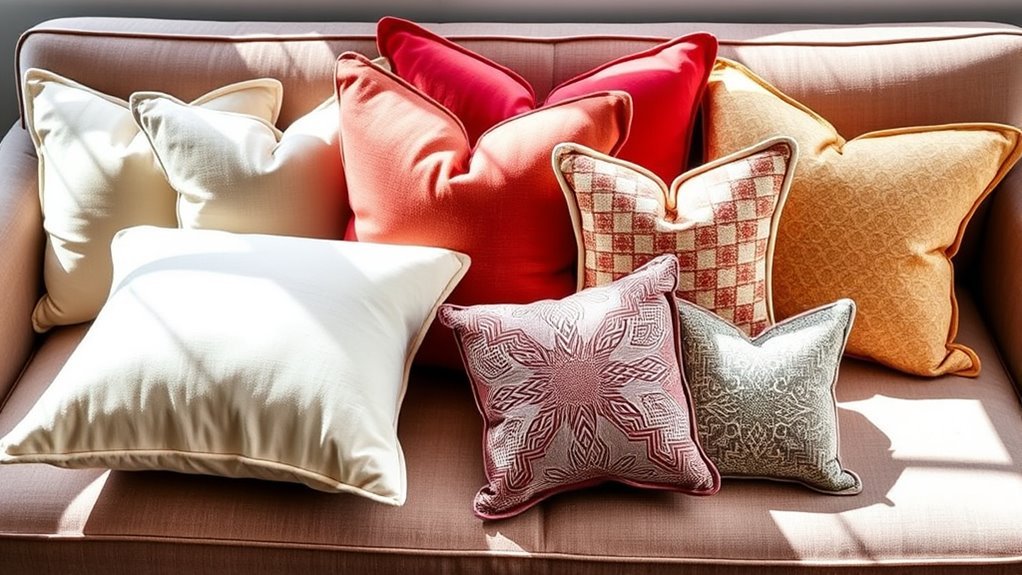
Choosing the right throw pillow dimensions starts with matching cushion height and width to your sofa’s frame. Standard 72 to 89 inch couches look balanced with 20×20 or 22×22 inch corner anchors, 18×18 inch secondary squares, and a 12×20 or 14×20 inch lumbar pillow to break up boxy shapes.
On a compact loveseat under 72 inches wide, oversized 24×24 inch cushions quickly swallow the middle seat. Stick to one 18×18 or 20×20 inch square per corner, adding a compact 10×18 or 12×20 inch lumbar only if at least 16 inches of open seat depth remains. Conversely, lounge sofas with a 26-inch or deeper seat need 22×22 or 24×24 inch back pillows to bridge the gap between the backrest and your lower back.
Before You Begin: Measure Your Sofa
Take three tape-measure readings before ordering covers or inserts: inside seat width (arm to arm), usable seat depth (front edge to back cushion), and inside back height (seat cushion top to frame top). Relying on overall sofa length alone often leads to pillows that dwarf low-profile backs or crowd shallow seats.
- Back-height check: Measure from the top of the seat cushion to the top of the backrest. On low-back modern sofas, add 5 inches to that inside back height to find your maximum square pillow size so cushions frame the back rather than hiding it.
- Seat-depth check: Most comfortable seating requires 18 to 20 inches of clear depth in front of the pillows. If your sofa seat is 21 inches deep, use a single square anchor with a slim lumbar rather than stacking three thick squares.
- Arm-style and corner check: Count the structural corners where pillows naturally lean. High rolled or track arms support two or three layered cushions per corner, whereas armless sofas or low bolsters need one fewer pillow per side so cushions do not slide off.
- Cushion-back style: Tight-back sofas have a firmer, more upright pitch that needs fewer pillows, while loose pillow-back sofas benefit from structured corner anchors that keep back cushions from slouching.
Pro tip: Use painter’s tape on your sofa back to mark out 20×20 versus 22×22 inch squares before buying—seeing the height against your arms and backrest prevents costly sizing mistakes.
Key Rules for Layering Your Throw Pillows
Successful pillow styling relies on three principles: descending scale, intentional count, and a cohesive color story. Stepping pillow sizes down from the outer arms toward the center ensures every layer stays partially visible instead of hiding behind the front cushion.
As noted in Pottery Barn’s pillow arrangement guide, interior designers often favor odd-numbered totals—such as 3, 5, or 7—because asymmetrical groupings feel relaxed and organic. Even counts like 2, 4, or 6 work best in tailored or traditional rooms where mirrored symmetry anchors a centered coffee table or fireplace.
To keep mixed pillows from looking chaotic, apply the 60-30-10 color rule: let walls and rugs carry 60% of the room’s palette, upholstery carry 30%, and throw pillows deliver the final 10% accent shades. Limit your pillow group to three or four related hues pulled from nearby artwork, rugs, or drapery, and vary at least two of three traits—size, color, or texture—between any two pillows that touch.
Choosing the Perfect Pillow Count for Comfort and Style
The ideal pillow count balances visual fullness against how your household actually uses the couch. A formal sitting room sofa can comfortably hold 5 pillows in a 2-2-1 layout, while a high-traffic family media couch often works better with 3 well-scaled pillows that never end up on the floor.
For sofas between 84 and 96 inches wide or deep L-shaped sectionals, 5 to 7 pillows provide enough coverage without creating a continuous wall of fabric. Always leave visible upholstery between your corner clusters so the sofa’s silhouette remains clean and open.
How to Layer Throw Pillows on a Sectional
Treat an L-shaped sectional as three anchor zones: the left outer arm, the 90-degree inside corner, and the right outer arm or chaise end. Start with a 22×22 or 24×24 inch anchor pillow in each of those three zones, then layer a 20×20 inch square or 14×20 inch lumbar in front of the deep inside corner where two backrests meet.
Keep the middle bench seats and the lounging run of the chaise clear. A 2-2-1 or 2-3-1 distribution across those three corners (5 to 6 pillows total) looks intentional while allowing two or three people to sit down immediately without moving cushions.
How to Layer Throw Pillows on a Sofa by Size and Count
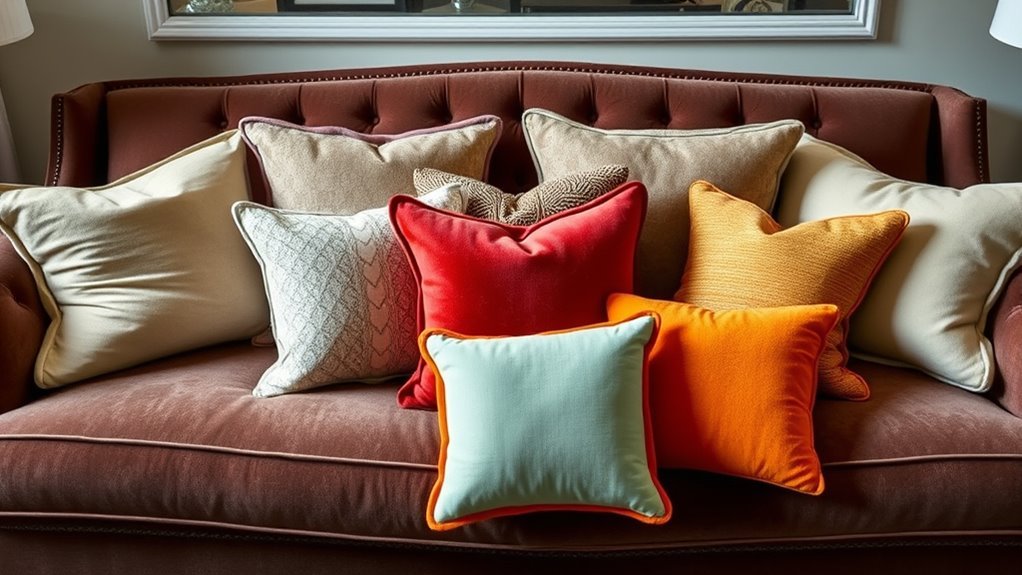
Follow a back-to-front, outside-in sequence to layer throw pillows on a sofa in under ten minutes. Building the arrangement from the outer arms toward the center guarantees proper height progression and leaves the middle seat open.
- Verify your sofa measurements. Confirm seat width, seat depth, and back height so your largest square does not exceed the backrest height by more than 5 inches.
- Anchor the back corners first. Place one 22×22 inch square (for standard sofas) or 24×24 inch square (for seats 26+ inches deep) snug against each outer arm, angled slightly toward the center.
- Layer medium squares in front and slightly inward. Overlap an 18×18 or 20×20 inch pillow in front of one or both corner anchors so at least 3 to 4 inches of the back pillow remains visible.
- Add a front lumbar or shaped accent. Center a 12×20, 13×21, or 14×20 inch lumbar pillow in front of one corner pair (for a 3- or 4-pillow look) or bridging the middle cushion (for a 5-pillow 2-2-1 layout).
- Perform the sit test. Sit all the way back in each seat; if the pillows force your posture upright or steal more than a third of the seat depth, remove one front layer or swap to a thinner insert.
- Fluff and angle the edges. Fluff each insert from the bottom seam upward and leave at least 12 to 18 inches of bare sofa cushion between corner groupings.
Choose Pillow Sizes Carefully
Proportion matters more than pillow quantity when styling different furniture silhouettes. On a low-profile mid-century or contemporary sofa, 20×20 inch back anchors paired with an 18×18 inch square and a 12×20 inch lumbar preserve the clean horizontal line of the backrest.
On a deep slipcovered or English roll-arm sofa, 18×18 inch pillows look undersized and get lost in the plush cushions. Step up to 22×22 or 24×24 inch back squares paired with 20×20 inch front pillows and a long 14×24 or 14×36 inch lumbar.
Layer By Size Order
Graduating pillow height by 2 inches per layer keeps every fabric and pattern in view. When two pillows of the exact same size sit one behind the other, the front cushion blocks the back one and pushes too far into the seat.
- Layer 1 (Back Corner): 22×22 or 24×24 inch square in a solid textured weave or subtle stripe to ground the arm.
- Layer 2 (Middle Overlap): 18×18 or 20×20 inch square in a medium- or large-scale print shifted 3 inches toward the center of the couch.
- Layer 3 (Front Accent): 12×20 or 14×20 inch rectangular lumbar (or a 16-inch round bolster) to drop the visual line and support your lower back.
What Size Pillow Insert Should You Use?
For square throw pillows between 18×18 and 24×24 inches, choose a pillow insert 1 to 2 inches larger than the cover measurement so the corners stay plump and upright instead of sagging. For example, pair a 20×20 inch cover with a 22×22 inch insert. For rectangular lumbar covers (such as 12×20 or 14×20 inches) and small 16×16 inch covers, use a same-size insert so the seams do not warp or bow.
Insert material affects both the sizing rule and how the pillow holds its shape over time. As outlined in West Elm’s pillow fill and care guide and The Spruce’s pillow-insert guidance, compressible natural fills benefit most from sizing up by 2 inches, whereas dense synthetic or heavy tapestry covers often need only a 1-inch increase or an exact match.
| Insert Fill Type | Feel & Look | Insert Sizing Rule | Best For |
|---|---|---|---|
| 95/5 or 90/10 Feather-Down | Heavy, structured, holds a “karate chop” crease; occasional quill poke | +2 in. for squares; exact size for lumbars | Thick cotton, canvas, velvet, or tightly woven linen covers |
| 80/20 or 50/50 Down-Feather | Cloud-like, ultra-plush, fewer quills; needs regular fluffing | +2 in. for squares; +1 in. or exact size for lumbars | Lighter fabrics, silk blends, and luxury lounge sofas |
| Microfiber / Gel Down Alternative | Soft, supple, mimics down without allergens or poking quills | +1 to +2 in. for squares; exact size for lumbars | Allergy-sensitive homes, loose knits, and everyday family couches |
| Standard Polyester Fiberfill (Poly-fill) | Bouncy, firm, rounded profile; cannot be karate-chopped | Exact size or +1 in. maximum | Budget setups, outdoor/patio sofas, and structured tailored looks |
Recommended Products

PREMIUM MATERIAL: These pillow inserts are filled by 1160g/2.56lb premium feather down(20% more than other) and the covers are double layered to prevent down overflowing.
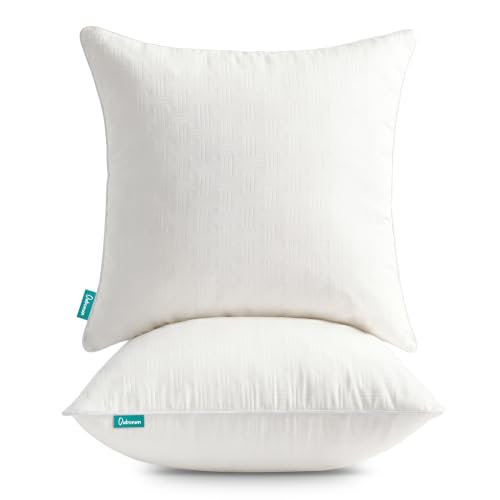
Fluffy Yet Supportive Comfort: Filled with premium down alternative polyester fiber, these 2 packs 22x22 throw pillow offer a soft, plush feel while maintaining comfortable support for everyday lounging, reading, or decorating your living space

PREMIUM MATERIAL:Our pillow Inserts have 100% textured woven fabric covers and ample 900g/1.98lb 3D high-quality fillings(20% more than other).They are soft and full enough to support your back and neck,providing you the best experience.
Mixing Patterns and Textures for Visual Appeal
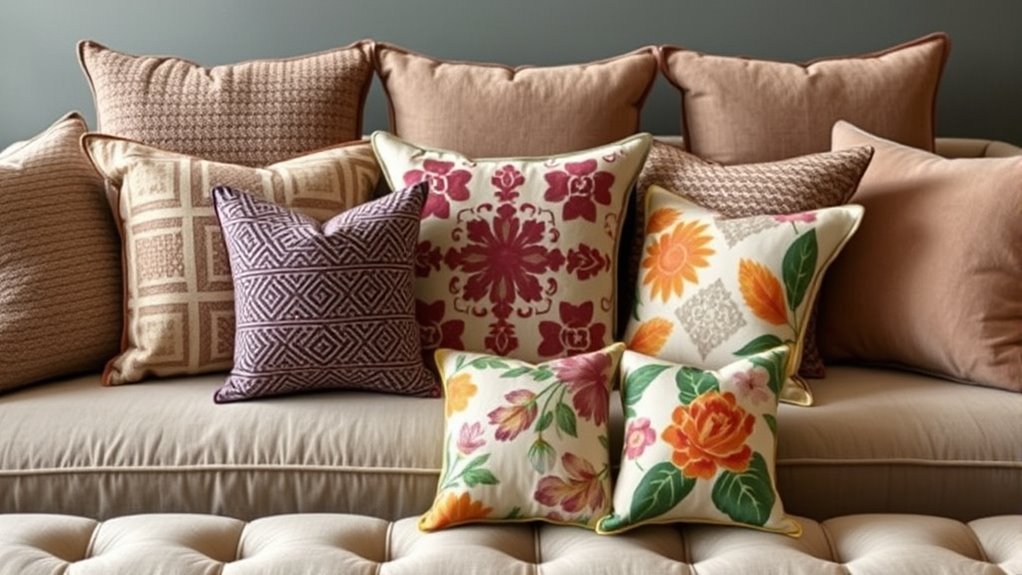
The easiest formula for mixing pillow patterns without visual clutter is one bold print, one small-scale geometric or stripe, and one textured solid within a shared three-color palette. Varying the scale of the patterns prevents two busy prints from competing for attention.
Start by selecting your hero fabric—such as a large-scale botanical, block print, or abstract motif on the front lumbar or 20×20 inch layer—and pull two background colors from that print for your remaining pillows. Pair it with a smaller-scale pattern (like a narrow ticking stripe, micro-check, or windowpane plaid) that is roughly half the size of the primary motif.
Even in a monochrome neutral room, contrasting textures create shadow and depth against flat sofa upholstery. Combine matte slub linen or chunky wool bouclé with smooth velvet, ribbed corduroy, or woven leather trim so neighboring cushions never blend into a single block of fabric.
How to Keep Your Sofa Comfortable and Usable
A well-styled sofa should never require guests to relocate a pile of cushions before sitting down. Keep everyday family couches functional by concentrating pillows at the arms and choosing compressible natural or microfiber inserts that mold under your shoulders.
If people need to move several pillows before they can sit down comfortably, reduce the count or use a thinner front layer.
- Leave 18+ inches of clear seat depth: Measure from the front edge of the sofa cushion to the front of your lumbar pillow to guarantee comfortable leg support.
- Pick washable, removable zippered covers: Tightly woven cotton, performance linen blends, and machine-washable velvet hold up best to kids and pets.
- Store seasonal covers flat: Instead of buying whole new pillows every season, keep one quality set of inserts and swap to lightweight linen covers in spring/summer and heavier wool or velvet covers in fall/winter.
- Refresh inserts twice a year: Tumble washable inserts on low heat with dryer balls to restore loft and keep corner layers standing upright.
Common Pillow Layering Mistakes to Avoid
Most throw pillow arrangements fail because of uniform sizing, evenly spaced lining, or under-stuffed covers. Fixing these three issues immediately makes a sofa look curated rather than crowded.
- Lining pillows evenly across every cushion: Spacing five pillows in a single row across the backrest looks like a retail display and blocks every seat. Group pillows in clusters at the corners instead.
- Using only the 18×18 pillows included with the sofa: Matching factory pillows in the exact upholstery fabric flatten the couch’s profile. Replace their covers or pair them in front of larger 22×22 inch contrasting anchors.
- Buying underscaled accents for a deep couch: Tiny 16×16 inch squares disappear on a 40-inch-deep sectional. Always anchor deep frames with 22×22 or 24×24 inch back pillows.
- Putting matching sizes in the same cluster: Stacking two 20×20 inch pillows on top of each other hides the back pillow; step down by 2 inches between layers.
Where to Shop for Stylish Throw Pillows
Once you have mapped out your sofa’s dimensions and pillow count, shop for zippered covers and inserts separately whenever possible. Buying standalone covers lets you invest once in high-loft feather-down or microfiber inserts and swap fabrics seasonally for a fraction of the cost.
Recommended Products

QUALITY MATERIAL: The pillow cover is composed of a soft and comfy corduroy which is a kind of polyester fabric, features a cute and elegant boho stripe design. Our pillow covers are of good workmanship, they are tightly sewn without loose threads.

SOFT & COZY CHENILLE TEXTURE: Indulge in the ultimate comfort with our premium chenille pillow covers. Expertly crafted from high-quality, luxurious chenille, they offer a super soft touch and a rich, velvety texture, providing a wonderfully cozy feel that invites relaxation.

Premium Quality: Filler is 360g/0.79lb 7D fiber(20% more than other) with good breathability and softness. The cover is smooth brushed fabric, comfortable, durable.
Online Retailers to Explore
Shopping online makes it easy to filter by exact dimensions (including harder-to-find 22×22, 24×24, and 14×36 inch sizes) and compare fabric composition before ordering. Always check whether the listing is cover-only or includes an insert.
- Etsy: Ideal for custom pillow dimensions, designer trade fabrics, handwoven mud cloth or kilim covers, and double-sided contrast piping.
- Amazon: Convenient for multi-packs of 95/5 feather-down or hypoallergenic microfiber inserts in odd sizes (including 22×22 and 24×24 inches) alongside budget-friendly corduroy, velvet, and linen covers.
- CB2 and West Elm: Carry coordinated modern textiles, contract-grade performance weaves, and CB2’s feather-down and down-alternative pillow inserts sized for oversized modern couches.
Local Shops to Visit
Shopping in person lets you test insert firmness, inspect zipper construction, and hold fabrics against upholstery swatches under natural light. HomeGoods focuses on in-store treasure-hunt shopping rather than e-commerce checkout, with rotating inventory of textured lumbars and feather-filled squares; check the official HomeGoods site to locate a nearby store.
Anthropologie, Crate & Barrel, Pottery Barn, and local independent home boutiques are also worth visiting when matching tricky undertones like warm ivory, taupe, or sage green. Bring a leftover fabric swatch from your sofa or a daylight photo of your rug and curtains so you can test color harmony in the store.
Frequently Asked Questions
What Is the 2-2-1 Rule for Sofas?
The 2-2-1 rule is a five-pillow styling formula that uses two large square pillows (usually 22×22 inches) in the back corners, two medium square pillows (18×18 or 20×20 inches) layered in front of them, and one 12×20 or 14×20 inch lumbar pillow centered or offset in front. It creates balanced symmetry with a relaxed focal point on standard 3-seat sofas.
Should Throw Pillows on a Couch Be the Same Size?
No, throw pillows on a couch should vary in size so the front cushions do not hide the back ones. Stepping down by 2 inches per layer—such as pairing a 22×22 inch back pillow with a 20×20 inch middle square and a 12×20 inch lumbar—creates visible depth and better lower-back support.
Does the 2-2-1 Throw Pillow Rule Work on Every Sofa?
No, the five-pillow 2-2-1 rule works best on standard sofas between 72 and 89 inches wide with at least 22 inches of seat depth. On a compact loveseat or shallow apartment couch, reduce the layout to 2 or 3 pillows so the seats stay open; on a large L-shaped sectional, expand to three separate corner groupings of 5 to 9 pillows total.
How to Style a Sofa With Throws and Cushions?
Drape a textured throw blanket over one arm, across the back corner, or lengthwise along a sectional chaise, then arrange your pillows in descending sizes right beside it. Keep the throw and cushions within a shared three-to-four-color palette and leave at least a third of the sofa upholstery visible so the setup looks effortless.
How Many Throw Pillows Should You Put on a Sectional?
Start with 5 to 7 throw pillows for a standard L-shaped sectional, or 7 to 9 for an extra-deep or U-shaped sectional. Cluster them in three spots—the left arm, the 90-degree inside corner, and the right end—rather than lining individual cushions across every seat.
What Size Insert Should I Use for a Throw Pillow Cover?
Use a pillow insert 1 to 2 inches larger than the cover for square pillows (for example, a 22×22 inch insert inside a 20×20 inch cover) to keep the corners plump and prevent sagging. For lumbar covers like 12×20 or 14×20 inches, use an exact same-size insert so the rectangular edges stay crisp.
Conclusion
The best sofa pillow arrangement starts with your furniture’s proportions rather than a rigid formula. Anchor the back corners with 20×20 to 24×24 inch squares, step down to 18×18 or 20×20 inch middle layers, and finish with a lumbar pillow while leaving at least 18 inches of clear seat depth. Measure your inside seat width, depth, and back height today, then test your existing cushions in a 3-pillow asymmetrical group or a 5-pillow 2-2-1 layout before ordering new covers.
Sources and Methodology
This guide treats pillow dimensions and counts as practical styling ranges matched to sofa width, seat depth, and back height. Recommendations were compiled using interior designer sizing standards, manufacturer insert specifications, and current retailer availability.
- The Spruce: Designer guidance on sofa pillow count and placement by sofa size
- Real Simple: Throw pillow size, count, and pattern-mixing guidance
- Room & Board: Throw pillow count ranges and oversize vs. standard square sizing
- Pottery Barn: Odd- versus even-numbered pillow groupings and arrangement layouts
- West Elm: Down, feather-blend, and down-alternative pillow insert fill and care standards
- The Spruce: Pillow insert sizing up rules and fill comparisons
- CB2: Feather-down and hypoallergenic down-alternative throw pillow insert specifications
- HomeGoods: Official store locator and in-store shopping information