Flat seat cushions and slouching back pillows can make a good couch look worn out years early. Learning how to re-fluff sofa cushions properly restores loft, smooths wrinkled fabric covers, and keeps your favorite spot from sinking into the frame. With the right hand technique for your cushion’s fill type, you can refresh most couches in under 20 minutes and spot when a cushion needs new batting or foam instead.
Quick Answer
To re-fluff sofa cushions, remove them from the couch, vacuum the deck and crevices, then shake, knead, pat, and press each cushion from all four sides toward the center to redistribute the fill. Rotate and flip reversible cushions every 2 to 4 weeks. If cushions stay flat, add polyester batting, extra fiberfill, or a replacement foam core.
At a Glance
| Time Required | 10–20 minutes for basic fluffing; 30–60 minutes if you are adding batting or fiberfill |
| Difficulty | Easy for routine fluffing; moderate for restuffing |
| Tools Needed | Vacuum with crevice or soft brush attachment, clean hands, soft brush, measuring tape, tennis balls inside a clean sock, optional polyester batting or fiberfill |
| Cost | $0 for basic hand fluffing; extra cost only if you buy new fill, batting, inserts, or professional repair |
Which Cushion Type Do You Have?
Before you start, identify the fill inside your cushions. The safest technique depends on whether the cushion uses a solid foam core, loose down and feathers, blown polyester fiberfill, or a polyester batting wrap. If you are unsure, press your fist firmly into the center for 10 seconds and release: foam rebounds as a single block, fiberfill feels springy but shifts in clumps, and down or feather fill leaves a clear handprint.
| Cushion Type | How It Feels | Best First Method | Avoid |
|---|---|---|---|
| Foam seat cushion | Firm, uniform block that springs back when pressed | Press and massage the edges, rotate the cushion, and add batting if the cover looks loose. | Hard beating, dryer heat, or overstuffing the cover. |
| Down or feather cushion | Plush, heavy fill that holds a sink-in impression | Shake, compress inward from all sides, clap, and let the fill rest for 5–10 minutes. | Moisture, high dryer heat, or vacuuming without the cover on. |
| Polyester fiberfill back cushion | Light, airy fill that can clump or leave hollow corners | Knead the fill toward the corners and add small handfuls behind the existing fill. | Adding loose fill against the front face, which creates visible lumps. |
| Attached back cushion | Sewn directly to the sofa back frame | Lift and push the fill upward from the bottom edge, then smooth the fabric in sections. | Forcing hidden zippers or pulling seams under tension. |
Why Sofa Cushions Go Flat
Sofa cushions flatten because body weight compresses internal fibers, upholstery fabric stretches slightly under tension, and most households sit in the same favorite spot every day. Loose-fill cushions—such as down, feathers, and polyester fiberfill—flatten fastest because individual clusters slide away from pressure points and pack into the bottom or edges. Re-fluffing works by breaking up those compacted clusters and trapping air between the fibers again.
Foam seat cushions behave differently. High-resiliency polyurethane foam holds its shape much longer than loose fill, though the outer polyester batting wrap (often called Dacron) still compresses over time. Lee Industries recommends flipping and fluffing cushions and pillows regularly to redistribute the fill, prevent deep creases, and slow uneven wear. However, once a foam core oxidizes and loses its cell structure, hand fluffing alone will not bring back firm support.
Check the Fabric Tag Before You Start
Before you use fabric freshener, water, steam, or any cleaning spray while refreshing your cushions, check the manufacturer care tag under the seat cushion or along the sofa platform. BISSELL explains that upholstery tags commonly use cleaning codes such as W, S, WS, and X to show which products are safe for the fabric:
- Code W (Water-based): Safe for water-based upholstery shampoo or foam cleaners. Do not saturate the cushion core.
- Code S (Solvent-only): Requires a water-free dry-cleaning solvent. Water or water-based sprays can leave permanent rings or shrink the weave.
- Code WS or SW (Water or Solvent): Can be spot-cleaned with mild water-based foam or a dry-cleaning solvent.
- Code X (Vacuum or Brush Only): Cannot tolerate any liquid or foam cleaner. Stick strictly to dry vacuuming and light brushing.
Warning: Never mist, steam, or spot-clean upholstery before checking the care code, and do not remove zippered cushion covers to machine-wash them unless the label explicitly allows it. The University of Georgia Extension advises pretesting cleaning agents and avoiding excess moisture so you do not cause water rings or finish migration.
Tools You Need for Fluffing Your Pillows and Cushions
You only need a few household items for routine cushion care. Gather these supplies and remove rings, watches, or bracelets before you start so you do not snag woven fabric or scratch leather:
- Vacuum cleaner with crevice and soft upholstery brush attachments: lifts crumbs, dust, pet hair, and abrasive grit from the sofa deck and welt seams.
- Clean hands: your primary tool for pushing, kneading, shaking, and squaring cushion edges.
- Soft clothes or upholstery brush: sweeps lint from textured fabric and velvet without damaging the pile.
- Tennis balls inside a clean sock: acts as a gentle, non-marking tapping tool to break up compacted down or fiberfill clusters.
- Measuring tape: needed if you plan to order replacement foam, cut polyester batting, or check throw pillow insert dimensions.
- Optional fabric freshener: use a light mist only if your upholstery carries a W or WS code, and always test a hidden seam first.
Note: Fabric freshener masks surface odors briefly, but it does not clean upholstery or restore loft. If a cushion smells musty or sour, inspect the inner core for trapped moisture or mildew before sealing it back up.
Recommended Products

【Quality & Soft Bristles】The shoe brush is made of pp and nano soft bristles, wear-resistant and flexible, do not hurt the surface of clothes, shoes and boots, can be used for delicate fabrics.

MULTIFUNCTIONAL CLEANING BRUSH: High-quality soft household cleaning brush bristles can easily clean dirty parts of clothes, such as collars and cuffs without damaging the fabrics, and can also be used to clean stains on tiles and countertops, making home cleaning easy.

OXY-POWERED CLEANING: Tackle everyday upholstery messes with our powerful Upholstery Cleaner. Its oxy-powered formula delivers powerful spot cleaning to help lift tough stains, even up to 7 days old, so your home stays fresh, clean-looking, and ready for guests, family time, and daily life on the go
Step-by-Step Guide to How to Re-Fluff Sofa Cushions
Follow these six steps in order whenever your sofa looks flat or wrinkled. Working on a clean rug or carpeted floor gives you leverage to reshape all four sides evenly.
1. Remove Every Loose Cushion
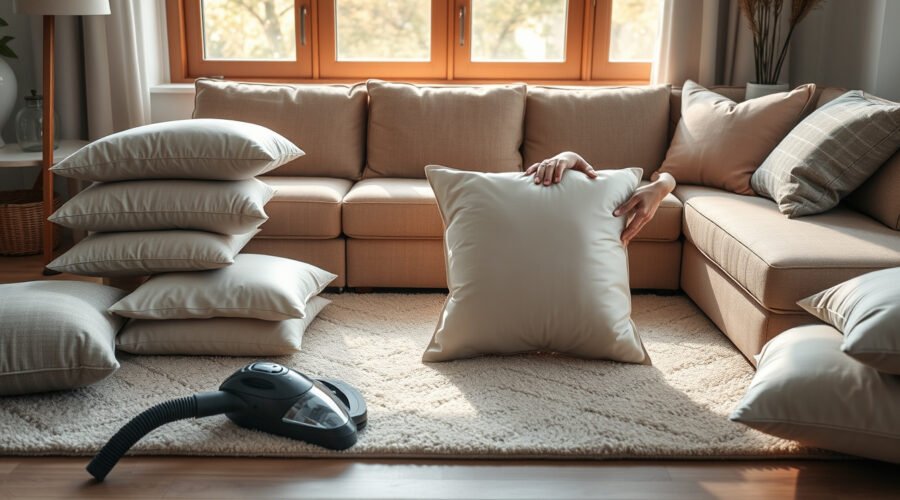
Lift off all removable seat cushions, back pillows, and throw pillows and set them on a clean surface. Trying to fluff cushions while they are wedged against the sofa arms leaves the back edge, bottom panel, and corners compressed.
2. Vacuum the Sofa Deck and Crevices
Run the crevice tool along the sofa platform (the deck), back corners, and arm crevices, then vacuum both sides of each cushion with a soft brush attachment. Removing sharp grit prevents dirt from grinding into the fibers while you knead the cushions.
3. Shake and Drop-Bounce the Cushion
Grip the cushion firmly at two opposite corners and give it several brisk shakes to loosen settled fill. For heavy seat or back cushions, stand the cushion upright on one side edge and gently drop-bounce it a few inches onto a clean carpeted floor, then rotate 90 degrees and repeat on the remaining three edges.
4. Push From Front to Back and Side to Side
Stand the cushion on its edge and place your hands on the front and back boxing panels. Push both edges firmly toward the center, release, and work your way down the length of the cushion. Turn the cushion and repeat from the left and right sides so fill moves back into the center crown and out to the corners.
5. Knead, Pat, and Square the Corners
Use an upward kneading motion—similar to kneading bread dough—to push settled filling from the bottom edge toward the top and center. Clap the opposite faces with open palms, then pinch and gently coax each corner so the outer cover aligns squarely with the inner core. Never yank welt cord or piping to straighten a crooked seam.
6. Rotate and Flip the Cushions
If your cushions have matching fabric on both faces, flip them over so the bottom becomes the top, and swap cushions between heavily used seats and side seats. You will know the fluffing worked when the center crown rises evenly, the corners look full, and loose fabric wrinkles disappear.
Pro Tip: Snap a quick smartphone photo before removing cushions from a large sectional or modular sofa. Noting which notched or angled cushion goes where makes rotating compatible seats much faster.
Best Techniques for Different Cushion Types
Different fillings respond to different amounts of pressure. Once you finish the basic routine, tailor your technique to the material inside the cover.
Recommended Products

Comply Comfort: ear tips designed to eliminate earbud pain while heat-activated memory foam molds to your ear for a personalized fit and all-day listening comfort without ear fatigue

【SAY GOODBYE TO SAGGING SEATS – Restore Sofa Support Instantly】-- Why replace your entire couch when you can easily revive it? Our premium white high-density support foam core provides robust, reliable upward tension that instantly lifts sagging cushions. Specially engineered to resist bottoming out and sagging under daily wear, it restores your sofa’s original loft and firmness. Bring back the pristine comfort of a brand-new couch without the high price tag

IMPROVE BALANCE & STRENGTH – Foam creates unstable surface for working on balance & core strength, which also strengthens feet/ankles for rehabilitation after injuries
Foam Cushions
Solid foam seat cushions need edge massaging and rotation rather than hard patting. Stand the cushion upright, press firmly along the compressed front lip where knees rest, and massage the foam core and batting wrap back toward the center. If the cover still twists around the core, open the zipper carefully and straighten the inner wrap by hand.
Down or Feather Cushions
Down and feather cushions offer a plush, sink-in seat, but the natural plumes compress under weight and need weekly reshaping. DOWN Inc. recommends shaking and firm compression to move down or feather fill back into place, followed by letting the pillow rest for 5 to 10 minutes before putting it back on the sofa so the clusters can expand with air.
To stop stray quills from working through the upholstery, Room & Board recommends vacuuming between the fabric casings and cushions with an upholstery attachment. Only use a dryer on a removable down insert if its care tag specifically permits it, and run it on low heat or air fluff for just 5 to 10 minutes.
Polyester Fiberfill Cushions
Loose polyester fiberfill responds best to vigorous kneading and open-palm clapping. Push the fill from the bottom seam upward into the top corners, where back cushions lose height first. If you feel dense knots through the fabric, unzip the inner casing and gently pull the matted fibers apart by hand to restore loft.
Dacron-Wrapped Cushions
Most quality foam seat cushions wrap the foam block in a layer of bonded polyester batting (Dacron) to round out the edges and keep the fabric taut. When the foam core still feels supportive but the cover puddles or wrinkles on top, the batting wrap has flattened and needs a fresh layer rather than harder fluffing.
Attached or Fixed Back Cushions
Because sewn-in back cushions cannot be removed or flipped, use an upward “milking” motion from the outside. Place both palms near the bottom crease, press inward, and sweep the filling firmly toward the top seam. Clap the sides with open hands and smooth the upholstery outward from the center to the welt seams.
Leather Sofa Cushions
Leather upholstery does not let air pass through the surface as easily as woven fabric; air only escapes through small breather vents or along the zipper track. Patting a sealed leather cushion too hard can strain the stitching. Instead, Room & Board advises unzipping leather casings regularly to remove, fluff, and rotate the inner cushion core directly before sliding it back inside.
Throw Pillows
Grab each throw pillow by the top two corners, shake it briskly, and repeat from the bottom two corners before clapping the sides together. Pottery Barn recommends matching the insert size to your pillow cover for a snug fit, and many interior stylists size up by 1 to 2 inches on down or feather inserts (for example, a 20-inch insert inside an 18-inch cover) so the corners never droop.
Mistakes to Avoid When Fluffing Cushions
Aggressive handling can damage seams, zippers, and internal cores. Watch out for these common cushion-care mistakes:
- Fluffing cushions while they remain on the sofa: leaving cushions in place prevents air and fill from moving into the back corners and underside.
- Punching cushions with closed fists: sharp punches can snap internal baffling threads in down channel casings and warp corded seams. Use firm, open-palm compressions instead.
- Using water or steam without checking the care tag: moisture can leave water rings on Code S fabrics and trap mildew inside dense foam or down.
- Forcing a tight or snagged zipper: pulling a stuck zipper under tension frequently rips the teeth away from the upholstery tape. Compress the foam first so the edges meet easily.
- Overstuffing the cover with loose fiberfill: packing too much fill into a casing turns a comfortable back pillow into a stiff, lumpy bolster and stresses the seams.
- Ignoring the sofa support deck: no amount of fluffing will stop cushions from sinking if the springs or webbing underneath have stretched out.
How to Fix Cushions That Stay Saggy
If your cushions flatten out again within a few hours of sitting, routine fluffing is no longer enough. Use these four targeted repairs to restore permanent support and loft.
Add Batting Around a Foam Core
When a foam seat cushion still feels firm but looks baggy inside its cover, wrap the core in new bonded polyester upholstery batting, commonly sold in 1/2-ounce (about 1/2-inch thick) or 3/4-ounce (about 1-inch thick) weights. Cut a piece long enough to cover the bottom, front nose, and top of the foam in one continuous sheet, leaving the back zipper edge unwrapped so you can zip the cover closed without strain.
Pro Tip: To slide a freshly wrapped foam core back into a snug cover without wrestling the corners, slip the foam inside a clean unscented trash bag first. The slick plastic lets you glide the cover into position, then tear and pull the bag out through the open zipper.
Add Fiberfill to Back Cushions
Back cushions lose height long before seat cushions wear out. Unzip the cover, open the inner ticking liner if it has one, and tuck small, pulled-apart handfuls of 100% polyester cluster fiberfill behind the existing insert. Placing new fill at the back and corners pushes the smooth existing layer forward so the front face stays lump-free.
Replace a Worn Insert
If your foam core stays dented after you stand up, feels soft in the middle, or sheds yellow dust, replace the insert. Measure the cover from seam to seam (length, width, and boxing height) rather than measuring the flattened old foam. For daily-use sofa seats, upholstery specialists recommend high-resiliency polyurethane foam with a density of 2.5 to 2.8 lb/ft³ (which governs lifespan) and a medium-firm ILD (Indentation Load Deflection) rating of 30 to 38 (which governs firmness). Lower-density foam under 2.0 lb/ft³ typically sags within a few years.
Check the Sofa Frame and Support
Remove all seat cushions and press down firmly on the bare sofa deck. If you feel a deep dip, sagging elastic webbing, detached sinuous S-springs, or a cracked wood slat, the frame underneath is causing the sag. Temporary cushion support boards can bridge minor dips, while stretched webbing or unhooked springs require frame repair.
Best Fill Materials for Fluffing Cushions
Choosing the right replacement or supplemental fill depends on whether you want structured support, sink-in plushness, or minimal weekly maintenance:
- High-resiliency (HR) foam (2.5–2.8 lb/ft³ density): best for everyday seat cushions that need firm support and clean, tailored edges.
- Bonded polyester batting (Dacron wrap): best for wrapping around foam cores to crown the top surface and fill out loose fabric wrinkles.
- Polyester cluster fiberfill: best for topping up zippered back cushions and throw pillows; resists clumping better than cheap uncarded polyfill.
- Down and feather blends: usually mixed as 75–90% waterfowl feathers for springiness and 10–25% down for softness; delivers a luxurious lounge feel but requires weekly shaking.
- Down-wrapped foam (envelope cushions): combines a supportive foam core inside a baffled down-and-feather jacket for comfort that holds its shape better than pure down.
Recommended Products


【insoles for standing all day】Plantillas para zapatos de hombre crafted with 4D cloud memory foam deliver cloud-like comfort; pre-marked guide lines enable tool-free customization for any shoe type, ideal for work boots, sneakers, and casual footwear

【Upgarded Memory Foam Cushion Inserts】Memory foam conforms to the body and relieves pressure points. A ventilated design helps to increase airflow through the memory foam layer. The heavier parts of the body that press farther into the memory foam are pressure points, and memory foam has the ability to soften and relieve those areas. Firm high density foam provides a supportive, durable base.
Maintenance Schedule for Long-Lasting Cushions
Sticking to a brief care schedule prevents fill from compacting permanently into one corner and keeps wear even across the entire sofa.
| Frequency | Cushion Maintenance Tasks |
|---|---|
| Weekly | Shake and compress down or loose-fill cushions, fluff throw pillows, and vacuum crumbs from high-use seats. |
| Every 2–4 Weeks | Swap cushion positions across the sofa and flip reversible seat and back cushions to spread wear evenly. |
| Monthly | Remove all cushions to vacuum the full sofa deck, welt seams, and inner casings with a soft brush attachment. |
| Seasonally | Inspect zippers, Dacron batting loft, foam recovery, throw pillow inserts, and the springs or webbing under the deck. |
When to Seek Professional Help for Cushion Repair
Call a local upholsterer or furniture repair technician if a zipper track has pulled away from the seam, your sofa uses custom L-shaped or T-shaped cushions that are difficult to cut at home, or the internal springs and webbing under the deck have failed. An upholsterer can cut high-density foam to exact tolerances, vacuum-compress the core with commercial equipment to fill the cover smoothly, and re-stretch sagging webbing.
You should also hire a certified upholstery cleaner for antique textiles, persistent pet or moisture odors, or any sofa labeled with a Code X tag. La-Z-Boy’s care guidance for Code X upholstery says not to use foam or liquid cleaner and to vacuum or brush lightly to avoid shrinking or staining water-sensitive fibers.
Key Takeaways
- Always take removable cushions off the sofa and vacuum the deck first so abrasive grit does not wear down fabric during kneading.
- Match your hand technique to the fill: massage and rotate solid foam, shake and compress down or feathers, and knead polyester fiberfill upward into the corners.
- Check the upholstery care tag (W, S, WS, or X) before applying any spray, steam, or cleaner, and never machine-wash cushion casings unless the tag allows it.
- Unzip leather cushions to fluff and rotate the inner core directly, because air cannot escape quickly through leather panels.
- When fluffing stops working, wrap wrinkled foam in 1/2-inch to 1-inch Dacron batting, tuck fresh fiberfill behind back cushions, or upgrade to 2.5–2.8 lb/ft³ high-resiliency foam.
Frequently Asked Questions
How do I get couch cushions fluffy again?
Remove the cushions from the sofa, vacuum the deck, shake each cushion, and press firmly from the front, back, and sides toward the center to redistribute the fill. Pat the faces with open palms, square the corners, and rotate or flip reversible cushions before putting them back.
How often should I fluff sofa cushions?
Fluff loose-fill down, feather, or polyester cushions once a week if you use the sofa daily. High-density foam seat cushions only need edge massaging and position rotation every 2 to 4 weeks to keep wear even.
Can I put sofa cushions in the dryer with tennis balls?
Only put a removable pillow insert in the dryer if its care label explicitly allows machine drying. Some down or feather inserts can run on low heat or air fluff for 5 to 10 minutes, but foam cores, upholstery covers, and leather should never go in the dryer.
Why are my cushions still sagging after I fluff them?
Cushions keep sagging after fluffing when the internal foam has lost its cell structure, the outer Dacron batting has flattened, or the sofa springs and webbing underneath have stretched out. Wrap the core in new batting for loose covers, or replace the foam core for deep seat dips.
Should I open the zipper on my sofa cushion?
Yes, you can open the zipper if it glides smoothly and you need to straighten the inner core, fluff a leather-encased insert, or add batting and fiberfill. Never force a stuck or tight zipper, as pulling under tension can rip the teeth or seam.
Can I re-fluff attached couch cushions?
Yes, you can re-fluff attached cushions from the outside by placing both hands near the bottom seam and pushing the filling firmly upward toward the top edge. Clap the front face with open palms and smooth the fabric outward in sections without pulling hard on the seams.
What is the best filling for sagging sofa cushions?
High-resiliency foam (2.5 to 2.8 lb/ft³ density, 30 to 38 ILD) wrapped in polyester batting gives seat cushions the longest-lasting support. For sagging back cushions and throw pillows, 100% polyester cluster fiberfill or a down-feather blend restores soft loft best.
Conclusion
Re-fluffing sofa cushions takes only a few minutes a week, yet it keeps your living room seating fuller, cleaner, and far more supportive. Start by removing the cushions, vacuuming the deck, and using the right hand technique for your foam, down, or fiberfill inserts. If a cushion flattens out again right away, open the zipper to inspect the core and add fresh Dacron batting, cluster fiberfill, or a high-resiliency foam insert so your couch feels comfortable again.
Sources
- Lee Industries Cushion Care: supports regular cushion flipping, fluffing, front-to-back and side-to-side reshaping, and vacuuming.
- BISSELL Upholstery Cleaning Guide: supports checking manufacturer care tags and interpreting W, S, WS, and X upholstery cleaning codes.
- University of Georgia Extension Textile Care Guidance: supports pretesting cleaning agents and avoiding overwetting textile fibers.
- DOWN Inc. Down or Feather Pillow Fluffing Guide: supports shaking, firm inward compression, 5–10 minute resting time, and low-heat dryer precautions for down and feather fill.
- Room & Board Fabric & Upholstery Care: supports vacuuming between casings and down cushions to prevent feather pokes and avoiding machine-washing upholstery casings.
- Room & Board Leather Furniture Care: supports unzipping leather cushion casings to fluff and rotate the inner cushion core directly.
- Pottery Barn Decorative Pillow Inserts Guide: supports matching throw pillow insert size and fill type to the outer cover for a full fit.
- La-Z-Boy Fabric and Leather Care: supports Code X dry-only maintenance (vacuuming or light brushing without foam or liquid cleaners).