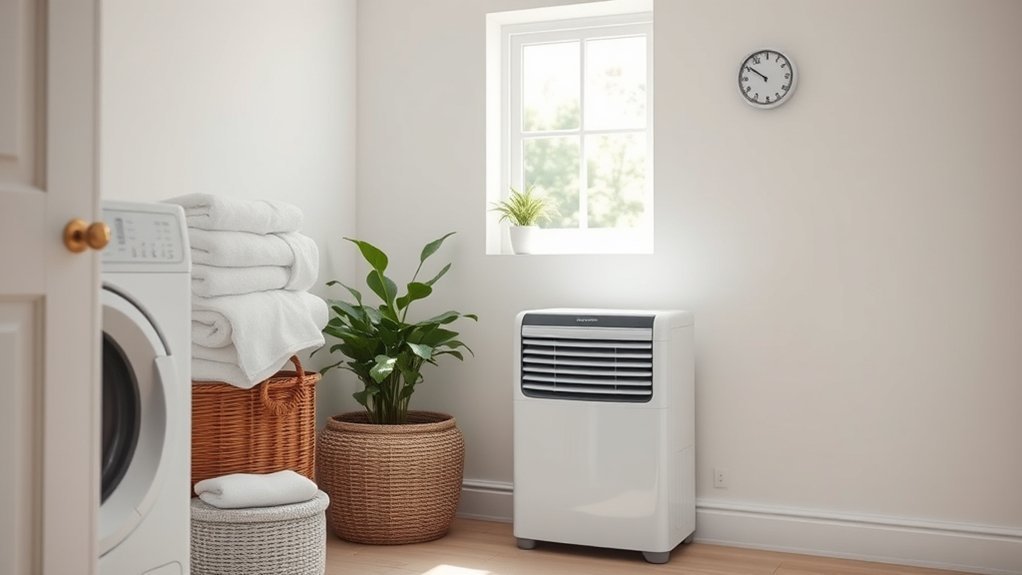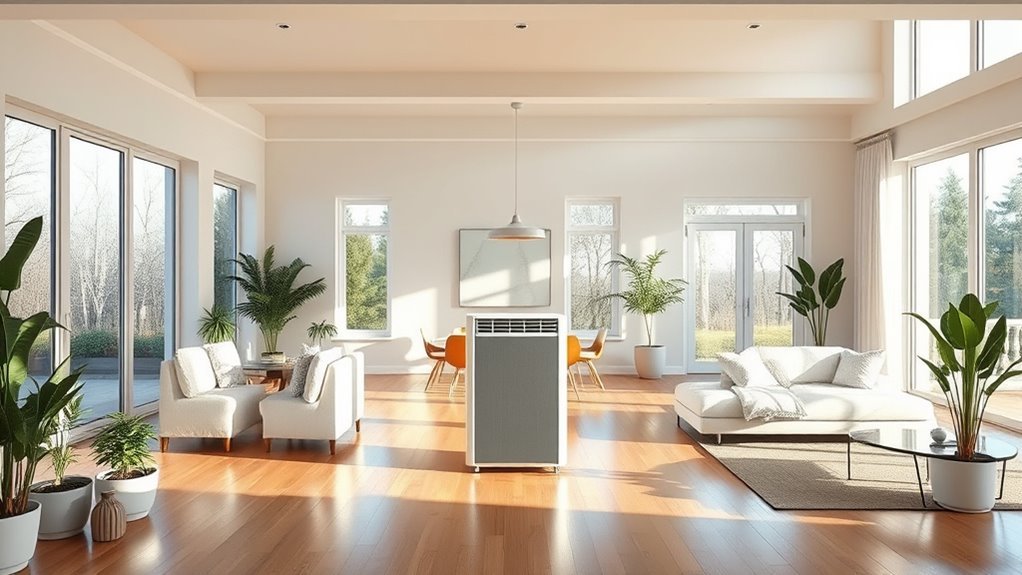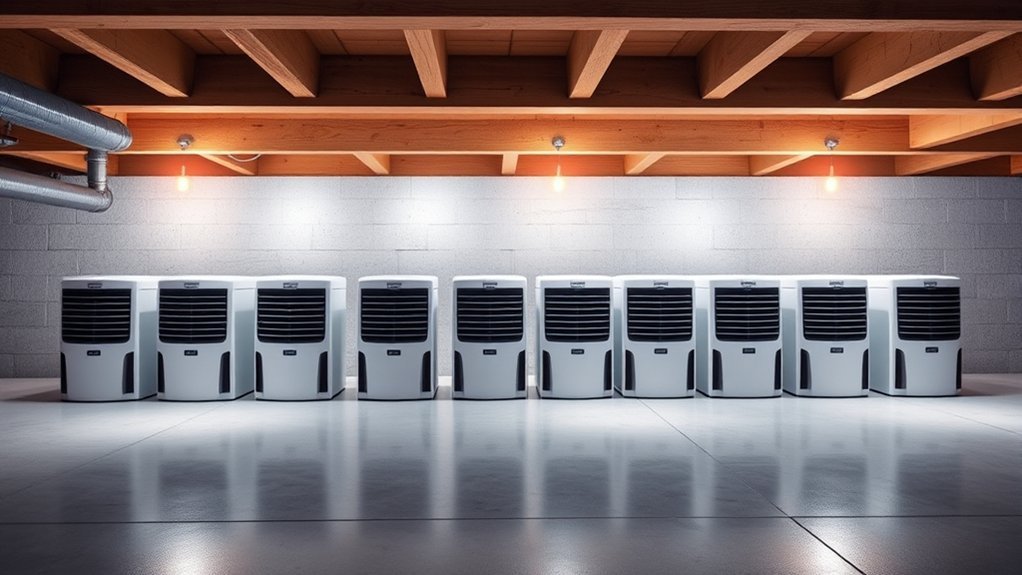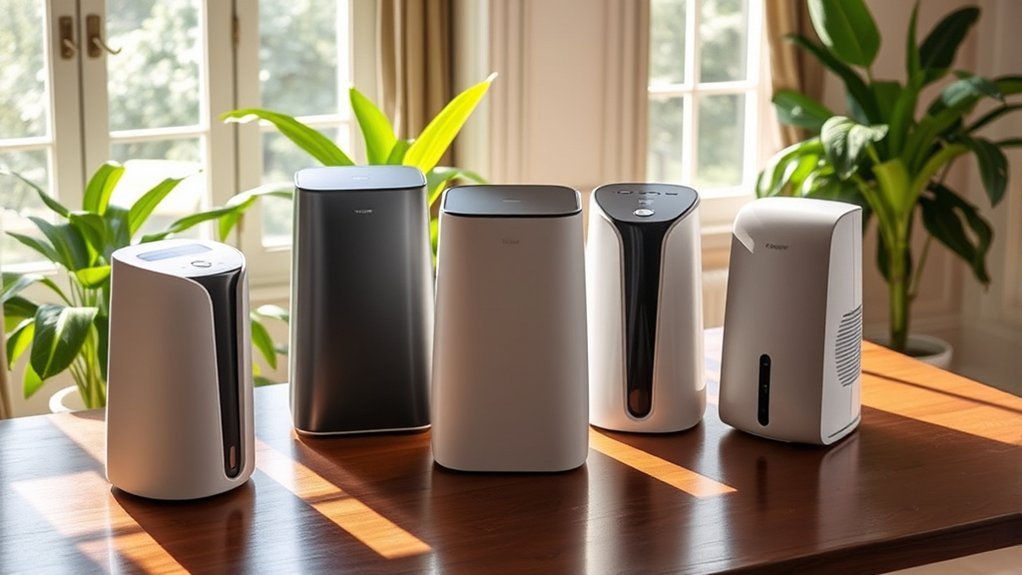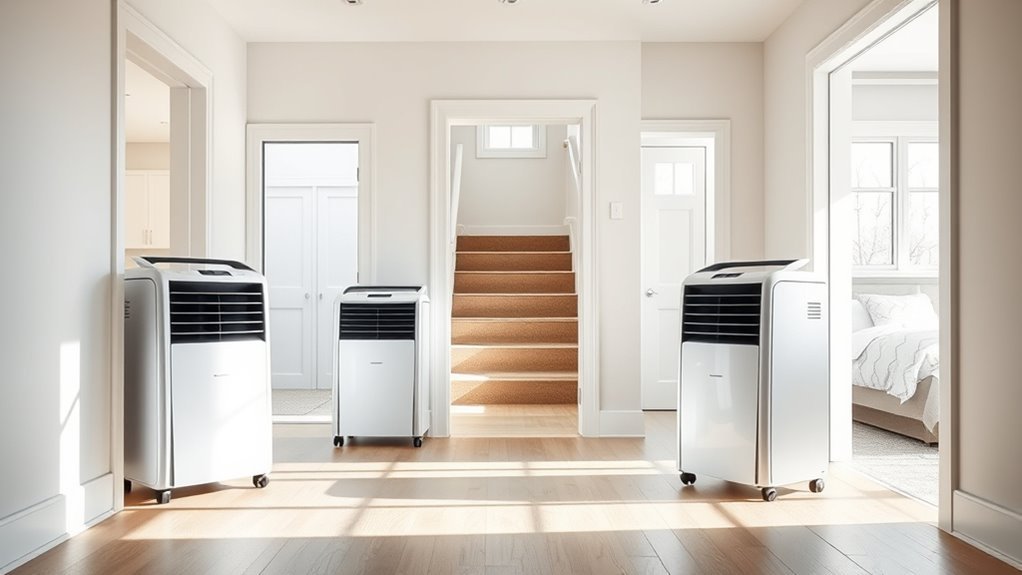
Most homes need one dehumidifier per separate damp zone, not one per room. Start with one properly sized unit for an open basement, bedroom, or living area. Add another unit when humidity stays above your target in a closed damp room, on another floor, or near a separate moisture source. Measure each zone with a hygrometer first, then match capacity to square footage, dampness level, layout, temperature, and drainage.
Quick Answer
Most homes need one dehumidifier for each separate damp zone. One correctly sized portable unit can handle one open area if humidity drops near 30% to 50% RH within 24 to 48 hours. Add another unit when closed rooms, separate floors, laundry areas, or bathroom zones stay above target. Consider a whole-home dehumidifier if the entire house stays above about 55% RH and you have central HVAC.
Key Takeaways
- Use a hygrometer first. Aim for about 30% to 50% relative humidity; if readings stay above that range, add drying capacity or fix the moisture source.
- Size dehumidifiers by both square footage and dampness level. A mildly damp room and a wet basement do not need the same capacity.
- One unit works best in one open area. Multiple closed rooms, separate floors, or problem zones usually need multiple units.
- A dehumidifier helps control moisture, but it does not repair leaks or remove existing mold.
At a Glance
| Time Required | 15–30 minutes to measure rooms and humidity; 24–48 hours to confirm whether the setup is working |
| Difficulty | Easy |
| Tools Needed | Hygrometer, tape measure, dehumidifier, grounded outlet, optional drain hose |
| Cost | Digital hygrometer plus any needed dehumidifier capacity; portable and whole-home system cost varies by capacity, drainage, efficiency, and installation needs |
Quick Count Guide
| Your situation | Likely setup | What confirms it |
|---|---|---|
| One open damp room or basement | One correctly sized portable unit | RH reaches about 30% to 50% within 24 to 48 hours. |
| Two closed damp rooms | Two smaller units or one unit rotated only if both rooms stay controlled | Each room stays in range with doors in their normal position. |
| Basement plus upstairs humidity | At least one unit per problem floor | Readings improve on both floors without over-drying one area. |
| Whole house stays humid | Compare several portable units with a professionally sized whole-home unit | Multiple rooms stay above target even after leaks, ventilation, and drainage are addressed. |
How Many Dehumidifiers Does Your Home Need?
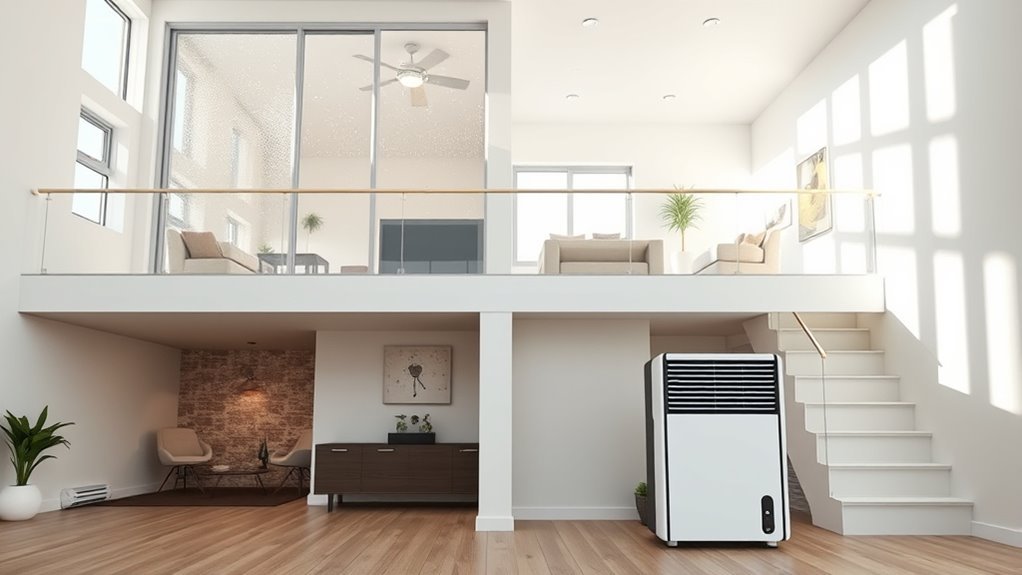
For one open damp area, start with one properly sized dehumidifier. For separate damp rooms, closed doors, multiple floors, or moisture sources in different places, plan on more than one unit. Count damp zones first: a basement, bathroom, laundry room, closed bedroom, or crawl-space-adjacent room can each behave like its own moisture zone.
The EPA recommends keeping indoor humidity below 60% RH, ideally 30% to 50%. The CDC advises keeping home humidity no higher than 50% all day to help prevent mold. In everyday use, a practical target is about 40% to 50% in damp seasons, with 30% to 50% as the safe general range.
A dehumidifier is sized by how much water it removes in 24 hours, not by how much water its bucket holds.
Recommended Products

【The Undisputed Champion — Industry-Leading Dehumidifier Brand】When you choose AEOCKY, you get double market validation. According to data independently verified by Stackline, a leading third-party data analytics company, AEOCKY was an industry‑leading dehumidifier brand on Amazon U.S. in 2025. This means you’re not just choosing a flagship product from a market leader, but a top-performing brand backed by independent market data and trusted by millions of real users, delivering the ultimate combination of performance, quality and trust.

2500 Sq. Ft Dehumidifier - SEMKAP dehumidifier for basement features a quiet, high-performance compressor that removes up to 32 pints of moisture per day (at 95°F, 90% RH). Ideal for basements, offices, bathrooms, bedrooms, kitchens, stockrooms, living rooms, laundry rooms, garages, crawlspaces, or RVs. It helps maintain optimal humidity between 40%–60%RH for healthier, more comfortable living

POWERFUL 2,500 SQ. FT. COVERAGE - Stop letting sticky, heavy air dictate your comfort. The BANABIE dehumidifier utilizes a high-efficiency rotary compressor to deliver heavy-duty moisture removal, extracting 32 pints daily (at 95°F, 90%RH). Engineered with a smart integrated airflow system, this unit effectively covers up to 2,500 Sq. Ft., ensuring that your basement, crawl space, or large open floor plans stay bone-dry
Do You Need One Dehumidifier Per Room?
You do not need one dehumidifier in every room by default. You need separate coverage only where humidity remains high after doors, airflow, and moisture sources are handled. If two rooms are connected and readings fall together, one unit may be enough. If a closed room still smells musty or reads above target, treat it as a separate zone.
Can One Dehumidifier Cover a Whole House?
A single portable dehumidifier rarely controls an entire multi-room house because dry air does not move evenly through closed doors, stairwells, and separate floors. A whole-home dehumidifier is different because it connects to central HVAC ductwork and must be sized and installed by a professional. Compare that option when several rooms stay humid, not just one basement corner.
Use this quick decision guide:
- Use one dehumidifier if the damp area is one open room or connected space and humidity drops into range within a day or two.
- Use two or more dehumidifiers if dampness is spread across closed rooms, several floors, or separate areas such as a basement and laundry room.
- Consider a whole-home dehumidifier if humidity is high throughout the house, your HVAC system can support it, and portable units are not keeping up.
Note: Portable dehumidifier capacity is measured in pints per 24 hours under test conditions. A “50-pint” unit does not mean the bucket holds 50 pints; it means the unit can remove about that much moisture per day under rated conditions.
Check Room Size and Layout
Start by measuring each room’s square footage. Multiply the room’s length by its width, then write down whether the space is open, closed off, on a separate floor, or connected by hallways. Layout matters because dry air does not move well through closed doors, tight corners, stairwells, or cluttered basements.
One dehumidifier can often manage an open basement, large bedroom, or connected living area if air moves freely. Enclosed bathrooms, laundry rooms, crawl-space entrances, storage rooms, and finished basement rooms often need their own unit or at least their own humidity reading.
| Home layout | Best approach |
|---|---|
| One open damp area | Start with one correctly sized unit near the dampest point. |
| Several closed rooms | Use separate units or rotate one unit only if readings stay controlled in every room. |
| Multiple floors | Use at least one reading per floor; damp lower levels usually need dedicated coverage. |
| Whole house feels humid | Compare portable units with a professionally sized whole-home dehumidifier. |
If air moves freely between rooms, place the unit where moisture collects fastest, such as a basement, laundry room, or bathroom-adjacent hallway. On multiple levels, several smaller or medium units usually control moisture more evenly than one oversized unit sitting far from the problem.
Recommended Products

Upgrade High Efficient Dehumidification: Dehumidifier utilize semi conductor condensation technology, ensuring quiet operation while effectively extracting moisture from the air. This advanced feature helps keep humidity levels below 45%

【Ideal for Large Homes & Basements (Up to 5,000 Sq. Ft)】The Waykar 80 pint dehumidifier efficiently removes up to 80 pints of moisture per day in high-humidity conditions (95°F, 90% RH). In warmer, damp spaces like basements (86°F, 80% RH), it removes 62 pints/day. This dehumidifier for basement is perfect for large areas such as basements, bathrooms, bedrooms, and living rooms. Customize your space by adjusting the humidity level from 30% to 80%, creating a drier and healthier environment

120-Pint/Day Dehumidifier for Large Spaces Up to 6,000 Sq. Ft.: This powerful dehumidifier for basement removes 120 pints/day in humid conditions (95℉, 90% RH) and 90 pints/day in warm, damp environments (86℉, 80% RH). Ideal for spaces up to 6,000 sq. ft., including offices, bedrooms, kitchens, living rooms, garages, and RVs. The ENERGY STAR certified dehumidifier maintains humidity between 30%–80%, providing a wider range than most models, which typically range from 40%–80%.
Measure How Damp Each Room Is
Before buying another machine, measure the humidity in each room. Moisture problems often cluster in bathrooms, basements, kitchens, laundry rooms, crawl-space areas, and rooms with poor airflow. A room that feels fine at noon may spike after showers, cooking, laundry, rain, or overnight temperature drops.
Check Room Humidity
Use a hygrometer to measure relative humidity in each room. Check readings at least twice a day for a few days: once during normal use and once when the room is likely to be damp. Bathrooms may spike after showers, kitchens after cooking, and basements after rain.
Use these readings as your guide:
- 30% to 50% RH: Usually a good range for comfort and moisture control.
- 50% to 60% RH: Watch closely, especially if the room smells musty or has condensation.
- Above 60% RH: Add capacity, improve ventilation, or fix moisture sources.
- Below 30% RH: The air may become too dry for comfort, wood furnishings, and some materials.
Spot Moisture Signs
Even before you measure, look for signs that a room is holding too much moisture. Musty odors, visible condensation on windows or walls, damp patches, peeling paint, warped wood, and mold spots all point to poor moisture control. The American Lung Association lists musty odor, moisture on cold surfaces, and water stains as key signs of a moisture problem.
Check bathrooms, basements, kitchens, and laundry rooms first. These high-humidity zones usually reveal the problem fastest. If condensation appears in several rooms, one dehumidifier in a single location probably is not reaching all the damp air.
Use a Hygrometer
A hygrometer gives you the numbers to act on. Place one in each problem room, or move one device from room to room and record the readings. Digital hygrometers are inexpensive and show real-time changes, so you can see whether your dehumidifier is actually lowering humidity.
Record each room’s reading, time of day, and moisture signs. After 24 to 48 hours of running a dehumidifier, check again. If the room stays above your target range, you may need a larger unit, a second unit, better airflow, continuous drainage, or a moisture repair.
| What to log | Why it matters |
|---|---|
| Room name, floor, and door position | Shows whether a room is connected to the dehumidifier or isolated from it. |
| Morning and evening RH readings | Catches humidity spikes after showers, laundry, cooking, rain, or overnight cooling. |
| Visible signs such as condensation, stains, or musty odor | Separates normal seasonal humidity from a leak, drainage issue, or ventilation problem. |
Match Dehumidifier Capacity to the Space
To match a dehumidifier to your space, use two numbers: the room’s square footage and the dampness level without dehumidification. The ENERGY STAR dehumidifier buying guide explains that capacity depends on both the size of the space and the conditions in that space. Treat the table below as a starting point, then confirm with a hygrometer after the unit runs.
Pro Tip: ENERGY STAR notes that it is better to oversize than undersize a portable dehumidifier. An undersized unit may run constantly and still fail to reach your target humidity.
| Condition without dehumidification | Typical signs | Under 2,000 sq. ft. | Over 2,000 sq. ft. |
|---|---|---|---|
| Slightly to moderately damp | Feels damp; occasional musty odor; roughly 50%–75% RH | 20–30 pints/day | 30+ pints/day |
| Very damp | Consistent damp smell; damp spots; roughly 75%–90% RH | 25–40 pints/day | 40+ pints/day |
| Wet | Sweating walls or floors; seepage; heavy laundry load; roughly 90%–100% RH | 30–50 pints/day | 50+ pints/day |
These are minimum capacity ranges, not guarantees. A cold basement, leaky foundation, indoor laundry drying, or poor ventilation can increase the moisture load. If the dehumidifier reaches your target quickly and cycles off, the capacity is usually adequate. If it runs nonstop and humidity stays high, it is undersized or the moisture source needs repair.
Note: If you owned an older dehumidifier, do not compare old and new pint ratings one-for-one. ENERGY STAR explains that since June 2019, DOE testing has rated portable dehumidifiers at 65°F instead of 80°F, which can make newer units show smaller capacity numbers than older labels.
Recommended Products

Room Size & Humidity Guidance:Performance varies with temperature, humidity, airflow, and moisture sources. Use continuous drainage in enclosed spaces for 40–50% RH; open areas reach 50–55% RH. For lower targets, choose a higher-capacity model. Readings may vary by location with air circulation—not a defect.

【Powerful 30-Pint Dehumidifier for Basement, Bedroom & Whole Home】This high-capacity dehumidifier removes up to 30 pints per day (95°F, 90% RH) and 25 pints under normal conditions (86°F, 80% RH).conditions, making it the go-to dehumidifier for basement spaces with sweating walls, a musty dehumidifier for bedroom comfort, and a versatile choice among dehumidifiers for home use. Covers up to 2,000 sq. ft., eliminating condensation, odors, and damp air for a fresher living environment.(Dehumidification capacity≠Water Tank Volume)

Efficient Water Collection Dehumidifier for 2,000 sq ft Large Space: Featuring a high-performance extraction system, this dehumidifiers for home collects up to 30 Pints of liquid daily under 95°F and 90% RH conditions. 30 Pints Dehumidifier for Basement is specifically engineered to maintain a dry atmosphere in spacious basements, bathrooms, or damp storage rooms where air circulation is limited.
Place Dehumidifiers in Problem Areas
Start with your dampest rooms: bathrooms, basements, kitchens, laundry rooms, and rooms with musty odors or condensation. Place each dehumidifier where the humidity source is strongest, but leave enough open space around the intake and exhaust so air can move freely.
Dampest Rooms First
Put dehumidifiers in the dampest rooms first. A basement with a musty smell, a bathroom with lingering steam, or a laundry room where clothes dry indoors will usually benefit more than a room that already stays in range.
- Basement: Use a larger-capacity unit, especially if the basement is cool, unfinished, or smells musty.
- Bathroom: Use exhaust ventilation first; add a dehumidifier nearby only if humidity stays high after showers.
- Laundry room: Vent dryers outdoors, avoid drying large loads indoors without airflow, and use a dehumidifier if humidity spikes.
- Closed storage room: Use a small or medium unit only if readings stay high; improve airflow where possible.
Match Placement To Moisture
Position units close to moisture sources such as washing machines, dryers, showers, damp foundation walls, or basement corners. Do not push the unit tight against a wall or furniture. Most portable dehumidifiers need open airflow around the intake and exhaust to work efficiently.
For one-room control, close windows and outside doors so the dehumidifier is not trying to dry outdoor air. For connected-room control, keep interior doors open only if you want one unit to treat the connected spaces and the humidity readings confirm it is working.
Think About Drainage and Temperature
If the reservoir fills quickly, use a continuous drain hose to a floor drain, utility sink, or condensate pump if your model supports it. A full bucket stops many units automatically, which means humidity rises again while the machine is off.
Basement temperature also matters. ENERGY STAR notes that if a space often falls below 65°F, frost can form on the coils and reduce performance. In cool basements, choose a model rated for lower temperatures or one with an auto-defrost feature.
Warning: Do not place a dehumidifier in standing water, do not run cords across wet floors, and avoid extension cords unless the manufacturer specifically allows them. In bathrooms, laundry rooms, and damp basements, follow the unit manual and use properly protected outlets.
When One Dehumidifier Isn’t Enough
One dehumidifier is not enough when indoor humidity stays high in areas the unit cannot reach. If one machine lowers the basement but the upstairs bathroom, bedroom, or laundry room still reads above 50% to 60%, you need more targeted control.
You may need another unit when:
- humidity stays high after 24 to 48 hours of continuous operation;
- condensation appears in rooms away from the dehumidifier;
- the bucket fills several times a day;
- musty odors remain in closed rooms;
- humidity spikes on a different floor;
- one area is wet while the rest of the home is normal.
Multiple dehumidifiers are especially useful in homes with finished basements, closed bedroom doors, basement bathrooms, indoor laundry drying, or split-level layouts. Instead of overworking one machine, place each unit where moisture actually builds.
Signs You Need Another Unit
Still seeing humidity around 60% with your dehumidifier running? That is a strong signal that the current setup is not controlling moisture well enough. Check the reading with a hygrometer before buying another unit, then look for the reason humidity is staying high.
Common signs you need another unit or more capacity include:
- Persistent condensation: Water on windows, cold walls, pipes, or basement surfaces means moisture is still building.
- Fast-filling reservoir: If you empty the bucket constantly, the moisture load may be too high for one unit.
- Musty smell in several rooms: Damp air is spread out, so one machine may not be reaching it.
- Damp patches: Local wet spots need targeted treatment and may also point to leaks.
- No progress after two days: If readings barely move, the unit may be undersized, blocked, frozen, or poorly placed.
Before adding another machine, check the basics: clean the filter, make sure airflow is not blocked, empty the bucket, confirm the humidistat setting, and close outside windows or doors. If water is coming through a wall, roof, plumbing line, or foundation, fix that source first.
Keep Mold Away With the Right Humidity
Keeping indoor humidity in the right range helps reduce mold risk. The EPA recommends low indoor humidity below 60% RH, ideally 30% to 50%, and the CDC recommends keeping home humidity no higher than 50% all day. A dehumidifier can help you reach that range in damp areas, but it is only one part of moisture control.
Keep humidity controlled, fix water sources quickly, and dry wet materials fast. Mold prevention starts with moisture control.
Use these mold-prevention habits:
- Watch for condensation on windows, pipes, and cold walls.
- Run a dehumidifier in high-moisture zones when readings are high.
- Use bathroom and kitchen exhaust fans that vent outdoors.
- Vent clothes dryers outdoors and avoid trapping laundry moisture indoors.
- Fix roof, wall, plumbing, and foundation leaks quickly.
- Clean and dry water-damaged materials as soon as possible after leaks or flooding.
Warning: A dehumidifier does not remove existing mold. If you can see or smell mold, clean it safely and fix the moisture source. The CDC says mold should be removed and the moisture problem corrected.
Maintain and Recheck Your Setup
After you choose the number of dehumidifiers, keep checking the results. Good humidity control is seasonal. A setup that works in spring may need adjustment during summer humidity, heavy rain, winter condensation, or periods of indoor laundry drying.
Use this maintenance checklist:
- Clean or rinse the filter as directed by the manufacturer.
- Empty and rinse the bucket regularly so standing water does not sit in the unit.
- Check drain hoses for kinks, clogs, and poor slope.
- Keep the intake and exhaust clear.
- Recheck humidity after storms, plumbing leaks, or long periods of closed windows.
- Set the humidistat to a practical target, usually around 45% to 50% in damp rooms.
If the room drops below 30% RH, reduce runtime or raise the humidity setting. Over-drying can feel uncomfortable and may affect wood floors, furniture, instruments, and some stored items.
Special Situations: COPD, Gnats, and Laundry Rooms
Some rooms and health concerns need extra care. A dehumidifier can help reduce dampness, but it should not replace medical advice, pest-source control, or proper ventilation.
COPD and High Humidity
If someone in your home has COPD or another lung condition, measure humidity instead of guessing. Dampness and mold can irritate the lungs, while air that is too dry can also feel uncomfortable. Keep the home in a balanced range and ask a clinician for personal guidance if symptoms worsen.
Gnats and Houseplants
A dehumidifier may make a damp room less inviting, but it will not solve every gnat problem. Fungus gnats are usually tied to moist houseplant growing media. Colorado State University Extension recommends letting the top 1 to 2 inches of growing medium dry between waterings to reduce egg and larval survival.
Laundry Room Moisture
Laundry rooms often need targeted humidity control because washing, drying, and damp fabrics add moisture to the air. The EPA lists drying clothes indoors as a source of excess indoor moisture. Use outdoor-vented dryer exhaust where required, space clothes for airflow, and use a dehumidifier if humidity stays high.
Frequently Asked Questions
Can one dehumidifier work for a whole house?
One portable dehumidifier can help an open area, but it usually will not control a whole multi-room house evenly. Closed doors, stairwells, separate floors, and different moisture sources limit airflow. If the whole home stays humid, compare multiple portable units with a professionally sized whole-home dehumidifier.
Is it better to have multiple dehumidifiers in one house?
Yes, multiple dehumidifiers can be better if your moisture problems are in separate rooms, on different floors, or behind closed doors. One unit is usually best for one open area. Several units give you better control when dampness is spread out.
Should you use a dehumidifier if you have COPD?
A dehumidifier may help if indoor humidity is high, because dampness and mold can irritate the lungs. Measure first and aim for a balanced range, usually about 30% to 50% RH. Do not over-dry the air, and ask your clinician for advice if humidity changes affect symptoms.
Will a dehumidifier help with gnats?
It can help indirectly if the room is very damp, but fungus gnats usually breed in moist houseplant soil. Let the top 1 to 2 inches of potting mix dry between waterings, remove decaying plant material, and use sticky traps if needed.
How big of a dehumidifier do I need for a 2,000 sq. ft. house?
For one open 2,000 sq. ft. damp area, many homes start in the 30- to 50-pint-per-day range depending on dampness. For a whole house with separate rooms and floors, you may need multiple portable units or a professionally sized whole-home dehumidifier.
Should doors be open or closed when using a dehumidifier?
Close outside doors and windows so you are not pulling in humid outdoor air. Keep interior doors open only when one unit is meant to dry connected rooms. If a closed room stays damp, it likely needs its own unit or better airflow.
Can a dehumidifier kill mold?
No. A dehumidifier helps reduce the moisture that allows mold to grow, but it does not kill or remove existing mold. Clean visible mold safely, dry wet materials, and fix leaks or moisture sources.
How long should you run a dehumidifier?
Run it until the room reaches your target humidity, then let the humidistat cycle the unit as needed. In very damp spaces, it may run for many hours at first. If it never reaches target humidity, check placement, capacity, drainage, airflow, and moisture sources.
Conclusion
So, how many dehumidifiers do you need? Start with one correctly sized unit for one open damp area. Add another unit when humidity stays high in separate rooms, on another floor, or in a problem zone the first unit cannot reach. Use a hygrometer, aim for about 30% to 50% RH, and size the unit by both square footage and dampness level. If the whole house stays humid, compare multiple portable units with a professionally sized whole-home dehumidifier.
Sources
- U.S. Environmental Protection Agency — Mold Course Chapter 9 — backs humidity targets, condensation prevention, dehumidification, and moisture-source control.
- Centers for Disease Control and Prevention — Mold — backs mold-prevention humidity guidance, ventilation advice, and mold-cleanup limits.
- ENERGY STAR — Dehumidifiers — backs dehumidifier buying guidance, capacity ranges, drainage, low-temperature operation, and whole-home notes.
- ENERGY STAR — Dehumidifier Testing and Capacity — backs pints-per-day capacity definitions and post-2019 DOE rating changes.
- American Lung Association — Mold — backs moisture-problem signs and respiratory-health cautions.
- Colorado State University Extension — Fungus Gnats as Houseplant and Indoor Pests — backs fungus gnat moisture and houseplant-soil guidance.