
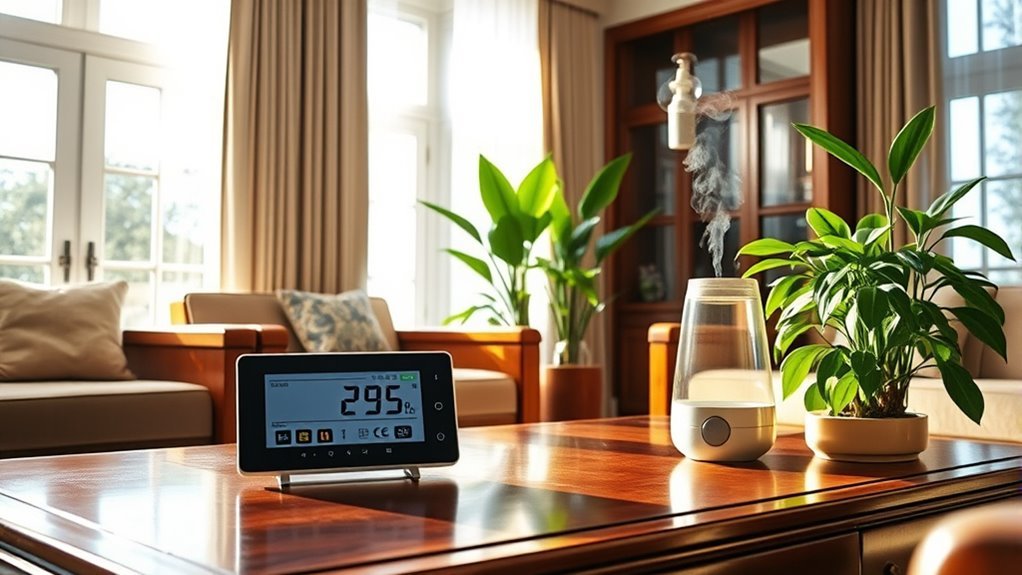
To control humidity and protect your living room furniture, aim for indoor humidity levels between 30% and 50%. Use a hygrometer to regularly measure humidity. Deploy dehumidifiers in damp areas and humidifiers in drier seasons. Improve ventilation in kitchens and bathrooms, and apply protective coatings to your furniture. Monitor your furniture every month for early signs of damage. Follow these steps to maintain a comfortable living space, and you’ll discover more effective strategies to enhance your home’s atmosphere.
Understanding the Importance of Humidity for Living Room Furniture
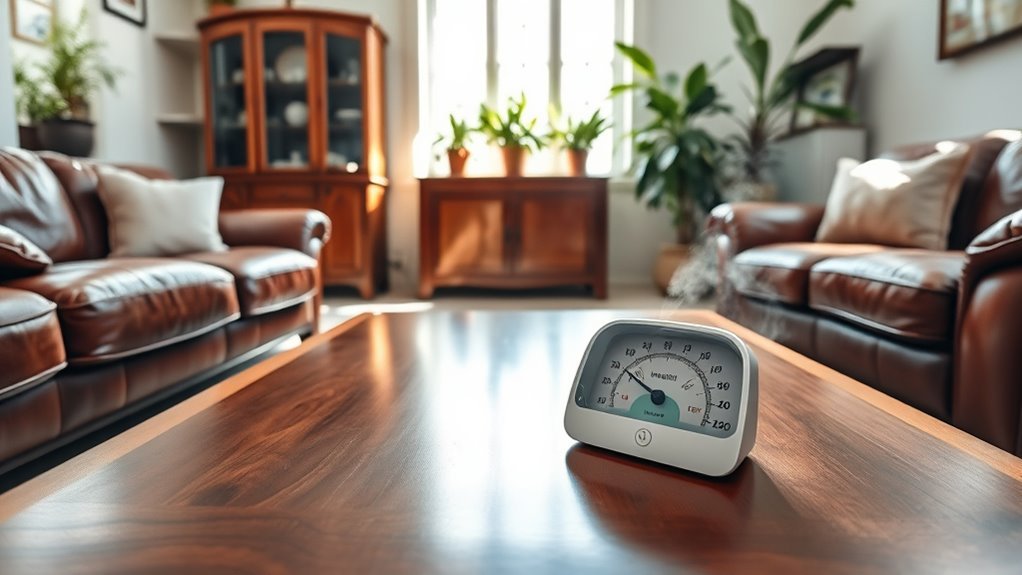
Understanding the importance of humidity for your living room furniture is essential if you want to maintain its beauty and longevity. Wood is hygroscopic, meaning it absorbs and releases moisture based on surrounding humidity levels. Maintaining indoor humidity between 30% and 50% helps prevent damage like cracking or warping. Excessive moisture can lead to mold growth on fabric items, while low humidity can loosen joints and degrade finishes. By controlling humidity, you can safeguard the structural integrity of your furniture and enhance air quality, reducing respiratory discomfort. Regularly monitoring humidity with a hygrometer allows you to make timely adjustments, ensuring you protect your furniture and create a comfortable living space. Prioritize ideal humidity to enjoy your beautiful furnishings for years to come.
Ideal Humidity Levels for Wooden Furniture: What You Need to Know?
To keep your wooden furniture in top condition, aim for a humidity level between 30% and 50%. This range helps prevent issues like drying, cracking, and warping, ensuring your pieces last longer and look great. By monitoring humidity levels and making seasonal adjustments, you can protect your investment effectively.
Recommended Humidity Range
Maintaining a humidity level between 30% and 50% relative humidity (RH) is essential for protecting your wooden furniture. This recommended humidity range minimizes moisture absorption or loss, preventing issues like cracking, warping, and loose joints. To achieve the ideal humidity, you might need to adjust your indoor environment seasonally, especially with heating and cooling systems in use. Regularly monitoring humidity levels with a hygrometer allows you to make timely adjustments, ensuring your wood furniture remains in top shape. By actively managing humidity, you not only protect your furniture but also enhance your overall indoor air quality and comfort. So, take control of humidity today and create a more inviting living space that celebrates your wood furniture.
Effects of Humidity Imbalance
When humidity levels fluctuate outside the ideal range of 30% to 50%, your wooden furniture can suffer considerable damage. Here’s what can happen:
- Drying and Cracking: Low humidity causes wood to become brittle, leading to cracks.
- Loose Joints: Insufficient moisture can result in loose joints, compromising furniture stability.
- Mold Growth: Excessive humidity fosters mold growth, threatening both your health and your furniture’s integrity.
- Wood Swelling: High moisture levels cause wood to swell, distorting its shape.
To protect your investment, monitor humidity levels regularly with a hygrometer. Use humidifiers in winter and dehumidifiers in summer to maintain stability. By taking these steps, you can prevent moisture issues and considerably reduce the risk of long-term damage.
Practical Strategies for Controlling Humidity Levels
To keep your furniture in top shape, you’ll want to monitor humidity levels regularly with a hygrometer, aiming for a range between 30% and 50%. Using dehumidifiers can effectively reduce excess moisture, especially during summer months when humidity tends to rise. Don’t forget to improve ventilation in key areas like kitchens and bathrooms to help keep humidity in check.
Monitor Humidity Levels Regularly
Regularly monitoring humidity levels is essential for preserving the integrity of your furniture. To protect your wood furniture and guarantee ideal humidity, follow these practical strategies:
- Use a hygrometer to measure indoor humidity, targeting a range of 30% to 50%.
- Keep an eye on humidity fluctuations during seasonal changes to prevent moisture levels that encourage mold growth.
- Schedule inspections of stored furniture every 1–2 months to catch early signs of damage, like condensation or mold.
- Maintain a consistent humidity control routine with dehumidifiers or humidifiers to stabilize conditions year-round.
Utilize Dehumidifiers Effectively
Maintaining ideal humidity levels is essential for furniture preservation, and utilizing dehumidifiers effectively can make a significant difference. Start by installing a whole-house dehumidifier to keep consistent humidity levels between 30% and 50%, which protects your wood furniture from warping. For targeted areas, set up portable dehumidifiers near valuable pieces, adjusting them as needed. Regularly monitor humidity levels with hygrometers, allowing you to adapt your dehumidifiers accordingly. Don’t forget to empty and clean the water reservoir every few days to prevent mold growth. Position your dehumidifiers away from walls and corners to improve air circulation and maximize moisture removal, ensuring your living room remains a sanctuary for your furniture.
Improve Ventilation Strategies
While humidity control is essential for preserving your furniture, improving ventilation strategies can greatly enhance your efforts. Here are four practical ways to maintain balanced humidity levels:
- Use exhaust fans in kitchens and bathrooms regularly to expel moisture-laden air.
- Open windows on dry days to promote airflow and allow fresh air to reduce indoor humidity naturally.
- Install ceiling fans to enhance air circulation, distributing humidity evenly and mitigating moisture accumulation.
- Strategically use dehumidifiers in the living room to actively remove excess moisture from the air, especially during humid weather.
Measuring Humidity Levels in Your Home
How can you guarantee your home’s humidity levels are just right for your furniture? Start by using a hygrometer to accurately measure indoor humidity levels. The ideal range for wood furniture is between 30% and 50% relative humidity (RH). Regularly monitor humidity, especially during seasonal changes, to keep it in check. Digital hygrometers offer precise readings and can track humidity trends over time, alerting you to any imbalances. Watch for signs of humidity imbalance, like creaking floors or condensation on windows, which indicate a need for better humidity control. If you have a smart HVAC system, take advantage of built-in humidity sensors that automatically adjust levels, ensuring your furniture stays protected.
Why You Need a Dehumidifier for Your Furniture
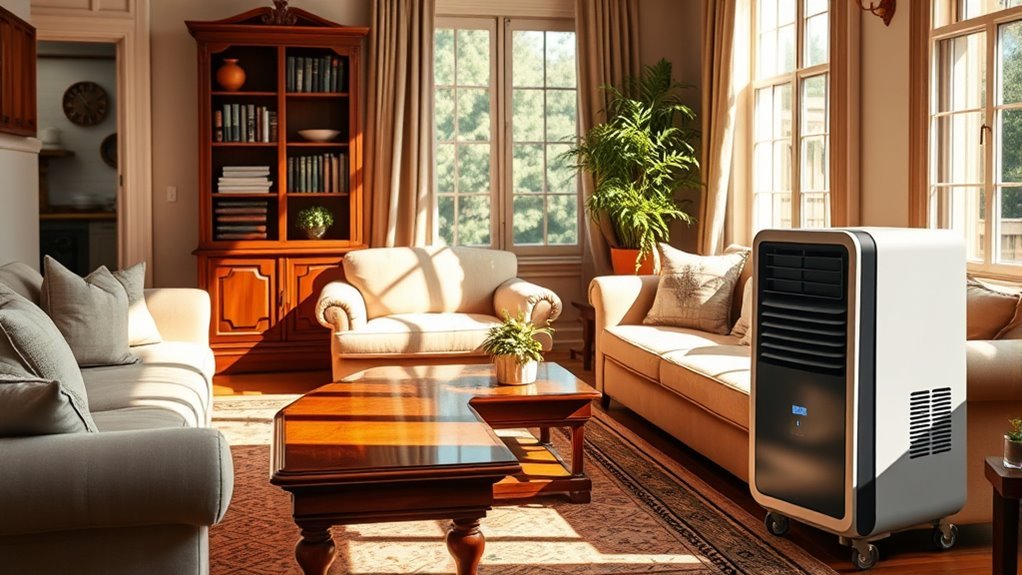
To protect your furniture from the damaging effects of excess moisture, investing in a dehumidifier is essential. Here’s why you need one:
Investing in a dehumidifier is crucial for safeguarding your furniture from excess moisture damage.
- Ideal Humidity Levels: A dehumidifier helps maintain humidity levels between 30% and 50%, vital for preventing wood furniture damage.
- Mold and Mildew Prevention: By reducing excess moisture, it considerably lowers the risk of mold and mildew on upholstered items.
- Improved Indoor Air Quality: Regular use enhances air quality, alleviating discomfort from high humidity, such as respiratory irritation.
- Localized Protection: Portable units can be placed near valuable wooden furniture for targeted defense.
Using a dehumidifier not only protects your furniture but also contributes to a healthier living environment.
Protecting Wooden Furniture From Humidity Damage
Maintaining the right humidity levels is key to safeguarding your wooden furniture from damage. Aim for indoor humidity between 30% and 50% to prevent your wood furniture from swelling, cracking, or warping due to moisture imbalance. High humidity can lead to mold and mildew, while low levels can dry out the wood, compromising its integrity. Use a hygrometer to monitor humidity accurately, and adjust with humidifiers or dehumidifiers as needed. Regularly inspect your furniture every 1-2 months for early signs of humidity damage, like warping or mold. Additionally, employ breathable covers and guarantee good air circulation in storage areas to control moisture and protect your cherished pieces. With proper care, you can preserve the beauty and longevity of your wood furniture.
Regular Maintenance for Long-Lasting Furniture Care
While regular maintenance may seem time-consuming, it’s essential for ensuring your furniture lasts for years to come. By following these steps, you can effectively protect your investment:
- Monitor humidity levels: Use a hygrometer to keep relative humidity between 30-50%.
- Inspect furniture: Check every 1-2 months for moisture-related issues like mold or warping.
- Use dehumidifiers: Place them in areas prone to high humidity, especially during summer.
- Apply protective coatings: Wax or seal wooden furniture at least once a season to prevent moisture absorption.
How to Create a Comfortable Living Space
Creating a comfortable living space goes hand in hand with maintaining the right humidity levels for your furniture. Aim for indoor humidity levels between 30% and 50% to protect and preserve your furnishings. Regularly monitor humidity with a hygrometer and consider dehumidifiers in damp areas.
| Action | Purpose |
|---|---|
| Monitor humidity levels | Maintain a consistent environment |
| Use dehumidifiers | Prevent mold and protect upholstery |
| Place furniture wisely | Minimize stress from heat and sunlight |
Additionally, utilize curtains or UV-protective films to shield your furniture from damaging rays. By keeping temperature and moisture in check, you’ll create a harmonious atmosphere that enhances comfort and extends the life of your furniture.
Frequently Asked Questions
How to Protect Furniture From Humidity?
To protect your furniture from humidity, use humidity monitors to track levels, invest in dehumidifier options, enhance air circulation, apply protective coatings, and implement moisture barriers during seasonal maintenance for ideal preservation of furniture materials.
How to Quickly Reduce Humidity in a Room?
To quickly reduce humidity, use dehumidifier options, implement ventilation techniques, and add moisture absorbers. Consider air conditioning, humidity monitors, and weatherproofing tips, while incorporating indoor plants and insulation methods for ideal results.
How to Keep a Room at 50% Humidity?
To keep your room at 50% humidity, use humidity meters and dehumidifier options. Implement ventilation tips, seasonal adjustments, and weather stripping. Consider indoor plants and moisture barriers to create a perfectly balanced, breathable oasis.
Will Mold Grow in 60% Humidity?
Yes, mold can grow at 60% humidity. To prevent mold growth, maintain humidity levels below 50%, guarantee proper air circulation, and implement moisture control strategies. Prioritize furniture care for a healthier indoor air environment.
Conclusion
By keeping humidity levels in check, you’re not just preserving your wooden furniture; you’re creating a cozy, welcoming living space. It’s true that a little effort goes a long way—using a dehumidifier and regularly checking humidity can prevent warping and cracking. So, take the time to implement these strategies. Your furniture will thank you, and you’ll enjoy a comfortable environment that feels just right, no matter the season. Happy decorating!

Leave a Reply