
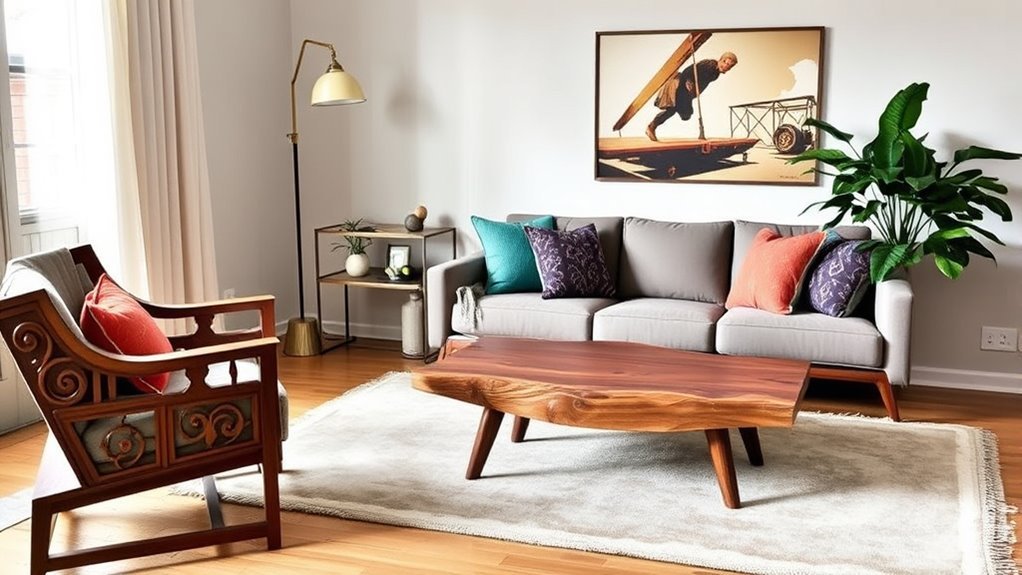
Mixing furniture styles can truly showcase your unique personality while creating a cohesive look. Start by selecting an anchor piece that resonates with you and guides the rest of your choices. Apply the 80/20 rule, dedicating 80% of your space to one primary style and using the remaining 20% for contrasts. Incorporate a color palette of three to five core colors, and don’t forget to layer textures for added depth. Stick around to discover more essential tips for harmony!
Why Mixing Furniture Styles Is Essential for Personalization
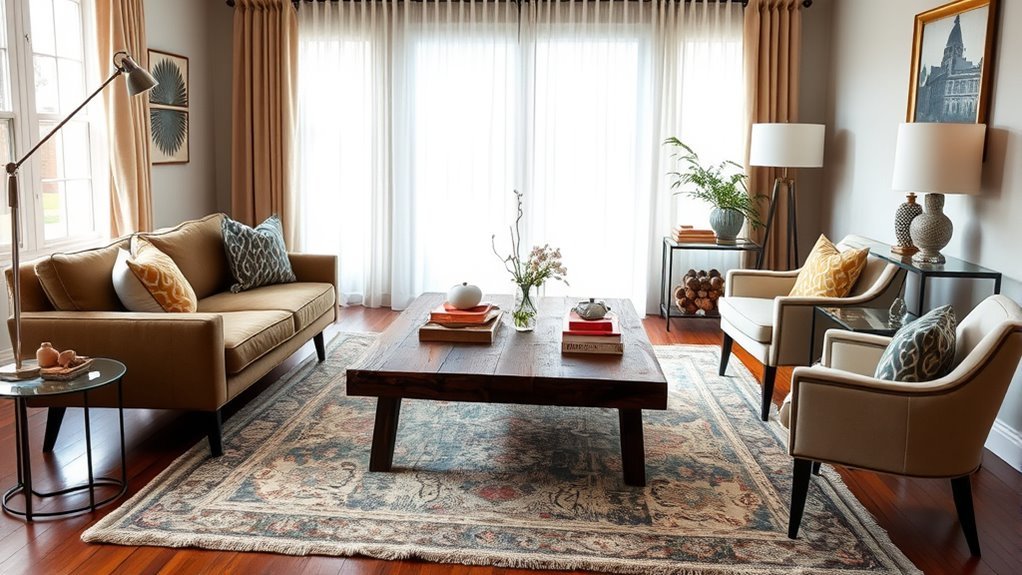
When you embrace the art of mixing furniture styles, you reveal a world where your unique personality shines through every piece in your home. Personalization becomes a thrilling adventure, allowing you to create eclectic spaces that tell your story. By blending contrasting styles, like mid-century modern with vintage boho, you enhance visual interest and invite warmth into your environment. Each design element reflects your interests, moving away from generic, cookie-cutter aesthetics. Over 60% of homeowners are already dancing with this trend, engaging in creative experimentation that fosters a richer living experience. So go ahead, mix those styles! Let your choices spark joy, and watch as your home transforms into a vibrant tapestry of your unique personality.
Choosing Your Anchor Piece: A Step-By-Step Guide
Choosing the right anchor piece can transform your space and set the tone for your entire design. Start by selecting a substantial item, like a sofa or dining table, that resonates with your personal style. This anchor piece will guide your furniture selections, ensuring a cohesive look that stands the test of time. When you choose high-quality materials, you create a lasting foundation for your design. Next, consider secondary pieces that enhance your anchor, achieving a balanced look while allowing for playful contrasting elements. As you begin this design process, remember that your anchor piece will harmonize diverse styles, making it easier to evolve your space over time. Embrace the freedom that comes with mixing elements, and let your creativity flow.
How to Use the 80/20 Rule for Style Balance
Creating a balanced space can feel overwhelming, but applying the 80/20 rule simplifies the process. By dedicating 80% of your furniture and decor to a primary style, you lay a cohesive foundation, while the remaining 20% introduces contrasting styles for visual interest. Here’s how to apply the 80/20 rule effectively:
Applying the 80/20 rule helps create a harmonious space by blending a dominant style with contrasting elements for visual interest.
- Choose Your Primary Style: Select a dominant style that resonates with you, dictating colors, materials, and forms.
- Incorporate Contrasting Styles: Add unique elements—furniture or decor—that complement but differ from your primary choice.
- Evaluate Balance: Step back and assess the harmony of your space, ensuring it reflects your personal expression without chaos.
This approach streamlines your design process, empowering you to mix styles confidently and creatively.
Techniques for Selecting Your Color Palette
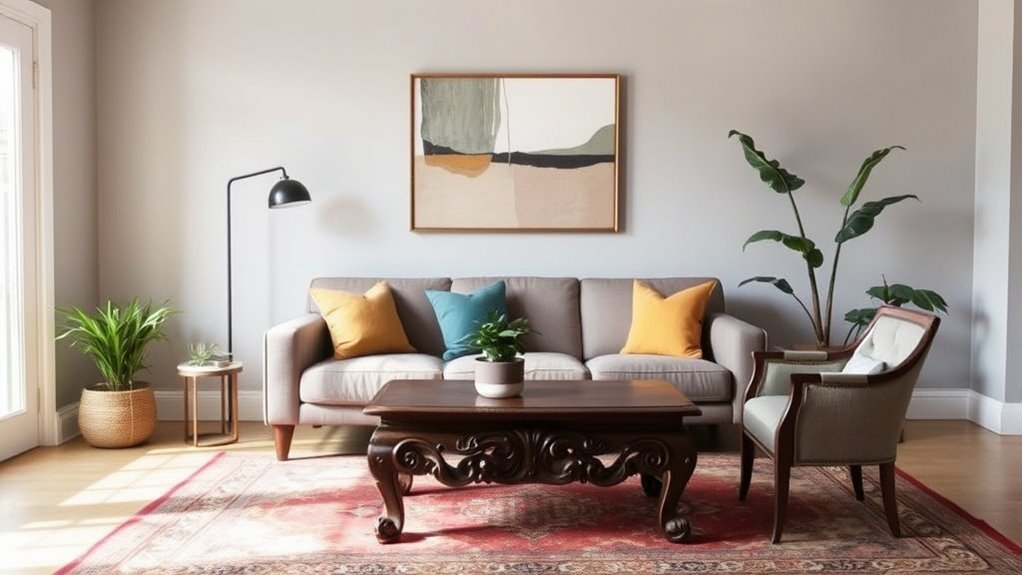
Mixing furniture styles not only enhances your space but also invites a unique character through color. Start with a neutral color palette—think whites, beiges, or grays—to create a cohesive base. Limit your selection to three to five core colors, repeating them throughout the space for visual rhythm. Use accent colors to highlight specific pieces; these should complement your primary colors without overwhelming the design. Pay attention to color undertones when mixing finishes, as consistent undertones enhance harmony. Consider the mood you want to evoke; warm colors create coziness, while cool colors promote calmness. By thoughtfully selecting your colors, you’ll achieve a cohesive design that reflects your personality and liberates your creative spirit.
Achieving Scale and Proportion for Balanced Furniture Design
When it comes to furniture design, achieving the right scale and proportion is essential for crafting a harmonious space. To create a balanced environment, focus on these key aspects:
- Match Visual Weight: Pair furniture with similar scale and visual weight to foster a cohesive look.
- Proportions Matter: Guarantee primary pieces, like sofas and dining tables, complement one another with their proportions, avoiding a cluttered feel.
- Distribute Styles: Mix styles evenly throughout the room to enhance visual balance, allowing each piece to contribute without overwhelming the space.
Layering Textures for Depth and Interest in Your Space
When you layer textures like soft linen with sleek marble or rugged wood, you create a mesmerizing visual experience that invites the eye to explore. Mixing these contrasting materials not only adds depth but also enhances the overall character of your space, making it feel thoughtfully curated. By thoughtfully pairing textures, you’ll establish a harmonious yet intriguing environment that reflects your unique style.
Complementary Texture Pairing
To create an enchanting space, layering complementary textures is key; it adds depth and visual interest that transforms any room. By thoughtfully pairing materials, you can achieve a cohesive atmosphere that feels curated and inviting. Consider these ideas for perfect texture blending:
- Mix Fabrics: Combine soft linens with plush velvet to introduce richness and comfort.
- Contrast Materials: Pair angular furniture with distressed wood for a balancing look that’s visually engaging.
- Diverse Silhouettes: Integrate polished metals with natural fibers, bridging various furniture styles seamlessly.
These thoughtful texture pairings allow contrasting materials to coexist harmoniously, elevating your design while reflecting your personal style. Embrace layering textures to create a dynamic yet cohesive space that evolves with your tastes.
Layering for Visual Interest
Layering for visual interest is all about creating an enchanting tapestry of textures that invigorates your space. Start by combining soft linen pillows with a sleek leather sofa, enhancing both sensory richness and visual depth. Don’t shy away from mixing materials; let distressed wood play against polished metal accents, crafting a dynamic contrast that adds character. Incorporate a variety of textures—plush rugs underfoot paired with smooth marble tables evoke a curated feel, ensuring your decor doesn’t fall flat. Experiment with different fabrics, like velvet and cotton, for a tactile experience that invites touch. Balance soft and hard elements to maintain cohesion, transforming your room into a thoughtfully designed haven of inspiring layers. Embrace the liberation that comes with textured harmony!
Bridging Different Styles With Decor
Bridging different furniture styles with decor can transform a space into a harmonious blend of the old and the new. Here’s how to create a cohesive atmosphere:
- Color and Texture: Choose a shared color or texture across decor items, like matching throw pillows with wooden picture frames, to unify contrasting styles.
- Layering Accessories: Mix modern and vintage accessories, such as sleek vases with classic books, to showcase an eclectic yet balanced composition.
- Silhouettes and Shapes: Use decorative elements with similar shapes to promote visual balance, ensuring that different styles work together seamlessly.
Common Mistakes to Avoid When Mixing Furniture Styles?
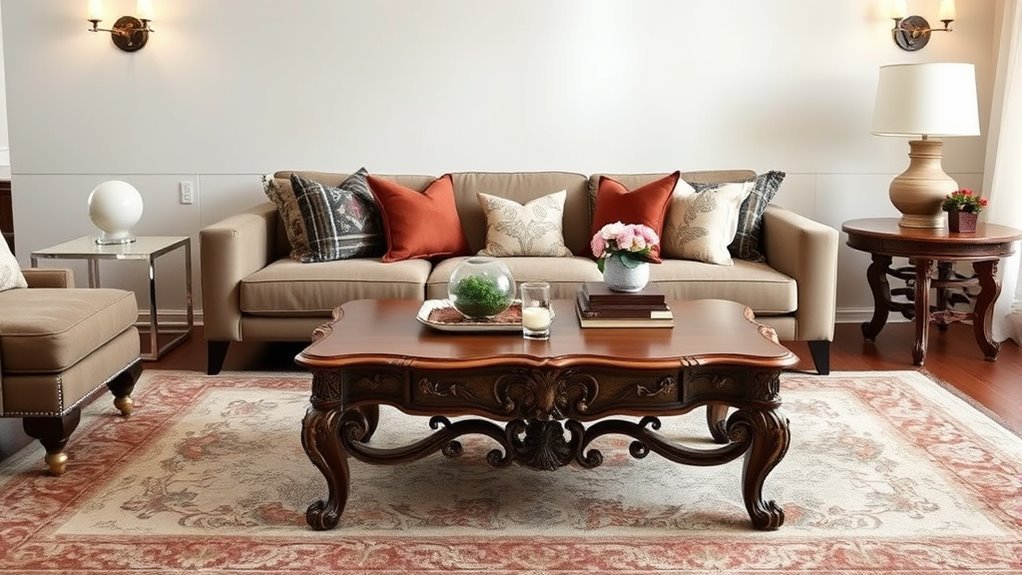
While mixing furniture styles can create a unique and personal space, it’s easy to fall into common pitfalls that disrupt harmony. Focus on avoiding these mistakes to guarantee your space feels intentional and inviting:
| Mistake | Impact | Solution |
|---|---|---|
| Ignoring balance and proportion | Leads to visual imbalance | Mix items with similar weights |
| Disregarding a cohesive palette | Results in a chaotic look | Choose 3-5 core colors |
| Overloading with contrasting styles | Causes confusion | Apply the 80/20 rule |
| Neglecting scale of furniture | Creates discomfort | Match sizes for harmony |
| Overlooking textures/materials | Diminishes cohesiveness | Repeat a unifying element |
Frequently Asked Questions
How Do I Choose a Color Palette for Mixed Styles?
Choose a color palette by exploring color theory. Mix complementary hues with neutral tones and accent colors to set the mood. Consider room size, lighting effects, and texture blending for a balanced and harmonious contrast.
What Are Some Examples of Cohesive Furniture Combinations?
You can create cohesive furniture combinations by blending eclectic combinations like mid-century modern with rustic charm, or pairing minimalist accents with industrial touches. Coastal elements and farmhouse fusion add contemporary flair and bohemian vibes for a liberated feel.
Can I Mix Modern and Vintage Furniture Effectively?
By blending modern aesthetics with vintage charm, you create a stunning contrast balance. Use color harmony and texture layering to accentuate statement pieces, establishing focal points that reflect your personal expression and smart space planning.
How Do I Maintain Functionality While Mixing Styles?
To maintain functionality while mixing styles, prioritize layout flexibility and space planning. Use multi-purpose furniture, adaptable pieces, and practical accessories. Guarantee comfort consideration and flow maintenance, balancing style hierarchy with effective storage solutions for a liberated space.
What Accessories Enhance a Mixed Furniture Style Look?
To enhance your mixed furniture style, use accent pillows and throw blankets for comfort, art pieces and statement vases for personality, area rugs for cohesion, and wall mirrors and lighting fixtures to add depth and ambiance.
Conclusion
In the world of interior design, variety is the spice of life. By thoughtfully mixing furniture styles, you can create a space that truly reflects your personality. Remember to choose an anchor piece, balance your elements, and layer textures for depth. As you bridge styles with decor, keep common mistakes at bay. Embrace the journey of design, and soon, your home will be a harmonious blend of your unique tastes, inviting and enchanting for all who enter.

Leave a Reply