
To prevent mold and mildew on your living room textiles, keep humidity levels between 30% and 50%. Regularly clean and vacuum your upholstery and curtains to remove dust. Address spills immediately, drying the fabrics thoroughly within 24-48 hours. Guarantee good ventilation by opening windows or using fans after activities like cooking or showering. Additionally, consider using mold-resistant fabrics. Implement these steps, and you’ll create a healthier environment for your textiles. Discover more helpful tips and techniques ahead.
Understanding Mold and Its Impact on Textiles
Understanding mold and its impact on textiles is essential for maintaining a healthy living environment. Mold thrives on damp fabrics, leading to potential damage and health risks, including allergic reactions and respiratory issues. Common textiles like upholstery, curtains, and carpets are particularly vulnerable to mold growth when moisture levels are high. To prevent damage, you need to regularly inspect and clean these items, as mold spores can hide within fibers. Maintain indoor air quality by keeping humidity below 60% and ensuring proper ventilation. If a spill occurs, clean it up immediately—preferably within 24-48 hours—to thwart mold proliferation. By taking these steps, you’ll protect your textiles and promote a healthier home.
Common Causes of Mold Growth on Fabrics
Mold growth on fabrics often stems from high humidity levels, usually above 60%, which creates an ideal breeding ground for spores. Poor ventilation in areas like closets and basements can trap moisture, further increasing the risk of mold. By understanding these common causes, you can take proactive steps to protect your textiles from potential damage.
High Humidity Levels
When indoor humidity levels rise above 60%, you create a perfect breeding ground for mold to thrive on your fabrics. High humidity levels often result from common activities like cooking and showering, which can introduce excess moisture in the air. If you leave damp areas, such as wet towels or blankets, without drying them promptly, you’re inviting mold to settle in. Additionally, leaky roofs or plumbing can markedly contribute to increased humidity, further elevating the risk. To prevent mold growth, guarantee proper ventilation in your living space. Use exhaust fans while cooking or showering and consider a dehumidifier to keep humidity levels in check. Taking these steps can help safeguard your textiles from mold damage.
Poor Ventilation Areas
High humidity levels can lead to a perfect storm for mold growth, especially in areas with poor ventilation. Without proper air circulation, moisture from the air can accumulate, creating an ideal environment for mold and mildew to thrive on your textiles. Activities like cooking or showering introduce excess moisture, and if damp items like towels are stored in your living room, that humidity level skyrockets. To prevent mold, make sure to use exhaust fans during these activities and consider opening windows to let fresh air in. Rearranging heavy furniture can also improve airflow, reducing trapped humidity. By taking these practical steps, you can greatly minimize the risk of mold on your beloved fabrics and maintain a healthier living space.
How to Keep Your Living Room Textiles Mold-Free
To keep your living room textiles mold-free, it’s essential to manage humidity levels and maintain cleanliness. Aim for indoor humidity between 30% and 50% to discourage mold growth. Regularly clean and vacuum your upholstery and curtains, removing dust and moisture that can lead to mold problems. When buying new textiles, consider mold-resistant fabrics or treatments to enhance their durability. Ascertain proper ventilation by opening windows or using fans, especially after activities that generate moisture, like cooking or drying laundry. If spills occur, address them immediately—dry the affected textiles thoroughly within 24-48 hours to prevent mold from taking hold. Always wear protective equipment when dealing with any potential mold issues to safeguard your health.
Effective Cleaning Techniques for Moldy Textiles
Cleaning moldy textiles can be an intimidating task, but with the right approach, you can restore your fabrics effectively. Start by taking them outside and brushing off any visible mold spores. Don’t forget to wear gloves and a mask to protect yourself from exposure to mold, which can lead to health problems. Next, scrub the affected areas with a mixture of hot water and non-ammonia soap. Afterward, disinfect the textiles using a solution of one cup of chlorine bleach to one gallon of water, applying it carefully. Allow the fabrics to air dry completely in a well-ventilated area. If you have heavily infested items like carpets or mattresses, it’s best to dispose of them to prevent further mold contamination.
How to Maintain Proper Humidity Levels at Home
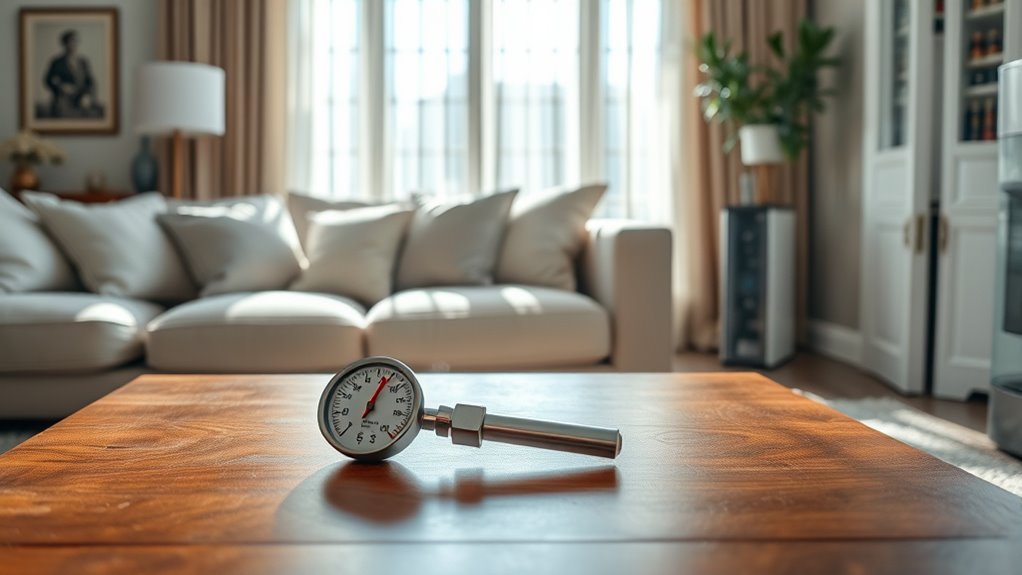
To effectively prevent mold growth on your textiles, it’s essential to maintain indoor humidity levels between 30-50%. You can achieve this by using dehumidifiers in damp areas and ensuring proper ventilation throughout your home. Regularly check for leaks and clean your air conditioning drip pans to keep moisture at bay.
Ideal Humidity Levels
Maintaining indoor humidity levels between 30% and 50% is essential for preventing mold and mildew on textiles. To achieve these ideal humidity levels, consider using dehumidifiers in damp areas or during humid weather. This helps reduce moisture accumulation in the air, creating a healthier environment for your textiles. Guarantee proper ventilation by utilizing exhaust fans in kitchens and bathrooms, as cooking and showering can considerably increase humidity. Regularly check and clean your HVAC systems to prevent any hidden moisture issues. On high humidity days, keep windows and doors closed, relying on air conditioning to regulate indoor humidity effectively. By taking these practical steps, you can protect your living space and enjoy a mold-free atmosphere.
Humidity Control Methods
While it might seem challenging to maintain proper humidity levels at home, implementing effective humidity control methods can greatly reduce the risk of mold and mildew on your textiles. Aim to keep humidity levels between 30% and 50% for ideal prevention. Here are some practical steps:
- Use dehumidifiers in damp areas to extract excess moisture.
- Guarantee proper ventilation by utilizing exhaust fans and opening windows for fresh airflow.
- Regularly check air conditioning systems, keeping drip pans clean and drain lines unobstructed.
Invest in a hygrometer to monitor humidity levels, allowing you to take action when mold spores indoors threaten your living space. By taking these steps, you’ll foster a healthier environment for your textiles and yourself.
When to Hire Mold Remediation Professionals?
If you’ve noticed mold growth on your textiles or a persistent musty odor in your living room, it’s essential to assess the situation carefully. If the mold covers more than 10 square feet, it’s time to hire mold remediation professionals. They have the specialized equipment and expertise to handle larger infestations effectively. If you detect ongoing mold despite your cleaning efforts or if moldy surfaces are present in HVAC systems, don’t hesitate to consult experts. Significant water leaks or plumbing leaks that have damaged your textiles also warrant professional help to avoid long-term mold growth. Finally, if you suspect hidden mold behind walls or under carpets, professionals can safely locate and remove it without causing further damage.
Frequently Asked Questions
What Keeps Mold Away?
To keep mold away, use mold resistant fabrics, control humidity, guarantee proper air circulation, and apply effective cleaning solutions. Also, follow ventilation tips like opening windows to reduce dampness and promote a healthier environment.
What Kills Mold Permanently?
To banish mold for good, embrace mold removal techniques like vinegar or hydrogen peroxide. Combine antifungal treatments with effective cleaning solutions, and employ moisture control methods, ensuring your space breathes freely without unwelcome guests.
Can Mold Cause Croup?
Yes, mold can exacerbate croup symptoms in children, increasing health risks. To protect their health, focus on prevention tips like maintaining a dry environment and regularly cleaning textiles to minimize mold effects.
What Can I Put in My Room to Stop Mold?
To stop mold, consider dehumidifier options and moisture absorbers like silica gel. Enhance air quality with essential oils and air purifiers. Don’t forget ventilation tips—open windows and circulate air regularly for a fresher room.
Conclusion
By following these steps, you can easily keep your living room textiles free from mold and mildew. You might think it’s too much effort, but investing a little time in prevention saves you from costly replacements and health risks later. Regular cleaning and maintaining proper humidity levels aren’t just chores; they’re essential practices for a healthy home. So, commit to these habits, and enjoy a fresh, mold-free living space all year round!

Leave a Reply