
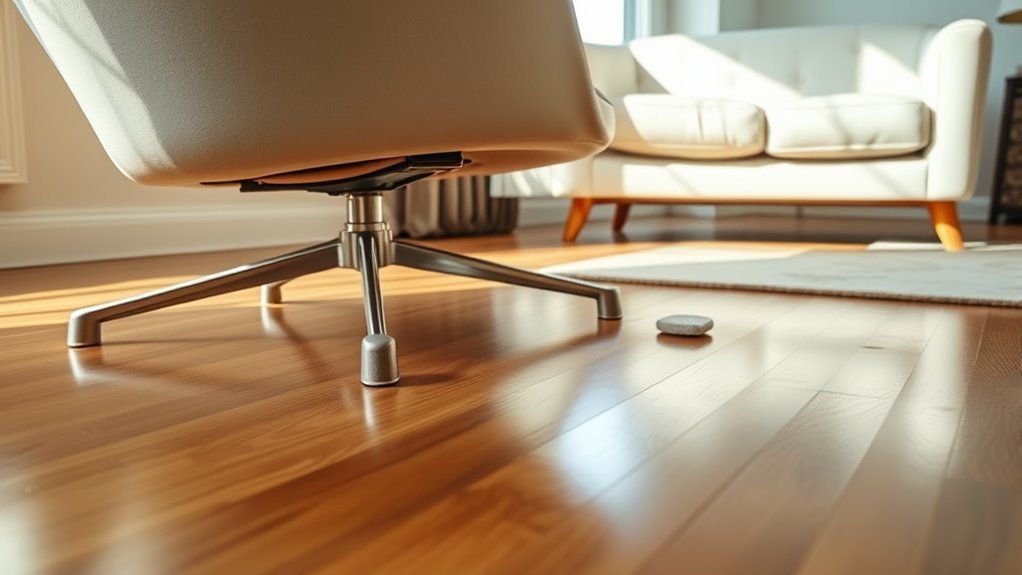
To protect your hardwood floors from chair and sofa legs, start by cleaning the surfaces to remove dirt. Assess your furniture’s weight, and then add soft felt or rubber pads to each leg. Regularly check these pads and replace them as needed to maintain effectiveness. Always lift furniture when moving it to avoid scratches. Additionally, consider using rugs in high-traffic areas for extra protection. Following these steps will help keep your floors pristine, and there’s more you can do to guarantee lasting beauty.
How Chair and Sofa Legs Damage Hardwood Floors
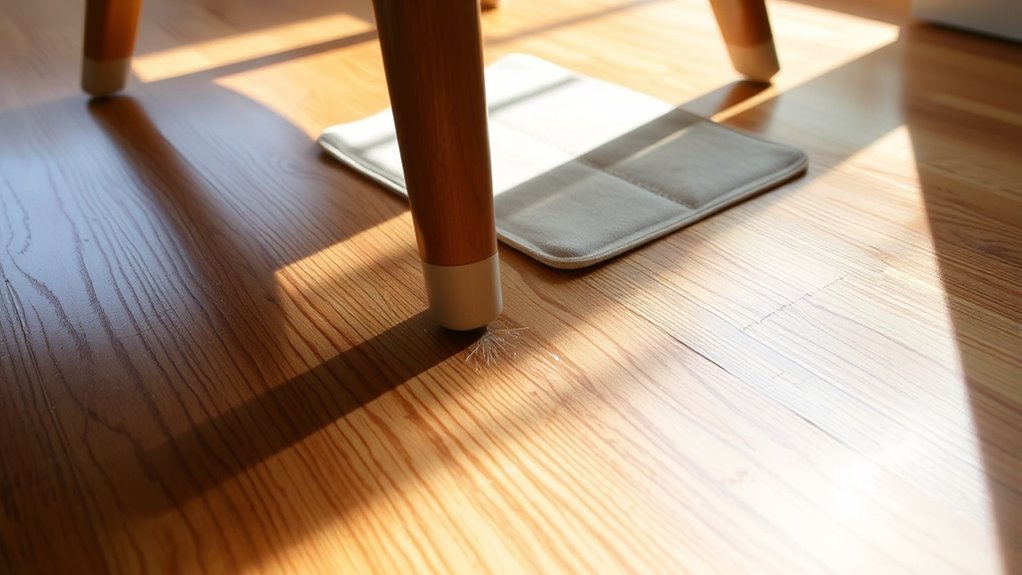
When you move chairs or sofas across hardwood floors, you might not realize how much damage those legs can inflict. Chair legs and furniture legs can easily scratch, dent, and scuff your beautiful hardwood surfaces. The weight and movement of heavy items like sofas increase the risk of deeper gouges. Furthermore, grit and debris trapped under these legs can be ground into the floor’s finish, leading to further wear and tear. Hard materials, such as plastic or metal, exacerbate the problem compared to softer options, making it vital to be mindful when moving furniture. Regularly shifting your items can create uneven wear patterns, so it’s essential to take steps to protect your hardwood floors from these potential damages.
Essential Preparation for Protecting Your Floors
Protecting your hardwood floors starts with thorough preparation. Begin by cleaning your hardwood floors to remove dirt and debris that can scratch the surface. Next, assess the weight and design of your chairs and sofas, since heavier pieces with sharper edges can cause more damage. Consider adding felt pads to the legs of your furniture; these create a soft barrier that helps prevent scratches and scuffs. Don’t forget to inspect and maintain these protective measures regularly—replace worn-out pads and clean chair legs to guarantee they continue to protect your hardwood floor. Finally, periodically rearranging your furniture can help distribute wear evenly, preventing localized damage and extending the life of your beautiful floors.
Choosing the Right Furniture Pads to Protect Hardwood Floors
When protecting your hardwood floors, choosing the right furniture pads is essential. You’ll want pads made from soft materials like felt or rubber, and their size and shape should match your furniture for ideal coverage. Regularly check and replace them to guarantee your floors remain scratch-free and in great condition.
Types Of Furniture Pads
Choosing the right furniture pads is crucial for safeguarding your hardwood floors from scratches and scuffs. Felt pads are a top choice for chair and sofa legs, providing a soft surface that minimizes damage. Rubber pads also work well, offering a non-slip grip and protection against heavy furniture. Make certain the pads are thick enough to cushion the weight and distribute pressure evenly across your floors. Consider using adhesive felt or rubber pads to guarantee they stay attached and don’t slip off. To maintain peak protection, regularly inspect your furniture pads and replace them as they wear down. By taking these steps, you can effectively protect hardwood floors and enjoy a beautiful, scratch-free environment.
Material Considerations For Protection
To effectively shield your hardwood floors from damage, selecting the right materials for furniture pads is essential. Choose furniture pads made from soft materials like felt, rubber, or cork; they cushion chair and sofa legs, reducing scratches and dents. Guarantee the pads are thick enough to absorb weight, minimizing floor damage. Opt for reliable adhesive options to keep the pads securely attached during movement. Regularly inspect and replace worn or damaged pads to maintain effective protection, as grit and debris can scratch your wood surface. If you’re feeling creative, consider DIY solutions like old carpet scraps or tennis balls for a custom fit. By choosing the right materials, you empower your floors to stay beautiful longer.
Size And Shape Matters
The right size and shape of furniture pads can greatly impact the protection of your hardwood floors. To guarantee effective safeguarding, consider these points:
- Match the size: Choose pads that fit the legs of your chairs and sofas perfectly.
- Distribute weight: Larger pads help distribute weight evenly, minimizing the risk of dents.
- Select the shape: Use round or square pads based on the legs’ shape, guaranteeing full coverage.
- Consider traffic: Thicker pads are ideal for high-traffic areas to withstand constant movement.
- Regular maintenance: Inspect and replace worn-out pads to maintain their protective function.
Effective DIY Solutions for Floor Protection
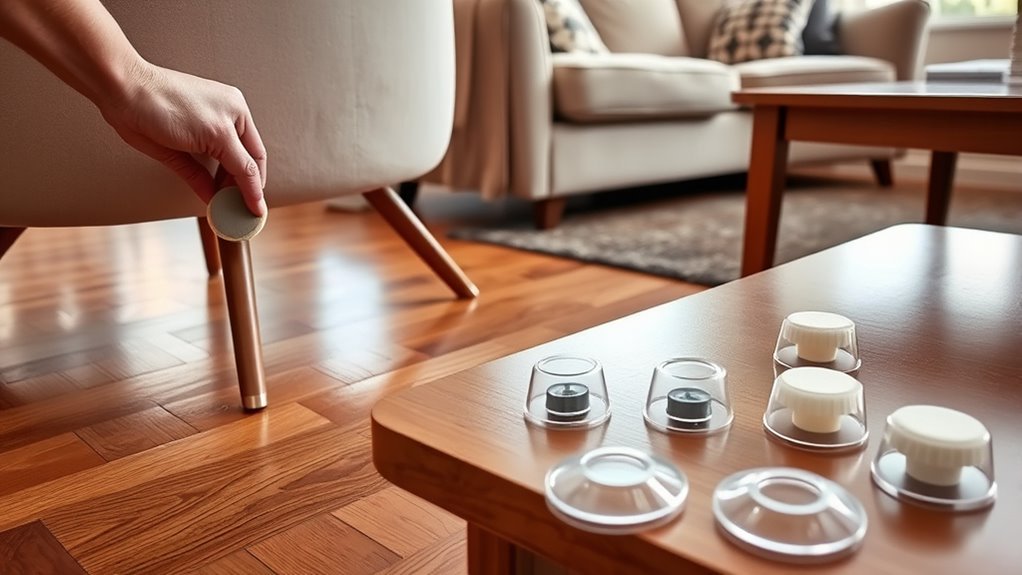
While protecting your hardwood floors from furniture damage might seem challenging, effective DIY solutions can make it simple and cost-effective. Start by applying felt pads on the bottom of chair and sofa legs. You can also repurpose old carpet scraps or thick felt, cutting them into custom-sized pads. Industrial-grade Velcro offers a removable furniture pad option. For a fun twist, try using tennis balls; just cut them open and slip them onto furniture legs for easy movement and floor protection. Be sure to regularly check and clean both your floor and furniture pads to keep dirt and debris at bay.
| Solution | Pros | Cons |
|---|---|---|
| Felt Pads | Easy to apply | May wear down over time |
| Repurposed Pads | Cost-effective | Requires some DIY effort |
| Tennis Balls | Fun and functional | Might not match decor |
Common DIY Mistakes to Avoid?
Although it may seem straightforward to protect your hardwood floors from furniture damage, common DIY mistakes can undermine your efforts. Here are some pitfalls to avoid:
Protecting your hardwood floors may seem simple, but common DIY mistakes can significantly hinder your efforts.
- Forgetting to clean the floor before applying chair pads, which can trap dirt and grit.
- Using inappropriate adhesive for felt pads, leading to them detaching too soon.
- Choosing hard plastic or metal pads instead of soft materials like felt or rubber.
- Neglecting to regularly inspect pads and replace worn-out ones, increasing floor wear.
- Overlooking weight distribution in furniture design, which can create concentrated pressure points.
Top Tips for Floor Maintenance
Protecting your hardwood floors goes beyond just using chair pads; it also involves regular maintenance to keep them looking their best. Start by routinely cleaning hardwood floors and chair legs to remove dirt and debris that can scratch the surface. A broom or vacuum with a brush attachment works wonders. Regularly check your chair leg pads to verify they’re intact and ready to protect against scratches. Use low pile or woven area rugs under furniture to absorb impact and shield your floors. If you notice any scratches, consider applying a polyurethane wood finish to enhance durability. Finally, always lift furniture when moving it to avoid gouges or scratches, maintaining the beauty of your hardwood investment.
Smart Strategies to Keep Your Hardwood Floors Looking Great
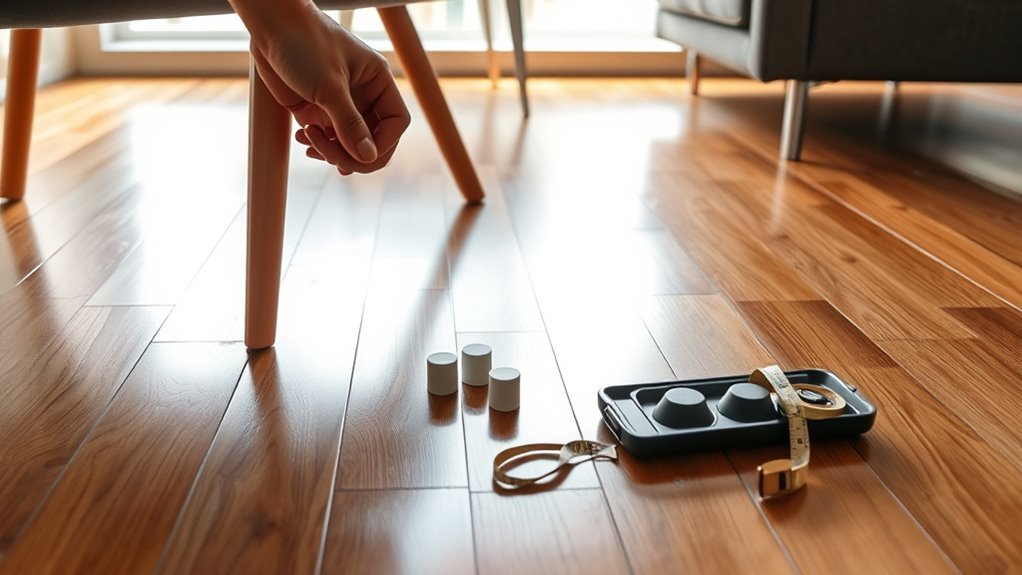
To keep your hardwood floors looking great, you need effective protection methods and regular maintenance. Start by choosing the right furniture pads and regularly cleaning both your floors and furniture legs to prevent scratches. By implementing these smart strategies, you can guarantee your floors remain beautiful for years to come.
Effective Floor Protection Methods
When it comes to keeping your hardwood floors in pristine condition, implementing effective floor protection methods is essential. Here’s how you can safeguard those beautiful surfaces:
- Use felt pads under chair and sofa legs to prevent scratches and scuffs.
- Regularly inspect and replace worn-out felt pads for ideal protection.
- Lay down area rugs in high-traffic zones to absorb impact and minimize wear.
- Consider furniture glides made of rubber or cork to evenly distribute weight and reduce pressure.
- Make it a habit to clean floors and furniture legs frequently to eliminate grit that could cause scratches.
Regular Maintenance Guidelines
Maintaining the beauty of your hardwood floors requires consistent care and attention. Start with regular maintenance to keep your wood protected; clean your floors frequently using a broom or vacuum with a brush attachment to prevent dirt buildup. Don’t forget to check your chair casters and furniture pads; worn pads can lead to scratches over time. Always lift your furniture rather than dragging it, as this considerably reduces the risk of gouging. Consider replacing hard plastic or metal legs with softer materials like rubber or felt to minimize damage. Finally, schedule periodic refinishing to restore your floors’ shine and protect against wear, ensuring your hardwood remains beautiful for years to come.
Choosing Suitable Furniture Pads
Choosing the right furniture pads is essential for protecting your hardwood floors from unsightly scratches and scuffs. To guarantee your floors remain pristine, consider the following:
- Use felt pads for a soft barrier against scratches.
- Opt for rubber pads in high-traffic areas for added grip and durability.
- Confirm pads are thick enough to absorb impact and distribute weight evenly.
- Regularly inspect and replace worn pads to maintain effectiveness.
- For uniquely shaped furniture, consider custom-cut pads for complete coverage.
Frequently Asked Questions
How Do You Protect Hardwood Floors From Chairs?
To protect hardwood floors from chairs, use furniture pads and felt glides on legs, swap hard wheels for rubber caps, and consider heavy duty mats as floor protectors. These steps reduce scratches and maintain your floors’ beauty.
Should You Use a Chair Mat on Hardwood Floors?
Using a chair mat on hardwood floors is like wearing armor; it enhances flooring durability and furniture movement. Chair mat benefits include prevention techniques against scratches and material comparisons guarantee you choose the best for protection.
What Is the Best Chair Pad for Hardwood Floors?
The best chair pads for hardwood floors are made from eco-friendly materials like bamboo or polycarbonate. They protect your floors, enhance style, and consider furniture leg covers to prevent scratches and maintain your space’s beauty.
What to Put Under a Recliner to Protect a Wood Floor?
Think of your hardwood floor as a delicate canvas. To protect it beneath your recliner, use felt sliders, rubber mats, or furniture glides. Recliner pads also help, ensuring smooth movement without damaging your beautiful floors.
Conclusion
By taking the right steps to protect your hardwood floors, you’re fundamentally putting a sturdy shield around your home’s beauty. Just like a knight guards their castle, using furniture pads and maintaining your floors will keep them looking flawless for years to come. Remember to regularly check for wear and tear, and don’t hesitate to update your protective measures. With a little effort, your floors can remain the shining foundation of your living space.

Leave a Reply