

Echo in a living room usually happens when sound bounces between hard, flat surfaces such as bare walls, tile, hardwood floors, glass, and high ceilings. The fastest way to make the room sound calmer is to add soft, dense, and uneven surfaces where sound is reflecting the most: the floor, windows, large empty walls, and the area around your TV or speakers.
Quick Answer
To reduce echo in a living room, start with a large rug and thick rug pad, add upholstered furniture and soft textiles, hang full-length curtains, break up bare walls with bookshelves or art, and place acoustic panels on the biggest reflection points. Plants can help a little, but they should not be your main fix.
Key Takeaways
- Treat the largest hard surfaces first: floors, windows, bare walls, and tall ceilings.
- Thick, soft, and textured items absorb more room reflections than thin, flat decor.
- Acoustic panels work best when placed where sound first bounces, not randomly around the room.
- Echo control improves sound inside the room; it is not the same as soundproofing against neighbors or traffic.
At a Glance
| Time Required | 30 minutes for quick furniture and textile changes; a few hours for curtains or acoustic panels |
| Difficulty | Easy to moderate |
| Tools Needed | Tape measure, rug pad, curtain rod or track, wall anchors, level, and optional acoustic panels |
| Cost | Free for rearranging furniture; varies by rug, curtain, bookshelf, and acoustic panel choices |
Why Your Living Room Echoes
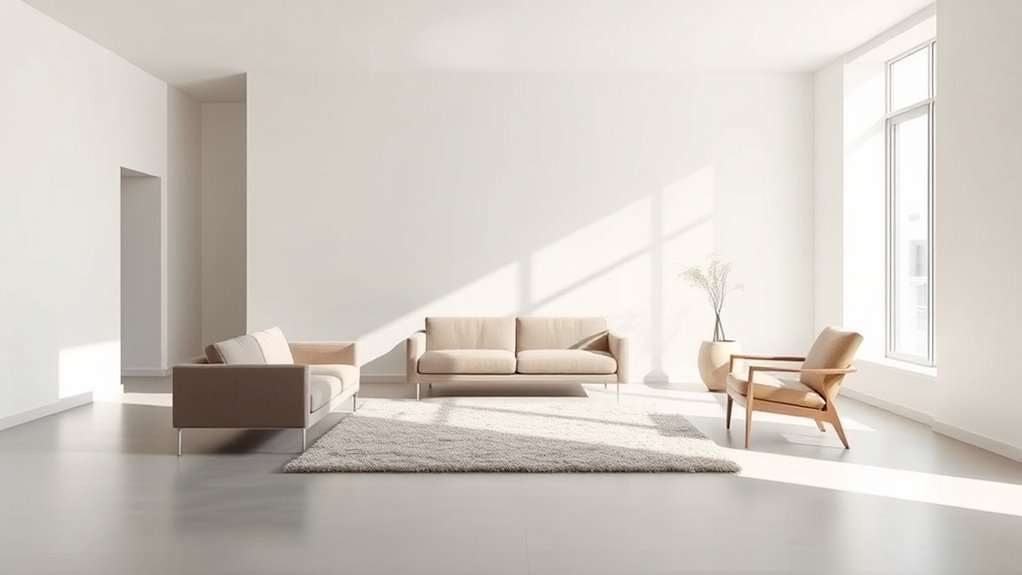
Echo and reverberation come from reflected sound. When you speak, play music, or watch TV, some sound travels directly to your ears while the rest bounces off walls, floors, windows, ceilings, and furniture. If the room has too many hard surfaces and not enough absorption, those reflections linger and make voices, dialogue, and music sound sharp or muddy.
Hardwood, tile, glass, drywall, stone, metal, and leather all tend to reflect more sound than thick fabric, carpet, books, cushions, and acoustic materials. That is why an empty living room often sounds louder and more “live” than the same room after it has a rug, sofa, curtains, and wall decor.
For a deeper technical explanation, room acoustics research explains how reflections, reverberation, absorption, and diffusion shape the way sound behaves indoors.
Do a Quick Echo Test Before You Buy Anything
Stand in the center of the room and clap once. If you hear a sharp ring, flutter, or “slap” sound, the room has strong reflections. Then speak at a normal volume from the sofa, the TV area, and the open side of the room. Notice where your voice sounds harshest or least clear.
Look for these common echo zones:
- large bare walls across from the sofa or TV
- uncovered hardwood, tile, or concrete floors
- wide windows or sliding glass doors
- high ceilings or vaulted ceilings
- open-plan spaces connected to kitchens, hallways, or staircases
- minimal rooms with little fabric, shelving, or soft furniture
Note: Echo control makes sound inside the living room clearer. It does not fully soundproof the room from outdoor noise, upstairs footsteps, or loud neighbors. Soundproofing usually requires sealing gaps, adding mass, and improving walls, doors, windows, or floors.
Start With the Floor: Add a Large Rug and Pad
The floor is often the biggest untreated surface in a living room. A large rug softens footstep noise and absorbs some of the reflections that would otherwise bounce between the floor and ceiling.
For best results, choose a rug that covers the main seating area. At minimum, the front legs of the sofa and chairs should sit on the rug. A thicker rug pad helps even more because it adds depth and softness under the rug.
Good rug choices include:
- thick wool or wool-blend rugs
- dense pile rugs
- layered rugs over a quality rug pad
- large area rugs that cover open walking zones
A tiny accent rug will not change the room much. If the room still echoes after adding a rug, the next places to treat are windows and bare walls.
Add Upholstered Furniture and Soft Textiles
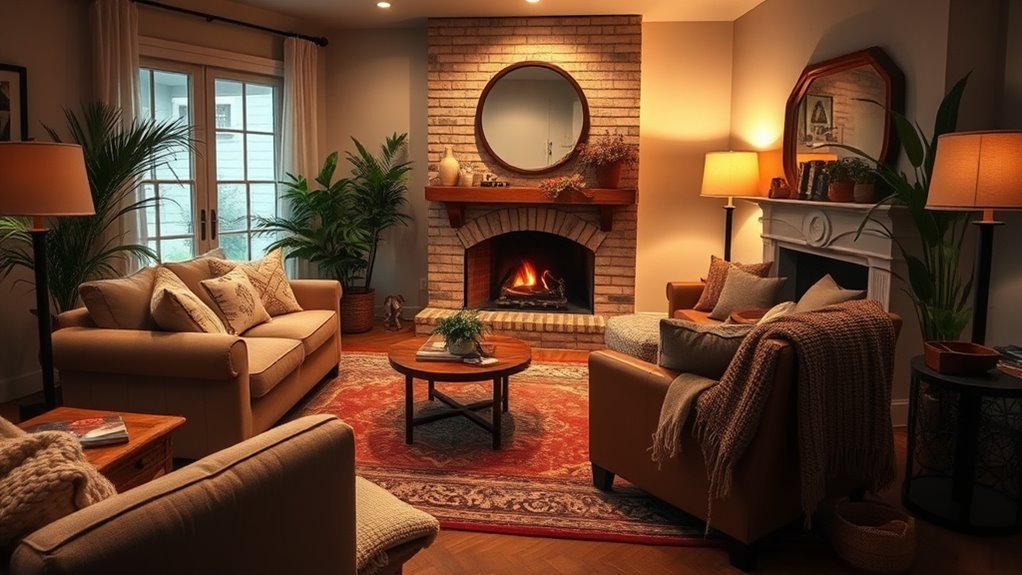
Upholstered furniture helps because fabric, padding, and cushions absorb more sound than hard, smooth surfaces. A plush sofa, fabric chairs, ottomans, pillows, and throw blankets all add soft surfaces that reduce reflections in the seating area.
You do not need to overfill the room. Focus on balance: if the space has a leather sofa, glass coffee table, bare floor, and plain walls, add softness nearby with a rug, fabric pillows, a throw blanket, and curtains. If you already have a large fabric sectional and thick rug, your biggest remaining echo source may be the walls or ceiling.
Hang Thick Curtains or Drapes Over Windows
Glass reflects sound strongly, so large windows and sliding doors can make a living room feel bright but echoey. Thick curtains help by adding a soft layer over the glass.
Choose curtains that are:
- full-length from near the ceiling to the floor
- wider than the window so the fabric can fold when closed
- made from heavier fabric rather than thin sheers
- paired with a liner if you want more weight and coverage
More fabric coverage usually works better than a flat, stretched panel. If possible, mount the rod wider than the window so the curtains cover the glass fully when closed.
Warning: Heavy curtains, bookshelves, ceiling baffles, and acoustic panels need proper anchors and hardware. If you are mounting anything overhead or into masonry, use the right fasteners or hire a qualified installer.
Break Up Bare Walls With Bookshelves, Art, and Texture
Flat, empty walls can create flutter echo, especially when two hard walls face each other. You can reduce this by adding objects that absorb or scatter sound.
Helpful options include:
- filled bookshelves
- fabric wall hangings
- canvas art instead of glass-framed art
- textured wood features
- open shelving with books, baskets, and decor
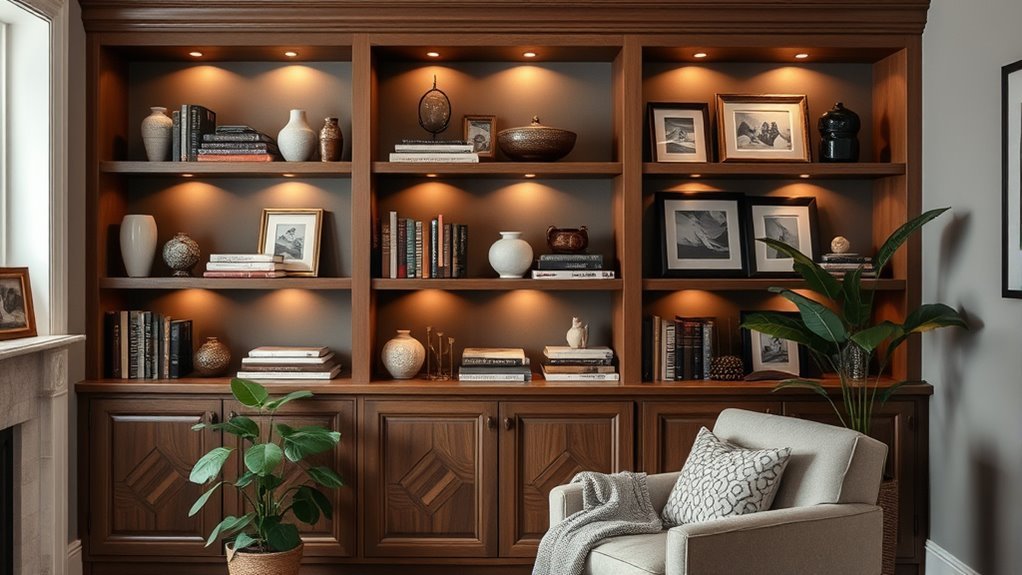
A packed bookcase is useful because it adds depth and uneven surfaces. Avoid relying only on thin framed prints behind glass, because glass is another reflective surface.
Use Acoustic Panels Where Reflections Are Strongest
Acoustic panels are one of the most direct ways to reduce echo and reverberation. They are designed to absorb sound reflections inside the room. For trustworthy performance, choose panels with published acoustic test data, especially data measured under ASTM C423 or another recognized acoustic test method.
Place panels where they will do the most work:
- on the large bare wall behind or across from the sofa
- on the wall opposite speakers or the TV
- at first reflection points on side walls
- in echoey corners or tall wall sections
- on the ceiling if the room is tall and still sounds harsh
For a simple first-reflection test, sit where you normally watch TV or listen to music. Have another person slide a mirror along the side wall. Anywhere you can see the speaker in the mirror is a likely reflection point. That is a strong place to put a panel.
Pro Tip: Do not spread a few tiny foam squares randomly around the room. A smaller number of thicker, well-placed panels usually works better than many thin panels in the wrong places.
What About Plants?
Plants can make a room feel softer and less empty, and large leafy plants may scatter some reflections near corners or hard walls. They are best used as a finishing touch, not the main solution.
If you like plants, place them near reflective corners, glass doors, or bare wall areas. Choose larger leafy plants rather than tiny tabletop plants if echo reduction is part of your goal. Still, treat the floor, windows, walls, and panel placement first.
How to Reduce Echo in a High-Ceiling Living Room
High ceilings create more volume for sound to travel through, so they often need more absorption than standard rooms. A rug and sofa may help, but they may not be enough on their own.
Try these high-ceiling fixes:
- use a larger rug and thicker pad
- hang taller, heavier curtains
- add acoustic panels higher on the walls
- use tall bookcases or textured wall features
- consider ceiling-mounted acoustic clouds if the room is very live
If the ceiling is vaulted or very tall, wall treatments should extend higher than eye level. Treating only the lower half of the room may leave the upper wall and ceiling reflections untouched.
How to Reduce Echo in an Open-Plan Living Room
Open-plan living rooms can echo because sound travels into the kitchen, hallway, stairwell, or dining area. The goal is to create softer zones and interrupt long sound paths.
Use furniture to create acoustic breaks:
- place a large rug under the seating area
- use a fabric sectional or upholstered chairs to define the conversation zone
- add curtains to nearby glass doors or windows
- place a bookshelf or console against a long bare wall
- avoid leaving one long, empty wall running through the entire open space
In open rooms, small changes can add up. You may need several moderate fixes instead of one single treatment.
A Simple Step-by-Step Plan
- Clap and listen. Find the spots where the room rings, slaps, or sounds harsh.
- Cover the main floor area. Add the largest rug that fits the seating zone, plus a rug pad.
- Soften the windows. Hang full-length curtains over large glass areas.
- Add fabric near the seating area. Use upholstered seating, pillows, throws, and ottomans.
- Break up bare walls. Add bookshelves, canvas art, fabric hangings, or textured decor.
- Add acoustic panels if needed. Focus on first reflection points and the largest empty walls.
- Retest the room. Clap, speak, and play TV dialogue at normal volume to compare the improvement.
How to Tell Whether the Room Sounds Better
You do not need professional equipment to notice improvement. After each change, repeat the same clap test and voice test from the same place in the room. The room should sound less sharp, voices should be easier to understand, and TV dialogue should need less volume.
You can also record a short voice memo before and after each change. Stand in the same spot, speak the same sentence, and compare how much ringing remains after your words stop.
The best echo fixes usually combine absorption and diffusion: soft materials reduce reflected energy, while uneven surfaces keep sound from bouncing back in one sharp path.
Common Mistakes to Avoid
- Using only a small rug. A rug that floats under the coffee table may look nice, but it may not cover enough reflective floor area.
- Buying thin foam for every problem. Thin foam may reduce some high-frequency reflections, but it will not solve every echo issue.
- Ignoring windows. Large glass surfaces can undo the benefit of soft furniture.
- Depending on plants alone. Plants are decorative helpers, not full acoustic treatment.
- Forgetting the ceiling. High rooms may need taller wall treatment or ceiling-mounted absorbers.
- Confusing echo control with soundproofing. Acoustic panels reduce reflections inside the room; they do not block most sound passing through walls, doors, or windows.
Frequently Asked Questions
How do I make a living room less echoey?
Start with the biggest hard surfaces. Add a large rug and rug pad, hang thick curtains over windows, use upholstered furniture, add pillows and throws, break up bare walls with bookshelves or fabric art, and place acoustic panels where sound reflects most strongly.
How do I make echo stop quickly?
The fastest quick fix is to add soft coverage: lay down a large rug, close thick curtains, add pillows and blankets, and move fabric furniture into the most echoey area. For a stronger fix, add acoustic panels to the largest bare wall or first reflection points.
How do I make a high-ceiling room less echoey?
Use more surface coverage than you would in a standard room. Add a large rug, tall curtains, upholstered furniture, tall bookshelves, and acoustic panels higher on the walls. If the ceiling is very high or vaulted, ceiling-mounted acoustic clouds may help.
Do acoustic panels soundproof a living room?
No. Acoustic panels mainly absorb reflections inside the room, which reduces echo and improves clarity. Soundproofing is different. It usually requires sealing air gaps, adding mass, improving windows and doors, and controlling vibration paths.
Are rugs or curtains better for reducing echo?
Use both if the room has hard floors and large windows. Rugs help with floor reflections and footstep noise. Curtains help with glass reflections. The better first choice depends on which hard surface is larger and more exposed in your room.
Can plants reduce echo in a living room?
Plants may help a little by adding texture and scattering some reflections, especially larger leafy plants near corners or glass. However, they should be treated as a small finishing touch. Rugs, curtains, upholstered furniture, bookshelves, and acoustic panels are more reliable.
Conclusion
Reducing echo in a living room is mostly about replacing hard, empty reflections with soft, dense, and textured surfaces. Start with a large rug, add curtains and upholstered furniture, break up bare walls, and use acoustic panels where reflections are strongest. If your room has high ceilings or an open layout, treat more surface area and retest after each change. With the right mix, your living room will sound calmer, clearer, and more comfortable for conversation, TV, and music.
Sources
- ASTM C423-23e1 — standard test method for sound absorption and sound absorption coefficients by the reverberation room method.
- Room Acoustics lecture notes — background on reflections, reverberation, absorption, and room-acoustic behavior.
- Detecting Sound-Absorbing Materials in a Room from a Single Impulse Response — supports the idea that room materials have different frequency-dependent absorption characteristics.
- Reverberation Time Control by Acoustic Metamaterials in a Small Room — supports the importance of broadband absorption for small-room reverberation control.
- Room acoustics affect communicative success in hybrid meeting spaces — supports the connection between room acoustics, reverberation, and communication clarity.


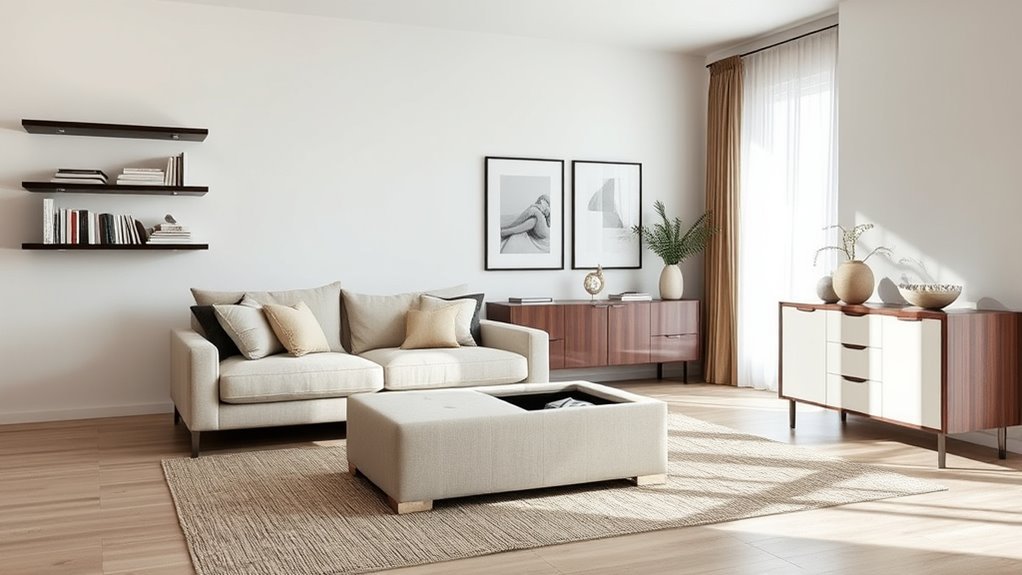
[…] why a nearly empty rental with polished boards sounds like a lecture hall the moment you clap. Sound waves bounce off these materials and keep travelling until something soft or uneven interrupts […]