

To reduce outside noise in your living room, start by identifying gaps in windows and doors, then seal them with weatherstripping or acoustic sealants. Next, replace single-pane windows with double or triple-pane options and hang heavy curtains to absorb sound. Enhance soundproofing by adding resilient channels and Mass-Loaded Vinyl to walls and ceilings. Finally, consider thick rugs or soundproof underlayment for floors. Keep going to discover more effective strategies and materials for ideal soundproofing solutions.
Common Noise Issues in Living Rooms and Why Soundproofing Matters

When you relax in your living room, the last thing you want is the distraction of outside noise creeping in. Common issues include thin windows and unsealed doors that easily allow sound transmission from traffic and pedestrians. This noise can disrupt your peace, affecting sleep quality and productivity. Soundproofing matters because it creates a sanctuary, enhancing your living space’s appeal to potential buyers or renters, thereby increasing property value. Using effective soundproofing materials like mass-loaded vinyl and installing Acoustic Panels can greatly reduce noise. Sealing gaps around windows and doors also plays a vital role. By addressing these common noise issues, you can transform your living room into a tranquil retreat, free from external disturbances.
Identifying the Main Sources of Noise in Your Space
To create a peaceful living room, it’s important to identify the main sources of noise that disrupt your space. Airborne noise, like traffic and conversations, often sneaks in through windows and doors with air gaps and cracks. These are your primary culprits. Additionally, impact noise from heavy vehicles or footsteps above can add to the disturbances. To pinpoint these issues, try the Fish Tank Test, observing water leaks around windows and doors to visualize sound entry points. The Coin-Rattle Test can reveal vibrations from windows, highlighting structure-borne energy contributing to noise. Finally, use smartphone apps to measure sound pressure levels, helping you identify the most problematic areas in your living space. This proactive approach is the first step toward liberation from unwanted noise.
Step 1: Identify and Address Main Sources of Noise
Identifying and addressing the main sources of noise in your living room is essential for creating a serene environment. Start by identifying airborne noise sources, like traffic and sirens, that infiltrate through gaps and cracks in windows and doors. Use quick noise detection tests, such as the coin-rattle test, to assess vibrations and air leaks effectively. Seal gaps and cracks with weatherstripping or acoustic sealants to minimize sound transmission. Consider replacing single-pane windows with double or triple-pane assemblies for significant noise reduction. Additionally, enhance your room’s acoustics by installing heavy curtains, thick rugs, or acoustic panels to absorb sound and further combat noise intrusion. These practical steps will empower you to cultivate a peaceful living space.
Step 2: Pick the Best Window Treatments for Soundproofing
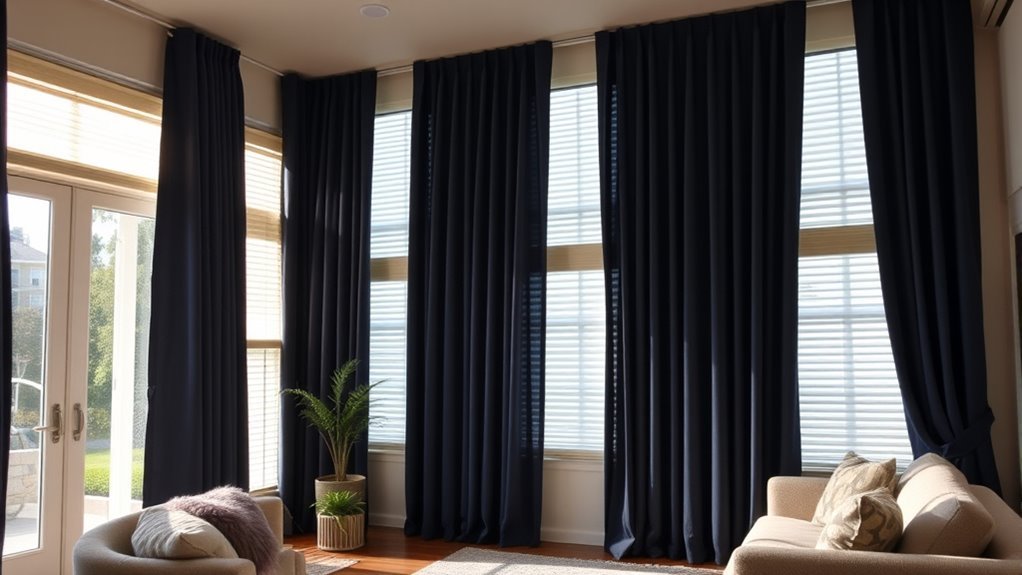
To effectively reduce outside noise, you’ll want to choose the right window treatments that enhance soundproofing. Acoustic curtains can absorb sound waves, while window inserts create an air gap that blocks noise transmission. Don’t forget to apply weatherstripping techniques around your window frames to seal any gaps and further minimize unwanted sounds.
Acoustic Curtains Benefits
While you may love the natural light streaming into your living room, the noise from outside can be a real distraction. That’s where acoustic curtains come in. These specially designed window treatments reduce noise levels by absorbing and blocking sound, offering noise reduction of up to 50%. With layered construction and soundproofing technologies like mass-loaded vinyl, they enhance your living space’s tranquility. Plus, they provide thermal insulation, keeping your room comfortable year-round. When choosing acoustic curtains, aim for a high Sound Transmission Class (STC) rating above 30 to guarantee peak performance.
| Benefit | Description | Emotional Impact |
|---|---|---|
| Noise Reduction | Blocks outside noise by up to 50% | Peaceful living environment |
| Thermal Insulation | Maintains comfortable room temperature | Cozy and inviting space |
| Soundproofing Technologies | Advanced materials for enhanced effectiveness | Freedom from distractions |
| Stylish Designs | Available in various styles and colors | Aesthetic appeal |
| Easy Maintenance | Machine washable options | Hassle-free care |
Window Inserts Options
When considering how to effectively minimize outside noise in your living room, window inserts emerge as a powerful solution. These window panels create an extra layer of insulation, considerably reducing noise caused by external sources. Interior window inserts can slash noise levels by up to 70% or more, depending on the materials used, like acrylic or glass. For ideal soundproofing effectiveness, select inserts designed specifically for noise reduction, featuring air gaps and layered materials that excel in blocking airborne noise. To maintain their performance, regular maintenance is essential—check for any gaps or damage. By investing in quality window inserts, you’ll enjoy a quieter, more serene living space that liberates you from the disturbances of the outside world.
Weatherstripping Techniques
Selecting the right window treatments is essential for effective soundproofing, as the right choices can greatly diminish outside noise. Heavy, layered curtains or acoustic drapes provide sound absorption by adding mass and disrupting sound waves. For an ideal solution, consider installing window inserts or double-glazed windows, which can improve soundproofing by up to 50%. Don’t overlook weatherstripping; magnetic options create an airtight seal around window frames, preventing sound leakage through gaps. Additionally, acoustic window treatments designed with dense materials and air pockets further enhance acoustic insulation. Cellular shades also serve as an effective barrier, trapping sound vibrations within their structure. By combining these techniques, you can create a peaceful living environment free from intrusive noise.
Step 3: Enhance Walls and Ceilings With Soundproofing Materials
To effectively enhance your living room’s walls and ceilings, choose soundproofing materials designed to block noise. Install resilient channels properly to decouple drywall, which greatly minimizes sound transfer. Additionally, applying acoustic panels strategically can further absorb unwanted noise, creating a more peaceful environment.
Choose Effective Soundproofing Materials
While enhancing your living room’s soundproofing, choosing the right materials is essential for effectively blocking out unwanted noise. Start with Mass-Loaded Vinyl (MLV), which creates a dense barrier against sound transmission. Consider soundproof drywall, composed of multiple layers for better performance in high-noise areas; it offers a higher Sound Transmission Class (STC) rating. Incorporate Green Glue between drywall layers to add mass and dampen vibrations, enhancing your sound isolation. For ceilings, acoustic tiles can absorb sound and reduce echo considerably. Additionally, installing resilient channels can decouple the drywall from the framing, further minimizing sound travel. By using these effective materials, you’ll reclaim your living space and enjoy a peaceful environment.
Install Resilient Channels Properly
Installing resilient channels correctly is essential for maximizing your living room’s soundproofing capabilities. These channels decouple the drywall from the framing, effectively reducing sound transmission by minimizing vibrations. When installing, fasten the resilient channels to the studs with screws, ensuring they aren’t directly attached to the drywall. Space them 24 inches apart to optimize their effectiveness. To further enhance soundproofing, consider adding a second layer of drywall over the channels. This increases mass and diminishes airborne noise. For maximum performance, apply a damping compound like Green Glue between the layers of drywall. This combination of resilient channels and strategic layering will greatly improve your living room’s sound isolation, liberating you from unwanted noise.
Apply Acoustic Panels Strategically
Acoustic panels can be a game-changer for reducing outside noise and improving sound quality in your living room. To maximize their effectiveness, strategically install these absorptive materials at the first reflection points on your walls. You can identify these spots by moving a mirror along the wall while sitting or standing in your space.
Consider a variety of panel sizes and shapes for a stylish design that not only absorbs sound waves but also enhances your room’s aesthetic. Make sure panels are mounted a few inches away from the wall assemblies for peak performance. Regularly inspect and clean them to maintain their sound-absorbing capabilities.
| Panel Size | Absorption Level |
|---|---|
| Small | Moderate |
| Medium | High |
| Large | Very High |
| Custom Shape | Variable |
Step 4: Choose Flooring Solutions to Reduce Impact Noise
To effectively reduce impact noise in your living room, consider the flooring solutions you choose. Dense carpets or rugs with soundproofing underlays can considerably dampen footfalls and vibrations, contributing to a serene environment. You might also explore cork or rubber flooring, both of which excel at absorbing sound and minimizing impact noise. If you prefer hardwood or laminate, utilizing acoustic underlayment can enhance sound insulation, tackling both airborne and impact noise. Strategically placed area rugs in high-traffic spots add another layer of noise reduction, especially when paired with sound-absorbing pads. Finally, make certain you properly seal gaps around flooring edges and use threshold strips to prevent sound leakage, maximizing the effectiveness of your soundproofing efforts.
Easy Soundproofing Tips for Renters

After addressing impact noise with effective flooring solutions, you can further enhance your living room’s tranquility with simple soundproofing tips tailored for renters. Start by installing removable Climate Seal window inserts to greatly reduce outside noise while keeping your rental agreement intact. Next, apply door seal kits and weather-stripping around door edges to prevent sound leaks. Hang heavy drapes or acoustical curtains over windows; they absorb sound and shield your space from intrusive noise. Don’t forget to place thick rugs or carpets on the floor to combat impact noise and reduce echo. Finally, arrange bookcases or wall art against exterior walls to add mass, creating an additional barrier that helps soundproof a room effectively.
Essential Maintenance Tips for Soundproofing
While maintaining your soundproofing setup might not seem like a priority, regular upkeep is essential for ensuring it remains effective. To keep your living room a serene haven, follow these maintenance tips:
- Conduct annual inspections for tiny gaps or cracks around windows, doors, and outlets.
- Regularly reapply acoustic sealant, as it can wear down over time, ensuring airtight seals.
- Replace or update soundproofing materials like acoustic panels every few years to enhance sound absorption.
Additionally, check weatherstripping on windows to block outdoor noise. By prioritizing these maintenance tasks, you’ll preserve the integrity of your soundproofing and enjoy a peaceful living space free from disruptive sounds. Remember, a little effort goes a long way in maintaining your sanctuary.
Frequently Asked Questions
How to Block Out 100% of Noise?
To block out 100% of noise, use soundproof materials like acoustic panels and noise barriers. Invest in effective window treatments, and consider sound masking techniques to create a serene, liberated living environment.
Is There a Device That Cancels Outside Noise?
Yes, devices like noise-canceling headphones, white noise machines, and acoustic panels can cancel outside noise. Consider installing soundproof windows and outdoor barriers for a more thorough solution to achieve a peaceful living environment.
What Are 10 Ways to Reduce Noise Pollution?
Imagine your sanctuary, wrapped in silence. You can use soundproofing materials, home insulation, and acoustic panels, while incorporating effective noise reduction techniques and window treatments to liberate yourself from the chaos of noise pollution.
What Blocks Sound From the Outside?
To block sound from outside, use soundproof materials like acoustic panels, install effective window treatments, apply door seals, and explore landscaping solutions like dense hedges. These methods create a peaceful, noise-free living environment.
Conclusion
By following these steps, you can effectively reduce outside noise in your living room and create a more peaceful environment. Remember, it’s not just about blocking sound; it’s also about enhancing your overall comfort. With a little effort, you’ll be well on your way to enjoying your space without the constant hum of the outside world. After all, when it comes to soundproofing, a stitch in time saves nine—so don’t wait to make these improvements!

Leave a Reply