
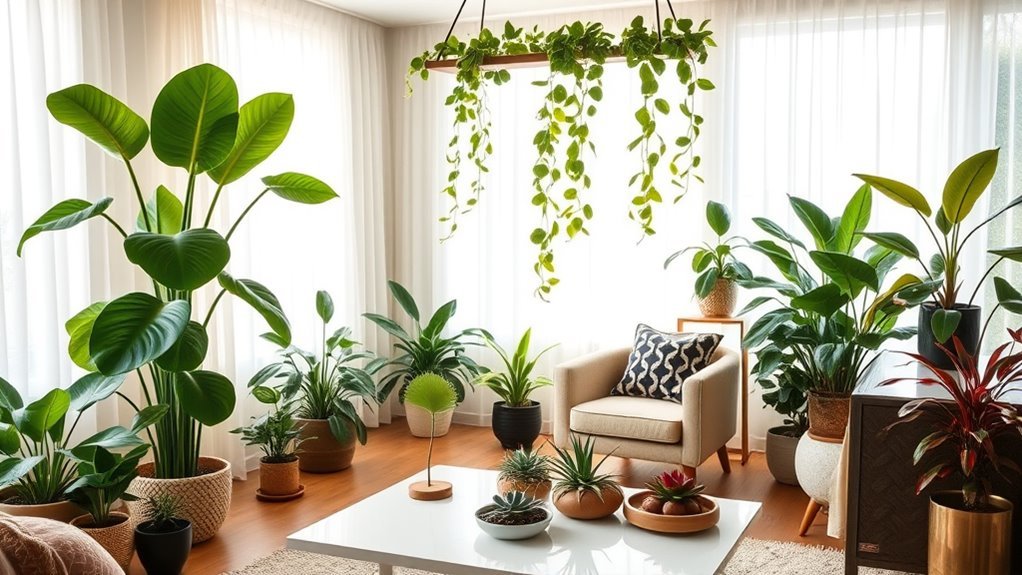
To enhance your living room with indoor plants, start by evaluating the light in your space—identify bright spots and shadows. Choose plants that fit your style, from tall palms to trailing pothos. Care for your greenery with a consistent watering schedule and proper soil. Create inviting groupings using the rule of three, mixing heights and textures. Finally, select fun pots that complement your plants and overall decor. You’ll uncover even more tips to elevate your design.
How to Assess Your Living Room Lighting?
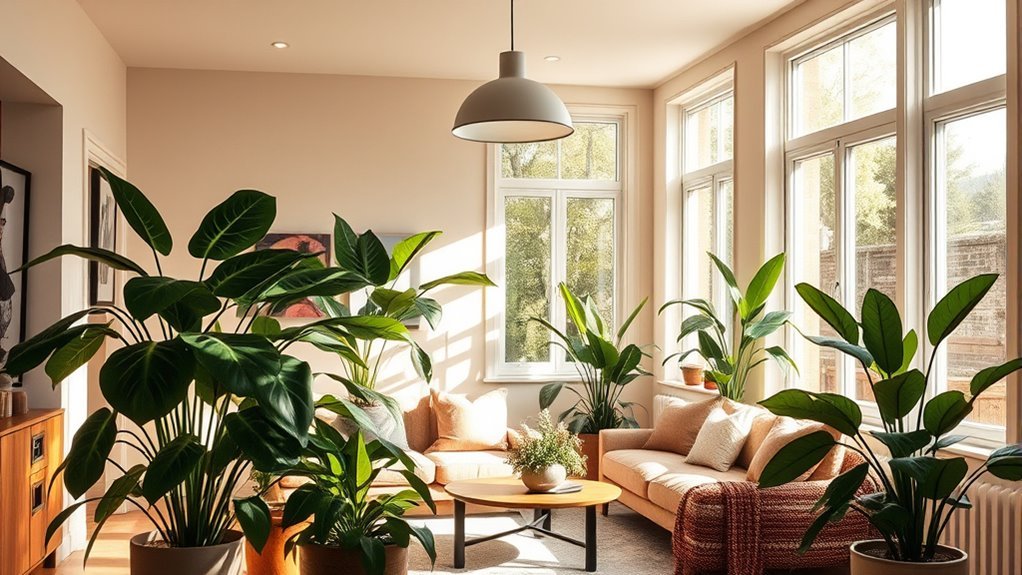
When you want to create a vibrant indoor oasis, reviewing your living room lighting is key. Start by evaluating the natural light that flows through your space throughout the day. Use a light meter or a smartphone app to measure intensity, identifying areas basking in bright indirect light or those shrouded in low-light conditions. Remember, low-light plants thrive where sunlight barely reaches, while others crave brightness. Take note of your wall colors; lighter hues reflect light, enhancing brightness, while darker tones absorb it. Finally, consider your artificial lighting options. Different types, like LED or fluorescent, impact plant growth considerably. If your room lacks adequate illumination, grow lights can offer that extra touch, ensuring your green friends flourish.
Choose Indoor Plants That Fit Your Style
To create a living room that feels harmonious and inviting, choose indoor plants that resonate with your personal style and the room’s overall aesthetic. Consider incorporating tall palms for a modern flair or trailing pothos for a boho vibe. If light is limited, opt for low-light plants like snake plants, while brighter spaces can showcase colorful anthuriums. Grouping them in odd numbers, such as threes, brings visual interest and balance. Unique containers, like vintage pots or DIY planters, enhance your decor. Keep plant care requirements in mind; low-maintenance plants like succulents or peace lilies guarantee your green companions thrive effortlessly.
| Plant Type | Ideal Conditions | Style |
|---|---|---|
| Snake Plant | Low-Light | Modern |
| Pothos | Moderate Light | Boho |
| Anthurium | Bright Light | Vibrant |
| Peace Lily | Low-Maintenance | Classic Elegance |
How to Care for Your Indoor Plants?
Caring for your indoor plants transforms your living space into a vibrant oasis. You’ll want to establish a consistent watering routine, pay attention to their light needs, and nourish them with the right soil and fertilizer to keep them thriving. Let’s explore these essentials that will help your green companions flourish beautifully in your home.
Watering Routine Essentials
A consistent watering routine is essential for keeping your indoor plants thriving and vibrant. Establish a watering schedule, aiming to water houseplants at least once a week, while adjusting for the changing seasons and their unique moisture needs. To check soil moisture, simply insert your finger about an inch deep; if it’s dry, it’s time to water. Be mindful of overwatering—ensure thorough watering without saturation, favoring well-draining soil. For those tropical beauties, don’t forget to mist plants between waterings to replicate their natural humidity. Consider using a digital moisture meter to accurately monitor soil moisture levels, ensuring your indoor plants receive just the right amount of love and attention they crave.
Light Requirements Overview
Understanding the light requirements of your indoor plants is crucial for their health and vigor. Begin by evaluating the light in your living room; observe how sunlight dances across the space throughout the day. Some plants, like succulents and cacti, crave bright, direct sunlight, while others, such as ferns and peace lilies, thrive in low light conditions. Thankfully, many indoor plants, including snake plants and pothos, are adaptable and can flourish in shaded corners. If natural light falls short, consider using grow lights to provide the spectrum necessary for plant growth. To keep your greenery lush and balanced, rotate your plants regularly, ensuring every leaf basks in the glow of light, promoting even growth and liveliness.
Soil and Fertilization Tips
While the right soil and fertilization practices can greatly enhance your indoor plants’ health, selecting a well-draining potting mix is your first step. Choose a mix rich in organic matter, like peat moss or coconut coir, to promote healthy growth and prevent waterlogging.
| Aspect | Tips |
|---|---|
| Fertilization | Use a balanced, water-soluble fertilizer every 4-6 weeks during spring and summer. |
| Watering | Check moisture with the finger test; if the top inch feels dry, it’s time to water. |
| Tools | Consider a digital moisture meter to avoid overwatering and under-watering. |
Embrace these practices to nourish your indoor plants with essential nutrients, ensuring vibrant, thriving greenery in your living space.
Grouping Plants With the Rule of Three
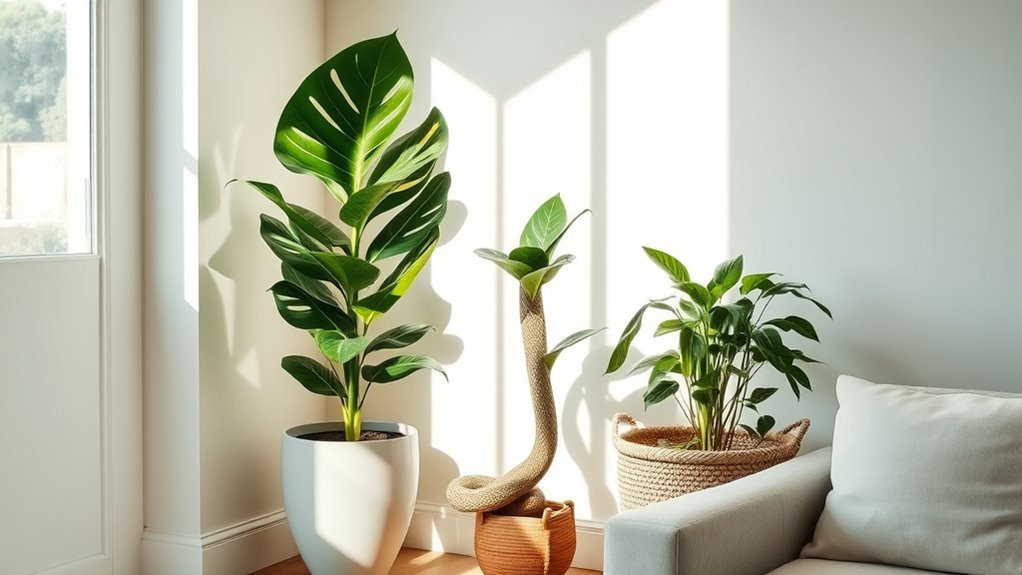
Three is more than just a number when it comes to arranging indoor plants; it’s a secret weapon for creating an enchanting focal point in your living room. By grouping plants in odd numbers, particularly threes, you establish a balanced, eye-catching display. Embrace varying heights to add depth and intrigue, ensuring each plant’s visual weight complements the others. Choose a common pot style to unify your arrangement, but mix in contrasting textures—think fine, feathery foliage paired with thick, solid leaves. Remember to group plants with similar care requirements, allowing them to thrive together. This harmonious plant arrangement not only beautifies your space but also breathes life into your living room, inviting serenity and liberation.
Experimenting With Heights and Textures
To breathe life into your living room, play with plant heights and textures like a skilled artist. Imagine towering fiddle leaf figs commanding attention, while delicate ferns weave a tapestry of softness beneath them. By mixing these elements, you’ll create a visual symphony that beckons the eye and invites warmth into your space.
Vary Plant Heights Strategically
As you curate your living room’s botanical ensemble, strategically varying plant heights can transform the space into a vibrant, layered landscape. Mix large plants, like Fiddle Leaf Figs or Kentia Palms, with medium-sized Snake Plants and small Pothos to craft a enchanting visual hierarchy. Utilize plant stands to elevate those smaller plants, allowing for a layered effect that draws the eye upward. Group plants in threes, balancing tall plants with trailing varieties like English Ivy, creating a dynamic arrangement that softens vertical lines. By arranging plants thoughtfully, you’ll not only enhance visual appeal but also highlight your decor’s unique features without overshadowing them. Embrace this freedom to explore heights and create your own lush sanctuary.
Mix Textures For Depth
While blending various textures in your living room’s plant display, you can instantly elevate the space’s visual appeal. Mix textures by combining fine, feathery foliage with thick, solid leaves to create stunning visual interest. Experiment with height variations—pair tall plants with shorter ones for a layered look that captures the eye. Grouping plants in odd numbers, like threes, enhances this dynamic display, emphasizing contrasting textures beautifully. Use plant stands or pedestals to elevate certain plants, introducing cascading effects with trailing varieties. Incorporating a variety of leaf shapes and sizes adds complexity, balancing the overall aesthetic. This thoughtful arrangement not only enlivens your space but also nurtures a sense of liberation and connection with nature.
Create Visual Focal Points
Creating visual focal points in your living room using indoor plants can transform the space into a vibrant oasis. To achieve this, group plants in odd numbers, like threes, to create striking arrangements that draw the eye. Experiment with varying sizes and textures by mixing plants with fine, feathery foliage alongside solid, thick leaves for a dynamic display. Use taller plants to lead the gaze toward design features, ensuring they don’t clash with your focal points. Layer plants at different heights using stylish plant stands to create a cascading effect, adding depth. Finally, choose pots that complement the plant foliage, enhancing the overall aesthetic of your interior design while inviting a sense of liberation and harmony.
Pick Fun Pots That Make Your Plants Shine
Choosing the right pots can transform your plants into stunning focal points in your living room. Select containers that not only match your decor style—think terracotta for rustic charm or sleek ceramic for a modern vibe—but also add unique personality. Consider using vintage teapots or woven baskets, ensuring they have drainage holes. Experiment with contrasting colors, pairing vibrant foliage against earthy-toned pots for striking visual appeal. Mix shapes and sizes for a dynamic display that captivates the eye. Aim for at least two different pot styles to create an eclectic atmosphere.
| Pot Style | Colors | Unique Containers |
|---|---|---|
| Terracotta | Earthy tones | Vintage teapots |
| Ceramic | Bright hues | Woven baskets |
| Concrete | Neutral shades | Repurposed jars |
| Metal | Bold colors | Artistic sculptures |
Frequently Asked Questions
How to Arrange Indoor Plants in a Living Room?
To arrange indoor plants in your living room, embrace height variation and group arrangements. Layer with complementary colors, choose diverse pot styles, and consider natural light to create focal points that evolve with seasonal changes.
What Are the 7 Basic Requirements for Plants?
Like a gentle breeze, you’ll need to contemplate light requirements, water needs, soil types, humidity levels, temperature preferences, a fertilization schedule, pest management, and pruning techniques to nurture your plants’ growth patterns beautifully.
How to Use Plants in Home Décor?
To use plants in home décor, choose vibrant plant types that match your color schemes. Consider texture contrast and lighting needs, placing them thoughtfully in decorative pots while ensuring ease of maintenance through seasonal changes and space considerations.
How to Style With Indoor Plants?
Don’t worry about plant upkeep; vibrant indoor plants can elevate your space effortlessly. Focus on size balance, texture variety, and lighting considerations while choosing pots that harmonize with your color scheme for stunning visual impact.
Conclusion
Now that you know how to incorporate indoor plants into your living room, imagine this: homes with plants can increase your mood by 60%. Picture yourself surrounded by lush greenery, vibrant colors, and invigorating textures, transforming your space into a serene oasis. So, grab those pots, pick your favorite plants, and let your living room flourish! With a little creativity and care, you’ll create a stunning environment that not only looks good but feels good too.

Leave a Reply