
Low-VOC paints are designed to emit fewer than 50 grams of volatile organic compounds (VOCs) per liter, making them a healthier choice for indoor air quality. These paints help reduce harmful emissions that can cause headaches and respiratory issues, which is vital for sensitive populations like children and pregnant women. Choosing low-VOC options allows for a more comfortable painting experience with less odor. To understand more about their benefits and how to choose the right one, keep exploring.
What Are VOCs and Why Low-VOC Matters for Indoor Air Quality?

When you consider the air quality in your home, understanding Volatile Organic Compounds (VOCs) is vital. These harmful chemicals can easily vaporize at room temperature, markedly polluting indoor air and leading to health issues like headaches and respiratory problems. Traditional paints often contain high levels of VOCs, making low-VOC paints a vital alternative. With fewer than 50 grams of VOCs per liter, low-VOC options greatly reduce harmful emissions, promoting improved air quality. The Environmental Protection Agency (EPA) provides regulations and certifications to help you identify these safer products. By choosing low-VOC paints and other household products, you can create a healthier living environment, especially benefiting vulnerable groups like children and pregnant women. Make informed choices for your indoor space.
Key Differences Between Low-VOC and No-VOC Paints
Understanding the differences between low-VOC and no-VOC paints is important for making informed choices about indoor air quality. Low-VOC paints contain fewer than 50 grams of VOCs per liter, while no-VOC paints claim to have 5 grams or fewer. However, no-VOC paints may still emit trace amounts of VOCs from colorants or additives. Although low-VOC paints are generally safer than traditional options, they aren’t entirely free of harmful chemicals. Both terms lack universal standardization, leading to variability in VOC content among different paint manufacturers. Ultimately, both low-VOC and no-VOC paints contribute to improved emissions, enhancing indoor air quality and promoting environmental health, thereby mitigating health risks for occupants.
The Health Benefits of Choosing Low-VOC Paints
Choosing low-VOC paints not only enhances the aesthetics of your space but also greatly benefits your health. By opting for low VOC options, you greatly reduce emissions of harmful chemicals that contribute to indoor air pollution. This shift leads to fewer health issues like headaches, dizziness, and respiratory problems often associated with traditional high-VOC paints. Low-VOC paints are especially essential for vulnerable populations, including children and pregnant women, as they minimize exposure to toxic substances. Additionally, the minimal odor during application improves comfort and allows for quicker occupancy. Ultimately, investing in low-VOC paints fosters a healthier indoor environment, promoting long-term health benefits and potentially lowering healthcare costs related to VOC exposure.
How Low-VOC Paints Improve Indoor Air Quality
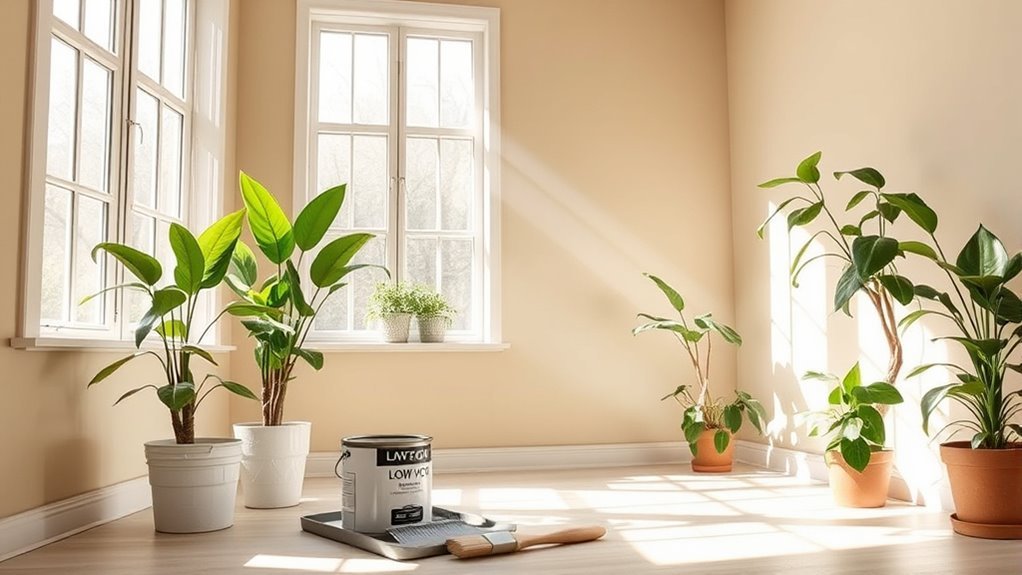
Low-VOC paints greatly enhance indoor air quality by drastically reducing harmful emissions that can linger long after application. These paint products contain fewer than 50 grams of VOCs per liter, considerably lowering the risk of health issues associated with volatile organic compounds. By minimizing indoor air pollutants, often ten times higher than outdoor levels, you create a healthier living environment.
| Feature | Low-VOC Paints |
|---|---|
| VOC Content | Fewer than 50 g/L |
| Odor | Less odor |
| Health Risks | Reduced respiratory issues |
| Environmental Impact | More environmentally friendly products |
Choosing low-VOC options not only improves health but also supports sensitive populations, making them the smart choice for any space.
Choosing the Best Low-VOC Paint for Your Space
How can you guarantee that the low-VOC paint you select truly meets your needs? Start by confirming it contains less than 50 grams of VOCs per liter, as this standard effectively reduces harmful emissions. Verify that any colorants used for tinting are also low-VOC or zero-VOC to maintain low emissions throughout your painting project. Prioritize brands that offer ingredient transparency, allowing you to avoid hidden harmful chemicals. Before committing to a larger purchase, test a small sample to assess odor and confirm comfort in your space. Finally, remember that for ideal indoor air quality, proper ventilation during and after painting is essential, as even low-VOC paints can off-gas for months.
Frequently Asked Questions
Is Low VOC Paint Better?
Low-VOC paint’s eco-friendly options offer health benefits and minimal odor levels. While drying time and application methods are comparable, you might find durability and color selection vary, affecting cost comparison and market availability. Choose wisely!
Is Low VOC Paint Safe to Breathe?
While low-VOC paint considerably reduces harmful emissions, it’s still essential to guarantee proper ventilation during use. Awareness of odor levels and product labeling helps enhance indoor air quality and minimize potential health effects, promoting painting safety.
Can You Sleep in a Room After Painting With Low VOC Paint?
You shouldn’t sleep in a freshly painted room, even with low-VOC paint. Allow adequate drying time, guarantee indoor ventilation, and consider allergy concerns. Check product labels for odor levels and health benefits before deciding.
What Paints Are Low in VOC?
Many eco-friendly options exist, like Sherwin-Williams and Benjamin Moore, offering low-VOC paint finishes. These brands guarantee vibrant color selection and significant health benefits, improving indoor air quality while minimizing environmental impact—worth considering for your home improvement projects.
Conclusion
To sum up, opting for low-VOC paints can greatly enhance your indoor air quality and health. By choosing these eco-friendly options, you’re not just painting your walls; you’re investing in a healthier living environment. While it may seem like a small change, it can make a world of difference. So, don’t just take it at face value—dive deeper into the benefits of low-VOC paints and give your space the fresh start it deserves.

Leave a Reply