
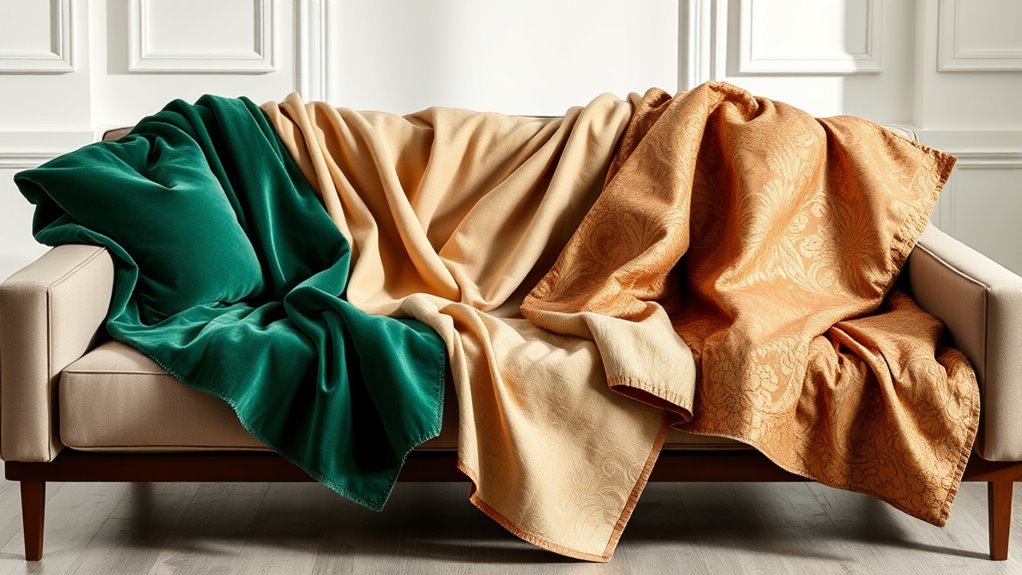
When choosing upholstery fabric for your living room sofa, consider the types available. Natural fibers like cotton and linen offer breathability, while synthetic options like polyester and microfiber excel in durability and stain resistance. Textured fabrics, like velvet and chenille, add visual interest and luxury. It’s important to match fabrics with your decor and choose colors that enhance the space’s vibe. Each fabric type has its unique attributes, and exploring them can help you find the perfect fit.
Understanding Upholstery Fabrics: Key Concepts
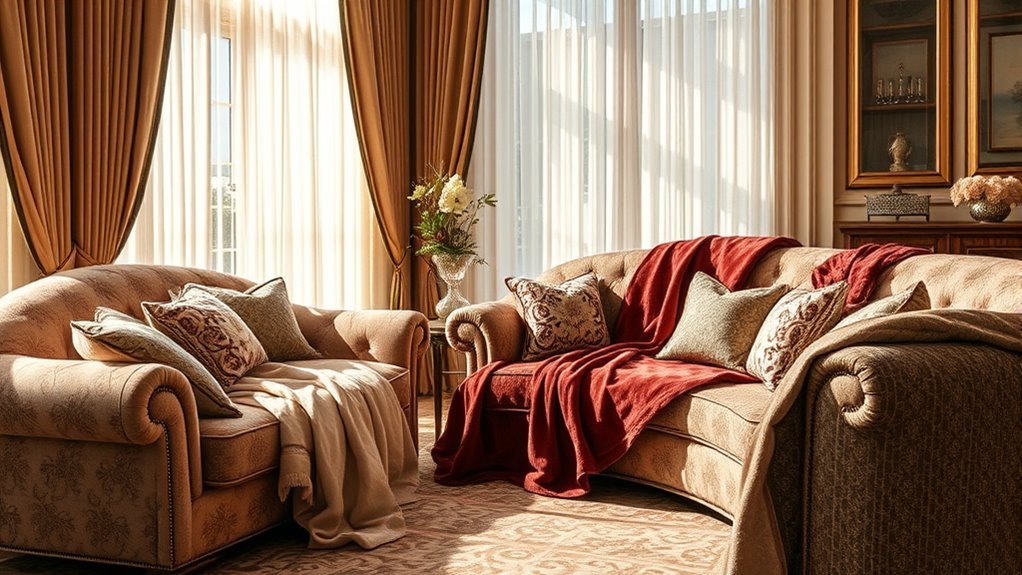
When choosing upholstery fabrics for your living room sofa, understanding the key concepts behind these materials is crucial. You’ll encounter two main types: natural fibers, like cotton and linen, celebrated for their breathability and comfort, and synthetic fibers, such as polyester and nylon, engineered for durability and stain resistance. While natural fibers may offer a cozy feel, they’re often less resilient against wear. Blended fabrics, combining both fiber types, enhance softness and stain resistance, making them perfect for high-traffic areas. The fabric’s construction—woven, knitted, or pile—also influences texture and durability. Performance testing guarantees these upholstery fabrics can withstand daily use, maintaining their beauty while liberating your living space from worries about wear and tear.
Why Fabric Choice Is Crucial for Your Living Room Sofa
Choosing the right upholstery fabric for your living room sofa can greatly influence both its functionality and style. The fabric you select directly impacts durability; options like leather and polyester are durable and resistant, perfect for high-traffic areas. Comfort and maintenance also vary; while cotton offers a soft touch, it demands more upkeep compared to synthetic fibers like microfiber, which repel spills effortlessly. Aesthetic appeal is equally important; luxurious velvet elevates formal spaces, whereas casual linen creates a relaxed atmosphere. Finally, consider environmental factors—natural fibers like wool and cotton promote sustainability, while blends can strike a balance between eco-friendliness and resilience. Understanding these characteristics guarantees you choose the ideal upholstery that complements your lifestyle and decor.
Natural Fibers: The Benefits of Cotton, Linen, and Wool
Natural fibers like cotton, linen, and wool offer distinct advantages that can enhance your living room sofa’s comfort and aesthetic appeal. Cotton’s breathability and softness create an inviting atmosphere, while its stain-resistant treatments make it family-friendly. Linen, crafted from sustainable flax, provides a natural look, keeping you cozy in winter and cool in summer; just be mindful of fading in sunlight. Wool stands out for its exceptional durability and innate stain resistance, ideal for high-traffic areas, while offering warmth and comfort.
| Fiber | Benefits |
|---|---|
| Cotton | Soft, breathable, stain-resistant |
| Linen | Sustainable, temperature-regulating |
| Wool | Durable, naturally stain-resistant |
| Requires specific care | |
| Variety of colors and patterns |
The Allure of Synthetic Upholstery Fabrics: Polyester, Nylon, and Microfiber
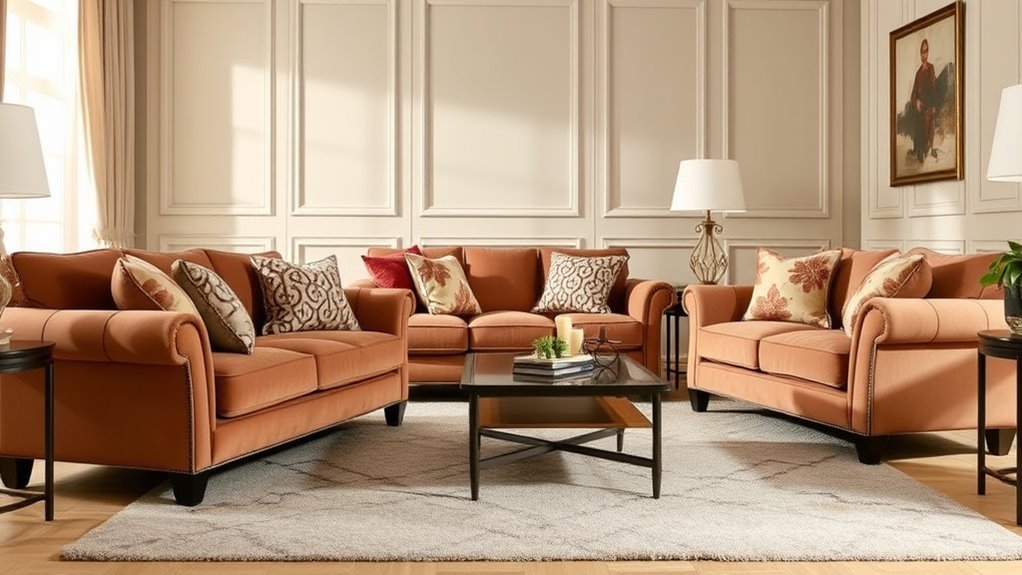
When you consider upholstery options for your living room sofa, synthetic fabrics like polyester and microfiber stand out for their practicality and style. Polyester offers durability and resistance to fading, making it a smart choice for busy households, while microfiber provides a luxurious feel that’s easy to maintain. Both fabrics combine aesthetic appeal with functionality, ensuring your sofa remains a centerpiece of comfort and elegance.
Key Benefits Of Polyester
While many upholstery fabrics exist, polyester stands out as a favored choice for living room sofas due to its remarkable blend of affordability and durability. This synthetic fabric excels in high-traffic areas, as it’s resistant to fading and wrinkling, ensuring your furniture looks fresh for years. If you’ve got kids or pets, you’ll appreciate how easy to clean polyester is; a simple wipe-down is often all it takes to keep it looking sharp. Though it may be less breathable than natural fibers, polyester’s versatility allows it to be blended with cotton or wool, enhancing its performance. For those seeking a long-lasting, stylish solution, polyester is undeniably a liberating choice for your living space.
Advantages Of Microfiber Upholstery
If you’re seeking a blend of comfort, durability, and style in your living room sofa, microfiber upholstery could be the perfect solution. This synthetic fabric, crafted from polyester, boasts a luxuriously soft texture that invites you to sink in. Its water-repellent properties make cleaning a breeze, ideal for high-traffic areas where spills are inevitable. Microfiber is remarkably durable, resisting stains and fading, ensuring your sofa looks stunning for years. The tightly woven fibers also create a barrier against dirt and allergens, making it a hypoallergenic choice for sensitive households. Lightweight and versatile, microfiber complements various furniture styles, all while being budget-friendly. Embrace the allure of microfiber and elevate your living space with effortless elegance.
What’s the Deal With Textured Fabrics Like Velvet and Chenille?
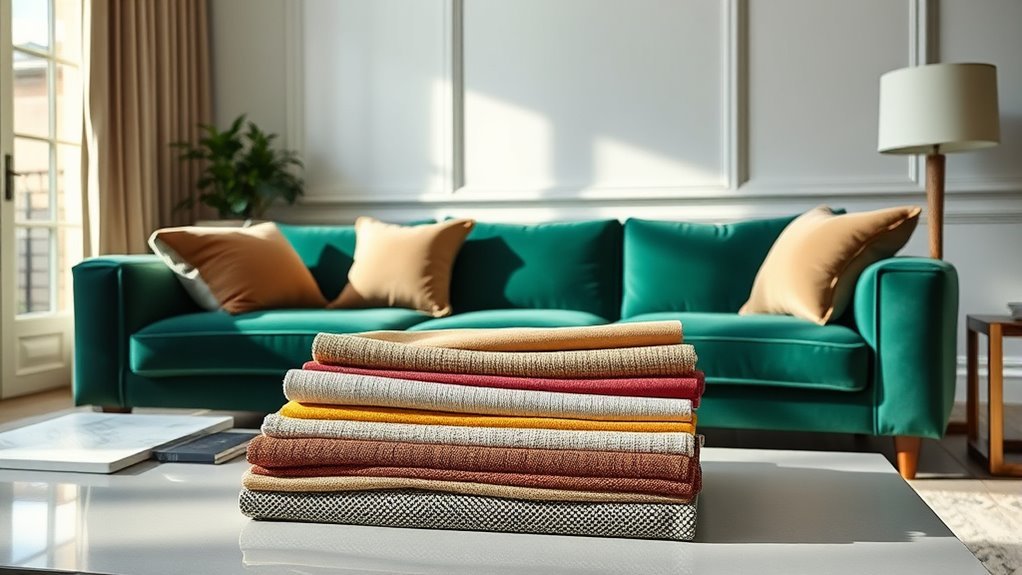
Have you ever wondered why textured fabrics like velvet and chenille are so enchanting for living room sofas? Their unique textures add depth and tactile comfort, transforming your space into a cozy retreat. Velvet impresses with its plush luxury, ideal for low-traffic areas, though it needs careful cleaning to avoid stains. Chenille, with its soft, looped structure, proves more durable and practical, making it a favorite for families.
| Fabric | Texture | Durability |
|---|---|---|
| Velvet | Plush and soft | Moderate |
| Chenille | Extra-soft loops | High |
| Cleaning | Challenging | Moderate (snagging) |
| Ideal For | Low-traffic areas | High-traffic areas |
Choose wisely for your lifestyle!
How to Evaluate Durability in Sofa Fabrics
When choosing a sofa fabric, you should consider its abrasion resistance and stain resistance ratings, as these factors greatly impact durability. Fabrics with high abrasion resistance can withstand daily wear, while those rated for stain resistance help maintain a fresh look in busy households. By understanding these key attributes, you can select materials that not only enhance your living room’s aesthetic but also endure the test of time.
Fabric Abrasion Resistance
Understanding fabric abrasion resistance is essential for selecting a sofa that withstands the rigors of daily life, especially in high-traffic areas. To evaluate this, look for upholstery fabric tested by the Wyzenbeek or Martindale methods. Fabrics rated for 15,000 to 30,000 double rubs are suitable for homes, but if you expect heavy use, opt for those exceeding 30,000. Synthetic materials like polyester and nylon often outperform natural fabrics such as cotton and linen in durability, resisting wear and tear more effectively. Regular cleaning further preserves this resistance, preventing dirt buildup that accelerates damage. By prioritizing abrasion resistance, you guarantee your sofa remains a vibrant, cozy centerpiece in your living space for years to come.
Stain Resistance Ratings
After ensuring your chosen upholstery fabric can withstand wear and tear, the next factor to evaluate is its stain resistance. Fabrics that resist stains allow you to enjoy your living space without constant worry. Here’s how to assess stain resistance:
- Check the AATCC 130 test rating—aim for 4-5 for ideal protection.
- Synthetic fabrics, like polyester and nylon, generally offer superior stain resistance over natural fibers.
- Performance fabrics, such as Sunbrella, feature built-in stain resistance for effortless cleaning.
- Consider the fabric’s ability to endure repeated cleanings, ensuring longevity.
Easy Cleaning: Maintenance Tips for Upholstery
While your living room sofa serves as a central gathering spot, maintaining its upholstery is crucial for preserving its beauty and longevity. Start with easy-to-clean synthetic fibers like microfiber and leather, which require little more than a damp cloth for spills. Regularly vacuum to remove dust and debris, preventing dirt buildup. For stains, mix a mild detergent with water and test on an inconspicuous area first. Consider stain-resistant treatments to enhance longevity, as they repel spills and dirt, making upkeep simpler. Always follow the manufacturer’s care instructions to avoid damaging the upholstery, especially with delicate fabrics like silk and velvet. These maintenance tips guarantee your sofa remains a stunning focal point in your living space.
Matching Fabrics With Your Home Decor
When you select upholstery fabrics for your living room sofa, consider how their colors and textures will harmonize with your existing decor. A well-coordinated color palette can elevate your space, while the right fabric can enhance the style of your furniture, whether it’s casual or formal. Aim for a cohesive look that reflects your personal aesthetic and invites comfort into your home.
Color Palette Coordination
Coordinating fabric colors with your home decor can transform your living space, creating a cohesive and inviting atmosphere. Here’s how to achieve perfect color palette coordination:
- Use neutral tones in upholstery, like beige or gray, for versatility that adapts to your evolving style.
- Incorporate accent pillows in trendy colors to easily refresh your sofa’s look without the commitment of bold fabrics.
- Opt for lighter fabric colors in small spaces to enhance openness and airiness, while darker shades can add warmth to larger areas.
- Choose subtle patterns that bring personality to your decor, ensuring they complement rather than clash with existing furnishings.
Embrace these tips and watch your living space come alive with harmony and beauty!
Complementing Furniture Styles
Creating a harmonious living space involves not just color coordination but also matching fabrics to your furniture styles. Opt for soft and cozy fabrics like cotton and linen to complement modern rustic decor, enhancing its inviting nature. For a more luxurious feel, consider velvet or leather, which elevate traditional settings beautifully. Layering different types of fabrics can add depth and interest; imagine a sleek leather sofa adorned with soft cotton or linen throw pillows. This mix not only enriches your space but also creates a comfortable atmosphere. In high-traffic areas, performance fabrics like Sunbrella blend durability with style, ensuring your living room remains both functional and aesthetically pleasing. Remember, textiles are essential in achieving a cohesive look.
Choosing the Right Color for Your Sofa
Choosing the right color for your sofa can transform your living space, as it sets the mood and complements your overall decor. Consider these aspects when selecting the perfect hue:
Selecting the ideal sofa color can elevate your living space, enhancing mood and harmonizing with your decor.
- Neutral tones like beige or gray offer versatility, blending seamlessly with various styles.
- Warm colors create an inviting atmosphere, while cooler tones evoke tranquility.
- Bold patterns can make a statement but might overwhelm smaller spaces; use accent pillows for a splash of color.
- Natural lighting affects color perception, so test swatches in your actual room.
Opt for synthetic fabrics that are resistant to fading, ensuring your chosen color remains vibrant over time and is easy to clean. Your sofa’s color can truly liberate your living experience.
What Makes a Good Sofa Fabric?
The color of your sofa sets the stage, but the fabric you choose greatly influences both its functionality and comfort. A good sofa fabric balances durability and comfort. Leather and wool thrive in high-traffic areas due to their resilience and stain resistance, while cotton and linen offer breathability and softness, perfect for intimate spaces. Performance fabrics like Sunbrella and LiveSmart are engineered for easy cleaning and stain resistance, ideal for families and pets. Texture also matters; plush materials like velvet provide coziness, while smoother options like linen exude elegance. Finally, opt for colorfast fabrics to preserve vibrancy, especially in sunlit areas. Choose wisely, and your sofa will become a sanctuary of comfort and style.
Frequently Asked Questions
What Are the Different Types of Fabric for Couches?
For couches, you’ll find fabric durability varies with choices like leather, cotton, and performance fabrics. Explore color options, enjoy diverse textures, consider maintenance requirements, and weigh cost considerations to find your perfect fit.
Which Fabric Is Best for a Living Room Sofa?
Isn’t durability essential when choosing a living room sofa fabric? Consider color options, maintenance tips, texture varieties, and environmental impact to find the perfect balance between style and practicality that fits your lifestyle.
What Is the Best Fabric to Reupholster a Sofa?
For reupholstering a sofa, choose durable fabrics like leather or performance textiles. Consider maintenance ease, color choices for your aesthetic, texture options for comfort, and cost factors to guarantee a stylish, lasting investment.
What Fabric to Avoid for a Couch?
Avoid delicate synthetic fabrics and natural fibers like silk and 100% cotton. Their beauty fades with stains and wear. For durability, prioritize stain-resistant options; maintenance tips will keep your couch vibrant and inviting.
Conclusion
In the journey of selecting the perfect upholstery fabric for your living room sofa, remember that it’s more than just a choice; it’s a reflection of your style and comfort. Just as you wouldn’t wear shoes that pinch your feet, don’t settle for fabric that doesn’t feel right. With the right blend of aesthetics and durability, your sofa can become the inviting centerpiece of your home, ready to cradle you and your loved ones in comfort for years to come.

Leave a Reply