
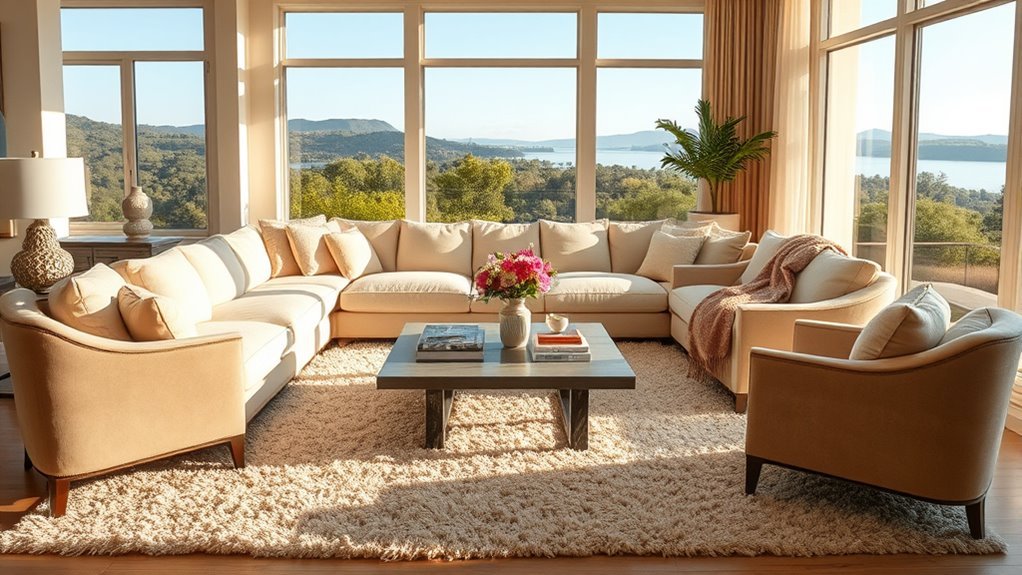
A conversation area in a living room is a dedicated seating zone arranged for effortless eye contact, relaxed posture, and natural back-and-forth talk. Instead of lining every seat toward a television or pushing all furniture flat against the walls, you group sofas, chairs, and tables into an inward-facing island. When the spacing and surfaces work together, guests know exactly where to sit, set a drink, and join the discussion.
Quick Answer
To create a conversation area in a living room, group sofas and chairs in a U-shape, L-shape, or parallel layout facing one another 6 to 8 feet apart. Place a central coffee table 14 to 18 inches from the seats, keep 30 to 36 inches clear for walkways, and anchor the zone with an area rug and warm 2700K–3000K lamps.
At a Glance
| Time Required | 30 to 60 minutes to measure and tape the floor; 1 to 2 hours to move furniture, rugs, and lighting. |
| Difficulty | Easy to moderate, depending on room dimensions and furniture weight. |
| Tools Needed | Tape measure, painter’s tape, notepad, furniture sliders, table or floor lamps, and a non-slip rug pad. |
| Cost | $0 when rearranging furniture you already own; optional cost for a rug pad, side table, tray, or warm LED bulbs. |
What Is a Conversation Area and Why Is It Important?
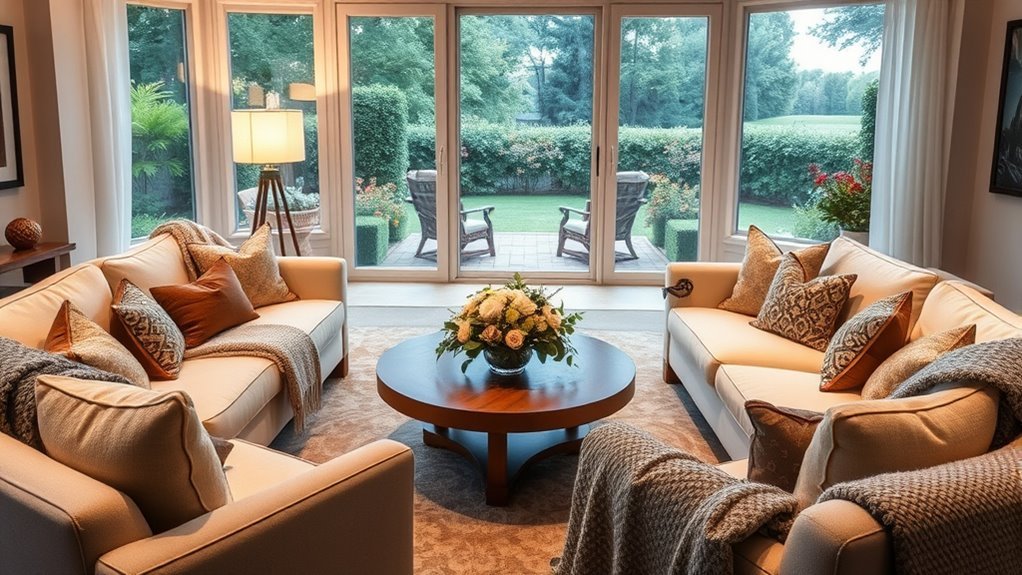
A conversation area is a grouped seating arrangement designed to help two or more people talk comfortably without straining to hear or twisting their necks. Classic configurations pair a sofa with two armchairs, place two sofas face to face, or combine an L-shaped sectional with an angled accent chair. What defines the zone is not the price of the furniture, but the spatial relationship between the seats.
In environmental psychology and proxemics (the study of how physical space affects human interaction), casual social conversation works best when people sit between 4 and 8 feet apart. Closer than 4 feet can feel crowded for guests outside your immediate household, while distances beyond 9 or 10 feet force people to lean forward and raise their voices.
A thoughtful living room seating arrangement matters because your living room is rarely just a home theater. It is where friends gather before dinner, family members catch up after work, and guests linger over morning coffee. Designing around human connection turns a pass-through room into the most welcoming spot in your home.
Note: A conversation area does not require a large formal parlor. Even a compact studio or apartment living room can form an effective social zone with one loveseat, a single angled armchair, and a shared side table.
Essential Features for a Cozy Conversation Area
Building a cozy conversation area relies on six core design elements: inward-facing seating, ergonomic spacing, reachable table surfaces, a grounding area rug, warm layered lighting, and a clear visual anchor. When all six elements work together, guests can sit down without wondering where to look, where to set a glass, or how to walk around the group.
Recommended Products

Sofa-Level Pocket Coil Support: This accent chair features 36 individually wrapped pocket coils for resilient support. The steel coil system helps maintain shape and prevents sagging over time, ensuring long-lasting support for reading, relaxing, or lounging

[BOXED EDGE CUSHION DESIGN]: This fashionable armless chair brings a cool vibe to your home with patterned fabric in neutral tones. Rich espresso finished, thicker padded seat and back, complimented by the curved back, provides premium comfort and support.

Mid Century Style: This accent chair has a simple and elegant design that suits any style of decoration in your living home or bedroom. The additional cushion also makes the reading chair more comfortable and beautiful
Comfortable Facing Seating
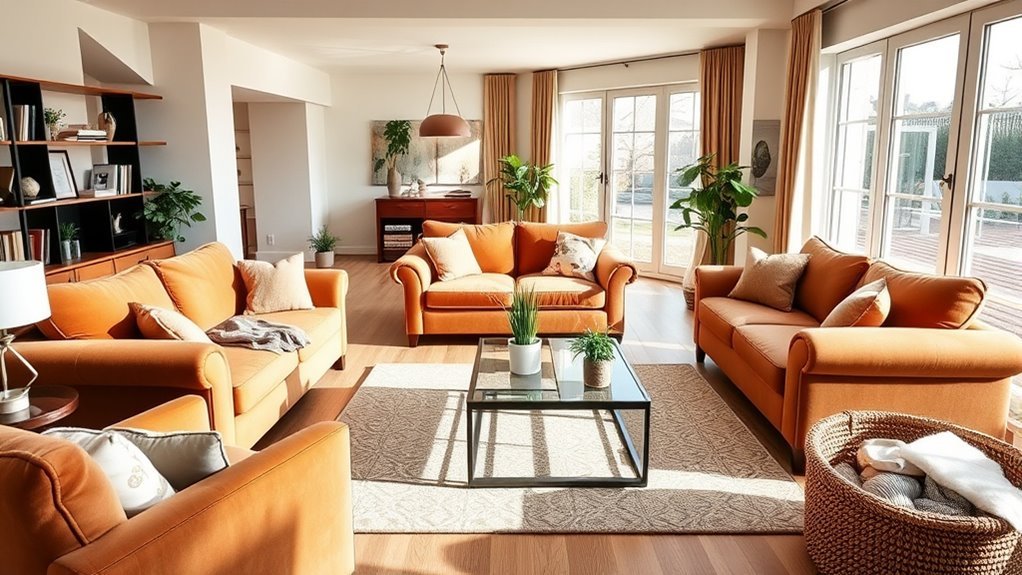
Arrange sofas, loveseats, accent chairs, or upholstered poufs so that every seat faces or angles toward the center of the group. A U-shape, L-shape, circular cluster, or parallel sofa layout supports eye contact far better than a single straight line of seating along one wall. Designers often use the 2:1 seating ratio—pairing two individual armchairs with one three-seat sofa—to balance visual weight and give guests flexible seating choices.
Practical Spacing
Ergonomic measurements keep a seating group intimate without feeling cramped. For chairs placed directly opposite a sofa, a span of 6 to 8 feet between seat fronts is an ideal starting range, according to layout guidance from Homes & Gardens. Design editors at Better Homes & Gardens similarly recommend keeping face-to-face seating within 8 feet and leaving 6 to 12 inches between the adjacent corners of sofas and chairs arranged in an L-shape.
Position your central coffee table 14 to 18 inches from the front edge of the sofa and chairs. That 16-inch sweet spot leaves comfortable knee clearance while letting seated guests set down a cup without standing up. Deep-seated lounge sofas, power recliners, or households with mobility aids may need 18 to 24 inches of clearance.
Clear circulation paths protect the seating group from constant interruptions. Plan for 30 to 36 inches of open walkway space along main routes around the perimeter of the furniture grouping, as recommended in Better Homes & Gardens’ conversation layout guide. If you are planning for wheelchair accessibility, the U.S. Access Board’s ADA Standards specify at least 36 inches of continuous clear width along accessible routes (narrowing to no less than 32 inches at doorways) and a 60-inch diameter turning circle.
Conversation Area Spacing Cheat Sheet
Use the reference dimensions below to check your floor plan before moving heavy pieces. Treat each figure as a practical baseline you can fine-tune for your room’s exact proportions.
| Layout Check | Recommended Measurement | Why It Helps |
|---|---|---|
| Facing sofa and chairs | 6 to 8 feet (3.5 feet minimum in tight rooms; 8 to 9 feet maximum) | Keeps guests within natural vocal and eye-contact range without shouting. |
| Corner gap in L-shaped seating | 6 to 12 inches between adjacent seat corners | Prevents knees from bumping while allowing a shared corner end table. |
| Sofa to coffee table | 14 to 18 inches | Leaves legroom for walking past while keeping drinks within arm’s reach. |
| Coffee table size and height | Length about 2/3 of sofa length; height level with or 1 to 2 inches below seat cushion | Balances visual scale and lets people reach the tabletop comfortably. |
| Side table height | Within 2 to 3 inches of the sofa or chair arm height (usually 22 to 28 inches tall) | Prevents awkward shoulder lifting or bending when setting down a glass. |
| Main walking route | 30 to 36 inches (36 inches minimum for wheelchair access) | Eliminates squeezing behind chairs or cutting through the conversation zone. |
| Area rug placement | Front legs (or all four legs) of main seats on rug; 6 to 8 inches wider than sofa on both ends | Visually locks separate pieces into one unified seating island. |
A Reachable Surface for Every Seat
Every person in the seating group should be able to set down a drink, book, or phone without standing up or leaning awkwardly. Choose a central coffee table that measures roughly two-thirds the length of your sofa (for example, a 56-inch table for an 84-inch sofa) and sits level with your sofa seat cushions or 1 to 2 inches lower (typically 16 to 18 inches tall). Supplement the center table with end tables, nesting tables, or C-tables positioned within 2 to 3 inches of the chair or sofa arm height.
An Area Rug That Anchors the Zone
An area rug defines the boundaries of a conversation area, especially in open-plan rooms without dividing walls. Choose a size—typically 8×10 feet for small-to-medium rooms under 14×17 feet, or 9×12 feet for larger spaces—so that at least the front legs of the sofa and every chair rest on the rug. Make sure the rug extends at least 6 to 8 inches past both ends of your sofa while leaving 12 to 24 inches of bare floor around the room’s walls.
Layered Lighting
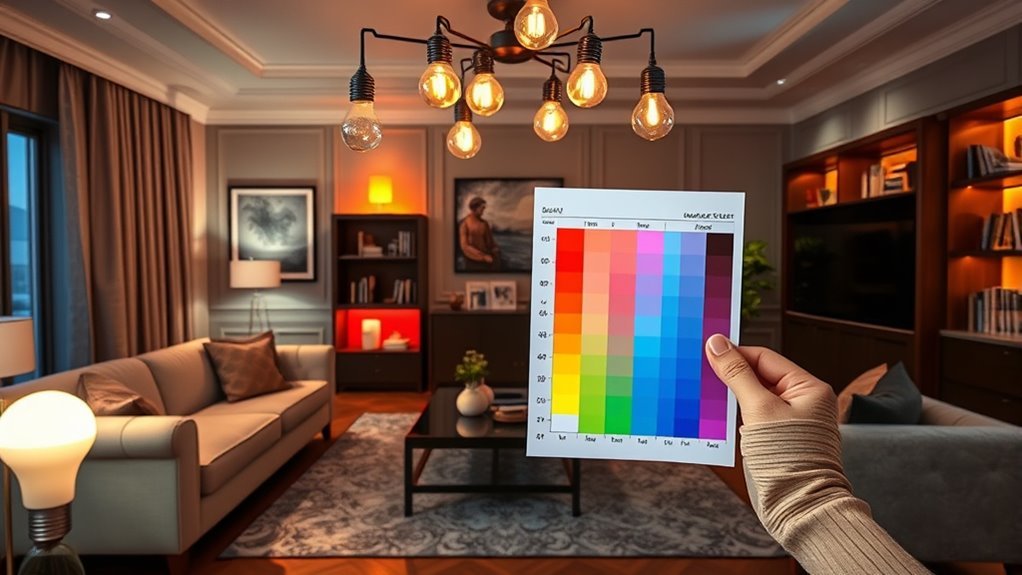
Harsh overhead fixtures cast shadows across faces and make a living room feel clinical. Build a three-layer lighting plan combining ambient ceiling fixtures on dimmers, task lamps beside reading and conversation seats, and soft accent lights on artwork or shelving. Choose LED bulbs labeled “warm white” or “soft white” rated at 2700K to 3000K on the Kelvin scale, and position table lamps so the bottom of the shade sits near seated eye level (about 40 to 42 inches off the floor) to prevent direct glare.
A Focal Point
A clear focal point gives your seating arrangement an immediate sense of purpose when you enter the room. Orient the primary sofa or seating opening toward an architectural feature such as a fireplace mantel, a picture window, built-in bookshelves, or a large piece of wall art. Once the main anchor is set, angle the secondary chairs inward so the focal point supports conversation rather than competing with it.
How to Arrange Seating for Better Conversations
Arranging seating for better conversations works best when you map your room’s dimensions, walkways, and focal point before lifting a single piece of heavy furniture. Follow these seven ordered steps to build a balanced layout that looks inviting from the doorway and feels effortless from every seat.
Recommended Products

This accent chairs set of 2 features: curving arms and flared legs for an iconically mid-century modern look. This mid century modern chair for living room includes an additional throw pillow for you to enjoy a relaxing time.

It is beautiful and comfortable, and suitable for all seasons. Create a cozy family living room with ease!

Product Dimensions: 18.90"L x 16.73"W x 31.10"H; Seat Dimensions: 15.75"SD x 16.73"W x 17.32"H; Backrest Height: 14.57"H; Weight: 9.26 LBS.
Step 1: Measure the Room
Measure the overall wall lengths, window widths, fireplace hearth depth, door swings, and main pass-through walkways with a tape measure. Use low-tack painter’s tape on the floor to outline the exact footprint of your sofa, chairs, and coffee table before moving anything. Taping the floor lets you spot pinched walkways and oversized pieces in minutes.
Step 2: Choose the Main Purpose
Decide whether your household uses the room primarily for face-to-face entertaining, family TV viewing, quiet reading, or a daily mix of all three. When conversation is the priority, orient seats toward one another across the center of the rug. If TV viewing shares the space, include one or two swivel armchairs that can pivot between the screen and the seating group.
Step 3: Place the Largest Piece First
Position your largest piece—usually the main sofa or sectional—facing or perpendicular to your primary focal point. In compact rooms, pull the sofa at least 3 to 5 inches away from the wall to give the upholstery breathing room and create a softer shadow line. In medium or large rooms, float the sofa several feet into the room to tighten the conversation circle and allow a 30-to-36-inch walkway behind it.
Step 4: Add Chairs Across or Beside the Sofa
Set two armchairs directly across from the sofa (6 to 8 feet away) for a balanced U-shape, or place one chair perpendicular to the sofa with a 6-to-12-inch corner gap to form an L-shape. Angle the chairs inward slightly—about 10 to 15 degrees—so seated guests naturally look toward one another rather than staring straight ahead in rigid lines.
Step 5: Add a Coffee Table or Ottoman
Center your coffee table or upholstered ottoman in the middle of the seating group, keeping 14 to 18 inches between the table edge and the front of the sofa cushions. If your chairs sit 8 feet from the sofa and cannot reach the central coffee table, place a shared side table between the two chairs so every guest has a surface within arm’s reach. When using a cushioned ottoman, add a flat wood or metal tray to hold glasses steady.
Step 6: Anchor With a Rug
Slide an area rug and a non-slip rug pad underneath the group so that at least the front two legs of the sofa and accent chairs rest on the pile. If the rug is too small to reach the chairs, the furniture will read as disconnected islands floating around a postage stamp.
Step 7: Test the Flow
Walk through the room from every doorway as if you are welcoming guests or carrying a tray of drinks. Verify that your busiest walking path routes around the outside of the seating group rather than slicing straight between the sofa and coffee table. If you have to turn sideways between a chair and table corner, widen that gap to at least 24 to 30 inches.
Pro Tip: Run a four-point seat test before you finish styling. Sit in every single seat and check four things: (1) Can I make eye contact with every other seat without twisting my spine? (2) Can I set down a mug without leaning forward off the backrest? (3) Can I stand up and exit cleanly? (4) Is lamp bulbs’ glare hidden behind a shade at seated eye level? Fix any seat that fails before hanging art or styling shelves.
Best Conversation Area Layouts by Room Type
Your living room’s architectural footprint dictates which furniture layout will flow best. Use these six room-specific strategies to adapt standard spacing rules to tight walls, bowling-alley proportions, open floor plans, fireplaces, and televisions.
Recommended Products
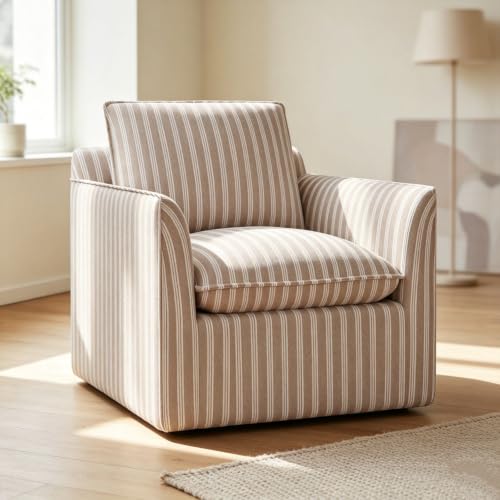
360 Degree Swivel Accent Chair - The modern accent chair has a powerful 360 degree rotating metal base that has passed 10,000 cycle tests, which allows the bucket chair to rotate freely, adding to the fun and joy of sitting on it.

360-Degree Swivel: This 360° swivel accent chairs set of 2 offers a stylish and contemporary touch to your space. With its compact size, this multi-functional chair is perfect for bedroom, living room, small spaces for reading corner, entrance, balcony or vanity chair, footstool, making it a versatile choice for any room

Rustic and Modern Design: Elevate your home with the timeless appeal of this swivel barrel chair. Featuring a natural rattan frame paired with luxurious brown leather, this rattan accent chair strikes the perfect balance between rustic charm and modern sophistication, offering an organic yet polished look for any space
Small Living Room
Place an apartment-sized sofa or loveseat (60 to 72 inches wide) along the longest uninterrupted wall, leaving 3 inches of breathing space behind the frame. Set one or two open-leg accent chairs across from or perpendicular to the sofa at a 4-to-6-foot conversation distance. Choose a round or oval coffee table (30 to 36 inches in diameter) or nesting tables to eliminate sharp corners in tight walkways.
Long Narrow Living Room
Divide a long, narrow room into two distinct functional zones instead of stretching a single seating group down the walls like a waiting room. Anchor the primary conversation area on an 8×10-foot rug at one end with a sofa facing two angled chairs, and curve the main 30-to-36-inch walkway along one side wall. Use the remaining end of the room for a compact writing desk, reading chair, or pair of swivel chairs around a small bistro table.
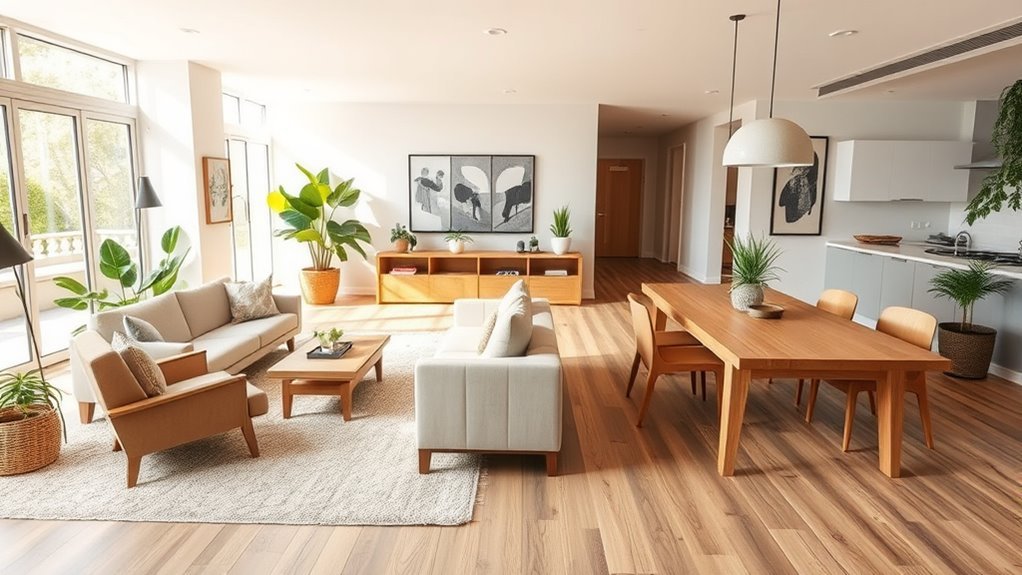
Open-Plan Living Room
Float the back of your sofa or sectional toward the kitchen or dining area to create a clear visual boundary without building walls. Place a narrow console table (12 to 15 inches deep and roughly level with or 1 inch below the sofa back) directly behind the sofa to hide the exposed upholstery, anchor a pair of table lamps, and house baskets below.
Fireplace Living Room
Treat the fireplace as the anchor of a U-shaped seating plan by placing two matching sofas perpendicular to the hearth or setting one sofa parallel to the mantel with two flanking armchairs. For fire safety, the U.S. Fire Administration recommends keeping upholstered furniture, curtains, and anything that can burn at least 3 feet (36 inches) from the fireplace or wood stove opening.
Living Room With a TV
Balance screen viewing with face-to-face interaction by mounting or placing the TV on a low media console so the center of the screen sits near seated eye level (about 42 inches from the floor). Position the primary sofa at a viewing distance of roughly 1.5 times the TV’s diagonal screen size (about 8 feet for a 65-inch TV), then add one or two swivel chairs opposite or perpendicular to the sofa so guests can face the group during conversations and rotate toward the screen on movie nights.
Large Living Room
Resist the urge to push a single sofa and two chairs 12 feet apart just to fill an oversized floor plan. Instead, keep your main conversation grouping within the 6-to-8-foot social zone on a 9×12- or 10×14-foot rug, and establish a secondary zone—such as a four-chair game table, a window-side chaise lounge, or a quiet two-chair reading nook—in the remaining space.
Creating a Welcoming Atmosphere in Your Conversation Area
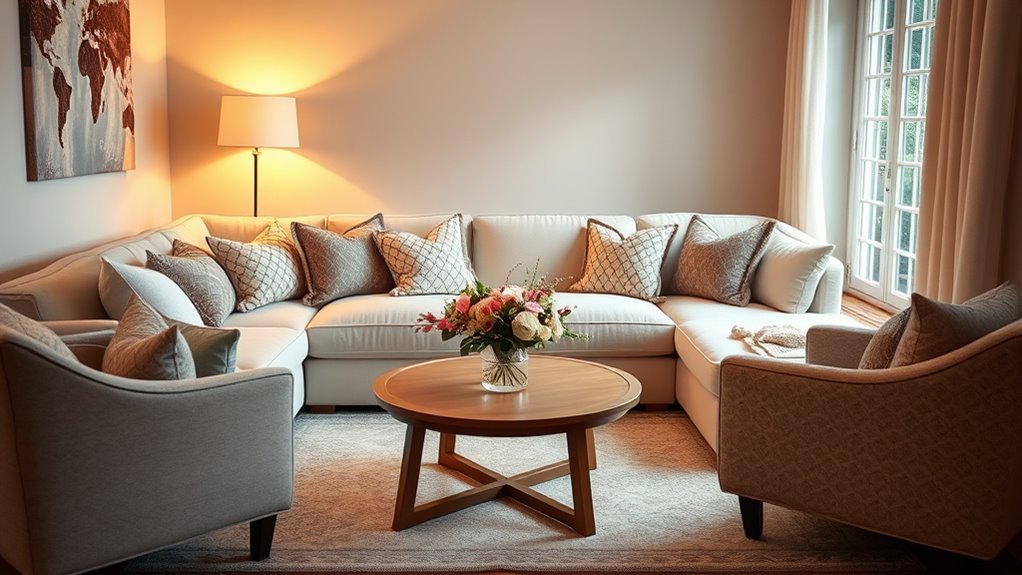
A truly warm and inviting atmosphere depends on sensory comfort just as much as floor-plan geometry. Soft acoustic textures, balanced color temperatures, glare-free lighting, and safe walkways keep guests relaxed enough to stay for hours.
Use Soft Textures
Combine tactile fabrics such as bouclé, linen, cotton velvet, wool rugs, and woven throws to soften hard architectural lines. Limit throw pillows to two per sofa end so guests can sit back fully against the cushions without having to move a pile of pillows onto the floor.
Choose Warm, Balanced Colors
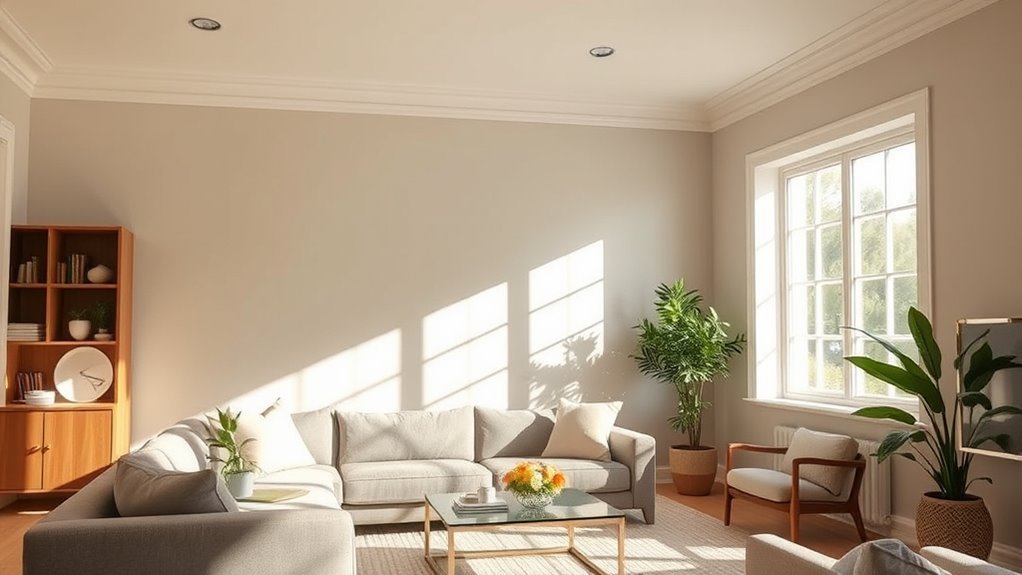
Warm undertones in oatmeal, clay, olive green, muted slate blue, and natural oak or walnut wood flatter skin tones and make a room feel grounded. Even a sun-drenched white living room feels intimate when balanced with warm wood side tables, woven baskets, and matte or eggshell wall finishes that diffuse reflections.
Make Lighting Adjustable
Position at least three light sources at staggered heights around the perimeter of your seating group: a floor lamp next to the sofa (58 to 64 inches tall), a table lamp on an end table, and wall sconces or picture lights on a dimmer switch. Keeping all bulbs within the 2700K to 3000K warm-white range prevents the jarring visual clash that happens when cool blue-white daylight bulbs mix with amber incandescent-style lamps.
Control Noise and Echo
Hardwood floors, bare drywall, and large glass panes bounce sound waves around the room, creating background echo that makes group conversation exhausting. Absorb harsh high-frequency reflections by pairing a dense wool or high-pile rug with a felt rug pad, hanging fabric drapery panels that extend past the window frame, and filling open bookshelves with books of varied depths.
Warning: Secure every area rug with a grippy rug pad or double-sided carpet tape, and run lamp cords behind furniture rather than across walkways. According to the CDC’s older adult fall prevention data, loose throw rugs, floor clutter, and uneven steps are primary home hazards that contribute to falls.
Personalizing Your Conversation Area for Maximum Comfort
Personalizing your seating zone turns a showroom layout into a space that sparks genuine conversation. Meaningful objects, tailored seat depths, and accessible surfaces give guests natural talking points while keeping every seat physically supportive.
Style your coffee table or nearby shelving with a curated stack of two or three large-format art or travel books, a ceramic bowl from a trip, or a low vase of fresh branches (kept under 12 inches tall on the coffee table so it never blocks sightlines between faces). Choose seat depths that fit how your household sits: 20 to 22 inches of inside seat depth supports upright posture for conversation, while deeper 24-inch lounge sofas benefit from lumbar pillows so shorter guests can still rest their feet flat on the floor.
| Element | Best Choice | Why It Helps |
|---|---|---|
| Seating Mix | Sofa (20–22 in. upright seat depth), swivel armchairs, and movable poufs | Supports different body heights, postures, and group sizes comfortably. |
| Acoustic Textures | Wool or high-pile rug with felt pad, lined curtains, upholstered chairs | Absorbs room echo so voices sound warm and clear at normal volume. |
| Color & Lighting | Warm neutrals, natural wood tones, and dimmable 2700K–3000K lamps | Creates a flattering, relaxed evening mood without harsh overhead glare. |
| Personal Details | Low centerpiece (under 12 in. tall), travel books, framed art, handmade objects | Sparks natural conversation without blocking eye contact across the table. |
| Seating Geometry | U-shape, L-shape, parallel sofas, or 4-chair circle angled 10–15 degrees inward | Encourages natural eye contact and effortless social interaction. |
Common Conversation Area Mistakes to Avoid
Even high-end living room furniture feels awkward when spacing or lighting errors work against social interaction. Check your current room against these seven common layout mistakes before shopping for new pieces.
- Pushing every seat flat against the walls: Perimeter seating leaves an empty dead zone in the middle of the room and stretches conversation past 10 feet. Pull pieces inward onto a central rug.
- Pointing every seat solely at the TV: A theater-row arrangement forces guests to turn their heads 90 degrees to speak. Angle at least one or two chairs toward the sofa.
- Floating an undersized area rug: A 5×7-foot rug stranded under only the coffee table visually shrinks the room. Size up to an 8×10 or 9×12 so the front legs of all main seats rest on the rug.
- Leaving “orphan” seats without a table: If a guest in an accent chair has to hold a drink in their lap, add a small C-table, pedestal table, or shared side table within arm’s reach.
- Routing foot traffic through the center: Allowing the main path from the hallway to the kitchen to cut between the sofa and coffee table interrupts every chat. Route primary walkways around the outside of the seating group.
- Placing tall decor on the coffee table: Tall floral arrangements or candelabras block eye contact across the zone. Keep coffee table centerpieces below 12 inches high.
- Relying on a single overhead ceiling fixture: Top-down lighting creates unflattering facial shadows. Turn off the ceiling light and use eye-level table and floor lamps instead.
Quick Layout Formulas That Work
When you want a reliable starting blueprint, choose one of these four designer-tested seating formulas based on your room size and seating capacity. Each layout naturally keeps guests within the 6-to-8-foot conversation zone.
Sofa + Two Chairs
This classic 2:1 formula seats five people comfortably and adapts to almost any rectangular living room. Place a three-seat sofa facing your focal point, set two armchairs opposite the sofa (or perpendicular to one end in smaller rooms), center a rectangular coffee table 16 inches from the sofa, and tuck an end table between the two chairs.
Two Sofas Facing Each Other
Two parallel sofas placed 6 to 7 feet apart across a long coffee table create a symmetrical, face-to-face gallery ideal for entertaining six to eight guests. Anchor the open ends of the corridor with a fireplace or window on one side and a pair of small stools or a console table on the other.
Sectional + Accent Chair
An L-shaped sectional provides built-in corner seating, but it can feel closed off on its own. Place a swivel or open-frame accent chair across from the open corner of the sectional—angled inward toward the center of a round coffee table—to complete a conversational triangle.
Four Chairs Around a Table
Four matching swivel or club chairs arranged in a circle around a 36-to-42-inch round coffee table or ottoman create the most egalitarian setup of all. Because every seat shares the exact same sightline and distance (about 5 to 6 feet across the circle), this formula thrives in square sitting rooms, libraries, bay windows, or secondary zones in large living rooms.
Key Takeaways
- Follow the 2:1 seating balance: Pair one primary sofa with two angled armchairs or swivel chairs so guests have flexible, face-to-face seating options.
- Proportion your tables to your sofa: Choose a coffee table roughly two-thirds the length of your sofa (level with or 1 to 2 inches below seat height) and side tables within 2 to 3 inches of arm height.
- Size up your area rug: Use an 8×10-foot or 9×12-foot rug so the front legs of every main seat rest on the rug and extend 6 to 8 inches past both ends of the sofa.
- Protect safety and accessibility clearances: Maintain 30 to 36 inches for main walkways (36 inches for wheelchair routes) and keep furniture at least 36 inches from fireplace openings.
- Verify with the four-point seat test: Sit in every seat to check eye contact, table reach, exit clearance, and glare-free 2700K–3000K lighting before finalizing the room.
Frequently Asked Questions
How do you create a conversation area in a living room?
You create a conversation area by pulling your sofa and chairs away from the walls into an inward-facing U-shape, L-shape, or parallel grouping spaced 6 to 8 feet apart. Place a coffee table 14 to 18 inches from the seats, anchor all front furniture legs on an area rug, add side tables and warm lamps, and leave 30 to 36 inches for outer walkways.
What is a conversation zone?
A conversation zone is a defined seating island where sofas, chairs, tables, rugs, and lighting work together to support face-to-face social interaction. It can serve as the primary furniture arrangement in a living room or as a smaller two-chair corner inside a larger open-plan space.
How much walkway space should a conversation area have?
Plan for 30 to 36 inches of clear width along main walking routes around the seating group, and at least 36 inches of continuous width (with a 60-inch turning circle) for wheelchair accessibility. Route the busiest path around the outside of the seating cluster rather than cutting between the sofa and coffee table.
What is the point of a conversation pit?
A conversation pit is a sunken architectural seating area popularized in mid-century modern homes from the 1950s through the 1970s to bring guests into an intimate, built-in perimeter without dividing walls, as detailed by Architectural Digest. Because recessed floors introduce step-down drop-offs, they require careful step lighting, railings, and accessibility planning.
How far apart should chairs be in a conversation area?
Chairs facing a sofa across a coffee table should sit 6 to 8 feet apart (never less than 3.5 feet or more than 9 to 10 feet). Side-by-side armchairs or seats meeting at an L-shaped corner should stay 6 to 12 inches apart so guests can talk comfortably and share a small end table.
Can a small living room have a conversation area?
Yes, a small living room can easily fit a conversation area by pairing a compact 60-to-72-inch loveseat with one or two open-leg accent chairs and a 30-to-36-inch round coffee table. Pulling the sofa 3 inches off the wall and anchoring the front legs of every seat on a shared rug makes a tight room feel cohesive and airy.
Should a conversation area face the TV?
A conversation area does not need to point every seat at the TV. In a multipurpose living room, face the main sofa toward the screen (centered around 42 inches off the floor) and place one or two swivel chairs perpendicular or opposite the sofa so they can turn toward guests for conversation and rotate toward the TV for movie night.
What size rug do you need for a living room conversation area?
Most living room conversation areas need an 8×10-foot rug (for rooms under 14×17 feet) or a 9×12-foot rug (for larger rooms, sectionals, or two facing sofas). The rug should extend at least 6 to 8 inches past both ends of the sofa and hold at least the front two legs of every sofa and chair in the grouping.
Conclusion
A well-planned conversation area transforms your living room from a passive TV space into an inviting hub for connection. By grouping seats 6 to 8 feet apart, keeping a coffee table 14 to 18 inches within reach, anchoring the footprint on an appropriately sized rug, and layering in 2700K–3000K lamps, you make it effortless for guests to relax and talk. Grab a tape measure and a roll of painter’s tape today, check your sofa-to-chair distance and walkway clearance, and run the four-point seat test before buying anything new.
Sources
- Homes & Gardens: How to Plan the Perfect Living Room Layout: Supports the 6-to-8-foot starting range for chairs placed opposite a sofa and inward-angled seating clusters.
- Better Homes & Gardens: How to Arrange Furniture: Supports keeping face-to-face seating within 8 feet, leaving 6-to-12-inch corner gaps in L-shaped seating, and spacing coffee tables 14 to 18 inches from sofas.
- Better Homes & Gardens: Arrange Furniture for Better Conversation: Supports floating furniture groupings, anchoring zones with rugs, and maintaining 30-to-36-inch circulation paths.
- U.S. Access Board: ADA Standards Chapter 4 – Accessible Routes: Supports the 36-inch minimum continuous clear width for accessible walking routes (32 inches at doorways) and wheelchair clearance standards.
- ENERGY STAR: Qualified Light Bulbs Color Temperature Guide: Supports choosing warm white or soft white bulbs rated at 2700K to 3000K for inviting living room lighting.
- U.S. Fire Administration: Heating Fire Safety: Supports keeping upholstered furniture and anything that can burn at least 3 feet (36 inches) from fireplaces and wood stoves.
- CDC: Facts About Older Adult Falls: Supports the home safety warning regarding loose throw rugs, floor clutter, and uneven steps.
- Architectural Digest: Conversation Pits: Supports the mid-century history, purpose, and safety considerations of sunken living room seating areas.


[…] What Is a Conversation Area in a Living Room? Definition, Examples & Tips […]