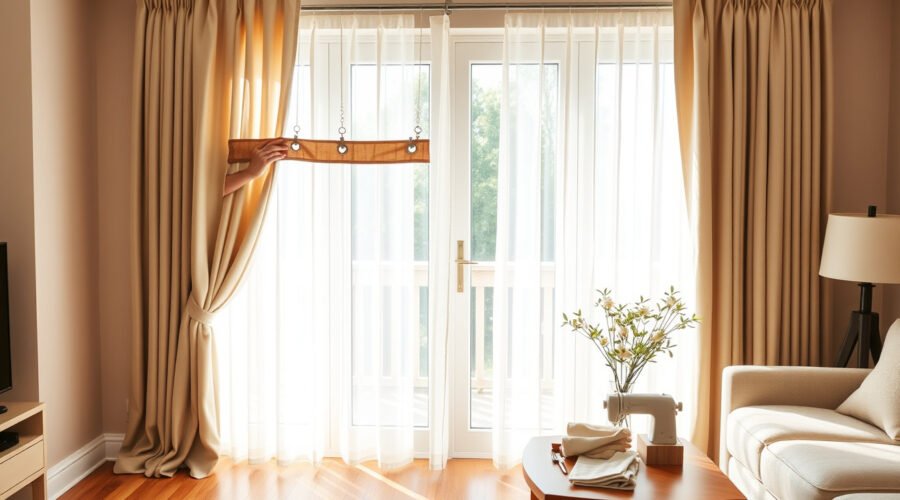
Short curtains can make a living room feel unfinished because they stop the eye before it reaches the floor. The good news is that you do not always need to replace them. With the right rod placement, curtain rings, hem adjustments, or a fabric border, you can make too-short curtains look intentional, balanced, and better fitted to the room.
Quick Answer
If your curtains are too short, first measure from the rod or rings to the floor. For a fast fix, add curtain rings or clips, let down the hem, or sew a fabric border to the bottom. If the rod is too high for the curtain length, lower it only if it still looks balanced with the window and ceiling.
Key Takeaways
- Living room curtains usually look most polished when they float just above the floor, gently kiss it, or break slightly.
- Raising rods can make a window feel taller, but the curtains still need enough length to reach the floor.
- Curtain rings, clip rings, hem release, and a bottom fabric band are the easiest ways to lengthen panels you already own.
- For fullness, choose curtain panels with a combined width around 2 to 2.5 times the rod or window width; sheers may need more fabric.
- Use anchors or studs for heavy rods, and keep cords from blinds or shades safely out of reach of children and pets.
At a Glance
| Time Required | 15 minutes for measuring; 30–60 minutes for rings, rod adjustment, or hemming; longer for sewing a fabric border. |
| Difficulty | Easy to moderate, depending on whether you are adding rings, moving hardware, or sewing trim. |
| Tools Needed | Steel tape measure, pencil, level, step ladder, curtain rings or clips, seam ripper, iron or steamer, drill, wall anchors, and matching fabric if adding a border. |
| Cost | Usually $0–$40 for simple fixes such as rings, clips, or hem tape; more for custom panels or new curtain hardware. |
Why Short Curtains Can Dim Your Space
Short curtains are not always wrong. Café curtains, sill-length curtains, and curtains above a radiator can be useful in kitchens, bathrooms, and tight spaces. In a living room, though, panels that stop several inches above the floor often look accidental rather than designed.
When curtains end too high, they visually cut the wall into sections. That can make the window feel smaller, the ceiling feel lower, and the room feel less finished. Floor-length curtains create a longer vertical line, which is why designers often use them in living rooms and bedrooms.
The most polished living room lengths are usually:
- Float: The curtain stops about 1/4 to 1/2 inch above the floor. This is clean, easy to maintain, and practical for homes with pets or heavy foot traffic.
- Kiss or graze: The curtain just touches the floor. This gives a tailored, custom look when measured well.
- Break: The curtain has about 1 inch of extra fabric resting on the floor. This feels softer and more relaxed.
- Puddle: The curtain has several inches of extra fabric on the floor. This can look dramatic, but it collects dust and is harder to open and close.
Note: A curtain that is 1/2 inch above the floor can look intentional. A curtain that stops 3, 4, or 6 inches above the floor usually reads as too short unless there is a clear reason, such as a radiator, built-in bench, or café-curtain style.
How to Hang Your Rods for Maximum Impact
Rod placement changes how your curtains frame the window. A rod mounted higher and wider than the frame can make the window feel taller and lets more glass show when the curtains are open. Better Homes & Gardens recommends mounting rods above the frame and extending them beyond the window, while Homes & Gardens notes that high, wide placement can make the window feel bigger and brighter.
For many living rooms, start with these ranges:
- Rod height: Mount the rod about 4 to 8 inches above the window frame, or closer to the ceiling if the ceiling is standard height and the curtains are long enough.
- Rod extension: Extend the rod about 8 to 12 inches beyond each side of the window when wall space allows.
- Panel fullness: Use curtain panels with a combined width around 2 to 2.5 times the window or rod width for a full look.
Rod Height Matters
Hanging the rod higher draws the eye upward, but it only works if the curtains still reach the floor. Before moving a rod up, measure the panels you already have. If raising the rod creates a bigger floor gap, you will need longer curtains, rings, clips, or a bottom border.
If the curtains are only slightly short, clip rings can add enough drop to solve the problem. If they are several inches short, lowering the rod may help, but do not place the rod directly on top of the window trim unless that is the only balanced option. A rod that is too low can make the window feel compressed.
Extend Beyond Window Edges
Extending the rod beyond the window edges gives the curtain panels a place to stack when open. This helps expose more glass, brings in more natural light, and makes the window look wider.
| Tip | Impact |
|---|---|
| Extend rods 8–12 inches when possible | Lets panels clear more glass and makes the window feel wider |
| Mount rods 4–8 inches above the frame | Creates a taller visual line without looking disconnected |
| Use 2–2.5x fullness | Prevents panels from looking flat or skimpy |
| Choose sturdy brackets for heavy fabric | Keeps the rod level and prevents sagging |
| Keep hardware simple | Lets the curtain length and fabric look intentional |
Warning: Use a stable ladder, check that your pencil marks are level before drilling, and use studs or wall anchors for heavy rods. If you layer curtains with corded blinds or shades, keep cords secured and out of reach of children and pets.
Measuring for the Perfect Curtain Length
Good curtain length starts with the final rod position, not the old window frame measurement. If you measure before deciding where the rod will sit, the panels may still come out too short.
- Set the rod position first. Decide whether the rod will sit 4 inches above the frame, 8 inches above it, or closer to the ceiling.
- Measure from the hanging point. For rod-pocket curtains, measure from the top of the rod. For rings or clips, measure from the bottom of the ring or clip where the curtain fabric begins.
- Measure to the floor in three places. Check the left side, center, and right side because floors are often slightly uneven.
- Choose the finish. Subtract about 1/4 to 1/2 inch for a float, measure to the floor for a kiss, or add 1 inch or more for a break or puddle.
- Check the product length. Common ready-made lengths often include 63, 84, 95 or 96, 108, and 120 inches, but exact sizes vary by brand and product listing.
Measure from the exact place the curtain will hang, not from the top of the window. A one-inch measuring mistake can be the difference between tailored and too short.
Recommended Products

Non-stretch, wear-resistant, vinyl-coated fiberglass tape (1/2-inch wide) for reliable strength and flexibility

Use for planning and positioning

2 Pack Soft Fashion Measuring Tape Set. Double sided, 60 inch / 150 cm, portable,durable tape measure. Small and light pocket size measuring tape.
Measure Curtain Width for a Fuller Look
Curtains can be the right length and still look unfinished if they are too narrow. For a fuller living room look, measure the width of the curtain rod or track, then multiply that number by about 2 to 2.5 for the combined width of both panels. For sheer curtains, you may prefer closer to 3 times fullness because thin fabric looks flatter when stretched across a window.
Example: If your curtain rod is 80 inches wide, choose panels with a combined width of about 160 to 200 inches. That could mean two 100-inch-wide panels, four 50-inch-wide panels, or custom-width drapery.
Pro Tip: Measure the rod or track width, not just the glass. The extra wall space on each side is part of the finished curtain span.
Recommended Products

Memory Shape Trained Curtains: Dukiyo pinch pleated curtains using memory shape training technology, which can help curtains to retain their original shape and reduce wrinkles. Our memory trained curtains hang perfect straight, maintained their form, ensuring a neat and organized look just like custom made

WELL MADE: Each pack contains one (1) blackout functional double wide curtain panel. Panel mesures 100"W x 84"L(8.3'W x 7'L), Thread trimmed and wrinkle free, constructed with 16 anti rust grommets top, fit well up to 1 1/2 inches curtain rods

AMAZING FABRIC: The blackout curtain's fabric is super soft and heavy innovative triple-weave polyester fabric. Same material back as of front makes it appear more elegant. The 14 sliver grommets top (inner diameter is 1.6-inch) adds a modern touch and easy hanging.
Lengthen Your Curtains With These Easy Fixes
If your curtains are too short, choose the fix based on how many inches you need and how permanent you want the change to be.
Recommended Products

PACKAGING INCLUDES: Set of 20 white drapery hooks. They matched perfect with the curtain rod, these curtain ring clips the clips are very tight so the curtain will not slip out, they were also a great value for the money.
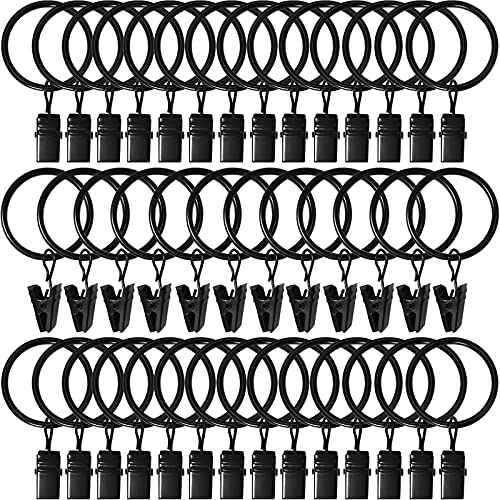
CURTAIN RINGS CLIPS PACKAGE: Set of 40 strong curtain rings with clips. Clip rings for curtains decorative drapery window.

【Curtain Rings with Clips Package Including】➤This set comprises 42Pcs clip rings curtains.These curtain clips with rings are with high quality and multi-purpose,which perfect for hanging your daughter's bows headbands,photo,party light,Christmas light hangers,lanterns,tent,object storage etc.
Add Curtain Rings or Clip Rings
Curtain rings or clip rings are the easiest fix when panels are short by 1 to 3 inches. They lower the fabric slightly without sewing and can also make the curtains easier to open and close.
This works best for rod-pocket panels, flat panels, and lightweight to medium-weight curtains. It may not work well for grommet curtains because the grommets are already built into the panel top.
Let Down the Hem
If the bottom hem has extra folded fabric, use a seam ripper to open the hem and press it flat. Then resew a narrower hem or use fusible hem tape if the fabric allows it. This can add an inch or more, depending on how deep the original hem is.
Before doing this, test a small hidden area. Some fabrics show old stitch lines, fading, or crease marks after the hem is released.
Sew a Fabric Border to the Bottom
A fabric border is the best fix when curtains are short by several inches. Choose a fabric that looks intentional: a matching solid, a darker tone from the room, velvet trim, linen banding, or a subtle pattern that repeats another color in the space.
For a tailored result, add the same amount of fabric to each panel and press the seams well. A border that is 4 to 10 inches deep often looks more deliberate than a tiny strip.
Lower the Curtain Rod Carefully
Lowering the rod can fix the length, but use this option carefully. It works when the rod is only slightly too high and lowering it still leaves some space above the window frame. It is not ideal if it makes the rod feel cramped against the trim.
Buy Longer Panels or Go Custom
If your curtains are more than 6 inches too short, new panels may be the cleanest fix. Choose the closest longer ready-made length and hem them to fit. For unusual windows, very high rods, or matching panels across multiple windows, custom curtains may be worth the extra cost.
Choosing the Right Fabric for Your Curtains
Fabric affects how curtains hang, how much light they filter, and how much privacy they provide. Cotton and linen blends feel relaxed and work well in casual living rooms. Velvet, wool blends, and lined panels feel heavier and more formal. Sheers soften daylight but do not provide the same privacy or light control as lined or blackout curtains.
The U.S. Department of Energy notes that drapery performance depends on factors such as fabric type and color, and that window coverings can help with comfort, glare, privacy, and temperature control. That does not mean every curtain is an energy-saving product, but it does mean lining, fit, and daily use matter.
- For a crisp, tailored look: Choose lined cotton, linen blends, or structured pleats.
- For softness and light: Choose sheers or semi-sheer linen, but use extra width for fullness.
- For privacy and TV glare: Choose lined, blackout, or room-darkening panels.
- For cold or sunny windows: Consider lined drapes that close fully and fit close to the window.
- For washable curtains: Check care labels before hemming because some fabrics shrink after laundering.
How to Style Your Curtains Once They’re the Right Length
Once the length is right, small styling details make the whole window look more finished. Steam or iron the panels before judging the final length because packaging creases can make curtains hang unevenly. Then train the folds by arranging the pleats from top to bottom and letting the panels rest in place.
Use tiebacks or holdbacks only when they suit the room. They can frame a window nicely, but placing them too high can make the panels flare awkwardly. For a softer layered look, pair sheers inside the window with heavier panels on the outer rod. This gives you daytime light, nighttime privacy, and a fuller window treatment.
Common Problems and Quick Fixes
- The floor is uneven: Measure in three spots and hem to the shortest practical point so one side does not drag.
- The curtains shrank after washing: Add rings, release the hem, or sew a bottom border. Check the care label before washing the rest of the panels.
- The window has a radiator below it: Use sill-length or just-above-radiator curtains intentionally instead of forcing floor-length panels.
- The rod sags in the middle: Add a center support bracket or use a stronger rod rated for heavier fabric.
- You rent and cannot drill: Consider tension rods, no-drill brackets, or existing hardware, but check weight limits before hanging heavy panels.
- The panels look skimpy: Add more panels or choose wider panels so the total width is about 2 to 2.5 times the rod width.
Frequently Asked Questions
What should I do if my curtains are too short?
Start by measuring how short they are. If they are short by 1 to 3 inches, add curtain rings or clip rings. If they are short by several inches, let down the hem, sew a fabric border to the bottom, or replace them with longer panels. Lower the rod only if the new position still looks balanced with the window.
How do I extend the length of curtains for a living room?
The cleanest options are clip rings, a released hem, or a sewn bottom band. A bottom band works especially well in a living room because it can look like a custom design detail rather than a repair.
Should living room curtains touch the floor?
Most living room curtains look best when they float just above the floor, gently touch it, or break slightly. A float is easiest to clean, a kiss looks tailored, and a break feels softer. Avoid a heavy puddle in high-traffic rooms because it collects dust and can get stepped on.
Can I lower the curtain rod instead of buying longer curtains?
Yes, but only if the rod still sits high enough to look intentional. If lowering the rod places it directly on top of the window trim or makes the wall above the window feel cramped, use rings, hem adjustments, or longer curtains instead.
How wide should curtains be for a full look?
For most living rooms, the combined panel width should be about 2 to 2.5 times the rod or window width. Sheer curtains often need closer to 3 times fullness because the fabric is lighter and looks flatter when stretched.
Conclusion
The right curtain length can make your living room look taller, softer, and more finished. Instead of relying on short panels that stop the eye halfway down the wall, measure from the final rod position to the floor and choose the fix that matches the gap. Rings, clips, hem adjustments, and bottom borders can all save curtains you already own. If the panels are far too short, longer or custom curtains will give you the cleanest result.
Focus on three details: a rod that is high and wide enough, panels that reach the floor in an intentional way, and enough fabric width to look full. Once those are right, your window treatments will feel like part of the room instead of an afterthought.
Sources
- Better Homes & Gardens — curtain rod height, rod extension, panel width, and common curtain-hanging mistakes.
- Homes & Gardens — measuring curtain width and length, rod placement, fullness, and floor-length styles.
- Architectural Digest — curtain-hanging tools, measuring steps, hardware placement, anchors, and fabric considerations.
- U.S. Department of Energy — window covering benefits, drapery performance factors, comfort, glare, privacy, and temperature control.
- Schema.org HowTo — structured data type for step-by-step instructional content.
- Schema.org FAQPage — structured data type for frequently asked questions.