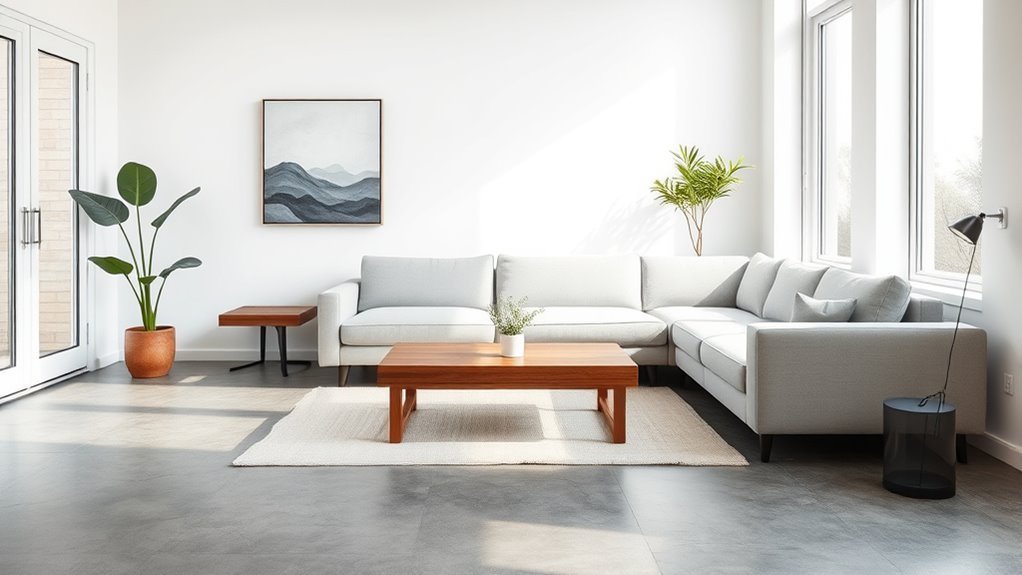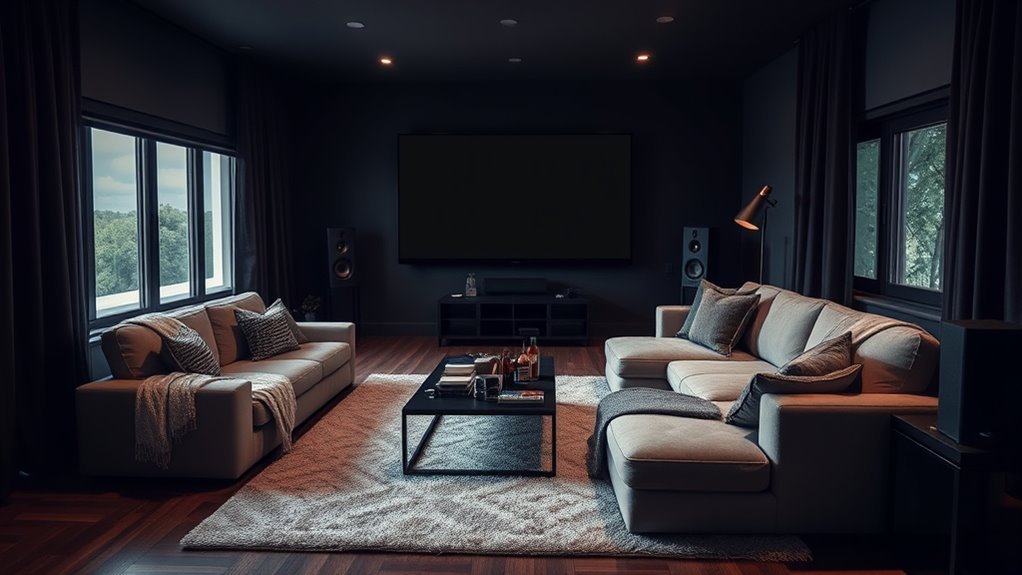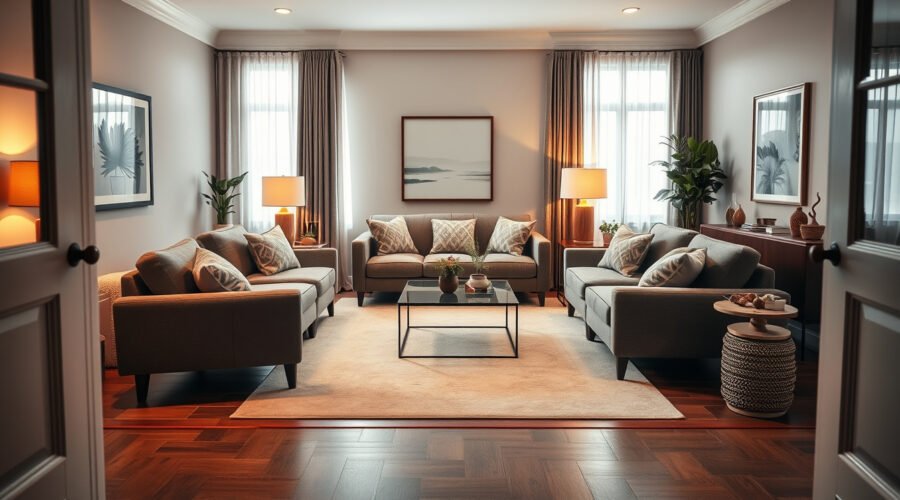
Your living room can feel unfinished even when the sofa, chairs, coffee table, and TV are already in place. Most of the time, the problem is not one missing item. It is a mix of furniture scale, spacing, lighting, rug size, wall decor, color repetition, and clutter that keeps the room from feeling intentional.
Quick Answer
Your living room feels unfinished when the furniture is not anchored, the lighting is flat, the rug is too small, the walls feel bare, colors do not repeat, or too many small decor pieces compete for attention. Start with layout and lighting before buying more accessories.
Key Takeaways
- Fix the layout first: create a focal point, pull seating into a conversation zone, and keep clear walkways.
- Use a rug large enough to connect the sofa and chairs; at minimum, the front legs of the main seating should sit on it.
- Layer lighting with overhead or ambient light, task lamps, and accent lighting so the room does not depend on one harsh fixture.
- Repeat colors, materials, and textures so the room feels collected instead of random.
- Edit clutter last, not first. Once the big pieces are placed correctly, it becomes easier to see which decor should stay.
At a Glance
| Time Required | 30 minutes for a quick reset; 1–2 hours for measuring, rearranging, and restyling |
| Difficulty | Easy to moderate, depending on furniture weight |
| Tools Needed | Tape measure, painter’s tape, phone camera, storage bin, lamps, bulbs, rug pad if needed |
| Cost | $0 if rearranging; $20–$150 for lamps, bulbs, pillows, or frames; more for a properly sized rug |
Common Reasons Your Living Room Feels Unfinished and Quick Fixes
If you walk into your living room and something feels “off,” start by checking the big visual anchors before you buy more decor. A room usually looks unfinished when the furniture, rug, lighting, walls, and accessories are not working together.
| What feels unfinished | Likely cause | Quick fix |
| The room feels empty in the middle | Furniture is pushed too far apart or only against walls | Move seating inward and define the area with a rug |
| The furniture looks random | Mixed styles, colors, or finishes do not repeat | Repeat one wood tone, one metal finish, or two accent colors |
| The room feels flat at night | Only one overhead light is doing all the work | Add table lamps, floor lamps, or sconces at different heights |
| The seating area feels disconnected | The rug is too small or missing | Use a rug that reaches under at least the front legs of the sofa and chairs |
| The walls feel bare | No vertical focal point | Add one large artwork, mirror, gallery grouping, or tall plant |
Note: Do not start by buying more small accessories. If the furniture placement, rug size, and lighting are wrong, extra decor will usually make the room feel more cluttered instead of more finished.
Diagnose the Room Before Buying Anything
Before you shop, take a photo of the room from the doorway. A photo helps you see what your eye stops noticing in person: a too-small rug, bare wall, awkward gap, dark corner, or cluttered tabletop.
- Circle the focal point. Is it the fireplace, TV, window, artwork, or sofa wall?
- Look for the empty middle. If the center of the room feels like a pass-through zone, the furniture may need to move inward.
- Check the lighting at night. If the corners disappear after sunset, you need more lamp layers.
- Check color repetition. A finished room usually repeats its main colors at least two or three times.
- Remove visual noise. Put small decor in a bin temporarily, then add back only the pieces that support the room.
How Furniture Placement Can Make Your Living Room Cozy
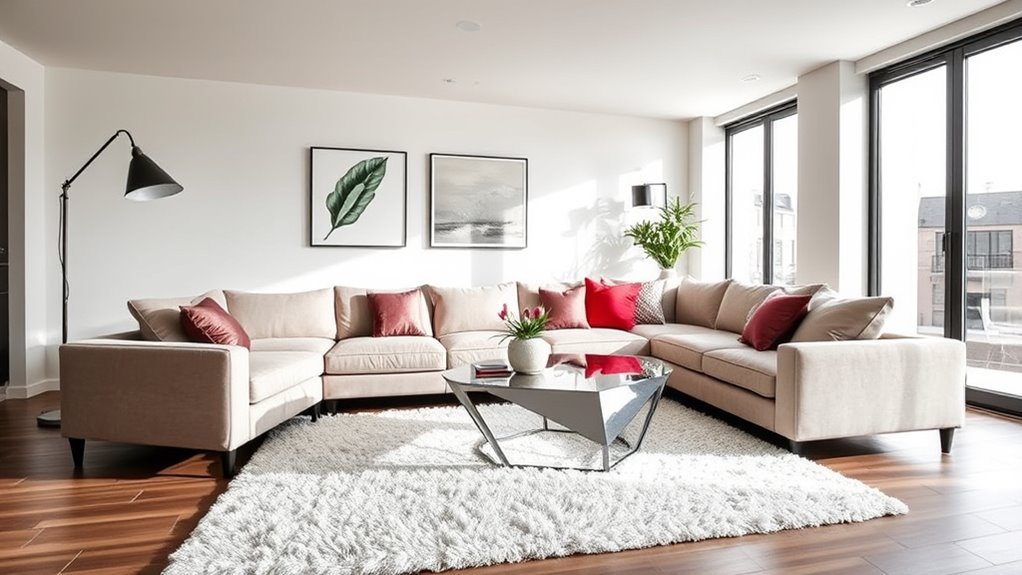
Furniture placement is often the fastest fix for a living room that feels unfinished. The goal is to create a conversation area, not a row of furniture around the walls. Start with the largest piece, usually the sofa, and angle or position the other seats so people can talk without turning their bodies sharply.
For many rooms, the coffee table feels best about 18 to 24 inches from the sofa. That keeps it close enough to reach while leaving legroom. Main walkways should stay clear; around 36 inches is a useful target when the room allows it. These are guidelines, not laws, so adjust them for narrow rooms, apartment layouts, and oversized furniture.
If your sofa has to sit against a wall, the room can still feel finished. Add a side table, lamp, artwork, or curtains to build height behind it. If the room is large, try pulling the sofa away from the wall and placing a console table, floor lamp, or narrow bench behind it so the arrangement looks intentional from every angle.
Pro Tip: Use painter’s tape to mark the sofa, rug, and coffee table footprint on the floor before moving heavy pieces. The tape test quickly shows whether the layout has enough breathing room.
The Impact of Furniture Scale on Room Aesthetics
Scale is the relationship between your furniture and the room. A sofa that is too deep can crowd a small living room. A tiny coffee table can make a large seating area look scattered. A narrow console under a huge wall can look lost. When the proportions are wrong, even beautiful furniture can feel unfinished.
Interior design experts often point to scale and proportion as major reasons a finished room still feels awkward. Better Homes & Gardens explains that scale and proportion describe how furnishings relate to one another and to the room itself, and that poor scale can make a space feel uneasy or disconnected. Read the scale and proportion guidance.
- Match furniture depth to room size. A deep sectional may be comfortable, but it can block movement in a small room.
- Balance low and tall pieces. If every piece is low, add height with curtains, art, a bookcase, floor lamp, or plant.
- Use fewer, larger accents. One substantial vase or tray often looks more polished than ten tiny objects.
- Repeat visual weight. If one side has a heavy sofa, the other side may need chairs, a cabinet, or a tall lamp for balance.
- Measure before replacing anything. A room that feels unfinished may need better spacing, not new furniture.
Why Layered Lighting Adds Warmth
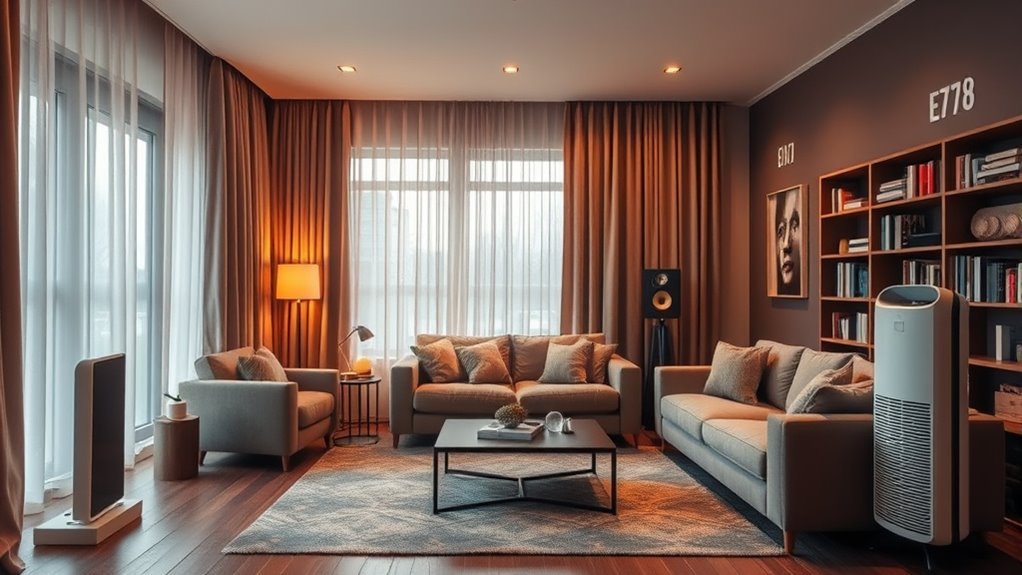
A living room often feels unfinished because the lighting is too flat. One ceiling fixture can light the room, but it rarely creates depth. Layered lighting uses several sources at different heights so the room works for relaxing, reading, entertaining, and watching TV.
Recommended Products

Multi-Function Dimmable Lamp: Vertical lamp includes an 12W dimmable LED bulbs that can be set to different color temperatures (3000K-6500K). 5%-100% dimmable brightness can be used to create different atmospheres and customize your favorite bedroom floor lamp.

2026 Upgrade: We always put users first and noticed customers expect greater durability and stability from their floor lamps. In February, we upgraded our materials to include high-quality LED bulbs and a full metal body, earning ETL certification. Our lamp is built to be more stable and durable, eliminating issues like sudden shut-offs and unsteady stands. Enjoy superior quality for a more convenient and comfortable life.

Modern Fully Dimmable(0-100%) Floor Lamp & Convenient Rotary Switch: Compared with traditional Non-dimmable floor lamps for living room, our floor lamp is fully Stepless Dimmable, which suitable for all the room style and using situation ,find the perfect light for your needs. This standing lamp is very easy to turn on and off. Just simply twist it and then you can adjust the arc floor lamps brightness what you want. 4.1FT rotary switch, which is very convenient for you to adjust it.
Types Of Layered Lighting
Use three basic lighting layers:
- Ambient lighting: the general light in the room, such as a ceiling fixture, recessed lights, or a large floor lamp.
- Task lighting: focused light for reading, working, games, or hobbies.
- Accent lighting: softer light used to highlight art, shelves, plants, texture, or architectural details.
The U.S. Department of Energy notes that LEDs are highly efficient and available in many colors and white-light options. It also recommends using compatible controls, such as dimmers and timers, to lower light levels and save electricity. See the DOE lighting guidance.
Impact On Room Ambiance
For a cozy living room, warm white bulbs around 2700K to 3000K usually feel softer for ambient lamps. Brighter or cooler bulbs can work for task areas, but they may feel too stark if every lamp in the room uses them. Instead of choosing bulbs by watts, choose them by lumens, which measure light output. ENERGY STAR explains that brightness is measured in lumens, not watts. See ENERGY STAR’s brightness guide.
A finished lighting plan might include a dimmable overhead fixture, a floor lamp near a reading chair, a table lamp beside the sofa, and one small accent light near art or shelves. The result feels warmer because light is spread across the room instead of blasting from one point.
The Role of Rugs in Anchoring Your Furniture
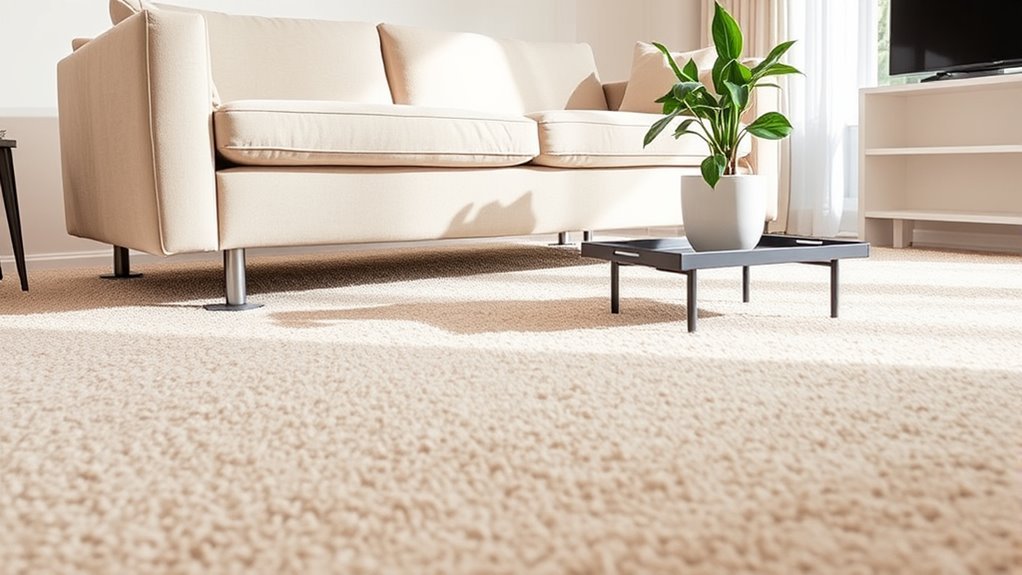
A rug makes separate pieces of furniture feel like one seating area. Without a rug, the sofa, chairs, and coffee table can look as if they are floating separately. With the right rug size, the room gains a clear center.
For most living rooms, choose a rug large enough for at least the front legs of the sofa and chairs to sit on it. If the rug is too small, it can make the furniture look disconnected. Architectural Digest’s rug sizing guidance also recommends using furniture placement as the metric and choosing a rug that allows all furniture, or at least the front legs of the main seating, to rest on it. Read the rug sizing guide.
- Small room: place the front sofa legs and chair legs on the rug to connect the seating area.
- Large room: use a bigger rug so all major seating pieces sit fully or mostly on it.
- Open-plan room: use the rug to separate the living area from dining or kitchen zones.
- Rug looks too small: layer it over a larger neutral rug instead of forcing it to carry the whole room alone.
Recommended Products

PET FRIENDLY & NON-SLIP BACKING: 8x10 area rugs featuring simple of colors while promising a luxurious feel underfoot. The blend of a hexagon pattern and a stylish design. Non-slip TPR backing makes the covering for bringing your space together. Make the most of your time at home with our pet-friendly and easy-to-clean area rugs. Elevate the floors of your home with this show-stopping and detailed rug

Ultra-Soft Low Pile Rug: Gent drizz living room rugs 8x10 made of Upgraded durable low pile faux wool fibers, 0.25'' thick, featuring a soft fuzzy density surface, soft and pliable to the touch, providing great comfort for your bare feet. The low pile makes it easy for your Large area rug to clean and is perfect for homes with kids and pets

Trendy Modern Rug: Our area rug is designed in today's popular minimalist style, featuring adaptable printed patterns that seamlessly blend into a wide range of interior aesthetics. This neutral rug adds understated elegance with a strong feeling of individuality to your living room, bedroom, dining room, nursery or playroom.
Create Visual Interest With Layering Techniques
Once the furniture and rug are working, add visual layers. Layering does not mean adding more clutter. It means combining height, texture, shape, and material so the room has depth.
- Layer textures: mix smooth wood, woven baskets, soft pillows, glass, metal, linen, or boucle.
- Vary heights: combine low coffee-table objects with taller lamps, branches, plants, or art.
- Use groups: style shelves and tables in small clusters instead of spreading tiny objects everywhere.
- Repeat shapes: if the room has many straight lines, add a round mirror, curved chair, or circular tray.
- Add softness: curtains, pillows, throws, and rugs help balance hard surfaces.
Color also helps the room feel finished. Choose two or three accent colors and repeat each one in small ways, such as pillows, books, art, lampshades, or ceramics. A blue pillow, blue artwork, and blue vase will feel more intentional than one random blue item.
Editing Your Decor for a Polished, Finished Living Room
Editing is what turns a decorated room into a polished room. If every shelf, table, and corner is filled, the eye has nowhere to rest. A finished living room needs both styled areas and empty space.
Try this simple editing process:
- Remove all small decor from the coffee table, side tables, mantel, and shelves.
- Clean the surfaces so you can see the room clearly.
- Add back the largest or most meaningful pieces first.
- Group small items on trays or in odd-numbered clusters.
- Leave some open space on every surface.
- Take another photo from the doorway and adjust what looks crowded.
Keep pieces that add comfort, function, memory, color, or texture. Remove pieces that are only filling space. A room feels more finished when each item has a reason to be there.
Best Types of Lighting for a Finished Living Room
The best living-room lighting plan includes more than one type of fixture. You do not need all of these, but most finished rooms use at least three light sources:
- Ceiling fixture: useful for general light, especially when cleaning or hosting.
- Floor lamp: adds height and fills dark corners.
- Table lamp: makes sofa and chair areas feel warm and usable.
- Wall sconce: adds style and saves surface space in smaller rooms.
- Picture light or accent lamp: highlights art, shelves, or a focal wall.
- Dimmer or smart bulb: lets the room shift from bright to relaxed.
Use warmer bulbs for cozy seating areas and brighter task lighting only where you need it. If your room feels yellow, dim, or gloomy, check both bulb temperature and lumens before buying a new fixture.
Recommended Products

[DIMMABLE FLOOR LAMP FOR BRIGHTNESS & COLOR] This tall lamp can use the remote control to adjust the brightness by stepless from 10% to 100% and color temperature from 3000K to 6000K, for warm white, natural white, and cool white light. You can adjust the brightness from super soft and cozy to bright and energizing, and switch between warm, natural, and cool light depending on your mood.

Floor Lamp with 3-Tier Side Table: More than just a floor lamp, this space-saving lamp and table combo provides 3 open shelves for books, drinks, décor, electronics and everyday essentials. Each shelf easily supports up to 60 lbs, providing sturdy and reliable storage for your daily items. Measuring 18.9"D x 13.39"W x 59.45"H, it fits naturally beside a sofa, bed or reading chair while adding useful storage without requiring a separate end table.

A FULLY FUNCTIONAL, STYLISH AND MODERN FLOOR LAMP: A fantastic product. The floor lamp is of very good quality, sturdy and durable, with rich color changes, bright and soft light, which is soothing to look at. When you light up one of these ambient lamps in your home or party, it will attract a lot of attention, a great product to recommend to friends, neighbors and family
Rearranging Furniture for Better Flow
Good flow means people can enter, sit, move through the room, and reach a surface without awkward detours. Homes & Gardens’ living-room layout guide recommends planning for movement, focal points, and zones, with about 36 inches for main walkways when possible and about 18 inches between a sofa and coffee table. See the layout guidance.
To improve flow, ask these questions:
- Can someone walk from the doorway to the sofa without squeezing around furniture?
- Can each seat reach a table, ottoman, or nearby surface?
- Does the seating face a focal point without making conversation difficult?
- Is the coffee table close enough to use but not so close that it blocks knees?
- Does the rug connect the seating area?
Warning: Do not create a pretty layout that blocks doorways, heat sources, vents, cords, or main walkways. Use proper anchors for heavy wall art, tall bookcases, and mirrors, especially in homes with children or pets.
Simple Layout and Decor Fixes for a Polished Living Room
If you want the fastest improvement, work in this order: layout, rug, lighting, walls, then decor. That order prevents you from using accessories to hide bigger design problems.
Optimize Furniture Arrangement
- Choose the focal point first. Arrange seating around a fireplace, TV, window, artwork, or main conversation area.
- Pull pieces into a group. Avoid seating that feels stranded around the edges of the room.
- Keep tables useful. Every seat should have a place nearby for a drink, book, or lamp.
- Use the rug as the anchor. The seating area should sit on or clearly connect to the rug.
- Leave room to move. Clear walkways matter more than perfect symmetry.
Enhance Lighting Layers
- Add light at eye level. Table lamps and sconces make a room feel more comfortable than overhead light alone.
- Fill dark corners. A floor lamp can make an unused corner feel intentional.
- Use dimmers when compatible. Dimming helps the room shift from daytime function to evening comfort.
- Check bulb color. Warm white bulbs usually suit living-room ambiance better than very cool bulbs.
- Highlight one feature. Accent lighting can draw attention to art, shelves, texture, or plants.
Edit for Clutter Control
- Remove decor that is too small to be noticed from across the room.
- Keep tabletops functional, not packed.
- Use trays to group remotes, candles, books, or small objects.
- Store extra throws, toys, games, and chargers in baskets or closed storage.
- Rotate seasonal decor instead of displaying every piece at once.
Wall Art, Curtains, and Vertical Finishing Touches
A living room can feel unfinished when everything sits below waist height. Add vertical elements so the eye travels upward.
- Use larger wall art. One oversized piece often looks more finished than several tiny frames spread too far apart.
- Hang curtains high. Curtains placed closer to the ceiling can make the room feel taller and more intentional.
- Add a mirror carefully. A mirror works best when it reflects light, art, a view, or another attractive part of the room.
- Try a tall plant. A plant or indoor tree can soften an empty corner without adding more furniture.
- Balance shelves. Mix books, objects, framed art, and empty space instead of lining everything up evenly.
Small Living Room vs. Large Living Room Fixes
A small living room and a large living room can both feel unfinished, but for different reasons.
In a small living room, the issue is often overcrowding. Use fewer pieces, choose furniture with visible legs, keep the rug correctly scaled, and add wall-mounted or slim lighting where floor space is tight. Avoid filling every corner just because the room is compact.
In a large living room, the issue is often disconnection. Create zones: a main conversation area, reading chair, game table, or secondary seating corner. Large rugs, paired lamps, substantial coffee tables, and repeated colors help the room feel unified.
Frequently Asked Questions
Why does my living room look empty?
Your living room may look empty because the furniture is too spread out, the rug is too small, the walls are bare, or the room has no strong focal point. Move seating closer together, add a properly sized rug, include a tall element, and repeat your main accent colors.
Why does my room feel weird?
A room often feels weird when scale, spacing, color, or lighting is off. The sofa may be too large, the coffee table may be too far away, the lighting may be too harsh, or the decor may not repeat any colors or materials. Take a photo from the doorway to spot the imbalance.
What is the fastest way to make a living room look finished?
The fastest fix is to create a clear seating zone. Pull chairs and the sofa into a conversational arrangement, place the front legs on a rug, add one lamp near seating, and remove small clutter from tables. This can make the room feel more intentional in less than an hour.
Does every living room need a rug?
Not every living room needs a rug, but most seating areas look more finished with one. A rug defines the zone, adds softness, and visually connects the sofa, chairs, and coffee table. If you skip a rug, use furniture placement, lighting, and a strong coffee table to create the same sense of anchoring.
How many lamps should a living room have?
Most living rooms feel better with at least two or three light sources besides natural daylight. A common mix is one overhead or ambient source, one floor lamp, and one table lamp. Larger rooms may need additional accent lighting near shelves, art, or dark corners.
Conclusion
A living room feels finished when the major pieces work together: the seating faces a clear purpose, the rug anchors the furniture, the lighting has layers, the walls have height, and the decor is edited instead of scattered. Start with what you already own. Rearranging furniture, changing bulbs, moving lamps, styling fewer objects, and repeating colors can make the room feel more complete before you spend money on anything new.
Sources
- U.S. Department of Energy — Lighting Choices to Save You Money — supports LED efficiency, dimmer compatibility, and lighting control guidance.
- ENERGY STAR — Learn About Brightness — supports lumens vs. watts guidance for choosing bulbs.
- Better Homes & Gardens — Scale and Proportion — supports furniture scale and proportion advice.
- Architectural Digest — Rug Sizes — supports rug sizing and front-legs-on guidance.
- Homes & Gardens — Living Room Layout — supports walkway, spacing, focal point, and furniture arrangement guidance.