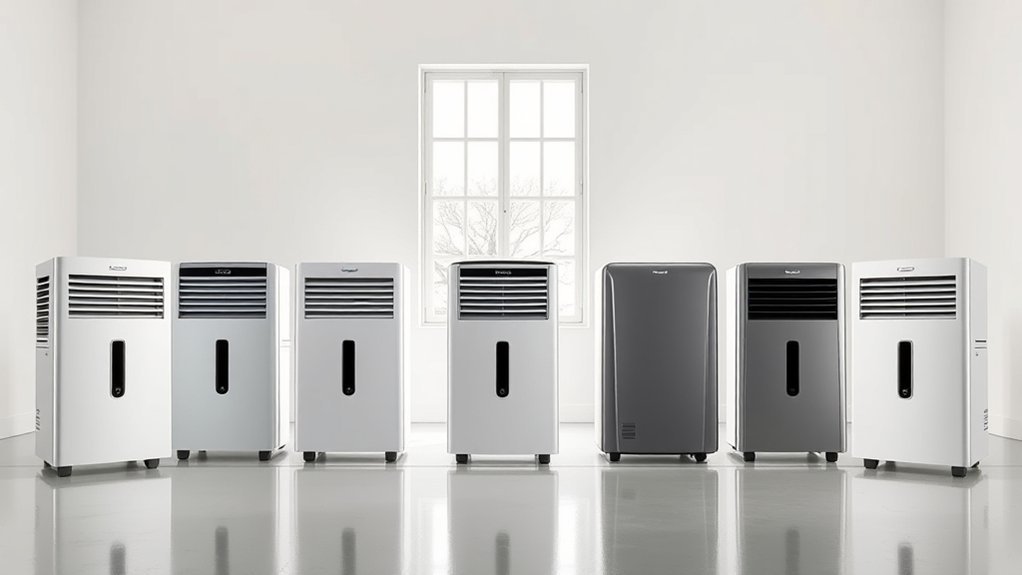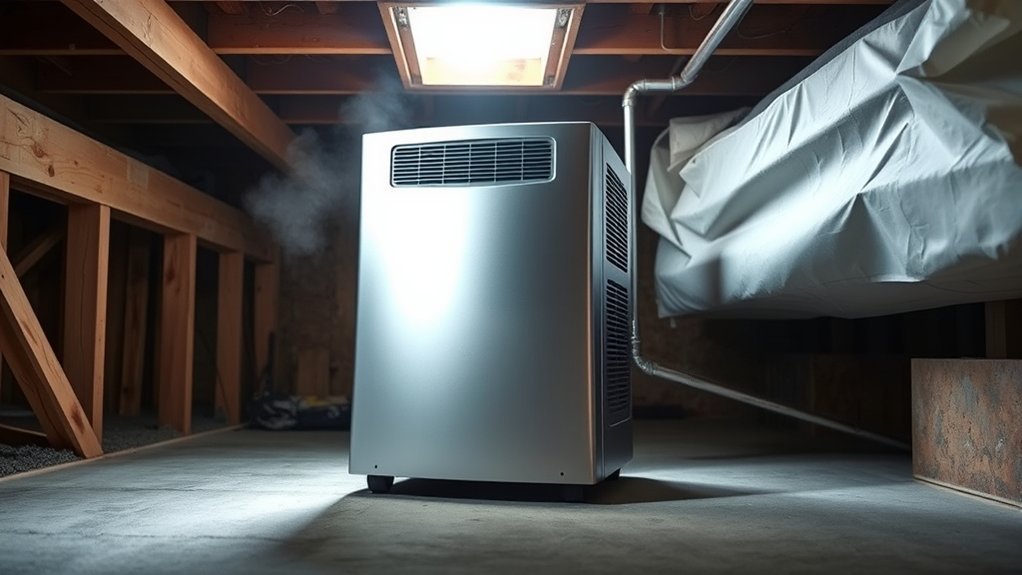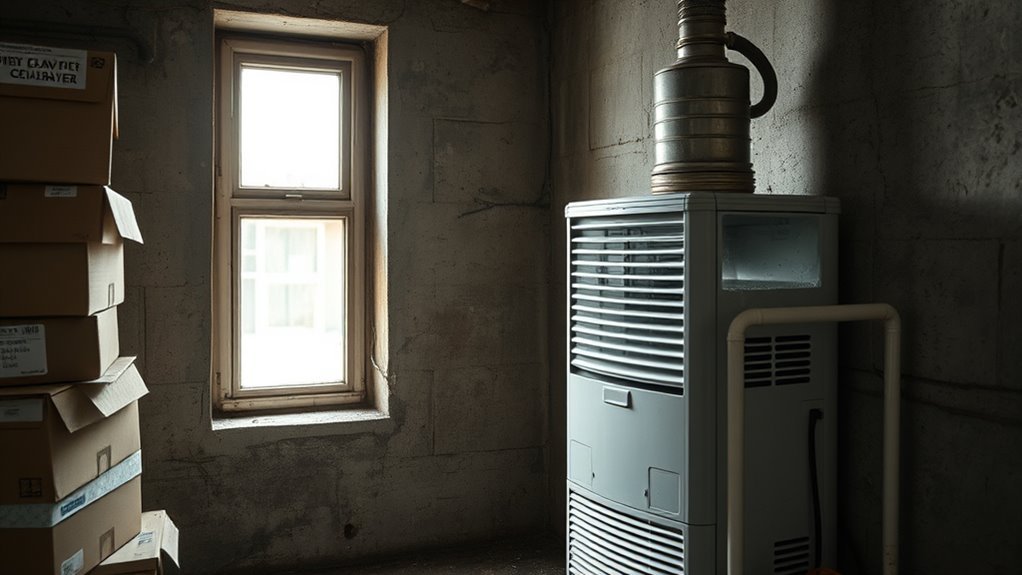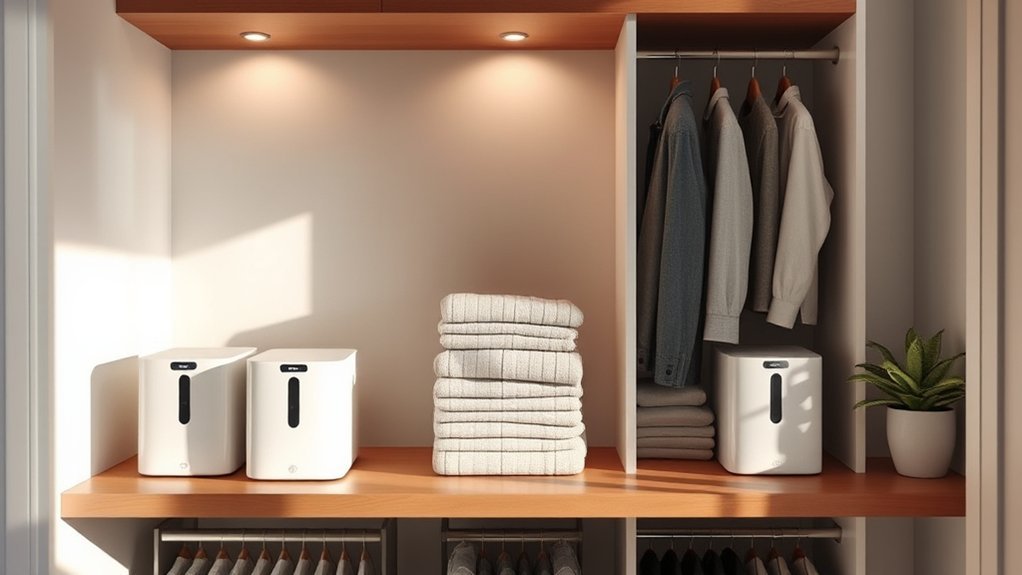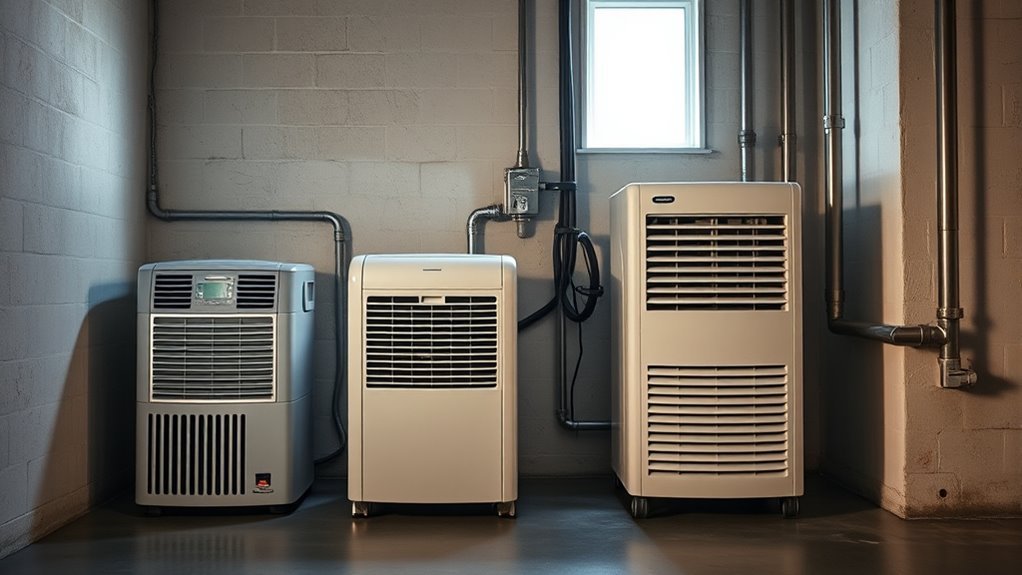
Desiccant and refrigerant dehumidifiers both remove moisture, but they do it in different ways. A desiccant dehumidifier uses a moisture-absorbing material and usually performs better in cold or unheated spaces. A refrigerant dehumidifier, also called a compressor dehumidifier, uses cold coils and is usually more efficient in warm, humid rooms. The best choice depends on room temperature, humidity level, drainage needs, noise tolerance, and running cost.
Quick Answer
Choose a desiccant dehumidifier for cold garages, conservatories, boats, workshops, and other unheated spaces. Choose a refrigerant dehumidifier for warmer rooms, basements, bedrooms, and larger living areas where temperatures usually stay above about 65°F. Refrigerant models often remove more water per watt in warm air, while desiccant models stay more consistent in cold air.
Key Takeaways
- Desiccant models are better for cold spaces because they do not rely on chilled coils that can frost over.
- Refrigerant models are usually better for warm rooms because the compressor-and-coil system removes moisture efficiently in warmer air.
- Do not rely on one universal energy rule. Compare wattage, moisture removal, runtime, and ENERGY STAR efficiency data where available.
- Check drainage before buying. Household models may use a tank or hose, while some industrial desiccant systems exhaust wet air.
- Aim for safe humidity control. The EPA recommends keeping indoor relative humidity below 60%, ideally between 30% and 50% where possible.
At a Glance
| Time Required | 10–15 minutes to measure room temperature, humidity, floor area, and drainage options before choosing a type. |
| Difficulty | Easy. The main decision is matching the technology to the room temperature and moisture load. |
| Tools Needed | Hygrometer, thermometer, tape measure, and the product specification sheet. |
| Cost | No cost to compare. Purchase price and running cost vary by capacity, wattage, runtime, and local electricity rate. |
Desiccant vs Refrigerant Dehumidifiers: Quick Comparison
| Feature | Desiccant Dehumidifier | Refrigerant Dehumidifier |
| Best temperature range | Cold or unheated rooms, especially where compressor models slow down. | Warm rooms where coil frosting is unlikely. |
| How it removes moisture | Uses a desiccant material, often in a rotating wheel, to adsorb water vapor. | Pulls humid air over cold coils so water condenses and drains away. |
| Heat output | Usually adds noticeable warmth to the air, which can help in winter. | Adds some heat from the compressor and condenser, but usually less noticeable. |
| Running cost | Can be worth it in cold rooms because extraction stays steadier, but heaters use power. | Often cheaper in warm rooms because the compressor system is efficient in those conditions. |
| Best uses | Garages, boats, conservatories, storage rooms, workshops, cold archives, and winter laundry drying. | Basements, bedrooms, living rooms, utility rooms, and large warm indoor areas. |
Recommended Products

【The Undisputed Champion — Industry-Leading Dehumidifier Brand】Choose AEOCKY, getting double market validation. According to data independently verified by Stackline, a leading third-party data analytics company, AEOCKY was an industry‑leading dehumidifier brand on Amazon U.S. in 2025. Meanwhile, it stands as a technology-leading rotary desiccant dehumidifier brand on Amazon. This isn’t just an appliance—it’s a complete humidity-control solution for small spaces. Skip low-performance alternatives and trust a brand recognized by the market.
![wisedry 2 x 500 Gram [2.2 lbs] Rechargeable Silica Gel Car Dehumidifier, Microwave Fast Reactivated Desiccant Packets Large for Gun Safe Closet Basement Garage Storage Moisture Absorber Bag Reusable](https://m.media-amazon.com/images/I/51pHUtcOd3L._SL500_.jpg)
✅ [ CLEAR WINDOWS ] - Wisedry silica gel car dehumidifier bag reduces condensation on car windows which can be a problem on cold winter mornings. Thanks to its high moisture absorption, each 500g silica gel adsorbs 150g(max 180g) of moisture! Also suitable for preventing moisture in other larger spaces like cupboards, storage room, tool shop, garage, RV, boat, basement etc.

19-PINT DESICCANT DEHUMIDIFIER – Highly Efficient Desiccant Rotor Removes Moisture, Odors & Mold While Warming Ambient Air; Perfect for Colder Seasons
Are Desiccant Dehumidifiers Better in Cold Rooms?
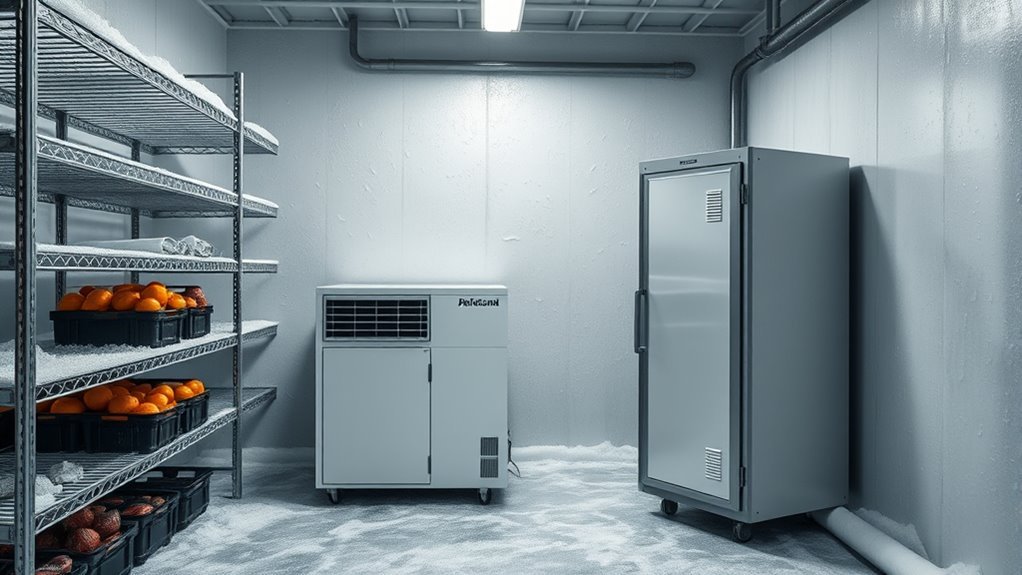
Yes. Desiccant dehumidifiers are usually the better choice for a cold room, garage, boat, conservatory, storage area, or other unheated space. They remove moisture by adsorption, so they do not depend on chilled coils staying above freezing.
That matters because a refrigerant unit can lose performance when the air is cool. ENERGY STAR notes that frost can form on condensing coils when air temperature drops below 65°F, which can make a compressor cycle on and off without removing much moisture.
Desiccant performance still depends on the exact model. Some industrial units are rated for very low temperatures; for example, the Ebac DD1200 lists a minimum operating temperature of -4°F. That does not mean every home desiccant dehumidifier works down to -4°F. Always check the product manual before using one near freezing.
Note: A desiccant model can also warm the outgoing air. Meaco says its desiccant units return air that is typically 10–12°C warmer than the air entering the machine, which can be helpful in cold, damp rooms.
How Do Refrigerant Dehumidifiers Handle Warm Rooms?
Refrigerant dehumidifiers work best in warm, humid rooms. The fan pulls damp air across cold evaporator coils. Water vapor condenses on the coils, drips into a tank or drain hose, and the drier air returns to the room.
In heated rooms, this process can remove a lot of water quickly. That is why compressor models are common for basements, bedrooms, living rooms, and large indoor areas. They are also widely covered by ENERGY STAR efficiency ratings, so it is easier to compare certified models by capacity and Integrated Energy Factor.
The weak point is cold air. When temperatures fall, the coil can frost, the unit may enter defrost mode, and moisture removal can slow. If the space regularly drops below about 65°F, look for a refrigerant unit specifically rated for low-temperature use or choose a desiccant model instead.
Warning: A dehumidifier is not a fix for an active leak, wet foundation, roof leak, or plumbing problem. Stop the water source first, then use a dehumidifier to control remaining moisture.
Which Dehumidifier Uses Less Energy?
The lower-energy choice depends on room conditions. In a warm room, a refrigerant dehumidifier is often the cheaper unit to run because the compressor system can remove moisture efficiently. In a cold room, a desiccant dehumidifier may be the more practical choice because it keeps extracting moisture when a compressor unit might frost, defrost, or run with poor output.
Do not judge energy use by watts alone. A 300-watt unit that runs all day and removes little water can cost more than a 500-watt unit that reaches the target humidity quickly. Compare three numbers together:
- Power draw: watts used while running.
- Moisture removal: pints or liters removed per day under test conditions.
- Runtime: how many hours the unit needs to reach and maintain the target humidity.
For certified refrigerant models, ENERGY STAR uses Integrated Energy Factor, measured in liters of water removed per kilowatt-hour. A higher IEF means better efficiency under the test conditions.
A simple running-cost estimate is: watts ÷ 1,000 × hours used × electricity price per kWh. For example, a 500-watt unit running 8 hours at $0.15/kWh costs about $0.60 for that day.
Recommended Products

Semiconductor dehumidifiers use thermoelectric cooling to remove moisture from the air. They create a drier, more comfortable environment by reducing humidity and improving air quality.
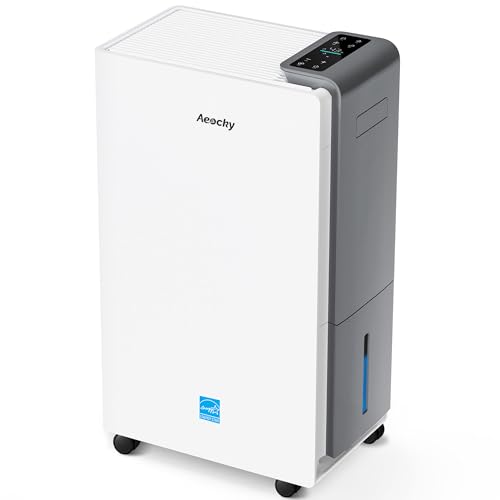
【ENERGY STAR 25 ≠ ENERGY STAR Most Efficient 2025】Don't fall for competitors' word games. With only 2.6% of ENERGY STAR models earning "Most Efficient 2025" title, these options are exceptionally rare on the market. RHEA-001 is one of the few to truly hold this top-tier certification. Many brands use misleading phrases like "Energy Star Efficient 25" or "Energy Star 25" to imply a standard they haven't met. Choosing them is a risk.With AEOCKY, you get verified performance and the peace of mind of authentic, top-tier efficiency.

1,500 SQ. FT. DEHUMIDIFIER – Removes up to 22 pints of moisture per day with an adjustable humidity setting from 35% to 85%. Perfect for use in basement, bathroom, bedroom, office, kitchen, cellar, or crawlspace. Maintain a healthy 45%-55% humidity range.
What Size Dehumidifier Do You Need?
Size matters as much as technology. Dehumidifier capacity is usually listed as pints per 24 hours or liters per day. A small unit may run constantly in a damp basement, while an oversized unit may cost more than necessary.
ENERGY STAR explains that portable dehumidifier testing now uses 65°F rather than 80°F to better reflect basement conditions. That means newer pint ratings may look lower than older labels, even when real-world performance is more honestly represented.
Before buying, measure the space and check the moisture load:
- Room size: larger rooms need more airflow and more daily extraction capacity.
- Moisture severity: musty smells, condensation, wet walls, or laundry drying all increase the load.
- Temperature: cold rooms favor desiccant or low-temperature-rated compressor models.
- Drainage: a large tank, gravity hose, pump, or wet-air duct may be needed for long runtimes.
- Target RH: use a hygrometer and aim for about 30%–50% RH when possible, while keeping RH below 60% to reduce mold risk.
Pro Tip: Buy for the coldest and dampest condition the room actually sees, not the warmest afternoon temperature. A garage that reaches 68°F in the day but drops to 42°F at night needs cold-room performance.
Which Dehumidifier Is Quieter and Easier to Maintain?
Noise depends on the model, fan speed, compressor design, and room acoustics. A desiccant unit avoids compressor hum, but it still has a fan and heater. A refrigerant unit may sound louder when the compressor runs, but many modern models have low fan settings, sleep modes, or quieter inverter-style operation.
Maintenance is also model-specific, but these rules are reliable:
- Both types need filter cleaning. A clogged filter reduces airflow and moisture removal.
- Both types may need water management. Many household desiccant and refrigerant units use a tank or drain hose.
- Refrigerant models need clear coils and good airflow. Blocked airflow can make frost and short-cycling worse.
- Industrial desiccant systems may need ducting. Some units exhaust wet air rather than collecting water in a bucket.
- Auto-restart and auto-shutoff help. These features matter in basements, rental properties, storage areas, and rooms you do not check daily.
If you need the quietest option for a bedroom, library, office, or museum-like space, compare the manufacturer’s dB rating at the fan setting you will actually use. Do not rely on type alone.
How Do You Choose Between Desiccant and Refrigerant Dehumidifiers?
Use the room conditions to choose the right dehumidifier. The fastest shortcut is temperature: cold rooms favor desiccant; warm rooms favor refrigerant. After that, compare capacity, drainage, noise, and running cost.
- Measure the room temperature. If it often falls below about 65°F, consider desiccant or a low-temperature-rated refrigerant model.
- Measure relative humidity. Use a hygrometer instead of guessing by feel.
- Decide your target humidity. For most homes, aim for 30%–50% RH when possible and stay below 60% RH.
- Match capacity to the space. Use pints/day or liters/day, not just physical size.
- Choose the drainage method. A bucket is fine for occasional use; continuous drainage is better for basements, garages, and long runtimes.
- Check noise and heat output. Desiccant warmth can help in winter but may be unwanted in summer.
- Compare running cost realistically. Use wattage, expected hours, extraction rate, and local electricity price.
For a cold garage, boat, workshop, storage room, or conservatory, choose a desiccant unit with an operating range that matches the lowest expected temperature. For a warm basement, bedroom, utility room, or large living space, choose an ENERGY STAR-certified refrigerant model with the right pint capacity and drainage setup.
Recommended Products

COLD-RATED TO 34°F — WORKS WHERE COMPRESSORS QUIT: Rotary desiccant technology pulls moisture at temperatures that shut conventional compressor dehumidifiers down. Unheated crawl spaces, garages, basements, and cabins stay dry through fall and winter, not just summer.
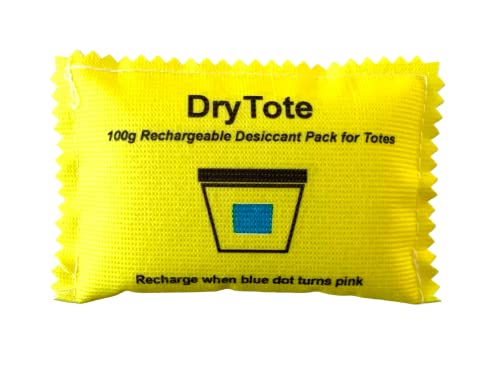
RECHARGES IN THE MICROWAVE OR OVEN: Dry the pack out in minutes and reuse it for years - no throwaway packets. Great for 3D printer filament, suitcases, closets, and seasonal storage.

Convenient To Carry: One desiccant pack measures 5.5x3.1 inches in size and weighs 100 grams, making it very lightweight and compact, making it easy to carry.
Frequently Asked Questions
Which is better, a desiccant or refrigerant dehumidifier?
A desiccant dehumidifier is usually better in cold or unheated spaces. A refrigerant dehumidifier is usually better in warm rooms where it can remove more water efficiently. The best choice depends on temperature, humidity, room size, drainage, and noise needs.
What are the disadvantages of a desiccant dehumidifier?
A desiccant dehumidifier can use more power in warm rooms because it uses heat to regenerate the desiccant material. It can also add noticeable warmth to the room, which may be useful in winter but uncomfortable in summer. Some models have smaller tanks or lower peak extraction than large refrigerant units.
Do refrigerant dehumidifiers stop working in cold rooms?
They may still run, but performance can drop in cooler air. ENERGY STAR warns that frost can form on condensing coils below 65°F, which can reduce moisture removal. For cold rooms, choose a low-temperature-rated refrigerant model or a desiccant dehumidifier.
What is the most reliable dehumidifier type?
Reliability depends more on correct sizing, clean filters, drainage setup, and using the unit within its rated temperature range than on type alone. A good refrigerant model can be reliable in a warm basement, while a good desiccant model can be more reliable in a cold garage or storage area.
Is desiccant dehumidification better than mechanical refrigeration?
Desiccant dehumidification is better for low-temperature spaces, low dew-point control, and some industrial or storage applications. Mechanical refrigeration is usually better for warm residential rooms where high water removal and lower running cost are the priority.
Do desiccant dehumidifiers need a drain?
Many household desiccant dehumidifiers collect water in a tank or allow hose drainage, just like compressor models. Some industrial desiccant systems exhaust wet air through ducting instead. Check the product manual before buying if you need unattended operation.
Conclusion
If you are choosing between desiccant and refrigerant dehumidifiers, start with room temperature. Desiccant units are usually better in cold, unheated, or low-temperature spaces because they do not depend on cold coils. Refrigerant units are usually better in warm rooms because they can remove moisture efficiently and are easier to compare through capacity and energy-efficiency ratings.
The best dehumidifier is not the one with the biggest claim on the box. It is the one with the right operating temperature range, pint capacity, drainage setup, noise level, and running cost for your actual room.
Sources
- ENERGY STAR — Dehumidifiers — frost risk below 65°F, capacity basics, and buying considerations.
- ENERGY STAR — Dehumidifier Testing and Capacity — current capacity-testing context and 65°F test condition.
- ENERGY STAR — Dehumidifiers Key Efficiency Criteria — Integrated Energy Factor and efficiency comparison.
- U.S. EPA — Mold Course Chapter 2 — indoor relative humidity guidance for mold prevention.
- Meaco — Desiccant Dehumidifiers — cold-space use cases and warm outlet-air guidance.
- Ebac — DD1200 Desiccant Dehumidifier — example of an industrial desiccant model rated to -4°F.