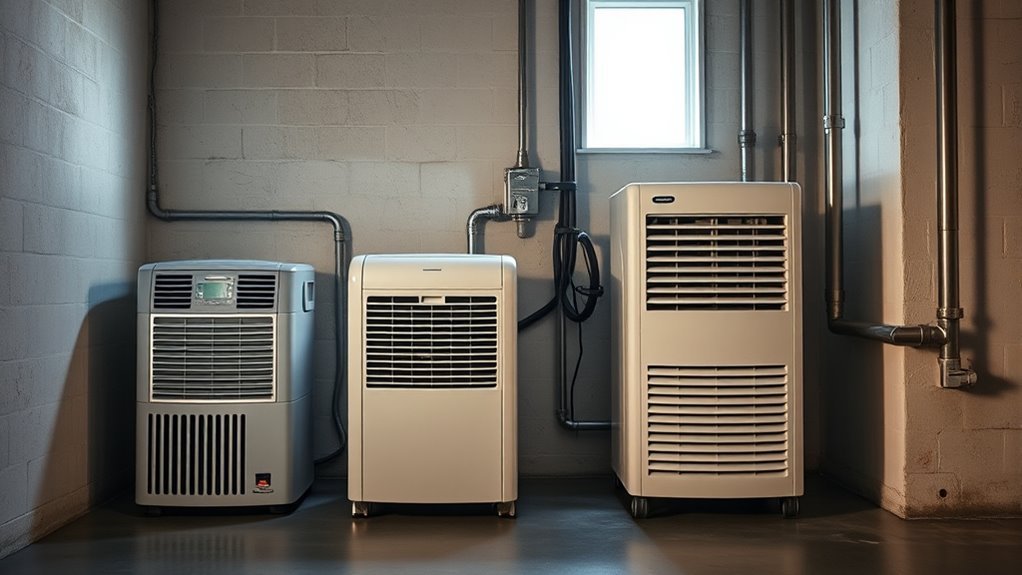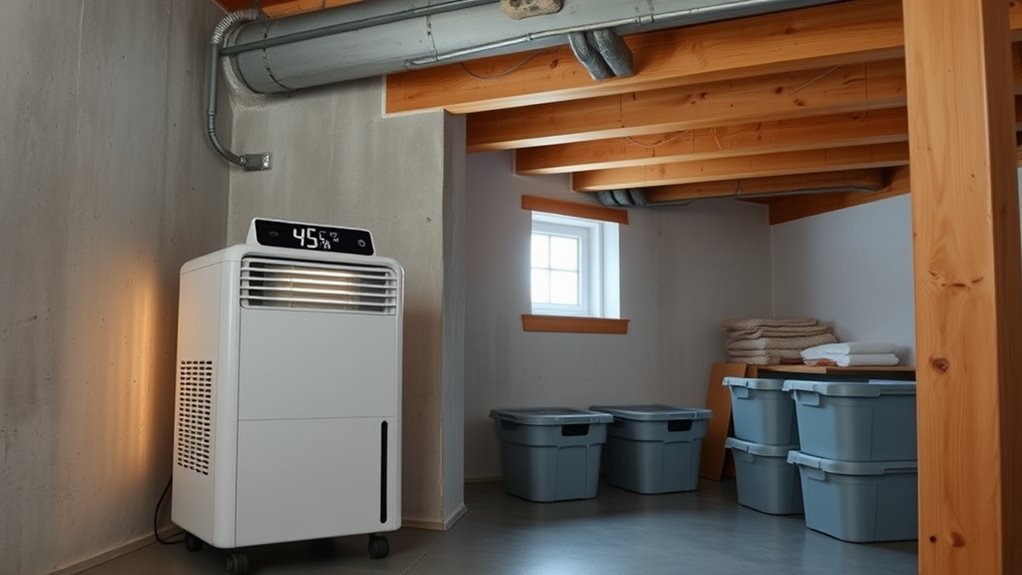
Set your basement dehumidifier by the humidity reading, not by guesswork. For most homes, the best basement dehumidifier setting is around 45% to 50% relative humidity (RH). That range keeps the space dry enough to discourage mold, musty odors, and dust mites without making the air uncomfortably dry.
Quick Answer
Set a basement dehumidifier to about 45% to 50% RH for everyday use. Keep indoor humidity below 60% and ideally between 30% and 50%. In summer, aim near 45% to 50%. In winter, use 45% to 50% unless the space becomes too dry, then raise it slightly while watching for condensation.
Key Takeaways
- The best basement dehumidifier setting for most homes is 45% to 50% RH.
- Keep humidity below 60% RH; the EPA recommends 30% to 50% RH when possible.
- Use a separate hygrometer to check the reading because built-in humidistats are not always perfectly accurate.
- If the basement stays damp, check for leaks, poor drainage, poor airflow, a dirty filter, or an undersized unit.
- Dry wet materials within 24 to 48 hours after a leak or spill to reduce mold risk.
At a Glance
| Time Required | 10 to 15 minutes to set and verify; several hours to stabilize after changes |
| Difficulty | Easy |
| Tools Needed | Basement dehumidifier, hygrometer, clean filter, drain hose if using continuous drainage |
| Cost | $10 to $50 for a hygrometer if you do not already have one; energy cost depends on unit size and runtime |
What Should a Basement Dehumidifier Be Set To?
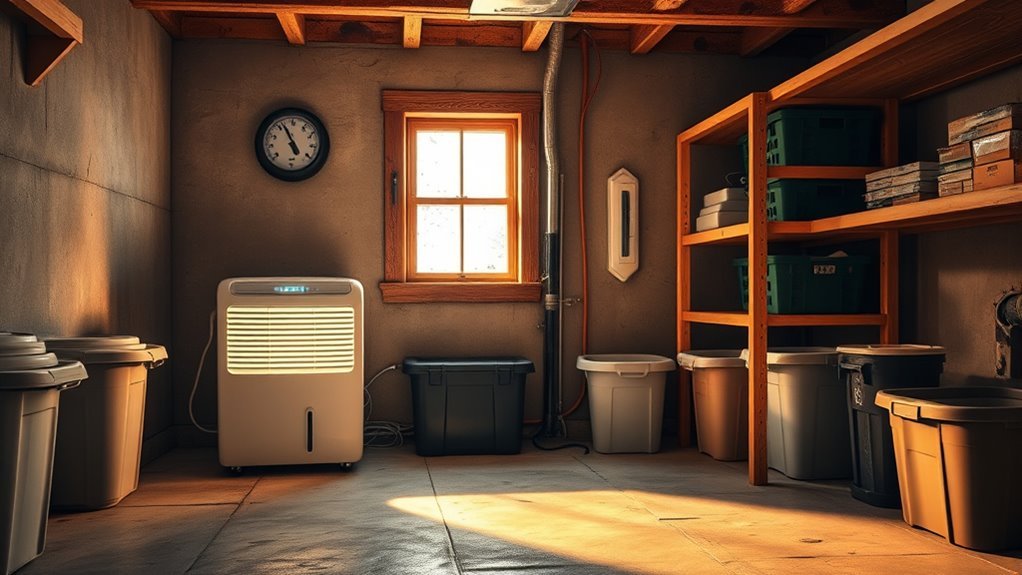
Your basement dehumidifier should usually be set to hold the space at 45% to 50% RH. That is the best target for most basements because it stays within the EPA’s recommended indoor humidity range of 30% to 50% while leaving a safety margin below 60% RH, where moisture problems become more likely.
Do not rely only on how the basement feels. Use a hygrometer and place it away from the dehumidifier’s exhaust air so it measures the room, not just the air blowing out of the machine. Check the reading after the unit has run for several hours, then adjust in small steps.
| Condition | Best Setting | Why |
| Normal basement | 45% to 50% RH | Good balance of mold prevention, comfort, and energy use |
| Damp or musty basement | 40% to 45% RH temporarily | Helps dry the space after a humidity spike, then return to 45% to 50% |
| Summer | 45% to 50% RH | Warm outdoor air and foundation moisture often raise basement humidity |
| Winter | 45% to 50% RH; up to 55% only if the air is too dry and there is no condensation | Avoids over-drying while still watching for cold-surface condensation |
| Stored papers, tools, wood, or fabric | 45% to 50% RH | Reduces musty odor, corrosion risk, and moisture damage to stored items |
The safest simple rule: keep basement humidity below 60% RH, and use 45% to 50% RH as your everyday target.
Why Basement Moisture Matters So Much
Basements are prone to moisture because they sit against soil, concrete, cool surfaces, and foundation walls. Even when you do not see standing water, water vapor can enter through small cracks, damp concrete, plumbing leaks, poor grading, or outdoor humidity.
When humidity stays high, you can get musty odors, condensation, mold growth, rust, peeling finishes, damp cardboard, and uncomfortable air. The goal is not to make the basement bone-dry. The goal is to keep it stable.
Mold and Odor Risks
Mold needs moisture to grow. A dehumidifier helps by lowering the amount of moisture in the air, but it does not remove mold that is already growing and it does not fix the water source. If you see or smell mold, look for the moisture problem first.
The EPA recommends drying wet or damp materials within 24 to 48 hours after a leak or spill to help prevent mold growth. That timeline matters most after water intrusion, flooding, plumbing leaks, or wet carpet.
Warning: If visible mold covers more than about 10 square feet, if sewage or contaminated water is involved, or if you suspect mold in HVAC equipment, follow EPA guidance and consider a qualified mold professional before disturbing the area.
Structural Damage Concerns
Moisture can damage more than the air. Over time, a damp basement can harm wood framing, stored furniture, drywall, insulation, metal fasteners, tools, and appliances. Watch for these warning signs:
- Condensation on pipes, ducts, windows, or cold walls.
- Damp concrete or dark spots on floors and foundation walls.
- Rust on pipes, tools, shelving, or HVAC equipment.
- Soft drywall, peeling paint, warped trim, or swollen wood.
- Musty boxes, books, fabric, or stored furniture.
A steady 45% to 50% RH target helps protect these materials without wasting energy by over-drying the space.
Air Quality Impact
High humidity can support mold, dust mites, and other indoor allergens. The CDC notes that damp buildings are associated with respiratory symptoms, asthma problems, allergic rhinitis, and other health issues. The American Lung Association also recommends keeping humidity below 50% to help reduce dust mites.
If anyone in the home has asthma, allergies, COPD, immune concerns, or ongoing respiratory symptoms, treat basement moisture as an indoor-air issue, not just a comfort issue. A dehumidifier can help control dampness, but medical symptoms should be discussed with a healthcare professional.
Best Basement Dehumidifier Settings for Summer
In summer, set your basement dehumidifier to 45% to 50% RH. Summer air carries more moisture, and basements often stay cooler than the air outside. When warm, humid air reaches cool basement surfaces, condensation can form.
Use this summer routine:
- Close basement windows on humid days.
- Set the dehumidifier to 45% to 50% RH.
- Run a fan only if it helps circulate indoor air without bringing in humid outdoor air.
- Check the hygrometer after several hours.
- Use continuous drainage if the bucket fills quickly.
- Inspect gutters, downspouts, grading, and foundation cracks if humidity keeps returning.
Pro Tip: If your dehumidifier has a “continuous” mode, use it only during heavy dampness, after a leak, or while drying the space. For normal use, the humidistat setting is usually better because it lets the unit cycle off after reaching the target RH.
Recommended Products

HIGH-EFFICIENCY MOISTURE REMOVAL FOR LARGE SPACES:Tired of damp, musty odors in your lower levels? This powerful dehumidifier for basement and large rooms removes up to 34 pints of moisture per day (at 95°F, 90% RH), covering spaces up to 2,500 sq. ft. It quickly brings relative humidity (RH) down to a healthy 40%–60% range, maintaining an ideal environment for your furniture, clothes, and walls. Ideal for expansive living rooms, crawl spaces, and storage areas, it creates a crisp, breathable indoor climate for your entire family.

【The Undisputed Champion — Industry-Leading Dehumidifier Brand】Choose AEOCKY, getting double market validation. According to data independently verified by Stackline, a leading third-party data analytics company, AEOCKY was an industry‑leading dehumidifier brand on Amazon U.S. in 2025. Meanwhile, it stands as a technology-leading rotary desiccant dehumidifier brand on Amazon. This isn’t just an appliance—it’s a complete humidity-control solution for small spaces. Skip low-performance alternatives and trust a brand recognized by the market.
Best Basement Dehumidifier Settings for Winter
In winter, start with 45% to 50% RH. If the air feels too dry and there is no condensation on windows, pipes, or walls, you can raise the setting slightly. Treat 55% RH as a short-term upper comfort limit, not the normal goal.
Cold basements need extra attention because many refrigerant-style dehumidifiers work less efficiently in low temperatures. If the basement is often below about 60°F, choose a unit rated for low-temperature operation or one with auto-defrost.
Recommended Products

【𝟭𝟬𝟬 𝗣𝗶𝗻𝘁 𝗛𝗶𝗴𝗵-𝗖𝗮𝗽𝗮𝗰𝗶𝘁𝘆 𝗠𝗼𝗶𝘀𝘁𝘂𝗿𝗲 𝗥𝗲𝗺𝗼𝘃𝗮𝗹 – 𝗖𝗼𝗺𝗳𝗼𝗿𝘁 𝗬𝗼𝘂 𝗖𝗮𝗻 𝗙𝗲𝗲𝗹】 Enjoy a drier, fresher, and more comfortable home by reducing excess humidity in basements, garages, laundry rooms, and other damp spaces. Removes up to 100 pints of moisture per day under high-humidity conditions (95°F, 90% RH), and up to 70 pints per day at 86°F and 80% RH, delivering reliable moisture control across a wide range of indoor environments.

【The Undisputed Champion — Industry-Leading Dehumidifier Brand】When you choose AEOCKY, you get double market validation. According to data independently verified by Stackline, a leading third-party data analytics company, AEOCKY was an industry‑leading dehumidifier brand on Amazon U.S. in 2025. This means you’re not just choosing a flagship product from a market leader, but a top-performing brand backed by independent market data and trusted by millions of real users, delivering the ultimate combination of performance, quality and trust.
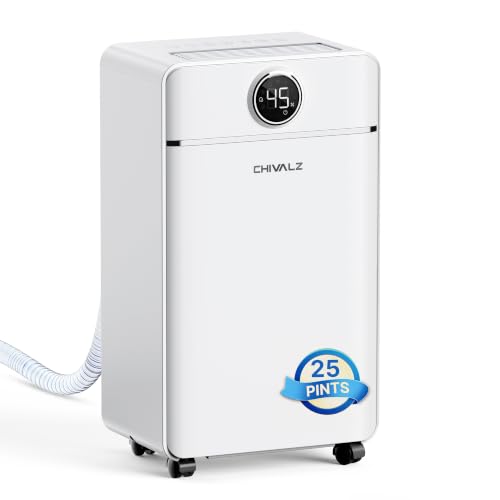
Easy-to-Read LED Display and 3 Modes: Monitor real-time humidity on the clear LED screen and set your ideal level (40%-60% RH) with ±3% accuracy. This dehumidifier features three intelligent modes to adapt to your needs. Auto Mode: Automatically maintains optimal humidity for basement, home and bedroom comfort. Laundry Mode: Accelerates indoor clothes drying by extracting airborne moisture. Sleep Mode: Whisper-quiet 40dB operation for undisturbed rest
Winter Humidity Targets
Use these winter targets:
- 45% to 50% RH: best everyday target.
- 50% to 55% RH: acceptable only if the air is too dry and there is no condensation.
- Below 30% RH: often too dry for comfort and stored wood items.
- Above 60% RH: too damp; check for leaks, condensation, or poor airflow.
If you see condensation, lower the setting and address the cold surface or moisture source. A dehumidifier can remove moisture from the air, but insulation, air sealing, drainage, and leak repair may still be needed.
Cold-Weather Dehumidifier Tips
Cold-weather performance depends on the unit and the basement temperature. To avoid wasted energy and frozen coils:
- Keep the dehumidifier away from exterior doors and very cold walls.
- Clean the filter so airflow stays strong.
- Use auto-defrost if your model has it.
- Do not block the intake or exhaust.
- Check the drain hose for kinks or frozen water.
- Watch the hygrometer instead of assuming the unit is working.
Note: Newer dehumidifiers may list lower pint capacities than older models because DOE testing changed to better reflect cooler basement conditions. When comparing units, compare current ratings, room size, and dampness level rather than old pint numbers alone.
How to Set Your Basement Dehumidifier Correctly
Use this simple process to set the dehumidifier and verify that it is actually controlling the room:
- Place a hygrometer in the basement. Put it several feet away from the dehumidifier and away from supply vents, exterior doors, and direct exhaust air.
- Set the dehumidifier to 45% to 50% RH. Start at 50% if the basement is only mildly damp. Start at 45% if it smells musty or feels clammy.
- Let it run for several hours. A damp basement will not stabilize instantly.
- Compare readings. Check the dehumidifier display against the separate hygrometer.
- Adjust in 5% steps. Avoid big swings unless you are drying a wet area after a leak.
- Recheck after rain. Heavy rain, snowmelt, laundry drying, or poor drainage can change basement humidity quickly.
If the built-in humidistat reads differently from your separate hygrometer, trust the separate hygrometer if it is placed well and appears reliable.
Where to Place a Basement Dehumidifier
Placement affects performance. A dehumidifier needs airflow to pull damp air across its coils and send drier air back into the room.
- Place it near the dampest area, but not directly against a wall.
- Leave open space around the intake and exhaust vents.
- Keep interior basement doors open if you want one unit to treat multiple connected areas.
- Keep exterior windows and doors closed during humid weather.
- Set the unit on a level surface.
- If using a hose, make sure it slopes continuously to the floor drain, sump pit, or condensate pump.
For finished basements, also consider noise. Put the unit where it can circulate air without being right beside a seating area, office desk, or bedroom.
How to Choose the Right Size Dehumidifier
The right dehumidifier size depends on the basement’s square footage and how damp it is. ENERGY STAR explains that dehumidifier capacity is measured in pints per 24 hours, and the needed capacity depends on the space size and the conditions before dehumidification.
Use these practical signs:
- Slightly damp: the basement sometimes smells musty, but there are no wet spots.
- Very damp: the basement often smells damp and may show spots on walls or floors.
- Wet: walls or floors sweat, seepage is present, or the bucket fills very quickly.
If your unit runs constantly but the hygrometer stays above 60% RH, the dehumidifier may be too small, poorly placed, dirty, blocked, or fighting an active water problem.
Recommended Products

4,500 SQ. FT. DEHUMIDIFIER – Removes up to 50 pints of moisture per day with an adjustable humidity setting from 35% to 85%. Perfect for use in basement, bathroom, bedroom, office, kitchen, cellar, or crawlspace. Maintain a healthy 45%-55% humidity range

【50 Pint Dehumidifier – Covers Up To 3500 Sq.Ft】Mnastin dehumidifier extracts up to 50 pints of moisture per day under hot humid (95℉, 90% RH), and maintains a stable 43 pints in typical damp basement settings (86℉, 80% RH). As a reliable dehumidifiers for home, it cuts wall condensation, musty smell and pet odors. Ideal for basements, bathrooms, laundry rooms, bedrooms, RVs and garages all year round

[The Undisputed Champion — Industry-Leading Dehumidifier Brand] When you choose AEOCKY, you get double market validation. According to data independently verified by Stackline, a leading third-party data analytics company, AEOCKY was an industry‑leading dehumidifier brand on Amazon U.S. in 2025. This means you’re not just choosing a flagship product from a market leader, but a top-performing brand backed by independent market data and trusted by millions of real users, delivering the ultimate combination of performance, quality and trust.
Signs Your Basement Humidity Is Too High or Low
Your hygrometer gives the best answer, but your basement will often show clues before the number gets extreme.
Signs Humidity Is Too High
- Musty odor
- Condensation on pipes, windows, ducts, or walls
- Damp concrete or wet spots
- Rust on tools, pipes, or metal shelving
- Peeling paint or bubbling finishes
- Cardboard boxes that feel soft or smell musty
- Visible mold or mildew
Signs Humidity Is Too Low
- Static electricity
- Dry throat, dry nose, or itchy eyes
- Cracking wood furniture or trim
- Brittle paper, leather, or stored items
- Basement RH consistently below 30%
If humidity is too low, raise the dehumidifier setting or turn the unit off until the space returns to a comfortable range.
How to Keep Basement Humidity Stable
Stable humidity comes from more than one appliance. The dehumidifier helps, but the basement also needs fewer moisture sources and better drainage.
- Fix leaks quickly. Check plumbing, water heaters, washing machines, foundation cracks, and window wells.
- Manage outdoor water. Clean gutters, extend downspouts, and make sure soil slopes away from the foundation.
- Use continuous drainage. A hose or pump keeps the unit running when humidity is high.
- Clean the filter. A clogged filter reduces airflow and water removal.
- Keep damp items out. Do not store wet towels, rugs, firewood, or open cardboard boxes in the basement.
- Vent dryers outdoors. A dryer that vents indoors adds a large amount of moisture.
- Check after storms. Rain and snowmelt can reveal drainage problems.
Note: A dehumidifier controls moisture in the air. It does not waterproof a foundation, repair a leak, dry hidden wall cavities, or remove mold already growing on materials.
Basement Dehumidifier Maintenance Checklist
A neglected dehumidifier can lose performance and may even become a source of odor. Use this checklist:
- Empty the bucket before it overflows, unless you use continuous drainage.
- Wash and dry the bucket regularly.
- Clean or replace the air filter according to the manufacturer’s instructions.
- Vacuum dust from the intake grille.
- Check the drain hose for clogs, kinks, algae, or poor slope.
- Keep the area around the unit clear.
- Unplug the unit before cleaning it.
- Inspect for frost if the basement is cold.
The Mayo Clinic recommends draining and cleaning dehumidifier moisture trays often to help prevent bacteria and mold.
Troubleshooting Basement Humidity Problems
Humidity Stays Above 60%
If the dehumidifier is set correctly but RH stays high, try these fixes:
- Close basement windows and outside doors.
- Clean the filter.
- Move the unit to a more open location.
- Confirm the bucket is seated correctly.
- Check for a clogged drain hose.
- Look for leaks, seepage, or damp stored items.
- Use a larger unit if the basement is large or very damp.
The Unit Runs All Day
A dehumidifier may run for long periods after heavy rain, a leak, or a long humid spell. If it never reaches the target, the unit may be undersized or the basement may have an active water source.
The Coils Freeze
Frozen coils usually mean the basement is too cold for that unit, airflow is blocked, or the filter is dirty. Clean the filter, improve airflow, and use a low-temperature-rated unit if needed.
The Basement Still Smells Musty
Musty odor can remain if mold, damp carpet, wet cardboard, old furniture, or a hidden leak is still present. Lowering the humidity helps prevent new growth, but it will not clean contaminated materials.
Frequently Asked Questions
What is the best humidity setting for a basement dehumidifier?
The best humidity setting for a basement dehumidifier is usually 45% to 50% RH. This target is low enough to control dampness and musty odors while staying within the EPA’s ideal indoor humidity range of 30% to 50% when possible.
Should you use a dehumidifier if you have COPD?
A dehumidifier may help if your indoor air is too damp because high humidity can support mold and dust mites. Keep the basement around 45% to 50% RH, clean the unit often, and talk with a healthcare professional if humidity changes seem to affect your breathing or COPD symptoms.
Should I run a dehumidifier 24/7 in my basement?
Run it continuously only when humidity is above 60%, after a leak, during very humid weather, or while drying a damp space. For normal use, set the humidistat to 45% to 50% RH so the unit can cycle off when the basement reaches the target.
Can a dehumidifier help with dust mites?
Yes. Dust mites depend on moisture in the air, and the American Lung Association recommends keeping home humidity below 50% to help reduce them. A basement setting around 45% to 50% RH is a good target if dust mites, allergies, or musty fabrics are a concern.
Is 60% humidity too high for a basement?
Yes, 60% RH is too high as a regular basement target. It is the upper limit you should stay below. If your basement is near or above 60%, lower the setting, improve drainage and airflow, and check for leaks or condensation.
Can I set my basement dehumidifier to 40%?
You can set it to 40% temporarily if the basement is very damp or smells musty, but it is usually not needed for everyday use. A 45% to 50% setting is more balanced for comfort, energy use, and moisture control.
Conclusion
For most homes, the best basement dehumidifier setting is 45% to 50% RH. Keep the basement below 60% RH, verify the level with a hygrometer, and adjust by season. In summer, stay near 45% to 50%. In winter, keep the same target unless the air becomes too dry and there is no condensation.
If humidity stays high even with the right setting, do not keep lowering the number forever. Look for leaks, clogged filters, poor drainage, bad placement, blocked airflow, or an undersized dehumidifier. The right setting works best when the basement’s moisture sources are under control.
Sources
- U.S. Environmental Protection Agency — Mold Course, Chapter 2 — supports keeping indoor RH below 60% and ideally 30% to 50%.
- U.S. Environmental Protection Agency — A Brief Guide to Mold, Moisture and Your Home — supports humidity targets, hygrometer use, condensation response, and drying wet materials within 24 to 48 hours.
- CDC/NIOSH — Health Problems Related to Mold — supports damp-building health cautions.
- ENERGY STAR — Dehumidifiers — supports dehumidifier capacity and sizing factors.
- ENERGY STAR — Dehumidifier Testing and Capacity — supports current dehumidifier rating and DOE testing context.
- American Lung Association — Dust Mites — supports keeping humidity below 50% to reduce dust mites.