A dehumidifier can add a noticeable amount to your electric bill, but there is no single monthly figure that fits every unit. The most reliable estimate comes from the dehumidifier’s running wattage, its actual operating hours, and your utility’s price per kilowatt-hour (kWh).
Quick Answer
A dehumidifier’s monthly electricity use depends on its running wattage and actual operating hours. For example, a 500-watt unit running eight hours a day uses 120 kWh per 30-day month. At the 2025 U.S. residential average of $0.173 per kWh, that costs about $20.76.
Key Takeaways
- Use watts × operating hours ÷ 1,000 to calculate kWh.
- A 500-watt unit running 8 hours daily uses about 120 kWh per month.
- The pint rating does not tell you the exact power draw. Check the nameplate, manual, ENERGY STAR listing, or a suitable plug-in energy meter.
- Aim for about 30% to 50% relative humidity, and avoid setting the humidistat lower than needed.
- ENERGY STAR certification, correct sizing, clean filters, closed doors and windows, and repaired moisture leaks can reduce unnecessary runtime.
How Much Electricity Does a Dehumidifier Use?
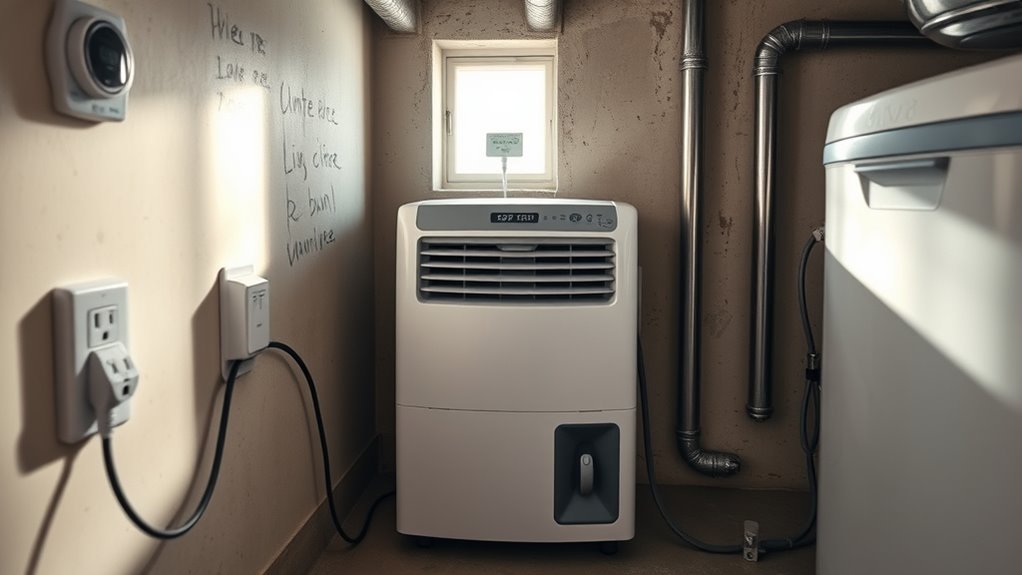
Electricity use is measured in kilowatt-hours, not watts alone. Watts describe how quickly the appliance uses power while it is operating. Kilowatt-hours describe the total energy used over time. The U.S. Energy Information Administration reported a 2025 U.S. residential average electricity price of 17.30 cents per kWh, but your own bill may show a much higher or lower rate.
The table below uses example power draws rather than promising that every dehumidifier of a certain capacity uses the same amount.
| Example Running Power | Daily Runtime | Monthly Energy | Monthly Cost at $0.173/kWh |
|---|---|---|---|
| 300 W | 8 hours | 72 kWh | $12.46 |
| 500 W | 8 hours | 120 kWh | $20.76 |
| 700 W | 12 hours | 252 kWh | $43.60 |
Note: “Eight hours per day” should mean eight total hours of active operation. A humidistat may cycle the compressor and fan on and off, so clock time plugged in is not always the same as full-power runtime.
A 500-watt dehumidifier running eight hours a day uses 120 kWh in a 30-day month. Multiply that by your own electricity rate for the best cost estimate.
What Drives Dehumidifier Costs?
Your dehumidifier’s operating cost changes with the appliance, the room, the weather, and your utility plan. The biggest factors are:
- Running wattage: Two units with the same pint rating can have different power draws and efficiency levels.
- Actual runtime: A unit that runs continuously uses more energy than one that reaches the setpoint and cycles off.
- Humidity setpoint: A very low target can keep the compressor running longer than necessary.
- Moisture entering the space: Open windows, damp foundations, plumbing leaks, unvented dryers, and frequent showers can add moisture faster than the unit removes it.
- Room temperature: Refrigerant dehumidifiers may remove less moisture in cool spaces and may spend time in defrost mode.
- Airflow and maintenance: A clogged filter, blocked intake, or insufficient clearance can reduce performance.
- Electricity price: Your cost per kWh directly changes the bill even when energy use stays the same.
A connected or “smart” model may make scheduling and monitoring easier, but smart controls do not guarantee a fixed percentage of energy savings. Savings depend on whether the controls actually reduce unnecessary runtime.
How to Calculate Dehumidifier Electricity Use
You can estimate monthly use in a few minutes with the wattage, operating hours, billing days, and electricity rate.
At a Glance
| Time Required | About 2 to 5 minutes |
| Difficulty | Easy |
| Tools Needed | Dehumidifier label or manual, calculator, utility rate, and optionally a compatible plug-in energy meter |
| Cost | Free with label data; optional energy meter cost varies |
Find the Wattage
Check the appliance nameplate, manual, manufacturer specifications, or ENERGY STAR product listing. Use the input wattage shown for normal dehumidifying operation when available. Do not confuse watts with volts, amps, pints per day, or annual kWh.
If the label lists volts and amps but not watts, multiplying volts by amps gives an upper electrical-input estimate for a simple load. Compressor appliances can have startup surges and power-factor effects, so a suitable energy meter provides a better real-world measurement.
Estimate Actual Daily Runtime
Estimate how many hours the compressor and fan actively operate each day. A unit left on for 24 hours may run at full power for only part of that period after the room reaches the humidity target. Runtime often increases after heavy rain, during humid weather, or when new moisture enters the room.
Compute Monthly Cost
Monthly kWh = watts ÷ 1,000 × operating hours per day × billing days
Monthly cost = monthly kWh × electricity price per kWh
Example: A 590-watt unit running 8 hours daily uses 4.72 kWh per day. Over 30 days, that equals 141.6 kWh. At $0.173 per kWh, the estimated monthly cost is about $24.50.
Pro Tip: For the most accurate estimate, measure the unit for several normal days with a plug-in energy meter that is rated for the appliance’s voltage and current. Follow the dehumidifier and meter manufacturers’ safety instructions.
Dehumidifier Monthly Cost Examples by Wattage
Capacity and wattage are related only loosely. A more efficient unit can remove more moisture without using proportionally more electricity. Use the following examples as calculation models, then replace the sample wattage with the number from your own unit.
30-Pint-Class Cost Estimate
For illustration, a 300-watt unit would use the following amount at the 2025 U.S. residential average rate of $0.173 per kWh:
| Runtime | Monthly kWh | Estimated Cost |
|---|---|---|
| 8 hours/day | 72 kWh | $12.46/month |
| 12 hours/day | 108 kWh | $18.68/month |
| 24 hours/day | 216 kWh | $37.37/month |
50-Pint-Class Monthly Costs
For illustration, a 500-watt unit would cost:
| Runtime | Monthly kWh | Estimated Cost |
|---|---|---|
| 8 hours/day | 120 kWh | $20.76/month |
| 12 hours/day | 180 kWh | $31.14/month |
| 24 hours/day | 360 kWh | $62.28/month |
Older 70-Pint Label Cost Example
Be careful when comparing an older “70-pint” dehumidifier with a current model. The U.S. Department of Energy changed the test procedure, and ENERGY STAR explains that an older portable 70-pint rating roughly corresponds to about 40 to 45 pints per day under the newer test conditions. The actual match varies by model.
For illustration only, a unit drawing 700 watts would use:
| Runtime | Monthly kWh | Estimated Cost |
|---|---|---|
| 8 hours/day | 168 kWh | $29.06/month |
| 12 hours/day | 252 kWh | $43.60/month |
| 24 hours/day | 504 kWh | $87.19/month |
How Electricity Rates Change Your Bill
The same appliance can cost very different amounts to run in different locations. A 500-watt unit operating eight hours daily uses 120 kWh per 30-day month regardless of the utility rate, but the price changes as follows:
| Electricity Rate | Monthly Cost for 120 kWh |
|---|---|
| $0.12/kWh | $14.40 |
| $0.173/kWh | $20.76 |
| $0.30/kWh | $36.00 |
Use the energy-charge rate from your utility bill. If your plan has time-of-use pricing, running the unit during lower-priced hours may reduce cost, although it does not reduce the number of kWh consumed.
Which Dehumidifier Uses the Least Power?
The model with the lowest wattage does not always remove moisture most efficiently. A tiny unit may draw less power but run much longer or remove far less water. Compare these four items:
- Capacity: Pints of water removed per day under the current test procedure.
- Integrated Energy Factor: Liters of water removed per kWh. A higher number means better tested efficiency.
- Annual energy consumption: ENERGY STAR listings provide a standardized annual kWh estimate for certified products.
- Fit for the space: The unit must handle the room’s size, temperature, and moisture load.
The current ENERGY STAR dehumidifier specification became effective October 1, 2025. ENERGY STAR states that certified dehumidifiers use about 20% less energy than comparable non-certified models while removing the same amount of moisture.
Recommended Products

Most Efficient Energy Star 2025 Dehumidifier:This high-performance compressor dehumidifier can remove 45 pints of moisture in a day (95℉, 90% RH) with 30%-80% target humidity setting range, which efficiently maintains your home's ideal humidity level. Perfect for large spaces up to 4500 sq.ft, it ensures a comfortable environment whether in your basement, bedroom,bathroom or office, garage,RV.ASAHWo Energy Star certified Dehumidifier cut down your hassle on energy.

【The Undisputed Champion — Industry-Leading Dehumidifier Brand】When you choose AEOCKY, you get double market validation. According to data independently verified by Stackline, a leading third-party data analytics company, AEOCKY was an industry‑leading dehumidifier brand on Amazon U.S. in 2025. This means you’re not just choosing a flagship product from a market leader, but a top-performing brand backed by independent market data and trusted by millions of real users, delivering the ultimate combination of performance, quality and trust.
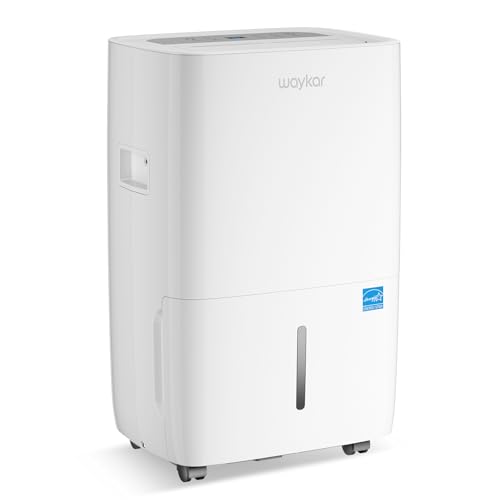
【80 Pint Capacity for Up to 5,000 Sq.Ft Spaces】Quickly removes excess moisture from basements, bathrooms, bedrooms, RVs, and other large living areas, delivering 80 pints per day (95°F, 90% RH).conditions. Designed as a powerful dehumidifier for basement, home, and large spaces, it helps eliminate damp air, condensation—and pet-related odors caused by excess humidity. Even during humid seasons, it works continuously to maintain a dry, comfortable, and healthier indoor environment.
How to Cut Dehumidifier Energy Use
Focus on reducing unnecessary runtime rather than chasing an unsupported savings percentage.
- Use a sensible setpoint. The U.S. Environmental Protection Agency recommends keeping indoor relative humidity roughly between 30% and 50%. A target around 45% to 50% is often a practical starting point unless your home or health professional requires something different.
- Fix the moisture source. Repair leaks, improve drainage, vent bathrooms and dryers outdoors, and address damp foundations. A dehumidifier should not be the only response to active water intrusion.
- Close the treated space. Keep windows and exterior doors closed while the unit runs unless outdoor air is drier and ventilation is the better choice.
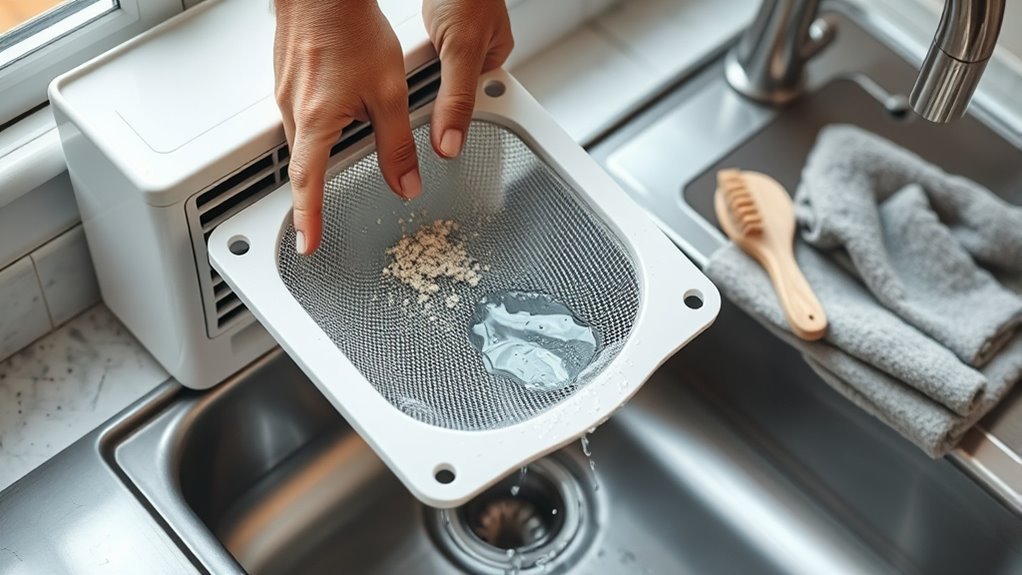
- Clean the filter. Follow the manufacturer’s schedule so airflow remains unrestricted.
- Allow proper clearance. Do not block the intake or exhaust. Follow the placement distances in the manual.
- Choose efficient equipment. Compare ENERGY STAR certification, Integrated Energy Factor, annual kWh, and capacity under the current test method.
- Measure before replacing. A plug-in energy meter and a separate hygrometer can show whether the unit is using excessive energy or simply responding to a heavy moisture load.
Warning: Some older dehumidifiers have been recalled for overheating and fire hazards. Check your brand and model on the U.S. Consumer Product Safety Commission dehumidifier recall page. Stop using a recalled unit and follow the listed remedy.
Recommended Products

Wellness Indicator: This humidity meter with humidity level icon indicates air conditions - DRY/COMFORT/WET, allowing this humidity sensor to ensure you’re always aware of changes to your home/household with just a quick glance

1-【Widely Application】The digital LCD monitor can be used in home, office, garage, schools, hotels, laboratories, kindergartens, aquaculture, instrument workshop, warehouse, reptile tank terrarium, aquarium, hermit crab habitat, and other places where temperature/humidity measurement is required.
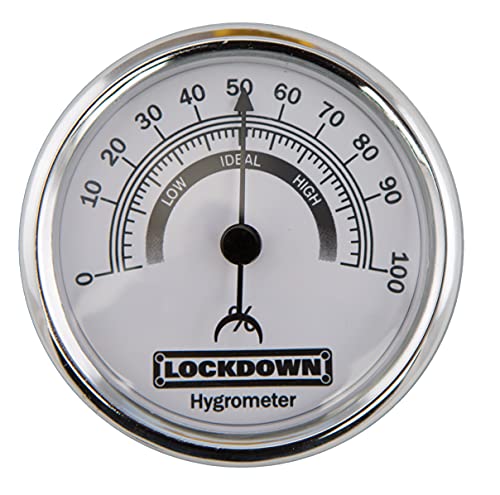
DIMENSIONS: 2.75 inch diameter
Dehumidifier vs. Air Conditioner Costs
A dehumidifier and an air conditioner do different jobs, so a single percentage comparison is misleading. A dehumidifier removes moisture but releases heat into the room. An air conditioner removes heat and also removes some moisture while cooling. Their costs depend on equipment size, efficiency, runtime, climate, and the area being treated.
| Device | Main Job | Effect on Room | Best Cost Comparison |
|---|---|---|---|
| Portable dehumidifier | Remove moisture | Usually warms the space slightly | Measured watts and runtime |
| Air conditioner | Remove heat and some moisture | Cools the space | System input, efficiency rating, and runtime |
Use a dehumidifier when moisture is the main problem and cooling is unnecessary. Use air conditioning when temperature control is also needed. In some homes, a properly designed whole-home dehumidification or HVAC strategy may be more effective than running separate portable appliances without coordination.
Recommended Products

🍀 1657ML Larger Capacity: The water tank of this dehumidifier can hold of water at most 1657ml(58 OZ), you don’t need to pour water frequently and don’t worry about the water overflow or water leaking. Please read the instruction manual before using the product!

🍃Advanced Small Dehumidifier for Home: Designed for lasting home use, our bathroom dehumidifier works gently and steadily to maintain a balanced humidity level. The large 44 OZ (1.3L) water tank minimizes emptying frequency. Suitable for dorm room, camper, apartment, room, office and living room. No more dampness-just fresh, comfortable air everywhere

Upgrade High Efficient Dehumidification: Dehumidifier utilize semi conductor condensation technology, ensuring quiet operation while effectively extracting moisture from the air. This advanced feature helps keep humidity levels below 45%
Why Your Dehumidifier Uses More Electricity Than Expected
If your measured energy use is higher than expected, check these common causes:
- The humidity target is set too low.
- Doors or windows are open, or the unit is trying to dry several connected rooms.
- A plumbing, roof, drainage, or foundation problem is adding moisture continuously.
- The filter or airflow path is blocked.
- The space is cold, causing reduced moisture removal or frequent defrost cycles.
- The humidistat is inaccurate or placed where it senses unusually damp air.
- The unit is too small for the moisture load and rarely reaches the setpoint.
Compare the dehumidifier’s reading with a separate hygrometer. If humidity remains high despite continuous operation, inspect the building for moisture entry before assuming a larger appliance is the only solution.
Frequently Asked Questions
Do dehumidifiers run up your electric bill?
Yes. Any powered dehumidifier adds electricity use. The increase depends on running wattage, active runtime, and your cost per kWh. A 500-watt example running eight hours daily uses 120 kWh per month and costs about $20.76 at $0.173 per kWh.
How much does it cost to run a dehumidifier 24/7?
If a 500-watt unit truly draws full power 24 hours a day for 30 days, it uses 360 kWh and costs about $62.28 at $0.173 per kWh. A humidistat may cycle the unit off, so measured consumption can be lower.
How much will an electric bill go up with a dehumidifier?
Calculate watts ÷ 1,000 × operating hours × billing days × your electricity rate. For example, a 300-watt unit running eight hours daily costs about $12.46 per 30-day month at $0.173 per kWh, while a 700-watt unit running 12 hours daily costs about $43.60.
Does a higher pint rating always mean higher electricity use?
No. Capacity, wattage, and efficiency are separate measurements. Compare the current pint-per-day rating, running watts, Integrated Energy Factor, and annual kWh. Also confirm whether an older capacity label used the pre-2020 test conditions.
What humidity setting saves the most energy?
Use the highest setting that still controls dampness, condensation, and mold risk. The EPA recommends about 30% to 50% relative humidity. A starting point near 45% to 50% often avoids unnecessary over-drying.
Is a dehumidifier cheaper to run than an air conditioner?
It may use less electricity than some air-conditioning systems, but the comparison depends on the exact equipment and runtime. A dehumidifier does not cool the room and can add heat, while an air conditioner cools and removes some moisture. Compare measured kWh for the job you actually need.
Are dehumidifiers good for people with COPD?
A dehumidifier can help control excess dampness and mold, which may be important for people with chronic respiratory disease, but it does not treat COPD. Air that becomes too dry can also feel irritating. Keep humidity in a comfortable range and ask a clinician for advice based on the person’s symptoms and treatment plan. The CDC advises keeping home humidity no higher than 50% to limit mold growth.
Conclusion
Your dehumidifier’s monthly electricity use comes down to three numbers: running watts, active operating hours, and electricity price. Use the formula instead of relying on capacity-based cost claims. Set a reasonable humidity target, address leaks and ventilation problems, maintain airflow, compare ENERGY STAR efficiency data, and measure real consumption when you need a precise answer.
Sources
- ENERGY STAR: Dehumidifiers: certification, efficiency, placement, maintenance, and current specification guidance.
- ENERGY STAR: Dehumidifier Testing and Capacity: DOE test changes, Integrated Energy Factor, and old-to-new pint-rating comparisons.
- U.S. Energy Information Administration: Electricity Prices: 2025 U.S. residential average electricity price.
- U.S. EPA: Care for Your Air: recommended indoor relative-humidity range.
- U.S. Consumer Product Safety Commission: Dehumidifier Recalls: recalled models and fire-hazard guidance.
- CDC: Mold and Health: mold, respiratory concerns, and humidity control.