Affiliate disclosure: This article contains Amazon affiliate links. We may earn a commission from qualifying purchases at no extra cost to you.
Product note: Specifications, seller terms, and availability can change. Confirm the current model details before ordering.
Updated August 2026.
A dependable 50-pint dehumidifier can help control persistent moisture in a damp basement, garage, laundry room, or large living area. The best choice is not simply the model with the largest advertised square-foot number. Compare how the capacity was measured, the available drainage methods, tank size, noise, low-temperature operation, portability, energy efficiency, controls, and warranty support.
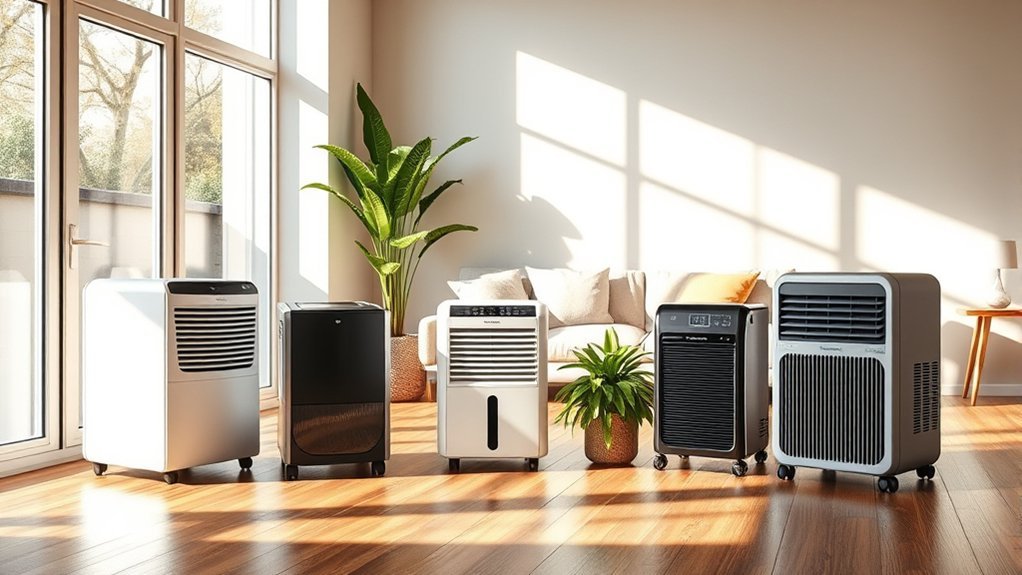
For most buyers, the Frigidaire FHDP5033Y1 is the strongest all-around option because it combines a documented 50-pint rating with a built-in pump, Wi-Fi control, and three drainage choices. The Amazon Basics 50-Pint Dehumidifier is the simpler pick for buyers who want familiar controls and ENERGY STAR certification without app features. The HUMILABS 50 Pint Dehumidifier offers a larger seller-stated tank, several operating modes, and a lower listed weight, but its 50-pint claim is measured under hotter and more humid conditions than standardized ratings.
Quick Verdict
Best Overall: Choose the Frigidaire FHDP5033Y1 when you need dependable large-room moisture control, upward pumping, and remote adjustments. Choose Amazon Basics for straightforward operation and gravity drainage. Choose HUMILABS when a larger bucket, sleep mode, child lock, and lighter listed weight matter more than standardized capacity documentation.
Quick Comparison of the Best 50-Pint Dehumidifiers
| Product | Best For | Capacity Basis | Drainage | Tank | Amazon |
|---|---|---|---|---|---|
| Frigidaire FHDP5033Y1 | Best overall | Manufacturer-rated 50 pints/day | Bucket, gravity drain, or built-in pump | 1.9 gallons | Check Price on Amazon |
| Amazon Basics 50-Pint | Simple operation | ENERGY STAR-certified 50-pint class | Bucket or continuous gravity drain | 6 liters | Check Price on Amazon |
| HUMILABS 50 Pint | Modes and larger seller-stated tank | Up to 50 pints/day at 95°F and 90% RH | Bucket or included gravity-drain hose | Seller states 1.7 gallons | Check Price on Amazon |
How these picks were evaluated: We compared documented or seller-stated moisture-removal capacity, test conditions, drainage setup, tank size, controls, portability, noise information, energy certification, warranty, and brand support. We did not treat advertised coverage numbers as directly comparable because temperature, starting humidity, airflow, ceiling height, doors, leaks, and test conditions can substantially change real-world performance.
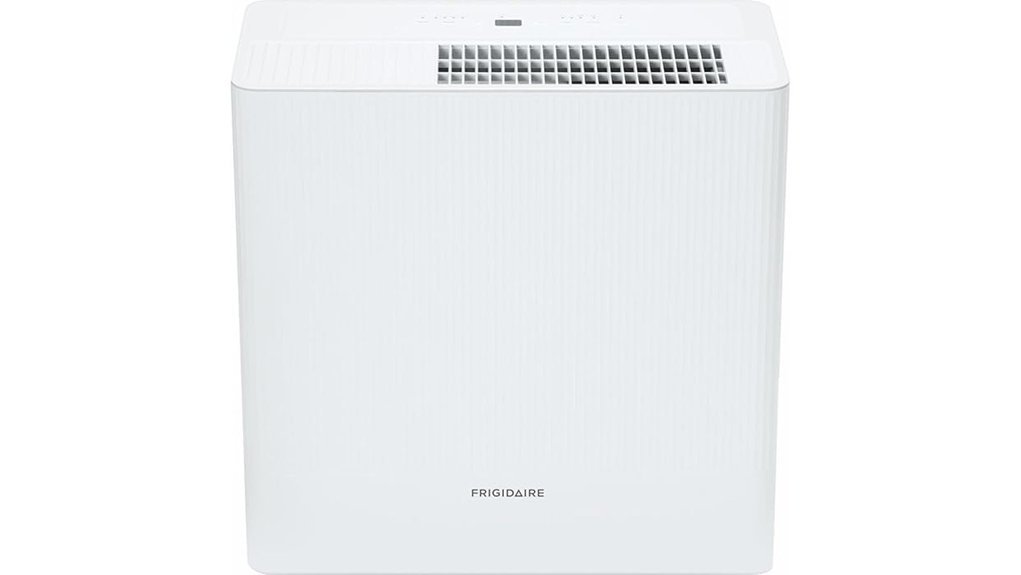
Frigidaire 50 Pint Built-In Pump Dehumidifier
Best Overall
The Frigidaire FHDP5033Y1 is the most complete all-around option in this comparison. Manufacturer specifications list a 50-pint daily capacity, a 1.9-gallon bucket, custom humidity control, two fan speeds, a washable filter, caster wheels, and continuous gravity drainage. Its built-in pump is especially useful when the nearest drain is above the unit, such as a utility sink or window.
Wi-Fi connectivity lets you monitor or adjust supported settings remotely. The main trade-offs are weight and sound. At about 42 pounds and roughly 49 to 51.5 dBA, it is better suited to a basement, laundry room, garage, or large living area than a noise-sensitive bedroom.
Why You’ll Like It: It solves the most common drainage problem by supporting a bucket, a downward gravity hose, or pumped discharge to an elevated drain.
Who Should Buy This: Buyers who want documented 50-pint performance, flexible drainage, remote control, and established-brand support.
Who Should Avoid This: Buyers who do not need a pump or Wi-Fi and would rather prioritize the lowest possible weight or purchase complexity.
Pros:
- Manufacturer-rated 50-pint daily capacity and 1.9-gallon bucket.
- Built-in pump plus gravity-drain and manual-bucket options.
- Wi-Fi control, adjustable humidistat, two fan speeds, and washable filter.
Cons:
- At about 42 pounds, it is difficult to carry between floors.
- The documented 49 to 51.5 dBA range may be noticeable in quiet rooms.
- The listed labor warranty is one year.
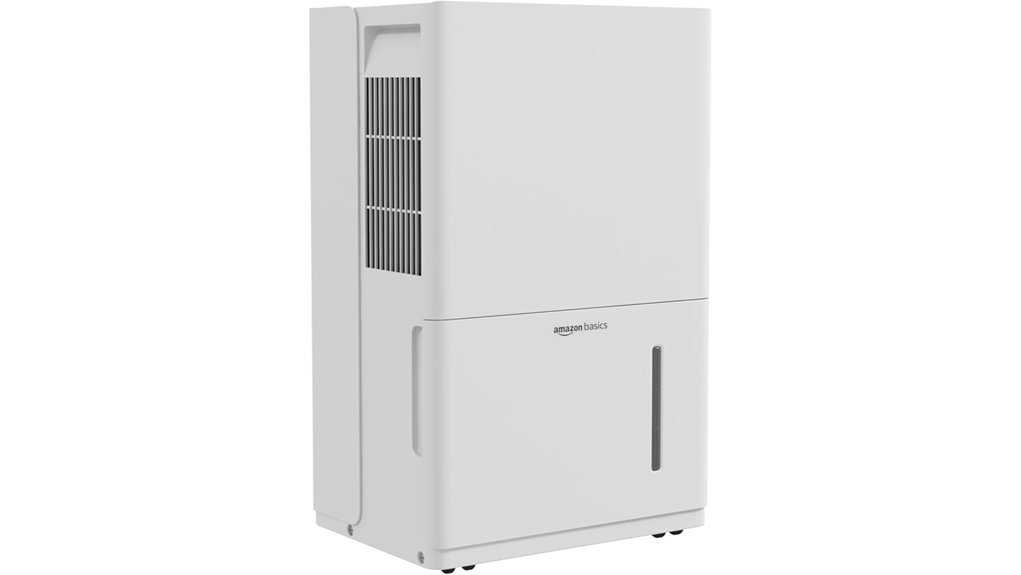
Amazon Basics 50-Pint Large Dehumidifier
Best for Simple Operation
The Amazon Basics 50-Pint Large Dehumidifier is a straightforward choice for buyers who want familiar controls without app connectivity or a built-in pump. The current listing identifies it as a 50-pint model for spaces advertised up to 4,000 square feet, with a six-liter bucket and ENERGY STAR certification. Treat the coverage number as a broad marketing estimate rather than a guarantee for every room layout.
Useful features include adjustable humidity control, a timer, auto restart after a power interruption, auto defrost, overflow protection, and a reusable filter. Continuous gravity drainage can reduce bucket emptying, but the hose must slope downward to a suitable drain because this model does not pump water upward.
Why You’ll Like It: It focuses on practical moisture control and routine maintenance without requiring an app or extra smart-home setup.
Who Should Buy This: Buyers who want a simple 50-pint-class unit for a basement, garage, or large room and have access to a floor-level drain.
Who Should Avoid This: Buyers who need upward pumping, remote control, or a unit that is easy to carry on stairs.
Pros:
- 50-pint-class capacity with a six-liter bucket.
- ENERGY STAR certification, auto restart, timer, auto defrost, and overflow protection.
- Reusable filter and uncomplicated controls.
Cons:
- At about 41 pounds, it can be awkward to carry between floors.
- No built-in pump or Wi-Fi control.
- The advertised 4,000-square-foot coverage should not be treated as a performance promise.
HUMILABS 50 Pint Home Dehumidifier with Drain Hose
Best for Flexible Modes
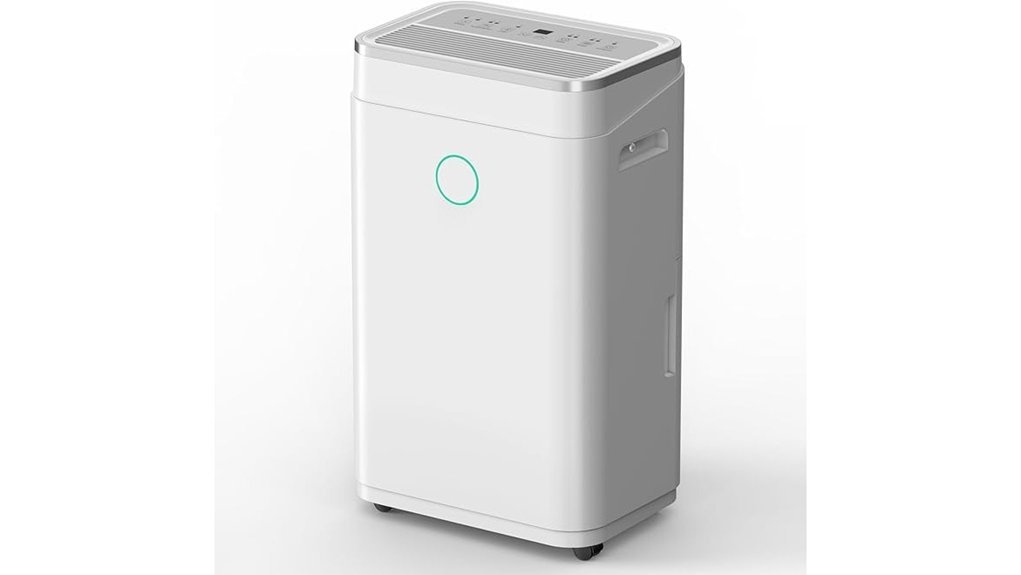
The HUMILABS model combines manual collection with continuous gravity drainage and a seller-stated 1.7-gallon water tank. Its controls include dehumidifying, drying, auto, and sleep modes, along with a 24-hour timer, two fan speeds, child lock, automatic shutoff, and auto defrost.
The listing states moisture removal of up to 50 pints per day at 95°F and 90% relative humidity. That is a hot, highly humid test condition, so this claim should not be compared as equal to a standardized 50-pint rating without confirming the test method. The current listing gives a weight of about 30.9 pounds, making it easier to lift than the Frigidaire and Amazon Basics models, although it still uses caster wheels for routine movement.
Specification caution: Some structured fields on marketplace listings can conflict with the product title or manual. Confirm the tank size, warranty terms, noise claim, and included hose on the live listing before ordering.
Why You’ll Like It: It offers useful household modes, a child lock, a larger seller-stated bucket, and a lower listed weight than the two established-brand alternatives.
Who Should Buy This: Buyers who value sleep mode, laundry-drying mode, a larger bucket, and easier lifting, and who are comfortable verifying marketplace specifications.
Who Should Avoid This: Buyers who want independently documented standardized capacity, a built-in pump, or the clearest long-term parts and service network.
Pros:
- Seller-stated 1.7-gallon bucket with an included gravity-drain hose.
- Multiple modes, two fan speeds, timer, child lock, auto shutoff, and auto defrost.
- Listed at about 30.9 pounds, lighter than the Frigidaire and Amazon Basics models.
Cons:
- The 50-pint claim is measured at 95°F and 90% RH rather than presented as a directly comparable standardized rating.
- No built-in pump for upward drainage.
- Marketplace specification fields and long-term support details require extra verification.
Factors to Consider When Choosing a 50-Pint Dehumidifier
A 50-pint label is a useful starting point, but it does not tell you everything about real-world performance. Use the checklist below to compare capacity, test conditions, drainage, temperature range, energy use, noise, tank size, controls, portability, and support before you buy.
Capacity and Test Conditions
Dehumidifier capacity is the amount of water a machine removes in 24 hours under stated test conditions. A standardized 50-pint rating is not necessarily equal to a marketplace claim of “up to 50 pints” measured in hotter, more humid air. Check the certification record, manufacturer specification sheet, or listing test conditions whenever possible.
Coverage Area and Room Conditions
Square-foot coverage is a rough marketing guide, not a promise that one portable unit will control every space of that size. Starting humidity, room temperature, ceiling height, airflow, open doors, foundation moisture, laundry activity, and outside-air leakage all affect results. A closed basement with moderate dampness is easier to manage than several separated rooms or a space with active water intrusion.
Drainage: Pump or Gravity
A gravity drain requires the hose to slope continuously downward toward a floor drain. A built-in pump can move collected water upward into a sink or out a window. Choose a pump model when no lower drain is available. For unattended use, secure the hose carefully and follow the installation instructions in the product manual.
Energy Efficiency Ratings
Look for current ENERGY STAR certification and compare the Integrated Energy Factor when the manufacturer publishes it. Also consider likely runtime. A correctly sized unit that cycles off after reaching the target humidity may use less energy than an undersized machine that runs continuously.
Noise Level Considerations
Compressor dehumidifiers produce both fan and compressor noise. Published figures often vary by fan speed and test setup. For bedrooms or offices, look for a documented low-speed noise rating and a sleep mode instead of relying only on terms such as “whisper quiet” or “ultra quiet.”
Low-Temperature Operation
Basements and garages can become cool enough for frost to form on the coils. Auto defrost helps the unit recover, but moisture removal still falls as the air gets colder. Check the manufacturer’s minimum operating temperature before using a dehumidifier in an unheated area.
Tank Size and Maintenance
A larger tank reduces emptying frequency, but it also becomes heavier when full. Washable filters can lower maintenance costs when they are easy to reach and cleaned on schedule. Check whether the bucket is comfortable to remove, whether the drain connection fits a common hose, and whether replacement parts are available.
Controls and Automation
An adjustable humidistat, auto restart, full-bucket shutoff, timer, memory function, and clear digital display are the most useful controls. Wi-Fi can help when the unit is in a basement or second property, but it does not increase the machine’s moisture-removal capacity. A separate hygrometer is useful for checking the accuracy of the built-in display.
Portability and Design
Most full-size dehumidifiers use caster wheels, but lifting them between floors can still be difficult. Compare total weight, handle position, power-cord storage, cabinet dimensions, and the route from room to room. Choose a lighter unit for frequent relocation and a heavier feature-rich model when it will stay beside a drain.
Warranty and Support
Check the written warranty, return window, customer-service contact, replacement-part availability, and whether the model has an accessible manual. Clear support and documented parts availability can be more valuable than an ambitious coverage claim from an unfamiliar seller.
Before You Buy
- Confirm whether the capacity uses standardized conditions or a seller’s maximum test environment.
- Measure the route to the drain and decide whether gravity drainage or a pump is required.
- Check the minimum operating temperature for a basement or garage.
- Compare bucket size, machine weight, noise documentation, warranty, and filter access.
- Verify voltage, outlet, hose, and clearance requirements in the manual.
- Fix plumbing leaks or water intrusion instead of relying on a dehumidifier alone.
Frequently Asked Questions
How Often Should I Empty the Dehumidifier’s Water Tank?
It depends on the bucket size, room humidity, temperature, and runtime. In a very damp space, a 50-pint-class unit may fill its bucket daily or more often. Full-bucket shutoff helps prevent overflow, while a correctly installed gravity hose or pump can reduce routine emptying.
Can I Use a Dehumidifier in Winter?
Yes, provided the room stays within the model’s approved operating-temperature range. Compressor dehumidifiers remove less moisture in cold air, and frost can form on the coils. Choose a model with auto defrost and check the manual before using it in an unheated basement or garage.
What Is the Ideal Humidity Level for Home Comfort?
A practical target for many homes is between 30% and 50% relative humidity. Many users start around 45% to 50% in a basement, then adjust for comfort, condensation, season, and the reading from a separate hygrometer.
Do Dehumidifiers Increase Energy Bills Significantly?
They add to electricity use, but the increase depends on wattage, local rates, humidity, temperature, and daily runtime. An efficient, correctly sized unit with an accurate humidistat can cycle off after reaching the target instead of running continuously.
How Noisy Are 50-Pint Dehumidifiers During Operation?
Noise varies by design and fan speed. Many compressor models are noticeable in a quiet room even when their sound is acceptable in a basement or laundry area. Compare documented low-speed ratings and consider sleep mode when the unit will operate near a bedroom or office.
Do I Need a Built-In Pump?
You need a pump only when water must travel upward to a sink, window, or elevated drain. A standard continuous-drain hose works when it can slope downward without kinks to a floor drain. Do not assume that “continuous drain” means a pump is included.
Does a 4,000- or 4,500-Square-Foot Rating Mean Whole-Home Performance?
Not necessarily. Portable dehumidifiers work best in an open or connected area with good airflow. Closed doors, multiple floors, high ceilings, air leaks, and active water intrusion can reduce effective coverage. A ducted whole-home dehumidifier may be more appropriate for several separated rooms.
Will a Dehumidifier Remove Existing Mold?
No. A dehumidifier can reduce the moisture that supports future mold growth, but it does not remove existing mold or repair the water source. Fix leaks and follow appropriate cleaning or remediation guidance for visible or extensive mold.
Conclusion
Final Recommendation
Choose the Frigidaire FHDP5033Y1 when you want the most complete drainage setup, documented 50-pint performance, Wi-Fi control, and established-brand support. Choose Amazon Basics when simple controls and gravity drainage are enough. Choose HUMILABS for its operating modes, seller-stated larger bucket, and lower listed weight, while confirming the live specifications before purchase.
Whichever model you choose, match the drainage route, operating temperature, documented capacity, bucket size, and support terms to the actual moisture conditions in your space. A portable dehumidifier can control humidity, but it should be used alongside repairs for leaks, seepage, or other ongoing water problems.