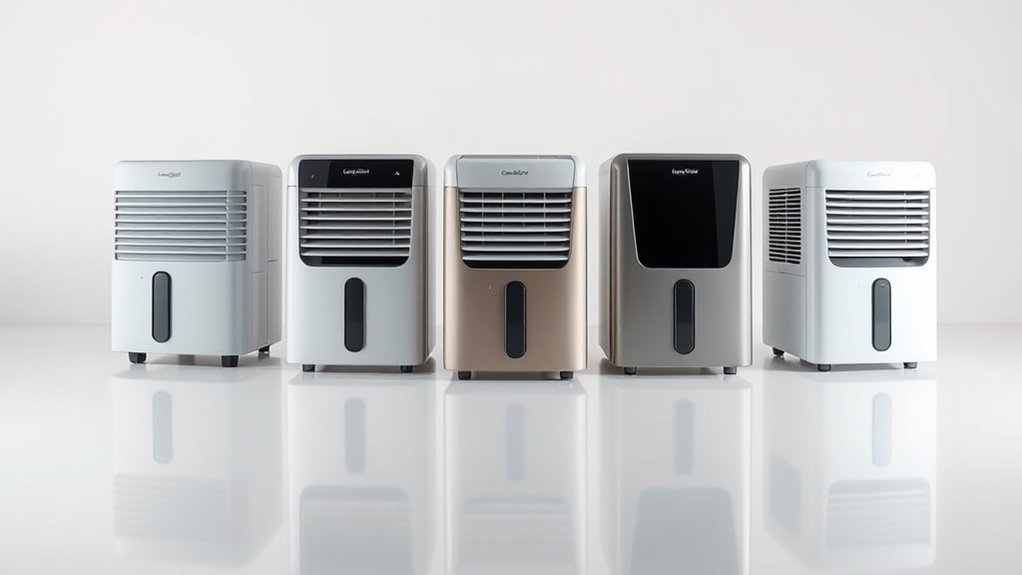
Choosing the best dehumidifier for a piano room starts with one goal: holding a stable relative humidity (RH)—typically between 40% and 50% RH—rather than simply buying the unit with the biggest coverage number. Because an acoustic piano’s wooden soundboard and action parts swell and shrink as moisture fluctuates, your top priorities should be an accurate adjustable humidistat, enough extraction capacity for your room’s actual moisture load, low operating noise, and reliable drainage. Full-size compressor models are the most dependable choice for maintaining a steady target in medium to large or persistently damp rooms, while compact thermoelectric (Peltier) units are best reserved for small, enclosed spaces with only mild seasonal humidity.
Important: Manufacturer coverage and pint-per-day figures are often measured under hot, saturated test conditions (such as 86°F–95°F and 80%–90% RH) rather than typical living-room temperatures (68°F–72°F). Always verify the humidity right beside your instrument with a separate digital hygrometer, follow your piano manufacturer’s specific care guidelines, and never aim dry exhaust airflow directly at the piano.
Quick Comparison of the Best Dehumidifiers for Piano Rooms
| Product | Best For | Type & Listed Capacity | Humidistat & Drain | Key Limitation | Amazon |
|---|---|---|---|---|---|
| Waykar 34-Pint Energy Star Dehumidifier Best Overall |
Most dedicated piano rooms needing automatic humidity control | Compressor (up to 34 pints/day max; 2,000 sq. ft.) | Adjustable humidistat; tank + drain hose | Larger and louder than mini tabletop units | Check Price on Amazon |
| AEOCKY 50-Pint Compressor Dehumidifier Best for Medium to Large Rooms |
Larger or persistently humid piano rooms | Compressor (up to 50 pints/day max; 0.8-gal tank) | Adjustable humidistat; tank + drain hose | Large footprint and relatively small 0.8-gal bucket | Check Price on Amazon |
| AEOCKY 4,500 Sq. Ft. Smart Dehumidifier Best High-Capacity Pick |
Open-plan living areas, basements, or large studios | Compressor (up to 80 pints/day max; 1.45-gal tank) | Adjustable humidistat; tank + drain hose | Oversized for standard closed piano rooms | Check Price on Amazon |
| 75 oz Compact Dehumidifier Best Compact Tank Capacity |
Small rooms with mild humidity needing fewer tank trips | Thermoelectric (75 oz / 2.2 L tank; up to 500 sq. ft. listed) | No precision humidistat; manual tank only | Light-duty moisture removal only | Check Price on Amazon |
| TABYIK 35 oz Dehumidifier Best Quiet Compact Pick |
Small, enclosed practice rooms prioritizing low noise | Thermoelectric (35 oz / 1,000 mL tank; 28 dB listed) | No humidistat; manual tank only | No target-humidity control or drain hose | Check Price on Amazon |
| Deyagoo 1500ML Dehumidifier Best Budget Compact Pick |
Small rooms with mild seasonal dampness | Thermoelectric (1,500 mL / 50.7 oz tank; up to 300 mL/day) | No humidistat; manual tank only | Modest 300 mL (~10.1 oz) daily maximum extraction | Check Price on Amazon |
| Windangel 44 oz Dehumidifier Best Controls Among Mini Units |
Small rooms needing timers and operating modes | Thermoelectric (44 oz / 1.3 L tank; up to 11.8 oz/day) | 3 modes + 4 timers; manual tank only | Sleep mode listed up to 44 dB | Check Price on Amazon |
| SANVINDER 25 oz Dehumidifier Best for Small Rooms |
Small, closed music corners wanting one-button simplicity | Thermoelectric (25 oz / 750 mL tank; up to 16 oz/day) | No humidistat; manual tank only | Small 25 oz tank and no drain hose | Check Price on Amazon |
| Eva-Dry EDV-1100 Best for Very Small Rooms |
Tiny enclosed practice booths up to 122 sq. ft. | Thermoelectric (16 oz tank; up to 16 oz/week) | No humidistat; manual tank only | Absorbs up to 16 oz per week only; not for under 50% RH | Check Price on Amazon |
How We Selected These Piano-Room Dehumidifiers
To evaluate dehumidifiers suitable for acoustic piano care, we compared humidity-target control, daily moisture extraction, drainage options, acoustic noise levels, room-size fit, portability, and ongoing maintenance against standard piano preservation guidelines from the Piano Technicians Guild (PTG) and major piano makers. Because an acoustic piano requires steady relative humidity rather than aggressive drying, compressor models with adjustable humidistats rank at the top of our list. They can remove substantial moisture during humid months and automatically cycle off once your target RH is reached.
We also included six compact thermoelectric (Peltier) models for readers with tiny, enclosed practice rooms, mild seasonal humidity, or strict noise constraints. However, thermoelectric units extract only ounces of water per day rather than pints, so we clearly note their real-world limits and strongly recommend pairing any unit with an independent digital hygrometer placed near the piano.
Waykar 34-Pint Energy Star Dehumidifier — Best Overall
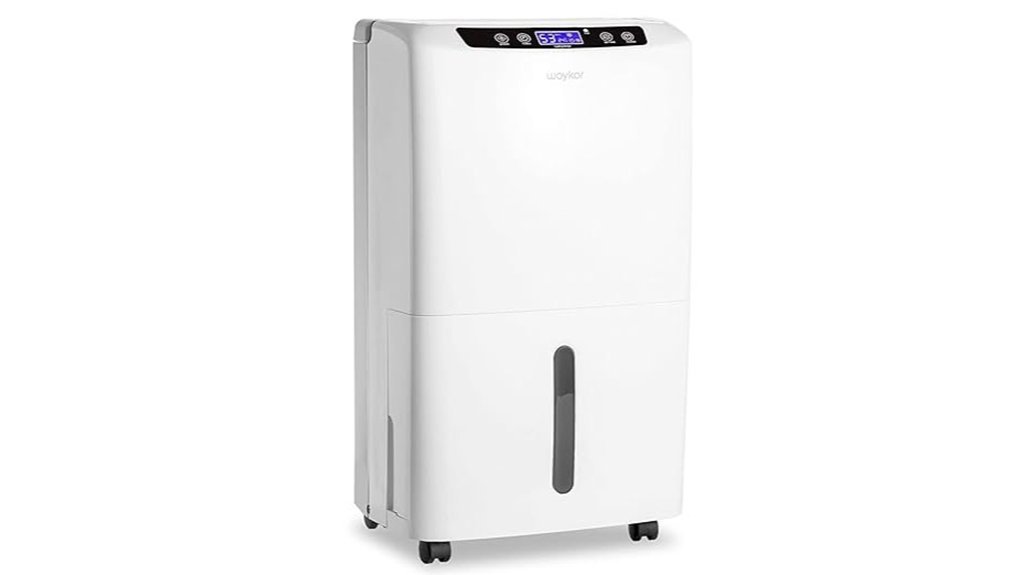
The Waykar 34-Pint Energy Star Dehumidifier is the strongest all-around match for most dedicated piano rooms because it pairs reliable compressor extraction with an adjustable digital humidistat, automatic defrost, a removable water tank, and continuous drain-hose support. While the manufacturer lists coverage up to 2,000 sq. ft. and a maximum extraction rate of 34 pints per day under hot, saturated test conditions (95°F and 90% RH), its real-world capacity at comfortable living-room temperatures (68°F–72°F) is well proportioned for keeping a small-to-medium music room steady around 45%–50% RH.
Key Specifications:
- Dehumidifier Type: Refrigerant compressor (Energy Star certified)
- Listed Extraction Capacity: Up to 34 pints per day (maximum test conditions)
- Listed Coverage Area: Up to 2,000 sq. ft.
- Humidity Control: Adjustable digital humidistat with automatic cycling
- Drainage Options: Removable manual bucket or continuous gravity drain hose
- Notable Features: Auto defrost for cooler rooms, auto shut-off, caster wheels, washable air filter
Best For: Dedicated piano rooms, living rooms, and teaching studios that need dependable compressor-based moisture control, automatic target-humidity cycling, and optional continuous drainage.
Why You’ll Like It: Unlike basic tabletop units that run non-stop without sensing room humidity, the Waykar allows you to set a specific target RH so the compressor cycles on when dampness rises and rests once the air stabilizes. That prevents both prolonged summer dampness and accidental over-drying when calibrated against a separate hygrometer placed near the piano.
Who Should Avoid It: Tiny, already-stable practice booths where a floor-standing compressor unit would take up too much floor space or be audible during quiet microphone recording.
Pros:
- Adjustable humidistat automatically cycles to hold a steady RH range around an acoustic piano.
- Includes both a removable water bucket and a drain-hose connection for continuous gravity drainage.
- Automatic defrost maintains reliable coil operation if room temperatures dip in basements or cooler seasons.
Cons:
- The internal bucket can fill quickly during peak summer humidity if a continuous drain hose is not attached.
- Compressor and fan hum are noticeable during quiet solo practice or sensitive acoustic recording.
- The 34-pint and 2,000 sq. ft. ratings reflect maximum test conditions rather than cooler indoor air.
Verdict: If you want one dependable appliance to stabilize a standard home piano room without babysitting a tiny water tray, the Waykar 34-Pint offers the best balance of capacity, automatic humidity control, and drainage flexibility.
AEOCKY 50-Pint Compressor Dehumidifier — Best for Medium to Large Rooms
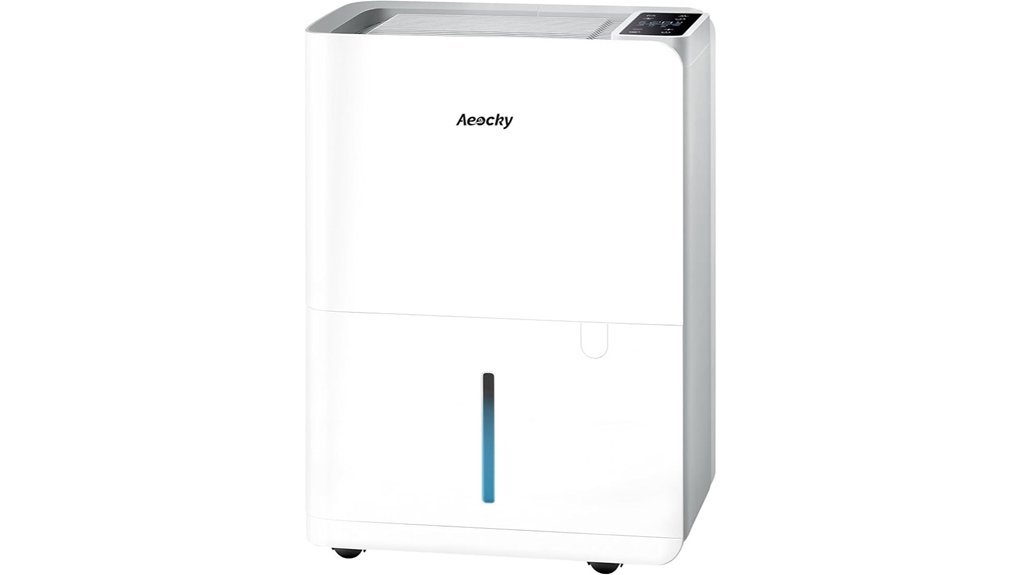
The AEOCKY BOREAS-001 is a higher-capacity compressor dehumidifier carrying a manufacturer-listed maximum of 50 pints per day, coverage up to 3,500 sq. ft., a 0.8-gallon (102 oz / 3.0 L) water tank, adjustable humidity control, and a continuous drain hose. Its extra extraction power is especially helpful when your piano sits in a larger living room, a ground-floor space in a humid climate, or a room that exchanges air with adjacent hallways.
Key Specifications:
- Dehumidifier Type: Refrigerant compressor (Model BOREAS-001)
- Listed Extraction Capacity: Up to 50 pints per day (maximum test conditions)
- Listed Coverage Area: Up to 3,500 sq. ft.
- Water Tank Capacity: 0.8 gallons (approx. 102 oz / 3.0 L)
- Humidity Control: Built-in adjustable digital humidistat
- Drainage & Controls: Manual tank or included drain hose, programmable timer, child lock
Best For: Medium-to-large piano rooms, humid ground-floor living areas, or spaces where smaller units cannot bring relative humidity down into the 40%–50% RH target zone.
Why You’ll Like It: The built-in humidistat reduces constant manual adjustments, while the higher compressor capacity pulls excess moisture out of larger rooms more quickly after rainy weather. Because the 0.8-gallon internal bucket is relatively compact for a 50-pint class unit, connecting the included gravity drain hose makes long humid seasons much more convenient.
Who Should Avoid It: Small, closed bedrooms or compact practice rooms where a 50-pint compressor would short-cycle, occupy unnecessary floor space, or generate more airflow noise than needed.
Pros:
- Strong compressor-based extraction handles persistent room humidity that overwhelms mini Peltier units.
- Adjustable humidistat, programmable timer, child lock, and drain-hose support add everyday convenience.
- Extra capacity provides headroom for rooms with high ceilings or open doorways.
Cons:
- The 0.8-gallon tank fills rapidly in damp weather if you cannot route the continuous drain hose to a floor drain.
- Larger physical footprint than compact music rooms typically require.
- Manufacturer noise and square-footage figures represent best-case operating conditions.
Verdict: For piano owners whose instrument sits in a spacious family room or a humid climate where a 30-pint unit struggles to keep up, the AEOCKY 50-Pint delivers the extra muscle needed to hold a stable humidity reading.
AEOCKY 4,500 Sq. Ft. Smart Dehumidifier with Drain Hose — Best High-Capacity Pick
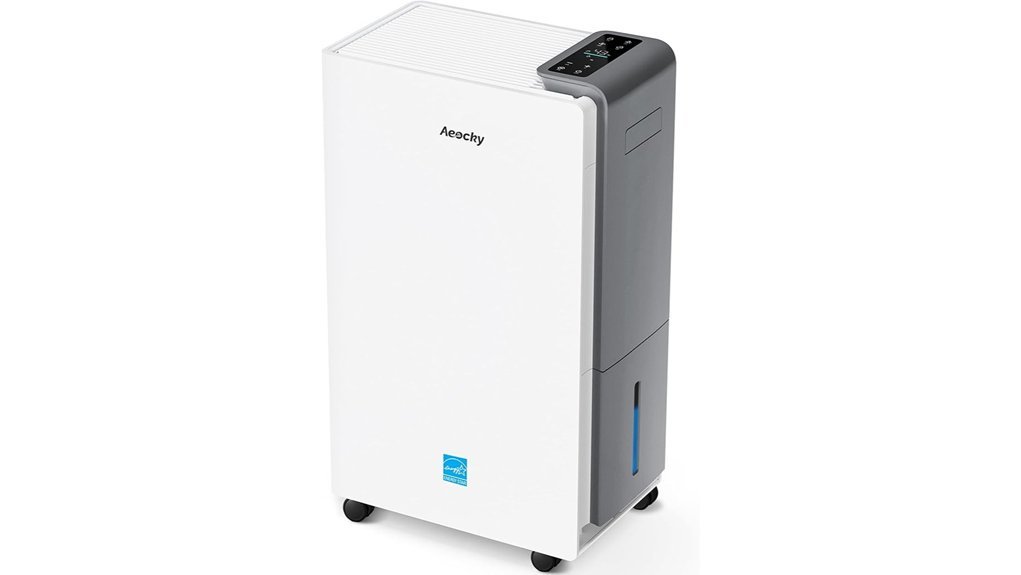
The AEOCKY RHEA-001 is the highest-capacity dehumidifier in this roundup, featuring intelligent humidity-sensing controls, a larger 1.45-gallon (185 oz / 5.5 L) water tank, continuous drain-hose support, and a manufacturer-listed maximum of up to 80 pints per day under extreme test conditions. While that output is far beyond what an enclosed bedroom or study needs, it is a practical solution when a grand or upright piano sits in a wide-open floor plan, a finished basement studio, or a large teaching hall.
Key Specifications:
- Dehumidifier Type: Heavy-duty refrigerant compressor (Model RHEA-001)
- Listed Extraction Capacity: Up to 80 pints per day (maximum test conditions)
- Listed Coverage Area: Up to 4,500 sq. ft.
- Water Tank Capacity: 1.45 gallons (approx. 185 oz / 5.5 L)
- Humidity Control: Intelligent digital humidistat with auto-sensing control
- Drainage & Controls: 1.45-gallon bucket or continuous drain hose, timer, child lock
Best For: Very large, open-concept living areas, basement music studios, or persistently damp coastal and southern homes where the piano shares air with a massive space.
Why You’ll Like It: Its high moisture-removal ceiling and generous 1.45-gallon bucket mean fewer tank-emptying interruptions when a floor drain is unavailable. For safe piano care, set the humidistat conservatively around 45%–50% RH, place the unit well away from the instrument, and confirm the reading beside the piano with an independent hygrometer so the room is never dried too rapidly.
Who Should Avoid It: Small or medium closed rooms, mildly humid climates, or buyers seeking whisper-quiet operation right next to the piano bench.
Pros:
- High moisture-removal capacity handles open-plan homes and damp basement studios where smaller units run nonstop.
- Generous 1.45-gallon water tank reduces manual emptying frequency compared with smaller buckets.
- Adjustable humidistat, timer, child lock, and continuous drain hose support automated long-term operation.
Cons:
- Too bulky and powerful for a standard enclosed music room.
- High-capacity airflow and compressor operation are audible during quiet practice or recording sessions.
- Seller energy-savings projections depend heavily on local climate, runtime, and utility rates and are not guaranteed.
Verdict: Only choose the AEOCKY 4,500 Sq. Ft. model if your piano lives in a large open-concept floor plan or a damp basement—where its heavy-duty compressor and 1.45-gallon tank can stabilize an expansive volume of air.
75 oz Compact Dehumidifier for Home — Best Compact Tank Capacity
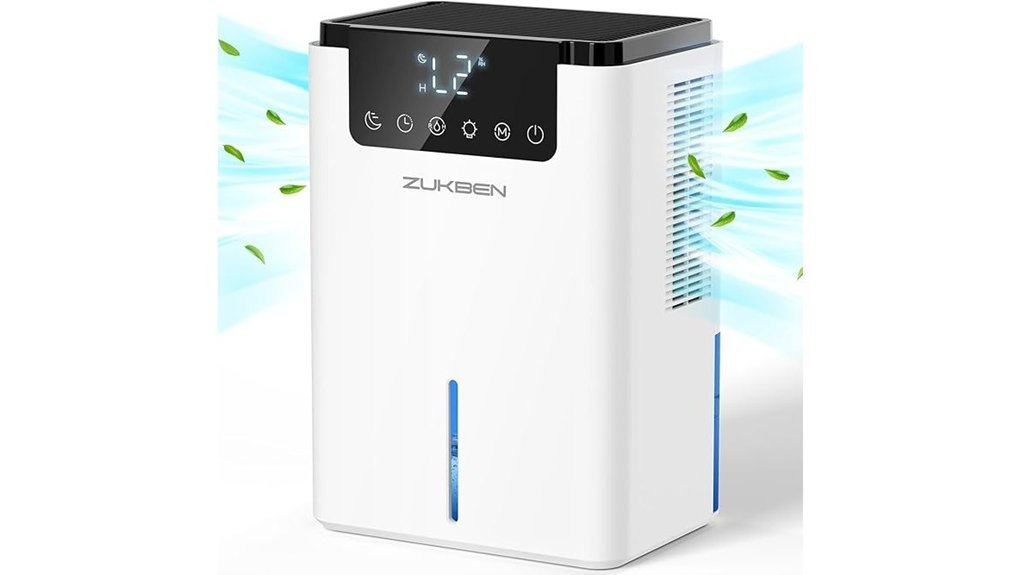
This compact thermoelectric dehumidifier pairs a 75 oz (approx. 2,200 mL / 0.58-gallon) water reservoir with a quiet sleep mode, timer settings, automatic full-tank shut-off, and optional ambient LED lighting. Although the seller listing promotes coverage up to 500 sq. ft., any Peltier-style mini unit is best understood as a light-duty maintenance appliance for a small, closed room with mild humidity—not a replacement for a compressor dehumidifier in a damp climate.
Key Specifications:
- Dehumidifier Type: Compact thermoelectric (Peltier)
- Water Tank Capacity: 75 oz (approx. 2,200 mL)
- Listed Coverage Area: Up to 500 sq. ft. (best for small enclosed rooms under 150–200 sq. ft.)
- Humidity Control: Manual/timer operation (no precision target humidistat)
- Drainage Options: Removable manual reservoir with automatic shut-off
- Notable Features: Sleep mode, timer settings, optional decorative LED light
Best For: Small, enclosed piano rooms with mild seasonal dampness where low fan noise and a larger tabletop reservoir matter more than rapid moisture extraction.
Why You’ll Like It: The 75 oz reservoir is roughly double the size of many competing mini dehumidifiers, reducing how often you have to empty the tray. Its compact footprint also makes it easy to place on a sturdy shelf or corner table several feet away from an upright piano.
Who Should Avoid It: Basements, open living rooms, or any space where relative humidity stays consistently above 55%–60% RH despite air conditioning.
Pros:
- Generous 75 oz (2.2 L) water tank requires less frequent emptying than smaller 16–35 oz tabletop units.
- Sleep mode, timer controls, and automatic full-tank shut-off simplify daily use.
- Compact footprint fits easily into tight practice rooms or bedroom music corners.
Cons:
- Thermoelectric cooling removes only a fraction of the moisture of a compressor dehumidifier.
- Lacks a built-in target humidistat and continuous drain hose.
- The 500 sq. ft. advertised coverage overstates practical humidity reduction in real-world rooms.
Verdict: If you only need gentle, low-noise moisture reduction in a small closed room and want the largest water tank among our compact picks, this 75 oz thermoelectric model minimizes daily tank maintenance.
TABYIK 35 oz Dehumidifier — Best Quiet Compact Pick
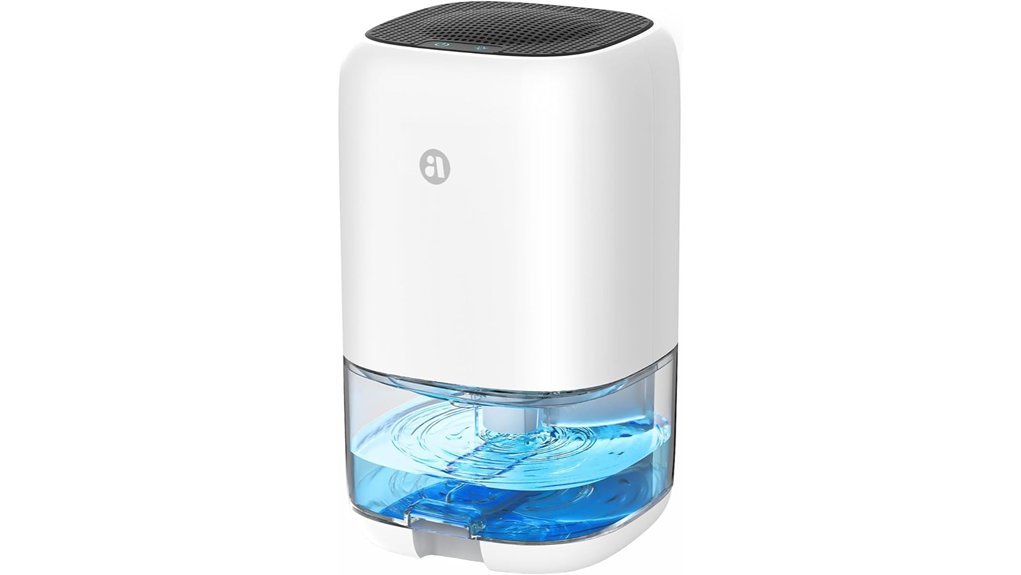
The TABYIK 35 oz (approx. 1,000 mL) unit is a compact thermoelectric dehumidifier featuring a low manufacturer-listed 28 dB operating noise level, automatic full-tank shut-off with an indicator light, a transparent water tank, and listed coverage up to 280 sq. ft. Like other Peltier models, its maximum daily collection claim is measured in warm, humid test conditions (86°F and 80% RH), so expect gentler extraction in cooler, air-conditioned rooms.
Key Specifications:
- Dehumidifier Type: Compact thermoelectric (Peltier)
- Water Tank Capacity: 35 oz (approx. 1,000 mL)
- Listed Extraction Rate: Up to 16 oz (450 mL) per day at 86°F and 80% RH
- Listed Coverage Area: Up to 280 sq. ft. (best for small closed rooms)
- Listed Noise Level: Approx. 28 dB
- Notable Features: Built-in carry handle, transparent water window, auto shut-off, optional mood light
Best For: Small, enclosed piano practice rooms or studios where ultra-quiet operation and easy portability are top priorities.
Why You’ll Like It: With a listed 28 dB sound level, the TABYIK 35 oz is unobtrusive during quiet piano practice or lesson sessions. Its transparent reservoir lets you check water accumulation at a glance, though you must pair it with a separate digital hygrometer because it lacks a built-in humidistat.
Who Should Avoid It: Rooms with persistent relative humidity above 55%–60% RH, open doors, high ceilings, or damp basement walls.
Pros:
- Low 28 dB listed noise rating avoids distracting hum during practice or teaching.
- Compact, lightweight body with a recessed handle is easy to move and position safely away from the piano.
- Automatic shut-off and clear water tank make routine monitoring simple.
Cons:
- Light-duty extraction cannot correct moderate-to-severe room dampness.
- No adjustable target humidistat or continuous drain hose.
- Moisture collection drops significantly when room temperatures fall below 65°F.
Verdict: For a small, well-sealed practice room that only creeps slightly above 50% RH in humid weather, the TABYIK 35 oz is a quiet, unobtrusive helper that will not disrupt practice sessions.
Deyagoo 1500ML Small Quiet Dehumidifier — Best Budget Compact Pick
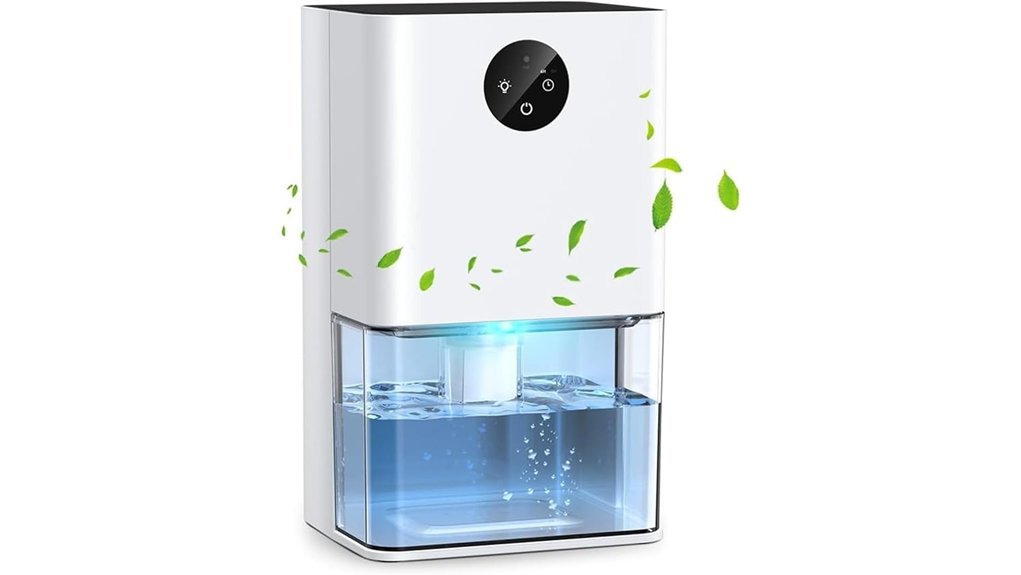
The Deyagoo DY501 uses thermoelectric cooling paired with a 1,500 mL (approx. 50.7 oz) transparent water tank. The manufacturer states a maximum collection rate of up to 300 mL (approx. 10.1 oz) per day at 86°F and 80% RH, listed coverage up to 300 sq. ft., and quiet operation around 30 dB. Because those figures reflect warm, saturated test air, always use a separate hygrometer near your piano to verify whether the unit is holding the room within a safe 40%–50% RH window.
Key Specifications:
- Dehumidifier Type: Compact thermoelectric (Model DY501)
- Water Tank Capacity: 1,500 mL (approx. 50.7 oz)
- Listed Extraction Rate: Up to 300 mL (10.1 oz) per day at 86°F and 80% RH
- Listed Coverage Area: Up to 300 sq. ft.
- Listed Noise Level: Approx. 30 dB
- Notable Features: Visible water tank, automatic full-tank shut-off, low energy draw
Best For: Budget-conscious piano owners with a small, closed room or apartment music corner experiencing mild seasonal dampness.
Why You’ll Like It: Its 1,500 mL (50.7 oz) tank holds several days of condensates at its modest 300 mL daily extraction rate, meaning you will not have to empty it every few hours. Its quiet ~30 dB operation and tiny footprint also suit bedrooms that double as piano practice spaces.
Who Should Avoid It: Humid coastal or southern climates, large or open rooms, or buyers who need automatic target-humidity shut-off.
Pros:
- Affordable, small-footprint unit with a generous 1,500 mL (50.7 oz) tank for its daily output.
- Quiet ~30 dB listed operation blends into bedrooms and small practice rooms.
- Automatic shut-off stops operation when the reservoir is full to prevent spills.
Cons:
- Maximum extraction of 300 mL (~10.1 oz) per day is very modest compared with compressor units.
- Lacks a built-in humidistat and continuous drain-hose port.
- May run continuously without lowering room RH if doors stay open or outdoor humidity is high.
Verdict: As a low-cost maintenance dehumidifier for a small, closed room with only slight humidity creep, the Deyagoo 1500ML is quiet and easy to manage—just verify its real impact with a hygrometer.
Windangel 44 oz Portable Dehumidifier — Best Controls Among Mini Units
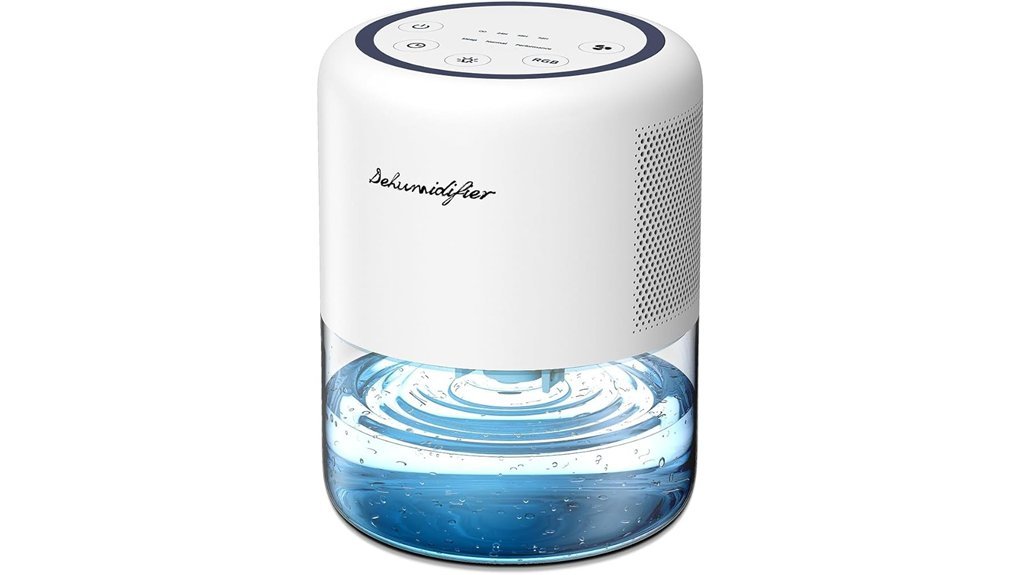
The Windangel 44 oz (approx. 1,300 mL) portable dehumidifier stands out from one-button tabletop units by offering three operating modes, four timer settings, optional mood lighting, and a manufacturer-listed maximum extraction rate of 11.8 oz (approx. 350 mL) per day at 86°F and 80% RH. It is marketed for small spaces up to 215 sq. ft. and carries a listed sleep-mode noise ceiling of up to 44 dB.
Key Specifications:
- Dehumidifier Type: Compact thermoelectric (Peltier)
- Water Tank Capacity: 44 oz (approx. 1,300 mL)
- Listed Extraction Rate: Up to 11.8 oz (350 mL) per day at 86°F and 80% RH
- Listed Coverage Area: Up to 215 sq. ft.
- Controls: 3 operating modes and 4 shut-off timer settings
- Listed Noise Level: Up to 44 dB in sleep mode
Best For: Small enclosed rooms where the owner wants built-in shut-off timers and multiple speed modes rather than a simple on/off switch.
Why You’ll Like It: The four timer presets allow you to run the dehumidifier for a set block of hours—such as overnight or before practice—and have it shut off automatically before you sit down to play or record. Still, rely on a separate digital hygrometer near the piano rather than assuming the built-in modes will hold an exact RH percentage on their own.
Who Should Avoid It: Recording spaces that require near-silent operation while the unit is running (since 44 dB is louder than several 28–30 dB rivals) or rooms with heavy moisture loads.
Pros:
- Three operating modes and four timer settings provide more scheduling control than basic mini units.
- 44 oz water tank and automatic full-tank shut-off help prevent accidental overflow.
- Compact chassis sits neatly on a sturdy shelf or side table away from the piano.
Cons:
- Listed sleep-mode sound level of up to 44 dB is louder than our quietest compact picks.
- No continuous drain hose and no precision digital humidistat.
- The 11.8 oz daily extraction rating applies only under warm, very humid test conditions.
Verdict: Choose the Windangel 44 oz if you want a compact tabletop unit with built-in timers so you can schedule moisture removal outside of your daily practice hours.
SANVINDER 25 oz Dehumidifier — Best for Small Rooms
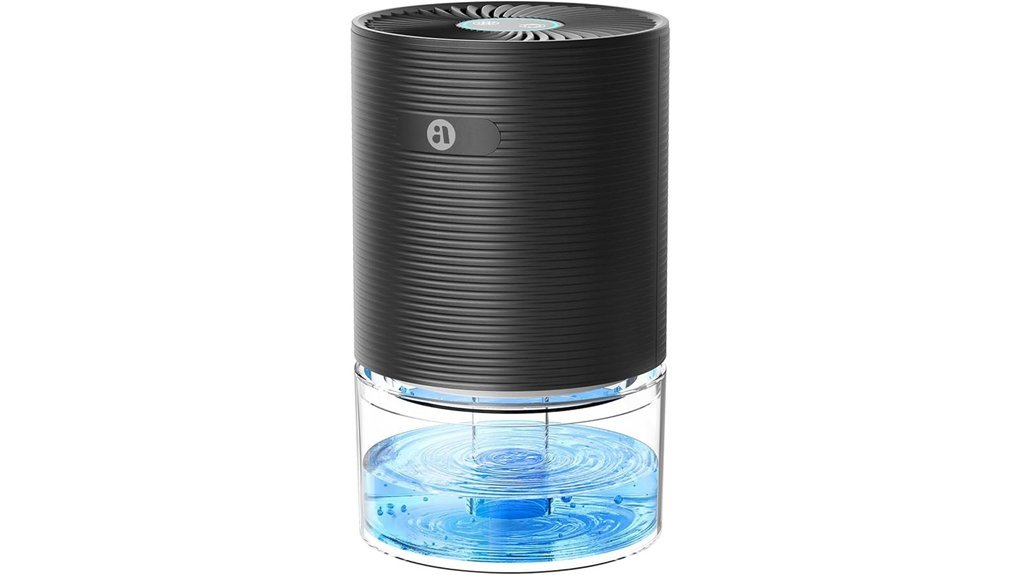
The SANVINDER 25 oz (approx. 750 mL) is an ultra-simple thermoelectric dehumidifier marketed for small areas up to 285 sq. ft. (with some seller graphics claiming up to 320 sq. ft.). The manufacturer lists up to 16 oz (approx. 470 mL) of water collection per day at 86°F and 80% RH, paired with automatic full-tank shut-off and quiet one-speed operation. As with all mini Peltier designs, real-world extraction drops in cooler rooms and works best in enclosed spaces well under 150 sq. ft.
Key Specifications:
- Dehumidifier Type: Compact thermoelectric (Peltier)
- Water Tank Capacity: 25 oz (approx. 750 mL)
- Listed Extraction Rate: Up to 16 oz (470 mL) per day at 86°F and 80% RH
- Listed Coverage Area: 285 sq. ft. (seller listing also mentions 320 sq. ft.; best for tiny closed rooms)
- Controls: Simple one-button operation with auto shut-off indicator
Best For: Small, closed practice rooms or upright-piano nooks where simple one-button operation and a tiny footprint are preferred.
Why You’ll Like It: There are no complicated menus—just plug it in, press the power button, and let it pull light moisture from a small closed room. Always judge its effectiveness by checking a digital hygrometer beside your piano rather than simply looking at water in the tray.
Who Should Avoid It: Medium or large rooms, leaky spaces with open doors, high humidity climates, or users who want automatic humidistat cycling.
Pros:
- Tiny footprint and effortless one-button operation.
- Automatic shut-off with red indicator light prevents tank overflow.
- Low electrical power draw (~22.5W) compared with full-size compressor units.
Cons:
- The small 25 oz reservoir requires frequent emptying during humid weeks.
- No continuous drain hose and no adjustable humidistat.
- Practical coverage is limited to very small enclosed spaces, and the seller listing shows conflicting figures (285 sq. ft. vs. 320 sq. ft.).
Verdict: The SANVINDER 25 oz is a straightforward, no-frills mini unit for a tiny enclosed practice room with mild dampness, provided you don’t mind emptying a 25 oz tray regularly.
Eva-Dry EDV-1100 Whisper-Quiet Dehumidifier — Best for Very Small Rooms
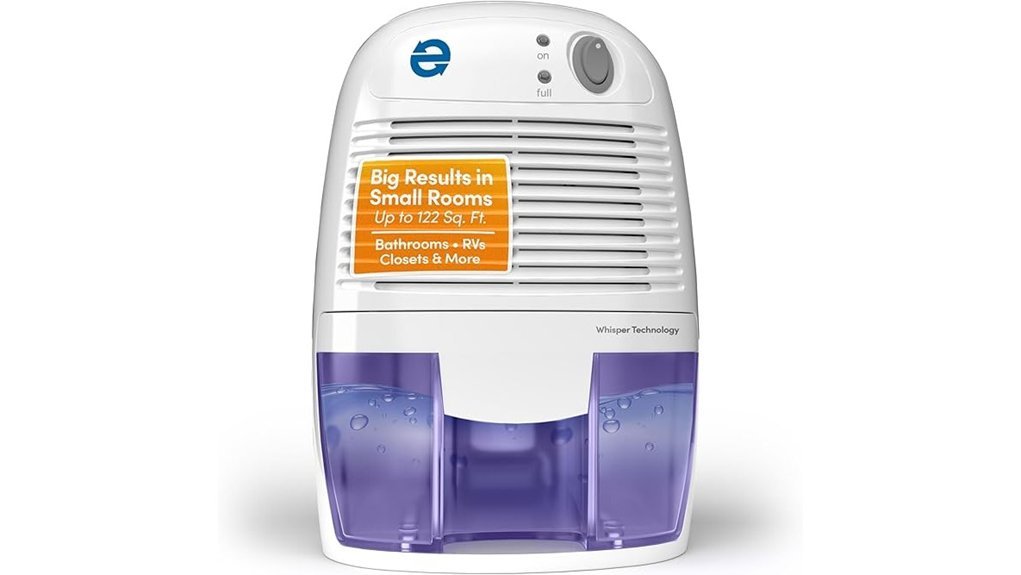
The Eva-Dry EDV-1100 is a petite thermoelectric dehumidifier equipped with a 16 oz (approx. 473 mL) reservoir, automatic full-tank shut-off, automatic restart after a power outage, and a listed 33 dB sound level. The manufacturer clearly specifies that it absorbs up to 16 oz of moisture per week (roughly 2 to 2.3 oz per day) when operated continuously in warm, humid conditions across spaces up to 1,100 cubic feet (about 122 sq. ft. with 9-foot ceilings).
Key Specifications:
- Dehumidifier Type: Petite thermoelectric (Peltier)
- Water Tank Capacity: 16 oz (approx. 473 mL)
- Listed Extraction Rate: Up to 16 oz per week (~2.3 oz/day) in warm, humid conditions
- Listed Coverage Area: Up to 122 sq. ft. (~1,100 cu. ft.)
- Listed Noise Level: Approx. 33 dB
- Operating Limits: Not designed for temperatures below 50°F or relative humidity below 50% RH
Best For: Very small, enclosed practice booths or compact music rooms up to the manufacturer-listed 122 sq. ft. that only need gentle, gradual moisture reduction.
Why You’ll Like It: Eva-Dry provides transparent, realistic operating limits rather than inflated coverage numbers, and the unit automatically restarts after a brief power interruption. Because it stops pulling significant moisture once relative humidity drops near 50% RH, it is also very unlikely to over-dry a tiny enclosed booth.
Who Should Avoid It: Any room larger than 122 sq. ft., unheated spaces below 50°F, or rooms with persistent dampness that require several pints of water removal per day.
Pros:
- Ultra-compact footprint and low 33 dB listed noise level fit tiny practice booths.
- Auto shut-off and auto power-restart simplify unattended operation.
- Transparent manufacturer specs make it easy to judge whether your space fits its 122 sq. ft. ceiling.
Cons:
- Very light moisture removal—up to 16 oz per week (~2.3 oz per day) maximum.
- No continuous drain hose and no digital humidistat display.
- Ineffective below 50°F or when relative humidity is already below 50% RH.
Verdict: Only pick the Eva-Dry EDV-1100 for a tiny enclosed practice booth (under 122 sq. ft.) with mild humidity where a larger dehumidifier simply will not fit.
Factors to Consider When Choosing a Dehumidifier for a Piano Room
Why Stable Humidity (40%–50% RH) Matters More Than a Single Number
An acoustic piano contains thousands of precision wood and felt components—most notably the spruce soundboard, hardwood bridges, pinblock, and key action. Because wood is hygroscopic, it absorbs moisture from damp air and releases moisture into dry air:
- When humidity stays too high (above 60% RH): The wooden soundboard swells and pushes upward against the strings (increasing “crown”), which drives the piano’s pitch noticeably sharp. Action felts and wooden bushings also swell, causing sluggish or sticking keys, while steel strings and tuning pins risk surface rust.
- When humidity drops too low (below 35% RH): The soundboard shrinks and loses crown, causing pitch to drop flat, glue joints to weaken, tuning pins to loosen in the pinblock, and cracks to form in the soundboard.
The Piano Technicians Guild (PTG) and leading makers such as Steinway & Sons, Yamaha, and Kawai emphasize avoiding prolonged dampness, severe dryness, and rapid seasonal swings. Most piano technicians recommend holding the room steady between 40% and 50% RH (or up to 55% RH in humid summer climates if maintained consistently) at a stable temperature of 65°F–72°F (18°C–22°C). Place an accurate digital hygrometer near the piano—not on top of the dehumidifier—and aim for the middle of your maker’s recommended range rather than forcing the room as dry as possible.
Compressor vs. Thermoelectric: Choose a Real Humidistat When Possible
Not all dehumidifiers work the same way. Full-size compressor (refrigerant) models draw air across cold evaporator coils and use a built-in humidistat to cycle on and off around your chosen RH target. By contrast, compact thermoelectric (Peltier) models use a small solid-state cooling plate, remove only ounces of water per day, and typically run continuously until switched off or until the tank fills.
| Feature | Compressor Dehumidifier | Thermoelectric (Peltier) Mini Unit |
|---|---|---|
| Typical Daily Extraction | 20 to 80+ pints per day (high capacity) | 2 to 16 oz per day (light maintenance only) |
| Built-In Target Humidistat | Yes — cycles on and off automatically | Rarely — usually runs continuously until full |
| Continuous Drain Hose | Standard on most models | Usually none (manual tank emptying only) |
| Operating Sound Level | Moderate (~45–52 dB fan and compressor hum) | Quiet (~28–44 dB small fan only) |
| Best Piano-Room Fit | Dedicated music rooms, living rooms, basements, humid climates | Tiny closed practice rooms with mild seasonal dampness |
Match Capacity to the Real Moisture Load (Understanding Pint Ratings)
Square-foot coverage and pint ratings on product listings require careful reading. Current U.S. Department of Energy (DOE) standards test dehumidifiers at 65°F and 60% RH, whereas many online listings advertise “maximum” extraction measured at 86°F–95°F and 80%–90% RH. In a comfortable 70°F piano room at 50% RH, any dehumidifier will extract significantly less water than its maximum-condition label. Factor in ceiling height, open doorways, basement concrete walls, and outdoor humidity: if your room stays above 55% RH for hours, choose a compressor model like the Waykar 34-Pint or AEOCKY 50-Pint rather than a tabletop unit.
Plan the Drainage Before You Buy
Continuous drainage is a major advantage during humid summer months because it prevents the dehumidifier from shutting off when the bucket fills—which would allow room humidity to spike back up around your piano. Confirm that the included gravity hose can run smoothly downhill to a floor drain without upward loops; if you need to route water upward into a utility sink, pair the unit with an external condensate pump. If you rely on manual emptying, pick a tank capacity you can carry comfortably without splashing near the instrument.
Consider Practice and Recording Noise
Decibel ratings tell only part of the story—low-frequency compressor vibration, fan speed, hard wood or tile flooring, and live room acoustics all influence what you hear at the piano bench. Place a compressor dehumidifier on a level surface (or a thin rubber anti-vibration mat), use low fan speed during practice, or let it bring the room to target RH before recording sessions.
Place It Safely Around the Piano
Proper placement protects both your piano’s finish and its internal wood structure:
- Keep at least 6 to 10 feet of distance: Never aim warm, dry exhaust air directly at the piano’s soundboard, rim, keybed, or pedals.
- Avoid spill hazards: Never set a compact tabletop dehumidifier on top of an upright piano or grand lid where a tank spill or condensation drip could ruin the veneer, action, or strings.
- Maintain airflow clearance: Leave 8 to 12 inches of open space around the unit’s intake filter and exhaust vents as directed by the manufacturer.
Prepare for Both Humid and Dry Seasons (and Consider In-Piano Systems)
A dehumidifier only removes moisture. In heated winter rooms or arid climates, indoor relative humidity often plunges below 30% RH, meaning your piano room may need a humidifier during winter and a dehumidifier during summer. Keep your digital hygrometer active year-round and switch off the dehumidifier once the damp season ends. If your piano sits in a huge open room where whole-room humidity control is impractical, ask a Registered Piano Technician (RPT) whether an internal system—such as a Dampp-Chaser Piano Life Saver System installed inside the piano—should complement or replace room appliances.
Maintenance and Cleaning
Empty and rinse the water bucket every few days with mild soap and warm water to prevent mold or biofilm buildup, clean the washable intake air filter every two to four weeks, and inspect the gravity drain hose periodically for kinks or algae blockages. Always unplug the dehumidifier before cleaning. A clogged intake filter restricts airflow, makes the compressor work harder, increases room noise, and reduces moisture removal.
- Measure your room’s square footage, ceiling height, and whether doors stay open to the rest of the house.
- Place a calibrated digital hygrometer near the piano and log RH readings morning and evening for several days.
- Check whether you have a floor drain for a gravity hose or will need to empty the bucket manually.
- Verify the lowest room temperature during humid months (thermoelectric units lose efficiency below 60°F–65°F).
- Confirm a stable floor spot at least 6–10 feet away from the piano where dry exhaust will not blow on the instrument.
Frequently Asked Questions
What Humidity Level Is Best for a Piano Room?
Most piano manufacturers and Registered Piano Technicians recommend maintaining a stable relative humidity between 40% and 50% RH (or within a steady 40%–55% RH band) at a room temperature of roughly 65°F to 72°F (18°C–22°C). Consistency is critical: avoiding rapid day-to-day or seasonal swings protects the wooden soundboard, pinblock, and action far better than chasing an overly dry number.
Can a Dehumidifier Damage a Piano?
Yes, a dehumidifier can damage an acoustic piano if it over-dries the room below 35%–40% RH or blows warm, dry exhaust air directly onto the instrument. Always place the unit at least 6 to 10 feet away from the piano, set a moderate target (such as 45% or 50% RH), and verify the reading near the piano with an independent digital hygrometer.
How Often Should a Dehumidifier Run in a Piano Room?
Run a dehumidifier based on measured relative humidity rather than a fixed daily timer. A compressor model with a built-in humidistat (such as the Waykar 34-Pint or AEOCKY 50-Pint) will automatically cycle on when humidity rises and shut off once your target RH is reached. Basic thermoelectric mini units lack humidistats and require manual monitoring so they neither fall behind on damp days nor run unnecessarily when the air is already dry.
Is a Small Thermoelectric Dehumidifier Enough for a Piano Room?
A small thermoelectric (Peltier) dehumidifier is only enough for a compact, well-sealed room with mild humidity that sits just a few percentage points above 50% RH. Because mini units extract ounces of water per day rather than pints, they cannot control open living rooms, basements, or humid summer climates. If your hygrometer does not drop into the 40%–50% RH range within a few days, upgrade to a compressor dehumidifier.
Where Should I Place the Dehumidifier in a Piano Room?
Place the dehumidifier on a level floor surface at least 6 to 10 feet away from the piano, with 8 to 12 inches of clearance around its air vents and its exhaust angled away from the instrument. Never place a water-filled dehumidifier on top of a piano, and keep the piano itself away from exterior windows, heating vents, and direct sunlight.
Do I Still Need a Separate Hygrometer if My Dehumidifier Has a Digital Display?
Yes. A dehumidifier’s built-in sensor only measures air right at the appliance’s intake grille, which often differs by 5% to 10% RH from the air across the room. Placing a reliable standalone digital hygrometer near the piano (at keybed height, out of direct drafts) shows you the true microenvironment your instrument experiences.
What If the Piano Room Becomes Too Dry in Winter?
Turn off and unplug the dehumidifier as soon as indoor humidity drops into the low 40% RH range during dry or heated winter weather. If indoor humidity falls below 35%–40% RH, use a room humidifier or consult a qualified piano technician about installing an internal humidity-control system (such as a Dampp-Chaser Piano Life Saver System) that manages both humidification and dehumidification directly inside the piano.
Final Recommendation
Best choice for most piano rooms: The Waykar 34-Pint Energy Star Dehumidifier delivers the ideal combination of automatic humidistat cycling, reliable compressor moisture extraction, and continuous drain-hose support for standard music rooms.
For larger or persistently damp spaces: Step up to the AEOCKY 50-Pint Compressor Dehumidifier for spacious rooms or humid climates, and reserve the high-capacity AEOCKY 4,500 Sq. Ft. (80-Pint) model for open-plan homes or basement studios.
For small, mildly humid rooms: The TABYIK 35 oz, Deyagoo 1500ML, and 75 oz Compact Dehumidifier offer quiet, space-saving operation for tiny enclosed rooms—just verify their effect with an independent digital hygrometer beside your piano and step up to a compressor model if relative humidity does not hold steady between 40% and 50% RH.
Ultimately, the best dehumidifier for a piano room is the one that maintains a steady 40%–50% relative humidity level without blowing dry air on your instrument, disrupting practice, or overflowing its tank. Measure your room’s humidity first, size your dehumidifier to the real moisture load, and adjust your setup as the seasons change so your piano stays in tune and structurally protected year-round.