Affiliate Disclosure: As an Amazon Associate, we may earn from qualifying purchases at no extra cost to you.
Updated August 2026
The best dehumidifier for a small safe depends on the safe’s usable internal dimensions, whether it has a power pass-through, and how much moisture enters from the surrounding room. For most compact safes, the Eva-Dry E-333 offers the simplest balance of cordless operation, renewable silica gel, and an easy-to-read moisture indicator. The Hornady Rapid Dry Stone and Wisesorb 40-gram canisters fit tighter spaces, while the MAXSafes 12-inch rod provides continuous protection when a safe has electrical access.
Quick Verdict
Best overall: Eva-Dry E-333 for convenient cordless use and wall-outlet regeneration.
Best for a tiny safe or lockbox: Hornady Rapid Dry Stone.
Best for narrow compartments: Wisesorb 40-gram silica-gel canisters.
Best continuous option: MAXSafes 12-inch electric rod for a safe with a suitable power pass-through.
Best flexible option: DryTote or Zarpax when a soft pack is easier to position than a rigid housing.
How these products were selected:
This is an editorial comparison based on product type, usable size, regeneration method, power requirements, moisture indicator, maintenance needs, and suitability for enclosed safes. It does not claim hands-on testing. Manufacturer coverage figures are estimates and are not directly comparable across brands or testing conditions.
Quick Comparison of Small Safe Dehumidifiers
| Pick | Type | Best Fit | Renewal or Power | Main Limitation | Details |
|---|---|---|---|---|---|
| Best Overall Eva-Dry Wireless Mini Dehumidifier E-333 |
Renewable silica-gel unit | Small enclosed safes, cabinets, and storage boxes | Cordless during use; wall-outlet regeneration | Housing may be too large for a shallow lockbox | Check on Amazon |
| Best for Tiny Safes Hornady Rapid Dry Rechargeable Dehumidifier Stone |
Reusable desiccant stone | Handgun safes, document boxes, cases, and lockboxes | Heat regeneration outside the safe | Small capacity may require frequent renewal in damp rooms | Check on Amazon |
| Best Compact Canisters Wisesorb 40-Gram Silica Gel Canisters |
Aluminum silica-gel canisters | Narrow shelves, drawers, jewelry safes, and divided compartments | Oven regeneration | Several canisters may be needed in a larger enclosure | Check on Amazon |
| Best Continuous Electric Option MAXSafes 12-Inch Electric Dehumidifier Rod |
Seven-watt heated rod | Small gun safes with power access and mounting clearance | Continuous plug-in power | Does not absorb or collect water | Check on Amazon |
| Best Swappable System Afloia Rechargeable Cordless Mini Dehumidifier |
Silica-gel sticks with regeneration base | Safes with enough height for one removable stick | Cordless sticks; powered heating base | Sticks are taller and wider than small tins or stones | Check on Amazon |
| Best Wall-Plug Renewable Unit Hornady Rechargeable Gun Safe Dehumidifier 95900 |
Renewable silica-gel housing | Small-to-medium gun safes and cabinets | Cordless during use; 110-volt regeneration | Needs enough room for its six-inch housing | Check on Amazon |
| Best for Irregular Layouts Zarpax Rechargeable Gun Safe Dehumidifier Bags |
Reusable flexible desiccant bags | Safes, cases, and cabinets with awkward open spaces | Microwave regeneration; slower alternative drying methods vary | Selected Amazon variation and pack quantity must be checked | Check on Amazon |
| Best for Documents and Electronics DryTote 100-Gram Rechargeable Desiccant Pack |
Reusable indicating desiccant pack | Document safes, electronics storage, cases, and totes | Microwave or low-oven regeneration according to instructions | A gallon rating does not state how much water it absorbs | Check on Amazon |
Eva-Dry Wireless Mini Dehumidifier E-333
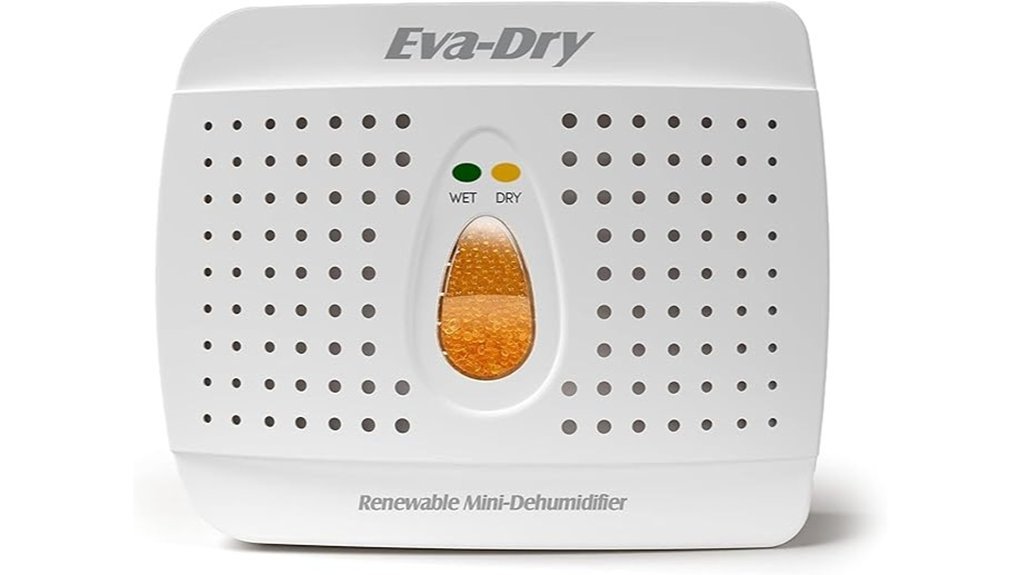
Best For: Owners who want a self-contained moisture absorber without routing a cord into the safe.
The Eva-Dry E-333 is the strongest all-around starting point for many small safes. It uses renewable silica gel, operates silently without power while inside the safe, and provides a visible color indicator when regeneration is needed. The manufacturer currently lists moisture absorption of up to 13 ounces and coverage up to 333 cubic feet, but the real renewal interval will depend on safe sealing, temperature, room humidity, and door-opening frequency.
Why You’ll Like It
- Cordless and silent while absorbing moisture
- Visible indicator reduces maintenance guesswork
- No disposable refill packets or liquid reservoir
Who Should Avoid It
- Very shallow lockboxes that cannot fit the housing
- Safes in actively wet or leaking locations
- Users who need automatic control at a precise humidity setting
Before You Buy: Measure the usable shelf space, not only the safe’s advertised volume. Regenerate the unit outside the safe and let it cool completely before returning it.
Hornady Rapid Dry Rechargeable Dehumidifier Stone
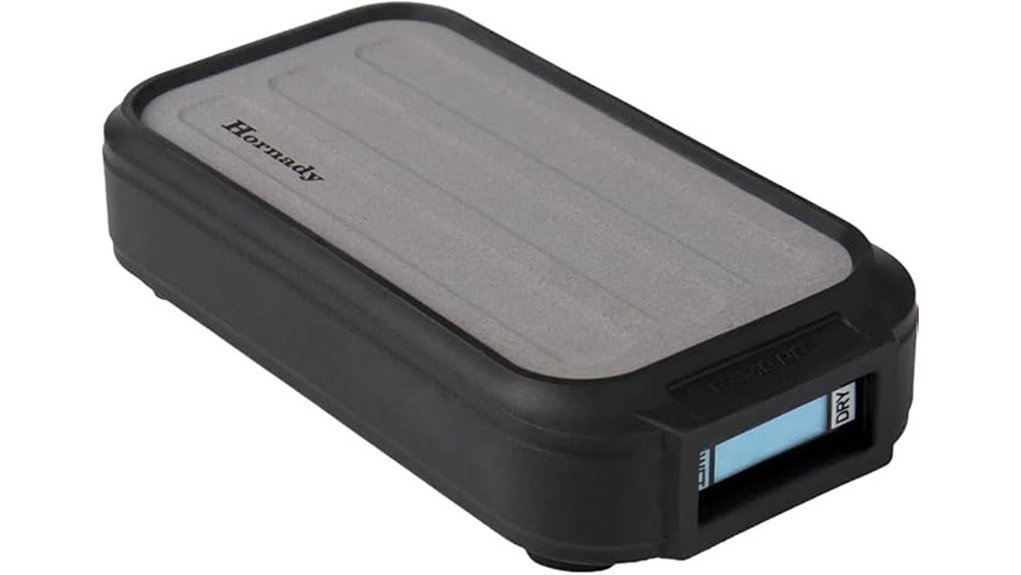
Best For: Handgun safes, document boxes, cases, and lockboxes where a larger renewable housing will not fit.
The Hornady Rapid Dry Stone is a practical choice when interior clearance matters more than maximum capacity. It is designed for compact enclosed storage, requires no cord while in use, and includes an indicator that shows when regeneration is needed. Its listed effective volume is up to approximately 10 cubic feet.
Why You’ll Like It
- Compact shape leaves more room for stored items
- No power, battery, or loose liquid during use
- Visible moisture-status indicator
Who Should Avoid It
- Safes substantially larger than its listed range
- Damp locations where a small desiccant saturates rapidly
- Users who do not have a suitable heat-regeneration method
Before You Buy: Follow Hornady’s instructions for the selected regeneration method. Remove any protective cover as directed, avoid overheating, and let the stone return fully to room temperature before placing it near valuables.
Wisesorb 40-Gram Silica Gel Canisters
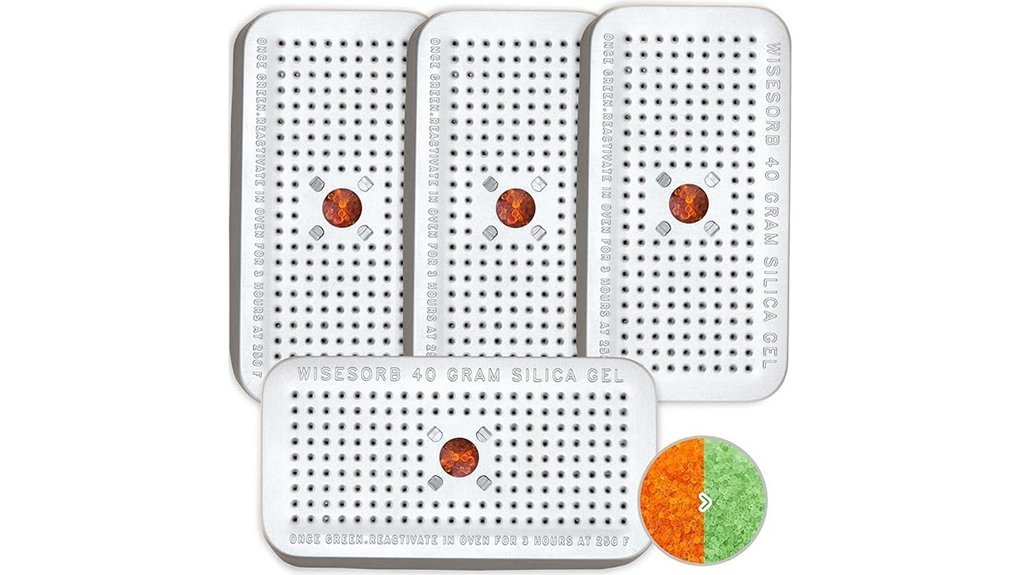
Best For: Safes with narrow shelves, separate drawers, or several compartments that benefit from distributed moisture absorption.
Wisesorb’s aluminum canisters are approximately 4.17 inches long, 2.24 inches wide, and 0.52 inches thick. Their slim format is easier to position around documents, jewelry, cameras, or other valuables than a large plastic housing. The manufacturer lists up to 30 cubic feet of coverage per canister, although actual performance should be confirmed with a hygrometer.
Why You’ll Like It
- Thin aluminum shell fits narrow storage areas
- Orange-to-green indicator window is easy to inspect
- Multiple canisters can be distributed around shelves or drawers
Who Should Avoid It
- Large safes unless enough canisters are used
- Users who cannot safely perform oven regeneration
- Food or medication storage requiring direct-contact-approved materials
Before You Buy: Inspect the full indicator window rather than reacting to one partially changed bead. Use a separate hygrometer to determine whether the safe itself is staying within the desired range.
MAXSafes 12-Inch Electric Dehumidifier Rod
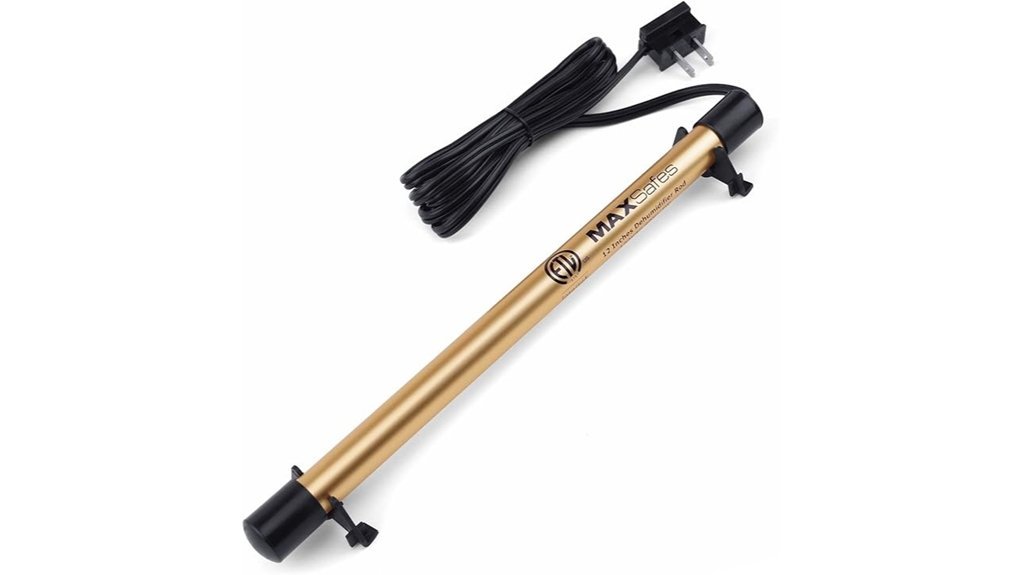
Best For: Small gun safes with a suitable electrical pass-through and enough clearance for permanent mounting.
The MAXSafes rod is a seven-watt heated unit that runs continuously. It does not collect water. Instead, it gently raises the temperature near the bottom of the safe and encourages air circulation, helping reduce condensation conditions around metal surfaces. Its 12-inch length is more manageable than longer rods designed for full-size cabinets.
Why You’ll Like It
- Continuous operation without desiccant regeneration
- No beads, packets, liquid reservoir, or disposable refill
- Can be mounted horizontally or vertically with suitable clearance
Who Should Avoid It
- Safes without a manufacturer-approved power pass-through
- Interiors where the rod or cord could contact stored items
- Users who specifically need moisture to be absorbed and removed
Before You Buy: Confirm the full 12-inch mounting space plus room for brackets and cord routing. Do not drill through a fire-rated safe or alter its insulation unless the safe manufacturer permits it.
Heat Clearance: Keep the energized rod separated from paper, fabric, foam, ammunition packaging, wiring, and other heat-sensitive contents. Use the supplied mounting hardware and follow the installation manual.
Afloia Rechargeable Cordless Mini Dehumidifier
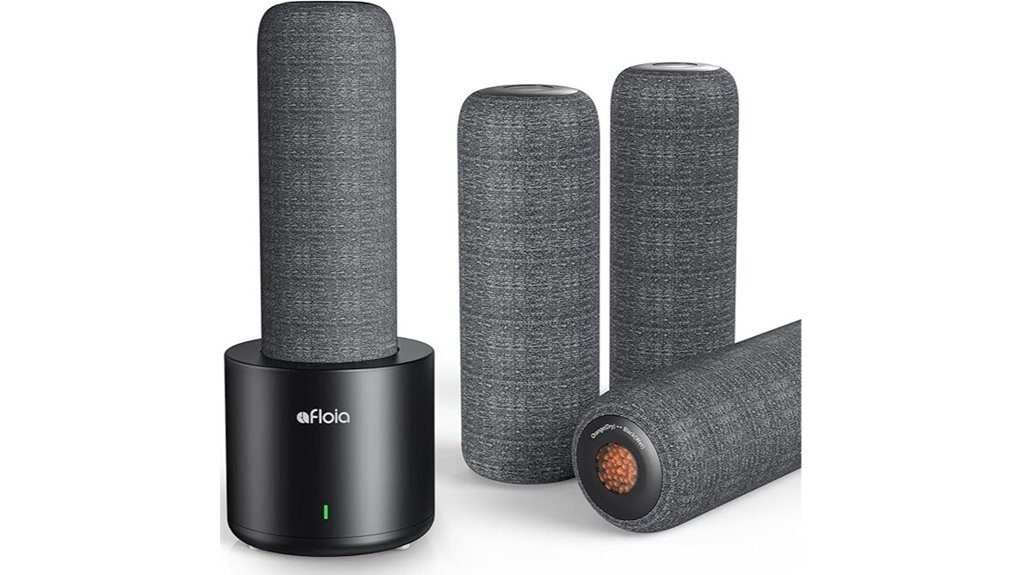
Best For: Owners who want to rotate multiple moisture-absorbing sticks between a safe, cabinet, case, or other small enclosure.
Afloia separates its silica-gel sticks from the powered heating base. Only a cordless stick goes inside the safe, while regeneration takes place outside the enclosure. This design is useful when several spaces need protection or when one stick can be swapped out while another is being renewed.
Why You’ll Like It
- Cordless silica-gel sticks inside the safe
- Dedicated regeneration base with automatic heating controls
- Several sticks can be rotated between storage areas
Who Should Avoid It
- Shallow lockboxes or safes without room for a cylindrical stick
- Buyers who want the smallest possible absorber
- Users who prefer simple oven- or microwave-reactivated packs
Before You Buy: Each stick is considerably larger than a slim canister or stone. Measure its required height and diameter carefully. Ignore broad room-style coverage claims and judge results from the hygrometer reading inside the closed safe.
Hornady Rechargeable Gun Safe Dehumidifier 95900
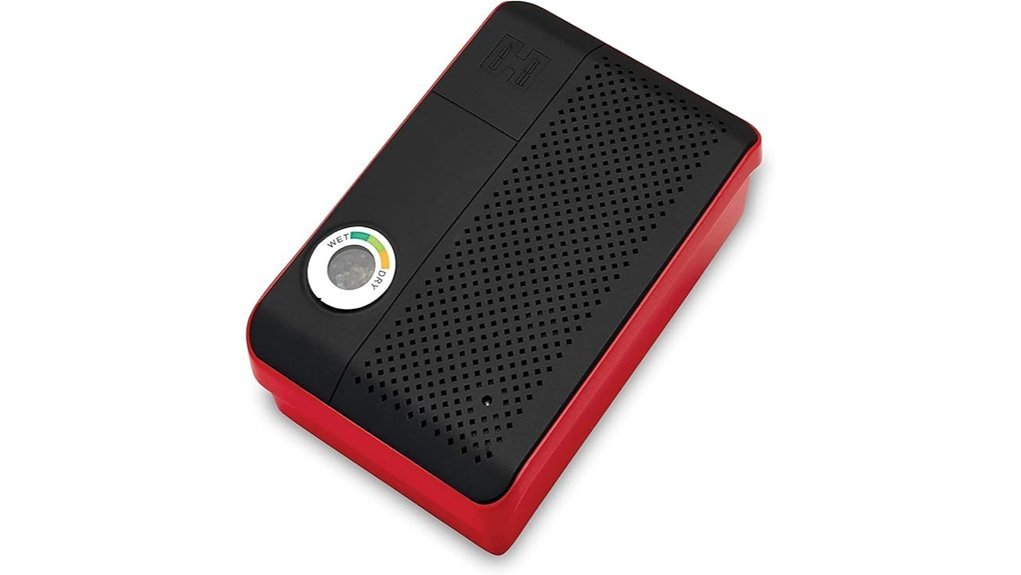
Best For: Small-to-medium gun safes that need a purpose-built renewable unit but do not have an internal outlet.
Hornady’s model 95900 absorbs moisture without electricity while it is inside the safe. When the crystals indicate saturation, the unit plugs into a 110-volt wall outlet outside the safe for regeneration. Hornady lists dimensions of approximately 1.5 inches high, 4 inches wide, and 6 inches deep, with coverage up to 333 cubic feet.
Why You’ll Like It
- Designed specifically for safes and enclosed cabinets
- Color-changing crystals show when regeneration is needed
- Quick-connect bracket can help keep shelf space clear
Who Should Avoid It
- Very small lockboxes that cannot fit the six-inch housing
- Users without a convenient 110-volt outlet for regeneration
- Highly humid locations that require continuous powered control
Before You Buy: “Cordless” describes normal moisture absorption only. The unit still requires household power during regeneration, and it should cool fully before being returned to the safe.
Zarpax Rechargeable Gun Safe Dehumidifier Bags
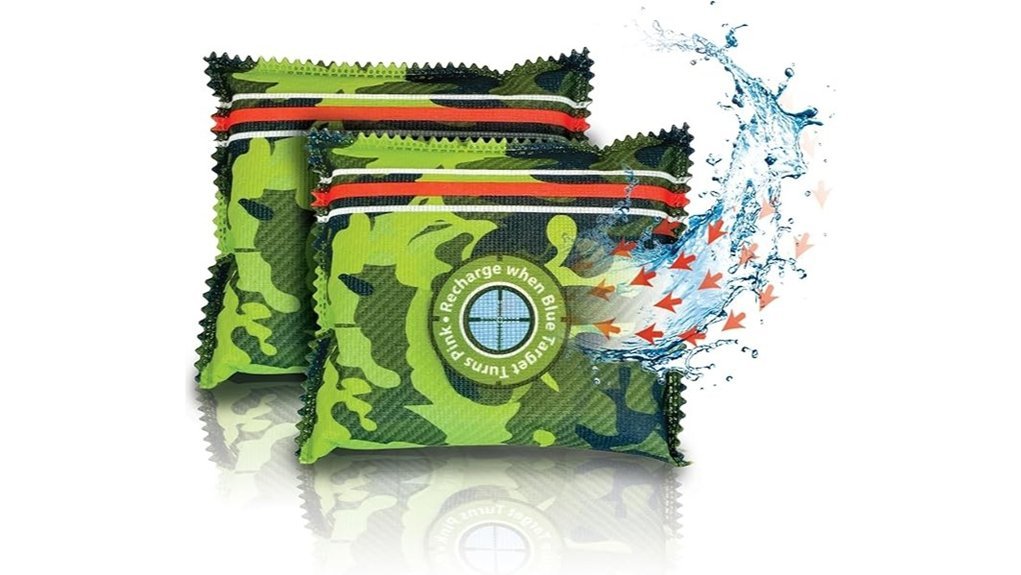
Best For: Safes and cases where a soft pack can fit beside a wall or below a shelf more easily than a rigid device.
Zarpax bags provide flexible placement without requiring an internal power cord. Their indicator changes as moisture is absorbed, and the bags can be renewed according to the manufacturer’s instructions. This format can be particularly useful in equipment cases or safes containing fixed shelves and awkward unused spaces.
Why You’ll Like It
- Flexible placement around fixed shelves or compartments
- No power or battery while inside the safe
- Reusable format with a visual status indicator
Who Should Avoid It
- Safes where the bag could be crushed, cut, or punctured
- Users who prefer a rigid spill-resistant housing
- Anyone unable to use the approved regeneration method
Before You Buy: Check the exact Amazon variation, bag size, and package quantity before ordering. Zarpax permits microwave regeneration for relevant models but warns against using a conventional oven. Follow the instructions supplied with the selected product.
DryTote 100-Gram Rechargeable Desiccant Pack
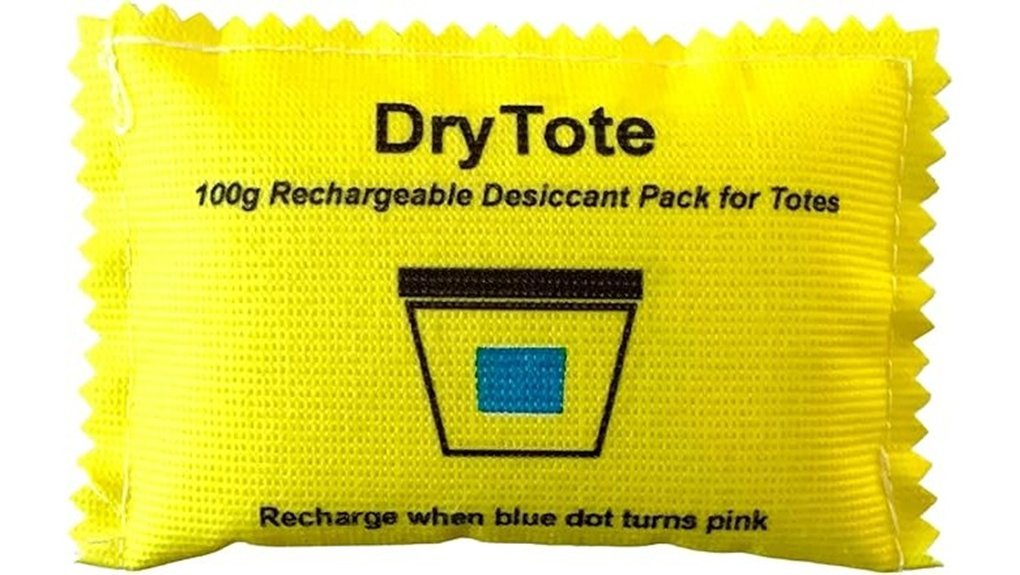
Best For: Document safes, electronics cases, photo storage, collectibles, and sealed storage containers.
DryTote’s 100-gram pack is a middle ground between a tiny canister and a bulky high-capacity bag. The manufacturer lists protection for enclosed spaces up to 200 gallons, which is approximately 27 cubic feet. Its built-in indicator shows when regeneration is required.
Why You’ll Like It
- Moderate size suits many document and home safes
- Flexible pack can sit beside stored contents
- Color-change indicator simplifies maintenance
Who Should Avoid It
- Extremely shallow safes with no open floor or shelf space
- Open cabinets that exchange humid air continuously
- Users who cannot follow the approved heat-regeneration process
Before You Buy: The 200-gallon figure describes an estimated enclosure volume, not how much liquid water the pack can hold. Keep the pack intact, allow airflow around it, and monitor the safe with a digital hygrometer.
Factors to Consider When Choosing a Dehumidifier for a Small Safe
A safe dehumidifier should fit the available space, match the incoming moisture load, and have a maintenance method you can follow safely. Measure first and verify the result with a separate digital hygrometer rather than relying only on a manufacturer’s coverage number.
Measure Usable Internal Space
Measure the internal height, width, and depth, then multiply them to estimate cubic feet. More importantly, measure the exact shelf or wall area where the product will sit. Allow room to open drawers, remove valuables, route a cord, install brackets, and expose the absorber to surrounding air.
Choose Between Desiccant and a Heated Rod
Silica-gel units physically absorb moisture and must be renewed after saturation. They are generally the easiest choice for document safes, jewelry boxes, handgun safes, and enclosures without electrical access.
Heated rods operate continuously and help reduce condensation by gently warming the lower part of the safe and promoting air movement. They require a safe power pass-through, permanent clearance, and separation from stored items. They do not collect water.
Match the Product to the Moisture Load
A high coverage claim does not automatically make a product better. A small canister may be sufficient for a well-sealed lockbox in a climate-controlled room. The same product may saturate quickly in a basement safe that is opened frequently. Start with a product that fits properly, then increase capacity only if hygrometer readings remain too high.
Use a Digital Hygrometer
A color indicator only shows the condition of the desiccant. It does not measure the humidity surrounding every stored item. Place a compact digital hygrometer inside the safe and record readings over several days before deciding whether the setup is adequate.
The safest target depends on what is stored. Metal, wood, paper, photographs, electronics, leather, coins, and jewelry do not all have identical requirements. Stable, moderate humidity is usually more useful than trying to make the safe as dry as possible. Follow the storage guidance for the most sensitive item.
Check the Exact Reactivation Method
Recharge methods are not interchangeable. Some units plug into a wall outlet, some use a dedicated heating base, and others require a microwave or oven. Never place metal in a microwave, use an oven on a microwave-only bag, or guess a heating time. Follow the instructions for the exact model and variation.
Check the Surrounding Room
An absorber inside a safe cannot solve an active leak, flooding, wet concrete, severe basement dampness, or continuous humid-air entry. Repair water problems first. If the room itself remains humid, use an appropriately sized room dehumidifier outside the safe while maintaining a separate safe absorber or rod inside.
Look for an Easy Maintenance Indicator
A visible bead window or color-changing dot makes routine checks easier. However, indicators can fade, respond unevenly, or change before the full product is saturated. Use the indicator to schedule maintenance and the hygrometer to judge actual safe conditions.
Safety Note: Allow every heat-reactivated product to cool completely before returning it to an enclosed safe. Keep hot devices and energized rods away from paper, photographs, fabric, foam, ammunition packaging, wiring, and other heat-sensitive contents.
Before You Buy Checklist
- Measure the exact internal placement area.
- Check whether the safe has an approved power pass-through.
- Decide whether wall-plug, microwave, oven, or heating-base regeneration is practical.
- Confirm that the product will not block drawers, shelves, bolts, or airflow.
- Add a digital hygrometer before increasing desiccant capacity.
- Check the Amazon variation, quantity, dimensions, and included accessories.
- Repair room leaks or severe dampness instead of relying only on an internal absorber.
Frequently Asked Questions
How Often Should I Recharge a Safe Dehumidifier?
Recharge it when the indicator shows saturation or when the hygrometer begins rising above the range appropriate for the stored contents. The interval may be days, weeks, or longer depending on room humidity, safe sealing, product capacity, and how often the door is opened.
Can I Put a Regular Room Dehumidifier Inside a Small Safe?
Usually not. Room dehumidifiers need substantial airflow, electrical clearance, and room for a water tank or drain. Use a safe-sized desiccant or approved heated rod inside the enclosure. Place a conventional dehumidifier in the surrounding room when the basement, garage, or closet remains damp.
What Humidity Level Should a Safe Have?
There is no single ideal number for every safe. Metal firearms, wood stocks, paper, photographs, electronics, leather, coins, and jewelry can require different storage conditions. Use a hygrometer and follow the guidance for the most sensitive item rather than pursuing the lowest possible humidity.
Is a Heated Rod Better Than Silica Gel?
A heated rod is convenient for continuous operation when the safe has power access and enough permanent mounting space. Silica gel is more practical for compact safes, document boxes, portable cases, and enclosures that must remain cordless. The better option is the one that fits safely and keeps the hygrometer reading stable.
Are Rechargeable Products Better Than Disposable Moisture Absorbers?
Rechargeability mainly reduces replacement cost and waste. It does not automatically mean greater moisture capacity. Safe volume, desiccant mass, room humidity, enclosure sealing, and maintenance frequency matter more than whether a product is reusable.
How Do I Know Whether It Is Working?
Record the hygrometer reading before installation and compare it with readings taken after the safe has remained closed for several days. A functioning desiccant should eventually show indicator changes, while an electric rod should operate and warm only as described in its manual. If the reading stays high, check the product’s saturation, placement, capacity, safe seal, and surrounding room.
Can a Safe Become Too Dry?
Yes. Extremely dry conditions can contribute to brittleness, shrinkage, cracking, or other problems in certain papers, photographs, wood, leather, adhesives, and finishes. Do not add more desiccant automatically. Monitor the environment and protect the most humidity-sensitive item.
Should I Use More Than One Moisture Absorber?
Use a second absorber only when one appropriately maintained unit cannot keep the humidity stable. In a safe with several closed drawers or compartments, two smaller canisters placed in different areas may work better than one large pack. Avoid crowding the safe or blocking airflow.
Conclusion
For most small safes, the Eva-Dry E-333 is the easiest starting point because it operates without a cord inside the safe, uses renewable silica gel, and provides a visible maintenance indicator. Choose the Hornady Rapid Dry Stone or Wisesorb 40-gram canisters when interior clearance is extremely limited. Choose the MAXSafes 12-inch rod when the safe has an approved power pass-through and you prefer continuous operation.
Final Recommendation
Measure the usable interior, add a digital hygrometer, and select the smallest product that can maintain stable conditions without blocking access or touching valuables. A well-fitted absorber that is renewed on schedule is a better choice than an oversized product selected only because it has a larger marketing number.