Planning a feeding setup for 2026? These four baby bottle options cover different priorities: the Kiinde Twist Squeeze system focuses on pumping, storing, and feeding from the same pouch; Philips Avent Natural Response uses a nipple that releases milk when a baby actively drinks; Dr. Brown’s Original uses an internal vent system; and Lansinoh pairs a NaturalWave nipple with an air ventilation system. The right choice depends on your baby’s preferred nipple shape and flow, how much cleaning you want to do, and whether breast-pump compatibility matters to your routine.
Quick Comparison
| Bottle | Main Strength | Included Flow | Best Fit |
|---|---|---|---|
| Kiinde Twist Squeeze | Feeds directly from Twist Pouches | Slow + medium Active Latch nipples | Parents who want fewer milk transfers |
| Philips Avent Natural Response 9 oz | Milk releases when baby actively drinks | Medium / Flow 3 | Breast-and-bottle combination feeding |
| Dr. Brown’s Original 8 oz | Internal vent system | Level 1 slow flow | Parents who prioritize a fully vented bottle |
| Lansinoh Anti-Colic 8 oz | NaturalWave nipple with air ventilation | Medium / 3M | A simpler wide-neck bottle for breast-to-bottle feeding |
Important: Nipple flow labels are manufacturer-specific. Age guidance is only a starting point; choose a flow that matches your baby’s feeding ability and follow the manufacturer’s instructions.
Kiinde Twist Squeeze Baby Feeding Bottle (2 Pack)
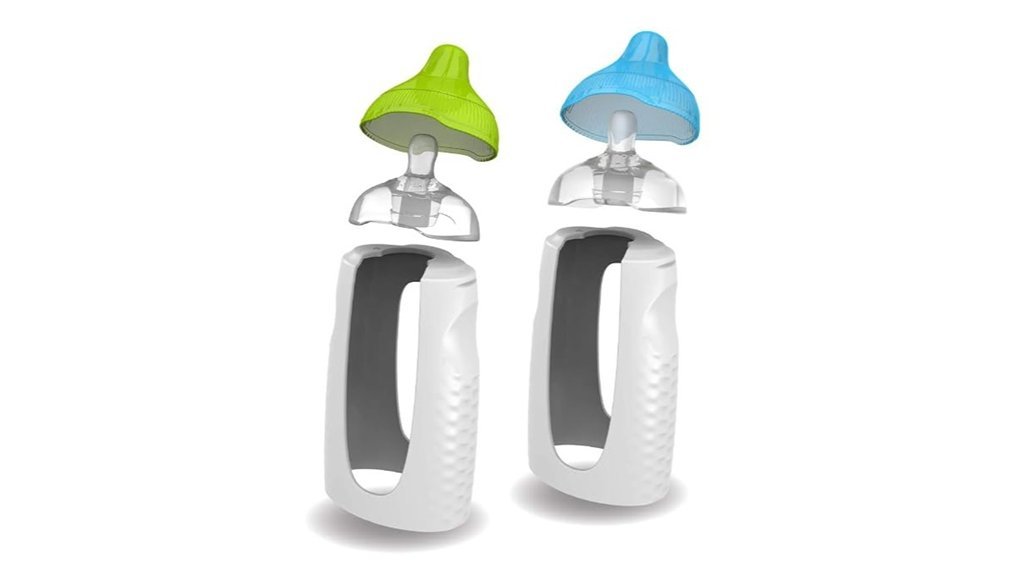
The Kiinde Twist Squeeze is different from a standard rigid baby bottle. It is a bottle holder designed to work with Kiinde Twist Pouches, so milk can be warmed and fed from the same pouch instead of being transferred into another bottle. The current Twist Squeeze configuration includes two bottle holders plus one slow-flow and one medium-flow Active Latch nipple with cases. Kiinde lists the bottle holders as BPA-free, phthalate-free, and PVC-free, and the wider Twist system supports direct pumping when the appropriate pump adapter is used.
Best For: Parents who already use or want to use the Kiinde Twist pouch system and prefer fewer milk transfers between pumping, storage, warming, and feeding.
Why You’ll Like It: The collapsible pouch setup helps keep air out of the milk path without a multi-piece internal vent, while the holder is shaped for easier gripping.
Pros:
- Lets you feed directly from compatible Twist Pouches.
- Includes both slow- and medium-flow Active Latch nipples.
- Bottle holders and compatible nipple components are designed for straightforward cleaning, including top-rack dishwasher cleaning where specified by Kiinde.
Cons:
- Requires Kiinde Twist Pouches for the intended setup.
- Disposable pouches create ongoing supply cost and more waste than a fully reusable bottle.
- Direct pumping may require a compatible adapter that is not part of every bottle-only pack.
Philips Avent Natural Baby Bottles, 9 oz, 2-Pack
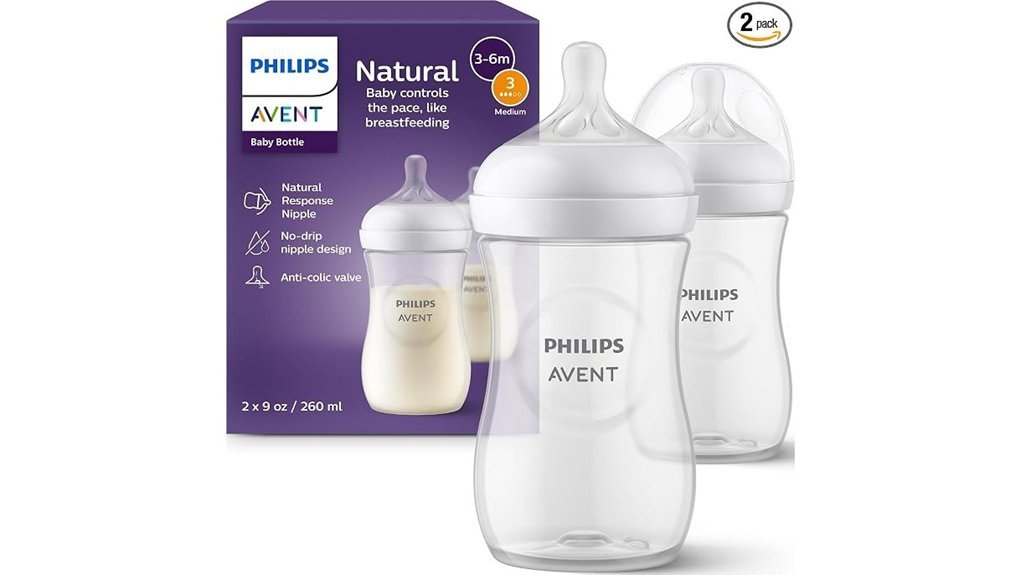
The Philips Avent Natural Response 9 oz two-pack is a practical option for families combining breast and bottle feeding. The verified SCY903/02 configuration includes two 9-ounce polypropylene bottles and two medium/Flow 3 silicone nipples. The Natural Response nipple is designed to release milk when the baby actively drinks and pause when the baby pauses. It also has a soft, breast-shaped design, a no-drip design, and an anti-colic valve. Philips lists this configuration for the 3-6 month development stage and describes the bottle as BPA-free and dishwasher-safe.
Best For: Families looking for a 9-ounce bottle with a responsive nipple design for breast-and-bottle combination feeding, especially when the included medium flow suits the baby.
Why You’ll Like It: The nipple’s active-drinking response can make the feeding rhythm feel less like a continuously free-flowing bottle.
Pros:
- Natural Response nipple releases milk when baby actively drinks.
- Wide, soft nipple shape is designed to support a comfortable latch.
- Wide-neck, dishwasher-safe bottle design simplifies routine cleaning.
Cons:
- The included medium/Flow 3 nipples are not the default choice for every newborn.
- Babies used to free-flow nipples may need time to adjust to the Natural Response design.
- Parents may need to buy a different nipple flow if the included flow does not match their baby’s feeding pace.
Dr. Brown’s Original Bottle, 8 Ounce, 4-Pack
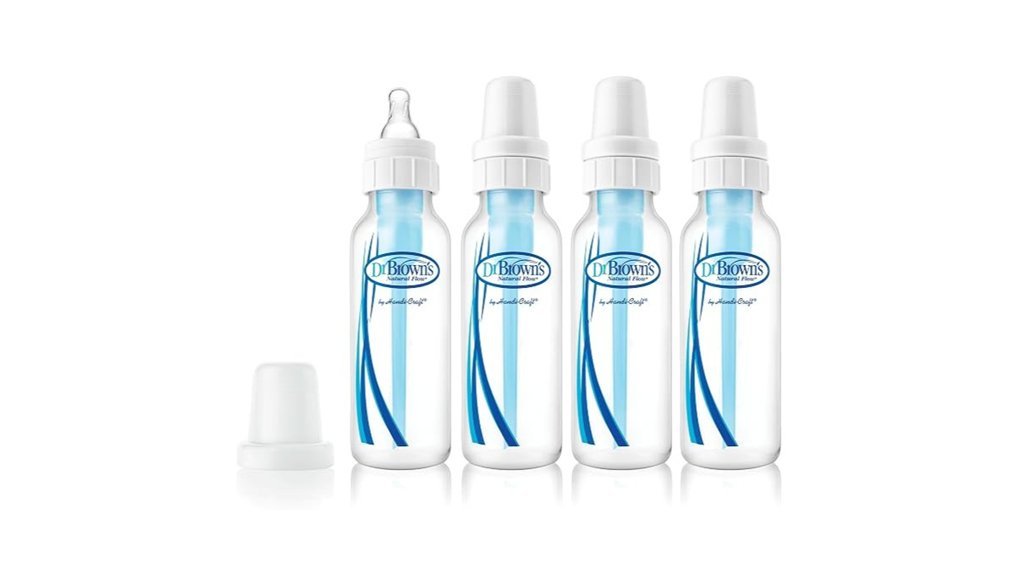
Dr. Brown’s Original 8-ounce 4-pack uses the brand’s internal vent system and Level 1 slow-flow nipples. Dr. Brown’s describes its fully vented bottle design as clinically proven to reduce colic, spit-up, burping, and gas, and the company has published research around nutrient preservation in vented bottle feeding. Those are product and manufacturer claims rather than a guarantee that every baby will have the same result. The main tradeoff is cleaning: the vent system adds parts that need to be washed carefully.
Best For: Parents who want a fully vented bottle system and are comfortable spending extra time cleaning the internal vent pieces.
Why You’ll Like It: The internal vent is the defining feature, giving parents a dedicated air-management system rather than relying only on a nipple vent.
Pros:
- Internal vent system is designed to manage airflow during feeding.
- Level 1 slow-flow nipple supports a slower feeding pace.
- Long-established bottle design with replacement nipples and accessories widely associated with the Dr. Brown’s system.
Cons:
- More pieces mean more cleaning than simpler bottle designs.
- Level 1 flow may be too slow as a baby’s feeding needs change.
- The older Original configuration is less flexible than newer vented designs that can be used with or without the internal vent.
Lansinoh Anti-Colic Baby Bottles, 8 Ounce (3-Pack)
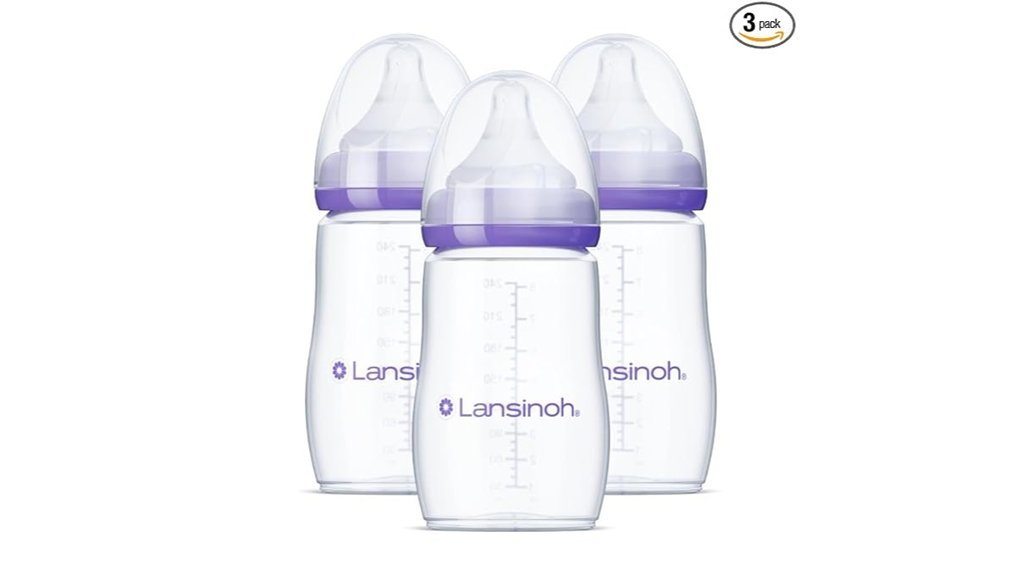
Lansinoh’s 8-ounce bottle pack includes wide-neck bottles with medium-flow 3M NaturalWave nipples made from 100% silicone, plus collars and protective caps. The NaturalWave nipple uses an Air Ventilation System designed to reduce air intake and potential causes of gas or colic. Lansinoh also positions the nipple for breast-to-bottle feeding and natural feeding actions. The bottles and nipples are dishwasher-safe, although Lansinoh recommends handwashing the nipples for longer service life.
Best For: Parents who want a wide-neck bottle with a soft silicone nipple, a built-in air ventilation system, and fewer specialized vent parts to clean.
Why You’ll Like It: The nipple combines a wide latch-friendly base with an integrated vent, so there is no separate internal vent assembly.
Pros:
- NaturalWave nipple is designed to support breast-to-bottle feeding.
- Air Ventilation System helps reduce air intake during feeding.
- Dishwasher-safe bottle setup keeps routine cleaning relatively simple.
Cons:
- The included medium-flow nipple may not match every baby’s preferred feeding pace.
- Plastic bottles may not appeal to families who prefer glass.
- Nipples should be inspected regularly and replaced when worn or damaged.
Factors to Consider When Choosing Baby Bottles for 2026
When comparing baby bottles, focus on fit for your feeding routine rather than assuming one bottle is best for every family. Nipple shape and flow, bottle material, air-management features, cleaning effort, pump compatibility, and capacity can all affect day-to-day convenience.
Nipple Shape and Size
Nipple shape can affect how comfortably a baby latches, but a breast-shaped nipple does not guarantee an easy breast-to-bottle transition. Look at the nipple’s width, softness, flexibility, and how it sits in your baby’s mouth. Also remember that each brand uses its own flow system, so “slow,” “medium,” and numbered flows are not directly interchangeable across manufacturers.
Material Safety Considerations
Check the exact material and care instructions for the bottle you buy. In this group, Philips Avent uses a polypropylene bottle with a silicone nipple, Kiinde uses plastic and silicone components across its Twist system, Dr. Brown’s Original is a plastic vented bottle with a silicone nipple, and Lansinoh uses a BPA/BPS-free plastic bottle with a silicone NaturalWave nipple. Replace components that become cracked, torn, cloudy, warped, or otherwise damaged, and follow the manufacturer’s instructions for washing, sterilizing, heating, and storage.
Anti-Colic Features
“Anti-colic” can describe different air-management designs. Dr. Brown’s uses an internal vent, Philips Avent incorporates an anti-colic valve in the nipple system, Lansinoh uses an Air Ventilation System, and Kiinde relies on a collapsible pouch that can be squeezed to remove air before feeding. These features are designed to reduce swallowed air or potential causes of feeding discomfort, but they cannot guarantee that colic, gas, or spit-up will stop for every baby.
Ease of Cleaning
Part count matters. A wide-neck bottle with a nipple and collar is generally faster to wash than a bottle with a multi-piece internal vent. Kiinde reduces bottle washing by feeding from disposable pouches, but you still need to clean the reusable holder and nipple components. Philips Avent and Lansinoh list dishwasher-safe bottle systems, while Dr. Brown’s vent pieces require extra attention so milk residue does not remain inside the narrow parts.
Compatibility With Breast Pumps
If you pump frequently, verify compatibility before buying a full bottle set. Kiinde is the most pump-focused option here because its Twist Pouches can connect to major pump brands through compatible adapters. Philips Avent parts are designed to work across the Avent feeding range. For Dr. Brown’s and Lansinoh, pump compatibility can depend on the pump model, flange or adapter, and bottle thread, so check the exact combination you plan to use rather than assuming universal fit.
Flow Rate Options
Do not choose a nipple solely by the age printed on a package. Use the manufacturer’s age guidance as a starting point, then watch how your baby feeds. A flow that is too fast may lead to gulping, leaking milk, coughing, or pulling away; a flow that is too slow may lead to frustration or unusually long feeds. If you are unsure which flow is appropriate, ask your pediatrician or a qualified lactation or feeding professional.
Transitioning Between Feeding Methods
For breast-and-bottle feeding, look for a nipple and flow system that allows a steady, comfortable rhythm rather than simply choosing the bottle that looks most like a breast. Philips Avent’s Natural Response design releases milk during active drinking, Lansinoh emphasizes natural feeding actions with its NaturalWave nipple, and Kiinde’s Active Latch nipples are designed around a deeper latch. Individual babies can still prefer one shape or flow over another.
Bottle Capacity Choices
Smaller bottles can be easier to handle for lower-volume feeds, while 8- or 9-ounce bottles give more room as feeding volumes increase. Capacity should match how much your baby usually takes at one feeding and how you prepare, store, and transport milk. A larger bottle is not automatically better for an older baby, and it does not need to be filled to capacity.
Frequently Asked Questions
Are These Bottles Dishwasher Safe for Easy Cleaning?
Philips Avent lists the Natural Response bottle as dishwasher-safe, and Lansinoh says its bottles and NaturalWave nipples are dishwasher-safe while recommending handwashing nipples for longer life. Kiinde says its Twist Squeeze bottle holders and compatible nipple components can be washed on the top rack where specified. Dr. Brown’s vented bottles require careful cleaning of the vent pieces, so follow the care instructions included with the exact Original pack you buy.
What Materials Are Used in These Baby Bottles?
Philips Avent lists polypropylene for the bottle and silicone for the nipple. Kiinde lists polyethylene, polypropylene, and silicone across the Twist pouch-and-feeding system. Lansinoh uses a BPA/BPS-free plastic bottle with a 100% silicone NaturalWave nipple. Dr. Brown’s Original is a plastic bottle system with silicone nipples. Always check current packaging because materials and included components can change.
Can These Bottles Be Used for Breast Milk Storage?
Kiinde Twist Pouches are specifically designed for pumping, storing, freezing, thawing, warming, and feeding breast milk within the Twist system. Standard feeding bottles may also hold expressed milk when properly capped and stored, but do not assume every bottle is intended as a long-term storage container. Follow the bottle manufacturer’s directions and current breast-milk storage guidance.
Do Any of These Bottles Come With Anti-Colic Features?
Yes. Dr. Brown’s uses an internal vent system, Philips Avent includes an anti-colic valve, Lansinoh uses its Air Ventilation System, and Kiinde’s collapsible pouch can be squeezed to remove air before feeding. These designs manage airflow in different ways, but none can guarantee that every baby will be free of colic, gas, or spit-up.
What Age Range Are These Bottles Suitable For?
The bottle body itself can often be used across more than one feeding stage, but the included nipple flow matters. Kiinde’s current two-holder set includes slow- and medium-flow nipples. The Philips Avent 9-ounce SCY903/02 pack includes medium/Flow 3 nipples and is listed for the 3-6 month stage. Dr. Brown’s Original pack uses Level 1 slow-flow nipples, while the Lansinoh 8-ounce pack includes medium 3M nipples. Change flow based on the manufacturer’s guidance and your baby’s feeding ability rather than age alone.
Conclusion
Each bottle here solves a different feeding problem. Choose Kiinde Twist Squeeze if reducing milk transfers is the priority; Philips Avent Natural Response if you want a nipple that releases milk during active drinking; Dr. Brown’s Original if you prefer a dedicated internal vent system; or Lansinoh if you want a wide-neck NaturalWave bottle with an integrated air vent and simpler cleaning. Before buying, confirm the included nipple flow, current pack contents, cleaning instructions, and compatibility with any breast pump or accessories you already use.