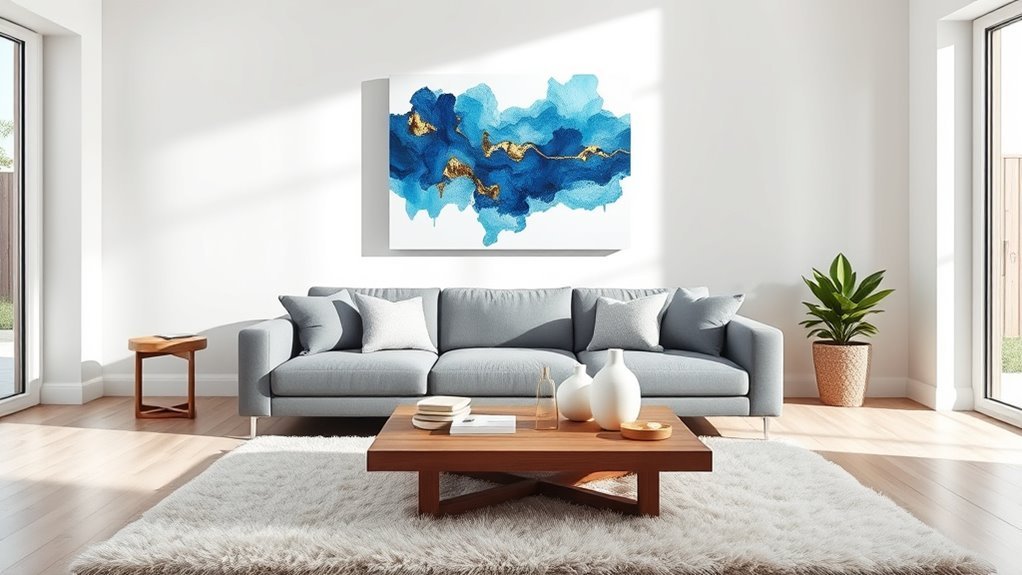
Watching a movie under a single overhead fixture forces a frustrating choice: put up with washed-out screen reflections, or sit in a pitch-black room that strains your eyes. A well-structured living room lighting plan with a TV solves both problems by separating general room illumination from reading lights and media-wall glow. When each layer sits outside the screen’s reflection path and runs on its own dimmer or switch, the space shifts effortlessly from daytime family life to cinema night.
Quick Answer
Build a living room lighting plan with a TV around three independently controlled layers: dimmable 2700K–3000K ambient fixtures for an even 10–20 foot-candle base, a 450–800-lumen task lamp beside reading seats, and low-output bias lighting behind the screen. Place every bulb and window treatment outside the screen’s reflection angles.
At a Glance
| Time Required | 30–60 minutes to map zones and test reflections; 1–2 hours to set up plug-in lamps, bias strips, and smart plugs |
| Difficulty | Easy for lamp placement, bias strips, and bulb upgrades; moderate to advanced for hardwired dimmers or sconces |
| Tools Needed | Tape measure, phone camera, floor plan sketch, dimmable LED bulbs (2700K–3000K, CRI 80+), plug-in or wall dimmers |
| Cost | $0 to rearrange existing lamps; $25–$150 for dimmable LED bulbs and a TV bias light; local electrician quote for hardwired work |
How to Create a Living Room Lighting Plan With a TV
Follow this five-step sequence before buying new fixtures or bulbs. Working from room layout to fixture testing ensures every light serves a specific seat or activity without reflecting off the television glass.
- Map the TV, seating, windows, doors, and outlets. Measure your room dimensions and mark where reflections appear on the turned-off black screen from each main seat.
- Establish the ambient base layer. Multiply your room’s square footage by 10 to 20 foot-candles to find your total lumen target, then spread that output across diffused ceiling, wall, or floor fixtures on dimmers.
- Place dedicated task lights at activity seats. Set an adjustable floor or shaded table lamp 15 to 20 inches beside reading chairs so pages stay bright while the rest of the room stays relaxed.
- Install subtle accent and media-wall bias lighting. Add a low-output backlight behind the TV and gentle shelf or picture lights outside the screen’s reflection zone to soften dark-room contrast.
- Run a day-and-night glare check and save scenes. Verify that no bare bulbs reflect in the panel from center or side seats, then set repeatable levels for movies, reading, hosting, and cleaning.
Why a Lighting Plan Matters for Your Living Room
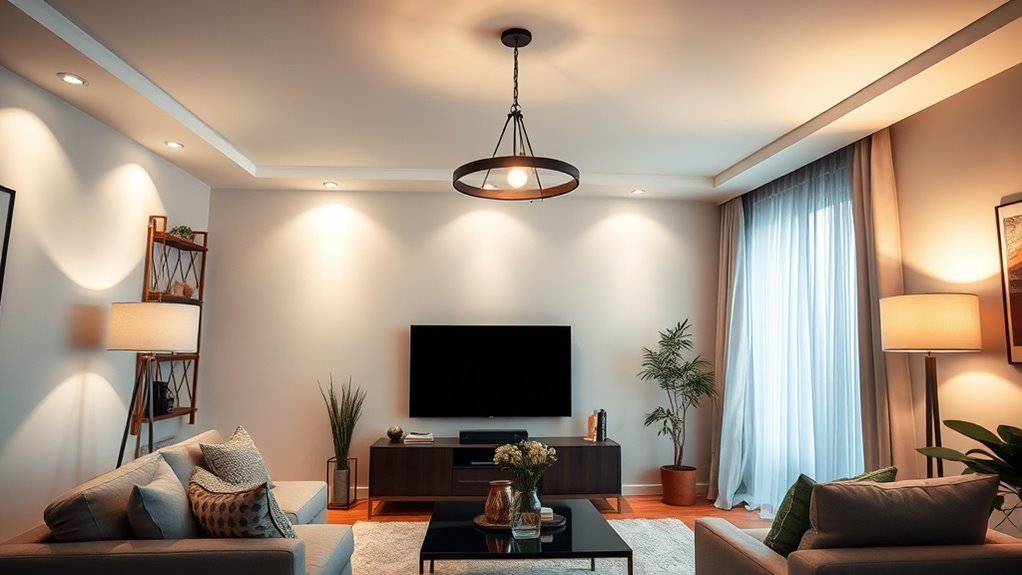
A deliberate living room lighting setup prevents the two biggest visual comfort mistakes in media spaces: screen glare and high-contrast eye fatigue. Instead of flooding the room with one overhead fixture, good design matches light direction and intensity to what you are doing.
When a bright ceiling fixture or unshaded lamp sits in front of a TV, its reflection washes out dark scenes and forces you to turn up the television’s backlight. Conversely, watching a bright high-dynamic-range (HDR) screen in a pitch-black room forces your pupils to constantly adjust between extreme highlights and dark walls. Distributing softer, independently controlled light sources around the room preserves picture contrast while keeping walkways and seating areas inviting.
More light is not always better. A comfortable TV room relies on controlled, indirect layers rather than one bright overhead fixture.
Identifying Essential Lighting Types: Ambient, Task, and Accent
Every effective living room layout combines three core lighting layers: ambient, task, and accent illumination. Giving each layer its own switch, dimmer, or smart plug lets you change the mood of the room in seconds.
Ambient Lighting
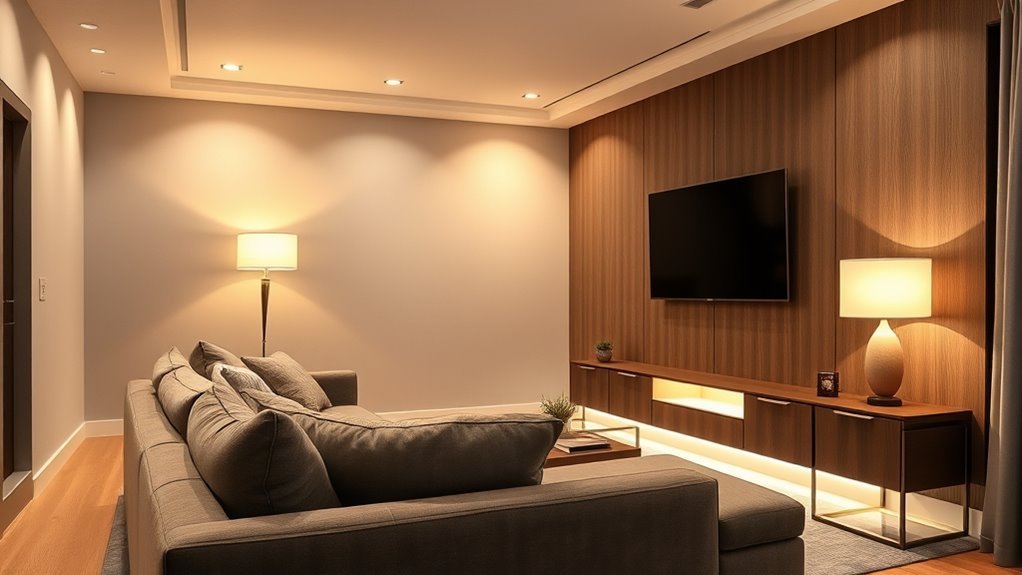
Ambient lighting provides the room’s overall background glow and safe illumination for walking and conversation. In a TV living room, rely on indirect or diffused fixtures—such as shaded floor lamps, cove lighting, wall sconces, or recessed cans aimed away from the screen—so the base layer never creates mirror-like glare.
Task Lighting
Task lighting delivers focused illumination of about 30 to 50 foot-candles directly onto books, laptops, board games, or crafts. Placing a downward-aimed floor lamp beside an armchair or a shaded lamp on an end table puts 450 to 800 lumens right on the work surface without spilling across the TV panel.
Accent Lighting
Accent lighting builds visual depth by highlighting bookcases, artwork, indoor plants, textured walls, or the wall behind the television. Keep accent fixtures roughly one-third the brightness of task lamps, or use low-output bias lighting behind the TV so the media wall frames the picture gently instead of competing with it.
Note: If your living room only has a single center ceiling fixture, you do not need to open the walls or ceilings right away. Add two or three plug-in floor and table lamps on smart dimmer plugs, test their positions against TV reflections, and decide later whether hardwired sconces or recessed lights are worth adding.
How to Map Your Living Room for Effective Lighting Placement
Mapping your floor plan before shopping prevents expensive placement mistakes like hanging sconces that reflect in the TV or buying lamps that cannot reach an outlet. Grab a tape measure, sketch the room, and record your zones and dimensions.
Identify Key Activity Zones
Divide the living room into five functional zones based on how your household uses the space each day:
- TV viewing zone: the sofa, sectional, media console, and the triangular reflection cone between the screen and every viewer’s eyes.
- Reading and hobby zone: an armchair, sofa corner, desk nook, or window seat where someone reads or uses a laptop while others watch TV.
- Conversation zone: the central seating arrangement where family and guests face one another.
- Display zone: built-in shelves, fireplace mantels, framed artwork, architectural stone or wood slats, and houseplants.
- Traffic zone: entryways, hall transitions, and paths behind seating that need clear, cord-free illumination.
Once your zones are labeled, match each one to its primary light source. The TV viewing zone gets indirect side or bias lighting, the reading zone gets a directional task lamp, the display zone gets low-output accent fixtures, and the conversation and traffic zones share dimmable ambient light.
Measure Space Dimensions
According to U.S. Department of Energy lighting specification guidance, surface illuminance is measured in foot-candles (fc), where 1 foot-candle equals 1 lumen per square foot. Living rooms typically need 10 foot-candles for relaxed evening viewing and up to 20 foot-candles for daytime hosting or cleaning. Multiply your room’s square footage by 10 and 20 to calculate your target lumen range—for example, a 15×20-foot living room (300 sq ft) needs roughly 3,000 to 6,000 total lumens distributed across all fixtures.
| What to Record | Why It Matters | How to Use It |
|---|---|---|
| Room length and width | Determines square footage and total lumen requirements (10–20 lumens per sq ft). | Spread 1,500–3,000 lumens (for a 150 sq ft room) or 3,000–6,000 lumens (for a 300 sq ft room) across at least three sides of the room. |
| Ceiling height | Controls fixture drop, beam spread, and wall-sconce mounting height. | Use flush mounts or low-glare sconces in 8-foot rooms, and mount wall sconces 60–66 inches from the floor to center. |
| TV screen height and angle | Defines the mirror reflection zone from center and side seats. | Keep exposed bulbs off the wall directly opposite the TV and avoid tilting a high-mounted TV downward toward floor lamps. |
| Outlet and switch locations | Shows where plug-in lamps and bias strips can connect without hazard. | Route cords along baseboards with cord covers or hire an electrician to add floor outlets for floating sofas. |
| Windows, mirrors, and glass doors | Predicts daytime sun glare and secondary lamp reflections at night. | Fit dual-layer shades on windows facing the TV and keep decorative mirrors out of the path between lamps and the screen. |
Consider Light Sources
Assign each fixture type a precise role and mounting position on your floor plan:
- Ceiling or wall ambient fixtures: place recessed cans 2 to 3 feet from perimeter walls so they wash curtains or bookcases rather than shining straight down onto the sofa or TV screen.
- Reading lamps: position floor or table lamps so the bottom edge of the shade sits around seated eye level—roughly 40 to 42 inches off the floor—and 15 to 20 inches beside and slightly behind the reader’s shoulder.
- Media-wall bias lighting: mount an inward-facing LED strip on the back of the TV or behind the console so light bounces softly off a matte wall without visible diodes.
- Corner and shelf balance lights: place a shaded lamp or uplight in the back corners of the room to balance the brightness of the television wall.
Pro Tip: Turn the TV completely off and snap a smartphone photo of the dark screen from your favorite seat with the room lamps turned on. The black glass panel acts like a mirror, and your phone camera will highlight faint bulb or lampshade reflections you might overlook in person.
Choosing Fixtures for TV Viewing and Reading
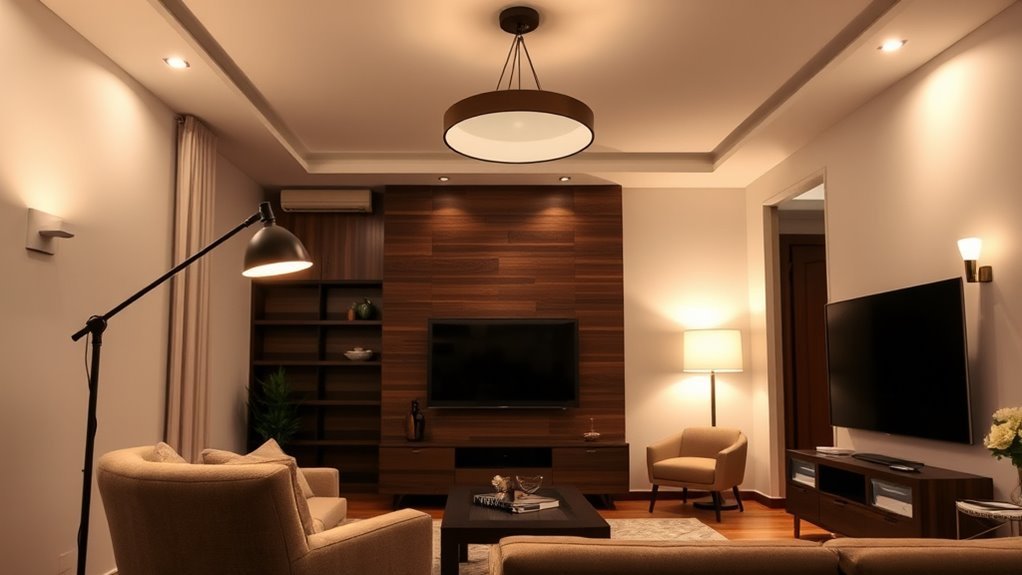
Choosing the right living room fixture comes down to how it shields the bulb and directs the beam. TV zones need diffused, indirect glow that stays behind or beside the panel, while reading seats need shielded downward beams that stop at the edge of the chair.
Recommended Products

【Wireless & Long-Lasting Power】 The built-in 8000mAh rechargeable battery makes these renter friendly sconces completely cordless, offering flexible placement anywhere in your living room, bedroom, bathroom entryway stairwell or hallway—no electrical wiring needed. Whether you're reading, relaxing, or hosting, find the ideal light setting for every occasion. Emergency lighting — Using them as a backup light source during power outages.

【Wireless Sconces & Easy Installation】 NO Wiring Required! Our battery operated wall sconce set of 2 are home-friendly and incredibly easy to install: fix the scones lighting on the wall with included screws(Tips: If the wall lights cannot be light up, please rotate the lamp tube slightly)

【10000mAh Long Battery Life】Long battery life, no need to charge it frequently. Each battery-operated wall sconce features an 10000mAh rechargeable battery capacity box, which can provide up to 60 hours of continuous illumination at the lowest setting and 20 hours at full brightness per charge. What's more, it is also a backup reliable lighting during power outages. Equipped with Type-C charging cable to charge
Best Fixtures for TV Viewing
- LED bias lighting behind the TV: attaches to the rear of the television and reflects off the wall. Home theater standards (SMPTE and ITU-R D65) specify a 6500K neutral white light with a Color Rendering Index (CRI) of 90+ dimmed to 10% or less of the screen’s peak brightness so your eyes perceive deeper blacks and accurate colors. If you prefer a cozier living room look when the TV is off, choose a tunable white strip that switches between 6500K for cinema and 2700K–3000K for everyday lounging.
- Diffused wall sconces flanking the media wall: mount sconces 60 to 66 inches off the floor and at least 18 to 24 inches outside the left and right edges of the TV. Choose frosted glass or fabric shades that hide the bulb completely.
- Shaded table or torchiere floor lamps behind seating: placing lamps behind or to the far sides of the sofa illuminates the room without entering the reflection angle of the screen.
- Baffled or gimbal recessed downlights on dimmers: if you use ceiling cans, select deep regressed baffles with a 30-degree or greater cutoff angle so you never see the bright light source unless you stand directly beneath it.
Best Fixtures for Reading
- Pharmacy or adjustable gooseneck floor lamp: lets you aim a focused beam directly onto a book while an opaque metal shade blocks side spill toward the TV viewer next to you.
- Table lamp with a dense fabric or lined shade: works well on an end table when the bottom of the shade aligns with seated eye level (40–42 inches from the floor), preventing you from staring into the bare bulb.
- Plug-in or hardwired swing-arm wall sconce: ideal beside a reading chair in tight corners; mount it so the bottom of the shade sits roughly 48 inches off the floor and swings over your shoulder.
How to Avoid TV Glare
Light reflects off a flat TV screen at the exact same angle it hits it—just like a billiard ball bouncing off a rail. Any unshaded bulb, bright lampshade, sunlit window, or backlit doorway inside that reflection cone will appear on the glass. Keep fixtures to the sides of the screen, behind the main seating line, or hidden behind the TV bezel, and use matte wall paint behind the media console to prevent glossy hot spots.
Use a Three-Position TV Glare Test
- Front-seat check: sit in the primary center viewing spot with the TV turned off, then switch on one light source at a time. Reposition, shade, or dim any fixture that shows up in the dark glass.
- Side-seat check: repeat the inspection from the far-left and far-right seats on your sofa or sectional. Because reflection angles widen off-axis, a table lamp that looks invisible from the center seat often reflects sharply for a side viewer.
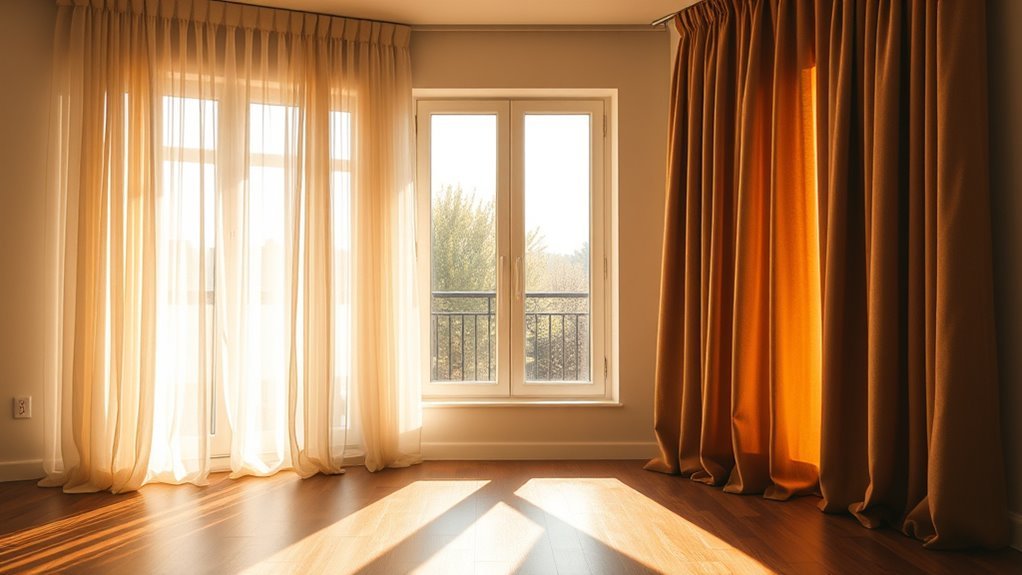
- Peak-daylight check: inspect the dark screen during the brightest hour of afternoon sun. Close sheer or blackout curtains, adjust blind slats upward, or swivel the TV mount slightly before trying to overpower daylight with indoor lamps.
Fixing position before brightness is the golden rule of glare control. Moving a lamp 12 inches or swapping a translucent glass shade for a lined drum shade solves glare without leaving the room dark.
Choosing Bulbs: Lumens, Color Temperature, and Compatibility
Selecting the right LED bulb is just as important as picking the fixture. When shopping, compare lumens instead of watts. Lumens measure actual light output (brightness), whereas watts measure electrical power draw. The U.S. Department of Energy notes that 450 lumens replaces a 40-watt incandescent bulb, 800 lumens replaces a 60-watt bulb, 1,100 lumens replaces a 75-watt bulb, and 1,600 lumens replaces a 100-watt bulb.
Next, check the bulb’s correlated color temperature (CCT) on the Kelvin (K) scale and its Color Rendering Index (CRI). For a cozy residential feel, 2700K (warm white) to 3000K (soft white) is the standard living room range. Keep all ambient and accent lamps within 200K–300K of each other so the room looks cohesive rather than patchy, and look for a CRI of 80+ (the ENERGY STAR minimum) or 90+ so wood tones, fabrics, and artwork look natural. As explained in the Federal Trade Commission Lighting Facts guide, every medium screw-base bulb package includes a standardized Lighting Facts label listing lumens, estimated yearly energy cost, lifespan, light appearance (Kelvin), and wattage.
| Living Room Layer / Fixture | Target Brightness (Lumens) | Incandescent vs. LED Watts | Color Temperature & CRI |
|---|---|---|---|
| Ambient table lamp or wall sconce | 450–800 lumens per bulb | 40W–60W incandescent / 4.5W–10.5W LED | 2700K–3000K, CRI 80+ (90+ preferred) |
| Overhead ceiling fixture or torchiere | 1,100–1,600 lumens total | 75W–100W incandescent / 9.5W–18W LED | 2700K–3000K, dimmable, CRI 80+ |
| Reading floor or desk task lamp | 450–800 lumens (directed) or up to 1,100 lumens | 40W–75W incandescent / 5W–14W LED | 2700K–3000K for relaxation; 3000K–3500K for detailed crafts |
| Shelf, plant, or artwork accent light | 150–400 lumens | 15W–30W incandescent / 2W–5W LED | 2700K–3000K, CRI 90+ for accurate art colors |
| TV rear bias lighting strip | Dimmed to 10% or less of TV peak brightness | Low-voltage USB or plug-in LED strip (typically 4W–10W) | 6500K (D65 standard, CRI 90+) for cinema accuracy, or 2700K–3000K tunable |
- Check enclosed-fixture ratings: if a ceiling globe or sconce completely seals the bulb inside glass, verify the LED box says “approved for enclosed fixtures” so trapped heat does not shorten the driver’s life.
- Match base and bulb shape: standard table lamps typically use medium screw bases (E26) with A19 omni-directional bulbs, while recessed cans often use wide-beam BR30 floods.
Recommended Products
✔ 2700K WARM YELLOWISH LIGHT: The A19 dimmable LED light bulbs give off 800 lumens of 2700k cozy color light. Easy installation with the standard medium screw base E26. NOTE: Please confirm the Kelvin (K) value. This is the most accurate way to select your desired light color. This bulb is 2700K light, which produces a WARM YELLOWISH light. It is not a Bright White or Daylight White bulb. If you prefer a whiter light, please consider our 4000k Cool White or 5000K Daylight options.

[Smooth Dimmable] With stepless dimmable range from 800lm down to 10%, adjust LED light bulb brightness of your space according to preference; No buzz & No flicker, smooth and comfortable lighting experience
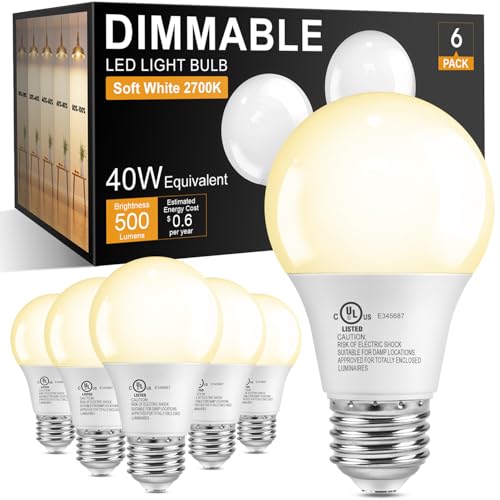
Dimming Range 10%-100%: Dimmable LED light bulbs compatible with most LED dimmers for smooth dimming. Compatibility Note: Best performance with LED dimmers. May flicker with halogen dimmers at low settings. Not for 3-way fixtures. Adjust brightness to control your space's look and feel
Implementing Dimmable Lighting for Flexible Use
Dimmers let the exact same fixtures provide 20 foot-candles for Saturday cleaning and 2 to 5 foot-candles for Sunday night movies. However, LED bulbs do not dim the same way old incandescent filaments do. The U.S. Department of Energy advises confirming both that the LED bulb is marked “dimmable” on its packaging and that it is compatible with your specific dimmer switch.
Older rotary or slide dimmers designed for 60W–600W incandescent loads often cause low-wattage LED bulbs to buzz, pop on suddenly, or flicker at low settings. Upgrade wall controls to modern LED-rated (CL or LED+) dimmers, or use plug-in lamp dimmers and smart bulbs. If your dimmable LEDs still flicker at their lowest setting, follow the Lutron low-end trim troubleshooting guide to raise the dimmer’s minimum brightness threshold until the dimming curve stays completely stable.
Warning: Do not install hardwired fixtures, replace wall switches, add recessed downlights, or modify house circuits unless you are trained to do so safely. The Electrical Safety Foundation International lists frequent breaker trips, dimming or flickering lights when appliances kick on, buzzing switches, warm wall plates, and discolored outlets as warning signs of an overloaded or failing electrical system. Always hire a licensed electrician to inspect those hazards and perform hardwired installations.
Recommended Products
ENERGY EFFICIENT: These 9W LED light bulbs provide the brightness of 60 watt light bulbs, saving $55.87 in energy costs over their lifetime compared to the incandescent equivalent

【Dimmable & Versatile】Smoothly adjust brightness with TRIAC dimmer compatibility. Tailor your lighting from soft to bright, ideal for relaxing evenings or task-focused environments. Not compatible with smart dimmers

【Efficiency Meets Comfort】 Dalattin's A19 engergy saving LED bulbs replace 60W incandescents with just 9W while delivering full 800 lumens brightness, slashing energy usage by up to 85%. This eco-conscious choice not only saves you approximately $1.08 annually per bulb but also ensures a cooler operation,and enhancing safety. With a lifespan of up to 13.7 years (at 3 hours daily use), they provide a lasting, no worry experience.
Use Scenes Instead of One Brightness Level
Group your fixtures on separate switches, smart plugs, or dimmer presets so you can trigger five everyday living room scenes:
- Movie night: TV bias light on at 5%–10% brightness, rear corner lamps dimmed to 10%–20%, and overhead lights turned completely off.
- Reading while the TV is on: shielded task lamp beside the reader set to 70%–100% and aimed strictly at the page, bias light on low, and ambient lamps at 20%.
- Hosting and conversation: table lamps and wall sconces at 50%–60%, shelf or art accent lights on, and overhead cans dimmed to 30% so faces look warm and shadow-free.
- Cleaning and hobbies: overhead ambient fixtures and lamps at 100% brightness (around 20 foot-candles across the floor).
- Daytime viewing: window shades adjusted to block direct sun on the screen, with a single corner lamp turned on only if the back of the room feels shadowy.
How to Maximize Natural Light in Your Living Room
Daylight makes a living room feel spacious and welcoming, but direct sun or a bright window reflected in a TV screen can ruin daytime viewing. Because the sun’s angle shifts from morning to late afternoon and sits lower in winter than in summer, your window strategy needs adjustable layers.
Use these five adjustments to balance natural light with your television:
- Mount the TV perpendicular to windows: placing the screen at a 90-degree angle to windows—rather than directly opposite them—keeps the brightest sky view out of the reflection path.
- Hang dual-layer window treatments: combine light-filtering sheer curtains or solar shades (which soften glare while preserving daylight) with blackout-lined drapery panels you can close for afternoon movies or sports.
- Angle horizontal blinds upward: tilting Venetian or wood blind slats toward the ceiling bounces daylight upward as indirect ambient light instead of onto the TV glass.
- Check mirror angles carefully: hang mirrors on walls where they bounce window light deeper into dark corners, never where a seated viewer sees a sunlit window reflected into the television.
- Avoid placing the TV in front of a window: silhouetting the screen against a bright window creates severe contrast fatigue and hides picture detail during the day.
Evaluating Your Lighting Plan for Comfort and Functionality
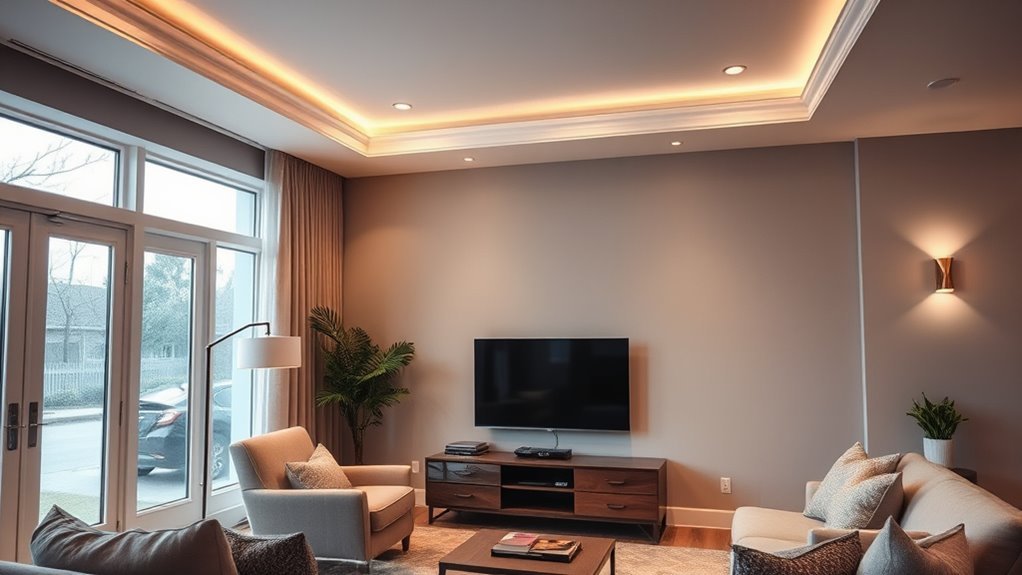
Once your lamps, bulbs, and window coverings are in place, test the room across a full 24-hour cycle. A layout that looks balanced on a cloudy morning can reveal harsh reflections at sunset or leave a reading chair too dim at 9 p.m.
Assess Lighting Effectiveness Regularly
- Run the black-screen reflection check at night with your movie-night scene active, then turn on a dark film scene with subtitles to verify comfortable contrast.
- Sit in every sofa and armchair position to ensure no one is looking directly under a lampshade at an exposed bulb.
- Read a printed book in your designated reading chair for 10 minutes; if you lean toward the lamp or squint, move the shade closer or step up from a 450-lumen bulb to an 800-lumen bulb.
- Turn on your hosting scene and check that all four corners of the room have balanced illumination without dark dead zones.
- Walk every doorway and traffic path to verify that lamp cords are tucked safely against walls or under low-profile cord channels.
Adjust Based On Activities
Fine-tune one layer at a time whenever something feels off. If the room feels overly bright during evening TV shows, dim the overhead or ambient lamps before touching your reading light or TV bias strip. If dark movie scenes still look washed out, turn off fixtures facing the screen and rely on backlighting behind the TV plus a low-output lamp behind the sofa.
Troubleshooting Common Living Room Lighting Problems
Most living room lighting frustrations come down to reflection angles, single-layer reliance, or mismatched bulb specifications. Use this diagnostic table to pinpoint the cause and apply the quickest fix.
| Problem | Likely Cause | Fix |
|---|---|---|
| Bright spot or glare on the TV screen | A lamp, ceiling fixture, or window sits inside the screen’s reflection cone | Move the lamp behind the seating line, switch to an opaque shade, close window coverings, or use rear TV bias lighting. |
| Eye strain during dark movie scenes | High contrast between a bright HDR screen and an unlit, dark wall behind it | Add a dimmable 6500K (or warm 2700K) LED bias strip on the back of the TV set to 5%–10% brightness. |
| Room feels flat, harsh, or cave-like | One overhead fixture or a single corner lamp is doing all the work | Spread 3 to 5 smaller light sources (450–800 lumens each) across different corners and heights. |
| Reading chair is too dim or bothers TV viewers | Ambient light is being used for reading, or an unshielded lamp spills sideways | Place an adjustable floor or table lamp with an opaque shade 15–20 inches beside and behind the reader’s shoulder. |
| LED bulbs flicker, buzz, or drop out when dimmed | Non-dimmable LEDs, an incompatible older incandescent dimmer, or low-end trim set too low | Use dimmable-labeled LED bulbs with an LED-rated dimmer, and raise the dimmer’s low-end trim adjustment. |
| Room looks patchy (some corners yellow, others bluish) | Mixed Kelvin color temperatures (for example, 2700K mixed with 4000K or 5000K) | Standardize all ambient and decorative lamps to 2700K–3000K with a CRI of 80 or higher. |
Key Takeaways
- Calculate your room’s total brightness by multiplying square footage by 10 to 20 foot-candles (1,500–3,000 lumens for a 150 sq ft room), then divide that total across multiple fixtures.
- Test for reflections with the TV turned off from the center seat, side seats, and during peak afternoon sun before installing permanent fixtures.
- Mount wall sconces 60–66 inches high and at least 18–24 inches outside the TV edges, and align reading lamp shades with seated eye level (40–42 inches off the floor).
- Shop by the FTC Lighting Facts label: pick 450–800-lumen dimmable LED bulbs in 2700K–3000K for ambient warmth, and use 6500K (D65) or warm low-output bias lighting behind the TV.
- Hire a licensed electrician for hardwired sconces, recessed cans, new circuits, or any outlet showing signs of electrical overload.
Frequently Asked Questions
How do you light a living room with a TV?
Light a living room with a TV by combining soft, dimmable ambient lamps around the room’s perimeter, a shielded task lamp beside reading chairs, and low-output bias lighting behind the screen. Keep bare bulbs, bright shades, and uncurtained windows out of the screen’s reflection path, and put each layer on a separate dimmer or smart plug.
How do you create a living room lighting layout plan?
Start by sketching your floor plan and marking the TV, seating, windows, and electrical outlets. Multiply the room’s square footage by 10 to 20 foot-candles to find your total lumen target, then assign ambient fixtures for general glow, directional task lamps for reading seats, and accent lights for shelves or the media wall. Test every lamp against the turned-off TV screen before drilling or hardwiring.
What is the 5-7 lighting rule?
The 5-7 lighting rule is an interior design guideline suggesting that an average-sized living room looks most balanced when illuminated by five to seven distinct light sources spread across ambient, task, and accent layers. It is a visual comfort tip rather than a building code—compact apartments may only need three or four sources, while large open-concept rooms may need more.
Should you use overhead lights while watching TV?
You should generally turn off or deeply dim overhead lights while watching TV because ceiling fixtures often reflect in the screen or cast glare into viewers’ eyes. If you use recessed downlights, choose baffled trims with at least a 30-degree cutoff angle, place them away from the front of the screen, and dim them to 10%–20% for movie nights.
What bulb brightness is best for living room lamps?
Choose 450 to 800 lumens per bulb for ambient table lamps and reading lamps, 150 to 400 lumens for shelf or artwork accent lights, and 1,100 to 1,600 lumens for primary overhead fixtures on dimmers. Always compare bulbs by lumens rather than watts; an 800-lumen LED bulb provides the same brightness as an old 60-watt incandescent while using only about 6 to 10 watts.
What color temperature is best for a living room with a TV?
A warm white range of 2700K to 3000K is best for living room ambient and reading lamps because it creates a relaxed residential atmosphere. For dedicated bias lighting mounted directly behind the TV screen, video calibration standards recommend 6500K (D65 neutral white) with a CRI of 90+ to preserve accurate on-screen colors, or a tunable strip you can warm to 2700K when the TV is off.
Should you put a light behind your TV?
Yes, placing a soft, low-output bias light behind your TV reduces eye fatigue in dark rooms and makes on-screen blacks appear deeper. Aim the LED strip toward a matte wall behind the panel so the diodes remain hidden from view, and keep its output at or below 10% of the television’s peak brightness.
Are ceiling lights enough for a living room?
No, ceiling lights alone are rarely enough for a multi-purpose living room because they cast overhead shadows, flatten wall depth, and often reflect in the television screen. Pair your ceiling fixture with eye-level floor or table lamps for reading and low-output accent or bias lighting near the media wall.
Conclusion
A glare-free living room lighting plan gives every seat and activity its own layer of light. Start tonight by turning off your TV, sitting in your main viewing spots with a phone camera, and checking which lamps or windows reflect in the black glass. Reposition any offending lamp behind the seating line, swap in dimmable 2700K–3000K LED bulbs, and add a subtle bias light behind the screen so your living room feels just as comfortable during a movie as it does when friends come over.
Sources
- U.S. Department of Energy – Purchasing Energy-Efficient Light Bulbs: supports lumen-to-watt replacement benchmarks (450, 800, 1,100, and 1,600 lumens), 2700K–3000K CCT guidance, CRI 80+ requirements, enclosed-fixture checks, and dimmer compatibility.
- U.S. Department of Energy – Lighting Specification Guidance: supports the definition of illuminance in foot-candles (1 foot-candle equals 1 lumen per square foot), direct versus diffuse and indirect light distribution, and interior color temperature consistency.
- Federal Trade Commission – Shopping for Light Bulbs: supports FTC Lighting Facts label metrics and LED versus incandescent wattage comparisons.
- Lutron Support Center – Flickering or Flashing LED Lights: supports raising a dimmer’s low-end trim setting to resolve low-brightness LED flicker and drop-out.
- Electrical Safety Foundation International – Home Electrical Safety: supports warning signs of overloaded circuits and hiring a licensed electrician for hardwired electrical work.