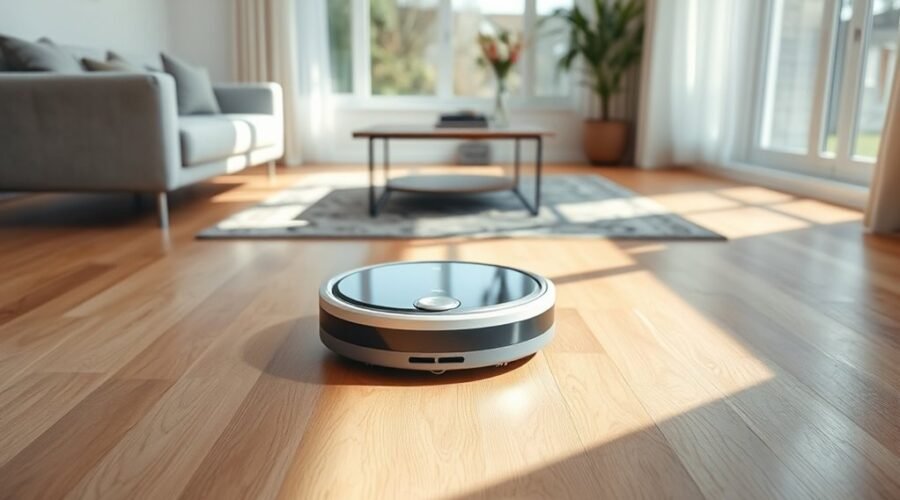
A robot vacuum is a compact floor-cleaning machine built to move on its own with limited oversight. It uses sensors, mapping tools, and software to navigate rooms, avoid obstacles, and plan efficient cleaning routes. Suction, brushes, and filtration work together to collect dust and debris from hard floors and carpets. The basics are straightforward, but the difference between models often appears in how they map, clean, and adapt to a home.
What Is a Robot Vacuum?
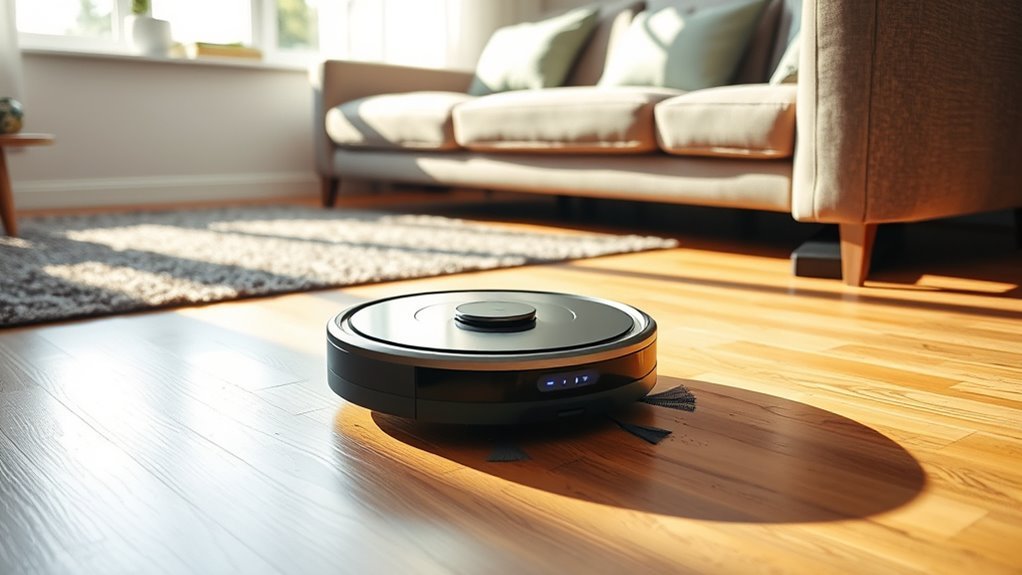
A robot vacuum is a compact electronic cleaning device designed to operate autonomously with minimal manual intervention.
As a robot vacuum cleaner, it is built to move through rooms, avoid obstacles, and remove dust from floors without constant supervision. The automated vacuum typically combines suction and rotating brushes to lift dirt, debris, and hair from hard floors and carpets. Its design reduces repetitive labor, giving users more time and less physical strain.
Built to navigate rooms, avoid obstacles, and lift dust with minimal supervision.
Many units support preset schedules, so efficient cleaning can occur while occupants focus elsewhere. When battery levels drop, the machine commonly returns to its dock for recharging and later resumes operation as needed.
Modern models may also offer smartphone control and smart home integration, allowing remote operation and status checks.
In practical terms, the device functions as a compact floor-cleaning system that automates routine maintenance.
How Robot Vacuums Map Your Home
Robot vacuums map a home by combining sensors such as LiDAR, cameras, gyroscopes, and IMUs to measure distance, track movement, and build an internal layout of the space. These robotic vacuums rely on navigation systems that convert sensor data into usable room boundaries, furniture locations, and travel paths, reducing guesswork and user dependence.
- LiDAR and cameras detect walls, doors, and obstacles.
- Gyroscopes and IMUs confirm heading and position.
- Mapping technology marks no-go zones and restricted areas.
- Real-time updates revise maps when furniture shifts.
This systematic approach lets the machine move with purpose, adapt to change, and revisit missed sections when needed. The result is a cleaner, more autonomous routine that supports practical freedom from constant manual control.
How Robot Vacuums Clean Floors
Once a cleaning cycle begins, the vacuum uses its navigation system to follow an efficient route around furniture and obstacles while its suction motor and rotating brushes lift dust, dirt, and debris from hard floors and carpets. In robot vacuum cleaners, LiDAR and camera-based obstacle avoidance help maintain coverage and reduce missed areas, supporting consistent cleaning performance without constant human oversight. Some models add mopping pads to capture fine dust and light stains that dry vacuuming may leave behind, extending floor care into a single pass.
| Function | Effect |
|---|---|
| Suction and brushes | Agitate and collect debris |
| Navigation sensors | Build routes and avoid collisions |
| Mopping module | Remove fine residue |
Regular maintenance matters: brushes should be cleared, filters checked, and the dustbin emptied so airflow stays strong. That routine preserves cleaning performance and keeps the device ready for liberated, low-effort floor care.
Smart Robot Vacuum Features to Look For
Smart robot vacuums often rely on LiDAR or camera-based navigation to map rooms, avoid obstacles, and clean with consistent coverage.
App connectivity adds practical control, enabling scheduled cleaning, remote operation, and system monitoring from a phone.
Voice control through smart home integration further streamlines use by allowing hands-free commands.
Smart Navigation
Navigation is a key factor in how effectively a robot vacuum can clean a home, and advanced models rely on technologies such as LiDAR, cameras, gyroscopes, and IMUs to build accurate maps and track movement.
Smart vacuums can navigate your home with organized, repeatable routes, reducing missed spots and wasted battery use. Real-time mapping helps them adjust when furniture shifts or doors open.
- LiDAR and camera mapping: creates detailed floor plans.
- Gyroscopes and IMUs: tracks direction and position.
- Real-time route correction: adapts to obstacles instantly.
- No-go zones: limits cleaning in selected areas.
These systems support dependable, hands-off cleaning, giving users more control over where the machine works and how thoroughly it covers each room.
App And Voice Control
App control expands a robot vacuum’s functionality by letting users start, stop, schedule, and monitor cleaning sessions from a smartphone.
Through the app, the system can display real-time mapping, set custom cleaning zones, and adjust routes for specific rooms or high-traffic areas. Alerts for battery status, maintenance needs, and completed jobs help keep performance predictable with minimal effort.
Voice assistants such as Google Home add another layer of control, allowing commands without touching a device. This supports hands-free maintenance during work, cooking, or travel.
Smart home compatibility further enables automated routines, so cleaning can begin when occupants leave or when sensors detect activity patterns.
The result is a more independent appliance that reduces oversight and restores time.
How to Maintain a Robot Vacuum
Routine maintenance keeps a robot vacuum operating at peak efficiency, beginning with regular cleaning of brushes and filters to preserve suction and capture performance.
The dustbin should be emptied frequently, and wheels and brush assemblies should be checked for tangled debris that can restrict movement.
Firmware and sensor updates should be applied as needed to improve navigation, resolve connectivity issues, and maintain reliable operation.
Clean Brushes And Filters
Regular maintenance of a robot vacuum’s brushes and filters is crucial for preserving suction power and cleaning efficiency. Effective cleaning of brushes and filters reduces drag, supports airflow, and helps the machine work with less resistance, giving users more freedom from manual labor.
- Clean brushes weekly to remove hair, threads, and debris.
- Inspect brushes for tangles and worn bristles that can reduce pickup.
- Check filters monthly; wash or tap out dust if the model allows.
- Replace HEPA filters every 6 to 12 months, per manufacturer guidance.
Routine care also lowers the risk of mechanical strain and keeps performance consistent across cleaning cycles.
Following the manual guarantees the vacuum remains dependable, efficient, and ready to navigate floors with minimal intervention.
Empty Bin Regularly
Alongside brush and filter care, the dustbin should also be emptied often to preserve suction performance and overall cleaning efficiency.
A robot vacuum that is allowed to run with a full bin must work harder, and that strain can reduce cleaning efficiency and shorten motor life. The empty bin task is best done after each cleaning session, or sooner when the fill line is reached, to prevent blockages and maintain airflow.
Regular dustbin cleaning also limits odors and keeps allergens from accumulating, which supports allergy sufferers. Many models provide alerts or indicators that signal when the bin needs attention.
Consistent maintenance keeps the machine operating within design limits and helps protect it from avoidable mechanical failure, while preserving independent floor care.
Update Firmware And Sensors
Keeping a robot vacuum updated through the manufacturer’s app can improve performance, fix bugs, and add compatibility with smart home systems. To maintain reliable operation, owners should update firmware and inspect sensors on a routine basis.
- Check the app for new firmware releases.
- Install updates to improve navigation and stability.
- Clean cliff and obstacle sensors with a soft cloth.
- Confirm the device maps rooms without errors.
Dirty or blocked sensors can reduce path planning accuracy and cause missed areas or falls. Regular maintenance helps the machine move independently across different surfaces while preserving cleaning efficiency.
Firmware updates often release better control logic, so the vacuum can adapt more effectively without constant user intervention.
How to Choose the Right Robot Vacuum
Choosing the right robot vacuum starts with matching the machine to the home’s surfaces and cleaning demands. A robotic cleaner should offer adjustable suction and brush types suited to carpet fibers and hard floors alike. Advanced navigation, such as LiDAR or camera mapping, helps it move systematically, avoid obstacles, and reduce wasted passes. Smart home compatibility matters for remote operation, scheduling, and voice control, freeing the user from constant supervision. Maintenance design also affects daily ease: self-cleaning dustbins and easy-access filters lower manual upkeep and keep performance steady.
| Priority | Feature | Benefit |
|---|---|---|
| Floors | Adjustable suction | Better debris pickup |
| Control | Smart home compatibility | Hands-free scheduling |
| Upkeep | Easy-access filters | Less manual work |
| Need | Tool | Result |
| Fit | Help Me Choose | Faster selection |
| Precision | LiDAR | Reliable mapping |
| Ease | Self-cleaning dustbin | Greater liberation |
Frequently Asked Questions
What Are the Downsides of Using a Robot Vacuum?
Downsides include reduced Cleaning efficiency on carpets, Battery life limits, Maintenance challenges, navigation errors, and higher cost. It often misses debris, requires frequent docking, and demands regular brush and filter cleaning for reliable operation.
Is a Robot Vacuum as Good as a Regular Vacuum?
No: a robot vacuum is generally not as good as a regular vacuum. Studies often show 20–30% less debris removed on carpets, though suction power, cleaning efficiency, and user convenience make it ideal for liberation from routine chores.
How Long Do Robot Vacuums Usually Last?
Most robot vacuums last 3 to 5 years. Battery lifespan usually drops after 2 to 3 years, while regular maintenance tips and occasional parts replacement preserve cleaning efficiency and extend useful service life.
Do Robot Vacuums Need Wi-Fi?
No, a robot vacuum does not need Wi‑Fi—yet the full story unfolds later. Basic operation works offline, but robot vacuum features, smart navigation, and maintenance tips improve with connectivity, granting users greater control and freedom.
Conclusion
In conclusion, a robot vacuum combines mapping, navigation, suction, and brush action to automate floor care with minimal oversight. In a practical sense, it acts like a small, methodical crew that traces a home, avoids obstacles, and removes debris room by room. One user noted that after weekly scheduling was enabled, visible dust buildup dropped by nearly half, illustrating how consistent automation can turn cleaning from a chore into a reliable background process.