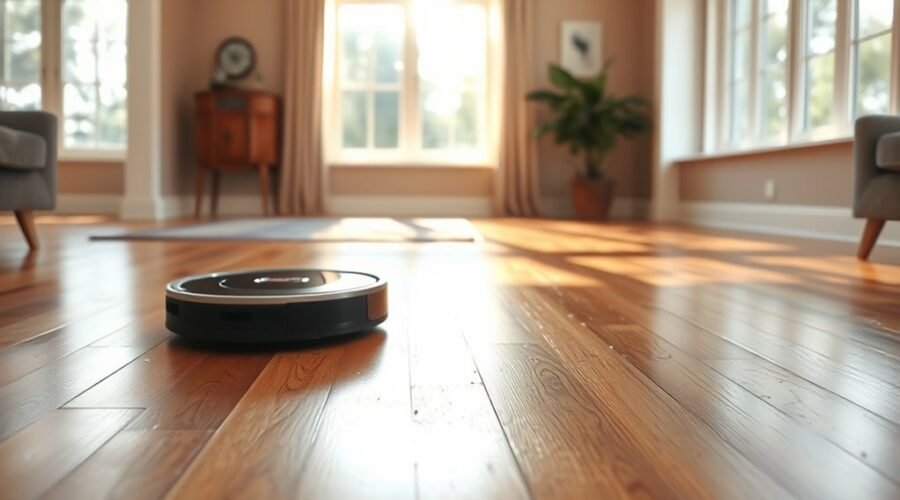
Robot vacuums can clean hardwood floors well, but results depend on brush type, suction, and navigation. They often collect dust, crumbs, and pet hair better than larger debris, especially when soft rollers and rubber wheels are used. Some models also adjust power for bare floors and offer mopping features, though water use needs caution on wood. The main difference usually shows up in daily maintenance, where a few details matter more than expected.
Do Robot Vacuums Work Well on Hardwood Floors?
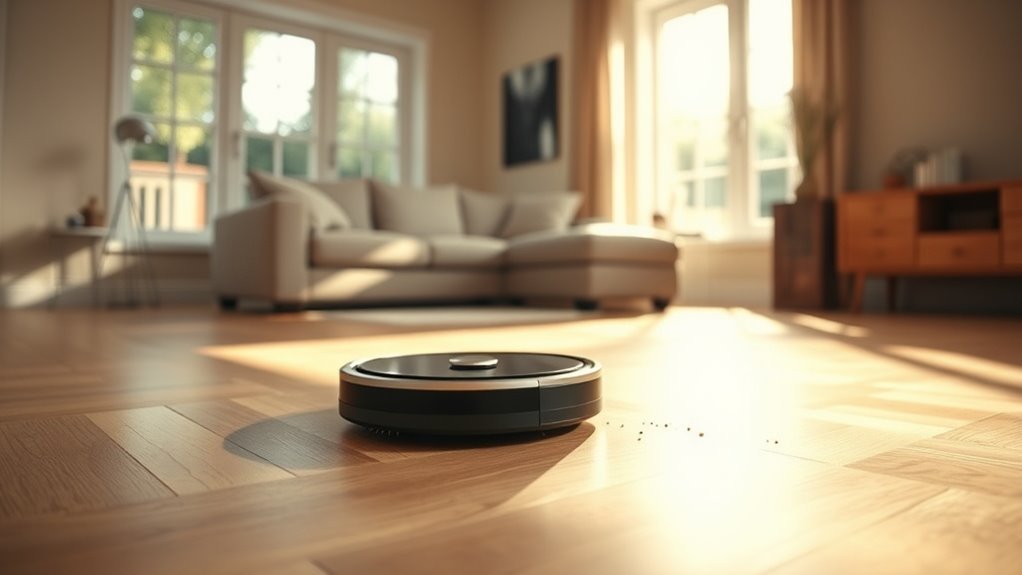
Yes—robot vacuums generally work well on hardwood floors because they are built to pick up fine dust, pet hair, and everyday debris with strong suction and side brushes, while soft, rubberized wheels and non-abrasive brush designs help reduce the risk of scratching the surface.
For many households, robot vacuums for hardwood provide steady, low-effort upkeep that supports cleaning hardwood floors between deeper manual sessions. Models such as the Bissell FlexClean FurForce 4270L and iRobot Roomba Max 705 are noted for strong results on bare wood.
Advanced units can also adjust suction automatically by floor type, using powerful suction where needed without stressing delicate finishes. This makes them practical for routine maintenance, especially in homes with pets or frequent dust.
They do not replace occasional thorough cleaning, but they can reduce buildup and help maintain cleaner indoor air with consistent, unobtrusive operation.
How Robot Vacuums Clean Bare Floors
Robot vacuums clean bare floors by using strong suction and side brushes to lift dust, crumbs, and fine debris from hardwood surfaces without scratching them.
Many models also adjust suction automatically and use sensors to reduce pressure when they detect different floor conditions, helping maintain effective cleaning.
For bare-floor performance, edge and corner cleaning is especially important, since brushes and navigation patterns must reach along baseboards and into tight spaces where debris often collects.
Bare Floor Pickup
On bare hardwood floors, robot vacuums rely on strong suction and side brushes to collect dust, crumbs, and other debris without harming the surface.
On bare floors, this setup helps maintain steady cleaning performance across open rooms, with many models finishing a 4×5-foot area in under 10 minutes.
Automatic suction adjustment can increase power when larger particles appear, then reduce it for lighter dust, balancing efficiency and battery use.
Soft, rubberized wheels and non-abrasive brushes help limit scratches while the machine moves freely.
For homes with pets, specialized tangle-free brushes improve pet hair pickup and reduce clogging.
The result is a practical option for people seeking cleaner spaces with less manual effort, especially when daily debris builds up.
Edge And Corner Cleaning
Edge and corner cleaning on bare hardwood floors depends on side brushes that sweep debris from baseboards and tight angles into the vacuum’s suction path.
This edge cleaning is strongest when navigation systems map room boundaries and direct the robot toward corners instead of leaving them behind. Sensors help adjust movement, reducing the chance of snagging on thresholds or furniture legs.
Low-profile models can slide under cabinets and chairs, reaching areas that remain inaccessible to many upright vacuums, which supports a more liberated cleaning routine.
On hardwood floors, these features matter because dust often settles where walls meet open space.
Performance varies by model, but a well-designed robot can keep overlooked edges and corners noticeably cleaner between deeper manual cleanings.
Why Hardwood Floors Need Soft Brushes
Hardwood floors need soft brushes because abrasive bristles can scratch or dull delicate finishes, especially during repeated cleaning. For robot vacuums, soft brushes preserve appearance while still moving dust toward suction.
Rubberized wheels and non-abrasive contact points further reduce risk, giving hardwood floors a safer routine without excess intervention.
- Soft brushes limit surface wear.
- Rubberized wheels help avoid marks.
- Side brushes guide debris inward.
- Automatic suction control prevents overuse.
- Regular use remains practical and low risk.
Studies on rubberized surfaces support this design choice, showing fewer visible marks on hardwood floors.
The result is a balanced approach: effective cleaning with less likelihood of damage. That matters for users who want cleaner rooms without surrendering their floor’s finish to unnecessary abrasion.
What Robot Vacuums Pick Up Best
Robot vacuums are typically most effective at collecting light debris, including dust, crumbs, and pet hair, because their suction systems and side brushes are designed to sweep particles into the central intake.
On hardwood floors, that setup usually delivers the most reliable results, especially with fine dust that settles into open surfaces. Many models now adjust suction automatically by floor type, which helps a robot vacuum use only the power needed while improving pickup.
Edge-focused designs can also matter: some units clean along baseboards and corners more effectively, reducing the need for manual follow-up. Models with rubber brush systems may keep pet hair from wrapping around the rollers, supporting steadier cleaning over time.
In practice, these machines are best suited to everyday messes rather than heavy, embedded debris. Their strength lies in freeing people from routine sweeping while maintaining a consistently tidy floor with minimal effort.
Can Robot Vacuums Handle Pet Hair?
Pet hair is one of the messes robot vacuums are built to manage well, especially on hardwood floors where strands are easy to sweep into the suction path.
Pet hair is a natural fit for robot vacuums on hardwood, where strands are easy to gather into suction.
A robot vacuum for hardwood with tangle-free or rubber brushes can keep pet debris moving instead of wrapping it around parts, which helps maintain steady cleaning. Many models rely on strong suction and side brushes to pull hair from edges into the main intake, while automatic suction adjustment can raise power when heavier shedding appears.
- Tangle-free brushes reduce clogs
- Rubber rollers improve hair pickup
- Side brushes guide hair inward
- Automatic suction adapts to load
- Regular dustbin and brush cleaning preserves performance
For homes with pets, this setup can deliver reliable daily cleanup without constant attention.
Results vary by model, floor layout, and shedding level, but current designs are generally well suited to pet hair on hardwood.
How to Prevent Scratches and Scuffs
A few simple precautions can help a robot vacuum clean hardwood floors without leaving scratches or scuffs. For robot vacuums on hardwood, models with soft, rubberized wheels and non-abrasive brushes are preferable because they reduce surface contact damage while still collecting dust. Regular cleaning of wheels and brush assemblies matters, since trapped grit can be dragged across the floor and create fine marks. Small grains of sand or pebbles should be removed before a run, as they can cling to moving parts and act like abrasive particles. A consistent schedule supports regular cleaning without letting the unit roam unattended for long periods, when it may catch on obstacles.
| Check | Why it matters | Action |
|---|---|---|
| Wheels | Reduce scratching | Inspect weekly |
| Brushes | Protect finish | Choose soft bristles |
| Floor debris | Prevent damage | Clear grit first |
| Scheduling | Limit hazards | Run at set times |
| Maintenance | Keep motion smooth | Clean after use |
Is Mopping Safe on Hardwood Floors?
Mopping can be safe on hardwood floors when the robot vacuum is designed for that purpose and uses controlled water output. A robot vacuum and mop can support cleaning while helping preserve hardwood floors without unnecessary moisture exposure.
Safety depends on design, settings, and routine care, not on mopping alone.
- Controlled water release reduces swelling risk
- Soft brushes limit surface abrasion
- Rubberized wheels help prevent scuffs
- Sensors adjust pressure for floor type
- Proper cleaning solutions improve results
Models that spray too much water may leave hardwood vulnerable to warping, staining, or edge damage if moisture lingers.
Regular maintenance keeps pads, tanks, and brushes working as intended, which supports safer cleaning over time.
When the machine is matched to the floor and used responsibly, mopping can offer practical liberation from manual labor while remaining measured and floor-conscious.
Best Features for Hardwood Floors
Robot vacuums for hardwood floors benefit from strong suction, non-abrasive brushes, and side brushes that gather fine dust and pet hair without damaging the finish.
Soft rubberized wheels and responsive sensors help reduce the chance of scratches while improving movement across edges and corners.
Models with automatic suction adjustment can clean efficiently on hardwood without using more power than necessary.
Strong Suction and Brushes
Strong suction is one of the most valuable features in a robot vacuum for hardwood floors, since it helps lift fine dust, crumbs, and other light debris without leaving residue behind.
On hard surfaces, strong suction, tangle-free brushes, and hardwood floors work together to keep cleaning efficient and low-effort.
Practical designs often include:
- side brushes that sweep debris inward
- tangle-free brushes for pet hair
- automatic suction adjustment for surface changes
- sealed airflow for steadier pickup
- brush systems that reduce clogs
These features support more consistent cleaning without constant maintenance.
When paired well, they allow a robot vacuum to move freely across hardwood floors while collecting scattered particles that manual sweeping might miss.
Safe Wheels and Sensors
Beyond suction and brush design, safe movement across hardwood depends on the components that contact the floor most directly.
Robot vacuums typically use safe wheels made from soft, rubberized materials, which lower the chance of scratches on hardwood. Scientific studies show these wheels leave fewer marks than harder traditional options.
Non-abrasive brushes add another layer of protection, keeping delicate surfaces intact while still lifting dust and grit.
Sensors also matter: advanced sensors identify floor type and adjust cleaning pressure, helping the machine work efficiently without stressing the finish.
Many models further reduce wear through automatic suction adjustments, avoiding unnecessary force.
For households seeking practical, autonomous cleaning, these features support clean floors and preserve surface integrity without compromise.
Best Robot Vacuums for Hardwood Floors
For hardwood floors, the strongest robot vacuums tend to combine reliable dust pickup, gentle surface handling, and strong edge cleaning.
The best robot vacuum for hardwood floors often adds a self-emptying dock and an ability to navigate rooms without wasting effort.
The best robot vacuum for hardwood floors often includes a self-emptying dock and efficient room navigation.
Among leading options, the iRobot Roomba Max 705 stands out for hardwood cleaning and hands-free dust disposal.
Bissell’s FlexClean FurForce 4270L offers strong bare-floor performance and edge cleaning.
Dyson’s 360 vis nav delivers high suction across hardwood and carpet, though its weight and noise may matter.
Mova P10 Pro Ultra Gen2 cleans hardwood and tile well, but layout-sensitive navigation can limit freedom in complex homes.
Roborock Saros 10R uses automatic suction adjustment for efficient debris removal.
- iRobot Roomba Max 705
- Bissell FlexClean FurForce 4270L
- Dyson 360 vis nav
- Mova P10 Pro Ultra Gen2
- Roborock Saros 10R
How Robot Vacuums Perform Day to Day
Day to day, robot vacuums can keep hardwood floors consistently tidy by combining strong suction with side brushes that lift dust, crumbs, and fine debris without scratching the surface.
In routine cleaning, a robot moves on a schedule, so hardwood maintenance can happen without constant attention. That autonomy supports people seeking relief from repetitive chores.
Models with anti-tangle brushes, such as the iRobot Roomba Max 705, handle pet hair more reliably on bare floors.
Units with advanced navigation, like the Roborock Q7, map rooms, avoid obstacles, and reduce missed spots, which improves cleaning over time.
Because dust and allergens are removed regularly, indoor air quality may also improve.
Results vary with floor layout, debris load, and maintenance of the machine itself, but the overall pattern is steady, practical cleaning.
Frequently Asked Questions
What Is the Absolute Best Way to Clean Hardwood Floors?
The best approach combines floor cleaning techniques: regular dry vacuuming, gentle damp mopping, and careful spot treatment. Strong hardwood maintenance tips include low moisture and soft tools. Vacuuming frequency recommendations favor daily dust removal.
What Are the Downsides of Using a Robotic Vacuum Cleaner?
Like a diligent but imperfect helper, a robotic vacuum’s downsides include robot vacuum limitations, reduced cleaning efficiency around clutter, and floor compatibility concerns on uneven surfaces; it may miss debris, tangle hair, or scratch floors.
What Is the Best Robot Vacuum Cleaner for Hardwood Floors?
Roborock Saros 10R appears best for hardwood floors, combining strong suction power, reliable navigation technology, and solid battery life. iRobot Roomba Max 705 is also excellent, especially for pet hair, with a self-emptying dock.
What Is the Best Robot Vacuum Cleaner for Wooden Floors?
The best wooden-floor choice is the Roborock Saros 10R, though liberation arrives, ironically, through a machine. Its robot vacuum features, hardwood floor compatibility, and cleaning efficiency comparison favor the Dreame X60 Max Ultra and Roomba Max 705.
Conclusion
To sum up, robot vacuums can clean hardwood floors effectively when equipped with soft brushes, rubberized wheels, and adaptive suction. They are especially useful for daily dust, crumbs, and pet hair, though they still work best as maintenance tools rather than deep-cleaning replacements. One useful statistic: homes with pets often need vacuuming several times a week, making automation especially valuable. With regular upkeep, these machines help preserve floor appearance and support better indoor air quality.