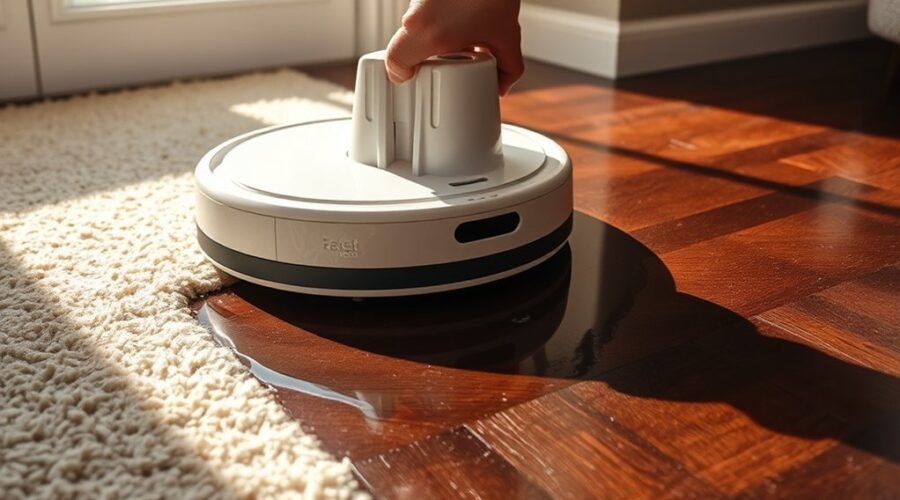
Robot vacuum mops can struggle on carpet when water delivery becomes inconsistent. A blocked nozzle, a misseated tank, or mineral buildup may interrupt flow before the mop pad ever contacts the fibers. Air trapped in the line can also mimic a failure. Each fault leaves distinct symptoms, and each points to a different fix. The next step is separating simple maintenance from a deeper system problem.
Why Your Robot Mop Won’t Dispense Water?
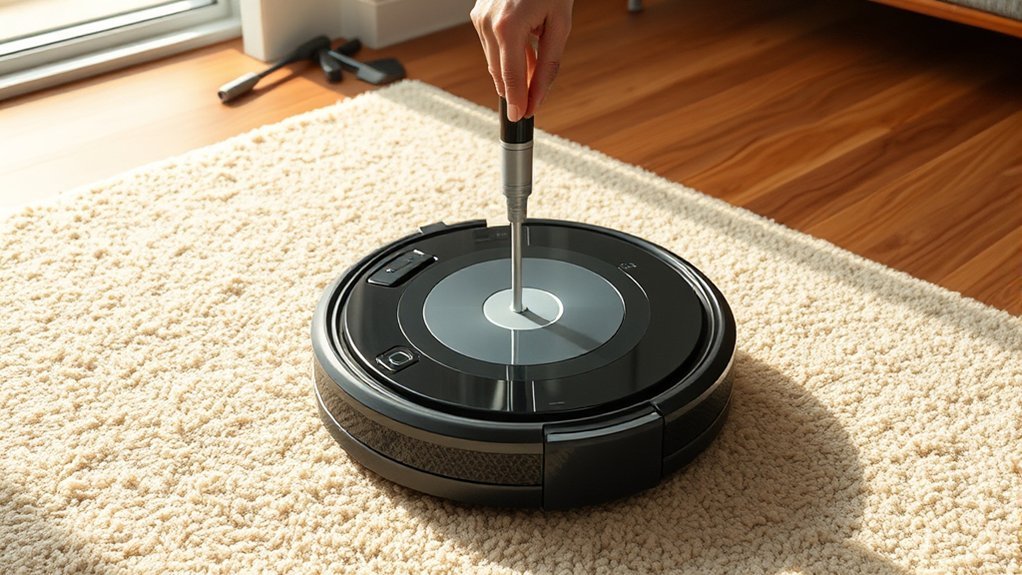
When a robot mop refuses to dispense water, the cause is often mechanical or procedural rather than electronic. The first checks should target water flow and water dispensing points: clogged outlets, a misseated water tank, or dirty pads that shed water instead of releasing it.
After refilling, trapped air in the pump can halt flow; dampening the pad primes the system and restores movement. The cleaning solution also matters. Incompatible formulas may leave residue that restricts internal channels and impairs operation.
Maintenance is thus not optional; it is the condition of freedom from recurring faults. The outlet should be cleaned, the tank rinsed, and the pads inspected after each cycle.
App-based water settings deserve verification as well, especially on models with adjustable output, because an incorrect level can appear as failure. A precise diagnostic sequence isolates the fault and returns the mop to reliable service.
How the Robot Mop Water System Works
Understanding why a robot mop fails to dispense water becomes easier once the water path is mapped. The system begins at the removable water tank, where controlled release supports steady water flow during cleaning. A pump then drives liquid through internal channels toward the mop pad, which absorbs moisture before it contacts the floor. This architecture allows precise dispensing of water without flooding surfaces and supports user control over results.
- The water tank stores supply and feeds valves and flow regulators.
- The pump maintains movement through sealed channels to the mop area.
- The mop pad receives water and transfers it to the floor.
- App controls, on models such as DEEBOT X9 PRO OMNI, can set up to 50 levels for ideal performance.
Clogged outlets, or a tank and mop installed incorrectly, can interrupt operation. Regular maintenance, including outlet cleaning and correct fitting, preserves efficiency and keeps the machine liberated to perform as intended.
What’s Blocking the Water Outlet?
A blocked water outlet is often caused by dirt or mineral buildup inside the nozzle, which restricts flow and prevents the mop from dispensing water evenly.
In diagnostic terms, clogged outlets reduce water flow by narrowing the passage at the water outlet, producing weak or intermittent delivery.
Mineral buildup is common where hard water leaves deposits that harden inside the channel.
Misinstalled tanks or mop pads can also create blockages by interrupting alignment in the dispensing path.
Residue from incompatible cleaning solutions may coat internal surfaces and limit movement, further impairing distribution.
Air trapped in the pump after refilling can mimic obstruction by halting water flow until pressure is restored.
Regular maintenance, including inspection and cleaning of the water outlet, helps preserve unobstructed channels and supports peak performance.
Clear pathways are essential for users seeking dependable, self-directed floor care rather than avoidable mechanical constraint.
How to Fix a Robot Mop That Won’t Dispense Water
Begin by inspecting the water outlet and nozzle for dirt or mineral buildup, since obstruction at the dispensing point is a common cause of water failure. A robot mop that loses water flow often has a clogged outlet, loose water tank, or poorly seated mop pad. Diagnose each interface in sequence.
- Remove the water tank, reseat it firmly, and confirm the valve opens.
- Check the mop pad for saturation, wear, or residue that may block proper contact.
- Dampen the mop pad, then run a short cleaning cycle to purge trapped air from the pump.
- Refill only with compatible cleaning solutions to avoid residue that impairs dispensing.
If water still does not pass, clean the nozzle again and verify that the tank latch locks fully.
Precise correction restores autonomy to the robot mop and keeps the system working without dependence on guesswork or unnecessary intervention.
How to Prevent Robot Mop Water Issues
Preventive maintenance keeps robot mop water systems stable by reducing the conditions that cause flow failure.
A robot vacuum mop should have its water tank rinsed regularly, with the outlet inspected for mineral buildup or dirt. This preserves water flow and limits dirty water residue in the dispensing path.
The mop pad must be clean, correctly seated, and fully dampened before operation; a dry or misaligned mop pad can block absorption and impair delivery.
A clean, properly seated, fully dampened mop pad ensures smooth absorption and reliable water delivery.
Only compatible cleaning solutions should be used, because improper fluids leave deposits that narrow channels and alter pump behavior.
After storage or refilling, priming the system helps remove trapped air and restores steady output.
App-based water output settings should be checked for each floor type, since excessive or insufficient flow can reduce cleaning accuracy.
Obstacle avoidance also matters, because collisions can shift the tank or pad assembly and disrupt calibrated operation.
Frequently Asked Questions
What Are the Most Common Problems With Robot Vacuums?
Common problems include reduced suction power from filter maintenance neglect and brush jams, poor battery life, navigation issues, app connectivity faults, limited dustbin capacity, and elevated noise levels. Each typically signals wear, clogging, or sensor contamination.
What Is the Best Robot Vacuum-Mop Combo According to Consumer Reports?
Consumer Reports often favors the Roborock S7 for robot features, cleaning efficiency, floor compatibility, and suction power, while iRobot Braava Jet M6 competes in brand comparisons; user reviews, maintenance tips, and price ranges still matter.
Why Isn’t My Robot Vacuum Mop Dispensing Water?
It usually fails from Water tank issues, Sensor malfunctions, Filter clogs, Battery performance, Scheduling conflicts, Cleaning mode misconfiguration, or Surface compatibility limits. Maintenance tips: inspect outlets, prime the pump, clean pads, and verify settings.
What Is the Average Lifespan of a Robot Vacuum?
Typically 4 to 6 years; neglected units may fail within 2. With robot vacuum maintenance, robot vacuum features, robot vacuum brands, robot vacuum reviews, robot vacuum comparisons, robot vacuum technology, robot vacuum pricing, robot vacuum accessories, longevity improves.
Conclusion
To conclude, reliable carpet cleaning with robot vacuum mops depends on a functional water path from tank to nozzle. A blocked outlet, improperly seated tank, closed valve, saturated pad, or trapped air can all interrupt flow. Routine inspection and purging cycles restore delivery and prevent performance loss. When maintained correctly, the system operates with near-machine perfection, turning a seemingly minor clog into an almost catastrophic cleaning failure avoided through methodical diagnostics.