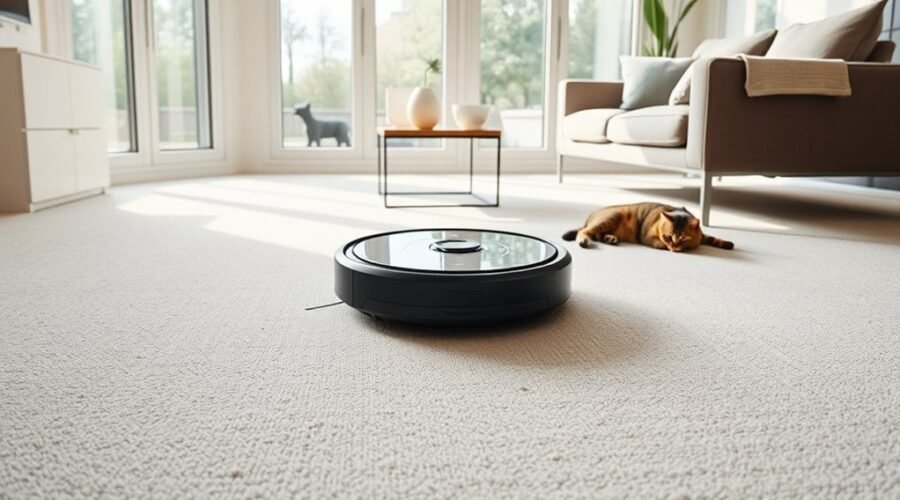
Robot vacuums for low pile carpet can remove everyday dust, crumbs, and pet hair without much effort from you. However, cleaning results depend on suction, brush design, and how well the robot covers your floors. Some models handle surface dirt easily but struggle with fine particles buried in carpet fibers. Knowing which features matter helps you get better results.
Quick Answer
Yes, robot vacuums work well on low pile carpet for routine cleaning. Models with effective rotating brushes, strong airflow, carpet detection, and reliable navigation usually perform best. They remove surface dust, crumbs, and much of the pet hair. However, deeply embedded dirt, carpet edges, and stubborn debris may still need a traditional vacuum.
Key Takeaways
- Brushroll design and real cleaning performance matter more than advertised suction numbers alone.
- Carpet Boost automatically increases suction on compatible models, although some very smooth carpets may not trigger detection.
- Dreame X50 Ultra and MOVA P50 Pro Ultra offer powerful suction and carpet-focused cleaning features.
- Dark carpets, loose rugs, long tassels, and deeply embedded dirt can still cause problems.
- Regular brush cleaning, filter care, and occasional deep vacuuming help maintain better carpet results.
Can Robot Vacuums Clean Low Pile Carpet?
)
Yes. Robot vacuums are generally effective on low pile carpet because the short fibers allow their wheels and brushes to move more easily. Compared with thick carpet, these surfaces offer better brush contact and less resistance.
A well-designed robot can pick up everyday dirt, loose crumbs, dust, and pet hair. Rotating brushes loosen particles while suction carries them into the dustbin.
Smart navigation also helps. Robots that map rooms systematically can cover open carpeted areas and return to spots they initially miss.
However, cleaning performance is not identical across models. Some pick up large debris well but leave fine sand or dust buried near the carpet backing.
A commonly stated estimate suggests that regular robot vacuuming can remove 90–95% of dry soil by weight. However, this figure has not been verified as a universal result for robot vacuums. Actual pickup depends on the machine, carpet, debris, and cleaning method.
For most homes, the main benefit is convenience. A robot vacuum can maintain carpet cleanliness between more thorough cleaning sessions.
What Low Pile Carpet Needs From a Vacuum
Low pile carpet has short, closely packed fibers that are easier to clean than long, plush fibers. Some carpet descriptions use heights under 0.5 inches, although the exact classification varies.
These carpets need a vacuum that combines effective suction, brush contact, and consistent coverage.
- Steady suction: Pulls loosened dust and debris away from carpet fibers.
- Rotating brushroll: Agitates fibers to release trapped crumbs, hair, and dirt.
- Reliable navigation: Helps cover the carpet without repeatedly missing the same areas.
- Suitable brush design: Maintains contact without pulling or snagging delicate carpet fibers.
- Good filtration: Helps keep collected dust inside the vacuum rather than releasing it into the room.
Carpet density also matters. A tightly woven low pile rug may behave differently from a softer carpet with similar fiber height.
For delicate or specialty rugs, check the carpet manufacturer’s cleaning recommendations before using an aggressive brush setting.
Best Features for Low Pile Carpet
The most useful features for low pile carpet are strong cleaning performance, carpet detection, effective brushes, and dependable navigation. A large suction number alone does not guarantee that a robot will remove more dirt.
Look for features that help the robot maintain contact with the carpet and complete each cleaning session without getting stuck.
Strong Suction Matters
Strong suction helps remove debris after the brushroll loosens it. Robot manufacturers commonly measure suction pressure in pascals, abbreviated as Pa.
Older models often advertised around 1,500–2,000 Pa. However, many newer models offer considerably higher ratings.
According to the ECOVACS suction power guide, standard robot vacuums commonly offer around 2,500–5,000 Pa, while advanced models may exceed that range.
Still, higher Pa does not automatically mean better carpet cleaning. Airflow, brush design, floor contact, and dirt pickup are also important.
When choosing a machine, prioritize measured carpet performance over the largest advertised number.
Carpet Mode And Brushes
Carpet mode automatically adjusts cleaning power when a robot detects a carpeted surface. This helps it use stronger suction where fibers hold more debris.
For example, Roborock’s Carpet Boost feature increases suction when the machine recognizes carpet and returns to normal power on hard floors.
Some very smooth, short-pile carpets may not trigger automatic detection. If your robot offers manual suction settings, choose a suitable carpet mode when needed.
Rotating brushes work alongside suction by lifting debris from the fibers. Dual-brush systems and anti-tangle designs can be particularly useful in homes with pets.
Advanced navigation helps the robot move between carpet and hard flooring while maintaining consistent coverage.
How Suction Power Affects Pickup
Suction power affects how effectively a robot vacuum pulls loosened particles into its dustbin. However, the advertised pressure rating is only one part of the cleaning process.
A robot with 2,000 Pa may handle light surface debris, while models advertising 3,000–5,000 Pa or more may offer greater suction capacity. Actual results still depend on airflow and brush contact.
Higher power can help with fine particles and pet hair, but it cannot compensate for a poorly designed brush or missed areas.
Different debris types also create different challenges:
- Fine dust: Requires good airflow, filtration, and repeated brush contact.
- Pet hair: Benefits from an effective brushroll and resistance to tangling.
- Crumbs: Need enough cleaning-head clearance to reach the suction opening.
- Embedded sand: Is harder to remove because particles settle between fibers.
When a carpet remains dirty after one pass, increasing suction or using an additional cleaning pass may improve pickup.
However, stubborn debris near the backing may still require a full-size upright or canister vacuum.
Why Rotating Brushes Help
Rotating brushes improve carpet cleaning by loosening particles that suction alone may struggle to reach. Their movement agitates the fibers and helps lift hair, crumbs, and fine dirt.
This is especially useful on low pile carpet, where short fibers allow the brushroll to maintain steady contact with the surface.
Brushroll Lifts Debris
A rotating brushroll works by moving against carpet fibers and dislodging trapped debris. Suction then carries the loosened material into the vacuum.
Some robots use dual-brush systems to improve contact and collection. Others use rubberized rollers designed to reduce hair wrapping.
For homes with shedding pets, anti-tangle brushes can reduce the amount of hair you need to remove manually.
However, no brush design prevents every tangle. Long hair and thread can still collect around roller ends and bearings.
Regular brush inspection helps prevent reduced performance and unnecessary wear.
Agitate Carpet Fibers
Brush agitation loosens dirt by moving the carpet fibers as the robot travels across them. This makes it easier for suction to collect particles that are not sitting directly on the surface.
Different cleaning features contribute to the process in different ways.
| Feature | Effect | Benefit |
|---|---|---|
| Rotating brushes | Loosen trapped debris | Better dirt pickup |
| Dual-brush systems | Improve brush contact | More consistent collection |
| Low pile carpet | Allows easier brush access | More reliable cleaning |
| Strong suction | Carries loosened soil away | Improved debris removal |
| Regular agitation | Loosens surface buildup | Less accumulated grit |
Effective agitation can improve everyday cleaning, but aggressive brush contact is not suitable for every carpet material.
Always consider the care requirements of delicate rugs before selecting a brush or suction setting.
Best Robot Vacuums for Low Pile Carpet
The Dreame X50 Ultra and MOVA P50 Pro Ultra are two strong options for low pile carpet. Both combine powerful suction with brush systems and features designed to improve carpet cleaning.
However, their strengths are different, particularly for pet hair and obstacle avoidance.
Dreame X50 Ultra
The Dreame X50 Ultra advertises 20,000 Pa maximum suction and uses a HyperStream detangling dual-brush system.
Its advanced navigation helps it move around obstacles, while its carpet modes allow different cleaning strategies.
The machine also supports mop removal and carpet avoidance, which are useful in homes with mixed flooring.
Its main strengths are strong carpet debris pickup and sophisticated navigation. However, it can struggle with some deeply embedded fine particles and pet hair.
MOVA P50 Pro Ultra
The MOVA P50 Pro Ultra advertises 19,000 Pa maximum suction. It includes carpet-care features, obstacle detection, and automatic dock maintenance.
Its mop-removal feature helps prevent unwanted mopping on carpets.
It is also a practical option for households dealing with pet hair, although its obstacle avoidance may be less reliable in cluttered spaces.
Which One Cleans Carpet Better?
Independent RTINGS carpet-cleaning tests identify the Dreame X50 Ultra as a strong overall carpet performer, while the MOVA P50 Pro Ultra offers competitive debris pickup and better pet-hair collection in their comparison.
Choose the Dreame if advanced navigation and obstacle handling matter most. Consider the MOVA if pet-hair pickup is a higher priority.
Both can reduce routine manual cleaning, but neither guarantees complete removal of deeply embedded carpet dirt.
Where Robot Vacuums Miss the Mark
Robot vacuums handle everyday surface cleaning well, but several carpet conditions can limit their effectiveness. The most common problems involve embedded debris, navigation, rug movement, and sensor behavior.
Embedded dirt: Fine sand and soil can settle near the backing. Even repeated passes may leave some material behind.
Edges and corners: A robot’s round body may limit how closely its cleaning head reaches walls, furniture legs, and tight corners.
Dark carpets: Some robots mistake black or very dark carpet for a drop. According to Roborock’s dark-carpet guidance, cliff sensors can trigger false alerts on these surfaces.
Loose rugs: Lightweight rugs can fold, slide, or bunch up when the vacuum moves over them.
Long fringes: Tassels and threads may wrap around the roller and stop the cleaning cycle.
Fine allergens: Robots may collect dust and pet dander, but surface vacuuming does not guarantee complete allergen removal.
Another concern is moisture from combination vacuum-and-mop machines. Not every robot can lift its mop pads high enough to protect carpets.
Warning: Do not allow wet mop pads to drag across carpet. Use vacuum-only cleaning, remove the mop attachment, or create a no-mop zone when supported. Never disable or cover cliff sensors near stairs or other drops.
Some machines require extra preparation before mopping. For example, iRobot’s Roomba Combo guidance explains that certain models cannot lift their mop pads while crossing rugs.
These limitations do not make robot vacuums ineffective. They simply mean that occasional manual cleaning and correct settings remain necessary.
How to Prep Low Pile Carpet for Cleaning
Preparing low pile carpet helps your robot finish a cleaning cycle without getting tangled or stuck. The goal is to create a clear path while protecting the carpet and the machine.
Follow these steps before the first cleaning session.
- Remove larger debris. Pick up paper, large crumbs, and objects that could block the suction opening.
- Clear cords and toys. Move charging cables, small toys, socks, and other items away from the cleaning path.
- Secure loose rug edges. Flatten curled corners and fold long fringes underneath the rug where safe.
- Deep vacuum heavily soiled areas. Before the first robot run, use a full-size vacuum on thick buildup, edges, and high-traffic spots when needed.
- Check the carpet settings. Select an appropriate suction level and confirm that carpet detection or vacuum-only cleaning is configured correctly.
- Test a small area. Watch the robot’s first pass to check for excessive pulling, snagging, missed areas, or navigation problems.
- Schedule regular cleaning. Set repeat sessions that match the amount of dust, foot traffic, and pet hair in your home.
You do not need to manually vacuum the entire carpet before every robot cleaning session. A deeper first clean is mainly useful when dirt has already accumulated.
After the initial run, review the cleaned area. If debris remains in the same spots, adjust the cleaning mode or use a targeted additional pass.
Simple Maintenance Tips
Regular maintenance helps a robot vacuum keep strong pickup performance on low pile carpet. Dust buildup, tangled hair, and blocked filters can reduce efficiency even when the motor is working normally.
Use this simple routine to keep the machine running properly.
- After each cleaning cycle: Check the dustbin and empty it when needed. Inspect the brush for large tangles.
- Every week: Remove wrapped hair, check the filter, and clean dirty sensors or wheels as directed by the manufacturer.
- Every few months: Inspect brushes, filters, wheels, and other wear parts. Replace components according to the manufacturer’s schedule.
- When suction weakens: Check the air path, dustbin, brush housing, and filter before assuming the motor is faulty.
The ECOVACS robot vacuum maintenance guide recommends regular dustbin emptying, brush inspection, sensor cleaning, and periodic replacement of worn components.
Do not wash filters unless your model’s instructions say they are washable. Reinstalling a damp or unsuitable filter can damage the machine.
For homes with allergy concerns, filtration deserves extra attention. The US Environmental Protection Agency recommends vacuuming carpets weekly or more often and considering HEPA filtration to help control indoor dust.
Proper upkeep helps maintain suction, improves cleaning consistency, and reduces avoidable interruptions.
Frequently Asked Questions
What Is the Best Vacuum Cleaner for Low Pile Carpet?
The best vacuum for low pile carpet combines effective suction, a suitable brushroll, and reliable dirt pickup. A robot vacuum is convenient for routine cleaning, while an upright or canister vacuum is generally better for deep cleaning. Consider filtration, battery life, noise, price, customer reviews, and maintenance needs before choosing.
What Are the Downsides of Using a Robotic Vacuum Cleaner?
Robot vacuums may leave embedded dirt, miss tight corners, or become stuck on cords and loose rugs. They also need brush cleaning, filter maintenance, and occasional replacement parts. Battery life, operating noise, navigation reliability, app features, and purchase price can affect convenience. They cannot clean stairs or every carpeted surface.
Can a Robot Vacuum Work on Thick Carpet?
Yes, some robot vacuums work on thick carpet, but results vary by model and pile height. Thick fibers can reduce wheel traction, interfere with brushes, and trap dirt beyond the cleaning head’s reach. Look for suitable carpet settings, reliable navigation, and tested pickup performance. Very thick or shag carpets may require a traditional vacuum.
Do Robot Vacuums Clean Carpets Well?
Yes, robot vacuums clean many carpets well enough for regular maintenance, especially low pile surfaces. Their performance depends on brush design, suction, navigation, carpet density, and cleaning frequency. Models with carpet detection and effective brushrolls often provide better results. However, deeply embedded particles may still require a full-size vacuum.
Conclusion
Robot vacuums can clean low pile carpet effectively when they combine good brush contact, reliable suction, and accurate navigation. They are especially useful for keeping dust, crumbs, and pet hair under control between deeper cleaning sessions.
Choose a model with proven carpet pickup, keep its brushes and filters clean, and use occasional manual vacuuming for stubborn dirt. This combination makes routine carpet care easier without expecting a robot to handle every cleaning task.
Sources
- ECOVACS: Robot Vacuum Suction Power: Explains Pa ratings, airflow, and actual dirt pickup performance.
- Roborock: Carpet Boost Mode: Explains automatic suction adjustment on carpet.
- Dreame: X50 Ultra Specifications: Confirms suction, brush design, navigation, and carpet features.
- MOVA: P50 Pro Ultra Specifications: Confirms suction, carpet protection, and maintenance features.
- RTINGS: Best Robot Vacuums for Carpet: Independent carpet pickup testing and model comparisons.
- Roborock: Dark Carpet Sensor Behavior: Explains false cliff detection on dark carpets.
- iRobot: Roomba Combo Mopping Instructions: Explains carpet protection and mop-pad limitations.
- ECOVACS: Robot Vacuum Maintenance: Supports dustbin, brush, filter, and sensor maintenance advice.
- US Environmental Protection Agency: Indoor Particulate Matter: Supports regular carpet vacuuming and filtration recommendations.