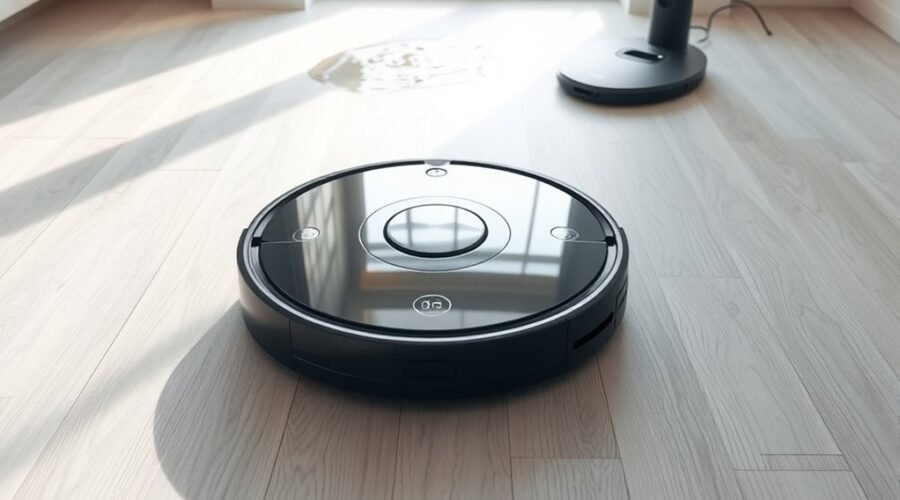
Robot vacuums can leave visible streaks after mopping when pad condition, cleaning chemistry, or water quality is off. Worn pads, excess solution, and mineral residue often cause the problem, especially on hardwood and vinyl plank. Water flow settings and surface prep also matter. The causes are usually simple, but the fix depends on the source. A few basic checks can separate a clean floor from a recurring haze.
Why Robot Mops Leave Streaks
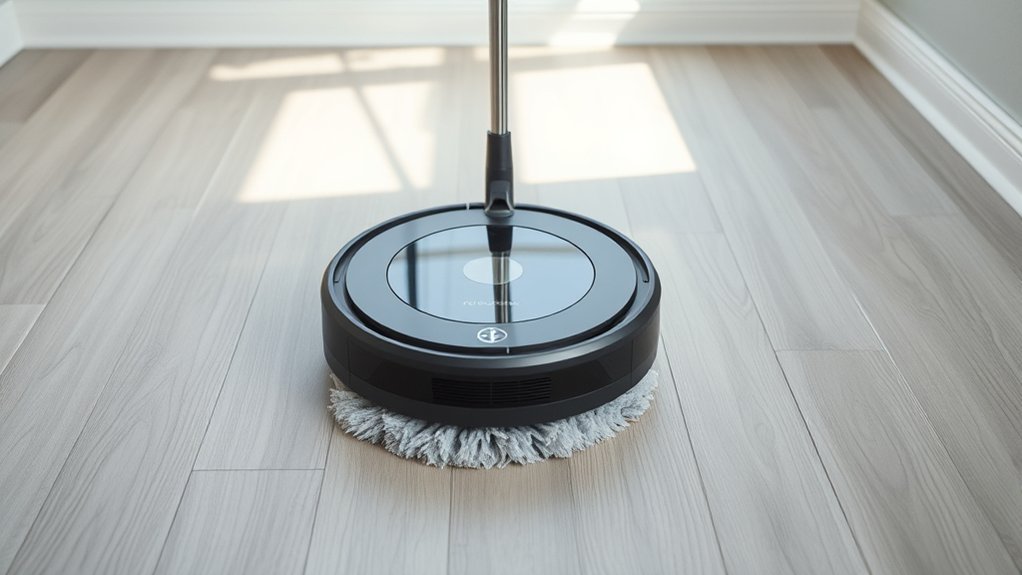
Robot mops often leave streaks when the mop pad is dirty, oversaturated, or worn, because it can spread grime back onto the floor instead of removing it.
A robot mop leaves visible residue when the wet path carries dissolved soil across the same surface repeatedly. Non-approved cleaning solution can worsen this by drying into sticky film, which becomes streaks on the floor after evaporation.
Water quality also matters: hard water deposits minerals, while dirty water adds contaminants that reduce cleaning efficiency.
Poor maintenance, such as infrequent rinsing or delayed pad replacement, compounds the problem and keeps liberation from cleaning progress out of reach.
A fresh mop pad improves contact, absorbs waste more effectively, and limits redistribution.
Running the robot in dry mode before mopping can remove loose dust and debris, reducing load on the wet cycle and lowering streak risk.
Check the Mop Pad First
A streaking robot mop often points first to the pad itself, since a dirty, worn, or overloaded pad can spread grime instead of lifting it. The mop pad should be inspected before every cleaning cycle, because residue trapped in fibers can create visible streaks and dull the floor. A fresh pad improves contact, absorption, and debris capture, giving the machine a cleaner path.
Inspect the mop pad before each cycle; a worn or dirty pad often spreads grime and leaves streaks.
- Fit a clean mop pad before each cleaning cycle.
- Wash reusable pads promptly; avoid fabric softener, which can reduce performance.
- Replace pads that look frayed, compressed, or discolored.
- Dispose of single-use wet pads after one use to prevent dirt transfer.
Routine pad checks preserve cleaning efficiency and support cleaner results with less manual correction. For users seeking liberation from repeated floor maintenance, this small inspection can remove a major source of streaks and restore consistent mopping performance.
Use the Right Cleaning Solution
Choosing the correct cleaning solution is essential for preventing streaks and protecting the robot mop’s internal components. To use the right cleaning solution, robot mops should receive only manufacturer-recommended formulas, such as Braava jet® Hard Floor Cleaning Solution or Bona Hardwood/Hard Surface Cleaner.
These products are designed for controlled evaporation and minimal residue, which supports avoiding streaks on sealed floors. Harsh commercial cleaners should be excluded because they can leave sticky films and may corrode pumps, seals, or fluid pathways.
Clean water is acceptable when the device is specified for water-only use, and low-foam solutions are preferable when additives are permitted; excess foam often translates into visible streaking. The tank should be filled according to the device’s instructions, commonly one cap per reservoir, to preserve consistent performance.
Regular flushing of the tank helps remove unapproved solution buildup, keeping floor output clean, predictable, and free from residue that undermines autonomous mopping.
Set Water Flow for Your Floors
Water flow should be matched to the floor type, since hardwood typically needs less output than tile or other absorbent surfaces.
On more porous floors, a higher setting can improve coverage and reduce patchy mopping. The setting should be adjusted until the mop leaves an even, uniform film without excess moisture.
Match Flow To Flooring
Matching water flow to the floor type is essential for reducing streaks and improving mop performance. The correct water level should follow surface absorption, not habit. A hard floor that is properly swept can usually tolerate a lower flow, while materials with more uptake may require a higher setting for removing leftover streaks.
- Identify the flooring material before starting.
- Select the lowest effective flow for each room.
- Keep settings consistent across similar surfaces.
- Inspect the roller mop and clean it regularly.
During first passes on a new surface, test and adjust in small steps. Precise matching limits excess moisture, supports cleaner passes, and gives the operator greater control over the finished result.
Raise Water On Absorbent Floors
On absorbent floors, a higher water flow setting helps the mop saturate the surface evenly and clean more effectively, which can reduce streaking.
On porous surfaces, water is absorbed quickly, so a stronger setting supports consistent mopping and limits dry patches that leave streaks.
Different flooring materials also require different flow levels, because their absorption rates vary and affect cleaning performance.
When soil load increases, the flow may need to rise to keep the pad wet enough for removal of grime.
Regular inspection of the floor condition gives the user control over water delivery and prevents uneven moisture distribution.
This adjustment preserves performance, reduces repeated passes, and supports a more liberated, efficient cleaning routine on absorbent floors.
Adjust For Even Coverage
Adjusting water flow to the floor type improves coverage and reduces streaking, especially on absorbent surfaces where higher settings help maintain a consistent wet pad.
A Robot Mop used for floor cleaning should not rely on default output; operators should adjust water flow to match tile, hardwood, or composite surfaces. Low or medium levels can dry too quickly, leaving streaks and uneven passes.
- Set higher flow on porous floors.
- Use moderate flow on sealed hardwood.
- Check the roller mop for residue.
- Maintain a routine to prevent leaving streaks.
Regular calibration supports clean, even coverage and preserves user control over the process. Properly tuned water delivery produces liberation from repeated touchups and reduces unnecessary labor.
Clean the Tank and Docking Station
Keeping the tank and docking station clean helps prevent streaks and preserves mopping performance. The tank should be emptied and rinsed after each use so leftover cleaning solutions do not settle into residue that promotes streaking.
Any buildup on the tank walls or cap can alter water quality and reduce cleaning consistency. The clean-water tank should also be inspected for hard water mineral deposits, since mineral scaling can impair flow and leave visible marks on floors.
The docking station requires equal attention: dirt, debris, and dried fluid can transfer onto mop pads and contaminate fresh water. Regular cleaning of the docking station supports reliable pad washing, charging, and fluid transfer.
Connections should be checked for proper fit and function so the robot can clean and recharge without interruption. Consistent maintenance keeps the system autonomous, efficient, and free from avoidable streaks.
Mop Dry Floors Before Wet Cleaning
Running the robot vacuum in dry mode before wet cleaning removes loose dust and debris that would otherwise mix with water and create streaks. This dry vacuum pass frees the floor from particles that can interfere with mop contact, letting the cleaning pads work with precision.
It also helps the mop spread solution more evenly, improving surface coverage and reducing visible streaks.
- Dry vacuum first to clear dust.
- Mop only after the floor is free of debris.
- Keep the cleaning path uniform and controlled.
- Repeat this habit for steadier cleaning results.
When floors are prepared this way, the robot vacuum can mop with less drag and fewer marks. Skipping dry mode leaves dirt suspended in water, which weakens cleaning performance and makes streaks more likely.
A consistent dry-before-wet routine supports cleaner finishes and more reliable freedom from residue.
Run a Second Pass to Remove Residue
A second cleaning pass can remove residual streaks and thin film left behind after the initial mop cycle, especially on floors with heavier soil load.
To run a second pass, the robot should be sent over the same area after the first cycle finishes, allowing the pads to lift leftover streaks and loosened residue before they dry.
Additional cleaning cycles often improve performance in traffic lanes, entry zones, and other heavily soiled sections where one pass may leave visible marks.
For best results, the water level should be adjusted during the second run so moisture is distributed evenly rather than pooled.
Overlapping cleaning paths can further reduce streak visibility by increasing contact between the mop and the floor.
Running the robot in dry mode before the second wet pass may also clear fine debris that would otherwise smear.
This sequence supports cleaner, more autonomous maintenance and restores the floor with minimal intervention.
Fix Robot Mop Streaks on Hardwood and Vinyl Plank
Reducing streaks on hardwood and vinyl plank begins with pad care, since clean or replaced mop pads prevent dirt from being redistributed across the floor.
Approved cleaning solutions, such as Braava jet® or Bona Hardwood/Hard Surface Cleaner, should be used to avoid residue and protect the finish.
Floor settings also matter: higher water output, dry pre-pass operation, and overlapping paths can improve coverage and reduce visible streaking.
Pad Care Tips
Dirty or worn mop pads are a common cause of streaking on hardwood and vinyl plank floors because they spread trapped soil instead of lifting it. Effective pad care tips keep mop pads working at full contact and reduce streaks during each cleaning cycle.
- Clean reusable pads after every run to remove embedded grit.
- Replace saturated or frayed mop pads before the next cleaning cycle.
- Wash pads without fabric softener, which reduces fiber grip and soil capture.
- Dry pads completely, then store them flat and select floor-specific pads when available.
This routine preserves cleaning efficiency, limits residue transfer, and gives the machine a clearer path to liberated, streak-free floors.
Safe Cleaning Solutions
Using only manufacturer-recommended cleaning solutions helps prevent the sticky residue that often causes streaks on hardwood and vinyl plank floors.
Safe cleaning solutions such as Braava jet® Hard Floor Cleaning Solution or Bona Hardwood/Hard Surface Cleaner support a Robot Mop without compromising hardwood floors.
Commercial cleaners may contain harsh chemicals that damage finishes and leave streaks after mopping.
Water quality also matters; hard water can form mineral deposits that leave streaks on surfaces and reduce the freedom of a clean, even result.
Fresh, clean mop pads should be installed for each cycle so dirt is not redistributed.
The correct dose is equally important: a recommended cap full per tank usually cleans effectively without overwhelming the floor.
This controlled approach limits residue and improves wipe quality.
Floor Type Settings
Correct floor type settings on the robot mop are essential for minimizing streaks on hardwood and vinyl plank floors, since each surface responds differently to moisture, pad friction, and cleaning intensity. A mismatch can leave residue, haze, or drag marks that block a clean finish.
For liberation from that cycle, the robot mop should be configured to match the floor’s absorption and durability.
- Select hardwood mode with reduced moisture.
- Use vinyl plank mode with slightly higher dampness.
- Pair the correct cleaning solution with the surface.
- Fit microfiber pads for hardwood, softer pads for vinyl plank.
Running dry mode first removes loose dust before wet mopping.
Frequent cleaning prevents buildup and keeps streaks from returning.
Keep Streaks From Coming Back
To keep streaks from returning, the robot vacuum should be maintained with fresh mop pads for each cleaning cycle so dirt and grime are not redistributed across the floor. It should mop often, and users should clean or replace mop pads after use; worn pads trap residue and weaken contact. Only approved cleaning solutions should be used, because unapproved liquids can leave sticky films that streak. A dry vacuum after mopping can remove fine debris and reveal missed marks. Water level should be matched to the floor type for stable coverage and less drag.
| Action | Result |
|---|---|
| Fresh pads | Cleaner finish |
| Approved cleaning solutions | No sticky residue |
| Dry vacuum | Reduced streaks |
| Proper water level | Consistent mopping |
If pads are washed, fabric softeners should be avoided, as they reduce absorbency. This routine keeps the machine free, the floor clear, and the user liberated from recurring cleanup.
Frequently Asked Questions
Why Is My Robot Vacuum Mop Leaving Streaks on the Floor?
It usually leaves streaks because dirty pads, unsuitable cleaning solution choices, hard water, or mismatched floor surface types undermine mop cleaning techniques; proper robot maintenance tips include washing pads, using approved fluids, and pre-drying dust.
Why Do My Floors Get Streaks After Mopping?
Floors streak because hidden residues emerge: unsuitable cleaning solutions, dirty pads, poor floor cleaning, and weak mop techniques. With precise streak prevention, sweeping first, using approved cleaning solutions, and fresh water restores a cleaner, freer finish.
Why Is My Roborock Leaving Streaks on the Floor?
Roborock streaks usually result from poor cleaning efficiency: a dirty mop pad, excess water residue, or surface compatibility issues. Using approved solution, clean water, and dry pre-sweep mode reduces streaking and restores cleaner, freer floors.
How to Mop the Floor Without Leaving Streaks?
He should vacuum first, then mop with fresh pads, approved solution, and correct water settings. These mopping techniques improve floor cleaning, support streak prevention, and simplify robot maintenance while leaving surfaces cleaner, drier, and free.
Conclusion
In conclusion, streaks after mopping usually trace back to pad wear, solution mismatch, excess water, or mineral buildup. Regular inspection of the mop pad, use of approved cleaning fluid, and correct water-flow settings help restore consistent results. Clean tanks, docks, and floors before wet mopping, then repeat a pass if residue remains. With routine maintenance and proper care, the robot mop works like a tuned instrument, delivering cleaner, more even floors.