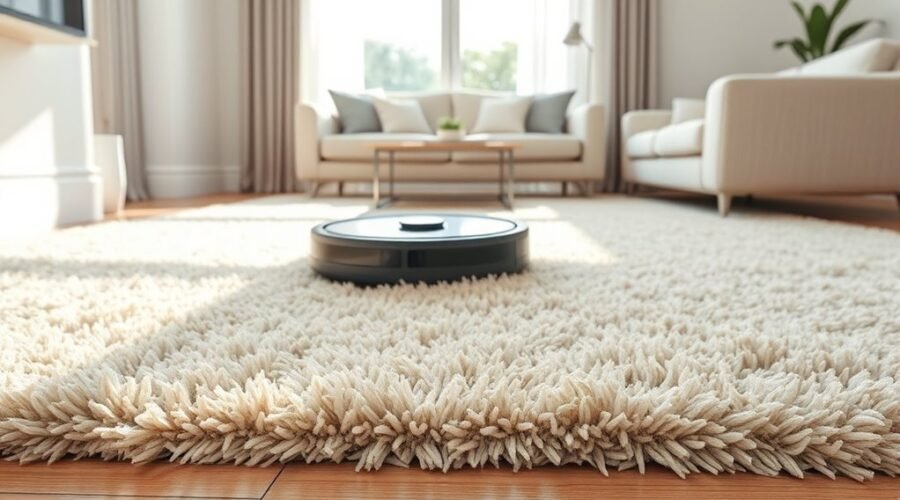
Robot vacuums can clean high-pile carpet, but results vary. Thick fibers challenge wheel clearance, brush design, and suction, so only better models handle them well. Some do a decent job on surface debris and pet hair, while deep dirt often stays behind. The key is knowing which features matter and where the limits begin, especially on plush rugs that can fool weaker machines.
Can Robot Vacuums Clean High-Pile Carpet?
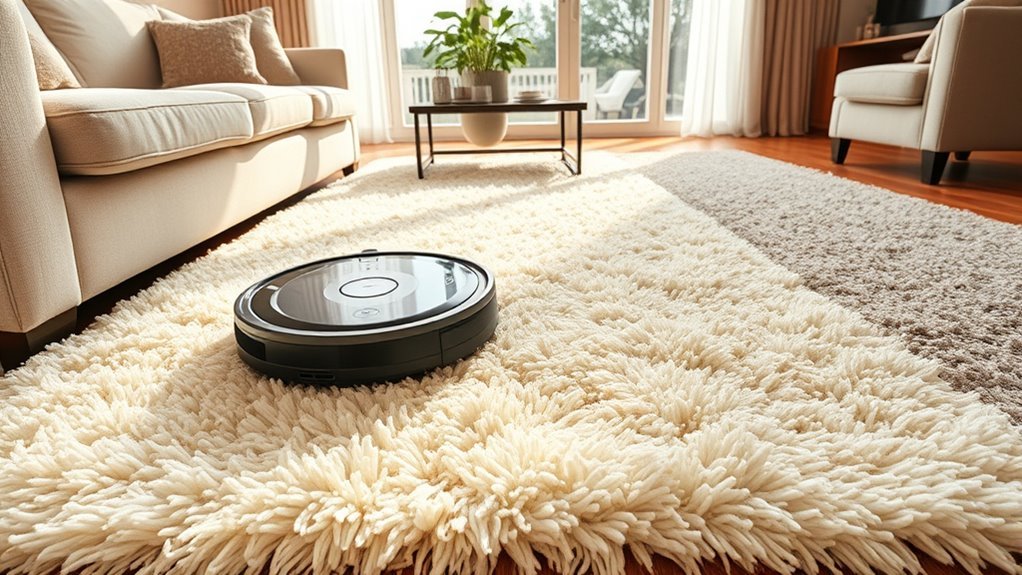
Yes—robot vacuums can clean high-pile carpet effectively, but only when they are built for the job. On high pile carpets, performance depends on strong suction, carpet boost, and brush systems that can agitate fibers without bogging down.
Models such as the Dreame X50 Ultra and Roborock Saros 20 show that modern robot vacuums can move through thick flooring and keep working where weaker units stall. Multi-pass cleaning helps lift embedded grit from busy areas, while anti-tangle parts matter for pet hair and loose fibers that would otherwise clog the machine.
Peak suction alone does not guarantee results; the vacuum must also keep contact with the pile and maintain steady pickup. Regular brush and filter cleaning protects that performance over time.
For people seeking more freedom from manual labor, the right robot can make dense carpet far less demanding.
What Thick Carpet Needs From a Robot Vacuum
Thick carpet asks more of a robot vacuum than standard flooring does. A high-pile carpet holds grit deep in its fibers, so a machine needs strong suction power and a brush design that keeps contact without bogging down.
Dual or rubberized rollers can help lift debris and hair from below the surface. Carpet Boost is useful because it increases agitation and suction when the vacuum reaches carpeted zones, improving pickup on stubborn patches.
Dual or rubberized rollers and Carpet Boost help a vacuum lift deep debris and hair from thick carpet.
A self-empty robot vacuum can also reduce interruptions, especially in homes where thick carpet sheds enough debris to fill the bin quickly. Clearance and stable mobility matter too, since plush surfaces can slow weaker models or trap them at thresholds.
Regular brush and filter cleaning keeps performance steady. With the right setup, thick carpet becomes manageable rather than a barrier to cleaner, more independent living.
Which Robot Features Matter Most?
Several robot features make a far bigger difference on high pile carpet than on hard floors.
Suction Power is the first filter; stronger models, ideally above 10,000 Pa, are better at pulling dirt and pet hair from deep fibers.
Brush Design also matters, with dual or rubberized rollers improving contact and agitation where plush piles resist cleanup.
A Carpet Boost Feature helps by raising suction automatically on carpet, so the robot does not waste energy on low-demand surfaces.
Mobility and Clearance are equally important, because thick carpet can slow weak drivetrains and trap low-clearance bodies.
Multi-Pass Cleaning adds another advantage by overlapping routes to lift embedded debris from traffic lanes.
Together, these features give the machine a better chance of moving freely and cleaning thoroughly, without making the user carry the burden of repeated manual vacuuming.
Is Suction Enough for Thick Carpet?
High suction helps on thick carpet, but it is not enough without strong brush contact to lift debris from deep fibers.
Dual or rubberized rollers and Carpet Boost settings can improve agitation and pickup, especially on plush surfaces.
Multiple passes in high-traffic areas often matter as much as raw suction for a thorough clean.
Suction vs Brush Contact
Although strong suction matters, it is not enough on its own for high pile carpet; effective cleaning depends on consistent brush contact that can agitate fibers and lift debris from deep in the pile.
In carpet cleaning, a capable suction plus a well-tuned brush system gives thick carpets a better chance of clear debris removal and stronger pickup performance.
Peak Pascals suggest power, yet they do not guarantee results on plush floors.
Dual or rubberized rollers usually maintain contact better than simple single brushes.
Many premium robots add carpet boost modes to raise suction when carpet is detected, which helps without manual effort.
- Better brush contact
- Stronger debris lift
- Improved thick carpets coverage
- More reliable pickup performance
Why Passes Matter
Suction alone is often not enough to clean thick carpet effectively; repeated passes improve results by giving the brush more chances to agitate fibers and lift embedded debris. On thick pile, high suction helps, but multi-pass cleaning modes do the heavier work by overlapping paths and reducing missed spots. Brush design matters as well: dual or rubberized rollers maintain contact better during repeated passes.
| Factor | Effect | Note |
|---|---|---|
| Pass count | Better pickup | More agitation |
| Suction | Limited alone | Needs brush contact |
| Brush design | Stronger lift | Dual rollers help |
| Navigation | Steady coverage | Avoids stalls |
| Traffic zones | Faster buildup | Clean more often |
Reliable obstacle avoidance keeps the vacuum moving, so liberated floor care continues without interruption.
Best Robot Vacuums for High-Pile Carpet
Several top high-pile picks stand out for their ability to maintain traction, adjust height, and clean deeply embedded debris.
Models such as the Dreame X50 Ultra, Roborock Saros 20, and iRobot Roomba Combo 10 Max pair strong carpet performance with features designed for thick fibers and plush rugs.
For high-pile carpet, effective brush design, lift systems, and extra cleaning passes matter as much as raw suction.
Top High-Pile Picks
High-pile carpet demands a robot vacuum that can climb, keep traction, and still pull debris from deep fibers. For anyone seeking more freedom from manual cleaning, these top high-pile picks stand out.
- Dreame X50 Ultra: its ProLeap climbing system makes it the strongest choice for high pile surfaces and steady coverage.
- Roborock Saros 20: the AdaptiLift Chassis 3.0 helps it cross tall thresholds while holding suction.
- iRobot Roomba Combo 10 Max: extra-pass logic supports pet owners by lifting more dirt and hair from plush carpet.
- Shark PowerDetect: NeverStuck Technology reduces strandings and keeps daily cleaning moving.
Roborock S8 MaxV Ultra also fits mixed homes, especially where carpets vary. Different cleaning modes help each model adapt to thick, demanding fibers without wasting effort.
Carpet Performance Features
For high-pile carpet, performance depends on more than raw power. A Robot Vacuum must combine strong suction, brush design, and smart control to pull debris from thick fibers.
Models with high suction, such as 22,000 Pa systems, help lift embedded dirt and hair from deep within the carpet. Dual rubber rollers improve contact and agitation, making cleaning more effective on plush surfaces.
Carpet boost features raise suction automatically when carpet is detected, saving effort and improving results. Navigation also matters; a vacuum that handles thresholds and changes well avoids stalling on thick rugs.
Self-emptying docks further support consistent cleaning by reducing maintenance. For households seeking freedom from constant upkeep, these features matter more than marketing claims.
Set Up Your Robot for Carpet Success
To improve performance on high pile carpet, the robot should be configured to use Carpet Boost so suction increases automatically when thicker fibers are detected. This setting helps the machine work harder without constant manual intervention, supporting cleaner floors with less effort.
For liberation from repeated sweeping, the robot should also follow a simple carpet routine.
- Enable carpet boost for automatic suction gains on thick rugs.
- Run multi-pass cleaning two or three times weekly in busy zones.
- Turn on edge cleaning after the main pass to catch debris near walls.
- Set no-go zones around tassels and obstacles to prevent stalls.
The schedule should be reviewed regularly. If dirt builds up faster in certain areas, the robot can be sent there more often.
Used together, these steps help the device move more efficiently, cover more ground, and deliver steadier results on challenging carpet without unnecessary frustration.
Can Vacuum-Mop Combos Handle Thick Rugs?
Vacuum-mop combos often struggle on thick rugs because their lighter build and weaker suction are usually not enough for deep cleaning plush fibers. On high pile surfaces, carpet pickup is often uneven, especially when the unit lacks strong agitation. Many vacuum-mop combos can glide over plush rugs, yet they leave embedded debris behind.
| Feature | Thick-rug effect |
|---|---|
| Carpet boost | Improves suction on high pile |
| Multi-pass cleaning | Helps lift trapped dirt |
| Brush maintenance | Keeps performance steady |
These tools can still serve light-duty work, but they rarely match a dedicated carpet machine. For users seeking freedom from dust and grit, the difference matters. Regular cleaning of brushes and filters helps preserve suction, but it cannot fully replace a design built for deep cleaning. When plush rugs dominate a home, a carpet-focused robot usually delivers more reliable results than a hybrid model.
Common High-Pile Carpet Mistakes
A few common mistakes can make robot vacuums perform poorly on high-pile carpet, starting with choosing a model meant for low-pile floors, which may stall or lack the mobility and suction needed on plush surfaces. For anyone seeking a robot vacuum for high-pile cleaning, the right setup matters.
- Running a vacuum for high pile in Quiet mode can weaken suction and leave deep debris behind.
- Ignoring carpet boost features reduces the extra power needed to lift dirt from dense fibers.
- Skipping multi-pass cleaning in busy rooms allows embedded soil to remain trapped.
- Neglecting maintenance brushes and filters lowers efficiency and limits airflow over time.
These mistakes often turn an automated tool into a half-measure. A better approach is simple: match the machine to thick carpet, use stronger settings when needed, and keep parts clean.
That combination gives the vacuum a fair chance to work with less effort and more freedom.
When a Robot Vacuum Is Not Enough
Even a capable robot vacuum can fall short on high pile carpet when dirt is packed deep into thick fibers. In many homes, robot vacuums handle surface crumbs, but high pile carpets trap grit below the reach of small brushes. Without enough suction power or a carpet boost feature, debris remains hidden. Long hair and pet fur can wrap around rollers, slowing cleaning and forcing stops.
| What happens | Result |
|---|---|
| Deep dirt stays buried | Surface looks clean, fibers do not |
| Brushes clog with long hair | Robot stalls, efficiency drops |
| Weak suction on plush pile | Manual vacuuming becomes necessary |
For liberation from constant upkeep, the practical approach is mixed cleaning. Robot vacuums can maintain day-to-day surface debris, while manual vacuuming removes embedded soil from thick carpets. On high pile carpets, that combination protects time, reduces frustration, and delivers a deeper clean than automation alone can reliably provide.
Frequently Asked Questions
Do Any Robot Vacuums Work on High Pile Carpet?
Yes, some robot vacuums work on high pile carpet. Models with strong robot features, reliable carpet compatibility, high suction power, advanced navigation technology, and anti-tangle brushes can improve cleaning efficiency, though results vary by thickness.
What Type of Vacuum Is Best for High Pile Carpets?
High-suction upright or canister vacuums with adjustable brush types are best for high pile carpets, because they lift debris from carpet fibers without excessive drag; practical maintenance tips and lower noise levels improve daily use.
What Are the Downsides of Using a Robotic Vacuum Cleaner?
A stitch in time saves nine: robotic vacuum cleaners bring navigation issues, limited suction, maintenance challenges, battery performance concerns, and price considerations. They free hands, yet may still require human follow-up for thorough cleaning.
Do Robot Vacuums Clean Carpets Well?
Yes, robot vacuums can clean carpets well when suction power, navigation technology, and brush types match the carpet fibers. Strong models maintain battery life while lifting debris; maintenance and smart settings improve results.
Conclusion
High-pile carpet can feel like a dense forest to a robot vacuum, and only the right machine can push through the undergrowth. Strong suction, carpet boost, and brush design make the difference between surface dust and a deeper clean. Even so, these robots have limits with embedded debris and heavy matting. For best results, they work as dependable helpers, not full replacements for a manual vacuum on plush, demanding rugs.