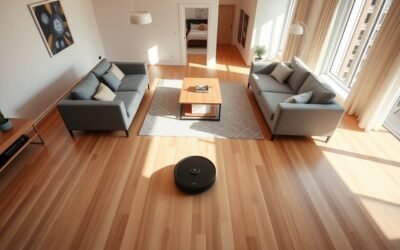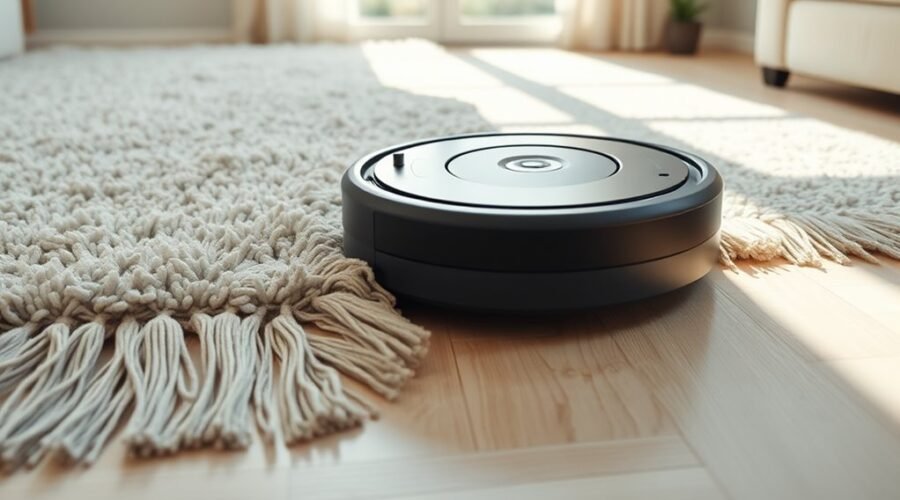
Robot vacuums can manage some rugs, but tassels often create problems. Loose fringe may wrap around brushes, snag on edges, or confuse sensors, especially on medium and high pile rugs. Low pile rugs are usually easier to handle, while thicker textures can disrupt navigation and cleaning. Setup matters too, since tucked tassels, anti-tangle brushes, and the right mode can change the outcome in ways that are not always obvious.
How Robot Vacuums Handle Rug Tassels
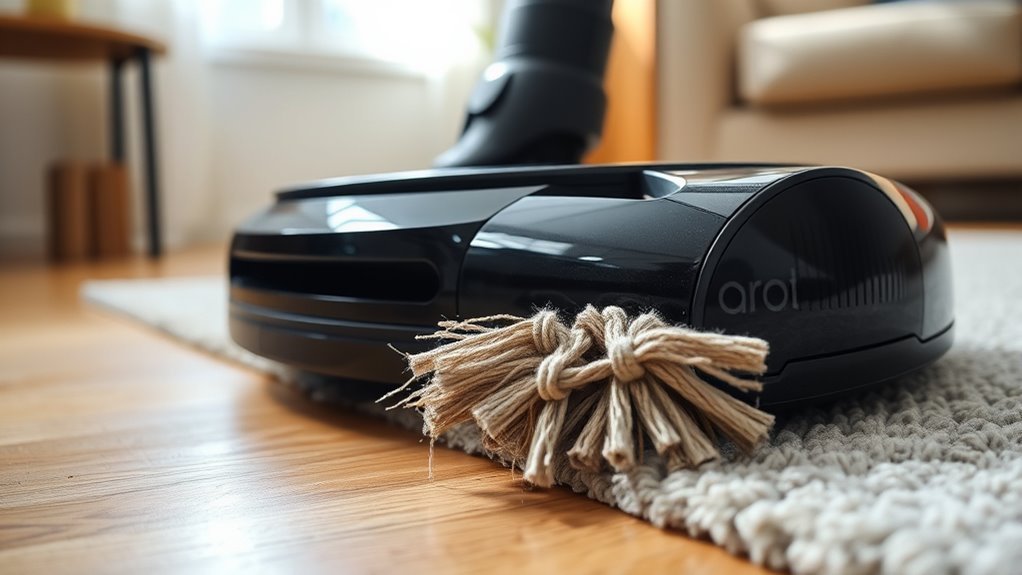
Robot vacuums can struggle with rug tassels because the loose strands may catch in the brushes and cause the machine to stop or report an error.
In practical use, a Robot works better when rug tassels are tucked under the rug or fixed with low-residue tape, since this reduces snagging during cleaning.
Models with anti-tangle brushrolls are built to limit wraparound and are often better suited to decorative rugs with fringe.
Regular maintenance also matters: clearing hair, dust, and debris from brushes and sensors helps the machine move more reliably.
For broader control, smart models can use no-go zones or virtual barriers to keep the Robot away from specific rugs with tassels while still cleaning the rest of the floor.
This approach supports efficient, low-interference cleaning without forcing unnecessary labor onto the user.
Which Rug Pile Heights Cause Problems
Low pile rugs usually pose the fewest problems, since robot vacuums can move across them with little traction loss.
Medium pile rugs may still be manageable, but performance can drop if the fibers are dense, dark, or backed by thick padding that confuses sensors.
High pile and shag rugs, especially those above 1 inch, often create the most difficulty by lifting the vacuum, reducing cleaning contact, and increasing the chance of getting stuck.
Low Pile Rugs
A smooth rug surface usually presents little difficulty for most robot vacuums, and low pile rugs—generally under 1/4 inch high—tend to be the easiest to clean. On low pile rugs, robot vacuums move freely, with navigation systems rarely impeded and tassels less likely to catch. Their suction power is used efficiently because the shorter fibers offer limited resistance, supporting thorough cleaning. In mixed flooring homes, this creates reliable performance and less manual intervention.
| Feature | Effect | Outcome |
|---|---|---|
| Low pile rugs | Easy passage | Less disruption |
| Suction power | Works efficiently | Cleaner surface |
| Navigation systems | Smooth routing | Better coverage |
| Tassels | Lower snag risk | Fewer interruptions |
| Mixed flooring | Easy shifts | Consistent performance |
Regular upkeep and suction adjustments help preserve fibers while maintaining disciplined, practical cleaning freedom.
Medium Pile Risks
Medium pile rugs can create more difficulty for robot vacuums, since their added height may reduce traction and increase the chance of getting stuck.
These risks are more pronounced when tassels or loose fibers are present, because moving parts can catch on entangled fibers and interrupt cleaning. Effective performance usually requires strong suction power, with at least 2500 Pa helping the machine stay grounded rather than riding up on the surface.
Advanced navigation can also improve results by letting the unit read the terrain and adjust its path. Regular maintenance remains important, including routine checks for wraps, debris, and wear.
For households seeking practical autonomy, medium pile rugs are workable, but they demand careful matching of robot vacuums to the rug’s texture and structure.
High Pile Limits
High pile rugs, typically more than 1 inch thick, often push robot vacuums beyond their comfort zone. On these high pile rugs, robot vacuums may lose traction, lift slightly, or slow as thick fibers increase resistance.
Navigation can become unreliable when wheels stall or the machine misreads surface changes. Shifting from low pile flooring to tall rugs is harder when raised edges or thresholds are present.
Models with strong suction, generally 2500 Pa or more, and larger wheels usually deliver better performance, though no machine is immune to fringe or tassels.
Regular maintenance supports freedom from interruptions: remove tangles, clear sensors, and inspect brushes often.
For households choosing between carpet types, pile height matters as much as layout, because limit conditions shape reliability and daily upkeep.
How Tassels Get Wrapped Around Brushes
Tassels can be pulled into a robot vacuum’s brushroll as the machine moves across a rug, where the loose strands are caught, twisted, and wrapped around the rotating brushes.
In practice, longer and looser tassels create the highest entanglement risk for robot vacuums, because the strands can tighten around the brushroll and stall cleaning. This can lead to jams, weaker pickup, and unnecessary wear if the buildup is not addressed.
Regular maintenance matters: removing wrapped fibers from the brushroll helps keep the machine running and preserves uninterrupted cleaning.
Users can reduce problems by tucking tassels under the rug or placing virtual barriers around affected areas. Selecting an anti-tangle model can also lower the chance of wraparound, especially on rugs with fringe.
The most reliable setup treats tassels as a known obstacle, not a minor detail.
How Robot Vacuums Cross Rug Edges
Robot vacuums cross rug edges according to the height and weight of the changeover, since steep or loose borders can slow movement or stop the machine.
Sensor placement and wheel clearance also matter, because adequate ground detection and enough undercarriage space help the vacuum climb onto the rug without scraping or stalling.
Models with larger wheels and flexible suspension usually handle these edges more reliably, especially when moving between hard floors and thicker rugs.
Edge Height Limits
Crossing a rug edge is not always as simple as moving from one floor type to another. Rug performance depends on edge height limits, because even a small rise can become an obstacle for entry-level machines.
Lower-profile vacuums may fail to adapt smoothly when the threshold is steep or uneven. Advanced models usually cope better, especially when equipped with larger wheels and flexible suspension, which help them climb over raised borders and move between surfaces with less resistance.
Some units also use multi-sensor navigation to read these changes and adjust pathing. Testing the vacuum on specific edges during a first run is practical, since it reveals whether the machine can handle real conditions before regular use.
Sensor and Wheel Clearance
A vacuum’s ability to clear a rug edge depends largely on wheel design, chassis clearance, and how well its sensors read the shift.
In sensor and wheel clearance, robot vacuums with large wheels and flexible suspension are more likely to manage clearing rug edges without pausing or scraping. A minimum of 0.5 inches of clearance is often needed for low-pile rugs, while tassels may still catch if the body rides too low.
Cliff sensors help prevent drops, but they can misread dark or patterned edges and avoid safe zones. Advanced models with multi-sensor navigation handle height changes more accurately.
Regular cleaning of sensors and wheels improves response, reducing stalls and helping the machine move with greater ease across varied surfaces.
Rugs That Confuse Robot Sensors
Dark, high-pile, or heavily fringed rugs can confuse robot vacuum sensors and drive systems, making routine cleaning less reliable. On dark rugs, cliff sensors may mistake the surface for a drop-off, so robot vacuums bypass areas that should be cleaned.
Thick pile can also reduce traction, especially near edges, causing uneven movement and missed debris. Loose tassels and decorative fringes can entangle brushrolls, stopping the machine until they are cleared.
These risks affect simple layouts and complex rooms alike, so rug choice matters for anyone wanting cleaner floors without extra labor. Advanced models are better prepared to handle such rugs because anti-tangle brushrolls and AI navigation improve recognition of obstacles and floor texture.
Still, even capable systems perform best on rugs with secure edges and minimal loose ends. Careful placement and selection keep cleaning accessible, reduce interruptions, and support more dependable operation overall.
Best Robot Vacuum Settings for Rugs
For low- to medium-pile rugs, carpet boost or turbo mode usually improves dirt removal by increasing suction where standard settings can fall short.
In practical rug cleaning, robot vacuums should be tested on each rug, because pile height, weave, and debris load change the best setting.
If tassels are present, tucking them under the rug can reduce tangling and preserve freer movement. The brush type also matters: rubber roller brushes often reduce wraps on fringed edges better than mixed bristles.
On dark or patterned rugs, monthly cleaning of cliff sensors can limit navigation issues caused by misread edges.
For ideal cleaning, users can compare suction levels on one area before running the full room. Lower settings may protect delicate fibers, while stronger suction helps with embedded dust.
A careful setup gives the machine more autonomy and keeps rug care efficient without unnecessary interference.
Best Robot Vacuums for Rugs
Robot vacuums with anti-tangle brush rolls and strong suction are generally the best fit for rugs, especially when tassels or high-pile fibers are involved. Among robot vacuums, models such as the Roomba i3 and i7+ are practical choices because their anti-tangle brush design reduces snagging on rug tassels while maintaining steady pickup.
Robot vacuums with anti-tangle brushes and strong suction are the safest bet for rug tassels and high-pile fibers.
- Suction power near 2500 Pa or higher helps lift embedded debris from high-pile rugs.
- Carpet boost modes increase cleaning strength on rugs without constant manual changes.
- LiDAR and similar navigation systems improve room mapping and floor-type shifts.
- An anti-tangle brush supports smoother contact with fringes and decorative edges.
- Regular maintenance keeps brushes, wheels, and sensors ready for reliable cleaning.
For households seeking freedom from repeated vacuuming, these features matter more than brand labels alone. The best robot vacuums combine controlled suction, responsive navigation, and easy upkeep, creating a more independent routine across varied rug surfaces.
Safely Clean Oriental Rugs
Oriental rugs should be prepared before a robot vacuum runs over them, since tassels and fringe can catch in the brushroll and cause tangling or wear. For oriental rugs with fringes, robot vacuums work best when the design includes anti-tangle brushrolls and adjustable suction.
Suction-only modes are often safer for delicate fibers, because they reduce friction while still removing surface dust. Regular maintenance matters: the brushroll should be checked for hair, threads, and trapped debris after each session to keep performance steady.
A traditional vacuum remains useful for periodic deeper cleaning, especially on valuable rugs that deserve careful handling and less mechanical stress. Even with good setup, robot vacuums are not a complete substitute for attentive care.
A practical routine gives occupants more control, protects textile structure, and helps preserve the appearance and longevity of ornate floor coverings without unnecessary risk or effort.
Secure Tassels And Loose Edges Before Cleaning
Loose tassels and raised edges should be secured before a robot vacuum starts, since even a small fringe can catch in the brushroll, interrupt the cleaning cycle, or trigger a fault on decorative rugs. To reduce risk, homeowners can secure tassels by tucking them beneath the rug or applying low-residue tape, keeping loose edges flat and calm.
- Flat edges help the vacuum’s sensors read the surface clearly.
- Decorative rugs should be checked for fringe before each run.
- Virtual barriers can block access to problem areas.
- Regular maintenance keeps threads from curling or lifting.
- Smooth setup can enhance efficiency on open floors.
If a rug remains unstable, the device may hesitate, reverse, or stop. A brief inspection before cleaning preserves autonomy, limits interruptions, and supports safer operation across the home.
Frequently Asked Questions
Can Robot Vacuums Go Over Rugs With Fringe?
Yes, but fringe durability, rug thickness, and surface compatibility vary. Vacuum sensors may trigger navigation challenges, reducing cleaning efficiency. Tangle issues are common, so maintenance tips include securing fringe, using anti-tangle brushes, and inspecting rollers regularly.
Can Robot Vacuums Cope With Rugs?
Yes—about 60% of robot vacuums manage rugs well, depending on rug types and carpet height. With adjustable vacuum settings, smart features, and obstacle detection, cleaning efficiency improves; performance comparison and maintenance tips help optimize results.
Which Types of Rugs Are Compatible With Robot Vacuums?
Low-pile carpet types and sturdy rug materials are most compatible with robot vacuums; matched vacuum power, sensor technology, and navigation systems improve cleaning efficiency. Rug height matters, and maintenance tips help avoid snagging.
What Are the Downsides of Using a Robotic Vacuum Cleaner?
Robot vacuums, like diligent sparrows, offer convenience but often face robot vacuum efficiency limits, maintenance requirements, battery life constraints, navigation obstacles, reduced suction power, noise levels, cost considerations, and mixed user reviews.
Conclusion
In the end, the robot vacuum moves like a small lantern across the floor, strongest on low-pile rugs and least steady where tassels trail like frayed threads of a net. Anti-tangle brushes and carpet boost settings are its compass and engine, but loose edges can still snag its path. When tassels are tucked and rugs lie flat, cleaning becomes smoother, safer, and more reliable, with fewer pauses, wraps, and missed corners.