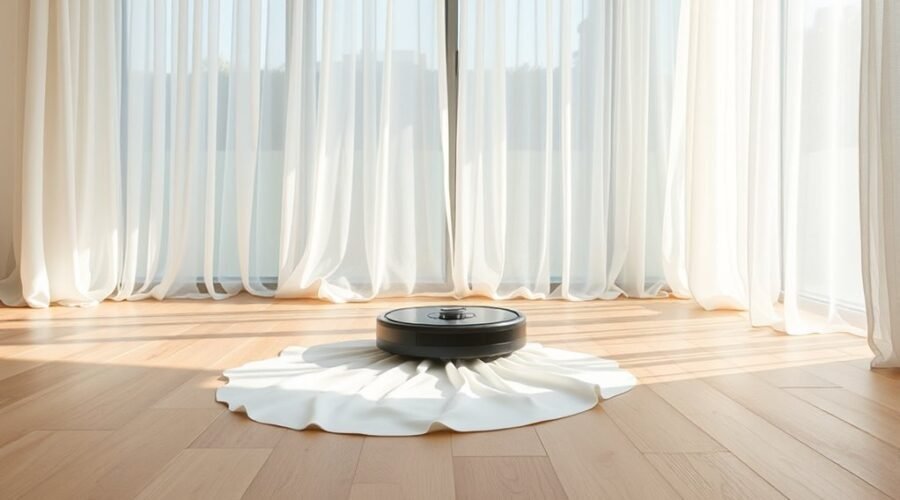
Robot vacuums can sometimes manage floor-length curtains, but only when the setup is forgiving. Loose fabric, low hems, and pooled drapes can trap brushes, jam wheels, or confuse sensors, leaving gaps in the cleaning path. A few simple adjustments often make the difference, from lifting curtains off the floor to marking off problem zones. The real issue is not the vacuum alone, but how the room is prepared.
How Floor-Length Curtains Confuse Robot Vacuums
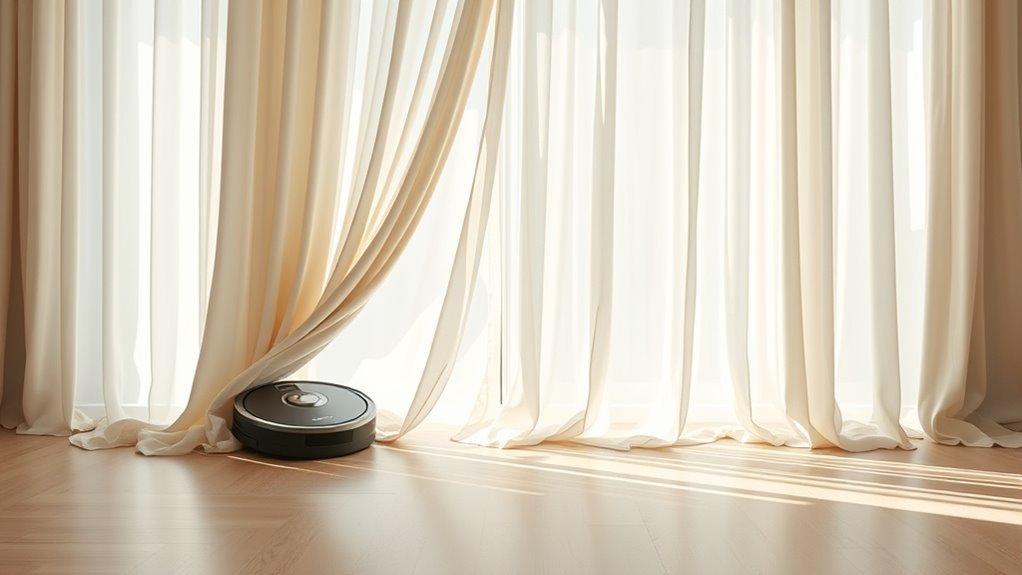
Floor-length curtains can confuse robot vacuums in several ways. When curtains touch the floor, their fabric may enter brushes or wheels, creating entanglement and operational disruptions.
Robot vacuums rely on sensors to map rooms, yet low-hanging curtains can distort readings and make the machine avoid nearby zones. This can leave edges uncleaned and reduce cleaning performance.
Some models with optical sensors may even read dark curtains as a drop-off, producing navigation errors and stopping movement where access should remain free. The result is poorer efficiency and an incomplete cleaning route.
In practical terms, the vacuum needs a clear path to move with confidence and maintain reliable coverage. Regular checks of curtain height help prevent confusion, support better navigation, and preserve autonomous cleaning.
For households seeking more control over domestic labor, keeping the floor visually and physically open during cleaning allows robot vacuums to work with fewer interruptions and better results.
Keep Curtains Off the Floor Before Cleaning
Before starting a robot vacuum, curtains should be checked to guarantee they do not touch the floor. This simple step protects cleaning efficiency and reduces entanglement risk.
When curtains hang too low, robot vacuums may catch fabric, stall, and require manual intervention. Keeping curtains lifted creates a clear path, free of obstructions, so the machine can move through the room with less interruption and reach superior cleaning results.
- Inspect curtain length before every run.
- Use chip clips or clothespins to hold fabric above the floor.
- Confirm the vacuum route stays open around windows and wall edges.
- Remove any dangling sections that could cause frustrating entrapments.
A few seconds of preparation preserves independence from avoidable setbacks. With curtains secured, the robot can work steadily, without tangling surprises or wasted time.
The result is smoother operation, fewer pauses, and better coverage across the room.
Prep Nearby Floors for a Smooth Run
Once curtains are secured above the ground, the surrounding floor should be cleared as well. Robot vacuums work best when cleaning is supported by clear pathways and a simple floor plan.
Furniture, cords, shoes, and other obstacles near the curtains should be moved aside so the machine can travel with efficient navigation. This prep reduces the risk of entanglements at brush level and helps protect the curtains from accidental contact.
Small items along edges deserve attention, since they can disrupt performance even when the fabric is lifted. A quick assessment of the space before each run can reveal trouble spots that might block movement.
For added freedom from interruption, chip clips or clothespins can hold fabric higher while nearby floors remain open. Testing the robot vacuums in the area before routine cleaning confirms whether the layout allows a smooth run without snagging, pausing, or repeated corrections.
Set Virtual Walls for Curtain Zones
Virtual walls in a robot vacuum app can mark curtain zones the machine should avoid, helping prevent tangles with floor-length fabric. This setup gives the robot vacuum clear boundaries, so it can move freely without obstruction and keep cleaning efficiency high.
Adjustable virtual walls fit different curtain lengths, making flexible management simple in homes where drapes hang close to the floor.
- Define curtain zones in the app.
- Use customizable settings to match each window.
- Schedule barriers for specific cleaning times.
- Protect delicate fabric and prevent damage.
With these controls, the vacuum is less likely to get stuck under drapes or brush against hanging material. The result is a cleaner room and more autonomy over how the machine works around textile-heavy spaces.
For households seeking practical freedom, virtual walls offer a direct way to keep the path open while preserving curtain condition.
Fix Curtain Snags and Stalls Fast
Curtain snags can quickly stall a robot vacuum, so floor-length fabric should be secured or lifted before cleaning starts. Chip clips or clothespins can hold curtains above the floor and prevent entanglement with brushes.
Secure floor-length curtains before vacuuming; chip clips or clothespins keep fabric clear and prevent brush entanglement.
During cleaning sessions, loose tassels and dangling ends should be tucked under the fabric to reduce obstacles. Curtain length should be checked regularly, since drooping material can disrupt navigation and trap robot vacuums mid-route.
When the curtain height is managed well, the machine keeps a clear path and moves with better efficiency. A fast fix for snags is often enough to restore progress without extra labor or delay.
If a stall occurs, the fabric should be raised immediately, then the route cleared before restarting. Simple adjustments protect freedom from constant interruption and help the vacuum finish its cycle with less friction, less waste, and fewer repeated stops around curtains.
Frequently Asked Questions
What Are the Downsides of Using a Robotic Vacuum Cleaner?
Downsides include robot vacuum noise, limited battery life, imperfect dirt detection, weak navigation technology, rising maintenance costs, inconsistent suction power, floor compatibility issues, unreliable smart features, pet hair tangles, and mixed user reviews.
What Vacuum Attachment for Curtains?
A soft dusting brush or upholstery attachment suits curtains best, supporting curtain care and dust removal with good vacuum efficiency. Coincidentally, the right choice depends on fabric types, length considerations, fabric protection, and performance comparisons, plus maintenance tips.
How Many Sq Ft Can a Robot Vacuum Handle?
Most robot vacuums handle about 1,000 to 3,000 sq ft per charge, depending on robot vacuum efficiency, battery life, navigation technology, obstacle detection, suction power, cleaning modes, maintenance tips, brand comparisons, and price range.
Can Robot Vacuums Go Over Thick Rugs?
Sometimes. Thick rugs test a robot vacuum height, rug thickness compatibility, and carpet sensor technology. Navigation efficiency and surface type adaptability affect cleaning performance comparison, pet hair management, battery life impact, user experience feedback, and maintenance requirements.
Conclusion
Can robot vacuums handle floor-length curtains? Usually, not well without preparation. Long fabric can tangle brushes, confuse sensors, and block cleaning paths. Raising curtains with clips, clearing floor obstacles, and setting virtual walls around curtain zones can help prevent snags and stalls. If a vacuum gets caught, stopping it quickly and adjusting the room layout keeps both the machine and the curtains safe. A little prep makes cleaning more reliable and efficient.