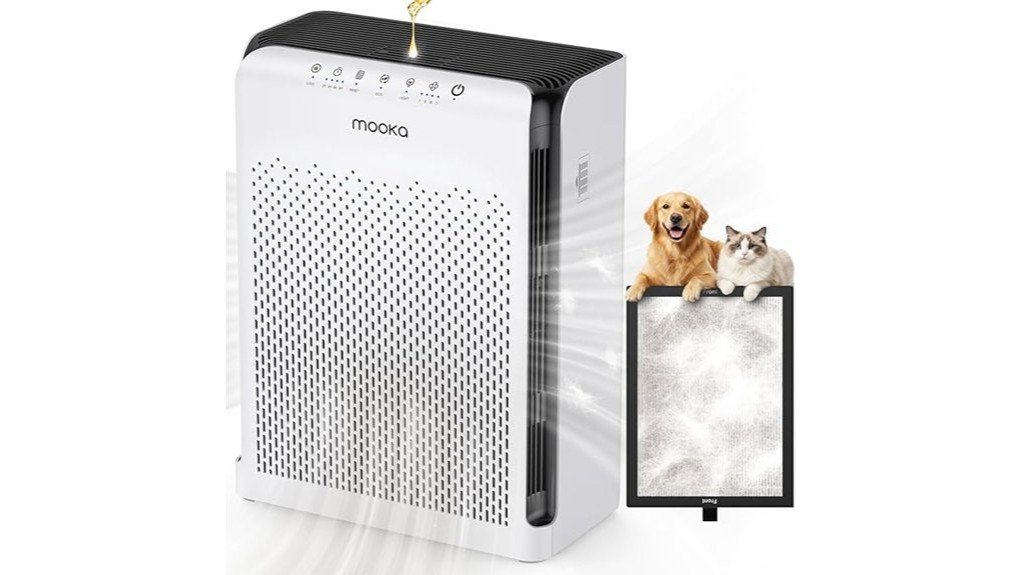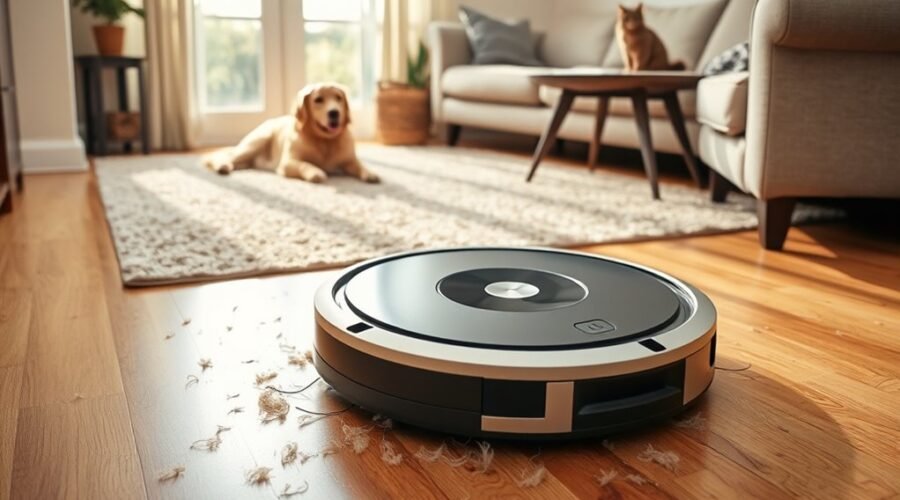
Robot vacuums can remove pet hair, but performance depends on suction, brush design, and floor type. Homes with carpets, shedding, or multiple pets often expose the limits of weaker models. Anti-tangle rollers, strong filtration, and smart navigation can improve results, yet routine maintenance still matters. The key question is not whether they work, but which models handle hair without constant intervention.
Can Robot Vacuums Clean Pet Hair?
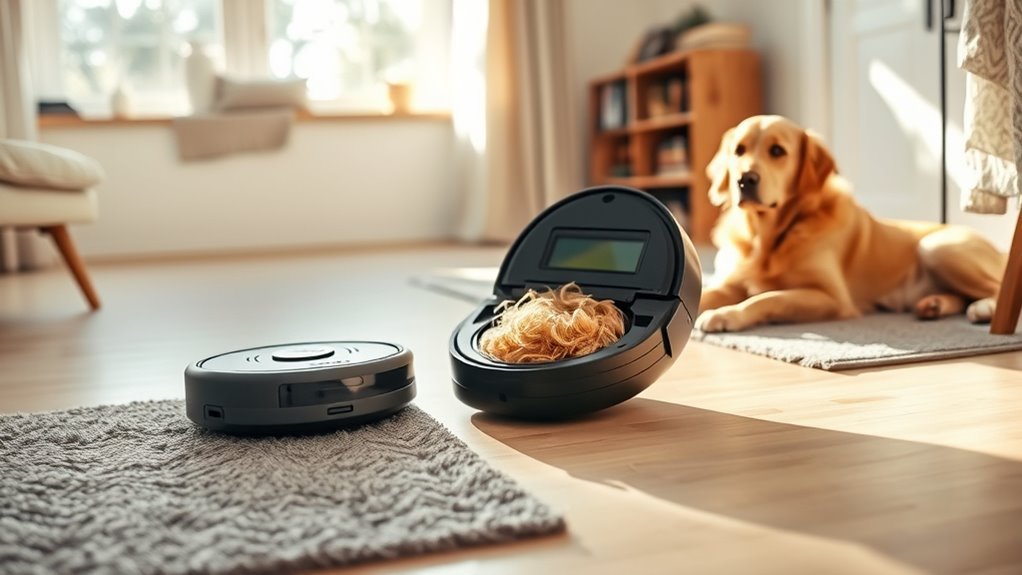
Yes, robot vacuums can effectively clean pet hair when equipped with strong suction, often in the 1,800 to 18,000 Pa range, and brush systems designed to handle fur.
In practice, robot vacuums support pet hair removal by combining powerful suction with anti-tangle rubber brushes that limit wraparound and maintain consistent pickup. These systems are suitable for daily operation, which is often necessary in homes with shedding animals.
Regular runs reduce buildup on hard floors and other smooth surfaces, lowering the burden on owners who want cleaner rooms without constant manual labor.
Regular runs keep hard floors cleaner, reducing buildup and saving owners from constant manual vacuuming.
Advanced navigation also improves coverage by steering around obstacles and pets, reducing missed areas and interruptions.
High-efficiency filtration further helps by trapping dander and fine allergens, which can improve indoor air quality.
For households seeking greater autonomy, robot vacuums offer a practical, low-effort method of controlling fur and maintaining a cleaner living environment.
Which Robot Vacuums Work Best on Carpets?
Robot vacuums that perform best on carpets typically combine high suction strength with effective airflow control. Models at 18,000Pa or above show stronger removal of embedded pet hair.
Anti-tangle brush designs, especially dual rubber brush rolls, also improve carpet performance by reducing hair wrap and maintaining consistent contact with fibers.
In practice, the most effective units pair strong suction with brush systems that sustain cleaning efficiency in homes with shedding pets.
Carpet Suction Strength
On carpets, suction strength and brush design are the main factors determining how effectively a robot vacuum removes pet hair. For households seeking freedom from daily lint and shedding, carpet suction strength should be prioritized.
High-output robot vacuums, including the Dreame L60 Ultra PE at 30,000Pa and the Ecovacs Deebot X8 Pro Omni at 18,000Pa, are well suited to extracting embedded debris from pile. Performance improves when suction is paired with stable brush contact, as seen in models such as the Roomba j9+.
Regular daily operation is clinically advisable, because repeated passes limit buildup before fibers trap more hair. In practice, newer robot vacuums with strong suction and advanced navigation offer the most reliable carpet relief for pet owners.
Anti-Tangle Brush Design
Beyond suction strength, brush design determines whether a robot vacuum can keep carpets clear of pet hair without constant tangling.
Anti-tangle rubber brushes reduce wraparound buildup, allowing robot vacuums such as the Roomba Max 705 and Dreame L60 Ultra PE to maintain steady contact with carpet fibers.
The iRobot Roomba j9+ uses dual rubber brush rolls to lift embedded strands and improve pet hair pickup on dense surfaces.
High suction, including 18,000Pa systems like the Ecovacs Deebot X8 Pro Omni, further supports removal in homes with multiple animals.
Tests report some models reaching complete pet hair pickup on carpet.
For best results, owners should inspect and clean brushes regularly. This maintenance preserves performance and frees carpeted rooms from repeated manual cleanup.
Why Anti-Tangle Brushes Matter for Pet Homes
Anti-tangle brushes are a practical upgrade for pet homes because their rubber bristles resist hair wrap, allowing robot vacuums to maintain steady cleaning performance over time.
In homes where pet hair is present daily, this design reduces interruptions that often weaken standard brush systems. Many models, including Roomba units, use patented anti-tangle technology to manage long strands without frequent stoppages.
The result is more reliable contact with carpets, tile, and hardwood, which helps lift embedded fur and debris with less loss of suction efficiency.
Maintenance demands also decline, since these brushes need cleaning less often than traditional bristle rollers that clog quickly.
For multi-pet households, that reduction matters because routine cleaning can continue with fewer manual resets and less downtime.
Anti-tangle brushes thus support a more independent cleaning routine, giving owners greater freedom from constant intervention while preserving consistent results across varied floor surfaces and daily shedding patterns.
How Robot Vacuums Handle Dander and Allergens
Robot vacuums handle dander through capture systems that combine strong suction with brush designs intended to lift fine debris from carpets and hard floors.
Their high-efficiency filtration traps allergens before they re-enter the air, which is especially useful in households sensitive to pet-related particles.
Daily runs help limit buildup by removing shedding and dander consistently rather than allowing it to settle.
Dander Capture Systems
Effective dander capture depends on filtration and airflow control, with many pet-focused robot vacuums using HEPA or comparable high-efficiency filters to trap fine dander and airborne allergens rather than recirculating them.
These dander capture systems matter because they reduce the residue that can trigger symptoms and keep living spaces more manageable. A HEPA filter paired with sealed airflow helps contain pet hair and microscopic particles during collection.
Many models also use anti-tangle rubber brushes to limit buildup, maintain suction, and reduce clogging. Regular daily runs are practical, since repeated pickup prevents dander from settling and spreading.
Some units use smart navigation to avoid pet zones and focus cleaning where debris accumulates. In multi-pet homes, these systems support a cleaner, freer environment.
Allergen-Focused Filtration
Allergen-focused filtration helps robot vacuums reduce dander and airborne allergens by combining high-efficiency filters with controlled airflow and sealed debris pathways.
In premium units, HEPA filters can trap 99.97% of particles as small as 0.3 microns, including pet dander, making them suitable for allergy-prone homes.
This allergen-focused filtration is most effective when paired with anti-tangle brushes, which limit hair wrap and keep debris moving toward the bin instead of recirculating through the system.
Some models with auto-emptying docks further reduce contact with captured allergens during disposal.
When used routinely, these systems help limit buildup on floors and in air currents, supporting cleaner indoor conditions.
For households seeking practical control, the design reduces dependence on manual cleaning and preserves personal comfort.
Daily Run Benefits
Daily operation helps limit the amount of pet hair and dander that settles and recirculates in the home, because frequent passes capture shedding before it builds up on floors and furniture. A daily run supports cleaner surfaces and less airborne debris, especially when advanced filtration systems trap fine particles.
| Feature | Effect | Benefit |
|---|---|---|
| Daily run | Frequent pickup | Less buildup |
| Pet hair | Captured early | Cleaner rooms |
| Advanced filtration systems | Dander retained | Improved air |
Models with smart navigation cover living areas methodically, while auto carpet hair boost increases suction on embedded fibers. For multi-pet households, consistent use creates a more controlled environment, reducing the burden of constant manual cleanup and restoring time and breathing room.
What Smart Navigation Does Around Pets?
Smart navigation in robot vacuums uses sensors and mapping algorithms to identify room layouts, detect obstacles, and route cleaning paths around pets without unnecessary contact. In practice, smart navigation helps the machine move with purpose rather than drift, giving owners more control and less disruption.
Models with LiDAR mapping build detailed floor plans, which support cleaner route planning and better coverage around furniture and pets. Obstacle avoidance technology can detect moving animals and steer away before impact, reducing stress for both sides.
Some units also allow pet zones, letting users mark resting areas so the vacuum stays clear of them. This approach supports a cleaner home while preserving the animal’s space.
For households seeking liberation from constant manual cleanup, the result is a more autonomous system that works quietly around daily life, limits interruptions, and maintains reliable cleaning performance without forcing pets to leave their routines.
How Often Should You Run a Robot Vacuum?
In homes with shedding pets, a robot vacuum should generally run daily to keep fur from accumulating and to prevent buildup from becoming harder to remove. Daily cycles are especially useful in multi-pet households, where pet hair can spread quickly across floors and fabrics. For many owners, several shorter runs each week may outperform occasional deep-cleaning sessions, because they interrupt shedding before it settles.
| Schedule | Purpose | Effect |
|---|---|---|
| Daily | Control pet hair | Limits visible accumulation |
| 3–5 times weekly | Target high-shed periods | Reduces buildup |
| Short runs | Maintain surface cleanliness | Improves coverage |
| Auto-empty models | Lower manual intervention | Supports consistent use |
| Brush and filter checks | Ongoing maintenance | Preserves performance |
Robot vacuums designed for pet hair can simplify maintenance, but they still require routine inspection of brushes and filters. This preserves suction, reduces tangles, and keeps cleaning predictable. Liberation comes from a floor plan that runs itself.
Which Roomba Models Are Best for Pet Owners?
For pet owners, the Roomba Max 715 is a strong option because its powerful suction is built to handle persistent pet hair, while the Roomba Plus 575 adds anti-tangle rubber brushes that help capture long hair without clogging.
These Roomba models support routine cleaning that limits pet hair buildup and removes fine dander, a practical benefit for households seeking cleaner air and less daily labor.
The Roomba Max 775 Combo Robot expands capability with an AutoWash Dock, making it a useful vacuum and mop combo for homes that need floor care beyond suction alone.
Selection should match shedding level, floor type, and maintenance preferences. For those prioritizing efficiency and autonomy, these models reduce manual sweeping and preserve time for other demands.
New customers may also lower upfront cost by taking 10% off the first purchase through email signup, making pet-focused cleaning more accessible without compromising performance.
When Robot Vacuums Don’t Work Well
Robot vacuums often underperform on pet hair when flooring or machine design exceeds their capabilities. High-pile carpet can overwhelm limited suction power, and weak brush contact may push hair deeper into fibers instead of lifting it. Units built mainly for hard floors tend to perform better on bare surfaces than in homes with multiple pets.
| Condition | Effect | Practical result |
|---|---|---|
| High-pile carpet | Poor pickup | Hair remains embedded |
| No anti-tangle technology | Brush wrap | More maintenance |
| Low battery life | Incomplete runs | Missed pet-hair zones |
Models lacking anti-tangle technology are especially vulnerable to hair wrap, which reduces efficiency and increases maintenance demands. In larger homes, inadequate battery life can leave entire rooms untouched. Reliable operation depends on matching the machine to the environment and keeping it serviced. Regular brush cleaning and bin emptying preserve performance and support cleaner, freer living.
Frequently Asked Questions
What Are the Downsides of Using a Robot Vacuum?
Robot vacuums can leave corners uncleaned, require frequent maintenance challenges, and often have limited dustbin capacity. Their suction power may be weaker on carpets, battery life can restrict coverage, and liquid messes usually need manual cleanup.
Which Robot Vacuum Is Best for Cleaning Pet Hair?
Dreame L60 Ultra PE appears best, its 100% pet-hair pickup evoking mythic precision. Its robot efficiency, pet friendly features, and maintenance tips suit liberation from shedding. Roomba j9+ and eufy X10 Pro Omni also perform strongly.
Which Robot Vacuum Cleaner Is Best for Removing Pet Hair?
The Roomba j9+ is best for removing pet hair, thanks to strong suction power, effective brush design, and a reliable filtration system. Ecovacs Deebot X8 Pro Omni and Dreame L60 Ultra PE are also highly capable.
Which Robot Vacuum Is Best for Cleaning Dog Hair?
The Dreame L60 Ultra PE stands as the clearest choice for dog hair, a vacuuming scalpel against shedding. Its robot features, pet hair pickup, and cleaning efficiency are exceptional, while tangle-resistant brushes reduce upkeep.
Conclusion
Robot vacuums can manage pet hair effectively when matched to the home’s flooring, shedding level, and cleaning demands. Strong suction, anti-tangle brushes, and reliable filtration improve results, while smart navigation and frequent use help maintain cleaner carpets and hard floors. Still, no machine is flawless; bins, brushes, and filters require regular attention. In pet homes, a robot vacuum is best viewed as a steady workhorse, not a miracle—quietly keeping hair from piling into a persistent storm.