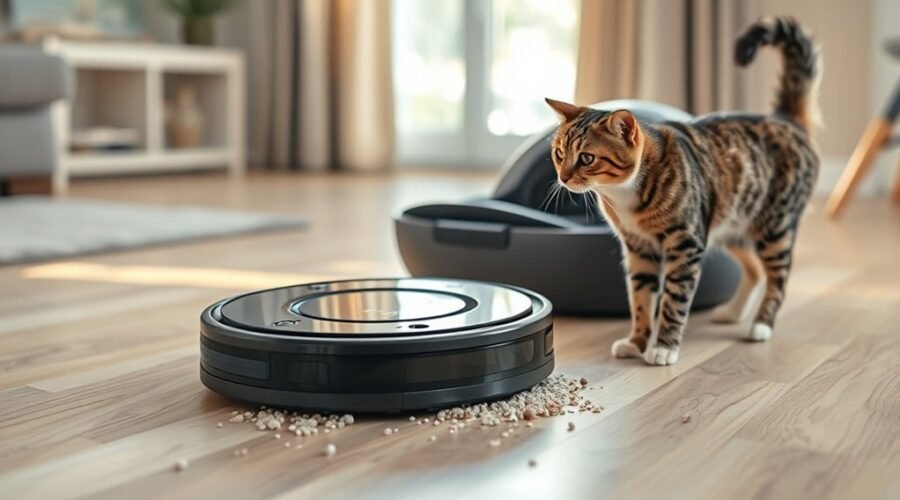
Robot vacuums can handle cat litter, but performance depends on the machine and the setup around the litter box. Strong suction, anti-tangle brushes, and smart navigation make a difference, especially in homes with more than one cat. Still, litter size, floor type, and daily maintenance can affect results in surprising ways, and the best choice is not always the most obvious one.
Can Robot Vacuums Clean Cat Litter?
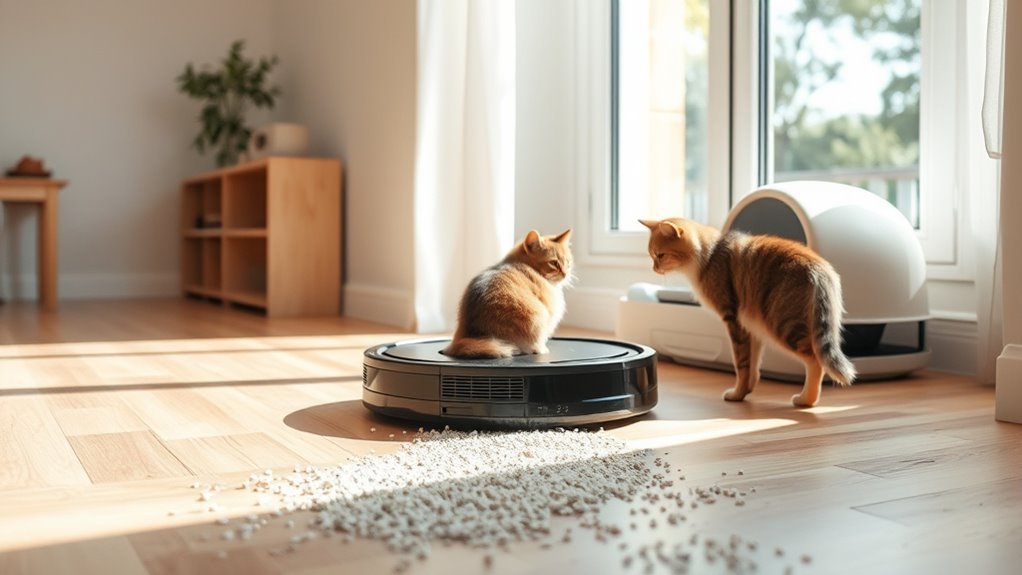
Yes—most robot vacuums can clean cat litter effectively, especially models with strong suction and anti-tangle brush rolls that help prevent clogs.
A robot vacuum for cat homes can handle cat litter on hard floors and low-pile rugs, giving owners more freedom from daily sweeping. Machines with high suction, such as those reaching 18,000 Pa, are better at lifting scattered granules before they spread through the house.
Robot vacuums can help manage cat litter on hard floors and low-pile rugs, reducing daily sweeping.
Some units also use Dirt Detect Technology to focus on litter and pet hair, improving cleanup where cats tend to track mess. Navigation systems help the vacuum move around litter boxes and cover nearby surfaces with less intervention.
Performance still varies by litter type and vacuum design, so results are not identical across models. Regular maintenance matters too: emptying the dustbin and cleaning brushes weekly keeps suction strong and reduces wear.
For many homes, this makes robot vacuums a practical, low-effort way to keep litter under control.
What to Look for in a Robot Vacuum for Cat Litter
A robot vacuum for cat litter should have strong suction, ideally 10,000 Pa or more, so it can lift fine granules and larger pieces without clogging.
A tangle-free brush design, such as one built to resist hair wrap, helps keep litter and pet hair from jamming the machine.
Smart navigation features, including obstacle avoidance and mapping, allow it to clean efficiently around litter boxes and other pet areas.
Strong Suction Power
Suction is the foundation of effective cat-litter cleanup in a robot vacuum. Strong suction power helps the machine lift scattered grains before they spread through a home, and it matters across both fine and coarse cat litter.
Models with powerful suction, such as the DEEBOT X8 PRO OMNI at 18,000 Pa, are better prepared for routine messes and heavier spills. That level of force also helps handle damp litter more reliably, lowering the chance of clogs and motor strain.
For pet owners seeking a cleaner, freer living space, suction should be a top priority. Regular filter care and brush cleaning keep performance steady over time. A larger dustbin can also reduce interruptions in multi-cat homes, supporting easier upkeep.
Tangle-Free Brush Design
Tangle-free brush design is a key feature in a robot vacuum meant for cat litter, because it keeps hair and litter from wrapping around the rollers and disrupting cleanup. A robot vacuum cleaner with this design can keep handling cat litter smoothly while preserving suction and reducing strain on the motor.
Models with patented systems, such as ZeroTangle 2.0, help prevent clogging and jamming, which supports steadier performance in busy pet homes.
- Less brush buildup means less manual clearing and more freedom from chores.
- Cleaner rollers help the vacuum hold suction during repeated litter pickups.
- Durable, low-maintenance brushes support longer service life for multiple-pet households.
For owners seeking relief from constant upkeep, tangle-free brush design offers practical, pet-friendly efficiency.
Smart Navigation Features
Smart navigation features matter because a robot vacuum must do more than move around the room; it must clean the area around a litter box thoroughly without repeatedly missing scattered granules. Strong smart navigation uses advanced sensors and mapping to cover pet zones efficiently, reducing skipped patches and wasted effort.
Good obstacle avoidance helps the machine steer around furniture, cords, and bowls, so automated cleaning can continue without frequent rescues. Slim models can slip into tight spaces where litter collects, improving reach under cabinets or beside the box.
Some units, such as DEEBOT T50 PRO OMNI, use Vision-Language Model technology to locate messy spots with greater accuracy. Regular software updates also keep navigation adaptable as room layouts change, supporting consistent, hands-free cleaning freedom for owners.
Best Robot Vacuums for Cat Litter
Among the strongest robot vacuums for cat litter, the DEEBOT X8 PRO OMNI stands out with 18,000 Pa suction, which helps lift scattered litter effectively from hard floors and carpets.
For owners seeking the best robot vacuum and a dependable vacuum for cat litter, its suction power offers a practical path to less sweeping and more free time.
The DEEBOT T50 PRO OMNI adds slim access and obstacle avoidance, useful around litter boxes in tight rooms.
The Roomba 694 uses Dirt Detect Technology to target heavier spill zones.
The ILIFE V3s Pro remains a budget-friendly suction-only choice for mixed floors.
- Strong suction reduces visible litter trails.
- Smart detection supports concentrated cleanup.
- Regular dustbin and filter care helps maintain performance.
How to Prevent Cat Litter Clogs
To reduce cat litter clogs, a robot vacuum should have strong suction, ideally 10,000 Pa or higher, so it can lift scattered litter before it settles into brushes or internal parts. This level of power helps the machine handle different grain sizes while helping prevent clogs in daily use.
A model with anti-tangle brush rolls, such as ZeroTangle 2.0 technology, can further reduce hair and litter jams, which is useful in homes with active cats. Owners should empty the dustbin and clean the filters at least once a week to keep airflow steady and prevent buildup.
Dry cat litter is the safest choice, since wet litter can stick inside the robot vacuum and cause malfunctions. During the first few cleaning runs, it helps to watch for small toys, cords, or debris that could block pickup.
With the right setup, cleaning stays easier and pets keep their space tidy.
Robot Vacuums vs. Cordless Vacuums for Cat Litter
Robot vacuums usually offer stronger hands-free performance for cat litter, using smart navigation and steady suction to cover the area more consistently than cordless vacuums.
Around litter boxes, their mapping and automated movement can reach missed spots more reliably, while cordless models depend on manual guidance and may need more frequent emptying.
For busy pet owners, the main advantage is convenience, since some robot vacuums also reduce upkeep with self-cleaning features and scheduled runs.
Cleaning Power Compared
When comparing cleaning power for cat litter, robot vacuums often have the advantage because their strong suction can lift scattered litter more effectively, while also reducing the need for repeated manual cleanup.
Robot Vacuums For Cat households may also handle pet hair and fine debris well, especially when paired with high-efficiency filters that trap allergens. Cordless vacuums can still perform well, but they usually depend on active use and may leave stray grains behind in everyday routines.
- Automated runs support steadier litter control.
- Strong suction helps capture mixed debris fast.
- Lower upkeep can free owners from constant sweeping.
For pet owners seeking more freedom, the hands-free nature of robot vacuums offers practical relief.
Maneuverability Around Litter
Around the litter box, robot vacuums usually have the edge in maneuverability because they can clean on their own and use advanced navigation to work around obstacles without a person guiding them. That freedom matters in homes with cat litter, where tight corners and scattered granules demand careful movement.
A robot vacuum and mop with obstacle detection can slip close to the box, map the area, and reduce the risk of pushing debris farther out. By contrast, cordless vacuums depend on manual steering, which can feel awkward around furniture and pet stations. Their reach is useful, but their maneuverability is tied to the owner’s time and effort.
For pet households seeking less hands-on cleaning, automation offers a practical path to cleaner floors and calmer routines.
Maintenance and Convenience
Because cat litter cleanup can become a daily chore, robot vacuums stand out for their hands-free convenience and low-maintenance design.
For cat owners seeking liberation from constant sweeping, robot vacuum cleaners can run on a schedule, handling litter messes automatically while the household stays busy. Their navigation systems and strong suction help limit scatter, and anti-tangle brushes reduce clogging.
Maintenance is usually simple: dustbins and brushes often need attention only weekly, unlike cordless vacuums that demand more frequent upkeep and manual use.
- Scheduled cleaning supports consistent litter control
- Weekly maintenance saves time and effort
- Automatic operation reduces daily pet-care stress
How to Maintain a Robot Vacuum With Cats
Regular maintenance is essential for a robot vacuum used in a cat-friendly home, as litter, fur, and tracked debris can quickly clog its system.
Regular maintenance keeps a robot vacuum running smoothly in cat-friendly homes, where litter, fur, and debris quickly cause clogs.
With robotic vacuum cleaners, steady maintenance keeps cat litter from packing into the dustbin, filters, and brushes. A weekly cleaning routine is usually enough, but homes with multiple pets or heavy shedding may need more frequent attention to protect suction and reduce breakdowns.
Models with tangle-free brush designs help limit hair jams and preserve parts. It also helps to schedule cleaning when cats are elsewhere, so the machine can move freely and avoid scattered litter or startled pets.
Around the litter box, small toys, cords, and other obstacles should be removed to improve navigation and coverage.
With these habits, owners gain cleaner floors, fewer interruptions, and more time away from constant sweeping.
Frequently Asked Questions
Is There a Robot Vacuum That Can Clean Cat Litter?
Yes, several robot vacuums can clean cat litter effectively. Strong robot vacuum features, careful litter box maintenance, and solid pet hair management matter most; models with powerful suction and tangle-free brushes perform best around cats.
What Are the Downsides of Using a Robotic Vacuum Cleaner?
About 30% of owners find robotic vacuums miss debris; downsides include weak suction power, tricky flooring compatibility, and frequent maintenance tips. In pet homes, they may scatter litter, clog, and alarm sensitive cats.
What Vacuum Is Best for Picking up Cat Litter?
The DEEBOT X8 PRO OMNI is best for cat litter, thanks to 18,000 Pa suction and ZeroTangle 2.0. Roomba 694, Shark IQ, and ILIFE V3s Pro also deliver strong cleaning efficiency and practical vacuum features.
Does Roomba Pick up Cat Litter?
Yes—Roomba often picks up cat litter well; many owners report cleaner floors within minutes. Roomba performance depends on litter types, especially dry granules. Maintenance tips include emptying bins often, checking brushes, and avoiding wet clumps.
Conclusion
Robot vacuums can handle cat litter well when they have strong suction, anti-tangle brushes, and smart navigation. Owners should still choose models with larger dustbins and keep the litter area tidy to avoid clogs and missed spots. Compared with cordless vacuums, they offer hands-free daily cleanup, especially in busy homes. With regular maintenance, a reliable robot vacuum can work like a quiet broom, sweeping up litter and helping keep floors cleaner for cats and people alike.