Robot vacuums can handle tracked-in dirt better than many people expect, but not all messes are equal. Fine dust, dry grit, and small crumbs are usually manageable, especially on hard floors and low-pile carpet. Bigger clumps, damp mud, and debris trapped in corners are a different story. Suction strength, floor type, and smart settings all shape the result, and the gap between “clean enough” and truly clean can be wider than it first appears.
Can Robot Vacuums Clean Tracked-In Dirt?
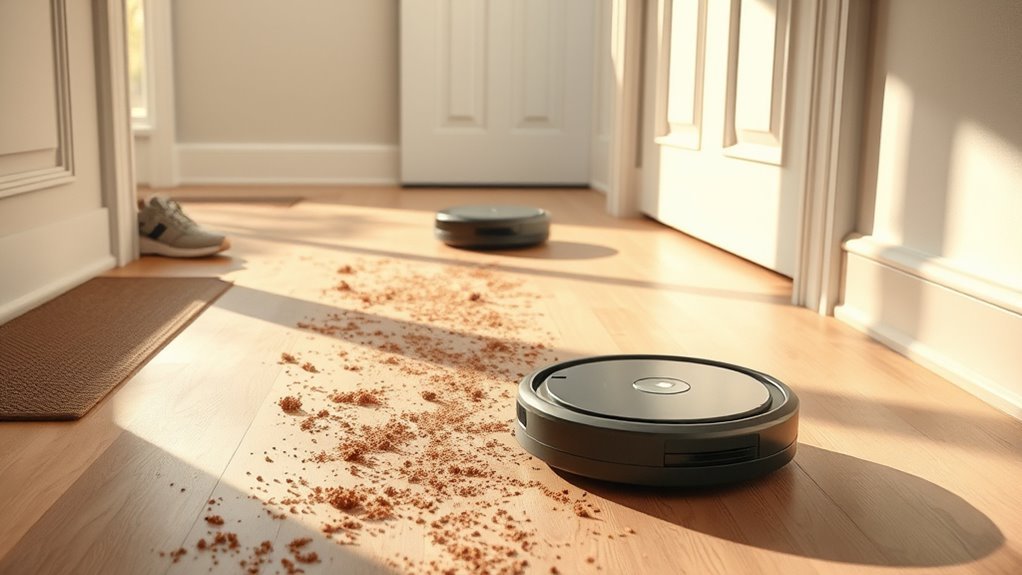
Robot vacuums can clean tracked-in dirt effectively when it consists of light dust and small particles, but they are less reliable with larger debris, clumps of mud, or outdoor grime.
In routine use, robot vacuums help keep floors presentable and reduce the burden of constant sweeping. Models with stronger suction, especially those rated at 8,000 Pa or higher, are better suited to lifting heavier particles brought in from outside.
Some units also adjust suction automatically, improving performance across mixed debris. Even so, they are not complete cleaning solutions for heavily soiled carpets or floors that need water extraction.
Edges, corners, and bulky debris remain weak points, and larger pieces can cause stalls or missed spots. For households seeking practical freedom from daily dirt, these machines offer useful support, but they still work best alongside occasional manual cleaning.
What Tracked-In Dirt Do Robot Vacuums Handle Best?
Robot vacuums handle light tracked-in dirt best, especially dust, grit, and small debris left on hard floors.
Their performance is usually strongest on smooth surfaces, where suction can lift surface-level dirt and pet hair before it spreads.
On carpet, they are more limited and tend to do better with fine debris than with heavier clumps or embedded dirt.
Light Dust and Grit
For light dust and grit, robot vacuums perform at their best, especially on hard floors and low-pile carpets where surface debris is easiest to lift. In these conditions, light dust and grit are the kinds of tracked-in dirt robot vacuums clean most reliably.
Their suction, often between 4,000 and 15,000 Pa, is enough for loose dirt and small particles. Anti-tangle brushes also help keep hair and debris from clogging the system, so performance stays steady with regular use. This makes them useful for maintaining freedom from buildup between deeper cleanings, before debris gets pressed into fibers or seams.
Still, they are not a full replacement for manual cleaning when clumps of dirt or larger bits are brought in.
Hard Floor Performance
On hard floors, tracked-in dirt that is light and dry—such as dust, grit, and small particles—is where robot vacuums tend to do their best work, especially when suction is strong enough to reach about 4,000 Pa or more. That strength supports consistent performance across open rooms and entryways.
| Debris type | Handling | Note |
|---|---|---|
| Dust | Best | Easy pickup |
| Grit | Strong | Needs suction |
| Hair/fibers | Better with rubber rollers | Less tangling |
| Wet mud | Poor | Manual cleanup |
| Large clumps | Limited | May be missed |
Regular emptying and filter care preserve airflow. Effective navigation matters too, because missed passes reduce coverage. For people seeking relief from daily mess, these machines offer practical help, though stubborn debris still demands human intervention.
Carpet Surface Limits
Much of the tracked-in dirt robot vacuums handle best on carpets is surface-level debris, especially dust and pet hair on low-pile surfaces. At these carpet surface limits, robot vacuums can clear daily buildup efficiently, supporting cleaner floors without constant manual labor.
Models with at least 4,000 Pa suction are usually needed for low-pile carpet, while 8,000 Pa or more performs better on medium- to high-pile carpet. Anti-tangle brushes improve pickup and reduce hair wrap, making regular runs more reliable.
Dark or patterned carpets may still challenge sensors, causing missed spots. These machines are useful for upkeep between deep cleans, but they do not extract embedded dirt or stains. For lasting freedom from grime, they should complement, not replace, thorough carpet cleaning.
Why Do Dirt and Grit Challenge Robot Vacuums?
Because of these limits, robot vacuums often need human backup to clear dense messes and restore full performance.
For households seeking easier routines, the key issue is simple: dirt and grit demand more power and precision than many robot vacuums can deliver.
How Does Carpet Affect Tracked-In Dirt Pickup?
Carpet fibers can hold onto tracked-in dirt, making it harder for a robot vacuum to remove debris fully from deeper pile surfaces.
Suction power becomes important on carpet, since stronger models usually lift more surface dirt and handle medium-pile rugs better.
Edge cleaning can still be limited, especially along baseboards and in carpet corners where dirt often settles.
Carpet Fibers Trap Dirt
Tracked-in dirt can be harder for robot vacuums to remove when carpet fibers trap debris below the surface, especially if the soil is deeply embedded. This is common on carpets because the pile can hold grit in place, limiting surface pickup.
Low-pile carpet usually supports better results, since debris sits closer to the top and is easier to lift. High-pile and shag styles can resist cleaning and may tangle robot vacuums.
In many homes, suction power remains important, with models around 8,000 Pa to 15,000 Pa often better suited for carpeted floors. Even so, routine carpet maintenance still matters, because robot vacuums typically handle surface soil more than deep contamination, especially along edges and corners.
Suction Matters On Carpet
Suction power plays a major role in how well a robot vacuum lifts tracked-in dirt from carpet, especially when debris settles below the surface. For most carpeted homes, suction in the 8,000 to 15,000 Pa range supports stronger pickup and helps robot vacuums reach dirt that foot traffic presses into fibers.
Low-pile carpet, under 0.5 inches, usually allows easier cleaning, while medium-pile carpet needs more suction and enough clearance. High-pile and shag carpet can reduce performance and increase tangling risk.
Budget models with weak suction often leave embedded grit behind, so regular deep cleaning may still be needed. Checking carpet height and robot specs helps maintain cleaner floors and supports freer, less labor-heavy upkeep.
Edge Cleaning Limitations
Robot vacuums often leave tracked-in dirt behind along baseboards and in corners because their round shape limits edge coverage. These edge cleaning limitations mean carpeted rooms still need backup care where debris gathers most.
On carpet, robot vacuums detect surface dirt well, but they usually miss particles worked into fibers. High-pile carpet makes the job harder, since wheels may bog down and brushes cannot reach deep enough to lift embedded grit.
Budget models can also lack the suction needed for busy walkways and entry mats. The result is a cleaner floor overall, yet not full freedom from dirt.
Regular emptying, brush cleaning, and occasional manual vacuuming remain necessary to clear the edges and restore a truly complete clean.
How Does Suction Power Change the Results?
The amount of suction a robot vacuum delivers has a direct effect on how well it removes tracked-in dirt. Higher suction power improves pickup, especially when dirt is pressed into carpet fibers or scattered as heavier debris.
Models rated at 8,000 Pa or more are generally better suited for these conditions, while units below 4,000 Pa may only handle light surface dust and can leave embedded dirt behind. Advanced robot vacuums can reach 22,000 Pa, which greatly improves results on mixed flooring and stubborn particles.
Models rated at 8,000 Pa or more handle embedded dirt far better than lower-suction units.
The way robot vacuums handle debris also depends on brush design, with rubber anti-tangle rollers helping maintain strong dirt pickup. Even strong suction can weaken if the dustbin is full, so regular emptying and maintenance remain important.
For tracked-in dirt, suction strength is a major divider between partial cleanup and a cleaner floor.
What Helps a Robot Vacuum Clean Better?
Better cleaning performance often comes from a combination of strong suction, smart design, and good upkeep. For tracked-in dirt, suction power of at least 8,000 Pa gives a robot vacuum a better chance of lifting grit from hard floors and carpets.
Rubber anti-tangle rollers also help, since they grab debris while resisting hair and fiber buildup. Mapping systems such as LiDAR improve coverage by guiding the machine through rooms with less missed area and more efficient routes.
Obstacle avoidance matters as well, because a vacuum that detects furniture, cords, and clutter can keep moving instead of stopping or wedging itself in place.
Regular care supports all of these features. Emptying the dustbin and cleaning the brushes keeps airflow strong and reduces clogs.
In practice, the best results come from combining power, navigation, and maintenance so the machine works with less interruption and more freedom from manual cleanup.
When Will You Still Need to Vacuum by Hand?
Even a strong robot vacuum has limits, especially when tracked-in dirt is heavy or clumped. In homes with constant foot traffic, entryways, mudrooms, and patio doors often need manual vacuuming because robot vacuums may leave behind larger debris, grit, or packed mud.
Thick carpets and high-pile rugs are another problem, since dirt can sink below the brush path and escape a quick pass. After outdoor play, gardening, or rainy-day messes, hand cleaning is often the fastest way to stop buildup before it spreads.
Robot vacuums also tend to miss edges, corners, and tight gaps, where dirt gathers unnoticed. For anyone seeking a cleaner home with less effort, manual vacuuming is still the reliable backup when surfaces are deeply soiled or when a truly complete clean matters.
Robot vacuums can reduce daily work, but they do not fully replace targeted attention in problem areas.
Frequently Asked Questions
What Are the Downsides of Using a Robotic Vacuum Cleaner?
Downsides include limited suction power, missed corners, and trouble with tracked-in dirt, especially wet debris. They also demand ongoing maintenance costs, such as brush cleaning and bin emptying, while cheaper models often underperform in busy homes.
How Big of a House Can a Robot Vacuum Clean?
A robot vacuum can clean homes up to about 2,000 square feet, with some larger-capacity models covering more. Robot vacuum efficiency depends on battery life, navigation, and cleaning capacity across rooms and floors.
Does a Robot Vacuum Clean While Mapping?
No, generally not. Like a surveyor before construction, a robot vacuum maps first, prioritizing mapping efficiency over pickup. Some models perform light cleaning, but most save stronger cleaning patterns for later, fuller runs.
Can I Use a Robot Vacuum to Mop My LVP Flooring?
Yes, a robot vacuum can mop LVP flooring if floor compatibility is verified. Robot vacuum benefits include light spill cleanup and routine maintenance, but excess moisture should be avoided; adjustable water flow and regular pad care help.
Conclusion
Robot vacuums can handle light tracked-in dirt well, especially dust and small grit on hard floors and low-pile carpet. Stronger suction and automatic adjustment improve results, but they still struggle with mud clumps, larger debris, tight corners, and heavy-traffic areas. In practice, they are a useful first pass, not a full substitute for hand vacuuming. Think of them as a daily net, not a fishing line for every speck.