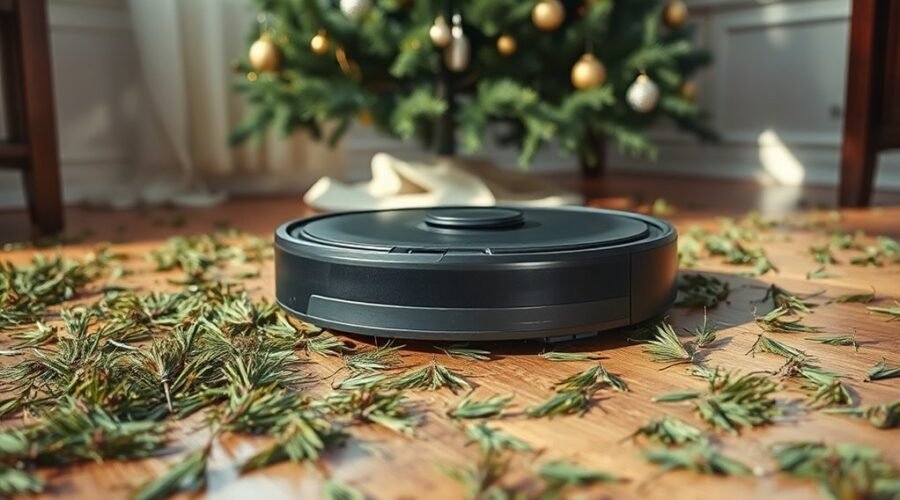
Robot vacuums can handle pine needles, but only under the right conditions. On hard floors, strong suction and good brush design can remove most debris, and some models perform surprisingly well. Carpet changes the result, since needles can work into fibers and stay put. Obstacle detection, regular emptying, and clean brushes help, but these machines still have clear limits. The real difference often comes down to surface type and machine design.
Can Robot Vacuums Clean Pine Needles?
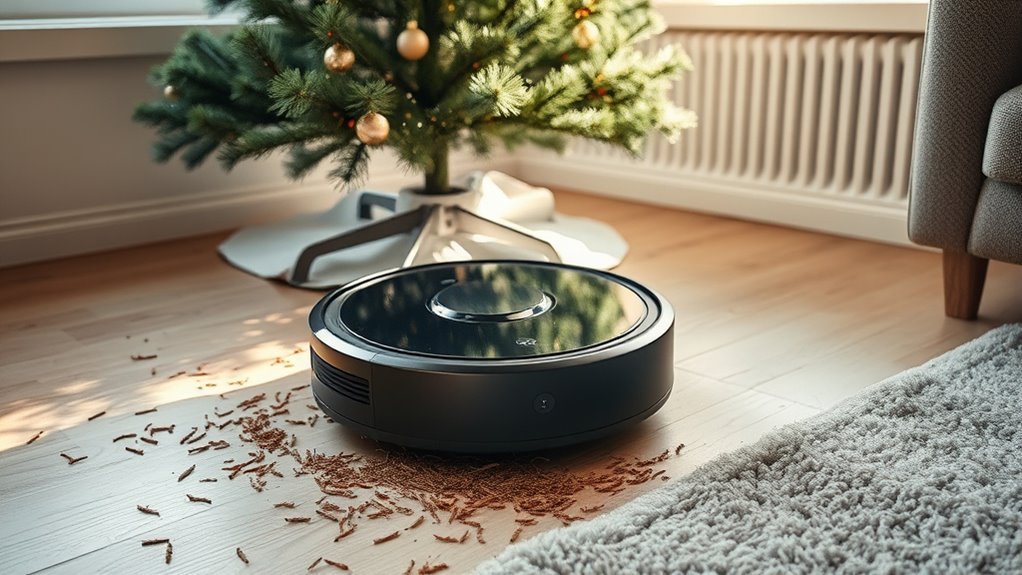
Yes—robot vacuums can clean pine needles, but performance depends heavily on the floor type and the machine’s suction and brush design.
On hard surfaces, models such as the iRobot Roomba j7+ can remove pine needles with high efficiency, often approaching 99% pickup.
On carpets, the result changes: the needles can lodge between fibers and resist extraction. Pine needles are stiff, light debris, so robot vacuums need strong airflow and effective brushes to move them reliably.
Units with higher suction, such as the DEEBOT X11 OmniCyclone, are better suited to this task, especially when edge-cleaning systems reach corners and baseboards.
Frequent scheduled runs help prevent buildup and reduce clog risk during peak shedding. For immediate deep cleaning, an upright vacuum may still deliver faster results.
For routine maintenance, however, robot vacuums can sustain a cleaner, less burdened floor with minimal manual effort.
Why Pine Needles Are Hard for Vacuums
Pine needles are difficult for vacuums because their long, stiff shape lets them slip into carpet fibers and floor cracks instead of lifting cleanly into the airflow. Their resin-coated surfaces also create static cling, so they adhere to flooring, rugs, and baseboards after ordinary passes.
Because the needles are lightweight, cleaning can scatter them further, leaving pine needles scattered across a room rather than captured in one cycle. In carpet, they can burrow below the nap, where brushes miss them or push them deeper.
In tight spaces, they bridge gaps and collect at edges, making pickup uneven. If suction is modest, needles may tangle in rollers, reduce airflow, and raise clogging risk.
During heavy shedding, the volume can rise fast enough to demand prompt removal, since accumulated debris can attract pests and undermine a clean, independent living space.
Best Robot Vacuum Features for Pine Needles
A robot vacuum intended for pine needles should prioritize very high suction, such as the 19,500Pa output of the DEEBOT X11 OmniCyclone, because strong lift is needed to pull stiff debris off carpets, hard floors, and edge lines.
In a best robot vacuum, airflow matters as much as raw suction, since pine needles often cling under light pressure from natural oils.
Smart obstacle detection helps the machine recognize scattered needles and avoid packing them into narrow gaps or corners.
Suction-only mode is useful because it enables repeated overlap passes without brush drag, improving pickup of needles that sit low or become embedded.
Scheduling is also critical: frequent runs during peak shedding prevent buildup and reduce manual cleanup.
The most capable systems combine strong lift, stable navigation, and flexible cleaning modes, giving users a practical path to less floor maintenance and more time recovered from repetitive sweeping.
Do Robot Vacuums Work on Carpet?
On carpet, robot vacuums have clear pickup limits because pine needles can work down into the fibers and resist removal.
Testing shows they can recover much of the debris, but usually not as completely as an upright vacuum with a brush roller that agitates the carpet more aggressively.
Suction-only modes and repeated passes improve results, yet they are best viewed as maintenance settings rather than a full solution for heavy needle buildup.
Carpet Pickup Limits
Carpet performance is where robot vacuums show their limits: even strong models such as the iRobot Roomba i7+ may remove about 75–80 out of 100 pine needles from carpet, but results can drop when needles are pushed deep into the fibers.
On carpet, the narrow, stiff shape of pine needles resists suction and is harder to lift than dust or crumbs. Upright vacuums still outperform robots, often clearing all 100 needles in testing.
Robot units can improve results with overlapping passes, especially in suction-only mode, and regular cleaning helps stop needles from settling further into carpet fibers.
For users seeking efficient, low-effort upkeep, robots remain useful, but they do not yet match the full carpet pickup power of a traditional upright cleaner.
Needle Embedding Issues
Needles that settle deeper into carpet fibers are harder for robot vacuums to collect, even when the machine has enough suction to handle loose debris. This needle embedding issues pattern reduces suction effectiveness on carpets, especially with pine needles that stand stiff and slip past brushes.
A robot vacuum may clear surface litter, yet embedded fragments remain and can accumulate below the fiber line.
- Loose needles are easier to remove.
- Deeply embedded needles resist pickup.
- Regular passes limit further sinking.
- Heavy shedding may still need manual follow-up.
In practice, robot vacuum performance on carpets is useful but incomplete. Tests with models such as the Roomba i7+ show solid removal, not total clearance.
For liberation from debris, repeated cleaning matters, but occasional upright support can still be required.
Best Carpet Settings
For carpet cleaning, robot vacuums generally perform best in suction-only mode with the highest practical suction setting, since brush agitation is not always enough to lift pine needles from fibers.
These best carpet settings reduce missed debris while limiting unnecessary scatter. Overlapping passes improve pickup because pine needles can lodge between carpet tufts and evade a single sweep.
Models with stronger suction and effective brush seals, such as the Roomba i7+, can remove roughly 75 to 80 percent of needles on carpet, but deep-set strands may remain.
Regular runs during shedding periods help prevent embedding. Robot vacuums can handle routine maintenance on carpet, yet an upright vacuum may still be needed for final cleanup when maximum fiber disruption and debris capture are required.
Why Hard Floors Are Easier for Pine Needles
Hard floors make pine needles considerably easier for a robot vacuum to collect because the debris remains on the surface rather than working its way into fibers. On hard floors, a robot vacuum can move with fewer obstacles, letting suction lift lightweight needles efficiently and with less wasted motion.
Hard floors keep pine needles exposed, making them easier for robot vacuums to lift efficiently.
The smoother surface also reduces static cling, so fewer needles stay behind after a pass.
- Debris stays exposed, not embedded.
- Suction reaches needles directly.
- Fewer fibers mean less resistance.
- Cleaner coverage needs less overlap.
This setup supports a more direct, low-effort cleaning cycle and gives users more freedom from repeated manual sweeping. Pine needles may still accumulate quickly, but hard floors let frequent robot runs interrupt buildup before it spreads.
For households seeking practical maintenance, hard floors offer the simplest environment for pine needle pickup and the most predictable results from autonomous cleaning.
How to Vacuum Pine Needles Without Clogs
Strong suction settings help a robot vacuum lift stiff pine needles before they lodge in carpet fibers or crevices.
After each run, the dustbin should be emptied and the brushes and filters inspected for trapped needles that can restrict airflow.
Regular maintenance and suction-only passes reduce clog risk and keep pickup performance consistent.
Strong Suction Settings
Setting a robot vacuum to a high suction level helps it pull in long, stiff pine needles before they can bridge the brush roll or jam the intake. Strong suction power is the primary control for keeping debris moving through the airflow path.
Models with adjustable suction can match the load on carpets and hard floors, reducing resistance and missed pickup. Suction-only mode is often best because it supports overlapping passes and better lift on scattered needles.
- Select maximum or near-maximum suction.
- Run slow, overlapping passes.
- Use suction-only mode for stubborn patches.
- Cover the area again if debris remains.
This approach gives the machine the force and repeat coverage needed to clear pine needles efficiently without unnecessary intervention.
Brush And Bin Care
Brush maintenance and bin management are essential when vacuuming pine needles, since stiff strands can wrap around bristles, restrict airflow, and create repeat clogs.
Effective brush and bin care keeps the robot vacuum moving with less interruption. After each run, inspect rollers, trim trapped needles, and wipe bristles with a dry cloth to remove resin or sap that can harden and reduce suction.
Empty the dustbin or bag immediately so debris does not compact and block intake paths. Frequent checks matter, especially on models like iRobot Roomba j.
If pine needles are routine, a self-emptying dock can reduce labor while preserving performance. The user gains more control by monitoring results, then adjusting cleaning frequency and route patterns to match debris load.
Best Places to Use a Robot Vacuum for Pine Needles
Robot vacuums perform best on hard floor surfaces when dealing with pine needles, since smooth floors prevent needles from embedding and allow near-complete pickup in tests. For the best places to use a robot vacuum for pine needles, prioritize open rooms with hard floors and minimal clutter; these conditions preserve mobility and collection efficiency.
Robot vacuums handle pine needles best on hard floors, where smooth surfaces maximize pickup and mobility.
On hard floors and carpets, performance diverges sharply, so placement matters.
- Kitchens and entryways with tile or vinyl.
- Living areas with hardwood or laminate.
- Hallways where needles track in from outside.
- Zoned zones near doors, using virtual barriers to confine shedding.
Carpeted areas are less suitable because needles press into fibers and escape the brush path. Regular scheduled runs help prevent buildup during peak shedding, especially where needles land lightly before settling.
High-volume deposits still merit supplemental upright cleaning. Strategic room selection keeps the robot in its effective range and supports cleaner, more autonomous maintenance.
How to Keep Your Robot Vacuum Running Smoothly
To keep a robot vacuum running smoothly amid pine needles, the dustbin should be emptied promptly after each use to prevent airflow restrictions and clogs.
Brushes should be checked regularly for trapped needles, hair, and debris, since buildup can reduce pickup efficiency and strain the motor.
Filters also require frequent cleaning to maintain suction performance and avoid premature wear.
Empty Bin Promptly
Emptying the dustbin after each run helps prevent pine needles from packing into the vacuum’s airflow path and reducing suction. To empty bin promptly is to preserve performance and avoid unnecessary strain on a machine meant to serve freely.
- Remove debris after every cycle.
- Prevent clogs before they form.
- Keep airflow open for steady suction.
- Reduce resin and sap buildup over time.
Pine needles accumulate quickly, so delaying disposal can overload capacity and weaken cleaning results. A clean dustbin supports efficient operation, protects motor output, and extends service life.
When shedding is heavy, increase emptying frequency to match the load. This simple routine keeps the robot vacuum responsive, efficient, and less constrained by debris.
Check Brushes Regularly
Regular inspection of the robot vacuum’s brushes helps prevent pine needles from tangling in the bristles and reducing suction performance.
To keep the machine efficient, check brushes regularly after each run, especially during peak shedding periods. A soft brush or cloth can clear wrapped pine needles, resin, and loose debris before buildup hardens and restricts movement.
Worn or damaged brushes should be replaced without delay, since intact bristles are essential for reliable pickup and steady floor contact. The owner’s manual should be consulted for model-specific brush care, because design tolerances vary.
This routine preserves cleaning power, reduces clog risk, and supports independent, low-maintenance operation. Clean brush assemblies allow the robot to move freely, gather debris more effectively, and maintain consistent service across pine needle-laden spaces.
Clean Filters Often
Brush maintenance alone will not keep a robot vacuum performing well when pine needles are present. Operators should clean filters often to preserve airflow and reduce strain on the motor. Clogged filters restrict suction, raise noise, and let debris recirculate, weakening pickup.
A simple maintenance cycle helps preserve autonomy:
- Inspect filters after each pine needles run.
- Tap out loose dust and fiber immediately.
- Wash washable filters, then air-dry fully.
- Replace nonwashable filters every 1-3 months.
Manufacturer guidance matters because filter media and airflow design vary. When suction drops, filter blockage is a likely cause.
Routine service improves cleaning performance and extends machine life, letting the device work with less interference and more consistent results.
When an Upright Vacuum Is the Better Choice
When pine needles are deeply embedded in carpet or concentrated in heavy patches, an upright vacuum is often the better tool. Its brush roller agitates carpet fibers and lifts stiff debris that resists simple suction, giving upright vacuums a clear advantage in tests where pickup reaches full removal.
For liberated, efficient cleanup, this matters: the machine delivers immediate results instead of waiting through slower robot passes. Larger dustbins also reduce interruptions, so more debris can be collected before emptying during peak shedding.
In practice, an upright model is recommended when the goal is thorough removal from dense carpet, entry mats, or localized drops after holiday traffic. Robot vacuums may handle light surface debris, but heavy accumulation and deeply lodged needles exceed their reach.
When speed, depth, and uninterrupted collection are required, the upright vacuum remains the more capable choice.
Best Robot Vacuums for Holiday Cleanup
For holiday cleanup, a robot vacuum can manage pine needles effectively on hard floors and around decorations, provided the model has strong suction and reliable navigation.
The best robot vacuums for holiday cleanup balance pickup, mapping, and low-touch maintenance. iRobot Roomba j7+ is a strong pick because it removes up to 99% of pine needles on hard surfaces.
Roborock S8 Pro Ultra adds powerful suction and obstacle avoidance for cluttered rooms. Kärcher RCV3 uses smart mapping to move cleanly around ornaments, cords, and furniture.
Roborock S8 MaxV Ultra reduces downtime with a self-emptying dustbin, freeing users from frequent bin checks.
- Roomba j7+ for maximum pickup.
- S8 Pro Ultra for mixed environments.
- RCV3 for precise navigation.
- S8 MaxV Ultra for low-maintenance cycles.
Regular scheduling keeps pine needles from building up, preserving open floors and reducing manual labor.
Frequently Asked Questions
What Is the Best Vacuum for Cleaning Pine Needles?
The best vacuum for pine needles is the DEEBOT X11 OmniCyclone, because 19,500Pa suction and TruEdge 3.0 deliver strong Pine Needle Efficiency on edges and floors; self-emptying convenience keeps maintenance minimal for liberated, efficient cleaning.
What’s the Easiest Way to Clean up Pine Needles?
In a jiffy, Needle Removal is easiest with a high-suction vacuum on suction-only mode, making overlapping passes across shedding zones. Regular cleaning, virtual barriers, and an upright vacuum for heavy fallout keep areas clear and autonomous.
What Are the Downsides of Using a Robotic Vacuum Cleaner?
Robotic vacuum cleaners can have limited suction, short Battery Life, and small bins, reducing efficiency. They may miss debris, tangle on obstacles, and require frequent maintenance, though they still offer convenient hands-off floor care.
What Type of Device Is Best for Picking up Pine Needles?
What device works best—upright vacuum or robot? For Pine Needle Cleanup, a strong upright vacuum with a brush roller leads on carpets, while high-suction robot vacuums suit hard floors and routine maintenance with less labor.
Conclusion
Robot vacuums can handle pine needles well on hard floors, where strong suction and airflow can sweep up loose debris efficiently. On carpet, however, needles often cling like burrs in the weave, reducing pickup and requiring more passes. Models with obstacle detection, high suction, and easy-to-clean brushes perform best, but they are not a full replacement for an upright vacuum in deep carpet cleaning. Regular emptying and brush maintenance help sustain performance.