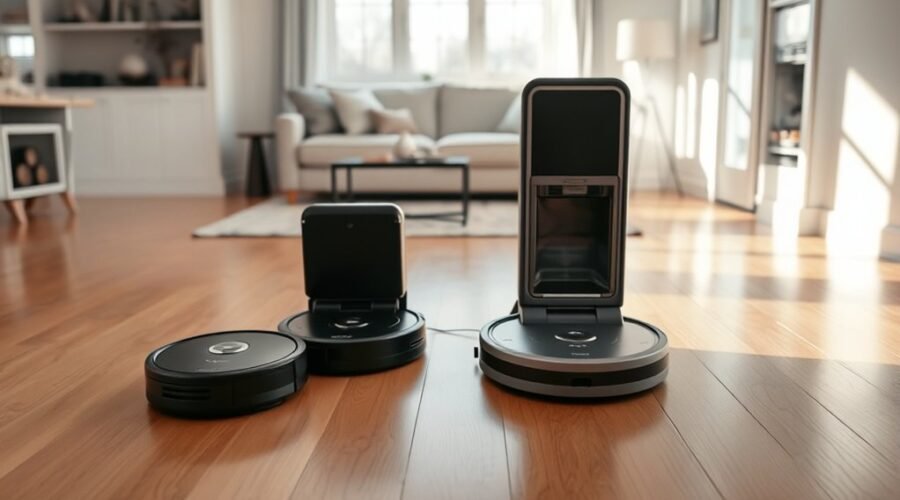
Self-emptying robot vacuum docks automate debris transfer from the vacuum into a larger base bin, reducing how often the dustbin must be handled. Standard docks are smaller, simpler, and cheaper, but they depend on frequent manual emptying. That difference affects noise, space, hygiene, and long-term convenience. For some homes, the trade-off is minor; for others, it changes the entire cleaning routine. The practical choice is not always obvious.
What Is a Self-Emptying Robot Dock?
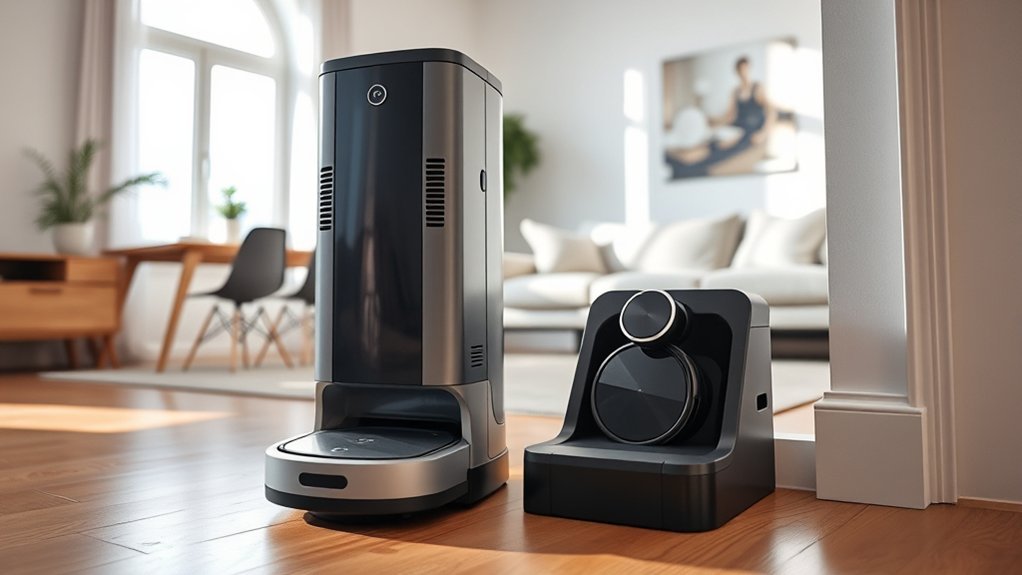
A self-emptying robot dock automatically transfers debris from the vacuum’s onboard bin into a larger dust bag, reducing how often manual emptying is needed.
This self-emptying robot dock is built for autonomy: after cleaning, the vacuum returns and the dock uses powerful suction to move collected debris into the bag. The sealed transfer process helps contain allergens and dust, improving hygiene and limiting exposure during disposal.
Built for autonomy, the dock uses powerful suction to move debris into a sealed bag, helping contain dust and allergens.
For busy households or larger homes, the larger dust bag can hold weeks of dirt, reducing maintenance interruptions and supporting cleaner floors with less effort.
Compared with standard charging docks, the unit adds convenience but also a bulkier design, since the extra emptying hardware needs more space. It also carries a higher price tag, which reflects the added function and materials.
The result is practical liberation from routine debris handling.
How Standard Robot Vacuum Docks Work
Standard robot vacuum docks function mainly as charging stations, guiding the unit to the base after cleaning to restore battery power.
They do not collect debris, so the onboard dustbin must be emptied manually after each run.
Their compact design simplifies placement in smaller spaces, but it also means regular user maintenance is still required.
Docking And Charging
In most cases, a standard robot vacuum dock functions primarily as a charging station, allowing the robot to realign, connect to power, and recharge with minimal user involvement. Unlike self-emptying robot vacuums, standard robot vacuum docks use a simple docking station or charging dock with limited advanced features. Their compact design suits smaller homes and reduces floor clutter. During autonomous navigation, the robot returns to the dock when battery levels drop, then resumes readiness for the next cleaning session.
| Feature | Standard Dock |
|---|---|
| Power role | Charges only |
| Space use | Compact |
| User task | Empty the dustbin |
| Maintenance | Frequent checks |
This setup supports practical freedom, but it does not remove manual maintenance. Users must still inspect the dustbin regularly to prevent clogs and odors, since the dock does not empty the dustbin automatically.
Manual Dustbin Emptying
With standard robot vacuum docks serving only as charging stations, the remaining maintenance task is manual dustbin emptying after each cleaning run.
A Standard Robot Vacuum typically uses a smaller dustbin size, so frequent maintenance is required, especially in pet-heavy or high-traffic homes. The user must check fill levels and empty debris before overflow reduces cleaning performance or vacuum efficiency.
Unlike Self-Emptying systems, these docks add no auto-charging or self-cleaning support beyond power delivery, so convenience is limited. Manual emptying also exposes the user to allergens and dust when the bin is opened and cleared.
Practical operation consequently depends on disciplined upkeep. For those seeking liberation from repeated chores, standard docks preserve basic function but leave the labor of maintenance and the risk of exposure with the user.
Space And Placement
Compact and unobtrusive, a standard robot vacuum dock typically needs only about 1.5 feet of clearance on each side and roughly 4 feet in front for effective access and navigation.
This Standard Dock functions as a charging station, not a Self-Emptying base, so the space requirement stays modest. Its compact form fits homes with limited floor area while preserving open paths for return trips.
Placement should be on a hard, flat surface near a power outlet, where the robot can align cleanly and recharge without interruption.
Because the dustbin is not emptied automatically, maintenance remains manual after each cycle. The practical result is a simpler setup with less equipment occupying the room, giving users more freedom in layout while keeping charging reliable and navigation efficient.
Self-Emptying vs Standard Docks
Self-emptying docks move debris into a larger sealed bag, reducing manual bin emptying and extending service intervals.
Standard docks keep costs lower and operate quietly, but they require more frequent emptying and offer less autonomy.
The choice typically depends on home size, debris load, and tolerance for added noise and higher upfront expense.
Self-Empty Dock Benefits
Although standard docks keep a robot vacuum charged and ready, self-empty docks add a major convenience advantage by automatically transferring debris into a larger sealed bin, reducing manual maintenance for weeks at a time.
This Self-Emptying design improves Hygiene by limiting dust exposure during disposal, a practical benefit for Allergy sufferers.
Greater Capacity also supports larger homes and Pet owners, since debris storage lasts far longer than with Standard docks.
The sealed bag system helps contain odors and fine particles, making routine upkeep more controlled and liberating.
Noise Levels rise briefly during emptying because of strong suction, but the cycle is short.
Cost is higher upfront, yet the reduction in Maintenance and added autonomy often justifies the premium for users prioritizing efficiency and cleaner handling.
Standard Dock Tradeoffs
Standard docks offer a lower-cost, quieter alternative, but they require the robot’s dustbin to be emptied manually after each cleaning cycle. A Standard Dock reduces initial cost and supports quieter operation, yet it shifts maintenance to the owner.
Manual emptying increases user intervention and limits autonomy, especially in larger homes or pet-heavy environments. By contrast, Self-Emptying systems transfer debris into a larger bin, reducing routine upkeep for weeks.
However, their powerful suction during transfer can be loud, and the dock usually needs more space due to bulkier space requirements. For buyers seeking liberation from frequent chores, the Standard Dock remains practical where budget, compact placement, and low noise matter more than hands-free convenience.
Noise, Size, and Placement Trade-Offs
When comparing dock types, size and sound are two of the most noticeable trade-offs: self-emptying models are typically bulkier, need about 1.5 feet of clearance on each side and roughly 4 feet in front, and produce a loud, handheld-vacuum-like burst during debris transfer.
For users seeking liberation from frequent intervention, the Self-Emptying option reduces manual maintenance, especially in larger homes, but its noise level and larger size can constrain placement in compact layouts.
The Standard Dock is quieter, smaller, and easier to position, though it offers less capacity and more direct oversight.
- Self-Emptying: better for extended autonomy and ideal performance in open floor plans.
- Standard Dock: better where quiet operation and flexible placement matter most.
Practical fit depends on room size, tolerance for sound, and how much visual bulk is acceptable.
How Maintenance and Hygiene Differ
Maintenance requirements differ sharply between dock types. A Self-Emptying Robot reduces routine maintenance by storing weeks of debris in larger dust bins, then transferring waste into sealed dust bags. This supports hygiene by trapping 99.9% of allergens and limiting airborne exposure during disposal.
The system still needs attention: the base station must stay clog-free and odor-free, and the high-suction channel should be checked regularly to protect cleaning efficiency.
Standard models demand more manual cleaning. Their dust bins, filters, and brushes need frequent emptying and washing, which increases user involvement and can release dust during handling.
Standard models demand frequent emptying and washing, increasing user involvement and potential dust exposure.
For households seeking freedom from repetitive upkeep, self-emptying designs shift labor from daily disposal to occasional inspection.
Standard models remain simpler in structure, but they require more hands-on care to control malodors, preserve performance, and keep maintenance predictable.
Which Dock Fits Your Home Best?
Choosing between dock types depends on room layout, cleaning demand, and household tolerance for upkeep and noise.
A Self-Emptying Robot Vacuum suits larger homes and high-traffic zones because it extends cleaning efficiency and lowers maintenance frequency. Its dock needs more space requirements, roughly 1.5 feet per side and 4 feet in front, so it fits best where open floor area is available.
A Standard Robot Dock is easier to place in compact areas, making it practical for apartments, secondary rooms, or users seeking a budget-friendly setup. Cost considerations also matter: self-emptying systems usually cost more upfront, while standard units remain accessible.
- Larger homes gain from fewer interruptions and more dirt storage.
- Compact areas benefit from a smaller dock footprint.
- Noise levels and service needs may guide the final choice.
For households prioritizing freedom from frequent emptying, the self-emptying option is stronger; for lean spending, the standard dock remains sufficient.
Why Narwal Flow Runs Quieter
The Narwal Flow is engineered for quieter operation than typical self-emptying robot vacuums, using advanced noise-reduction technology to limit sound during both cleaning and dock maintenance.
As a self-cleaning robot vacuum, it balances suction, mopping, and drying without the abrupt bursts common in standard self-emptying docks. Its AI-Adaptive base manages maintenance tasks with controlled airflow, while the emptying mechanism is tuned for quiet performance rather than maximum noise or force.
Hot air drying for mop pads also helps prevent odors and reduces damp-mop hum, improving the overall cleaning experience. This design supports a serene cleaning experience in homes with small children and in other noise-sensitive spaces.
Compared with louder dock systems, the Narwal Flow keeps disruption low and preserves household freedom during operation. Its quieter profile makes routine floor care less intrusive, allowing cleaning to happen with less interference and more comfort.
Frequently Asked Questions
Is a Self-Emptying Robot Vacuum Worth It?
Yes—if self emptying convenience, reduced maintenance frequency, and better pet hair efficiency matter, it is often worth it. The cost comparison favors larger homes, stronger filtration system, and longer battery life despite higher noise levels and size compatibility limits; user reviews help.
What Is the Best Docking Station for a Robot Vacuum?
A self-emptying, self-cleaning docking station is the crown jewel. It should match robot vacuum types, guarantee docking station compatibility, strong charging efficiency, lower maintenance requirements, support suction power, compare price, fit space considerations, show brand reliability, customer reviews, technology advancements.
What Are the Key Differences Between a Roomba and a Regular Vacuum?
Roomba offers autonomous suction power, navigation technology, battery life, and smart features with app integration, but lower dust capacity, higher maintenance frequency, and strict size compatibility. Regular vacuums provide stronger floor types versatility, yet higher noise levels.
What Are the Key Features to Look for When Buying a Robot Vacuum?
Key features include suction power, navigation technology, battery life, smart home integration, dustbin capacity, cleaning modes, maintenance requirements, price range, brand reputation, and warranty coverage; these determine performance, autonomy, and long-term value.
Conclusion
In the self empty vs standard robot vacuum dock debate, the split is stark. A self-emptying dock can seem almost tireless, swallowing debris with industrial-like efficiency and drastically reducing touchpoints. A standard dock remains simpler, smaller, and far less demanding on space and budget, but it calls for frequent dustbin attention. For large homes, self-emptying often wins; for tight spaces, standard docks stay practical. The best choice depends on convenience, noise, and maintenance tolerance.