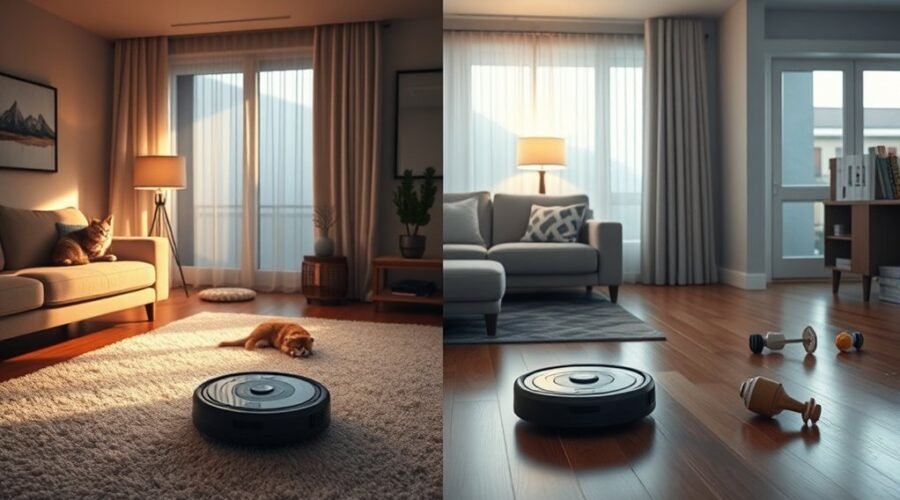
Quiet and standard robot vacuum modes serve different cleaning needs. Quiet mode lowers noise and often uses less suction, making it useful in shared spaces, during work, or near sleeping children. Standard mode raises power and sound, which can improve pickup on carpets and heavier debris. Battery use, cleaning depth, and daily convenience can all change with the mode selected, and the practical tradeoffs are not always obvious at first.
How Quiet and Standard Robot Vacuum Modes Work
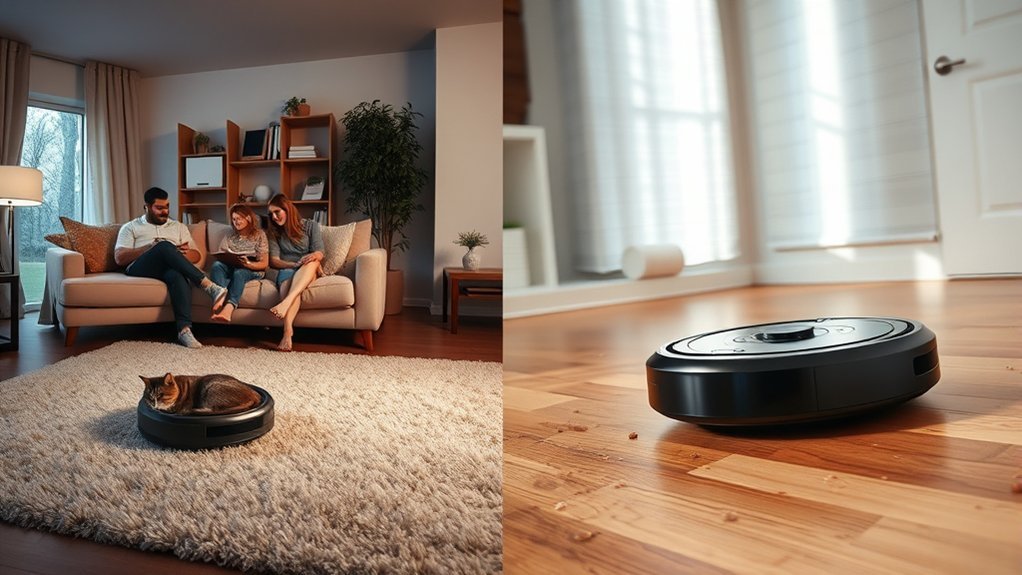
Quiet robot vacuum mode reduces suction power to keep noise levels at about 60 dB or lower, making it a practical choice for homes with babies, shared living spaces, or offices.
Quiet robot vacuum mode keeps noise around 60 dB or lower, making it ideal for babies, shared spaces, and offices.
In quiet mode, the machine lowers motor output and often uses brushless motors plus sound insulation to limit mechanical noise. This design supports cleaning during work, rest, or conversation without demanding silence from everyone present.
Standard mode, by comparison, increases suction power to improve debris pickup and can produce higher noise levels that are more noticeable in routine life. The tradeoff is functional: quiet operation may miss larger particles on the first pass, so more cleaning cycles may be needed.
For users seeking control over their environment, quiet mode offers a way to maintain order with less disturbance, while standard mode provides stronger cleaning when background noise is less important.
Quiet vs Standard Robot Vacuum Noise Levels
Quiet robot vacuum modes typically stay at or below 60 dB, while standard modes often rise above 70 dB, creating a noticeable gap in everyday noise exposure.
That 5-10 dB difference can affect comfort and concentration in home offices, during calls, or while children are sleeping.
Quiet mode reduces disruption, but standard mode may be preferable when higher suction and faster debris pickup are needed.
Noise Level Differences
How much noise a robot vacuum produces can noticeably affect day-to-day use, especially in shared or work-from-home spaces. A quiet robot vacuum usually stays at 60 dB or below, while standard modes can climb past 70 dB, making operational noise far more present.
Because a 5–10 dB rise is often heard as clearly louder, the difference is practical, not minor.
- Quiet modes use brushless motors and foam insulation to reduce sound.
- Standard modes generally deliver stronger suction, but with more noise.
- Quiet operation can go unnoticed during calls, supporting flexible routines.
Quiet settings may sacrifice pickup of larger debris, yet they still handle fine dust and pet hair effectively.
Standard settings suit heavier cleaning when sound is less important.
Comfort In Daily Use
Noise level differences also shape how comfortable a robot vacuum feels during everyday routines. A quiet robot vacuum typically runs at 40-60 dB, while standard units often exceed 70 dB, so the noise gap can alter comfort by 3-5 dB in noticeable ways.
| Mode | Noise | Daily comfort |
|---|---|---|
| Quiet | Low | Supports work |
| Standard | High | Distracts users |
| Quiet | Moderate suction | Fewer interruptions |
| Standard | Strong suction | More intrusive |
| Quiet | Fine dust pickup | Better for calls |
In homes with children or remote work, quieter operation preserves focus and family time. Although quiet mode may require extra passes, it still collects pet hair and dust effectively. Models like the MOVA V50 Ultra can be nearly undetectable during conference calls, giving households greater freedom from disruptive noise.
How Quiet Mode Affects Cleaning Power
A softer hum comes with a tradeoff in performance, as quiet mode typically lowers suction power to keep robot vacuums near 60 dB or below. This reduction can lower cleaning efficiency, especially on thick carpets where debris may need two passes for full pickup.
Quiet mode softens the hum, but reduced suction can mean weaker pickup on thick carpets.
Fine dust and pet hair are often handled adequately, but larger crumbs can remain after a single run. In practice, the quieter setting preserves a calmer room atmosphere with only a 3-5 dB change, yet it limits the machine’s ability to pull material from deeper fibers.
For households seeking freedom from constant noise, the compromise may still be worthwhile, but expectations should remain realistic.
- Better for surface dust than embedded dirt
- Less effective on deep carpets than standard mode
- May require extra passes for crumbs and heavy debris
When to Use Quiet Robot Vacuum Mode
Quiet robot vacuum mode is best used during work hours, conference calls, nighttime cleaning, or early morning routines, when lower noise levels help avoid disruption.
It is also well suited for homes with babies or small children, apartments with thin walls, and rooms where light daily tidiness on hard floors is the main goal.
The tradeoff is reduced cleaning intensity, so it is most practical when quiet operation matters more than maximum pickup power.
Ideal Times For Quiet Mode
When should a quiet robot vacuum be used? Quiet mode is best at ideal times when reduced background noise matters most. It supports homes with babies or young children by limiting disruption during naps and play, typically staying at 60 dB or lower.
It also suits work hours, when focus and productivity benefit from steadier surroundings. In shared living spaces, quiet operation helps preserve calm where sound travels easily.
- Run it during nighttime or early morning to avoid waking sleeping household members.
- Use it during family movie nights or gatherings, keeping cleaning active without interrupting conversation or viewing.
- Choose it whenever thin walls, remote work, or rest periods require a quieter routine and more personal freedom.
Best Rooms For Quiet Mode
Certain rooms benefit more than others from quiet robot vacuum mode, especially spaces where low noise supports sleep, concentration, or shared use.
Bedrooms are a primary choice because a quiet robot vacuum keeps noise levels below 60 dB, supporting rest and relaxation.
Home offices also benefit, since reduced sound protects focus and productivity.
In nurseries and children’s rooms, quieter operation helps avoid disrupting naps or play.
Apartment dwellers can use it to limit sound transfer through thin walls and preserve good relations.
Multi-purpose living areas may also be cleaned in quiet mode during movie nights or gatherings.
In each room, the main advantage is practical freedom: cleaning can continue without forcing people to pause work, rest, or connection, while cleaning performance remains adequate for routine maintenance.
Tradeoffs In Quiet Cleaning
Although quiet robot vacuum mode keeps noise at or below about 60 dB, it does so by reducing suction power, which makes it better suited to routine maintenance than heavy-duty cleaning.
In quiet mode, the machine can keep apartments, shared walls, and sleeping spaces calmer while still supporting daily maintenance. It often lifts fine dust and pet hair efficiently, yet larger debris may need extra passes or a standard setting.
- Use quiet mode during work hours or naps
- Choose it for light debris and frequent upkeep
- Switch modes when floors need deeper cleaning
That tradeoff gives users more freedom to clean without disruption, but it also asks for realistic expectations about performance.
When Standard Mode Cleans Better
Standard mode on a robot vacuum is generally the better choice for deep cleaning because it typically delivers stronger suction, often above 6000 Pa, which helps lift embedded dirt from carpets and pull in larger debris more effectively.
In standard mode, strong suction improves cleaning efficiency by reducing the need for repeated passes, especially on high-pile rugs and other textured surfaces. It also handles pet hair and dander more reliably, making it practical for homes where allergens and shedding build up quickly.
On mixed flooring, standard mode can clear fine dust on tiles while still reaching dirt trapped in fibers. For scheduled cleanings, it offers a more thorough result in high-traffic areas, where debris accumulates faster.
Quiet settings may conserve noise comfort, but standard mode better serves situations where a fuller, more complete clean is the priority, allowing users to reclaim time without sacrificing performance.
Quiet Robot Vacuum Performance on Carpets
Quiet mode offers a calmer cleaning experience on carpets, typically running at about 60–65 dB, which is noticeably less disruptive than standard modes that can exceed 70 dB.
Quiet mode cleans carpets at about 60–65 dB, offering a calmer, less disruptive experience than standard vacuuming.
A quiet robot vacuum is thus well suited to homes where work, rest, or media use should remain uninterrupted. On low- to medium-pile flooring, it can collect everyday dust efficiently, though reduced suction power may limit one-pass pickup of fine debris.
- Deep carpet fibers may hold pet hair and dust, especially in a high-pile carpet.
- Two cleaning passes often improve results when quiet settings lower suction power.
- Brushless motors and sound-reducing designs help preserve practical carpet cleaning with less noise.
For users seeking more freedom from household disruption, quiet mode offers a balanced compromise: less acoustic stress, acceptable carpet performance, and a cleaner room without the louder presence of standard operation.
Battery Life in Quiet vs Standard Mode
Battery life in robot vacuums often improves in quiet mode because reduced suction lowers power demand, extending runtime by roughly 20–30% compared with standard operation. In practical terms, quiet mode commonly delivers 90–120 minutes, while standard mode may fall to 60–90 minutes. The difference matters for users seeking autonomy over cleaning schedules and fewer interruptions.
| Mode | Typical battery life |
|---|---|
| Quiet mode | 90–120 min |
| Standard mode | 60–90 min |
| Quiet mode with sensors | Often more efficient on mixed floors |
Standard mode uses maximum suction, so it cleans faster but drains the battery sooner, sometimes cutting runtime by 15–25%. Quiet mode can also reduce motor stress during routine use, which may support longer battery lifespan. Smart sensors in some models further optimize power by adjusting suction to floor type, making quiet mode a practical choice for daily maintenance and efficient coverage.
Ways to Reduce Robot Vacuum Noise
Reducing operating noise in a robot vacuum often starts with simple upkeep and smart use habits. Regular maintenance keeps the machine freer, cleaner, and less likely to broadcast rattles or friction. A quick check of brushes, wheels, and the dust bin can prevent clogs that raise noise levels and strain performance.
Compared with a vacuum vs regular vacuum setup, the robot usually benefits most from unobstructed moving parts and a clear path.
- Clean the dust bin and brushes frequently to reduce blockages.
- Remove hair or debris from wheels and brush rolls to limit scraping.
- Run the unit on hard floors when possible; smoother surfaces usually produce less noise than carpets.
Models with brushless motors or foam insulation can further lower sound output. Scheduling cleaning during vacant hours also helps preserve household calm.
These measures support efficient cleaning without unnecessary disturbance, giving users more control over when and how noise enters daily life.
Which Robot Vacuum Mode Should You Use?
When selecting a robot vacuum mode, the best choice depends on the cleaning task, floor type, and tolerance for noise.
Quiet mode suits regular upkeep, especially on hard floors and low-pile carpets, where its lower suction still removes dust and crumbs efficiently. Its reduced noise levels, around 60 dB or less, make it practical in homes with babies, during work hours, or while watching movies.
It also improves battery life, allowing longer cleaning sessions before recharge.
Standard mode is better when debris is heavier or carpets are high-pile, since stronger suction can capture embedded dirt in fewer passes.
For those seeking more freedom from disruption, quiet mode can support daily cleaning without interrupting calls or routines.
However, if deep cleaning is the priority, standard mode remains the more effective choice.
The most practical approach is to match the mode to the mess, preserving comfort while maintaining a cleaner home.
Frequently Asked Questions
What Are the Key Features to Look for When Buying a Robot Vacuum?
Key features include suction power, battery life, and smart navigation. He should also consider low-decibel operation, obstacle avoidance, smart scheduling, dustbin capacity, and self-emptying options, ensuring practical, efficient cleaning with minimal disruption.
Which Robotic Vacuum Is the Quietest?
By candlelit standards, the MOVA V50 Ultra appears the quietest, with Noise levels below 60 dB, strong Cleaning efficiency, and favorable User reviews. Its brushless motor and insulation suit households seeking liberation from intrusive noise.
What Are the Key Differences Between a Regular Vacuum and a Robot Vacuum?
Regular vacuums, including upright vacuums vs canister vacuums, offer stronger suction power comparison and broader floor type compatibility. Robot vacuums clean autonomously, navigate by sensors, and suit routine maintenance, while requiring more frequent emptying and brush cleaning.
Do You Run Your Robot Vacuum Every Day?
Yes—daily use can be worthwhile. Like a gardener trimming hedges little by little, one 60 dB run prevents buildup. Daily cleaning benefits include fewer allergens; noise level preferences and scheduling options make it practical, liberating.
Conclusion
In conclusion, quiet and standard robot vacuum modes serve different needs. Quiet mode runs at lower noise levels and is better suited for routine cleaning, shared spaces, and longer battery life, much like a steady breeze rather than a gust. Standard mode delivers stronger suction and performs better on carpets and heavy debris, but it is louder and uses more power. The best choice depends on the flooring, mess level, and household noise tolerance.