A robot vacuum dustbin collects fine dust, hair, and larger debris after every cycle, and neglect quickly affects suction and airflow. Safe cleaning starts with full removal from the unit, followed by careful emptying and a light rinse only when the manufacturer allows it. The process seems simple, yet trapped residue, odors, and hidden buildup often require more attention than expected.
Why Your Robot Vacuum Dustbin Needs Cleaning
A robot vacuum dustbin needs regular cleaning to prevent debris buildup that can clog airflow and reduce suction power. A clean dustbin supports maintenance routines that optimize vacuum performance and keep cleaning cycles efficient.
When debris remains trapped, internal filters and sensors face added strain, which can shorten service life and increase wear. Frequent emptying also limits the accumulation of allergens and bacteria, helping preserve healthier indoor air.
In homes with pets or heavy foot traffic, the dustbin should be emptied after each use or whenever full, because rapid loading quickly degrades performance. Consistent cleaning keeps the vacuum ready for autonomous work, reducing unexpected maintenance interruptions and preserving reliable operation.
For users seeking liberation from repetitive floor care, this simple habit protects the machine’s core function and sustains dependable results over time.
How to Empty the Robot Vacuum Dustbin Safely
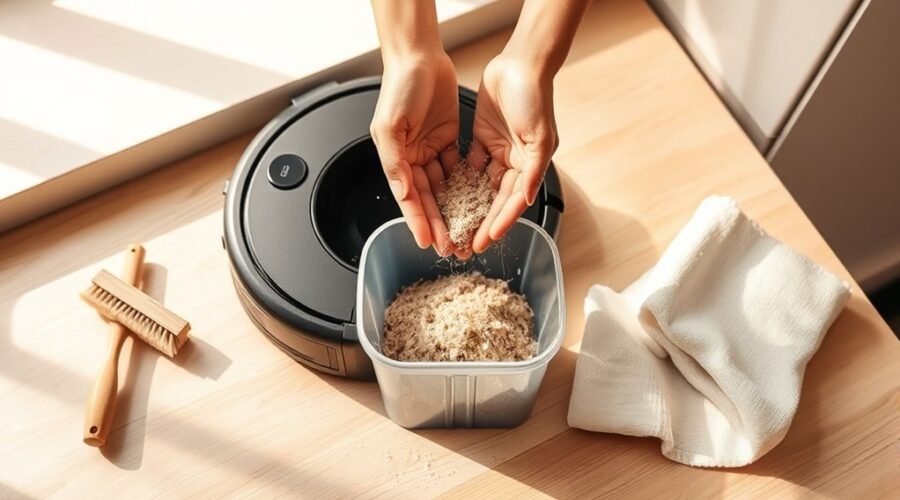
Detach the robot vacuum dustbin before emptying it, then hold it over a trash can to prevent debris from scattering. Open the bottom flap or press the release button to empty the dustbin, and tap gently to free trapped lint.
This step in cleaning your robot vacuum should be performed after every cycle to maintain suction and prevent a full dustbin from restricting airflow. In homes with pets, frequent dustbin cleaning supports peak performance and reduces odor buildup.
During this process, inspect the dustbin for cracks, warped seals, or loose latches; damage can undermine hygiene and freedom from repeated failures.
- A clear bin restores control.
- A sealed bin preserves quiet efficiency.
- A damaged bin steals time and patience.
- A disciplined routine enables thorough maintenance.
For broader care, empty the dustbin promptly, then allow it to dry completely before reattaching after any rinse.
How to Rinse and Dry the Dustbin Properly
Rinse the robot vacuum dustbin under cold or lukewarm water until all loose debris is removed. Then use a soft brush or cloth to lift any stubborn residue from the interior without applying harsh chemicals.
The dustbin should be cleared thoroughly so airflow remains unobstructed and optimal suction is maintained. After rinsing, shake off excess water and set the part aside to air dry completely before reassembly. This step limits moisture buildup and reduces the chance of odors or mold.
During drying, inspect the dustbin for cracks, warping, or wear that could compromise performance; damaged components should be replaced immediately.
For steady results, schedule weekly cleaning, or more often in homes with pets or elevated dust levels. A disciplined rinse and dry routine keeps maintenance simple, prevents stubborn dirt from accumulating, and allows the robot vacuum to operate with reliable freedom and efficiency.
How to Remove Stuck Dirt and Odors
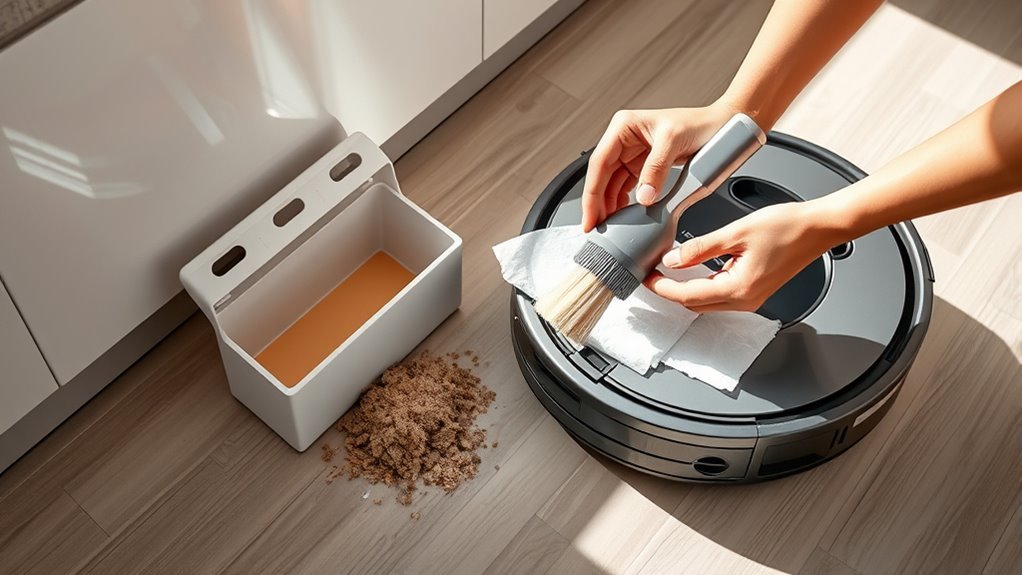
Stuck dirt in a robot vacuum dustbin can be removed with a soft-bristled brush or an old toothbrush, using gentle strokes to lift debris without scratching the plastic. To remove the dustbin, the user should first check the dustbin, then brush seams, corners, and around dirty sensors until residue lifts cleanly.
- A clear bin restores confidence.
- Removing odors helps reclaim fresh air.
- Careful cleaning supports freedom from repeated manual fixes.
- Regular maintenance preserves peak performance.
If odors remain, rinse the bin with cold or lukewarm water and apply mild cleaning solutions or a disinfecting solution sparingly. The bin should then air dry completely before reattachment.
Drying prevents moisture buildup and protects hygiene. A weekly inspection is practical, with more frequent attention in homes with pets. This routine helps eliminate trapped debris, reduce lingering smells, and keep the vacuum ready for reliable service.
How to Prevent Dustbin Clogs and Buildup
To prevent dustbin clogs and debris buildup, the dustbin should be emptied after each cleaning session so airflow remains unobstructed and suction stays consistent. A Robot vacuum depends on an unclogged dustbin, clean filters, and clear sensors to maintain cleaning performance. Weekly filter care limits pressure rise and reduces the risk of a clogged chamber. Overfilling should be avoided because packed debris can block passages and trigger full-bin alerts.
| Action | Frequency | Effect |
|---|---|---|
| Empty dustbin | After use | Prevents buildup |
| Clean filters | Weekly | Preserves airflow |
| Wipe sensors | Weekly | Improves detection |
| Brush stuck debris | As needed | Stops clogs |
Soft brushes or cloths should be used to clean residue without damaging components. This routine supports efficient operation, protects the dustbin, and gives the Robot the freedom to work without avoidable resistance.
Frequently Asked Questions
Is Vinegar Safe for a Robot Vacuum?
Vinegar is safe only for non-electrical dustbin materials; its vinegar benefits include odor elimination and grime removal. Vinegar risks include corrosion on sensors. Robot maintenance requires diluted use, cleaning accessories, vinegar alternatives, user tips, cleaning frequency, maintenance schedule.
Can You Wash a Roomba Dust Bin?
Like a careful mechanic, yes: a Roomba dust bin can be washed with lukewarm water only. Robot maintenance tips, dustbin cleaning techniques, vacuum filters care, and maintenance schedule suggestions support vacuum performance enhancement.
What Are the Downsides of Using a Robotic Vacuum Cleaner?
Robot vacuum limitations include weak suction power on carpets, navigation issues, surface compatibility gaps, battery life limits, noise levels, maintenance challenges, price concerns, replacement parts costs, and connectivity problems; frequent upkeep can hinder practical liberation.
What Is the Average Lifespan of a Robot Vacuum?
A robot vacuum typically lasts 5–7 years; one well-kept unit may outlive a commuter’s shoes, stretching to 8–10 with robot maintenance, cleaning schedules, battery care, filter replacement, performance optimization, troubleshooting tips, dustbin capacity, floor compatibility, app integration, and cost efficiency.
Conclusion
In practice, the theory is simple: a clean dustbin preserves suction because airflow depends on unobstructed passage. When debris is removed promptly, rinsed gently, and fully dried before reinstallation, the vacuum operates more efficiently and with less strain. Neglect, by contrast, accelerates odor, clogging, and wear. The deeper lesson is that routine maintenance is not cosmetic; it is a functional requirement. Consistent care protects performance, hygiene, and the robot’s long-term reliability.