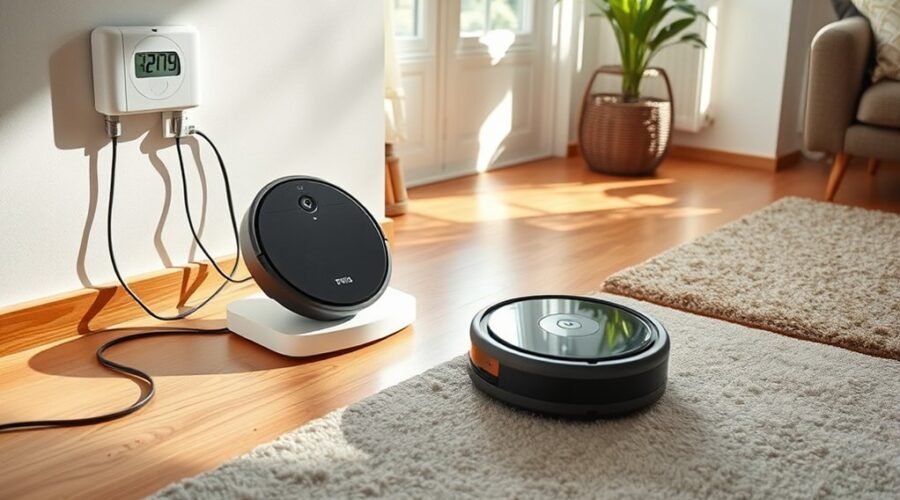
Robot vacuums usually draw about 60 to 100 watts while cleaning, far less than upright models that often use 500 to 1,500 watts. That difference can translate into annual electricity costs of roughly $29 to $70, depending on run time and charging habits. Some models are even lower in practice, but standby power and dock charging still add up. The real question is how much those factors change the total.
How Much Electricity Does a Robot Vacuum Use?
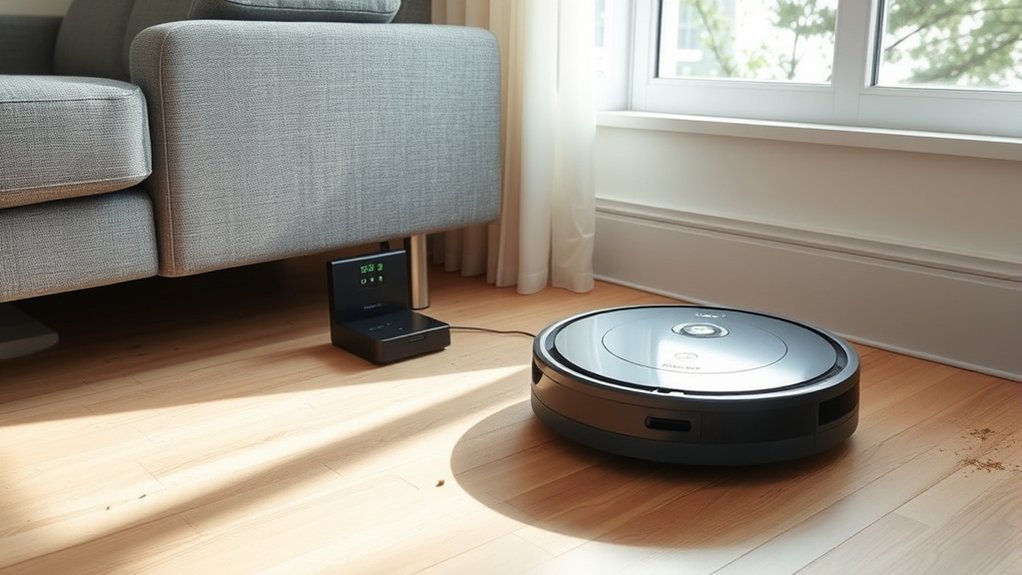
Robot vacuums typically use between 60 and 100 watts while operating, a fraction of the 500 to 1,500 watts common to traditional vacuums. This lower electricity demand makes the robot vacuum an energy-efficient cleaning option for households seeking less dependence on high power usage.
At 60 watts, one hour of operation consumes about 0.06 kWh, illustrating modest energy consumption even during active cleaning. Over a year, annual energy costs generally fall between $29 and $70, depending on usage patterns and model efficiency.
For example, an energy-efficient model such as the eufy L60 can use about 0.08 kWh for two hours daily, totaling roughly 29.12 kWh annually. Even in standby mode, electricity use remains minimal, with some units drawing only 3.6 watts.
Compared with traditional vacuums, the data show a clear efficiency advantage, giving users more control over consumption and lower long-term costs.
What Affects Robot Vacuum Power Use?
Several factors influence how much power a robot vacuum draws beyond its typical 60 to 100 watt operating range.
Robot vacuum power rises when suction is increased, especially in turbo settings, while eco options lower average power consumption.
Higher suction, especially turbo modes, increases power use, while eco settings keep consumption lower.
Floor types matter: carpets create more resistance and usually raise energy consumption, whereas hard surfaces let the machine move with less effort.
Cleaning modes use also changes demand, since spot cleaning and deep-clean cycles require more output than routine navigation.
Usage frequency affects totals as well; more cleaning sessions mean greater electricity use across a week or month.
Battery capacity influences runtime and the energy required to support it, though a larger pack does not always mean worse efficiency.
Smart features, such as mapping or obstacle recognition, can add modest load, yet these units remain energy-efficient compared with larger cleaners.
How Charging Increases Electricity Use
Charging can raise a robot vacuum’s total electricity use well beyond its active cleaning draw because the battery must be replenished after each run. Typical charging for robot vacuums, such as a Roomba, is about 28 watts, and repeated charging cycles increase electricity consumption over time.
Many units also sit in standby mode, with models like the eufy X10 Pro using around 36Wh daily, adding to total energy consumption even when they are idle. Because a robot running daily may need charging every couple of days, the cumulative load can meaningfully affect the overall electricity bill.
Active cleaning often uses 60 to 100 watts, but the charging phase extends usage beyond that window. Newer models improve energy efficiency with better charging designs, yet multiple recharge events still matter.
Practical tips: reduce unnecessary runs, schedule efficient cleaning, and keep docks accessible to limit wasted charge time.
Robot Vacuum Power Compared to Upright Vacuums
In power terms, robot vacuums are far lighter loads than upright models: most draw about 60 to 100 watts during cleaning, while uprights commonly use 500 to 1,500 watts. That gap shapes robot vacuums energy use and makes the power consumption of robot units easier to predict.
| Type | Typical draw |
|---|---|
| Robot vacuum | 60–100 W |
| Upright vacuum | 500–1,500 W |
A robot running one hour at 60 watts uses about 0.06 kWh; a traditional vacuum cleaner can use close to 1 kWh in the same period. Models with smart navigation and regular maintenance can sustain efficient cleaning with less effort, so they consume less electricity without demanding constant oversight. Annual use can stay modest: some units remain near 70 kWh with daily cleaning. The tradeoff is clear: uprights deliver higher cleaning power, but robot vacuums reduce overall energy consumption and remain energy efficient for routine floor care.
ECOVACS DEEBOT Power Use
ECOVACS DEEBOT models reflect the lower power profile typical of robot vacuums, with the DEEBOT T30S rated at 60 watts. At that level, the robot vacuum consumes far less power than many full-size cleaners, making its energy usage easier to manage.
The 5200mAh battery supports up to 290 minutes of cleaning time on hard floors in silent mode, showing how efficient runtime can be paired with restrained demand. Smart navigation helps reduce power consumption by limiting redundant passes and focusing the cleaning route.
The 5200mAh battery delivers extended runtime, while smart navigation trims waste and keeps cleaning efficient.
Automatic recharging further supports disciplined operation, since the unit returns to power without wasting runtime or requiring manual oversight. This design promotes eco-friendliness while helping lower electricity costs.
For households seeking freedom from excess utility burdens, ECOVACS DEEBOT presents a measured balance of performance and efficiency. Its power profile is not only practical, but also aligned with lean, accountable home energy use.
Eufy Robot Vacuum Power Use
Eufy robot vacuums show a similarly restrained power profile, with the X10 Pro using less than 0.2 kWh over two hours of daily operation, or about 70 kWh annually. This eufy robot vacuum demonstrates how robot vacuums use lower power without sacrificing a practical cleaning solution.
| Model | Use | Annual |
|---|---|---|
| X10 Pro | <0.2 kWh/2h | ~70 kWh |
| X10 Pro standby | 36 Wh/day | very low |
| L60 | <40 Wh | 29.12 kWh |
| Fridge comparison | ~45x higher | — |
| Outcome | energy-efficient | lower bills |
The L60 is even leaner, at roughly 0.08 kWh for two hours. In standby mode, the X10 Pro draws about 36Wh daily, less than a typical LED bulb. Across power modes, eufy emphasizes energy-efficient operation, keeping annual consumption modest and helping reduce electricity bills. For households seeking autonomy in routine cleaning, the data points to a dependable, lower power option.
Narwal Robot Vacuum Power Use
Narwal robot vacuums, including the Freo Z Ultra, Freo X Ultra, and Freo, operate at a maximum power output of 65 watts, with the Freo model using 45 watts.
At typical daily runtimes, the Freo Z Ultra uses about 0.13 kWh per day and roughly 47.45 kWh annually, while the Freo X Ultra is estimated at 23.725 kWh per year and the Freo at 16.43 kWh.
Their integrated mopping, smart mapping, and overall efficiency contribute to lower electricity use than many competing brands.
Narwal Wattage and Runtime
With a maximum output of 65 watts, Narwal robot vacuums sit in a relatively efficient power range compared with traditional vacuums. Narwal wattage remains modest, and that lower power consumption helps reduce electricity bills during daily use.
The Narwal Freo Z Ultra uses about 0.13 kWh per day at two hours, or 47.45 kWh annually. The Freo X Ultra, at one hour daily, reaches roughly 23.725 kWh per year. The Narwal Freo operates at 45 watts, with annual energy consumption near 16.43 kWh.
These figures show how runtime shapes energy demand more than cleaning features alone. For users seeking practical freedom from waste, Narwal models are designed to optimize performance while keeping kWh usage restrained.
Narwal Energy-Saving Features
Energy efficiency in Narwal robot vacuums comes not only from modest wattage, but also from features that help limit unnecessary runtime and repeated cleaning passes.
Narwal models draw up to 65 watts, or about 0.065 kWh per hour, yet their advanced features support lower annual energy usage. AI Smart Mapping and dual HD cameras help robotic vacuum cleaners plan routes efficiently, reduce overlaps, and complete cleaning with fewer wasted motions.
The Freo Z Ultra can use about 47.45 kWh per year at two hours daily, while the Freo X Ultra uses roughly 23.725 kWh with one hour daily.
The Narwal Freo, at 45 watts, reaches about 16.43 kWh annually. This profile indicates strong energy efficiency, low power consumption, and a sustainable path toward effective cleaning with less strain on household electricity budgets.
How to Lower Robot Vacuum Electricity Costs
Reducing robot vacuum electricity costs is most effective when usage patterns and settings are optimized together. Smart Vacuums can consume far less energy when eco-mode settings replace turbo output, often cutting power consumption by as much as 50% during routine cleaning sessions.
Optimizing usage patterns and eco-mode settings can cut robot vacuum energy use by as much as 50%.
To keep use disciplined, schedule cleaning for low foot traffic periods; this lets the machine move with fewer interruptions and less wasted runtime. Regular maintenance also matters: clean filters and brushes so airflow remains efficient and the motor does not draw extra power.
In homes that stay relatively clean, fewer cleaning sessions can translate into measurable relief on electricity bills. Energy-efficient models such as the eufy L60 or Narwal Freo further reduce demand, typically using about 30 to 65 watts, far below traditional vacuums that may draw 500 to 1,500 watts.
Together, these choices free households from avoidable energy waste.
Frequently Asked Questions
Should I Run My Robot Vacuum Every Day?
Yes—daily use is reasonable for many homes, given daily cleaning benefits, robot vacuum maintenance, floor types suitability, battery life considerations, scheduling features advantages, noise level comparisons, pet hair effectiveness, smart home integration, energy efficiency ratings, user reviews insights.
What Appliance Is the Biggest Energy Waster?
Electric furnaces are the biggest energy wasters; one can draw 5,000 watts, like a floodgate left open. Energy consumption, appliance efficiency, smart technology, cost savings, usage habits, environmental impact, maintenance tips, cleaning effectiveness, power ratings, seasonal variations.
What Are the Downsides of Using a Robot Vacuum?
Robot vacuums often underperform on cleaning efficiency, floor compatibility, and pet hair, while navigation technology, dust bin capacity, and battery lifespan can limit autonomy. Robot vacuum maintenance, noise levels, app integration, and scheduling convenience also affect utility.
Should I Leave My Robot Vacuum Plugged in All the Time?
Usually yes; eufy X10 Pro uses under 0.2 kWh for two daily hours. Consistent charging habits support energy efficiency and smart home integration, though battery replacement may come sooner. Scheduling options and maintenance tips reduce power consumption, preserve robot vacuum lifespan.
Conclusion
To sum up, robot vacuums use modest electricity, typically 60 to 100 watts while cleaning and only a few watts in standby. Annual costs usually fall between $29 and $70, with usage, battery charging, and model efficiency driving the total. Compared with upright vacuums, they remain far more economical. For households seeking convenience without a power hog, the numbers show a clear advantage—practically a modern-day marvel with sensible operating costs.