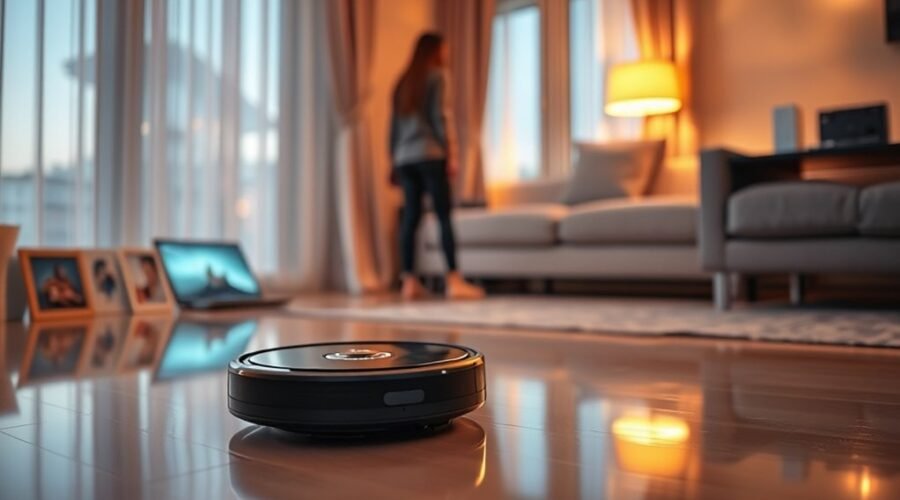
Robot vacuum cameras can improve navigation, but they also raise real privacy questions. They may capture room layouts, daily routines, and occasional images of people or pets, then send some of that data to cloud services. Manufacturers often offer safeguards, yet the level of protection varies widely. The key issue is not whether these devices see everything, but how much they store, share, and expose when something goes wrong.
What Do Robot Vacuum Cameras Actually See?
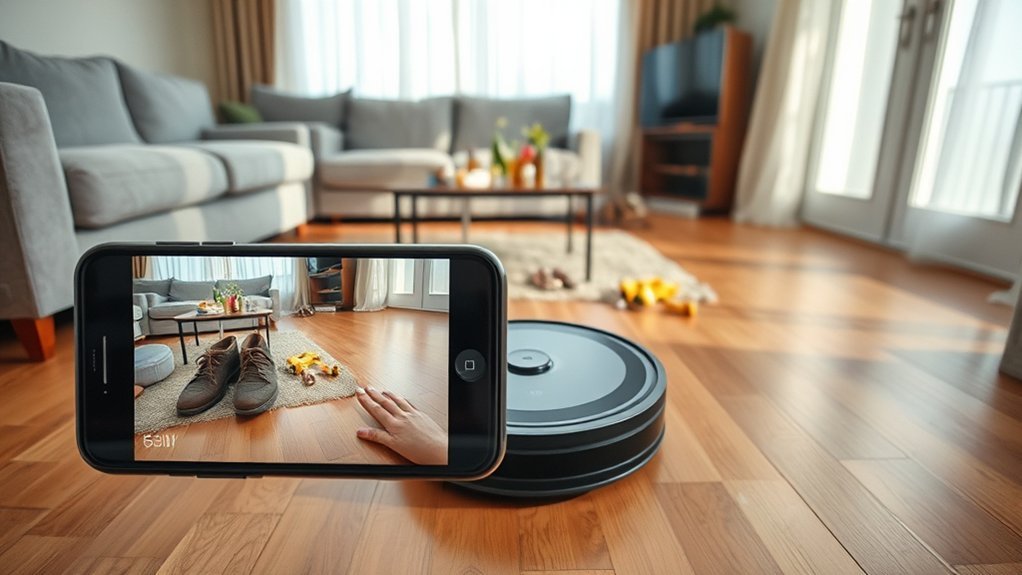
Robot vacuum cameras primarily see the home as a map of surfaces, obstacles, and room layouts, using that visual data to navigate and avoid collisions.
Robot vacuum cameras map surfaces, obstacles, and room layouts to navigate efficiently and avoid collisions.
In practice, robot vacuums map floors, walls, furniture edges, and paths that help them move efficiently. On advanced models, this visual system can sometimes register images of household members passing through a room, which is why privacy concerns arise.
The camera may also glimpse sensitive areas, depending on placement and use. Some devices send information to cloud servers for processing, so data handling matters.
Manufacturers often describe security measures such as encryption and privacy policies, yet those assurances do not remove the need for user scrutiny. For those who want stronger control, offline mode or camera disablement can reduce exposure and support more autonomous household use.
The key question is not only what the camera sees, but who can access those images and under what conditions.
What Data Do Robot Vacuums Collect?
Beyond the visible sweep of dust and debris, robot vacuums often gather a broader set of data to function effectively. These IoT devices rely on data collection that can include floor maps, cleaning schedules, distances traveled, obstacle logs, and error reports. Some robot vacuums with cameras or microphones may also capture visual and audio data, which can affect privacy if access is not tightly controlled. Wi-Fi models may share information with cloud servers, adding security vulnerabilities and expanding exposure beyond the home. Manufacturers sometimes record app interactions and usage frequency, and this metadata may include personal information.
| Data type | Purpose |
|---|---|
| Floor maps | Navigation |
| Schedules | Automation |
| Error logs | Troubleshooting |
| Audio/video | Monitoring |
| App metadata | Service improvement |
This mix of data can be useful, yet it also demands strong data protection laws and careful device settings so users retain control over what leaves the home.
How Robot Vacuum Maps Create Privacy Risks
Mapping features can make a robot vacuum far more useful, but they also create a detailed record of the home that may expose more than users expect.
In robot vacuum privacy debates, home mapping is the main concern because LIDAR and cameras can outline rooms, furniture, and entry points with surprising precision. The data collected may also include obstacle distances and navigation patterns, which can reveal routines and other personal data.
For some models, images of household members may be stored or shared, adding another layer of security issues. When maps move to cloud servers, third parties may gain access unless safeguards are strong. That raises questions about who can view the information and how it is used.
Weak security protocols and poor encryption can increase the chance of unauthorized access, making the map itself a valuable target. Clear controls, limited sharing, and stronger protections help reduce these risks.
Can Robot Vacuum Cameras Be Hacked?
Robot vacuum cameras can be hacked when weak security leaves video feeds, sensors, or stored data exposed to unauthorized access.
Reports of camera, microphone, and even Lidar-related exploits show that connected vacuums may create privacy risks beyond simple floor mapping.
Protection depends on measures such as end-to-end encryption, regular firmware updates, and strong account security.
Hacking Vulnerabilities
Some robot vacuum cameras can be hacked, exposing both live video and other sensitive data. In robot vacuum security, privacy concerns often stem from an internet connection that routes data through cloud services.
Security flaws in some smart devices have let intruders control cameras, microphones, and navigation without notice. Hacking vulnerabilities are not theoretical; incidents involving Ecovacs models and the LidarPhone hack show how attackers may exploit sensors for spying.
Data protection depends on regular firmware updates and stronger safeguards, including end-to-end encryption and authentication.
- Unauthorized control can reveal home layouts.
- Cloud links may broaden exposure.
- Sensor exploits can enable eavesdropping.
- Model-specific flaws can persist quietly.
Privacy Protection Steps
Because robot vacuum cameras can be hacked, privacy protection starts with basic account and network security. Strong, unique passwords and two-factor authentication reduce unauthorized access to robot vacuum cameras and the app.
A secure Wi-Fi network, with updated router settings and strong encryption, helps protect Wi-Fi network information from interception. Regular firmware updates matter because they often patch hidden flaws before attackers exploit them.
Users should also check whether encrypted data is used during transmission and storage, since weak handling can raise privacy risks. Reading manufacturer policies clarifies data collection and whether information is shared with third parties.
Third-party certifications can offer added confidence, though they do not replace careful security practices. With these steps, users can better defend privacy protection while keeping useful automation.
How Robot Vacuum Cloud Connectivity Exposes Your Home
Cloud-connected robot vacuums often upload detailed home maps, navigation paths, and device information to manufacturer servers, which can reveal more about a home than many users expect.
Remote access features may add convenience, but they also create another route for unauthorized viewing if accounts, apps, or cloud systems are poorly protected.
Data-sharing controls consequently matter, since privacy risks can grow quickly when location data, Wi-Fi details, and camera images are handled with weak limits.
Cloud-Linked Home Maps
While robot vacuums can map a home with LIDAR, cameras, and other sensors to improve navigation, those detailed floor plans are often synced to manufacturer servers for storage and remote access. In cloud-connected systems, home maps may reveal room layouts, Wi-Fi details, and other sensitive data, creating privacy concerns and pressing data protection questions.
- LIDAR sensor scans can outline every wall and doorway
- firmware updates may improve features but also change collection practices
- encryption such as AES-256 helps defend stored records
- security patches matter when cloud systems hold household plans
Reports of unencrypted uploads show that weak safeguards can expose users. Companies facing commercial pressure may also retain data longer than expected.
Consumers seeking autonomy should review policies, favor strong encryption, and keep firmware updates current.
Remote Access Risks
Those same cloud links that store home maps and cleaning schedules can also open a path into the device itself. For robot vacuums, cloud connectivity can turn ordinary convenience into privacy and security concerns when remote access is poorly protected.
Detailed maps, camera feeds, and other data they collect may travel to remote servers, where weak encryption or flawed controls can invite data breaches. Past incidents have shown that unauthorized viewing of footage is possible when security and data protection are thin.
A model with strong data protection certification may reduce the privacy risk, yet no certification can erase every threat. For people seeking control over their homes, constant internet dependence should be treated with caution, especially when a device can be reached from outside the household.
Data Sharing Controls
Because robot vacuums often depend on cloud services to store floor maps, operational logs, and navigation data, their privacy impact depends heavily on how much information manufacturers collect and how much control users are given over it.
For many robot vacuums, data sharing controls are the real safeguard against overreach. Key questions include:
- Does the privacy policy explain what is sent to the cloud?
- Is user consent required before images or logs leave the device?
- Is advanced encryption used to protect data security?
- Can offline mode reduce exposure and limit what vacuums can spy on?
Manufacturers’ privacy claims should be checked against compliance with data protection rules.
When cloud access is broad, vacuums can spy indirectly through detailed maps and usage patterns. Strong settings, clear notices, and the option to disable remote access give users more freedom.
What Robot Vacuum Brands Say About Data Use?
Robot vacuum brands vary widely in how they describe the collection and use of customer data. iRobot says its production Roombas do not send images or video without user consent, framing privacy as a matter of user control, while ECOVACS gives users options to opt out of data sharing for training and to request full erasure of their data from company servers.
For robot vacuum cleaners, this means cameras can potentially raise data privacy concerns even when the devices are marketed as helpful. Brands often point to privacy controls, security audits, and bug bounty programs to show responsibility, but those claims are not uniform.
iRobot’s Roomba j7 series is often cited in this discussion, yet consumers still need to read policies closely. Eufy’s earlier backlash over alleged cloud uploads shows why scrutiny matters.
In practice, user consent and clear data handling language remain central to judging whether a device supports autonomy or quietly expands surveillance.
Privacy Features That Actually Help
Privacy protections become more meaningful when they are built into the vacuum itself rather than left to vague promises. For robot vacuums, practical safeguards give users real control over a smart device in the home network.
- Camera disable switches stop visual capture when privacy matters most.
- Data encryption, especially AES-256, helps keep transmitted information from interception.
- Sharing controls let owners limit PII sent to manufacturers.
- Regular updates and firmware updates close weaknesses before they spread.
These features align with privacy regulations and reflect what users prefer: clear choices, not hidden defaults. A vacuum that can work without cameras, protect traffic in transit, and accept regular updates offers stronger day-to-day security.
Certifications help signal that a brand treats privacy seriously, but the most useful protection remains simple control at the device level. When those controls are easy to find and use, people gain more freedom over their space and data.
Which Privacy Certifications to Look For
When evaluating robot vacuum cameras, certifications tied to GDPR and CCPA can signal stronger rules for consent, data access, and limits on data sharing.
Marks from TÜV Rheinland and ETSI EN 303 645 may also suggest that a device follows recognized privacy and cybersecurity standards.
Together, these labels can help buyers compare how seriously a manufacturer treats personal data protection.
GDPR and CCPA
Under GDPR, manufacturers must obtain explicit consent before processing personal data, while CCPA gives California residents the right to know what is collected, access that information, and opt out of data sales.
For robotic vacuums, these rules matter because smart devices often map homes and store data. The California Consumer Privacy Act and GDPR are not just legal checkboxes; they shape how manufacturers handle data storage, security, and consumer trust.
Clear privacy certifications signal better accountability and help users judge whether GDPR compliance is real. Key checks include:
- transparent privacy notices
- easy consent controls
- limited data retention
- clear deletion options.
When manufacturers explain collection and use plainly, people can choose devices with more freedom and less surveillance risk.
TÜV and ETSI Standards
Beyond legal requirements such as GDPR and CCPA, robot vacuum buyers can also look for third-party certifications that show a product has been tested for security and data protection. TÜV Rheinland and ETSI EN 303 645 are useful markers for connected devices and smart devices. They indicate that privacy, IoT security, and encryption practices have been examined, including consent and user-control rules.
| Standard | Focus | Value |
|---|---|---|
| TÜV Rheinland | Testing | Strong data protection |
| ETSI EN 303 645 | Consumer IoT security | Secure communication |
| Both | Privacy assurance | Higher consumer trust |
When a manufacturer earns these certifications, it signals respect for personal information and supports more liberated use of connected devices.
Safer Robot Vacuum Choices for Privacy
For households concerned about privacy, safer robot vacuum choices are typically models without cameras or those that let users disable camera features, since they reduce the amount of data collected about home layouts and daily activity.
In robot vacuums, privacy is stronger when design favors local processing and limited telemetry.
- models without cameras limit image capture
- LIDAR navigation maps rooms without visual recording
- offline operation keeps data off the cloud
- data protection certifications and clear policies improve security
Brands that offer transparency in data handling help buyers assess whether cleaning schedules stay local or are shared externally.
LIDAR navigation can support effective cleaning while avoiding household imagery, making it a practical option for those seeking more control.
Strong data protection certifications, including AES encryption and GDPR alignment, signal better security practices.
Together, these features give users more independence and reduce unwanted exposure.
How to Use a Robot Vacuum More Safely
Secure use of a robot vacuum starts with basic account and device hygiene: owners should change default passwords, use strong unique credentials for the vacuum and its app, and keep firmware and software updated to reduce security risks.
Regular firmware updates close known gaps and strengthen security, making it harder for outsiders to reach the device. Privacy settings should also be reviewed so data collection is limited; if camera functions are unnecessary, disabling them reduces exposure.
The Wi-Fi network should be monitored for unusual activity, and WPA2 or WPA3 encryption should protect the connection between the robot vacuum and home devices.
Placement matters as well: keeping the unit out of sensitive areas such as bedrooms and bathrooms lowers the chance of accidental recordings or unwanted data capture.
Used this way, the robot vacuum can support convenience without surrendering control over private spaces.
Frequently Asked Questions
What Are the Security Risks With Robotic Vacuum Cleaners?
Robotic vacuum cleaners face data breaches, unauthorized access, surveillance concerns, weak user consent, poor encryption standards, firmware vulnerabilities, malicious hacking, insecure data storage, and privacy regulations gaps, making regular updates and careful settings essential for protection.
Are Roborock Cameras Privacy-Conscious?
Yes, Roborock cameras appear relatively privacy-conscious, with data encryption, user consent, privacy policies, software updates, and user settings reducing surveillance concerns. Camera placement, data storage, and remote access remain relevant factors to review carefully.
Which Robot Vacuum Is the Most Privacy Friendly?
A camera-free LIDAR model often proves most privacy friendly. What looks safer than an unblinking eye? It should prioritize robot vacuum features, privacy settings, user data limits, camera technology restraint, surveillance concerns, security updates, manufacturer policies, smart home integration, consumer reviews.
Do All Robot Vacuums Have Cameras?
No, not all robot vacuums have cameras. Many rely on robot vacuum features like LiDAR or infrared; camera technology appears mainly in premium models. Data collection, mapping software, user consent, privacy settings, brand comparisons, consumer awareness, smart home integration vary.
Conclusion
Robot vacuum cameras can be useful, but they also leave a quiet trail through the home, sketching rooms, furniture, and daily routines like an unseen houseguest with a camera roll. Privacy depends on design and settings: encryption, local storage, limited sharing, and camera controls can lower risk. Still, no device is perfectly private. Careful buyers should compare protections closely and treat every connected vacuum as a small window into the home.