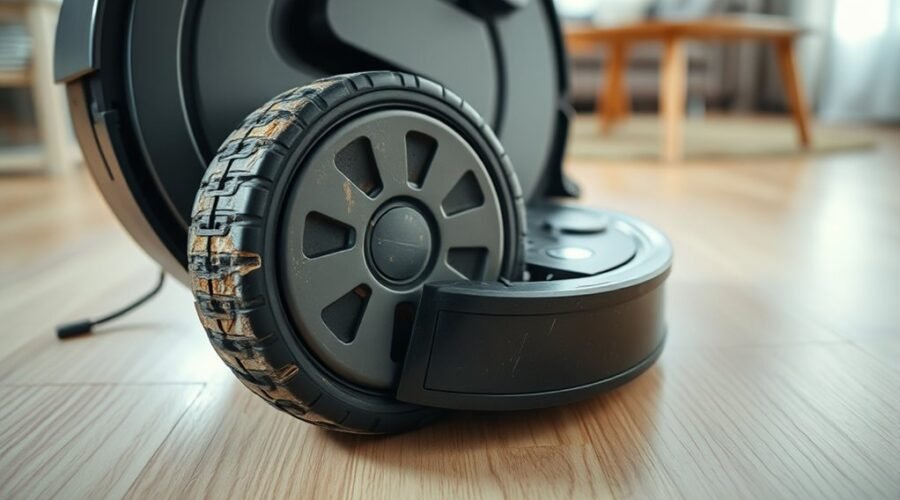
Robot vacuum wheels should be replaced when wear begins to affect traction, steering, or noise levels. Cracks in the tread, flattened spots, a glossy surface, or uneven wear often signal declining performance. Navigation errors, black marks on floors, and grinding sounds can point to deeper damage. The key question is whether cleaning is still enough, or whether the wheel itself has reached the end of its service life.
What Robot Vacuum Wheel Wear Looks Like
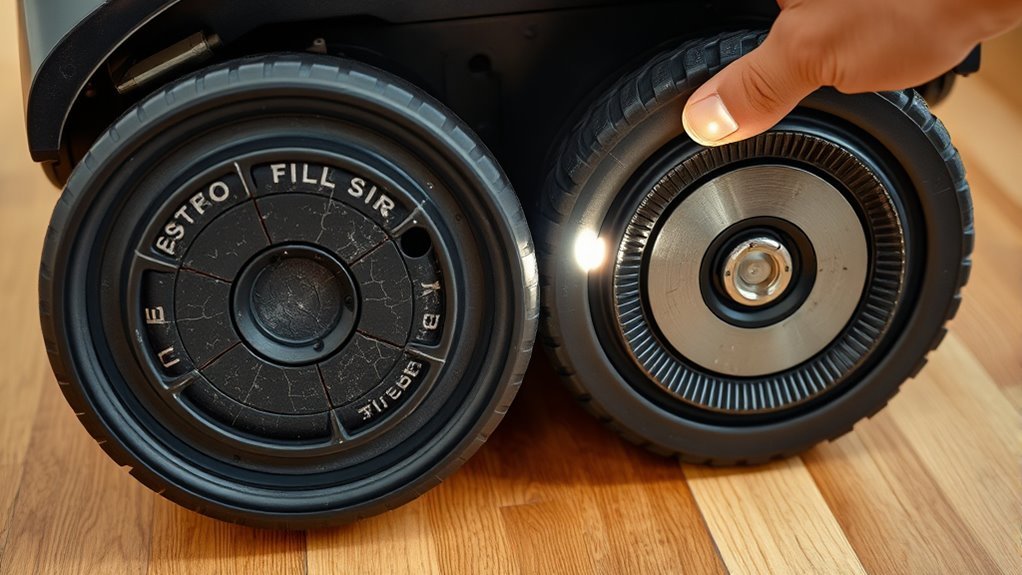
Robot vacuum wheel wear typically appears as visible cracks or tears in the rubber tread, smooth or flattened tread patterns, uneven wear across the wheel surface, or deformation that alters the wheel’s shape.
These wheel issues reduce traction and compromise movement over tile, carpet, and thresholds. Worn treads often appear polished or bald, indicating loss of grip.
Uneven wear may show one edge eroding faster than the other, creating imbalance and erratic tracking. Deformation can present as warping, swelling, or a misshapen profile that resists clean rotation.
Frequent sticking is another observable sign, especially when the wheel catches on debris or requires repeated cleaning to restore motion.
Together, these indicators show mechanical fatigue, not merely surface dirt. A detached inspection of tread condition, symmetry, and rotation quality provides the clearest reading of wear.
Such evidence helps preserve autonomy in floor care by identifying decline before performance becomes unreliable.
Robot Vacuum Wheel Problems That Mean Replacement
Wheel replacement is warranted when visible tread cracking or rubber deterioration begins to reduce traction and disrupt navigation.
In a robot vacuum, that wear becomes actionable when the wheel no longer grips cleanly, and the vacuum cleaner starts drifting or correcting too often. Black trails on floors are another clear fault signal; they usually indicate rubber melting or decomposition, not a minor cosmetic issue.
A wheel that sticks, hesitates, or fails to rotate smoothly after cleaning points to internal damage, bearing failure, or hidden deformation. Excessive noise, especially grinding, suggests mechanical distress inside the wheel assembly and justifies replacement.
A wheel that sticks or grinds after cleaning signals internal damage and should be replaced.
Frequent wheel overload errors also indicate that the control system is detecting resistance beyond normal limits. At that stage, continued use only extends inefficiency and limits autonomy.
Replacement restores stable motion, predictable navigation, and cleaner operation without forcing the machine to labor against degraded components.
Why Robot Vacuum Wheels Wear Out So Fast
Rapid wear usually stems from constant contact with mixed floor surfaces, which gradually degrades tread and reduces traction.
Robot vacuum wheel treads face repeated stress from tile, carpet, thresholds, and uneven edges, so friction accumulates fast. Debris, hair, and dust buildup increase resistance, forcing motors to work harder and abrading the wheel surface.
Material quality matters: rubber compounds with poor resilience, or brittle plastic, lose shape sooner and show wear signs earlier. Temperature swings and humidity can further weaken integrity, making wheels crack, harden, or slip.
From a maintenance perspective, regular cleaning and inspection are practical maintenance tips that preserve mobility and delay failure. Neglect accelerates degradation because trapped grit acts like a cutting medium.
For users seeking liberation from avoidable breakdowns, understanding these drivers clarifies why replacement may become necessary sooner than expected, even when the vacuum still appears functional and continues moving.
How to Check Robot Vacuum Wheels for Damage
Damage from wear becomes easier to confirm through a direct inspection of the wheels. A technician should check for damage on the rubber treads, looking for cracks, thinning, or a polished surface that reduces traction.
The wheel axles should be examined for debris, wrapped fibers, and packed dirt; if needed, remove hair carefully to restore free movement. Each wheel should then be rotated by hand. A smooth turn indicates normal condition, while stiffness or drag may reveal an internal fault or a stuck robot vacuum wheel.
Audible grinding or squeaking during operation points to stress in the wheel motor or related bearings. Frequent wheel error alerts should also be noted, because they often reflect impaired mobility rather than a software issue.
When these signs appear together, the wheel assembly has likely reached the end of reliable service and should be replaced to preserve performance and operational freedom.
Clean or Replace Robot Vacuum Wheels?
Robot vacuum wheels should be cleaned regularly to remove hair and debris that can restrict movement and reduce traction.
If the rubber treads are worn, cracked, or flattened, replacement is the appropriate corrective action.
Unusual noise or repeated overload errors may indicate motor-related damage, which also warrants wheel replacement.
Clean Wheels Regularly
Regular inspection and weekly cleaning of the wheels help prevent debris buildup, hair wrap, and fiber entanglement that can cause sticking, overheating, or reduced mobility.
To clean wheels regularly, a technician should rotate each wheel, remove trapped particles, and check for hair around the axles and treads. This routine supports smooth navigation and helps preserve performance without unnecessary dependence on premature replacement.
Robot vacuum wheels should also be examined for wear signs, including cracks, uneven contact surfaces, or thinning rubber, because contamination can obscure early damage.
When dirt is cleared at once, the drive system maintains efficiency, path tracking remains stable, and the machine stays available for autonomous work.
Consistent care protects mobility, minimizes friction, and extends service life.
Replace Worn Treads
Worn or cracked treads should be inspected closely, since reduced tread depth and rubber deterioration can sharply lower traction and cleaning performance.
When robot vacuum wheels begin slipping, leaving dirt behind, or struggling on thresholds, it is prudent to replace worn treads before broader failure develops.
Uneven movement and frequent errors also signal diminished grip.
Targeted replacement is often more economical than purchasing full wheel assemblies, giving users a practical path to upkeep without waste.
Regular maintenance focused on tread condition preserves cleaning efficiency and reduces avoidable strain on the system.
By acting promptly, the vacuum retains stable motion, better obstacle handling, and more consistent results.
Replacement rubber parts can restore function while keeping the machine serviceable, efficient, and ready for continued autonomous work.
Check For Motor Damage
Careful inspection of the wheel assembly should include the motor, since grinding, clicking, or uneven wheel rotation can indicate internal damage rather than simple tread wear.
The unit should be observed for excessive wear on treads, but the deeper issue may lie in motor damage that limits torque or stalls movement. Wheel sensors can flag persistent errors when rotation becomes inconsistent or blocked.
If a wheel does not spin freely, cleaning may no longer restore function. Regular lubrication can reduce friction, yet it cannot correct failed bearings or worn windings.
Repeated alerts, noise, and poor traction together justify replacement. Technical diagnosis should remain direct: identify the fault, confirm the cause, and remove defective parts without delay.
Replace the Wheel Module or Just the Tire?
Deciding whether to replace the wheel module or only the tire depends on the type and extent of wear. If the rubber shows visible abrasion, cracking, or flattening, tire replacement may be sufficient. A worn tire typically reduces traction and travel efficiency, but it does not always justify replacing the full wheel assembly.
When the wheel drags, binds, or fails to spin freely, the fault often lies beyond the outer tread, and it is usually more practical to replace the wheel module. This approach is especially relevant when internal wear or motor issues are suspected.
Compatibility matters: some Roomba e, i, j Series, and Combo 10 Max units support individual wheel replacements, while newer models may not. Before purchasing parts, verify whether the design allows module-level service.
When the wheel assembly appears damaged or malfunctioning, full replacement often delivers the most reliable outcome and preserves operational autonomy.
How to Make Robot Vacuum Wheels Last Longer
To extend wheel life, a robot vacuum should be maintained on a regular schedule. Consistent maintenance preserves traction, limits friction, and supports autonomous cleaning freedom. The wheel assembly should be clean, inspected, and serviced with discipline.
- Inspect rubber treads weekly for cracks, thinning, or uneven wear. Replace damaged parts before traction declines.
- Clean wheels every week with care, removing hair, dust, and debris that increase resistance and accelerate abrasion.
- Avoid thick carpets and dense rugs when possible; these surfaces impose high load on the wheel system and shorten service life.
- Lubricate wheel axles monthly, and wipe the housing and sensors with a damp cloth to prevent dust buildup that can impair motion and navigation.
This maintenance routine reduces mechanical stress, preserves mobility, and helps the robot operate reliably with less interruption.
Frequently Asked Questions
How Often Should I Replace Roomba Rollers?
Roomba rollers should generally be replaced every 6 to 12 months. Replacement frequency depends on use, floor type, and roller maintenance tips. Observe signs of wear, practice DIY roller cleaning, and replace sooner if performance drops.
What’s the Average Lifespan of a Robot Vacuum?
A robot vacuum typically lasts 3 to 5 years. With disciplined robot vacuum maintenance, cleaning frequency, and monitoring performance indicators, wheel durability often improves, though batteries usually need replacement after 2 to 3 years.
Can I Trade in My Old Roomba for a New One?
Yes; many retailers and iRobot offer Roomba trade in options. Benefits of upgrading include discounts on Best Roomba models, while Eco friendly disposal reduces waste. Eligibility, valuation, and required returns vary by program and condition.
How Do I Clean the Front Wheel on My Roomba?
Power off, flip the Roomba, and remove debris from the front wheel using brush or tweezers. Wipe housing with a damp cloth. These wheel maintenance tips, cleaning tools needed, troubleshooting steps, performance improvement tricks restore mobility.
Conclusion
To conclude, robot vacuum wheels should be replaced at the first clear signs of tread cracking, uneven wear, glazing, navigation errors, black floor marks, or grinding noise. One useful statistic is that wheel-related failures account for a significant share of mobility complaints in heavily used robot vacuums, especially after repeated exposure to debris and hard flooring. Regular inspection and timely replacement help preserve traction, reduce motor strain, and maintain consistent cleaning performance over the machine’s service life.