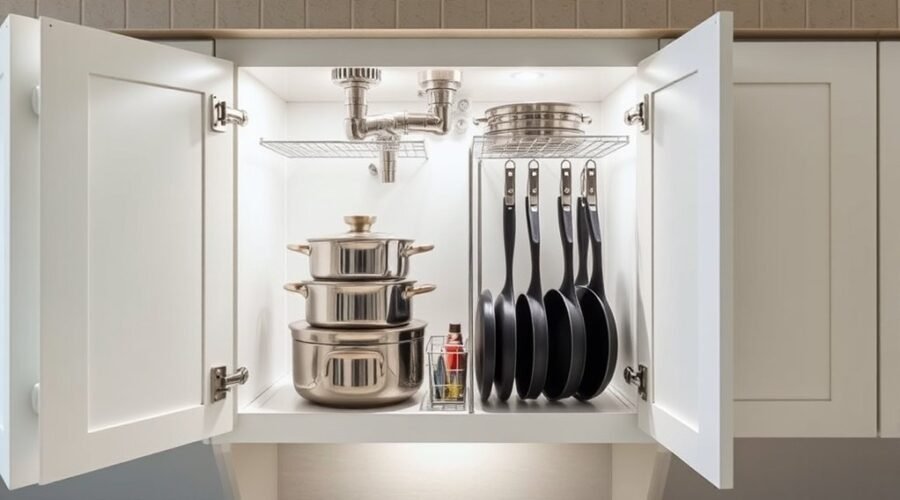
Storing pots and pans under the sink can free up valuable cabinet space, but it only works when the area is set up with care. A cluttered cabinet quickly turns useful cookware into a daily hassle, especially when lids, handles, and cleaning supplies compete for room. With the right layout, the space can hold more than expected and stay easy to manage. The key is knowing which organizers make the biggest difference.
Why Store Pots and Pans Under the Sink?
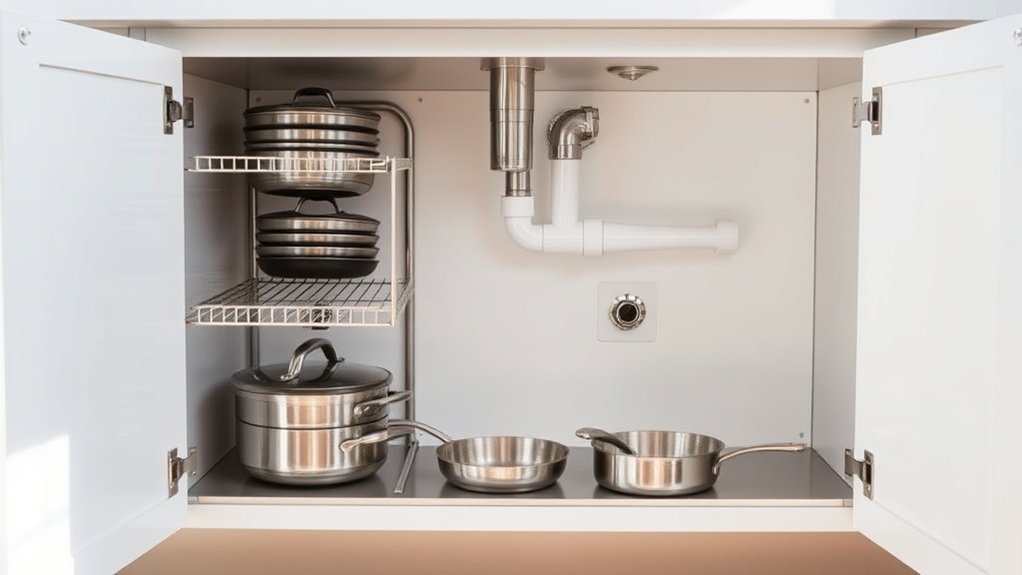
Storing pots and pans under the sink can make practical use of space that often goes unused while keeping everyday cookware within easy reach.
This under-sink storage option supports kitchen organization by moving bulky pots and pans out of upper cabinets and off countertops. The result is more open space for essentials and a calmer cooking area.
Larger pots that do not fit well in standard cabinets can be placed here, helping maximize vertical space efficiently. With tiered racks or adjustable dividers, the storage area stays accessible and easier to manage.
Cookware remains close at hand, which streamlines workflow and reduces the need to reach into deep cabinets. For those seeking a more liberated kitchen layout, this approach offers a simple, practical way to keep pots, pans, and other cookware organized without wasting valuable space.
Clear Out the Under-Sink Cabinet
Before adding any organizers, the under-sink cabinet should be emptied completely so the available space can be assessed and any unnecessary items identified.
This clear out step gives a full view of the storage space and makes organizing pots and pans more intentional. Each item should be checked for broken parts, duplicates, or tools that no longer earn their place. Removing them helps reduce clutter and creates room for essentials that deserve easy access.
The cabinet should then be cleaned thoroughly to remove spills, dust, or residue, leaving a fresh base for the next stage. A shelf liner may be added to protect the surface from leaks and to keep the area tidy.
Once the cabinet is reset, vertical space can be used more effectively with adjustable organizers or tiered storage, allowing pots and pans to rest neatly without crowding.
This simple reset supports order, clarity, and freedom from waste.
Best Under-Sink Organizers for Cookware
Tiered shelves, pull-out racks, and stackable bins are among the most effective under-sink organizers for cookware because they use vertical space without making pots and pans hard to reach.
These under-sink organizers turn a cramped cabinet into a practical storage solution that supports a full cookware collection. Stackable bins separate pieces cleanly and reduce clutter, while a lazy Susan can improve corner access with a simple spin.
Adjustable dividers and drawer organizers help keep items orderly, especially when borrowed from deep drawers or adapted for the cabinet below the sink. The result is better accessibility and less time spent hunting for a pan.
With the right setup, the space works for liberation from chaos and wasted cabinet room. Investing in a few well-chosen pieces can free up other storage areas and create a calmer, more efficient kitchen overall.
How to Store Pots, Pans, and Lids
Smart storage starts with separating pots, pans, and lids so each item has a clear place.
A VARIERA lid organizer or cabinet lid rack can keep lids upright and easy to reach, while tiered shelves and under-sink organizers help pans and pots stand neatly without wasting vertical space.
Larger pots can also move to tall pantry shelves, leaving the sink area cleaner and more accessible.
Smart Pot Storage
Making room for pots and pans under the sink starts with clearing out non-cookware items and shifting cleaning supplies elsewhere.
A well-planned pot organization system gives each pot a place and protects cabinet space from chaos. Large pans can stand on end beside the sink for easy access, while a tiered organizer keeps mismatched pots and pans stacked without crushing one another.
Under-sink storage ideas work best when they maximize space and keep cookware visible at a glance. In larger cabinets, a compact shelf or divider can support a cleaner layout and reduce strain during cooking.
If the under-sink area is limited, pantry shelves can hold bigger pots, freeing valuable cabinet space near the stove and supporting a more liberated, efficient kitchen routine.
Lid Organization Ideas
A few simple lid organizers can prevent the under-sink area from becoming noisy and cluttered. A lid organizer, such as a VARIERA rack, helps keep lids upright and easy to reach, so they no longer tumble with pots.
To organize pots and pans with less friction, store lids in a designated drawer or separate rack instead of stacking them. Dish-drying racks can serve as practical stand-ins, using vertical space efficiently.
Adjustable dividers create clear sections for different lid sizes, reducing overlap and keeping each piece in place. Over-cabinet lid holders also reclaim unused room behind doors and keep lids near their matching cookware.
This setup supports a cleaner, more flexible storage system, giving each lid a defined position and making retrieval simple.
Store Bulky and Odd-Shaped Cookware
Bulky pots and odd-shaped cookware are best handled with storage that uses height and structure instead of floor space. Tall pantry shelves can hold bulky pots and odd-shaped cookware in plain view, freeing cabinet room near the stove.
Bulky cookware fits best on tall shelves, where height creates order and frees valuable cabinet space.
In under-sink cabinets, larger pans may stand upright, turning vertical space into a practical storage solution. Adjustable pot organizers help separate mixed sizes, preventing scratches while keeping each piece accessible.
Lid racks and dividers keep covers aligned with their matching cookware, reducing clutter and wasted searching. Unused corners can support standing racks or slim carts, giving awkward items a stable home without crowding the main shelf.
This approach favors order without restriction, allowing kitchen tools to stay organized, reachable, and ready for use. By using structure instead of stacking chaos, the space works with the cook, not against it.
Make Under-Sink Storage Easy to Reach
Easy access becomes the priority once bulky cookware has been given a vertical home. Effective under-sink storage should keep daily cookware easy to access without forcing a hunt. By relocating cleaning products elsewhere, the cabinet can maximize available space for pots, pans, and lids.
Simple organization strategies help: stand larger pans on end beside the sink, place lids in the center, and reserve the most convenient spots for frequently used pieces.
- Use adjustable shelves to divide vertical space cleanly.
- Add under-sink organizers to keep cookware separated and visible.
- Keep heavy items low and front-facing for faster retrieval.
This layout supports a practical sense of freedom, since every item has a clear place and no section feels crowded. When vertical space is used well, the cabinet becomes easier to navigate, and cookware remains ready for quick use instead of buried behind clutter.
Tips for an Organized Setup That Lasts
To keep under-sink cookware storage working well over time, the cabinet should remain deliberately simple and easy to reset. The easiest path is to reserve the space for pots, pans, and pot lids, while moving cleaning products elsewhere. That choice supports efficient use of space and frees the cabinet from clutter.
Larger pans can stand on end beside the sink, improving accessibility and making it easier to keep pots and pans in order. In the middle, stack lids so they stay visible and do not slide into a mess.
Under-sink organizers, including tiered racks and pull-out bins, add structure without trapping items in hidden corners. To preserve the setup, regularly assess what is stored there and remove broken pieces or rarely used extras.
With a light, disciplined system, the cabinet stays calm, useful, and easy to maintain.
Frequently Asked Questions
What Are Some Clever Ways to Store Pots and Pans?
Clever storage uses magnetic strips, hanging racks, drawer dividers, stackable bins, tiered shelves, pull out baskets, and lid organizers. Such systems free space, improve access, and let cookware live efficiently, visibly, and independently.
Can You Store Pots and Pans Under the Sink?
Yes—like ships in a narrow harbor, pots and pans can live under the sink. Storage solutions there demand space optimization, respect under sink challenges, preserve pot protection, keep cleaning supplies elsewhere, and maintain kitchen accessibility via alternative locations.
What Are Some Smart Ways to Organize Under the Kitchen Sink?
Smart under-sink organization uses drawer dividers, pull out racks, stackable bins, a lazy susan, tension rods, magnetic strips, and under shelf baskets. He or she gains freedom from clutter, finding cookware quickly and reclaiming space.
What Are Some Common Mistakes to Avoid When Organizing Under Sink Storage?
A homeowner learned overcrowding space, ignoring access, neglecting size, using unsuitable materials, overlooking humidity, failing to label, and skipping maintenance caused chaos; she then simplified storage, restored order, and reclaimed ease beneath the sink.
Conclusion
In practice, storing pots and pans under the sink works best when the space is treated as a compact, adjustable zone rather than a catchall. The theory that vertical storage always saves the most space proves true here, especially with tiered shelves and pull-out racks. Yet success depends on regular sorting and keeping heavier cookware low. With the right organizers and a simple maintenance routine, the cabinet can stay efficient, accessible, and clutter-free.