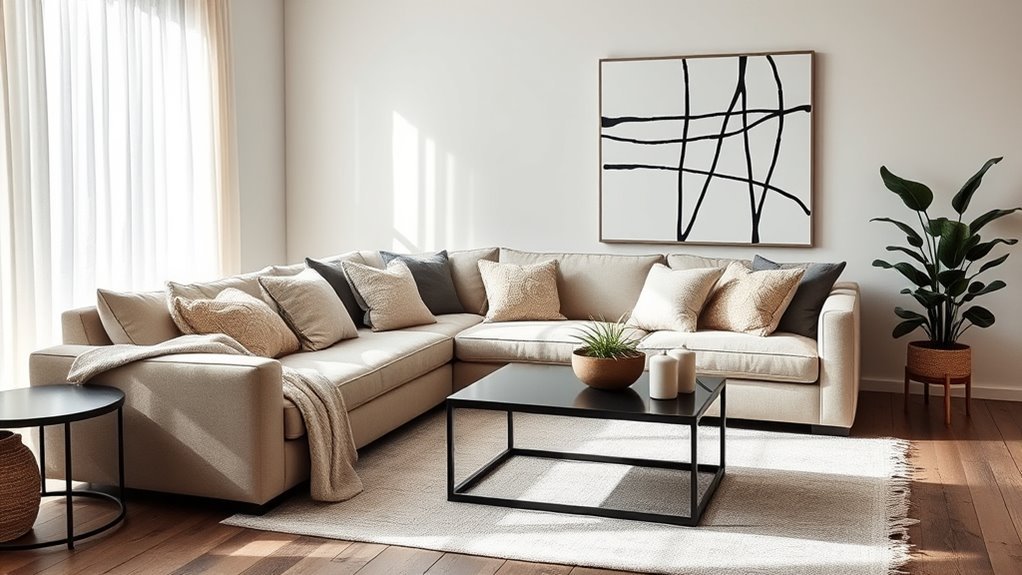
Curled rug corners are more than an eyesore—they are a serious trip hazard in busy hallways, entryways, kitchens, and living rooms shared by kids, pets, or older adults. Learning how to stop rug corners from curling takes two steps: relaxing the upward bend in the rug fibers and anchoring the edge with a pad, corner gripper, or tape that will not stain or strip your flooring.
Quick Answer
To stop rug corners from curling, vacuum both sides of the corner, gently reverse-roll the edge downward, warm the backing on low with a hairdryer held 6 inches away if the care label allows heat, and flatten it under heavy books over a towel for 24–48 hours. Prevent repeat curling with a floor-safe rug pad trimmed 1 inch smaller per side.
At a Glance
| Time Required | 10–20 minutes of active setup, plus 24–48 hours of weighting for stubborn corners |
| Difficulty | Easy for standard area rugs; moderate for oversized, antique, or rug-over-carpet setups |
| Tools Needed | Vacuum, clean white towel, flat books or weights (5–10 lbs), low-heat hairdryer, floor-safe rug pad, removable corner grips, or rug tape |
| Cost | Free using household weights; low cost for corner grippers or tape; moderate for a full-size felt-and-rubber rug pad |
How to Stop Rug Corners From Curling: 5 Step-by-Step Fixes
You can flatten most curled rug corners without buying hardware by releasing the tension stored in the backing and fibers first. Always reshape and flatten the corner before applying corner grippers or tape so the adhesive isn’t fighting an upward pull.
Warning: Do not use steam, melting ice cubes, permanent double-sided carpet tape, or high heat unless both your rug care tag and flooring warranty allow them. Moisture and trapped heat can warp hardwood, swell jute or sisal, melt synthetic polypropylene fibers, and delaminate latex rug backings. If a lifted corner sits in a walkway, move the rug out of traffic until it stays flat.
- Clean the rug and floor underneath. Vacuum the top of the rug, then fold back the corner to vacuum dust, grit, and pet hair off the backing and floor. Fine grit acts like sandpaper on fibers and prevents grippers or pads from gripping the floor. The Carpet and Rug Institute care guide recommends vacuuming high-traffic zones daily and light-traffic areas weekly to remove dry soil before it damages fibers.
- Reverse-roll the curled corner. Tuck the lifted corner downward—in the exact opposite direction of the curl—into a loose cylinder. Hold it gently for 2 to 3 minutes, or wrap a clean towel around the roll for a few hours. Never fold or crease the rug backing sharply, which can crack stiff jute or latex foundations.
- Apply gentle, moving warmth if the care label allows it. Check the rug tag first. If safe, set a hairdryer to low heat and hold it at least 6 inches away from the underside of the curled corner. Move the nozzle continuously back and forth for 30 to 60 seconds until the backing feels slightly warm and pliable, never hot.
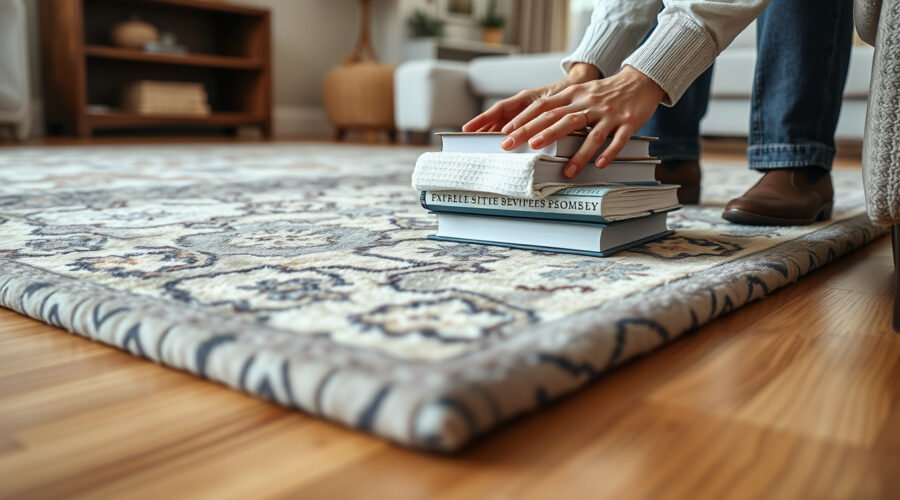
- Weigh the corner flat for 24 to 48 hours. Lay the warmed corner flat on the dry floor, cover it with a clean white towel to prevent dye transfer or pressure marks, and stack 5 to 10 pounds of flat, heavy books on top. Leave the weight undisturbed for 24 to 48 hours so the fibers cool and set in a flat position.
- Anchor the corner for long-term hold. Once the corner lies flat on its own, install a properly sized non-slip rug pad underneath, attach removable V-shaped or triangular corner grippers, or apply floor-safe rug tape rated for your exact flooring finish.
How to tell it worked: Remove the books and towel, step onto the corner from the center of the rug, and push your foot lightly toward the edge. The corner should stay flush against the floor without springing upward or sliding. If it still lifts after 48 hours, repeat the warming and weighting cycle or add a rigid anti-curl corner stiffener beneath the edge.
Pro Tip: If only one corner curls repeatedly, rotate the entire rug 180 degrees after flattening it. Rotating moves the weakened corner out of doorway swing paths, HVAC floor vents, direct window sunlight, and heavy foot-traffic pivot points.
What Causes Rug Corners to Curl?
Rug corners curl when the backing retains tension from tight packaging, absorbs uneven room moisture, or shifts across an unsupported surface. Identifying the exact cause prevents you from wasting money on tape when the real problem is humidity or an oversized rug pad.
- Shipping and storage memory: New rugs are tightly rolled on cores for weeks during transit, training the stiff weft yarns and backing to curve upward at the ends when unrolled.
- Missing or improperly sized rug pad: A thin rug on a slick floor slides and bunches under foot traffic. Conversely, a pad that reaches all the way to the rug’s edge pushes the corners upward instead of letting them taper to the floor.
- High indoor humidity or damp subfloors: Natural fibers like wool, jute, and cotton absorb moisture from the air and expand at different rates than synthetic backings, pulling corners upward. Following the U.S. Environmental Protection Agency indoor air quality guide, keep indoor relative humidity between 30% and 50% (and always below 60%) to prevent moisture distortion and mold growth.
- Heavy foot traffic and chair friction: Corners positioned at hallway turns, doorway thresholds, or beneath dining chairs get kicked and dragged repeatedly until the edge binding stretches.
- Dirty floor or deteriorating backing: Dust coats non-slip pads so they lose friction, while aging latex backings dry out, crack, and shrink at the perimeter.
- Area rug layered over wall-to-wall carpet: Walking across an area rug on top of plush carpet pushes the upper rug forward with the directional nap of the carpet pile, causing rippled edges and curled corners.
Choose the Right Fix for the Problem
Match your flattening method to the symptom you see on the floor before applying adhesives or buying a new pad. Using the wrong product—such as a thick cushion pad over carpet or heavy tape on coated hardwood—often makes curling worse.
| Problem | Best First Fix | Avoid |
| New rug corners curl upward out of packaging | Reverse-roll, warm on low heat from 6 inches away if allowed, then weight for 24–48 hours | Sharp folding creases, soaking steam, or applying tape before relaxing the curl |
| Entire rug slides and corners flip up | Add a floor-compatible non-slip rug pad cut 1 inch smaller per side than the rug | Pads that extend to the edge, overly thick pads in doorways, or PVC pads on wood/vinyl |
| Only one high-traffic corner keeps lifting | Attach a rigid removable corner gripper or rotate the rug 180 degrees | Permanent carpet tape on antique wood, waxed floors, or peeling polyurethane finishes |
| Area rug bunches and curls over wall-to-wall carpet | Place a low-profile (1/8-inch) high-friction carpet-to-carpet pad underneath | Thick felt or memory foam pads that raise the edge height and increase sponge-like flexing |
| Wall-to-wall installed carpet lifts along walls or doorways | Hire a carpet installer to power-stretch the carpet or replace tack strips and transition bars | Treating loose tack-strip carpeting like a movable throw rug with double-sided tape |
Recommended Products
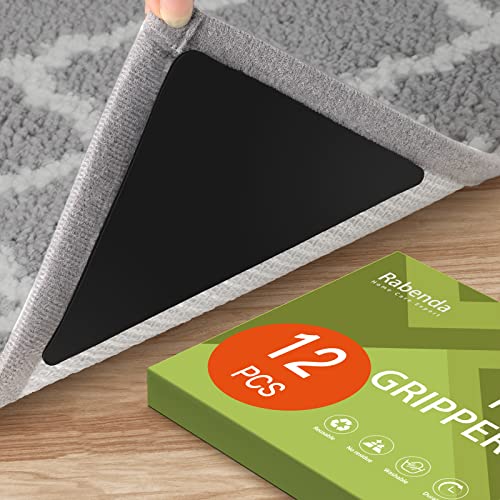
Advantaged Triangle Design: The Triangle Design grippers for area rugs and hardwood floors will maximum increase the contact surface. The strong adhesion will help stick firmly and keep your area rugs in place. Moreover, the rug stickers for wood floors will prevent the rug corners and edges curling and always keep your rugs steady and safe

Unique Design: Do you still worry about the traditional glue rug tape harm your floor ? This gripper uses VACUUM TECH design which grips hard smooth floors firmly and easily, this design can protect your floor perfectly as no glue used on floor. But it does not work for rug on carpeted floor. It does not work for rubber backed rug ,jute rug or fluff backing rug.

NON SLIP AND CURLING: Unstable sliding carpets create household hazards. ZONGOOL rug tape stabilizes rugs and prevents corner curling. Compatible with all rug shapes for indoor and outdoor use, it holds carpets firmly in position and reduces common shifting and curling issues
Best Rug Pads to Prevent Curling Corners on Different Flooring
A properly fitted rug pad is the most reliable long-term defense against curled corners because it stops the rug from shifting while supporting the foundation. Always match the pad’s material and thickness to your specific flooring surface so the pad neither slips nor chemically reacts with the floor finish.
| Flooring Type | Recommended Pad Material | Ideal Thickness | Materials to Avoid |
|---|---|---|---|
| Hardwood (solid or engineered) | 100% felt or dual felt-and-natural-rubber | 1/8 in. (runners/doors) to 1/4 in. (living areas) | PVC, synthetic latex, and solvent-based adhesives |
| Laminate | Breathable natural rubber or felt-and-rubber | 1/8 in. to 1/4 in. | Non-breathable sealed foam or plastic pads that trap moisture |
| Luxury Vinyl (LVP/LVT) & Sheet Vinyl | Non-staining felt or LVP-certified polyurethane/EVA pad | 1/8 in. to 1/4 in. | Natural or synthetic rubber and latex backings (causes yellowing) |
| Tile, Stone & Concrete | Open-grid natural rubber or felt-and-rubber | 1/16 in. to 1/4 in. | Cheap PVC waffle pads that flake into grout lines |
| Wall-to-Wall Carpet | Dual-sided directional carpet-to-carpet grip pad | 1/16 in. to 1/8 in. | Thick cushion pads (over 1/4 in.) that create a raised tripping lip |
| Radiant Heated Floors | Low-R-value perforated natural rubber or needle-punched felt | 1/8 in. to 1/4 in. | Dense closed-cell foam or low-melt adhesives that bake onto floors |
Recommended Products

PLUSH FELT CUSHION: Choose from three thickness options - 1/4", 3/8”, and 1/2" - offering various levels of a soft feel underfoot, sound absorption, insulation, and extra comfort for your area rugs in busy spaces.

NON-SLIP GRIP FOR SAFETY: Durable latex rubber backing prevents slipping, sliding, bunching, and wrinkles on hardwood, tile, carpet, or any floor—superior hold compared to basic foam pads for everyday use.

NOT NON-SLIP - This pad is meant for use with rugs anchored by furniture or heavy rugs that stay in place on their own. For non-slip applications, try one of our felt and rubber options.
Rug Pad Size Rule
Measure the body of the rug itself—excluding decorative fringe or tassels—and trim your pad so it sits slightly inside the entire perimeter. According to the RugPadUSA rug pad sizing guide, you should subtract 2 inches from both the length and width of the rug (leaving a 1-inch inset on all four sides), or subtract 2.5 to 3 inches for thicker rugs and sizes 10 by 13 feet or larger so the edges drape smoothly downward onto the floor.
Hardwood Floors
Protect solid and engineered wood with a breathable felt-and-natural-rubber pad (rough felt side up to grip the rug backing, smooth natural rubber side down to grip the floor). Choose a 1/4-inch pad for living rooms and a 1/8-inch low-profile pad for hallways and doorways. Never use cheap PVC waffle pads or solvent-based adhesives, which release plasticizers that strip or haze polyurethane wood finishes.
Laminate Floors
Select a thin (1/8-inch to 1/4-inch), breathable non-slip pad labeled safe for laminate flooring. Avoid placing a thick 3/8-inch pad under a light flatweave rug near an entryway door, because the abrupt step-up causes shoes and door sweeps to catch the corner.
Vinyl and LVP Floors
Always verify your flooring manufacturer’s warranty before placing any pad under a rug on luxury vinyl plank (LVP) or luxury vinyl tile (LVT). The Shaw Floors luxury vinyl care guide advises using mats without latex or rubber backings to avoid discoloration, and the Karndean LVT floor protection guide warns that rubber compounds cause permanent yellow or brown chemical staining on vinyl. Use only pads explicitly labeled non-staining and vinyl-safe.
Tile, Stone, and Concrete
Anchor rugs on slick ceramic, porcelain, stone, or sealed concrete with a high-friction, low-profile (1/16-inch to 1/8-inch) open-weave pad. In kitchens, bathrooms, mudrooms, and entryways, mop and dry the floor completely before laying the pad down so trapped dampness does not warp the rug corners or stain grout lines.
Carpeted Floors
Stop an area rug from creeping and buckling on top of wall-to-wall carpet with a specialized 1/8-inch carpet-to-carpet pad. These thin pads use a textured backing that locks into the underlying carpet pile while holding the upper rug taut. Avoid thick felt cushions here; excess height makes the rug flex like a diving board every time you step on the edge.
Heated Floors
Choose only breathable rug pads rated for radiant heated floors (typically perforated natural rubber or needle-punched felt with a low thermal resistance, or R-value). Never use thick closed-cell memory foam or sticky acrylic tapes over radiant heat, as trapped heat degrades the adhesive and bakes residue onto the flooring.
Note: Both the CDC home fall-prevention checklist and the National Institute on Aging room-by-room fall prevention guide advise removing small throw rugs entirely from older adults’ walking paths—or securing larger rugs firmly with non-slip backing or double-sided tape—to prevent dangerous slips and trips.
Effective DIY Techniques for Keeping Your Rug Flat
Once you flatten a curled corner, targeted edge accessories keep thin or stubborn corners from lifting again without replacing the rug. Combine these DIY methods with a clean floor and a properly inset rug pad for lasting hold.
Use Corner Grips for Small Lifted Edges
Removable V-shaped or triangular corner grippers work best when one or two corners curl upward while the center of the rug stays flat. Choose grippers with a rigid inner spine that splints the corner flat, stick the permanent adhesive side to the dry rug backing first, and press the reusable gel or friction face onto a freshly cleaned floor.
Use Rug Tape Carefully
Double-sided rug tape anchors thin runners and flatweave corners, provided you select a removable tape engineered for your exact floor finish. Test a 2-inch strip in an inconspicuous closet or corner for 48 hours before taping the rug. Never apply heavy-duty carpet tape to unfinished wood, oil- or wax-treated floors, antique hardwood, or peeling polyurethane.
Should You Use the Ice Cube Trick?
Skip the viral ice-cube trick on most indoor rugs and hard floors. While melting an ice cube on a curled synthetic rug edge dampens the fibers so a weight can press them flat, the standing water seeps through to the floor underneath. That trapped moisture can swell laminate seams, leave white water rings on hardwood, stain jute or sisal brown, and delaminate glued rug backings. Dry reverse-rolling, gentle hairdryer warmth, and 24 to 48 hours of book weighting achieve the same result safely.
Weigh Down Corners the Right Way
When a heavy wool or synthetic rug corner keeps springing back after an overnight press, extend the weighting time to 48 hours and distribute the pressure across the entire diagonal fold line. Lay a clean white towel over the corner first, then place a flat hardcover book or wooden board topped with 5 to 10 pounds of weight right to the outer tip of the corner.
Keep the Rug and Pad Clean
Dust buildup underneath a rug acts like tiny ball bearings that let corners slide and curl. Vacuum the rug surface at least once a week—and fold back the edges monthly to wipe the floor and rinse or vacuum reusable grippers. As the Shaw Floors carpet maintenance guide notes, frequent vacuuming stops abrasive dry soil from working below the pile where it wears down fibers and backing structure.
Quick Safety Check Before You Put the Rug Back
Run a 60-second walk-around test after flattening your rug to confirm the edge cannot catch a shoe, cane, stroller wheel, or vacuum head. Walk across the corner from all four directions, swing nearby doors fully open, slide any dining or desk chairs backward across the border, and push an upright vacuum over the edge. If the edge sits higher than 1/4 inch or catches your foot, switch to a thinner 1/8-inch rug pad or relocate the rug out of the traffic lane.
Special Care for Different Rug Types
Different rug fibers and backings react very differently to heat, moisture, and adhesive tension. Always inspect the care tag and the underside of the corner before choosing a flattening method.
- Wool rugs: Thick tufted or woven wool holds roll memory stubbornly. Reverse-roll carefully, use only low hairdryer warmth, and avoid strong adhesive tapes on canvas-backed wool rugs where glue is used to hold the tufts.
- Jute, sisal, and seagrass rugs: Keep plant-fiber rugs completely dry—never use steam, damp towels, or ice cubes, which cause water stains and permanent fiber shrinkage that curls corners tighter.
- Washable rugs: Remove from the dryer promptly on low heat (or air-dry flat) so corners do not bake into a curled shape. Ensure both the cover and pad are 100% dry before reassembling on the floor.
- Antique, hand-knotted, or silk rugs: Never apply rug tape, corner adhesives, or heat to valuable handmade rugs. Use a custom-cut felt-and-rubber pad and consult a professional oriental rug repair specialist if uneven warp tension causes a corner to curl.
- Latex-backed rugs: Flip the corner over and rub the backing. If dry white powder, cracked rubber flakes, or sticky residue comes off on your fingers, the latex is breaking down and the rug needs re-backing or replacement.
How to Stop Ruggable Corners From Curling
Two-piece washable rugs like Ruggable use a lightweight woven or tufted cover that clings to a separate non-slip pad, requiring a specific alignment method to keep corners flat. Unlike washable brands such as Tumble that insert pad corners into underside pockets, standard two-piece Ruggable covers rely on tension and a slight perimeter overhang to taper smoothly to the floor.
- Start with a clean, bone-dry floor. Dust or dampness under the pad reduces friction and causes the edges to creep.
- Center the pad with the correct overhang. Ruggable designs its rug covers slightly larger than the pad—typically leaving 1 to 2 inches of overhang on smaller rugs and slightly more on oversized rugs—so the pad stays hidden and the cover slopes down to the floor.
- Do not tuck the pad into the corner pockets on standard two-piece covers. Ruggable’s corner pleats on classic two-piece covers act as weighted corners to hold the edges down; forcing the pad into them pulls the cover too tight and makes the corners curl upward.
- Smooth from the center outward. If a corner lifts after washing, peel that section of the cover up from the pad, pull it gently outward to remove slack, and press it back down working from the middle toward the corner.
- Give wash creases 48 to 72 hours to relax. Minor ripples from folding or machine drying typically flatten out within a few days of foot traffic once the cover is aligned evenly over the pad.
You can review setup steps for two-piece, tufted, and all-in-one styles in Ruggable’s official guide for rug assembly and care.
Mistakes to Avoid for Lasting Rug Flatness
Avoiding common shortcuts protects both your rug backing and your flooring warranty while keeping corners flush for years. Most repeat curling happens when homeowners try to tape down a corner that is still under mechanical tension or sitting on an oversized pad.
- Using a pad that is flush with the rug edge: A pad that isn’t trimmed 1 inch shorter per side pushes the rug perimeter upward and catches shoes.
- Overusing permanent double-sided carpet tape: Industrial carpet tape bonds permanently to polyurethane and vinyl wear layers, stripping the finish when removed.
- Using steam or water on moisture-sensitive floors: Steaming a rug in place drives hot moisture straight into hardwood seams, laminate cores, and natural jute backings.
- Ignoring lifted corners in walkways: The U.S. Consumer Product Safety Commission works with safety standards groups to reduce household flooring slip, trip, and fall hazards—treat any curled edge in a hallway or stair landing as an immediate safety priority.
- Taping over a crumbling rug backing: Adhesive strips cannot grip flaking latex; they simply pull the backing apart faster.
When to Call a Professional
While DIY reverse-rolling, weighting, and pad adjustments fix most curled area rugs, structural carpet or rug damage requires a specialist. Call a professional installer or rug restoration expert in any of these five situations:
- Wall-to-wall carpet is lifting at walls, seams, or doorways: A professional carpet installer needs a power stretcher, seam iron, or new tack strips and metal transition thresholds to re-anchor the carpet safely.
- The rug is antique, hand-knotted, silk, or high-value: A rug restoration specialist can block (wet-stretch on a frame) a warped handmade rug or re-bind curled serging without damaging collector value.
- The backing is crumbling, powdery, or sticky: A rug repair shop can strip deteriorated latex and apply a fresh cotton canvas or non-slip backing.
- Your floor shows yellow staining or finish hazing under the rug: Remove the rug and pad immediately and contact your flooring manufacturer for approved residue removal steps.
- The corner still curls sharply after 48 hours of weighting: Tight edge serging or shrunken foundation warps may need professional blocking or binding relief.
Key Takeaways
- Relax the curl before anchoring: vacuum both sides, reverse-roll, warm on low from 6 inches away if care tags allow, and press under 5–10 lbs of books over a towel for 24–48 hours.
- Trim your rug pad 2 inches narrower and shorter than the rug body (a 1-inch inset on all four sides) so the corners drape downward instead of perching on the pad edge.
- Match pad chemistry to your floor: use felt-and-natural-rubber on hardwood, LVP-certified non-rubber pads on luxury vinyl, and 1/8-inch carpet-to-carpet pads over wall-to-wall carpet.
- Keep indoor relative humidity between 30% and 50% so wool, jute, and cotton backings do not swell and curl at the corners.
Frequently Asked Questions
How do you flatten the ends of a new rug?
To flatten the ends of a new rug, vacuum both sides, reverse-roll the curled end downward for a few minutes, warm the backing gently with a hairdryer on low held 6 inches away if the care label allows heat, and weigh it down with heavy books over a clean towel for 24–48 hours. Once flat, place a rug pad trimmed 1 inch smaller per side underneath to keep the ends from curling again.
How do you fix carpet coming up at the edges?
Fix a movable area rug lifting at the edges with a properly sized rug pad, removable corner grippers, or floor-safe rug tape. If installed wall-to-wall carpet is coming up along a wall or doorway, call a professional carpet installer to power-stretch the carpet, repair the seam, or replace worn tack strips and transition bars.
How do you get Ruggable corners to lay flat?
Get Ruggable corners to lay flat by placing the pad on a clean, dry floor, centering the cover with an even 1- to 2-inch overhang on all sides, and leaving the corner pockets untucked on standard two-piece covers. If a corner still lifts, peel the cover back toward the center, pull gently outward to remove slack, and smooth it flat.
Can rug tape damage hardwood, vinyl, or laminate floors?
Yes, standard double-sided carpet tape can strip polyurethane finishes on hardwood, leave gummy residue on laminate, or chemically discolor vinyl floors. Only use removable rug tape explicitly labeled safe for your exact flooring type, test a small strip in a hidden spot for 48 hours first, or choose a non-staining rug pad instead.
Why does my rug corner keep curling after I flatten it?
A rug corner keeps curling after flattening when the rug slides on a dusty floor, sits on a pad that reaches all the way to the edge, absorbs excess room humidity above 50%, or has a shrinking, worn-out backing. Clean underneath the rug, trim the pad 1 inch inside the rug perimeter, rotate the rug 180 degrees, and add a rigid corner gripper.
Is the ice cube trick safe for curled rug corners?
No, the ice cube trick is not safe for most indoor floors or natural-fiber rugs because melting ice seeps underneath the corner and can warp hardwood, swell laminate seams, and stain jute, sisal, wool, or antique backings. Use dry reverse-rolling, gentle low hairdryer warmth, and heavy books over a dry towel instead.
Can you use a clothes iron to flatten a curled rug corner?
Never press a hot clothes iron directly onto a rug, as high heat can melt synthetic polypropylene or polyester fibers and scorch wool or latex backings. A safer alternative is using a hairdryer on low heat held at least 6 inches from the rug backing, followed immediately by 24–48 hours of flat weighting over a clean dry towel.
Conclusion
Stopping rug corners from curling for good requires releasing the upward bend first and supporting the rug properly underneath. Start today by vacuuming under the lifted corner, reverse-rolling and weighting it over a dry towel for 24 to 48 hours, and pairing your rug with a floor-safe pad trimmed 1 inch inside every edge so your walkways stay flat and trip-free.
Sources
- CDC STEADI Home Fall Prevention Checklist: Supports removing throw rugs or securing area rugs with non-slip backing or double-sided tape to prevent falls.
- U.S. Consumer Product Safety Commission: Flooring, Slips, Trips, and Falls: Supports addressing curled rug edges in walkways as a household trip and fall hazard.
- Carpet and Rug Institute Carpet and Rug Care Guide: Supports daily to weekly vacuuming schedules to remove dry soil before it wears down fibers.
- Shaw Floors Carpet Care and Maintenance: Supports frequent vacuuming to stop abrasive soil from working below the carpet pile.
- Shaw Floors Luxury Vinyl Care: Supports using mats without latex or rubber backings on luxury vinyl flooring to prevent discoloration.
- Karndean LVT Floor Protection Tips: Supports avoiding rubber-backed mats that can permanently stain vinyl floor coverings.
- Ruggable Rug Assembly Guide: Supports Ruggable cover overhang dimensions, corner setup, and outward smoothing instructions.
- RugPadUSA Rug Pad Size Guide: Supports subtracting 2 inches from rug length and width (or 2.5–3 inches for thick rugs) so edges drape smoothly.
- U.S. Environmental Protection Agency Care for Your Air Guide: Supports maintaining indoor relative humidity between 30% and 50% to control moisture and mold.
- National Institute on Aging Room-by-Room Fall Prevention Guide: Supports eliminating unsecured throw rugs and tripping hazards in home walkways.